Haunted Houses and Mansions in America

Historic homes with lasting ghost stories: what sets each apart, what is history and what is legend, and whether the doors are open to visitors today.

98 places in 38 destinations · Sources checked October 28, 2026

A house keeps its stories closer than any other building. Families were born, married, grew old and died in these rooms, and the ghost stories told about them are usually stories about those families: a mother who never stopped grieving, a builder who would not leave, a child still heard on the stairs. This collection brings together historic houses and mansions with long-told ghost stories, together with what we know about each one today.

Some are house museums with regular tours; some have become restaurants, inns, offices or event venues; some are private homes; and a few no longer stand, or survive only as a legend we cannot tie to a single building. Each entry pairs what sources support about the house with the story as it is told, presented as legend and reported experience rather than fact, and shows its present-day status as we last checked it.

These places come from our own coverage and were chosen by our team. Most are in cities where we run tours; being listed here does not mean a tour visits a house, and no tour of ours goes inside a private home. This is not a nationwide survey or a ranking. Use it to compare the kinds of houses and the kinds of stories, then read our full article on any that catch your interest.

This collection covers the historic houses and mansions we have written about, whether or not the public can visit them today, including private homes, houses now used for other purposes, houses that no longer stand and legends we cannot tie to a specific building. Every entry is named by its actual city and state. A tour includes a place only where its entry says “Featured on.” It is not a survey of every haunted house in the country.

98 places

At a glance

Comparison of the places in this collection
PlaceLocationEraThe storyToday
12 West Oglethorpe AvenueSavannah, GA1898Waiting manOpen to the public
432 Abercorn StreetSavannah, GA—Debunked legendPrivate home
Andrew Low House MuseumSavannah, GA1840sFaithful butlerOpen to the public
Davenport HouseSavannah, GA1820Phantom catOpen to the public
Hampton Lillibridge HouseSavannah, GA1790sFaded hauntingStatus not confirmed
Henry Willink CottageSavannah, GA—Shipbuilder's griefStatus not confirmed
Juliette Gordon Low BirthplaceSavannah, GA1821Benevolent founderLimited access
Mercer Williams House MuseumSavannah, GA1860sTrue-crime legacyGuided entry only
Owens-Thomas HouseSavannah, GA1819Gentleman in riding coatGuided entry only
Boone Hall Plantation & GardensMount Pleasant, SC1681Enslaved people's spiritsOpen to the public
46 Avenida MenendezSt. Augustine, FL—Waiting loverOpen to the public
Audubon HouseKey West, FL1840sWatchful sea captainOpen to the public
Ernest Hemingway Home & MuseumKey West, FL—Famous authorOpen to the public
Harry S. Truman Little White HouseKey West, FL1890Former employeeGuided entry only
Porter MansionKey West, FL1830sLingering doctorStatus not confirmed
The Artist HouseKey West, FL—Haunted doll's homeLimited access
Watlington HouseKey West, FL1829Mother and childOpen to the public
CarntonFranklin, TN1826Grieving caretakerGuided entry only
Carter HouseFranklin, TN1830Soldier come homeGuided entry only
Cherry ManorFranklin, TNc. 1820Woman at the windowNot open to the public
Lotz HouseFranklin, TN1858Searching motherGuided entry only
Shuff's MusicFranklin, TN—Lady in the rocking chairOpen to the public
FairvueGallatin, TN1832Lost childPrivate home
Two Rivers MansionNashville, TN1859Lady in BlackLimited access
The Former Lee HouseChattanooga, TN (unconfirmed)—Civil War familyStatus not confirmed
The Ellis HouseEureka Springs, AR (unconfirmed)—Lingering doctorStatus not confirmed
Beauregard-Keyes HouseNew Orleans, LA1826Civil War soldiersGuided entry only
Gardette-LePrete HouseNew Orleans, LA1836Massacre legendPrivate home
Hermann-Grima HouseNew Orleans, LA1831Genteel family spiritsGuided entry only
LaLaurie MansionNew Orleans, LA1830sEnslaved victimsPrivate home
Site of Marie Laveau's cottageNew Orleans, LA—Voodoo QueenNo longer standing
1859 Ashton VillaGalveston, TX1859Independent sistersLimited access
Bishop's PalaceGalveston, TX1887–1893Watchful buildersOpen to the public
Moody MansionGalveston, TX1895Estranged widowOpen to the public
Stewart MansionGalveston, TX1926Pirate legendStatus not confirmed
Van Alstyne HouseGalveston, TX—Attic presenceStatus not confirmed
Huebner-Onion Homestead and Stagecoach StopLeon Valley, TX1858Pioneer familyLimited access
LambermontSan Antonio, TX1894Tragic ownerLimited access
The Gillespie Mansion LegendSan Antonio, TX—Urban legendNo longer standing
Victoria's Black Swan InnSan Antonio, TX—Lost loveLimited access
Littlefield HouseAustin, TX1894Disputed campus legendNot open to the public
Texas Governor's MansionAustin, TX1856Heartbroken suitorGuided entry only
Castle of Heron BayFort Worth, TX1860sDrowned brideStatus not confirmed
Thistle HillFort Worth, TX1903Lady in whiteStatus not confirmed
Carlyle House Historic ParkAlexandria, VA1753Grieving motherGuided entry only
ColrossPrinceton, NJ (originally Alexandria, VA)1799Moved-house legendNo longer standing
Green's Mansion HouseAlexandria, VA—Four unidentified spiritsNo longer standing
Michael Swope HouseAlexandria, VA1780sGhostly familyPrivate home
The Schafer HouseAlexandria, VA—Grieving motherStatus not confirmed
WoodlawnFairfax County, VA (Alexandria mailing address)1800–1805Musical hostessGuided entry only
Governor Calvert HouseAnnapolis, MD1728Colonial presencesOpen to the public
George Wythe HouseWilliamsburg, VA1750sGrieving motherOpen to the public
Peyton Randolph HouseWilliamsburg, VAc. 1716Colonial patriotGuided entry only
Edgar Allan Poe House & MuseumBaltimore, MD1833–1835Literary ghostLimited access
Evergreen HouseBaltimore, MD1850sFamily still at homeGuided entry only
Orianda HouseBaltimore, MD1850sEmpty-house watcherLimited access
The White HouseWashington, DC1792Presidential spiritsLimited access
Alexander Hamilton's Philadelphia homePhiladelphia, PA1790sFounding fatherNo longer standing
Betsy Ross HousePhiladelphia, PAc. 1740Devoted craftswomanOpen to the public
Bishop White HousePhiladelphia, PA1787Faithful clergymanNot open to the public
ClaytonPittsburgh, PA1882Grieving familyGuided entry only
Congelier HousePittsburgh, PA—Murderous wifeStatus not confirmed
Jennie Wade HouseGettysburg, PA1863Civilian casualtyGuided entry only
Tillie Pierce HouseGettysburg, PA1829Battle-era civiliansLimited access
Emlen Physick EstateCape May, NJ1879Woman at the windowGuided entry only
14 West 10th StreetNew York, NY1850sLiterary ghostPrivate home
Hooper-Lee-Nichols HouseCambridge, MA1685Colonial widowNot open to the public
Parkman HouseBoston, MA1825Murder victimNot open to the public
Grimshawe HouseSalem, MA1770Literary romanceNot open to the public
Joshua Ward HouseSalem, MA1784Witch-trial sheriffLimited access
Ropes Mansion and GardenSalem, MA1727Tragic accidentLimited access
Samuel Pickman HouseSalem, MA1665Lost childLimited access
The House of the Seven GablesSalem, MA1668Colonial familyGuided entry only
The Witch HouseSalem, MA1675Witch trialsOpen to the public
Hull-HouseChicago, IL1889Cursed infant legendOpen to the public
Lincoln Home National Historic SiteSpringfield, IL1839Grieving motherGuided entry only
Bissell MansionSt. Louis, MO—Founder who stayedNot open to the public
Lemp MansionSt. Louis, MO1860sFamily tragedyOpen to the public
The Bel-Nor 'Exorcist' houseBel-Nor, MO1949Exorcism casePrivate home
Alexander Majors HouseKansas City, MO1856Frontier householdLimited access
Epperson HouseKansas City, MO1920Campus mansion legendNot open to the public
Allison MansionIndianapolis, IN1914Industrialist founderLimited access
Hannah HouseIndianapolis, IN1858Underground Railroad legendLimited access
Ryan MansionGalena, IL1876Phantom pianoStatus not confirmed
Byers-Evans House MuseumDenver, CO1883Family who stayedOpen to the public
Creswell MansionDenver, CO—Playful childrenStatus not confirmed
Croke-Patterson-Campbell MansionDenver, CO1891Phantom houndLimited access
Molly Brown House MuseumDenver, CO1889Lingering householdGuided entry only
Peabody-Whitehead MansionDenver, CO1889Lady in mourningPrivate home
Milligan HouseFlagstaff, AZc. 1904Lingering daughterNot open to the public
La Palazza MansionLas Vegas, NV—Mob-era legendStatus not confirmed
Rosson House Museum at Heritage SquarePhoenix, AZ1895Devoted lady of the houseGuided entry only
The Buford HouseTombstone, AZ—Victorian householdStatus not confirmed
Casa de AguirreSan Diego, CA1853Hooded watcherOpen to the public
Casa de LópezSan Diego, CAc. 1835Family who stayedStatus not confirmed
Davis-Horton HouseSan Diego, CA1850Wartime spyOpen to the public
Whaley House MuseumSan Diego, CA1857Hanged man's footstepsOpen to the public
Pittock MansionPortland, OR1914Prankster childOpen to the public

Georgia, the Carolinas & Florida

Savannah's squares hold the largest cluster here, from house museums to a famous address-only legend, alongside a Lowcountry plantation outside Charleston, a St. Augustine house now home to a restaurant, and Key West homes tied to sea captains, a doctor, a president and a writer.

Savannah, GAOpen to the public

12 West Oglethorpe Avenue

Also known as: Husk Savannah

1898Waiting man

A case study in how Savannah legends grow: a turn-of-the-century residence that became an Elks lodge and is now a restaurant, wrapped in tales our own article treats skeptically. Choose it if you like separating rumor from record, and the shadowy figures people report outside.

The story people tell

Passersby report shadowy figures in the alley behind the house and near the back corner, and the figure described most often is a man in a cap leaning against the house as if waiting for a ride before vanishing. Legends also tell of a doctor who lost his family to yellow fever and starved himself in a locked room, and of a grieving young mother, but our article describes these as stories with no evidence behind them.

History we checked · 2 sources

Today: Open to the public (former residence and Elks lodge rehabilitated as a restaurant (Husk Savannah); open to diners) — verified October 28, 2026 (source)

Savannah, GAPrivate home

432 Abercorn Street

Debunked legend

Savannah's address-only legend, and a story place rather than a place to visit: a privately owned 1860s mansion on Taylor Square. Read it for how a ghost tale attaches itself to a real family and why our article argues the famous version does not hold up. It is a private residence, and we do not encourage anyone to approach the house.

The story people tell

The story told about this house claims the Civil War veteran who built it punished his daughter by tying her to a chair at her window until she died in the heat, then took his own life in the same spot. Our article says records do not support that tale: the builder died in Colorado years later, and his daughters grew to adulthood. Even so, our article allows that the house may still be haunted, and the square around it carries its own reputation for unease.

History we checked · 1 source

Today: Private residence, not open to visitors — we do not encourage anyone to approach the house; please respect the residents' privacy — verified October 28, 2026 (source)

Savannah, GAOpen to the public

Andrew Low House Museum

1840sFaithful butler

An 1840s Italianate mansion on Lafayette Square that you can tour by day as a museum, tied to a Scottish cotton merchant and to the founder of the Girl Scouts. Choose it for quiet, domestic stories — a rocking chair, a butler, a trace of perfume — set in rooms that remain furnished.

The story people tell

According to former employees, a spirit they call Tom continues his duties as butler, moving objects back into place, with footsteps heard on every floor and an older, stately man seen at the top of the stairs. Others claim to have glimpsed a Robert E. Lee lookalike in a fine suit. A family heirloom rocking chair is said to rock on its own, visitors report perfume on the staircase, and some describe an elderly woman reclining on a bed whom many believe is Juliette Gordon Low.

History we checked · 4 sources

Today: Open to the public (house museum and garden run by the Colonial Dames of Georgia; ticketed tours; check hours before visiting) — verified October 28, 2026 (source)

Savannah, GAOpen to the public

Davenport House

Also known as: Isaiah Davenport House

1820Phantom cat

A Federal-style townhouse whose rescue launched Savannah's preservation movement, and a museum you can tour in daylight. Its ghost stories are small and household-scale — a cat and a child on the stairs — which suits readers who want architecture and history first, with a light chill on the side.

The story people tell

Staff members describe a cat seen running across the kitchen doorway and up a chimney, and some report hearing a shrieking cat that is never found. A former docent reported seeing a young girl climb the stairs during a nighttime program and vanish when followed; others have reported the same girl, along with footsteps and noises upstairs. Some believe she is Isaiah Davenport's daughter Sarah, though our article notes this has never been established.

History we checked · 3 sources

Today: Open to the public (house museum owned and run by Historic Savannah Foundation; ticketed tours; check hours before visiting) — verified October 28, 2026 (source)

Savannah, GAStatus not confirmed

Hampton Lillibridge House

1790sFaded haunting

A rare 1790s wooden house moved across town in 1963, and a story place rather than a visit: it appears to be a private home, best seen from across the street. Read it for a legend our own article questions, with owners who say the house is quiet.

The story people tell

The story told for decades is that after Jim Williams moved the house to St. Julian Street he reported demonic presences and ghostly visions, and that a bishop was called to perform an exorcism that did not end the activity. Our article takes a skeptical view: the owners told our writer that nothing paranormal has happened while they have lived there, and the article suggests whatever haunted it may have moved on.

History we checked · 2 sources

Today: We could not confirm this house's current status or public access (checked October 28, 2026)

Savannah, GALimited access

Juliette Gordon Low Birthplace

Also known as: Wayne-Gordon House

1821Benevolent founder

The 1821 townhouse where the Girl Scouts' founder was born, and a counterpoint to Savannah's darker tales: its stories are about a family that stayed to encourage. Public access centers on Girl Scout programs and special tours, so check before planning a visit.

The story people tell

According to our article, visitors describe a warm, encouraging presence they connect to Juliette 'Daisy' Gordon Low, especially during Girl Scout visits. Some report a man reading or writing in the study whom they associate with the Gordon family, a nurturing presence and the scent of jasmine in the parlor linked to her mother Eleanor, and the sound of lively discussion and laughter in that parlor when it is empty.

History we checked · 2 sources

Today: Limited public access: Girl Scouts-owned historic house; serves troops year-round and opens to the general public for special tours and programming — verified October 28, 2026 (source)

Savannah, GAGuided entry only

Mercer Williams House Museum

Also known as: Mercer House

1860sTrue-crime legacy

The Monterey Square mansion at the center of Midnight in the Garden of Good and Evil, open on scheduled museum tours. Choose it for a true-crime backdrop rather than a colonial legend: a celebrated 1981 shooting, four trials, and stories that grew around the people who lived through them.

The story people tell

Staff who have worked in the house after hours have reported seeing Jim Williams walking the halls. Some tell of Danny Hansford's spirit lingering, and one story claims Williams sought a practitioner to cleanse the house of him; some go further and say Hansford's ghost frightened Williams to death. Another tale holds that a boy who fell from the empty house in 1969 has been seen reliving his fall.

History we checked · 3 sources
  • New York architect John S. Norris designed the house, begun in 1860 for General Hugh Mercer and halted by the Civil War. (The Clio)
  • John Wilder completed the house, and no member of the Mercer family lived in it. (The Clio)
  • Jim Williams bought the vacant house in 1969; in 1981 Danny Hansford was killed in the study, and after four trials Williams was found not guilty. (The Clio)

Today: Entry only with an authorized guided tour: house museum seen on scheduled tours (reported to cover the ground floor); check schedule before visiting — verified October 28, 2026 (source)

Savannah, GAGuided entry only

Owens-Thomas House

Also known as: Richardson House

1819Gentleman in riding coat

A William Jay-designed Regency house on Oglethorpe Square, toured with a guide and paired with preserved urban slave quarters that tell the story of the people who were enslaved there. Choose it for a well-told history alongside a cluster of specific, named encounters, including one from Jim Williams.

The story people tell

The story told about the parlor involves a well-built man with jet-black hair in 1830s clothing who watches guests and then walks through a wall. A former maid reportedly found a dining table in disarray with a chair pulled out, as if someone had just eaten, and Margaret Thomas is said to stroll the garden at night in a large hat and gray shawl. Jim Williams described seeing a sweating man in a riding coat and boots, crop in hand, pace the front room in the 1960s, and a guide reported hearing a match strike during a late tour.

History we checked · 3 sources
  • Richard Richardson commissioned the house around 1816 to a design by English architect William Jay, and his family moved in in 1819. (Telfair Museums)
  • The Marquis de Lafayette stayed there in March 1825 as a guest of Mary Maxwell, who ran it as a boarding house. (Telfair Museums)
  • Margaret Gray Thomas, Owens's granddaughter, left the property to the Telfair Academy at her death in 1951; it opened to the public in 1954. (Telfair Museums)

Today: Entry only with an authorized guided tour: Telfair Museums house museum; interior seen on guided tours only; check hours before visiting — verified October 28, 2026 (source)

Mount Pleasant, SCOpen to the public

Boone Hall Plantation & Gardens

in Mount Pleasant, about 10 miles northeast of downtown Charleston

1681Enslaved people's spirits

Boone Hall pairs a 1936 Colonial Revival mansion with a plantation landscape whose history reaches back to 1681, including surviving brick cabins built for enslaved people. Its ghost stories grow from that history of slavery and brickmaking rather than from the mansion itself, making it a place to weigh lore against a difficult, well-interpreted past.

The story people tell

Our article reports that many people believe the spirits of enslaved people who suffered and died here remain on the grounds, and the ghosts most often described are a young girl and boy whose stories are unknown. Another account describes a woman in tattered clothing, her face hidden by long hair, seen briefly by the creek near an old brick kiln chimney before fading. Visitors have also claimed to see blood or a wounded young woman on 'the 13th step,' part of a local legend about a bride killed on the night before her wedding.

History we checked · 3 sources

Today: Open to the public (privately owned working plantation operated as a ticketed attraction; the first floor of the 1936 mansion is seen on guided tours (upper floors are private); check hours before visiting) — verified October 28, 2026 (source)

St. Augustine, FLOpen to the public

46 Avenida Menendez

Also known as: Harry's Seafood Bar & Grille

Waiting lover

This is a haunted house you can sit down to dinner in. The old bayfront home is now a seafood restaurant, so the story comes with a table near the water rather than a ticketed tour, and it suits travelers who want their ghost lore with a meal.

The story people tell

The story most often told describes a young woman named Isabella in a flowing white dress, said to wait on the staircase for a lover who never came back from battle. Local legend also tells of a soldier in armor whose heavy footsteps are reported at night, and of recordings said to have caught voices speaking old Spanish.

Today: Open to the public (now a restaurant (Harry's Seafood Bar & Grille); dining guests can sit inside the historic building or its courtyard) — verified October 28, 2026 (source)

Key West, FLOpen to the public

Audubon House

Also known as: Captain John H. Geiger House

1840sWatchful sea captain

A wrecker captain's 1840s home set in lush gardens and filled with Audubon prints, with a quiet ghost story centered on the man who built it. It suits readers who want an easy daytime museum visit with art, architecture and a gentle, protective legend rather than a dark tragedy.

The story people tell

According to the stories told here, Captain John Geiger still keeps an eye on his house. Visitors describe a distinguished man in nineteenth-century clothing in the upstairs windows when the floor is empty, and museum staff and guides say they feel watched when alone in the house. Some report a presence in the gardens, as if someone is still tending the plants.

History we checked · 2 sources

Today: Open to the public (house museum and gardens open daily; check hours before visiting) — verified October 28, 2026 (source)

Key West, FLOpen to the public

Ernest Hemingway Home & Museum

Famous author

The Spanish Colonial-style house where Ernest Hemingway lived through the 1930s, now a busy museum known as much for its six-toed cats as for its writer. It suits literary travelers and casual visitors alike, and its ghost lore is light-hearted, with a famous author and his second wife said to linger at home.

The story people tell

Those who say they are sensitive to such things report hearing a typewriter clacking, and visitors claim to see Hemingway at his writing desk or waving from the second-floor veranda. One story tells of a couple who waved back at him in 1961 before learning of his death. Others say Pauline Hemingway has been seen at the garden gate and atop the central staircase, and some even describe a phantom six-toed cat.

History we checked · 2 sources
  • The house was Ernest Hemingway's home from 1931 to 1939, after Pauline Hemingway's uncle bought it for the couple. (The Clio)
  • Some of the cats on the grounds descend from a six-toed cat given to Hemingway by a ship's captain. (Ernest Hemingway Home & Museum)

Today: Open to the public (house museum open daily for walk-in visits; check hours before visiting) — verified October 28, 2026 (source)

Key West, FLGuided entry only

Harry S. Truman Little White House

1890Former employee

An 1890 naval station building that became a president's winter retreat, now a museum that keeps his furnishings in place. It suits readers who want political history first and a modest ghost story second, and it is visited on the museum's own guided tours during the day.

The story people tell

According to employees, the house museum has a resident ghost, though the story goes that it is not Harry Truman. Staff have reported sudden changes in temperature and even full-bodied apparitions, and the ghost of a former employee is believed to still walk the halls.

History we checked · 2 sources

Today: Entry only with an authorized guided tour: presidential museum; interior seen on guided tours, check hours before visiting — verified October 28, 2026 (source)

Key West, FLStatus not confirmed

Porter Mansion

Also known as: Dr. Joseph Yates Porter House

1830sLingering doctor

The Caroline Street home of a doctor who helped tie yellow fever to mosquitoes, so its ghost story is anchored to a notable figure in Florida public health. Its tales are playful, about coins and wine glasses rather than tragedy, but it is a working building of apartments and offices, best enjoyed from the street.

The story people tell

The stories told here center on Doctor Porter himself. Staff at a bar once in the building reported wine glasses tossed from their racks, and one bartender said she served a man in turn-of-the-century clothes who vanished, leaving dimes, and later recognized him in a photograph of Porter. Residents have described coins neatly stacked by unseen hands and chamber music playing in empty rooms.

History we checked · 2 sources
  • The house dates to about 1838 and was built as a two-story house, with a third floor and mansard roof added in 1870. (Key West Historic Marker Tour)
  • Dr. Joseph Yates Porter, Florida's first public health officer, lived in the house for 80 years and died in the room where he was born. (Key West Historic Marker Tour)

Today: We could not confirm this house's current status or public access (checked October 28, 2026)

Key West, FLLimited access

The Artist House

Also known as: Otto family home

Haunted doll's home

The Victorian house on Eaton Street where the story of Robert the Doll began, now a small guesthouse. It suits readers who know the doll's legend and want the domestic setting behind it, and travelers who would like to stay overnight in a house with a well-known Key West ghost story.

The story people tell

Guests have reported doors opening and closing by themselves and lights flickering. The story most often told is of a woman in a wedding dress seen walking down the stairs, with some guests saying they have spoken with her, and others describe waking to a shadowy woman at the foot of the bed. Many believe she is the wife of artist Gene Otto, still watching over her home. The house is also remembered as the place where, according to legend, Gene's doll Robert seemed to move on his own.

History we checked · 2 sources
  • The house at 534 Eaton Street was once the Otto family home and is now the Artist House bed and breakfast. (Florida Keys Weekly)
  • Robert the Doll, once Eugene Otto's toy, now lives at the Fort East Martello Museum. (Florida Keys Weekly)

Today: Limited public access: now a guesthouse; interior for overnight guests, visible from the street — verified October 28, 2026 (source)

Disclosure: Ghost City Tours has a discount partnership with The Artist House: its guests receive a discount on our tours. It did not affect this listing.

Key West, FLOpen to the public

Watlington House

Also known as: Oldest House Museum

1829Mother and child

A modest 1829 sea captain's family home on Duval Street, preserved with its garden, whose ghost story is a tender one about a mother and child rather than a violent death. It suits readers who prefer a small, intimate museum and a family history traced through three generations of the same household.

The story people tell

As told in a local ghost-story collection, a live-in caretaker heard a rocking chair creak in the room above his every night, though he found no one there. A former caretaker said he once heard marbles rolling and saw a little girl in a glow of light who ran into an empty bedroom. A visitor to the museum later claimed the presence was Emeline Watlington, still rocking the sick daughter she had held in that chair until the child died.

History we checked · 3 sources

Today: Open to the public (house museum and garden run by the Old Island Restoration Foundation; check hours before visiting) — verified October 28, 2026 (source)

Tennessee & Arkansas

Franklin's houses stood in the path of the 1864 battle, and their stories grow from it. Nashville adds two plantation-era houses, and Chattanooga and Eureka Springs each contribute a legend we have not been able to tie to a specific building.

Franklin, TNGuided entry only

Carnton

Also known as: Carnton Plantation; McGavock house

1826Grieving caretaker

A plantation house that became a field hospital on the night of the Battle of Franklin, with the family cemetery for the battle's Confederate dead just beyond the yard. Its stories are tied closely to Carrie McGavock and her decades of tending the graves, which makes it a strong pick for readers who want Civil War history first and the ghost lore woven through it.

The story people tell

The story most often told is of a woman in a long dark dress, believed to be Carrie McGavock, seen walking the halls, sitting on the back porch, or standing at windows that look toward the cemetery. Visitors also report a figure in a Confederate general's uniform on the grounds, often said to be Patrick Cleburne, along with soldiers crossing the fields at twilight. Some describe children's faces in the upper windows and the smell of cooking in the empty kitchen.

History we checked · 4 sources
  • Carnton was built in 1826 and was originally owned by Randal McGavock. (Battle of Franklin Trust)
  • After the battle, Carnton served as the largest field hospital in the area for hundreds of wounded and dying Confederate soldiers. (Battle of Franklin Trust)
  • The bodies of four Confederate generals lay on Carnton's back porch on the morning of December 1, 1864. (Battle of Franklin Trust)
  • In 1866 the McGavocks set aside two acres beside their family cemetery for nearly 1,500 Confederate soldiers killed in the battle. (Battle of Franklin Trust)

Today: Entry only with an authorized guided tour: historic site run by the Battle of Franklin Trust; house seen on guided tours — verified October 28, 2026 (source)

Franklin, TNGuided entry only

Carter House

1830Soldier come home

A farmhouse at the center of the Battle of Franklin whose outbuildings still carry the scars of the fighting, and whose ghost lore follows one family's son who came home to die. Pick it for a personal, close-up Civil War story; it sits across the street from the Lotz House, so the two pair naturally.

The story people tell

According to local lore, Tod Carter still lingers in the bedroom where he died, with visitors reporting a young man in Confederate uniform sitting on the bed or looking out toward the fields. Staff and visitors say they hear Tod and his sister Annie talking just out of earshot, and many describe their clothes being tugged when no one is near. Neighbors tell of hoofbeats in the dark said to belong to Tod's horse, and one Halloween account describes period-dressed figures at a bonfire that vanished moments later.

History we checked · 4 sources

Today: Entry only with an authorized guided tour: state historic site operated by the Battle of Franklin Trust; house seen on guided tours — verified October 28, 2026 (source)

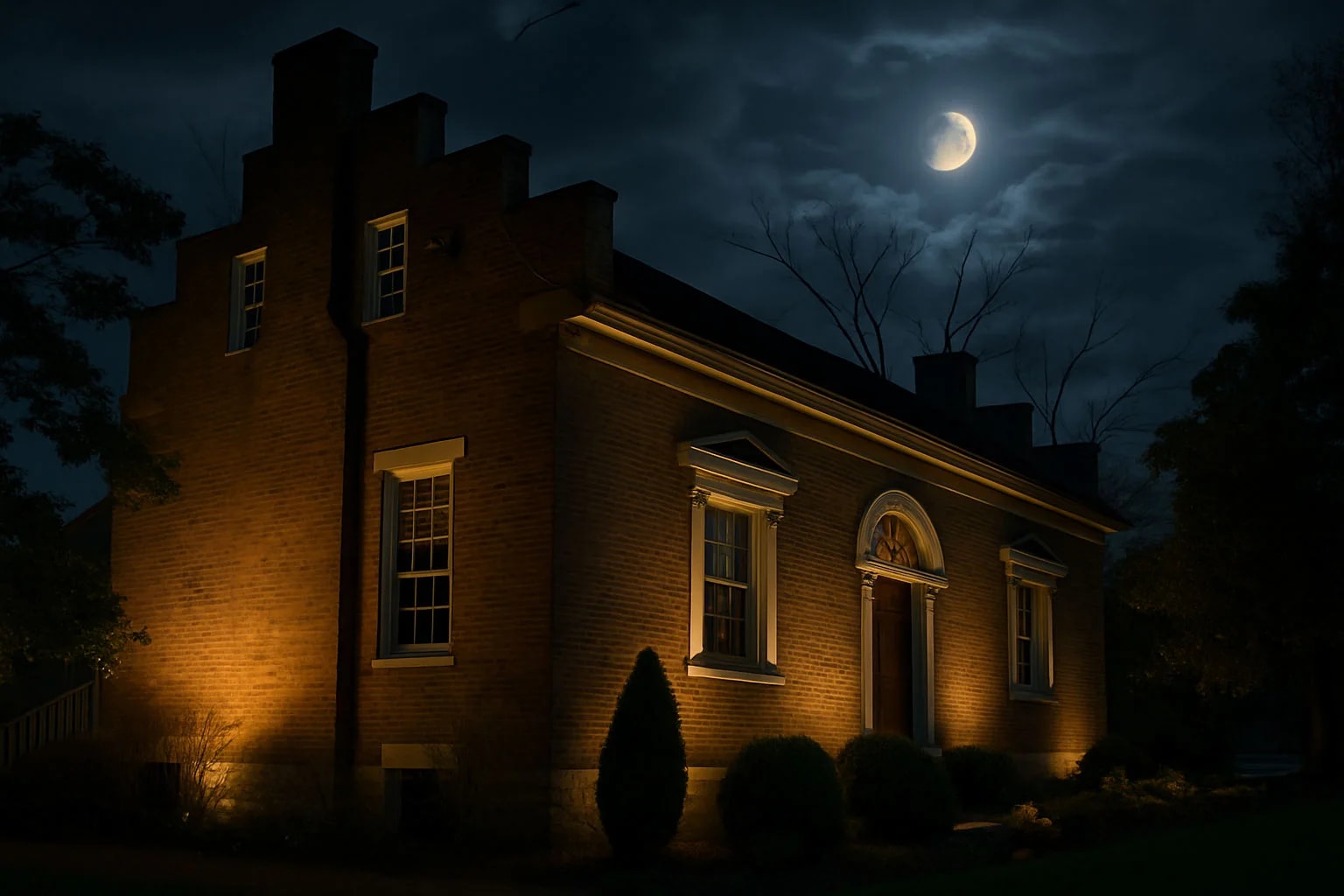
Franklin, TNNot open to the public

Cherry Manor

Also known as: 137 Third Avenue North

c. 1820Woman at the window

A survivor from Franklin's earliest decades whose many lives, as home, girls' school and offices, gave it an unusually varied set of ghost stories. The building now stands unoccupied, which makes it a fit for readers who like a story-and-sidewalk stop on a downtown walk rather than a museum visit.

The story people tell

The story most often told is of a pale woman, sometimes described in white, seen at an upstairs window when the building was believed empty, or near the staircase and upper hallway. Some accounts call her Peggy, though no record says who she was. People familiar with the house also describe books falling from shelves, shaking chandeliers, footsteps in empty rooms and the feeling of being watched; some versions tie the woman upstairs to the house's years as a girls' school.

History we checked · 2 sources

Today: Not open to the public (vacant historic building, formerly offices; seen from the street) — verified October 28, 2026 (source)
Franklin, TNGuided entry only

Lotz House

Also known as: Lotz House Museum

1858Searching mother

A craftsman's showpiece home that stood in the path of the Battle of Franklin, where the stories mix grieving parents, lost children and soldiers. Choose it for its intimate scale and its pairing with the Carter House across the road, which the Lotz family fled to during the fighting.

The story people tell

According to visitors, a little girl's face appears at the upstairs windows when the house is empty, and some describe small hands tugging at their clothes. A woman in period dress is said to stand on the staircase holding a candle and calling 'Where is Ann?', which some connect to Margaretha Lotz. Guests also report sounds of battle outside, uniformed figures around the exterior, and a woman heard weeping in different rooms.

History we checked · 3 sources

Today: Entry only with an authorized guided tour: privately run house museum; interior seen on guided tours — verified October 28, 2026 (source)

Franklin, TNOpen to the public

Shuff's Music

Also known as: historic Gaut House

Lady in the rocking chair

A working music shop inside a historic Franklin house, where the ghost stories come from the employees, visitors and children who spend time inside. It suits readers who enjoy a haunting tucked into an everyday business, with a Civil War-era woman at its center; browse as a customer and respect lessons in progress.

The story people tell

The story most often told is of a visiting artist who met a woman in an upstairs rocking chair who reportedly said, 'I used to live in this house.' Local tradition identifies her as Sallie Carter Gaut, a Confederate sympathizer said to have lived here during the war. Employees describe a handprint on the old glass above the front door that is said to return after cleaning, and staff, customers and children report footsteps, voices from empty rooms and a woman some say walked through a wall.

History we checked · 2 sources

Today: Open to the public (now a music store and lesson studio; open to shoppers during business hours) — verified October 28, 2026 (source)
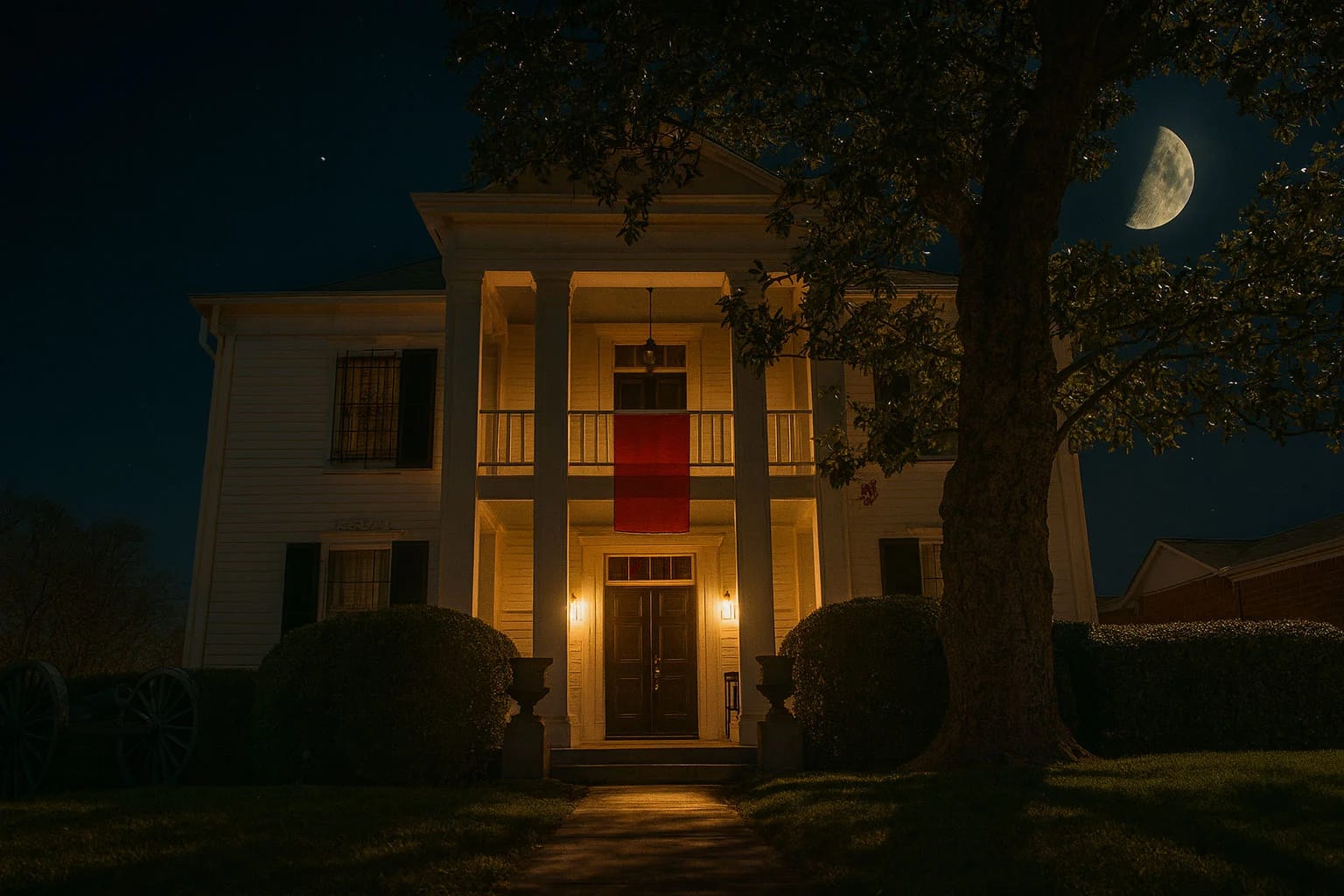
Gallatin, TNPrivate home

Fairvue

Also known as: Isaac Franklin Plantation

about 25 miles northeast of Nashville, in Gallatin

1832Lost child

This is a place to read about rather than visit: an 1830s plantation house built by one of the South's largest slave traders, now a private home ringed by subdivisions and a golf course. Its ghost stories cannot be separated from the history of the enslaved people trafficked by its builder, which makes it a sobering entry rather than a playful one. It is a private residence, and we do not encourage anyone to approach the house.

The story people tell

The stories our article recounts begin with talk of a 'Fairvue Curse.' A later family who lived in the house reportedly described hearing a girl's voice and seeing a little girl, said to be Franklin's daughter Victoria, and a man in a Union uniform roaming upstairs at night. Local legend also tells of a blue light racing across the fields, linked to a servant boy said to have died in a well while carrying a lantern.

History we checked · 3 sources
  • The National Park Service says the Isaac Franklin Plantation, known as Fairvue, was built in 1832 by one of the South's most successful slave traders. (National Park Service)
  • Isaac Franklin and his partner John Armfield ran a slave-trading business that came to be regarded as the largest in the South. (Tennessee Encyclopedia (Tennessee Historical Society))
  • The National Park Service withdrew Fairvue's National Historic Landmark designation in 2005, citing loss of historic integrity. (National Park Service)

Today: Private residence, not open to visitors — we do not encourage anyone to approach the house; please respect the residents' privacy — verified October 28, 2026 (source)

Nashville, TNLimited access

Two Rivers Mansion

1859Lady in Black

An Italianate plantation house now owned by the city and used as an event venue, so its ghost stories come largely from staff closing up after weddings and parties. It suits readers who want a lived-in, low-menace haunting rather than a tragedy; the interior is generally reached through events rather than daily tours.

The story people tell

Event staff have reported flickering lights and floating orbs after lock-up, footsteps and the sound of a laughing crowd after guests have left, doors that open on their own and objects that turn up somewhere else. The house also has its own 'Lady in Black,' a dark figure said to glide through the mansion and across the neighboring golf course; one popular explanation is that she is a McGavock woman still making her daily rounds.

History we checked · 3 sources
  • David McGavock built the mansion in 1859 for his bride, Willie Elizabeth Harding, though it was not finished until the 1870s. (Friends of Two Rivers Mansion)
  • Mary Louise Bransford McGavock, the last of the McGavock family, returned to Two Rivers in 1954 and remained there until her death in 1965. (Friends of Two Rivers Mansion)
  • After her death the Metropolitan Government of Nashville and Davidson County acquired the property and set aside a 14-acre historic site. (Friends of Two Rivers Mansion)

Today: Limited public access: Metro Parks historic house used for private event rentals and occasional public events; no regular public hours — verified October 28, 2026 (source)

Chattanooga, TN (unconfirmed)Status not confirmed

The Former Lee House

Civil War family

Read this for a full Civil War household tale, with colonel, mourning mother, servants, a soldier in the garden and a pianist daughter, but know that it cannot be pinned to a known Chattanooga building. Treat it as local lore to enjoy, not a house to go looking for.

The story people tell

The story our article tells is of a Greek Revival mansion where the Lee family is said to linger. A man in a Confederate officer's uniform is described reading at the study desk before vanishing, with boots pacing from desk to window and a smell of pipe tobacco. The legend says the colonel's wife, Elizabeth, who lost two children to scarlet fever, sits rocking in the upstairs nursery in a black mourning gown, weeping or singing lullabies. Servant figures are reported cooking in the kitchen and carrying linens up the stairs, a young soldier is said to wait beneath an old magnolia in the garden, and piano music credited to the daughter, Rebecca, is heard from an empty parlor.

Today: We could not confirm this house's current status or public access (checked October 28, 2026)

Eureka Springs, AR (unconfirmed)Status not confirmed

The Ellis House

We write about Eureka Springs but do not run tours there.

Lingering doctor

This one is for readers who like spa-town lore: a hillside doctor's house tied to the era of healing-water seekers, told with whispers, fogged glass and a shoeless child. The house cannot be matched to a known address, so it is a tale to read rather than a stop.

The story people tell

According to the legend in our article, a reclusive doctor who treated patients by lamplight never left his hillside house. Locals reportedly called it the house with the cold windows, because its glass fogs in any season and passersby feel sudden chills. Residents are said to hear whispers that call their names and old-time music with no radio playing; investigators describe heavy pressure on the chest and a stern male voice saying 'Be still,' 'Not yet' and 'She's mine.' A woman in white is said to watch from an upstairs window at dusk, and children tell of a little boy with no shoes on the stairs who leaves muddy footprints.

Today: We could not confirm this house's current status or public access (checked October 28, 2026)

Louisiana

French Quarter townhouses with courtyards and iron galleries, among them two house museums, a private home whose history of cruelty became one of the city's best-known ghost stories, and the site of Marie Laveau's cottage.

New Orleans, LAGuided entry only

Beauregard-Keyes House

Also known as: Le Carpentier House

1826Civil War soldiers

A French Quarter house museum where a visitor can tour the rooms and walled garden tied to two very different residents, a Confederate general who rented it and a novelist who restored it. Its ghost lore leans toward battlefield echoes, making it a fit for readers drawn to Civil War stories set far from any battlefield.

The story people tell

The story most often told is of Civil War soldiers in grey or butternut uniforms who appear, stare vacantly, and fade away. Accounts collected after World War II describe passersby hearing gunfire, groans and shouting and smelling musket smoke near the house. Frances Parkinson Keyes herself wrote that General Beauregard's ghost poked around at night looking for his boots.

History we checked · 3 sources

Today: Entry only with an authorized guided tour: house museum owned by the Keyes Foundation; interior seen on guided tours; check the museum's schedule — verified October 28, 2026 (source)

New Orleans, LAPrivate home

Gardette-LePrete House

Also known as: the Sultan's Palace

1836Massacre legend

A grand 1836 Greek Revival corner house with lacy iron galleries whose fame rests on a massacre legend that no record supports. Pick it for the gap between story and history: the tale is lurid, the documented past is a dentist, a planter and a foreclosure. It is a private residential building. It stands at 716 Dauphine Street. It is a private residence, and we do not encourage anyone to approach the house.

The story people tell

The legend, as our article tells it, says a man claiming to be a sultan's brother leased the house, and after months of music and opium-scented parties, blood was found running down the front steps after a stormy night, with the household slaughtered and the sultan buried alive in the courtyard. Our article notes no record supports the tale. Residents have since described a dark figure at the foot of a bed, keys that go missing, and a dog that seemed to be pushed down the stairs; others tell of a Confederate soldier and a woman.

History we checked · 2 sources

Today: Private residence, not open to visitors — we do not encourage anyone to approach the house; please respect the residents' privacy — verified October 28, 2026 (source)

New Orleans, LAGuided entry only

Hermann-Grima House

1831Genteel family spirits

A restored 1831 French Quarter townhouse that is toured with a guide, complete with courtyard, open-hearth kitchen and quarters for the enslaved people who worked there. Its ghost stories are gentle ones, about scents and kindnesses rather than fear, so it suits readers who want history first and a light haunting second.

The story people tell

A former director told the Times-Picayune in 1991 that the house's ghosts 'never do unpleasant things' and instead seemed to warm the rooms on cold mornings. Staff accounts describe the scent of roses linked to Mrs. Grima and lavender linked to Mrs. Hermann, even when no flowers were present. One story relayed to our writers tells of visitors who took a period-dressed couple in the lobby for actors, only to be told no actors were working.

History we checked · 3 sources

Today: Entry only with an authorized guided tour: house museum run by The Woman's Exchange; interior seen on scheduled guided tours; check the museum's schedule — verified October 28, 2026 (source)

New Orleans, LAPrivate home

LaLaurie Mansion

Also known as: LaLaurie House

1830sEnslaved victims

The French Quarter house where, in 1834, a kitchen fire exposed seven tortured enslaved people and a crowd nearly tore the building down. Choose it for a story where documented cruelty and later embellishment are tangled together, and where the ghosts are said to be the victims rather than the owner. It stands at 1140 Royal Street. It is a private residence, and we do not encourage anyone to approach the house.

The story people tell

Many of the hauntings told here are attributed to the enslaved people held in the house. People report moaning from a room where they were said to be kept, phantom footsteps, and a heavy, negative feeling just standing outside. One of our guides has described a sharp tug on her bag with no one there, and, on another tour, street lamps that had been dark for weeks flickering on when she spoke the name of Leia, a young enslaved girl said to have fallen to her death in the courtyard.

History we checked · 3 sources

Today: Private residence, not open to visitors — we do not encourage anyone to approach the house; please respect the residents' privacy — verified October 28, 2026 (source)

New Orleans, LANo longer standing

Site of Marie Laveau's cottage

Voodoo Queen

The St. Ann Street lot where the Voodoo priestess Marie Laveau lived and died, though her cottage was replaced long ago by a later private building. It belongs here as a site story: a pilgrimage-of-the-imagination for readers interested in Laveau and New Orleans Voodoo, viewed from the sidewalk only.

The story people tell

According to local lore, Laveau has been seen walking down St. Ann Street in a long white dress and her tignon. Guests who stayed in the later building on the site have described hearing chanting and drumming coming from the living room at night, then finding a single pristine feather on the floor with every window locked. Others have described a shadowy figure glaring from a corner and the feeling of being held down in bed.

History we checked · 3 sources

Today: The house no longer stands here — original Laveau cottage is gone; a later shotgun double on the lot is privately owned and not open to the public — verified October 28, 2026 (source)

Texas

Galveston's grand Broadway houses, built from the wealth of its port and survivors of the 1900 storm, lead this group, with San Antonio homesteads and castles, Austin's governor's mansion and a campus house, and two Fort Worth mansions.

Galveston, TXLimited access

1859 Ashton Villa

1859Independent sisters

An antebellum Italianate mansion on Broadway whose ghost stories belong to two very different sisters, an independent world traveler and a sister who sought refuge there after a hard marriage. It suits readers interested in women's lives in Victorian Texas. The interior now opens mainly for events, so check the historical foundation's calendar.

The story people tell

According to staff and visitors, Bettie Brown is seen in the Gold Room and at the top of the staircase, and a tour guide reported a blonde woman in a turquoise gown holding an ornate fan on the second-floor landing. Bettie's chest of drawers is said to lock and unlock itself, and a ceiling fan reportedly kept turning after being switched off on her birthday. A caretaker described piano music and a woman in nineteenth-century dress who vanished, and some believe the musician is her sister Tilly. Visitors also report a man's voice arguing with an unseen woman.

History we checked · 4 sources

Today: Limited public access: Galveston Historical Foundation event venue; interior open only for rentals and occasional ticketed events such as seasonal ghost tours — verified October 28, 2026 (source)

Galveston, TXOpen to the public

Bishop's Palace

Also known as: Gresham House

1887–1893Watchful builders

A towering stone Victorian on Broadway that is easy to visit and rich in detail, from carved stonework to painted ceilings. Its ghost lore is gentle, centered on the builders who are said to keep watch over their home, which makes it a good choice for families or anyone who wants architecture first and a light chill second.

The story people tell

The story most often told is that Walter Gresham still paces the halls, with some saying he grows more active during hurricanes, as if keeping watch over the house that rode out the 1900 storm. Josephine Gresham's card box, which remains in the home, is said to move on its own. Some visitors also report being pushed, scratched or tripped by an unseen presence near the front of the house.

History we checked · 3 sources

Today: Open to the public (house museum run by Galveston Historical Foundation; self-guided tours daily, with occasional special guided tours) — verified October 28, 2026 (source)
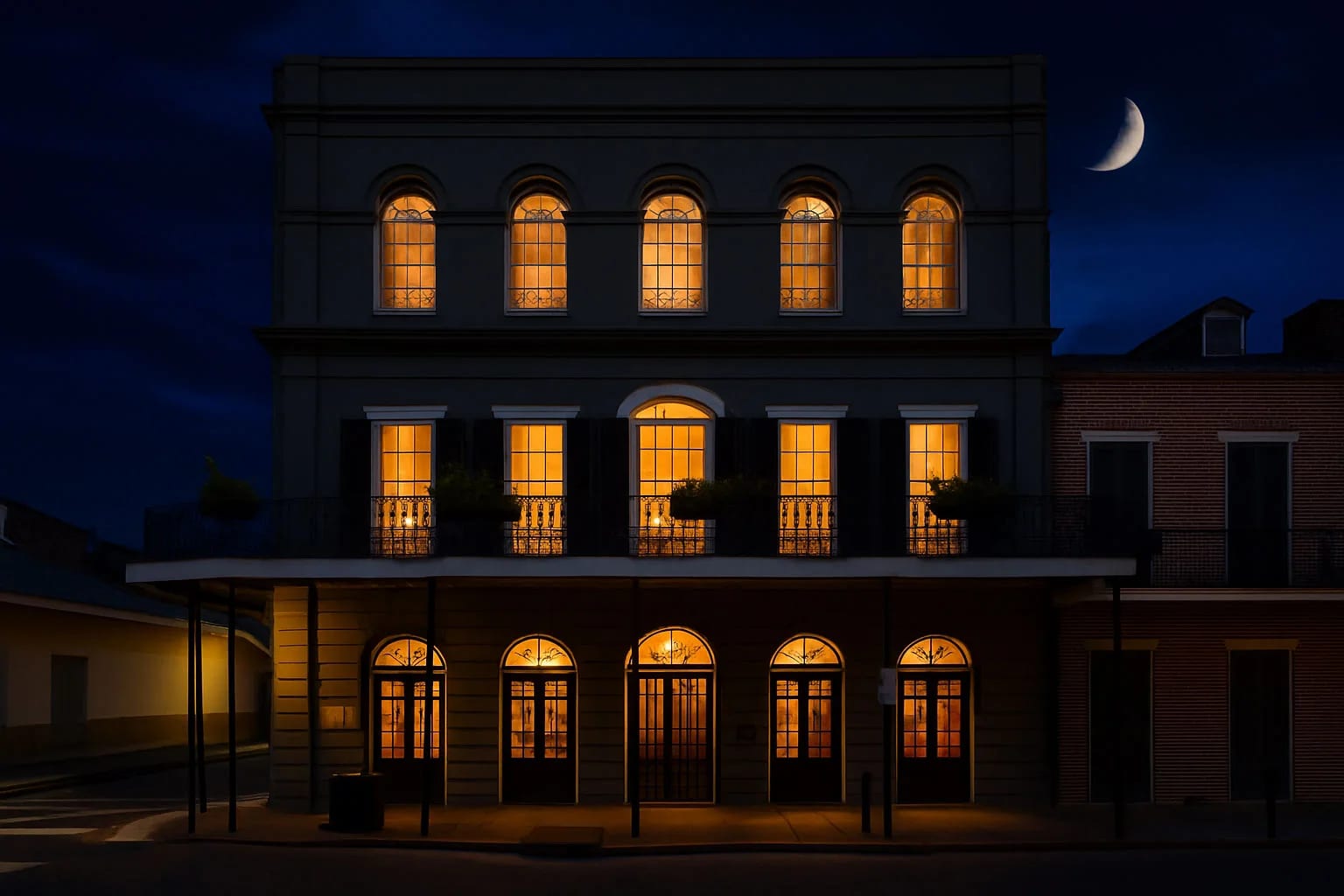
Galveston, TXOpen to the public

Moody Mansion

Also known as: Willis-Moody Mansion

1895Estranged widow

A 31-room Romanesque Revival mansion that tells the story of one of Texas's great business families, furnished with their own belongings. Its ghost lore is quiet and centers on the lonely first owner, so it suits history lovers who want a full house-museum visit with a faint supernatural thread rather than a dramatic haunting.

The story people tell

The story told here is modest: guests have reported disembodied voices and footsteps with no clear source, and some wonder whether Narcissa Willis, who reportedly lived there estranged from her children, still considers the house her own. Many of the reports involve photographs, with visitors saying blurred figures or faces appear in pictures taken at the house.

History we checked · 3 sources
  • Narcissa Willis began the house in 1893 after her husband's death, and it was completed in 1895 to designs by architect William H. Tyndall. (Clio)
  • After the 1900 hurricane drove off other bidders, William Lewis Moody Jr. bought the house for $20,000. (Clio)
  • Mary Moody Northen lived in the house from 1954 to 1983. (Moody Mansion (official site))

Today: Open to the public (house museum and event venue; open for tours most days, check hours before visiting) — verified October 28, 2026 (source)

Galveston, TXStatus not confirmed

Stewart Mansion

Also known as: Isla Ranch

1926Pirate legend

A 1920s West End estate whose legends reach back past its builders to pirates and the island's earliest history, and whose most lurid tale is one the records disprove. It is best read as a story about how ghost lore grows around a long-neglected building; it is not open to visitors and its future is uncertain.

The story people tell

According to local legend, the property's caretakers have heard cannon and musket fire and screams, and phantom pirates are said to patrol its edges. One visitor reportedly saw a woman in rags wearing a necklace of bones. The best-known tale claims Maco Stewart killed his family and hid them in the walls, a story that the family's burial records contradict.

History we checked · 3 sources

Today: We could not confirm this house's current status or public access (checked October 28, 2026) (source)

Galveston, TXStatus not confirmed

Van Alstyne House

Attic presence

Pick this for a Galveston tale that ties the 1900 storm to a single attic spirit, with an antiques-shop era that adds odd modern touches. The house behind the story could not be pinned down, so read it as island lore rather than an address.

The story people tell

The story told about the Van Alstyne House centers on 'the man in the attic.' The legend says the family's grand staircase sheltered about fifty neighbors during the Great Storm of 1900, and some who tell the tale wonder whether the attic presence is the house's original owner. While an antiques business is said to have used the house, accounts describe toy trucks gliding across the floor on their own, alarms and security sensors going off with nobody there, and voices with European accents in empty rooms. Some people describe the activity as a replaying imprint, others as something that responds to the living.

Today: We could not confirm this house's current status or public access (checked October 28, 2026)

Leon Valley, TXLimited access

Huebner-Onion Homestead and Stagecoach Stop

in Leon Valley, about 10 miles northwest of downtown San Antonio

1858Pioneer family

A limestone frontier homestead and former stagecoach stop on the old Bandera road, now set in a city natural area. The interior is not regularly open, so it suits readers who want Texas Hill Country pioneer history and a quiet domestic haunting rather than a museum visit.

The story people tell

According to our article, the Onion family, who lived here after Joseph Huebner's death, told of stairs creaking as if someone were climbing them, and a family member is said to have written that several relatives had the same experience. Later accounts describe a laundry press heating on its own, shattering plates, piano notes and the sound of horse hooves crossing the yard, as if the old stagecoach stop were still in use.

History we checked · 2 sources

Today: Limited public access: historic homestead on city natural-area parkland; grounds host Leon Valley Historical Society events and open houses; house interior not regularly open — verified October 28, 2026 (source)

San Antonio, TXLimited access

Lambermont

Also known as: Terrell Castle

1894Tragic owner

A four-story limestone castle built for a diplomat who brought Belgian and French chateau ideas home to Texas. It is a private event and lodging venue rather than a museum, so it suits readers drawn to unusual architecture or those booking an event, with ghost lore that is mostly footsteps and sounds.

The story people tell

Staff and guests have shared stories of a small TV sent tumbling from a table, footsteps in the hallways loud enough that housekeepers say they mistake them for coworkers, the sound of children playing upstairs and cigar smoke in the library. Local stories tie the activity to tragedies said to have happened in the house, including the death of Edwin Terrell in 1910.

History we checked · 3 sources
  • Architect Alfred Giles was commissioned in 1894 to build the limestone castle for Edwin Holland Terrell, a former U.S. Minister to Belgium. (Hoodline)
  • Terrell named the house after Belgian diplomat Baron Auguste Lambermont. (Hoodline)
  • The Terrell family lived in the house until 1910. (Texas State University Libraries)

Today: Limited public access: privately owned event venue with some boutique lodging; access by booking events or stays; property listed for sale in 2026, so status may change — verified October 28, 2026 (source)

San Antonio, TXNo longer standing

The Gillespie Mansion Legend

Urban legend

This entry is for readers interested in how urban legends form: a San Antonio tale, repeated for decades, about a hidden child and a household tragedy, long known by an outdated and derogatory local nickname, the “Midget Mansion.” Our article treats every version as unsupported, and the house itself is gone, so there is nothing to visit.

The story people tell

The legend, as our article retells it while noting that none of it is supported by evidence, comes in several versions. In one widely told version, a wealthy man ashamed of a child born with dwarfism built a smaller, scaled-down house on his property and kept the child hidden there with servants. In one telling he killed everyone in a rage and set the house on fire; in another the servants turned on the family and then themselves. People say the ghosts of those killed walk the grounds, with footsteps, figures and lights in the windows, objects thrown by unseen hands, and spirits that chase trespassers, though the story holds that no one has been hurt.

History we checked · 1 source
  • The San Antonio Current reports that vandalism and a fire took their toll on the house, which was demolished, and that the site near the Medical Center is now luxury condominiums. (San Antonio Current)

Today: The house no longer stands here — demolished; the site is now occupied by condominiums — verified October 28, 2026 (source)

San Antonio, TXLimited access

Victoria's Black Swan Inn

Also known as: White Gables

Lost love

A Salado Creek farmhouse turned wedding and event venue, whose ghost lore is a 20th-century love story rather than a frontier legend. The venue itself hosts events, so it suits readers who want a haunted house they can enter at a public event, with a story rooted in one family's mid-century losses.

The story people tell

According to local legend, Joline Woods Street and her husband Park Street still haunt the house. Guests report a young woman seen sitting on the bed in an upstairs bedroom, a heavy feeling in a downstairs room, and a man said to stalk angrily through the house, along with temperature drops, unexplained noises and lights switching on and off. Some also describe a child spirit said to play pranks when living children are present.

History we checked · 2 sources

Today: Limited public access: historic house now a wedding and event venue; no lodging; open for booked events and the venue's own public events — verified October 28, 2026 (source)
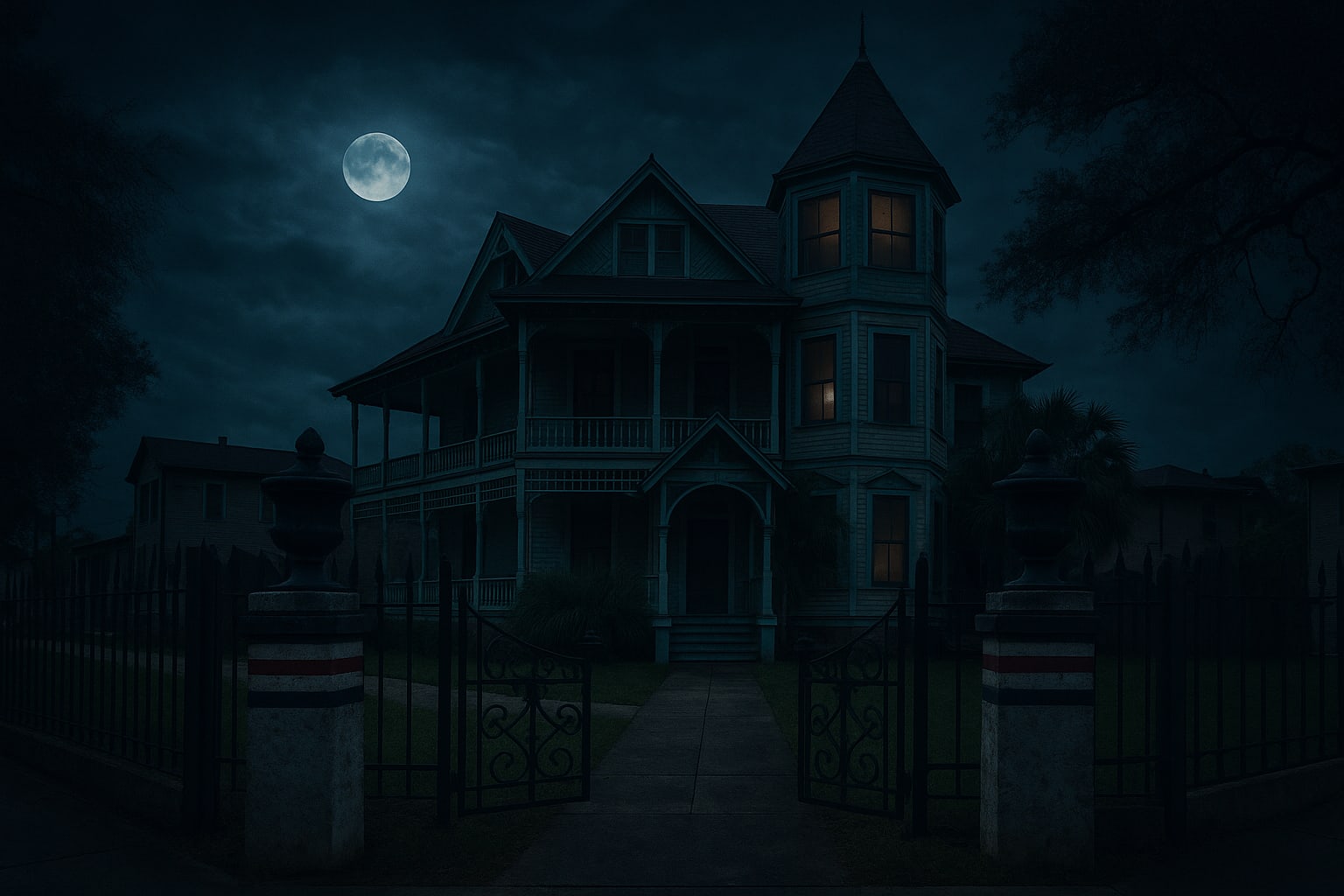
Austin, TXNot open to the public

Littlefield House

Also known as: Littlefield Home

1894Disputed campus legend

A lone Victorian mansion on a busy university campus, easy to see from the street though closed inside. It is a good pick for readers interested in how campus legends grow, since its best-known tale is one the family itself has publicly disputed.

The story people tell

The best-known campus legend claims George Littlefield locked his wife Alice in the attic whenever he left, fearing Union soldiers would take her; a great-grandnephew has said there is no basis for the story. Even so, accounts describe piano music upstairs said to be Alice playing, invisible footsteps on the stairs and stray shrieks heard in the house.

History we checked · 3 sources

Today: Not open to the public (university office and event space; not open for public tours; exterior visible from campus) — verified October 28, 2026 (source)

Austin, TXGuided entry only

Texas Governor's Mansion

1856Heartbroken suitor

A working governor's residence where the ghost stories involve the state's own leaders, from Sam Houston to a Civil War governor's family. Free guided tours by reservation let you see a Greek Revival house restored after a 2008 arson attack.

The story people tell

One story told at the mansion concerns Governor Pendleton Murrah's nephew, who, according to legend, shot himself in an upstairs bedroom after the governor's wife's niece rejected his proposal; staff are said to avoid the room, where sobbing and footsteps are reported. Another account holds that during Governor Mark White's term, a light above Sam Houston's portrait that was switched off at night kept being found on again in the morning.

History we checked · 3 sources

Today: Entry only with an authorized guided tour: official residence of the governor; free guided tours by advance reservation only, no walk-ups — verified October 28, 2026 (source)

Fort Worth, TXStatus not confirmed

Castle of Heron Bay

Also known as: Whiting Castle; Lake Worth Castle

1860sDrowned bride

A stone house enlarged into a castle on the shore of Lake Worth, this is a ruin-like place known mostly from the road, with stories that mix a drowned bride, a lost poker bet and a family's misfortunes. It suits readers interested in local legend and lake-country folklore rather than a house they can tour.

The story people tell

According to local legend, the first stone house was meant as a wedding gift, but the bride was found drowned near the lakeshore on the wedding day, and the groom soon married her sister. Since then, people have claimed to see a woman in a white dress running from the property toward the lake before vanishing, or standing in its windows. More recent accounts describe a young man in dark clothing, sometimes only a shadow, watching visitors from the windows; many believe he is the son of a former owner.

History we checked · 1 source
  • A Tarrant County College Collegian report says the Whiting family acquired the property after a previous owner lost it in a poker game, and that a fire later gutted the estate. (The Collegian (Tarrant County College))

Today: We could not confirm this house's current status or public access (checked October 28, 2026) (source)

Fort Worth, TXStatus not confirmed

Thistle Hill

Also known as: Wharton-Scott House

1903Lady in white

A Gilded Age cattle-baron mansion whose ghost stories center on weddings and parties rather than tragedy, with reported glimpses of a woman in a lace gown that guests mistake for a costumed actor. It suits readers drawn to Texas ranching wealth and the social life of early 1900s Fort Worth. Current public access is unclear, so check before planning a visit.

The story people tell

The story most often told is of a lady in a flowing white lace gown seen on the landing of the grand staircase, and a similar woman reported sitting by an upstairs window. Wedding guests have described passing a woman in a long gown they took for a costumed actress, only to be told no staff wear period dress. Others report orchestra music and dancing from the empty third-floor ballroom, and renovation workers in the late 1970s said they saw a man in 1940s clothes walking down the stairs. Many believe the lady is Electra Waggoner Wharton, still hosting her parties.

History we checked · 3 sources

Today: We could not confirm this house's current status or public access (checked October 28, 2026) (source)

Virginia, Maryland & Washington, D.C.

Colonial and early-republic houses in Alexandria, Annapolis and Williamsburg, Baltimore's estates and Poe's rowhouse, and the White House. Several Alexandria entries are legends whose houses have been moved, demolished or cannot be pinned to one building.

Alexandria, VAGuided entry only

Carlyle House Historic Park

Also known as: John Carlyle House

1753Grieving mother

A colonial stone mansion you can tour, with a formal garden behind it in the middle of Old Town. Its ghost lore is tied to a documented family and to a real turning point of the French and Indian War, so the history and the story reinforce each other.

The story people tell

The story told about Carlyle House centers on Sarah Carlyle, who lost several of her children. Museum staff have reported a sorrowful woman in colonial dress in and around the second-floor children's bedchamber, moving as if checking on the children before fading from view. Staff and visitors also describe children's laughter upstairs and in the garden, and some say they have heard men's voices arguing in the empty dining room, which some researchers believe may be an echo of the 1755 congress.

History we checked · 3 sources

Today: Entry only with an authorized guided tour: house museum run by NOVA Parks; interior seen on guided tours; check the schedule before visiting — verified October 28, 2026 (source)

Princeton, NJ (originally Alexandria, VA)No longer standing

Colross

Also known as: Belle Aire; Grasshopper Hall

the house itself now stands in Princeton, New Jersey; its original site was the 1100 block of Oronoco Street in Old Town Alexandria

1799Moved-house legend

Pick this for a ghost story that outlived its setting: the Alexandria legend stays with the town even though the brick house was taken down and rebuilt in New Jersey. It reads best as a tale about land and memory, since there is no Alexandria house left to visit.

The story people tell

The legend told in our article is set not in the house but on land the tale describes as the old Colross estate, now covered by homes. People there are said to see a tall shadow figure standing silently at the edge of a yard before it vanishes, which the story links to an estate overseer who supposedly disappeared and was never found. A woman in eighteenth-century dress is described sobbing with her hands over her face, and the legend says she is the wife of an early owner. Most often reported, according to the tale, are the voices of children crying, laughing and calling for their mothers late at night, along with small footsteps on gravel paths that no longer exist.

History we checked · 3 sources

Today: The house no longer stands here — house moved away: dismantled in Alexandria and rebuilt in Princeton, NJ, where it serves Princeton Day School; the Alexandria block is now redeveloped — verified October 28, 2026 (source)

Alexandria, VANo longer standing

Green's Mansion House

Also known as: Mansion House Hospital

Four unidentified spirits

Choose this for a mystery with no answer: an Old Town tale of four unidentified figures, a man, a woman and two girls. The name most likely points to James Green's Mansion House hotel beside Carlyle House, later a Civil War hospital, though the tale's details do not clearly match that building. Little of it survives, so it is a story to read, not a house to tour.

The story people tell

The story told about Green's Mansion is that people who once worked there describe the same four figures without having compared notes: a man in a dark nineteenth-century suit who seems to be searching for something and fades when spoken to, a dark-haired woman in a white dress, and two girls of about eight to twelve, usually seen together. Accounts also describe footsteps and indistinct conversation in empty rooms, doors and windows moving on their own, sudden cold spots, objects shifted from where they were left, and a steady feeling of being watched. Who the four might be, the tale says, remains a mystery.

History we checked · 3 sources

Today: The house no longer stands here — the hotel no longer stands as built; its surviving portion, restored as the historic Bank of Alexandria building, houses a private business — verified October 28, 2026 (source)

Alexandria, VAPrivate home

Michael Swope House

1780sGhostly family

This one suits readers drawn to gentle, domestic hauntings: the tale is of a whole household still going about its day rather than one angry spirit. It stands at 210 Prince Street and is a private residence; we do not encourage anyone to approach the house.

The story people tell

The legend our article tells is that an entire family never left this Old Town townhouse. Former residents are said to describe measured footsteps starting on the third floor, where the children's rooms were, and coming down the main staircase; parents, children and servants appearing together in doorways; conversations just outside bedroom doors that wake sleepers; and doors struck hard from the other side before swinging open on an empty hall. The story ties the haunting to a Swope family said to have been struck by typhoid in 1847, and many who tell it speak of these ghosts with more affection than fear.

History we checked · 2 sources
  • The Michael Swope House was built between 1784 and 1786 for Michael Swope, a Revolutionary War hero. (ALXnow)
  • A 1976 Alexandria Bicentennial Youth Commission booklet, described by the Office of Historic Alexandria, includes a ghost story set at the Michael Swope House. (Office of Historic Alexandria, City of Alexandria)

Today: Private residence, not open to visitors — we do not encourage anyone to approach the house; please respect the residents' privacy — verified October 28, 2026 (source)

Alexandria, VAStatus not confirmed

The Schafer House

Grieving mother

For readers who like layered Old Town lore: the tale told in our article piles a mourning mother, a fatal staircase and a condemned spy into one house, while the street's recorded history holds a different tragedy, the 1868 lamp fire. WETA places the Schafer family's home and confectionery at 107 North Fairfax Street, a townhouse it says local businesses have since used; our article's house may not be that building, and we do not encourage anyone to approach it or disturb those who work there.

The story people tell

According to the legend our article tells, a woman in black Victorian mourning dress and veil, whom the story names Helena Schafer, is seen standing in the doorway of the old nursery. The main staircase is said to be where one of the family's children fell to his death and where an earlier owner was found after taking his own life. In the backyard, neighbors reportedly see a young man in ragged clothes with his hands bound behind him, described as a Confederate spy said to have been executed there, mouthing words without sound. Residents tell of children's laughter, crying and running feet, lights flickering in sets of three, a television turning to static at 3:17 in the morning, sudden cold in the nursery, and being touched or scratched by something unseen.

History we checked · 1 source
  • WETA's Boundary Stones recounts that Laura Schafer, the 26-year-old youngest daughter of confectioners Christian and Susan Schafer, died on June 29, 1868 after the glass of her lamp cracked in the family's North Fairfax Street home. (WETA Boundary Stones)

Today: We could not confirm this house's current status or public access (checked October 28, 2026)

Fairfax County, VA (Alexandria mailing address)Guided entry only

Woodlawn

in Fairfax County near Mount Vernon, south of Old Town Alexandria

1800–1805Musical hostess

A Federal-era mansion designed by the architect of the U.S. Capitol and built on land from George Washington's Mount Vernon. Visitors can tour the interior in season, and its stories reach from the Washington family to the enslaved people who worked the estate.

The story people tell

The story most often told at Woodlawn is of Nelly Custis Lewis, a harpist: staff and visitors have reported faint harp music from the empty music room, and a woman in a long white gown said to glide along the main staircase and upstairs hall. Staff also describe a man in what appears to be a Confederate uniform in the west wing, children's laughter in the rose garden, and crying and voices from the cellar and kitchen areas where enslaved people worked.

History we checked · 2 sources
  • Dr. William Thornton, who also designed the U.S. Capitol, designed Woodlawn, which was built between 1800 and 1805. (National Park Service)
  • George Washington gave Woodlawn to Eleanor "Nelly" Custis Lewis and her husband, Lawrence Lewis, as a wedding gift. (National Park Service)

Today: Entry only with an authorized guided tour: historic house museum (National Trust site); interior on guided tours only, grounds open on operating days; seasonal, check before visiting — verified October 28, 2026 (source)

Annapolis, MDOpen to the public

Governor Calvert House

Also known as: Historic Inns of Annapolis

We write about Annapolis but do not run tours there.

1728Colonial presences

A hotel on State Circle that grew from a Calvert governor's 1728 house, with an early heating system unearthed behind it. Pick it for its layered history rather than a single legend; its ghost lore is low-key and diffuse, which suits travellers more curious about old Annapolis than about frights.

The story people tell

The Governor Calvert House has no single famous ghost. Guests and staff have reported brief glimpses of figures in hallways and rooms, sometimes described in period dress, along with footsteps in empty corridors, doors opening or closing on their own, cold spots and the feeling of being watched. Our article treats these as accounts gathered over the years rather than a record of events.

History we checked · 3 sources
  • After his term as governor ended in 1727, Charles Calvert bought the State Circle property and in 1728 built a one-story brick dwelling there. (Maryland Historical Trust)
  • Excavations in 1982–84 found a hypocaust, believed to date from Benedict Calvert's ownership in the 1730s, behind the house. (Maryland Historical Trust)
  • The Historic Inns of Annapolis partnership bought the building in 1983 and developed it into the Governor Calvert Inn. (Maryland Historical Trust)

Today: Open to the public (now a hotel (Historic Inns of Annapolis); the preserved hypocaust is displayed inside; check with the hotel before visiting as a non-guest) — verified October 28, 2026 (source)

Williamsburg, VAOpen to the public

George Wythe House

1750sGrieving mother

This brick house on Palace Green was home to George Wythe, a signer of the Declaration and Jefferson's teacher, and briefly Washington's headquarters before Yorktown. It is part of Colonial Williamsburg's interpreted Historic Area, so visitors with admission can stand in the house the legend is set in.

The story people tell

The story most often told here belongs to Lady Ann Skipwith, said to have died in childbirth in an upstairs bedroom; according to local legend her wailing is heard at night, and visitors report a rocking chair creaking in an empty room. Lore also holds that George Wythe's figure is seen at work in his study.

History we checked · 3 sources

Today: Open to the public (Colonial Williamsburg historic site, included with Colonial Williamsburg admission; check the Foundation's site for how the house is currently shown) — verified October 28, 2026 (source)

Williamsburg, VAGuided entry only

Peyton Randolph House

c. 1716Colonial patriot

This rambling red house belonged to Peyton Randolph, president of the first Continental Congress, and later sheltered the French commander Rochambeau during the Yorktown campaign. Guided tours inside are part of Colonial Williamsburg admission, so readers can pair its dark reputation with a look at the rooms themselves.

The story people tell

According to the lore our article repeats, Peyton Randolph himself is said to appear in his study, still at work on Congress business. Other accounts tell of a young girl in colonial dress seen around the house, of soldiers in old uniforms said to search the rooms, and of a large shadow figure that some visitors claim to have sensed in the basement.

History we checked · 3 sources

Today: Entry only with an authorized guided tour: Colonial Williamsburg historic site; interior seen on guided tours included with Colonial Williamsburg admission — verified October 28, 2026 (source)

Baltimore, MDLimited access

Edgar Allan Poe House & Museum

1833–1835Literary ghost

The modest rowhouse where a poor, unknown Poe lived with his aunt and cousin, preserved as a small museum you can visit by reservation. Pick it for the literary pilgrimage: the ghost lore here grows out of Poe's own reputation and his unexplained death in Baltimore.

The story people tell

Visitors and staff have reported a man in dark nineteenth-century clothing glimpsed in a doorway or on the stairs, a figure many assume is Poe himself, and a sense of company in the garret and upper rooms. Some accounts instead describe a heavyset, gray-haired older woman, whom longtime tellers connect to Maria Clemm or Poe's grandmother. Others describe footsteps on the stairs, knocks, cold spots and the feeling of being watched.

History we checked · 2 sources

Today: Limited public access: small house museum run by the nonprofit Poe Baltimore; visits by advance reservation on a limited weekly schedule — verified October 28, 2026 (source)

Baltimore, MDGuided entry only

Evergreen House

Also known as: Evergreen Museum & Library

1850sFamily still at home

A Gilded Age mansion still filled with one railroad family's books, art and furniture, including a private theater decorated by Léon Bakst. Choose it for a quiet museum visit where the eerie feeling comes from how intact the rooms are, not from a tragedy.

The story people tell

Evergreen's lore is about presence rather than tragedy. Visitors and staff have described brief glimpses of figures in period dress in hallways and on a staircase, footsteps and doors in empty rooms, cold spots and the feeling of not being alone. Some who report a female figure link it to Alice Warder Garrett, though our article stresses that no sighting has ever been tied to a specific Garrett.

History we checked · 3 sources

Today: Entry only with an authorized guided tour: historic house museum run by Johns Hopkins; house seen on guided tours; check visitor information before going — verified October 28, 2026 (source)

Baltimore, MDLimited access

Orianda House

Also known as: Crimea Mansion

1850sEmpty-house watcher

An Italianate stone villa standing alone in the woods of one of the country's largest urban parks, built with a fortune made on a Russian railroad. Choose it for an atmospheric park walk with a strange family history attached; the house itself opens only on limited occasions.

The story people tell

The lore here is local and thinly documented, as our article says. Park visitors and event guests have described a face or figure at the mansion's windows when it was supposed to be empty, and a person seen near the tree line or an old carriage path who is gone when approached. Others report footsteps above empty rooms, doors closing on their own and a heavy sense of being watched.

History we checked · 3 sources

Today: Limited public access: historic house in a city park; the park is open, the mansion is leased and opens only on limited days or for events and tours — verified October 28, 2026 (source)

Washington, DCLimited access

The White House

1792Presidential spirits

The executive residence's ghost lore comes partly from the people who lived there, from first ladies to presidents' children, and the White House Historical Association keeps its own account of the stories. Public tours are limited to selected rooms and must be requested well ahead, so for most readers this is a story told from Pennsylvania Avenue.

The story people tell

The story most often told centers on Abraham Lincoln, said to appear in the Lincoln Bedroom; Grace Coolidge is among those reported to have seen him. Staff have described the smell of soap and lavender in the East Room, where Abigail Adams once hung laundry, and lore holds that Andrew Jackson's laughter echoes from the Rose Room and that young Willie Lincoln has been seen in the halls.

History we checked · 3 sources

Today: Limited public access: working residence and office of the President; free public tours of selected rooms must be requested in advance through a Member of Congress (foreign visitors through their embassy); visible from the street and Lafayette Square — verified October 28, 2026 (source)

Pennsylvania, New Jersey & New York

Philadelphia's founding-era houses, two Gettysburg homes caught in the 1863 battle, a Gilded Age family home in Pittsburgh, a Victorian estate in Cape May and a Greenwich Village brownstone.

Philadelphia, PANo longer standing

Alexander Hamilton's Philadelphia home

Also known as: site

1790sFounding father

Choose this for a founding-era legend in the old capital: a Treasury Secretary still arguing about banks and tariffs. The rented house he lived in is long gone, so what remains is the story and a marked spot near Walnut and Third Streets.

The story people tell

The legend our article tells is that the house where Alexander Hamilton lived in Philadelphia is haunted by revolutionary-era figures. People report a short man with auburn hair, matching descriptions of Hamilton, who appears deep in thought or writing. Others say they hear heated debate about banks, tariffs and finance in empty rooms, and describe sudden cold spots where he would have worked, along with a feeling of being watched.

History we checked · 2 sources

Today: The house no longer stands here — house demolished long ago; a plaque near Walnut and South 3rd Streets marks the location — verified October 28, 2026 (source)

Philadelphia, PAOpen to the public

Betsy Ross House

c. 1740Devoted craftswoman

A modest colonial rowhouse museum in Old City that anyone can walk through on a ticketed visit, with narrow stairs and low ceilings that keep the scale personal. Its ghost story centers on a working craftswoman rather than a statesman, a good fit for families and first-time visitors to historic Philadelphia.

The story people tell

The sighting most often described is a woman in colonial dress on the narrow staircase between floors, whom many visitors take to be Betsy Ross herself. Visitors and guides also describe the sound of sewing and a motherly presence in the house.

History we checked · 2 sources
  • Visit Philadelphia describes the house as a circa-1740 residence where Betsy Ross ran an upholstery shop. (Visit Philadelphia)
  • Betsy Ross was widowed three times and died in 1836 at age 84. (Visit Philadelphia)

Today: Open to the public (house museum run by Historic Philadelphia, Inc.; ticketed self-guided visits; seasonal schedule, check before visiting) — verified October 28, 2026 (source)

Philadelphia, PANot open to the public

Bishop White House

1787Faithful clergyman

A brick Federal-era townhouse inside Independence National Historical Park, home of the founding figure of the Episcopal Church in America. It is currently closed, so this is a story you take in from the Walnut Street sidewalk; it suits readers interested in how the city's epidemic years shaped its ghost lore.

The story people tell

According to Darcy Oordt's book Haunted Philadelphia, as our article relates, the house is said to be haunted by several former residents, and even a mysterious ghost cat. Lore connects the bishop to the epidemic victims he ministered to.

History we checked · 2 sources

Today: Not open to the public (National Park Service historic house; currently closed, exterior visible from Walnut Street) — verified October 28, 2026 (source)

Pittsburgh, PAGuided entry only

Clayton

Also known as: the Frick Mansion

We write about Pittsburgh but do not run tours there.

1882Grieving family

A Gilded Age industrialist's family home kept as a museum, where the ghost story grows out of a family's grief rather than a crime. The rooms can be seen on a museum tour, so it suits readers who want detailed, well-kept history paired with a gentle child-ghost tale.

The story people tell

The story told at Clayton centers on Martha Frick, the young daughter of Henry Clay Frick. According to the lore, a child's laughter and small running footsteps are heard in the upstairs halls, and some visitors describe glimpsing a little girl in a white dress who vanishes when approached. Others report the scent of cigar smoke in Frick's study and a stern, watchful presence they attribute to Frick himself.

History we checked · 2 sources
  • Henry Clay Frick and Adelaide Howard Childs Frick bought Clayton in 1882, and architect Frederick J. Osterling turned it into a 23-room mansion in 1891. (The Frick Pittsburgh)
  • Clayton opened to the public in 1990 as part of the vision of Helen Clay Frick. (The Frick Pittsburgh)

Today: Entry only with an authorized guided tour: historic house museum on The Frick Pittsburgh campus; interior seen on tours that start at the visitor center; check the museum before visiting — verified October 28, 2026 (source)

Pittsburgh, PAStatus not confirmed

Congelier House

Also known as: the 'House the Devil Built'

We write about Pittsburgh but do not run tours there.

Murderous wife

A house that exists only in story: a grim Pittsburgh haunted-house legend set on the North Side, with no building left and little in the record to back it. Include it for readers who enjoy tracing how a legend grows, here around a real 1927 disaster, rather than for a place to see.

The story people tell

The legend, as our article tells it, says the house was built in the 1860s and that in 1871 a wife murdered her husband and a servant there, and that later residents and servants met violent ends or went mad. The apparition most often described is a Victorian woman carrying an axe, said to be the murderous wife, and neighbors were said to hear screams at night and see faces in the windows of empty rooms. According to the story, the house was finally destroyed in an explosion in 1927.

History we checked · 1 source
  • On November 14, 1927, a gas-tank explosion on Pittsburgh's North Side killed 28 people after workers repairing the tank set off a dangerous mix of gas and oxygen. (Pittsburgh Post-Gazette (The Digs))

Today: We could not confirm this house's current status or public access (checked October 28, 2026)

Gettysburg, PAGuided entry only

Jennie Wade House

Also known as: Georgia Wade McClellan House

1863Civilian casualty

A small brick house on Baltimore Street where one civilian death came to stand for the town's whole ordeal at Gettysburg. It suits a reader who wants a single, personal story rather than a battlefield, and the house is a museum you can see on a guided tour, with the door the fatal bullet passed through.

The story people tell

The story most often told is that Jennie Wade never left the house where she died. Visitors and paranormal enthusiasts describe a young woman in a long dress moving through the rooms and hallways, and some say they have caught the scent of freshly baked bread, a reminder of her final task. Others report soft footsteps and voices whispering her name.

History we checked · 3 sources

Today: Entry only with an authorized guided tour: house museum; interior seen on guided tours, check hours before visiting — verified October 28, 2026 (source)

Gettysburg, PALimited access

Tillie Pierce House

Also known as: James Pierce House

1829Battle-era civilians

This is the family home of a teenage girl whose written account of the battle is still read today, so its stories are tied to a named, documented civilian witness. It is now a small inn, which makes it a choice for readers who would rather spend the night inside a battle-era house than visit one by day.

The story people tell

Guests say they have heard children playing on the stairs and in the hallways late at night when no children were staying at the inn. Others describe a dark, silent figure of a man in a long coat on the staircase who simply vanishes, and a woman heard sobbing in an upstairs bedroom. Some believe the spirits are tied to the Pierce family, to soldiers who died in the house, or to Tillie herself.

History we checked · 2 sources
  • The James Pierce House on Baltimore Street was the home of Matilda Jane 'Tillie' Pierce and was constructed in 1829. (Gettysburg Daily)
  • During the battle Tillie went to help nurse at the Jacob Weikert house, while her mother nursed wounded Union soldiers in the family home. (Gettysburg Daily)

Today: Limited public access: now a bed-and-breakfast inn; interior for overnight guests — verified October 28, 2026 (source)

Cape May, NJGuided entry only

Emlen Physick Estate

Also known as: Physick House Museum

1879Woman at the window

For readers who want to walk through an intact Victorian household rather than read about one, this dark, angular Stick Style house museum offers rooms furnished as a family lived in them. Its lore is quiet and domestic, centered on a woman at an upper window, and it ties directly to a real preservation fight that saved the house.

The story people tell

The story most often told is of a woman in a pale, old-fashioned dress seen at the upper windows, or passing a doorway inside; many who tell it believe she is Frances Ralston, Emlen Physick's mother, while others suggest his aunt Emilie. Staff have reported footsteps crossing closed upper floors, doors opening and closing on their own, and hearing their names called when alone. Visitors describe murmured voices and the feeling of being watched, and restoration workers were among the first to report sounds they could not trace.

History we checked · 3 sources
  • Cape May MAC describes the house as the 1879 Emlen Physick Estate and offers house tours in the Physick House Museum throughout the year. (Cape May MAC (Museums+Arts+Culture))
  • Emlen Physick Jr., born in 1855, trained as a physician but never practiced, and died in 1916. (The History Girl)
  • In 1970 residents organized to stop plans to demolish the mansion, forming the Mid-Atlantic Center for the Arts, now Cape May MAC. (The History Girl)

Today: Entry only with an authorized guided tour: Victorian house museum run by Cape May MAC; interior seen on scheduled guided tours; check the MAC schedule before visiting — verified October 28, 2026 (source)

New York, NYPrivate home

14 West 10th Street

Also known as: the 'House of Death'

1850sLiterary ghost

A Greenwich Village brownstone known for its literary past and its long-whispered nickname, best taken as a story and a streetscape rather than a visit. It suits readers interested in how a celebrity resident and a dark modern reputation grew into a city ghost legend. The building holds private apartments, so it is a place to read about, not to visit. It is a private residence, and we do not encourage anyone to approach the house.

The story people tell

Residents over the years have reported many encounters here, and psychics have claimed that more than 20 spirits remain. According to the stories, a woman in white has been seen on the staircase, and Mark Twain himself is said to appear in a white suit near the stairs. Tenants describe footsteps, doors opening and closing on their own, cold spots, and a shadowy figure at the foot of a bed.

History we checked · 2 sources
  • The house was built in the 1850s and was later converted from a single-family home into a 10-unit apartment building. (6sqft)
  • Mark Twain lived at the address for about a year, from 1900 to 1901. (6sqft)

Today: Private residence, not open to visitors — we do not encourage anyone to approach the house; please respect the residents' privacy — verified October 28, 2026 (source)

New England

Salem's houses connect to the 1692 witch trials and to Nathaniel Hawthorne; Boston and Cambridge add a Beacon Hill house linked to a notorious 1849 murder and one of the oldest houses in Cambridge.

Cambridge, MANot open to the public

Hooper-Lee-Nichols House

in Cambridge, about 4 miles west-northwest of downtown Boston

1685Colonial widow

A first-period Cambridge farmhouse later remodeled into a Georgian mansion, this is a house whose ghost lore spans three centuries: a destitute colonial widow, Revolutionary-era soldiers and a Victorian family tragedy. Its longtime role as a historical society headquarters has ended and the house is being sold, so for now it is a story to read and an exterior to see from Brattle Street.

The story people tell

One story centers on Elizabeth Hooper, the first owner's widow, who is said to glide across the floor in the white sheet her body was reportedly found in. Legend also places five Hessian soldiers playing cards in the library, though our article notes no records support their supposed burial on the property. Others describe a Nichols granddaughter, said to have died after stepping on lit fireworks, moving objects and weeping softly. A former director of the historical society told an author that doors opened and closed and objects moved, and resident fellows reportedly described encounters near the archives.

History we checked · 3 sources
  • History Cambridge dates the house to 1685 and describes it as the second-oldest house in Cambridge. (History Cambridge)
  • Richard and Elizabeth Hooper bought an 11-acre farm and built a two-and-a-half-story house; Richard died in 1690, and Elizabeth was destitute by her death in 1701. (History Cambridge)
  • Later owner Joseph Lee was a prominent Tory who fled to Boston in 1774 after a Cambridge crowd opposed his royal appointment. (History Cambridge)

Today: Not open to the public (longtime historical-society headquarters now offered for sale for use as a private residence; no regular public hours; exterior visible from Brattle Street) — verified October 28, 2026 (source)

Boston, MANot open to the public

Parkman House

Also known as: Tuckerman-Parkman Mansion

1825Murder victim

A Beacon Hill townhouse whose ghost lore is borrowed from one of Boston's notorious nineteenth-century murder cases. It is a street-view stop only: the building is city-owned and closed, so pick it for the story and the setting facing the Common.

The story people tell

The story told about the house ties it to Dr. George Parkman, killed in 1849 at the Harvard Medical College. According to our article, in 1999 a broken third-floor toilet flooded the house on November 23, the anniversary of the murder, and some people blamed his ghost, since parts of his remains had been hidden in a privy. Our article itself calls a toilet-wrecking spirit far-fetched.

History we checked · 3 sources

Today: Not open to the public (city-owned building used as the Mayor's official reception hall; not open to the public; view from the street only) — verified October 28, 2026 (source)

Salem, MANot open to the public

Grimshawe House

Also known as: the Peabody House

1770Literary romance

A plain wooden house beside a colonial burying ground, best for literature lovers: it is where Hawthorne courted Sophia Peabody, and it takes its nickname from his posthumous romance Dr. Grimshawe's Secret. It is a private building with no public access, so it belongs here for its story.

The story people tell

The ghost lore here is slight and openly debated. Some people believe Sophia Peabody, who was said to stroll the neighboring burying ground with Hawthorne, is a likely presence, and a few claim to have seen her apparition. Hawthorne himself wrote that the house was 'hardly worthy to be haunted.'

History we checked · 2 sources
  • The house was built in 1770, and Dr. Nathaniel Peabody owned it from 1835 to 1841, when his daughters Elizabeth, Mary and Sophia lived there. (History of Massachusetts Blog)
  • Nathaniel Hawthorne began courting Sophia Peabody during the Peabody years and became a frequent visitor to the house. (History of Massachusetts Blog)

Today: Not open to the public (privately owned (Peabody family trust) and being remodeled into apartments; visible from Charter Street only) — verified October 28, 2026 (source)

Salem, MALimited access

Joshua Ward House

Also known as: The Merchant hotel

1784Witch-trial sheriff

A 1784 Federal brick mansion where George Washington spent a night, standing on land tied to Salem's witch-trial sheriff. Today it is a boutique hotel, so the way to experience it is as an overnight guest or from the sidewalk, with a darker, sheriff-centered ghost story than Salem's museum houses.

The story people tell

Local lore holds that the spirit of High Sheriff George Corwin, who carried out arrests during the 1692 witch trials, lingers on his old land, and stories told about the house describe the sensation of invisible hands at the throat. Our article also recounts a dark-haired woman some believe to be an accused witch, said to appear in a 1980s photograph later published by Robert Cahill, along with books pulled from shelves and candles found melted.

History we checked · 2 sources
  • Merchant Joshua Ward built the house in 1784, and George Washington spent the night there on October 29, 1789. (Lark Hotels)
  • The building has served as a home, tavern, office and rare book shop and is now a boutique hotel. (Lark Hotels)

Today: Limited public access: now a boutique hotel (The Merchant); interior is for hotel guests — verified October 28, 2026 (source)

Salem, MALimited access

Ropes Mansion and Garden

1727Tragic accident

A Georgian mansion with a free public garden, where in season visitors can wander fifteen furnished rooms at their own pace. Its ghost lore is tied to a Loyalist judge and a daughter's fatal accident, and its Hocus Pocus fame makes it a natural stop for film fans and history readers alike.

The story people tell

According to local lore, Abigail Ropes, who our article says died after her dress caught fire in the house in 1839, is still heard or seen in the mansion, and some attribute its 2009 fire to her. Others believe Judge Nathaniel Ropes lingers too; a photograph taken during an insurance appraisal is said to show a man's hands on the front-hall couch. Visitors to the garden describe an icy touch and whispering voices.

History we checked · 2 sources
  • The Ropes Mansion was built in 1727-1729 in the Georgian style and renovated in the Colonial Revival style in 1894. (Peabody Essex Museum)
  • A fire in 2009 led to a full restoration, and the house reopened to the public in 2015. (Peabody Essex Museum)

Today: Limited public access: Peabody Essex Museum historic house; self-guided interior visits in season only; the garden is open year-round — verified October 28, 2026 (source)

Salem, MALimited access

Samuel Pickman House

1665Lost child

A rare surviving First Period timber house from the 1660s, standing beside a colonial burying ground near the witch trials memorial. It now serves as the cemetery welcome center, making it an easy stop for readers exploring Salem's Charter Street corner and its darker folklore.

The story people tell

According to local legend, the house was the scene of an 18th-century family tragedy, and the figure people report is a young girl said to be seen at a second-floor window. Visitors describe capturing orbs and faces in photographs, and some say voices like children's are heard nearby at night. Our article is clear that the tragedy itself is oral folklore.

History we checked · 2 sources
  • The Peabody Essex Museum dates the house to 1665, a First Period building standing on its original site. (Peabody Essex Museum)
  • Historic Salem, Inc. restored the house in 1969, and the museum bought it in 1983; it now serves as a welcome center for the Charter Street Cemetery. (Peabody Essex Museum)

Today: Limited public access: owned by the Peabody Essex Museum; used as the Charter Street Cemetery welcome center in partnership with the City of Salem; check before visiting — verified October 28, 2026 (source)

Salem, MAGuided entry only

The House of the Seven Gables

Also known as: Turner-Ingersoll Mansion

1668Colonial family

A 1668 seaport mansion that inspired Hawthorne's novel, now a museum toured room by room, including the hidden staircase. It suits readers who want literature, maritime Salem and colonial architecture together, with ghost lore that the museum itself does not promote.

The story people tell

Local lore tells of a man seen climbing the hidden staircase, a boy said to run and giggle in the attic, and a woman some believe is Susanna Ingersoll, Hawthorne's cousin, reportedly seen walking the halls or looking out the windows toward the garden. Our article notes that museum staff tend to say there are no ghosts here at all.

History we checked · 3 sources

Today: Entry only with an authorized guided tour: museum run by the House of the Seven Gables Settlement Association; the mansion interior is seen on timed tours, grounds pass sold separately — verified October 28, 2026 (source)

Salem, MAOpen to the public

The Witch House

Also known as: Jonathan Corwin House

1675Witch trials

The home of a judge who sat on the 1692 witch trials court, run by the City of Salem as a self-guided museum of 17th-century life. It suits readers who want the witch trials told through a household, with ghost lore that grows from the judge's family as much as his court.

The story people tell

Visitors to the Witch House describe hearing disembodied voices and feeling the chill of an unseen presence. Some attribute it to those accused of witchcraft; others tie it to what our article calls the 'Corwin Curse', a run of early deaths in the judge's family that included four of his children who died in infancy between 1684 and 1690. The house's protective charms, such as a hidden shoe and witch bottles, add to its reputation.

History we checked · 3 sources

Today: Open to the public (city-owned historic house museum with self-guided visits for a fee; seasonal hours, check before visiting) — verified October 28, 2026 (source)

The Midwest

Lincoln's Springfield home, Hull-House in Chicago, St. Louis houses tied to a brewing dynasty and to the 1949 case behind The Exorcist, frontier and campus houses in Kansas City, Indianapolis mansions and a Galena house.

Chicago, ILOpen to the public

Hull-House

Also known as: Jane Addams Hull-House Museum

1889Cursed infant legend

Hull-House is a place where the ghost story is itself documented history: Jane Addams wrote about the weeks when crowds arrived demanding to see a Devil Baby she insisted did not exist. The surviving 1850s mansion is now a university museum about the settlement movement, so the legend comes with a serious historical setting.

The story people tell

The legend, as Addams herself described it, held that a Devil Baby with cloven hoofs, pointed ears and a tail had been brought to Hull-House, and for weeks visitors refused to believe her denials. Our article reports that the story never fully faded: staff are said to describe crying sounds and footsteps from the attic where the baby was supposedly hidden, and a sense of dread near the attic stairs. Others report a sad-looking woman in Victorian clothing at the upper windows, whom some believe to be Addams and others connect to the legend.

History we checked · 3 sources

Today: Open to the public (house museum run by the University of Illinois Chicago in the original Hull Home and Residents' Dining Hall; check hours and tour days before visiting) — verified October 28, 2026 (source)

Springfield, ILGuided entry only

Lincoln Home National Historic Site

1839Grieving mother

A plain two-story family house on a preserved 1850s Springfield block, toured free with a guide, where the stories are about grief rather than fright. Pick it if you want a haunting told quietly through a family's loss, inside rooms a future president actually lived in.

The story people tell

Visitors and staff have described a woman in mid-1800s dress moving through the rooms, sometimes seeming to straighten things, whom many believe is Mary Todd Lincoln. Some report small footsteps, faint laughter or a small figure on the stairs that people connect to Eddie, and a few describe a tall, thin figure in a doorway. Rangers and volunteers tell of objects that will not stay put, a rocking chair that moves on its own, doors found open or closed, and cold spots.

History we checked · 3 sources
  • Construction of the cottage for the Reverend Charles Dresser began in 1839, and the Lincolns moved in on May 1, 1844, after buying it for $1,500. (National Park Service)
  • In 1850 the Lincolns' second son, Eddie, died just before his fourth birthday. (National Park Service)
  • In 1887 Robert Lincoln deeded the home to the State of Illinois on condition it be kept in good repair and free of access to the public. (National Park Service)

Today: Entry only with an authorized guided tour: National Park Service site; free guided tours with tickets from the visitor center; check hours before visiting — verified October 28, 2026 (source)

St. Louis, MONot open to the public

Bissell Mansion

Also known as: Captain Lewis Bissell Mansion

Founder who stayed

One of the early brick houses of St. Louis, this north-side home spent years as a murder-mystery dinner theater before closing during the pandemic. It now stands empty to visitors, so it is a story to read and a facade to see from Randall Place rather than a place to go in.

The story people tell

According to staff and guests from its dinner-theater years, the figure most often described is Captain Lewis Bissell himself: a tall, stern man in period military dress said to appear in the parlors and dining rooms before vanishing. Others report a melancholy Lady in White at the upper windows, and the sound of children laughing and running through empty rooms.

History we checked · 2 sources
  • St. Louis Magazine reports the house was built in 1823 by Captain Lewis Bissell, a War of 1812 veteran. (St. Louis Magazine)
  • The house was home to the Bissell Mansion Restaurant and Murder Mystery Dinner Theater, which did not reopen after COVID. (St. Louis Magazine)

Today: Not open to the public (former dinner theater; did not reopen after COVID, was listed for sale and later reported sold; no public access, visible from the street only) — verified October 28, 2026 (source)

St. Louis, MOOpen to the public

Lemp Mansion

Also known as: Lemp Mansion Restaurant & Inn

1860sFamily tragedy

The former home of a St. Louis brewing dynasty is still open as a restaurant and inn, so you can eat or even stay the night in the rooms where its story unfolded. It suits travelers who want a family tragedy with deep, well-recorded history behind the ghost lore.

The story people tell

Staff and guests have long reported the scent of lavender, linked in local lore to Lillian Handlan Lemp, known as the Lavender Lady, along with sightings of a woman in a lavender dress near the main staircase. Others describe a heavy presence in the former bedroom and office tied to the two Williams, dogs barking in empty rooms said to be Charles Lemp's, a child's laughter from the attic, and a piano heard playing on its own.

History we checked · 3 sources

Today: Open to the public (restaurant, inn and event venue with its own ghost/history tours; currently listed for sale, with the owners saying it will keep operating and hosting events through December 2027) — verified October 28, 2026 (source)

Bel-Nor, MOPrivate home

The Bel-Nor 'Exorcist' house

in Bel-Nor, about 10 miles northwest of downtown St. Louis

1949Exorcism case

This ordinary suburban home is one of the places where the 1949 St. Louis case that inspired The Exorcist unfolded. It is a private residence with no public access, so it belongs here as a story to read, best for readers drawn to the recorded religious history behind a famous horror film. It is a private residence, and we do not encourage anyone to approach the house.

The story people tell

According to accounts of the case, the strange events followed the boy from Maryland into his relatives' home here in 1949: scratching sounds in the walls, furniture said to move on its own, and marks reported on his body. Later residents and neighbors have described cold spots, a feeling of being watched, and pets that refuse to enter certain rooms, though others are said to have lived there without incident.

History we checked · 3 sources
  • Saint Louis University says Jesuit Raymond Bishop visited the family on March 9, 1949, after they arrived in St. Louis. (Saint Louis University)
  • The rites took place at the Bel Nor house, the College Church rectory, Alexian Brothers Hospital and a Jesuit retreat center, ending on April 18, 1949. (Saint Louis University)
  • A small item about the case became the basis for William Peter Blatty's novel, though Blatty changed key facts. (Saint Louis University)

Today: Private residence, not open to visitors — we do not encourage anyone to approach the house; please respect the residents' privacy — verified October 28, 2026 (source)

Kansas City, MOLimited access

Alexander Majors House

1856Frontier household

An antebellum house museum on the state line that connects its stories to the overland freight trade and the Pony Express rather than to a single tragedy. It suits readers drawn to frontier and Western history; the museum keeps limited seasonal hours and has occasionally hosted ghost-themed events, so check before visiting.

The story people tell

Visitors and staff say the house still seems occupied. A tall, bearded man in 1850s clothing, believed to be Majors, is reported in the parlor and study, and a woman in mid-nineteenth-century dress is said to appear in the upstairs bedrooms and kitchen, where some describe the smell of cooking. Witnesses also tell of hoofbeats racing up to the house and stopping suddenly, and of figures in Civil War dress on the grounds.

History we checked · 2 sources
  • The house was completed in 1856, probably with the forced labor of enslaved people. (National Park Service)
  • Alexander Majors ran one of the largest western overland freighting companies of the 1850s and helped create the Pony Express. (National Park Service)

Today: Limited public access: house museum open limited days in season, otherwise by appointment; check before visiting — verified October 28, 2026 (source)

Kansas City, MONot open to the public

Epperson House

Also known as: UMKC

1920Campus mansion legend

A 54-room 1920s mansion on a university campus that has stood empty for years, which gives its campus ghost stories a particular pull. It suits readers interested in college legends and in a house whose next chapter, a planned restoration as a small hotel, has yet to be written. For now it can only be seen from outside.

The story people tell

Students and staff have long told stories about this house. The account most often repeated is of an elderly woman in old-fashioned clothing on the grand staircase, sometimes seeming to stumble, along with the sound of a fall when no one is there. A distinguished older man in early twentieth-century business clothes is also said to appear in the library, sitting in a favorite chair.

History we checked · 2 sources

Today: Not open to the public (vacant university-owned building awaiting rehabilitation; no public access) — verified October 28, 2026 (source)
Indianapolis, INLimited access

Allison Mansion

Also known as: Riverdale

1914Industrialist founder

A grand early twentieth-century estate built for one of the men behind the Indianapolis Motor Speedway, which ties its ghost story to motorsport and industry rather than war or epidemic. It now sits on a university campus as offices and an event venue, so most readers will know it through its story or a booked event rather than a tour.

The story people tell

The story most often told is that James Allison never left the estate he built. Witnesses describe a well-dressed man in early twentieth-century clothes who seems solid until he vanishes, and some say papers are found scattered and the temperature drops in his former study. People also report seeing his figure on the terrace at dusk, hands clasped behind his back, gazing out at the water before he fades away.

History we checked · 4 sources

Today: Limited public access: university building (Office of the President, Alumni House) and event venue; no public tours found — verified October 28, 2026 (source)

Indianapolis, INLimited access

Hannah House

Also known as: Hannah-Oehler-Elder House

1858Underground Railroad legend

An 1858 Italianate brick house on Indianapolis' south side whose fame rests on a legend historians have never been able to substantiate, which makes it a case study in how a ghost story can outgrow the record. It has long hosted events and paranormal gatherings, so check current listings before visiting; it suits readers who like a long local haunted-house tradition.

The story people tell

According to local legend, freedom seekers hiding in the basement before the Civil War died when a lamp tipped over and started a fire, and visitors say a smell of decay still rises from below. People report moans, whispers and shuffling footsteps in the basement and shadow figures that seem to flee from light. Upstairs, the story goes, a tall gentleman in period clothing, believed to be Alexander Hannah, stands at a second-floor window.

History we checked · 3 sources

Today: Limited public access: privately owned historic house used for events, rentals and scheduled tours; check before visiting — verified October 28, 2026 (source)

Galena, ILStatus not confirmed

Ryan Mansion

1876Phantom piano

A grand Italianate country house on the edge of Galena whose stories center on music and a family that seemed never to stop entertaining. It suits readers interested in Gilded Age Midwestern wealth and Victorian spiritualism. Current public access is unclear, so treat it as a story place unless the owners announce otherwise.

The story people tell

The story most often told involves piano music drifting from empty parlors, with some witnesses saying they have seen keys press down on their own. Investigators claim EMF meters react as soon as guests enter the library, and some believe James Ryan still oversees his affairs there. Visitors also report shadow figures in the hallways, cold spots and the feeling of being accompanied, and séance participants claim to have made contact with members of the Ryan family.

History we checked · 1 source

Today: We could not confirm this house's current status or public access (checked October 28, 2026) (source)

The West

Denver's silver-boom mansions, Old Town San Diego's adobes and the Whaley House, a Portland hilltop mansion, Phoenix's Victorian Rosson House, and houses in Flagstaff, Las Vegas and Tombstone.

Denver, COOpen to the public

Byers-Evans House Museum

1883Family who stayed

A museum where nearly everything on display belonged to the family who lived there, the Byers-Evans House suits readers drawn to the idea that belongings hold on to the past. Its Italianate rooms now also house a women's history center, so a visit is grounded in Denver history first and ghost lore second.

The story people tell

According to our article, staff and guests have reported voices from empty rooms, furniture moved overnight, and doors opening and closing on their own. Some claim to have seen figures in early-20th-century clothing said to be members of the Evans family, and many believe the family's own belongings keep that era alive. A medium is said to have told a manager that a portal had opened in the house, and the manager reportedly now speaks to the spirits when she arrives.

History we checked · 3 sources

Today: Open to the public (History Colorado museum housing the Center for Colorado Women's History; check hours before visiting) — verified October 28, 2026 (source)

Denver, COStatus not confirmed

Creswell Mansion

Also known as: Cresswell House

Playful children

A good pick for readers who want a warm, unthreatening haunting full of music, children's games and roses. The legend most likely belongs to Capitol Hill's Creswell Mansion, though the tale's family does not match that house's records, and the building's present use is unclear.

The story people tell

The legend told in our article is a gentle one. People say children laugh and run through the upstairs halls in the late afternoon, and some describe a boy and girl in late-1800s clothes holding hands or waiting on the stairs. Classical piano music is reported from the parlor with nobody at the bench, which the story credits to the builder's wife, named Eleanor in the tale. A gentleman in Victorian dress is said to stand at a second-floor window, cigar smoke lingers in the library, and in the garden a woman in a white dress and wide-brimmed hat is described tending the roses before she vanishes.

History we checked · 1 source
  • Denver Public Library records that architect John J. Huddart designed the 1889 sandstone Creswell Mansion for Denver businessman Joseph Creswell, combining Queen Anne and Romanesque Revival elements. (Denver Public Library)

Today: We could not confirm this house's current status or public access (checked October 28, 2026) (source)

Denver, COLimited access

Croke-Patterson-Campbell Mansion

Also known as: the Patterson Inn

1891Phantom hound

With its turrets and heavy stonework, this Capitol Hill mansion looks like a small castle, and its lore is suitably gothic: a spectral hound, a bride at the tower window and a newspaper publisher who never left. It now operates as an inn, so most readers will know it as a story and a striking exterior on 11th Avenue.

The story people tell

The legend most often told is of a huge shadowy dog with glowing red eyes, which some witnesses claim had three heads, said to have been heard howling on the grounds since the early 1900s. Another story describes a bride who reportedly leapt from the turret window after being jilted; our article notes historians debate whether it happened, but witnesses describe a woman in white at that window. Some believe Thomas Patterson remains too, and people have reported pipe-tobacco smells and papers rearranged overnight.

History we checked · 3 sources
  • The mansion was built in 1891 for Thomas B. Croke, with the main house and carriage house designed by Isaac Hodgson Jr. (5280 Magazine)
  • The Croke family did not stay long, and the house passed to Thomas Patterson, a majority owner of the Rocky Mountain News. (5280 Magazine)
  • Architect Brian Higgins renovated the house, and it opened as a nine-suite bed-and-breakfast in October 2012. (5280 Magazine)

Today: Limited public access: now a nine-suite bed-and-breakfast inn for overnight guests (adults 18+); not open for walk-in visits; exterior visible from 11th Avenue — verified October 28, 2026 (source)
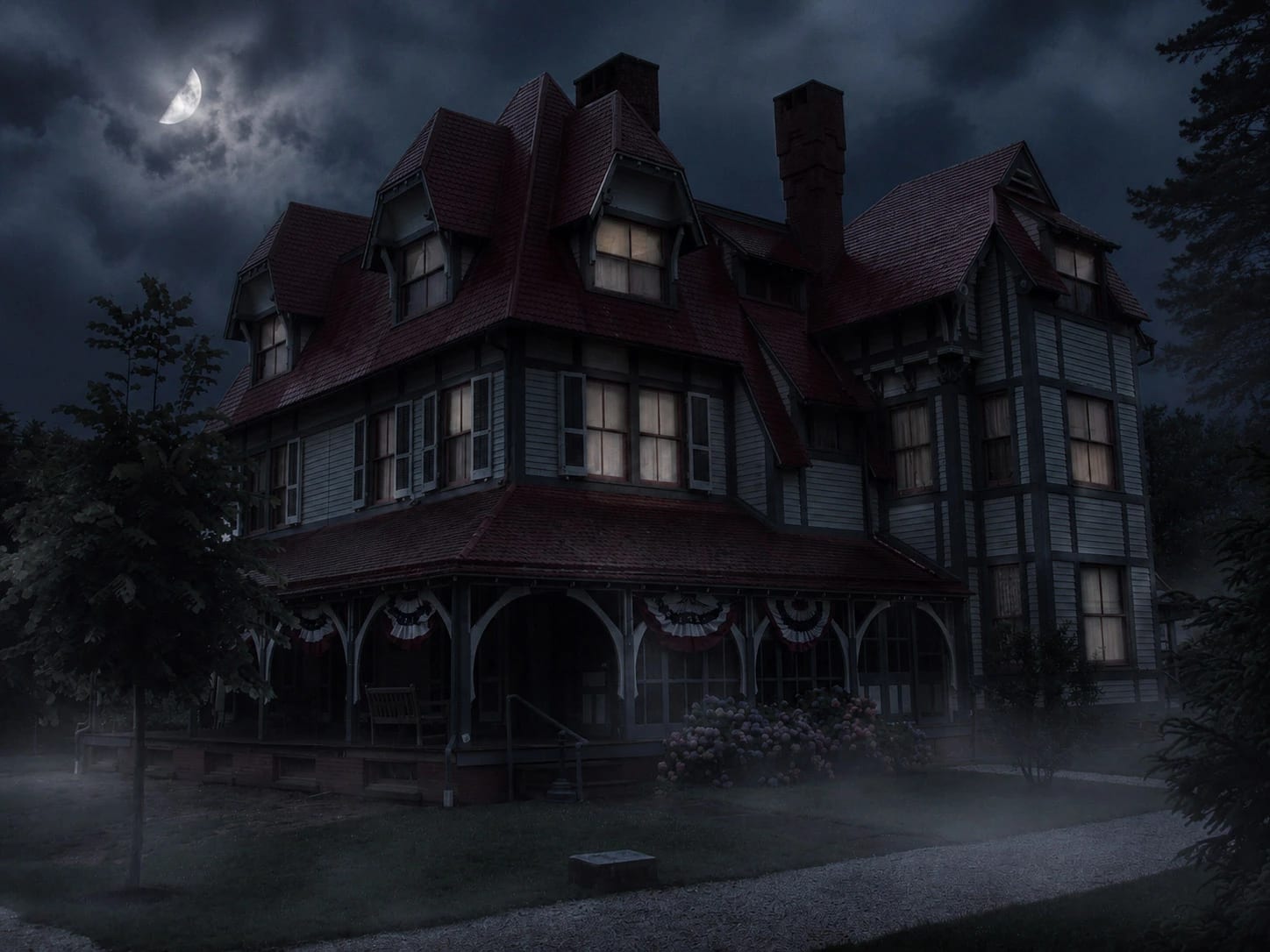
Denver, COGuided entry only

Molly Brown House Museum

1889Lingering household

This is the home of a famous Titanic survivor, kept as a guided-tour museum by the preservation group founded to save it. The lore is gentle and household-scale, with pipe smoke, loosened light bulbs and furniture that moves, which suits readers more interested in a remarkable woman's life than in fright.

The story people tell

Our article reports that visitors smell pipe tobacco despite the no-smoking policy, which many attribute to Molly's husband, J.J. Brown. Staff are said to find light bulbs mysteriously unscrewed and furniture rearranged, sometimes reportedly by a woman in Victorian clothing who may or may not be Molly herself. Tourists describe cold spots in her room, the Browns' daughter Catherine Ellen is believed to raise and lower the blinds in hers, and there are stories of a dour servant reflected in a mirror near the first-floor stairs.

History we checked · 2 sources
  • History Colorado states the house was built in 1889 and was one of the earliest Denver homes built with electricity. (History Colorado)
  • Historic Denver was founded in 1970 to save the 1889 home, which continues to operate as the Molly Brown House Museum. (National Park Service)

Today: Entry only with an authorized guided tour: house museum run by Historic Denver; interior seen on guided tours; check the museum's schedule before visiting — verified October 28, 2026 (source)

Denver, COPrivate home

Peabody-Whitehead Mansion

Also known as: Whitehead-Peabody House

1889Lady in mourning

A red sandstone Queen Anne mansion that has been a surgeon's home, a governor's residence, nightclubs and bars, and now rental apartments, this house shows how much living a Capitol Hill mansion can absorb. It is a private residence today, best treated as a story to read about. It stands at 1128 Grant Street. It is a private residence, and we do not encourage anyone to approach the house.

The story people tell

The story most often told is of a woman in black mourning dress seen gliding along the second floor, said to be searching rooms and standing at windows overlooking the garden. Others report the spirit of a young maid on the back stairs, where people describe a sudden cold presence and the sound of someone rushing past. Witnesses have also claimed to hear children laughing and running on the second floor where a nursery once was.

History we checked · 3 sources
  • The Denver Gazette reports the three-story mansion was built in 1889 of stone from Red Rock Canyon. (The Denver Gazette)
  • Dr. William Whitehead was the first resident and died in the mansion in 1902; Governor James H. Peabody moved in in 1903 and lived there two years. (The Denver Gazette)
  • After years as nightclubs, restaurants and bars, the building was converted back to living space and now offers luxury rentals. (The Denver Gazette)

Today: Private residence, not open to visitors — we do not encourage anyone to approach the house; please respect the residents' privacy — verified October 28, 2026 (source)

Flagstaff, AZNot open to the public

Milligan House

c. 1904Lingering daughter

Built by the brickmaker whose red bricks helped rebuild fire-prone early Flagstaff, this modest Queen Anne house is a working office rather than a museum. Its lore is small-scale and workplace-centered, with staff stories of coffee brewing before anyone arrives, which gives it a lighter, workaday tone.

The story people tell

The story told by staff, as our article recounts it, centers on a woman remembered as Mabel, said to have died in an upstairs bedroom. Staff have reported cold spots near that room, soft footsteps on the upper floor, a faint old-fashioned floral scent, and upstairs doors swinging open on their own. A favorite account describes staff arriving to find the coffee pot already brewing in a locked building, and restoration workers reportedly described a woman in period clothing in a hallway.

History we checked · 2 sources
  • The National Register nomination dates the house to about 1904 and credits its construction to James C. Milligan. (National Park Service)
  • Milligan was a local brickmaker and building contractor who set up his own brickyard near a sandstone quarry east of town in 1888. (National Park Service)

Today: Not open to the public (city tourism-bureau offices in a historic house; not a house museum; confirm access before visiting) — verified October 28, 2026 (source)

Las Vegas, NVStatus not confirmed

La Palazza Mansion

Mob-era legend

A legend rather than a visit: a single-story Spanish-style home in a Las Vegas neighborhood that local lore ties to the city's mob era. It belongs in the collection as a story to read, not a place to approach; it is a private home, and none of its history could be checked against records.

The story people tell

According to the story told about the house, a former owner woke in the night feeling as if someone were strangling him, though no one was there, and while moving out he is said to have found a hidden room with blood on its walls. Neighborhood lore holds that the house once served as a mob 'murder house.'

Today: We could not confirm this house's current status or public access (checked October 28, 2026)

Phoenix, AZGuided entry only

Rosson House Museum at Heritage Square

1895Devoted lady of the house

A restored Queen Anne Victorian in downtown Phoenix's Heritage Square, toured in small guided groups, offering a rare look at territorial-era domestic life in the desert. Its ghost lore is gentle and domestic, centered on the house's first lady, which suits readers looking for a museum visit with a soft supernatural edge.

The story people tell

The spirit most often described is said to be Flora Rosson, an elegant woman in Victorian dress seen in the parlor, the bedroom and the gardens, her presence reportedly announced by the scent of roses or old-fashioned perfume. Staff and visitors also report footsteps on the upper floors when no one is there, and some say Flora has been seen standing at the windows, gazing out at the gardens.

History we checked · 2 sources
  • Arizona State University's archival record says Roland and Flora Rosson built the house, that Roland Rosson served as mayor of Phoenix in 1895, and that he moved to Los Angeles in 1897. (Arizona State University Library)
  • Restoration of the house was completed in 1980 with federal, state, city and private funds. (Arizona State University Library)

Today: Entry only with an authorized guided tour: city-owned house museum run by the Heritage Square Foundation; interior seen on guided tours; check the schedule — verified October 28, 2026 (source)

Tombstone, AZStatus not confirmed

The Buford House

Victorian household

Where most Tombstone ghost stories come from saloons and gunfights, this 1880s home on Safford Street carries a quieter, domestic legend of a family and its household. Its current use is unclear, so treat it as a story and a street-side stop rather than somewhere to go in.

The story people tell

According to local lore as our article tells it, the Buford children are said to play hide-and-seek through the rooms, with laughter reported from the old nursery. Some describe the lady of the house appearing in Victorian dress on the staircase, and George Buford is said to be seen slumped at the desk in his study, still fretting over a lost fortune.

Today: We could not confirm this house's current status or public access (checked October 28, 2026) (source)

San Diego, CAOpen to the public

Casa de Aguirre

1853Hooded watcher

A rebuilt adobe at the gateway to Old Town San Diego, standing where an 1853 family home once stood and now open as a small museum and shops. It suits readers exploring Old Town who want a quick, outdoor-friendly ghost story with mid-1800s Old Town history behind it.

The story people tell

The story told by guides and visitors centers on a man in a dark, hooded cloak said to appear in the bell tower late at night, especially under a full moon, silently watching the plaza below. Employees and visitors also report heavy footsteps on the upper floors, voices in Spanish and English from empty rooms, and a feeling of being watched.

History we checked · 2 sources

Today: Open to the public (reconstructed adobe at the Old Town park entrance housing a small free museum and shops; check hours before visiting) — verified October 28, 2026 (source)

San Diego, CAStatus not confirmed

Casa de López

Also known as: La Casa Larga

c. 1835Family who stayed

A gentle, family-centered story set in the heart of Old Town San Diego, where the Mexican-era pueblo grew up. Pick it if you prefer a haunting told as homecoming rather than horror — a household of protective spirits instead of a single tragedy. Treat it as a landmark site; the building standing today is described as a reconstruction.

The story people tell

According to people who have worked at the property, the house's spirits seem to be its own family. Employees report a dignified man in Mexican-era dress walking the main rooms as if inspecting his home, a quieter presence heard as footsteps and moving furniture that some connect to Juan Matias Moreno, and a figure in priestly robes some believe is Father Antonio Ubach. The accounts told most often describe a woman in mid-1800s dress tending the rooms and the sound of children laughing and running through empty halls.

History we checked · 2 sources

Today: We could not confirm this house's current status or public access (checked October 28, 2026) (source)

San Diego, CAOpen to the public

Davis-Horton House

Also known as: William Heath Davis House; Gaslamp Museum

1850Wartime spy

A modest New England-style saltbox in the middle of the Gaslamp Quarter, now a museum you can walk through on your own. Its stories are unusually varied — a wartime mystery, a quiet couple on the stairs and a phantom cat — and its rooms trace the house's many lives, from family home to county hospital.

The story people tell

The story most often told here involves a man some paranormal investigators believe was a German spy who died in the house; witnesses describe a tense figure near the windows, and some report pacing footsteps upstairs. Guides and visitors also describe a Victorian couple who appear standing together on the staircase landing before fading away, and staff report a tabby cat that darts through rooms, purrs, or settles on laps before vanishing.

History we checked · 3 sources

Today: Open to the public (house museum run by the Gaslamp Quarter Historical Foundation; self-guided admission tours; check hours before visiting) — verified October 28, 2026 (source)

San Diego, CAOpen to the public

Whaley House Museum

1857Hanged man's footsteps

A brick Greek Revival family home in Old Town that also served as a store, theater and county courthouse, and the place to choose if you want to walk through the rooms where the stories are set. Its lore blends a frontier hanging with a family's private losses, and the museum leans into its reputation with evening programs.

The story people tell

According to local lore, Thomas Whaley himself heard footsteps he attributed to Yankee Jim Robinson, the man hanged on the ground where the house stands, and visitors still report boots on the upstairs hallway. Staff and visitors describe footsteps, cold spots, cigar smoke and perfume with no source, children's laughter or crying in empty rooms, and figures in Victorian dress believed to be Thomas, Anna and their daughter Violet. A further legend tells of a girl named Anna Belle Washburn in the dining room, though our article notes no record of her has been found.

History we checked · 3 sources

Today: Open to the public (house museum; self-guided daytime admission, with separate reserved evening and paranormal programs; check hours before visiting) — verified October 28, 2026 (source)

Portland, OROpen to the public

Pittock Mansion

1914Prankster child

A hilltop French Renaissance–style chateau that is now a public house museum, with sweeping views over Portland. Its ghost lore is playful rather than dark, centered on an unidentified prankster boy, which makes it a lighter choice for readers and families curious about a haunted mansion they can actually tour.

The story people tell

The story told about Pittock Mansion centers on an unknown boy that staff and visitors describe as a prankster: objects reportedly move from where they were placed, closed doors are found open, and childlike laughter is said to echo through empty rooms. Some visitors also report seeing an elderly couple at the windows, whom they believe to be Henry and Georgiana Pittock, along with the scent of roses in the master bedroom.

History we checked · 2 sources
  • Construction of the mansion began in 1912, and Henry and Georgiana Pittock moved in during 1914. (Pittock Mansion Society)
  • After the 1962 Columbus Day Storm damaged the house, the City bought the property for $225,000, with $67,500 of it raised by citizens, and it opened to the public as a historic house museum in 1965. (Pittock Mansion Society)

Today: Open to the public (historic house museum operated by the nonprofit Pittock Mansion Society on city parkland; check hours before visiting) — verified October 28, 2026 (source)
Comparing the houses by what you can do there

House museums are the easiest to visit. Many open only for guided tours at set times, so the interior you see, and the stories a docent will or will not tell, depend on the tour. Some museums lean into their ghost stories with evening programs; others keep to the documented history and leave the legends to visitors.

Several houses now serve other purposes: restaurants, inns, offices, university buildings and event venues. You may be able to step inside as a diner or guest, or only for an event, and the use can change when a property is sold. The status with each entry says what we found and when.

Private homes are included because their stories are part of their cities, and some are known only by their address. They are not open to visitors. We do not encourage anyone to approach these houses, and nothing on this page is an invitation to do so.

Finally, some entries are houses that no longer stand, houses that were moved away, or legends whose house cannot be identified with confidence. They are here for the story, and their entries say plainly what is legend and what the record shows.

Visiting respectfully

Check hours and tour requirements with each house or its managing organization before you go. Many house museums are small, run by nonprofits or volunteers, and close for private events, holidays or restoration.

Inside a house museum, follow the docent and the posted rules on photography, touching furnishings and stepping beyond barriers. Many of the objects are fragile and original to the families who lived there.

At private homes, stay away. Do not knock, ring, trespass, photograph residents or linger outside. The people in these stories were real, and so are the families who live in these houses now.

Go deeper by city

Some of our destinations have their own collection with every place of this kind we cover there.

Where we run ghost tours

Ghost City Tours runs tours in these destinations. Being listed in this collection does not mean a tour visits a place: a tour includes a place only where its entry says “Featured on”.

By The Ghost City Tours editorial team. Historical details were checked against the sources cited with each place on October 28, 2026. Ghost stories are presented as the accounts people tell, not as established fact.

Hotel operations, access rules and hours change — confirm with each place before you travel.

Reviewed by Tim Nealon on October 28, 2026.