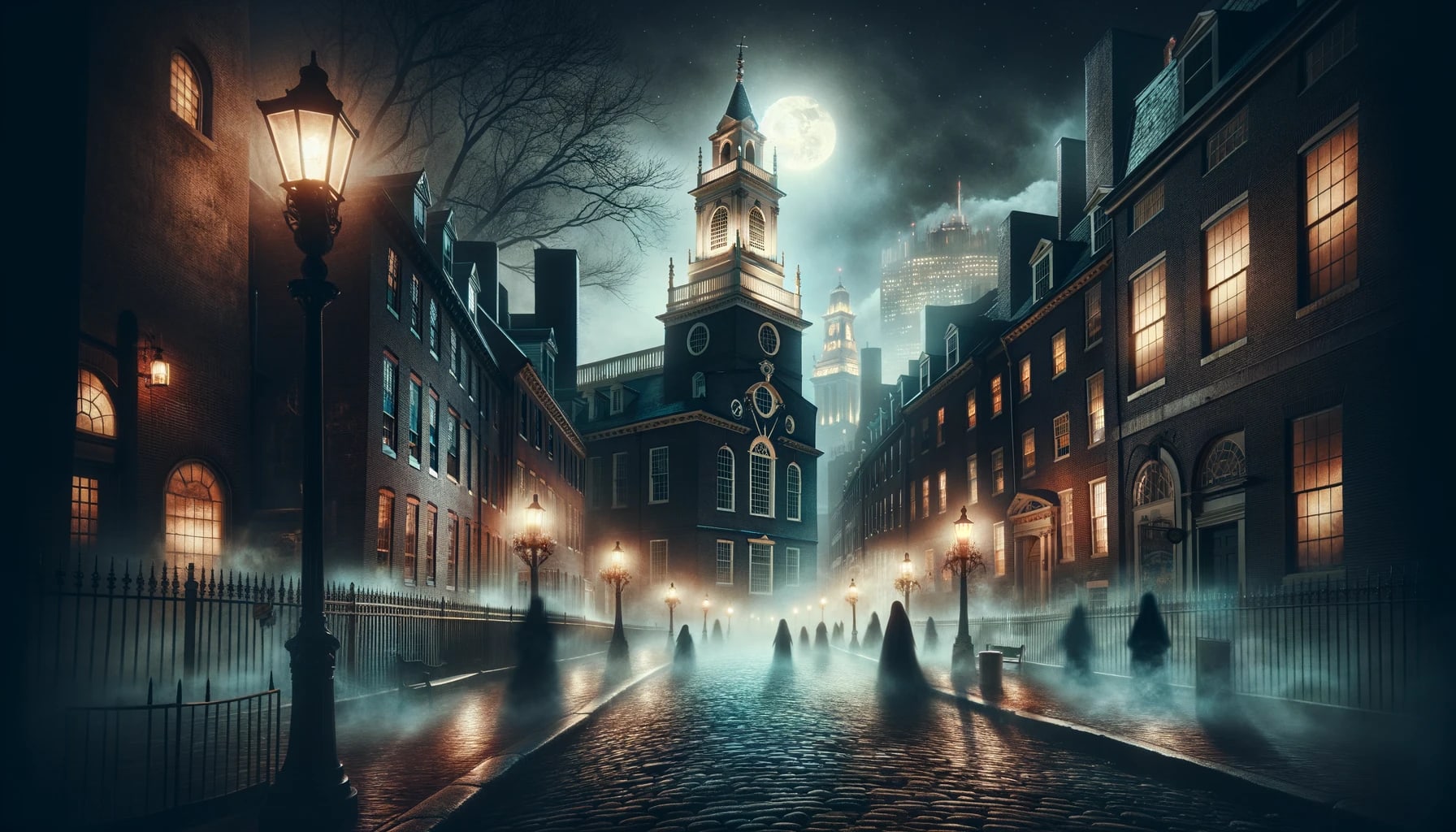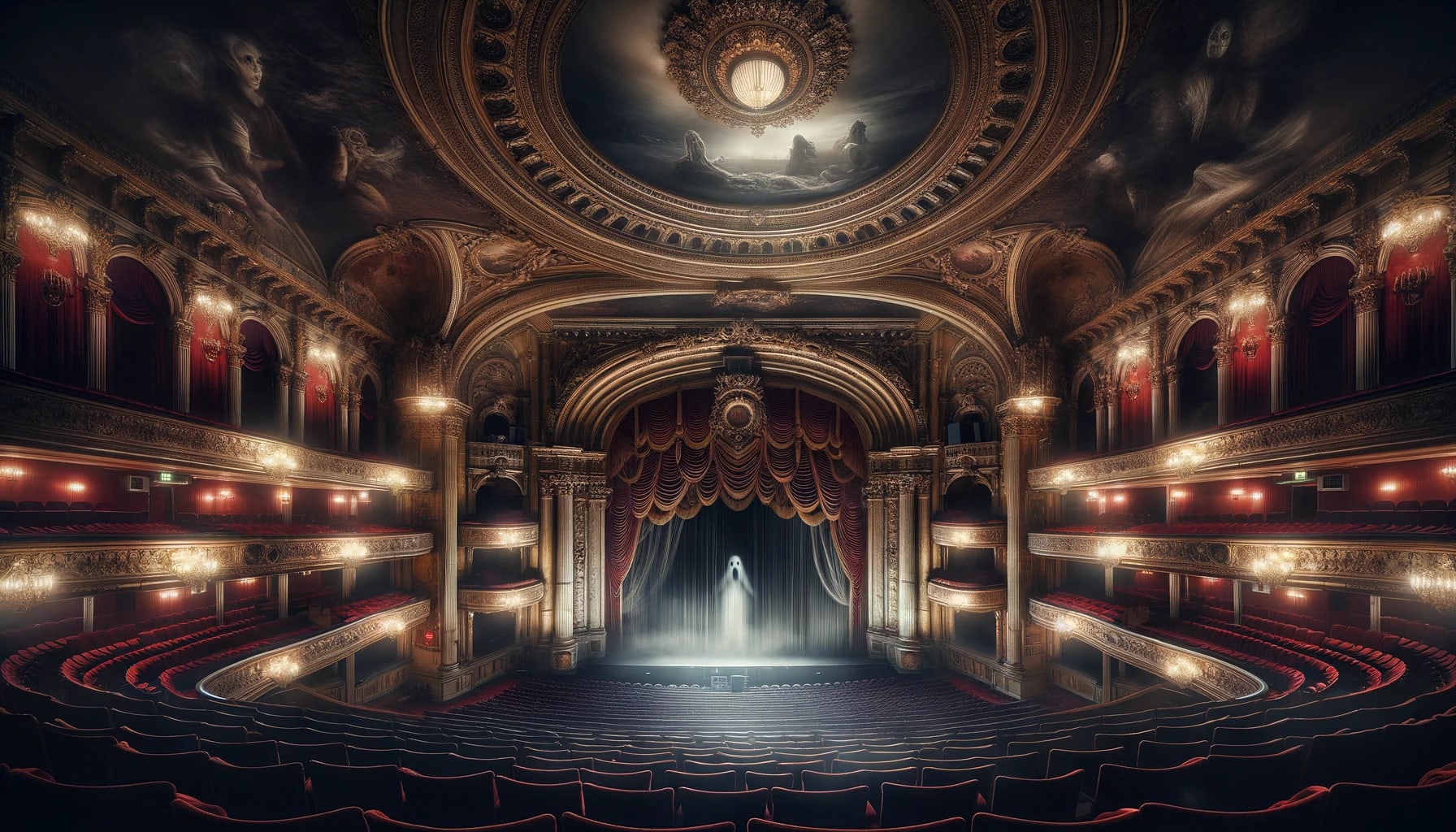
The restored auditorium of the Lucas Theatre in Savannah, Georgia, seen from the stage

Haunted Theaters and Music Halls in America

Opera houses, movie palaces, frontier stages and music halls with lasting ghost stories: what sets each apart, what is history and what is legend, and which still raise the curtain today.

38 places in 22 destinations · Sources checked October 29, 2026

Theaters may be the most superstitious buildings in America. Performers whistle backstage at their peril, a single ghost light burns on an empty stage overnight, and almost every old house has a seat, a box or a catwalk that someone swears is never quite empty. The ghost stories told about these places are usually about the people who gave their lives to them: a stagehand who never left, a performer still waiting for a curtain call, a projectionist still in the booth.

This collection brings together the historic theaters, opera houses and music halls we have written about. Most still host performances, from Broadway tours and concerts to classic films and comedy; a few are private, dark for now or used for something else entirely. Each entry pairs what sources support about the venue with the story as it is told, presented as legend and reported experience rather than fact, and shows its status as we last checked it.

These places come from our own coverage and were chosen by our team. Many are in cities where we run tours, but being listed here does not mean a tour visits a theater. This is not a nationwide survey or a ranking. Use it to compare the kinds of venues and the kinds of stories, then read our full article on any that catch your interest.

How we chose these places. Every place has a full article, history checked against cited sources, and its ghost stories told as the accounts people share.

This collection covers the theaters, opera houses, music halls and other performance venues we have written about, whether or not they are open today, including venues that are closed, private or now used for something else. Every entry is named by its actual city and state. A tour includes a place only where its entry says “Featured on.” It is not a survey of every haunted theater in the country.

  1. We have written about it, and it is identified by its actual city and state
  2. We publish a full article on the venue and its stories
  3. Historical statements checked against cited sources; where a story cannot be checked, it is told as legend
  4. Ghost stories presented as reported accounts and local lore, not as fact
  5. Each entry shows whether the venue is open as we found it on the date shown, including venues that are closed, private or repurposed
Today
Region

The Northeast & Washington, D.C.

A Boston theater restored by Emerson College, an Off-Broadway stage and a working recording studio in Greenwich Village, Pittsburgh's university playhouse, and Ford's Theatre, where Lincoln was shot.

Boston, MA

Cutler Majestic Theatre

Also known as: the Majestic Theatre

1903Phantom dignitary

Eben Jordan's 1903 Beaux-Arts jewel box by John Galen Howard survived decades as the Saxon movie house before Emerson College bought it in 1983 and spent twenty years restoring it. Now Emerson's stage on Tremont Street, it hosts opera, dance and theater, ideal for anyone who wants Gilded Age plasterwork with their ghost story.

The story people tell

Staff tell of a gentleman in formal Edwardian dress who sits in a box seat watching the stage, nicknamed 'the Mayor' after the dignitary said to have attended opening night. A Lady in White is reported alone in the upper balcony, gone when the house lights rise. Crew describe applause from an empty auditorium late at night, and many believe the restoration woke the spirits up.

History we checked · 2 sources
  • Emerson College's archive says the Majestic was sold to Sack Cinemas in 1955, ran as the Saxon movie theater for nearly 30 years, and reopened as the Cutler Majestic in May 2003. (Emerson College History (Emerson College Archives))
  • Boston Magazine reports that the theater opened in 1903 with the musical comedy The Storks, with Isabella Stewart Gardner in the audience. (Boston Magazine)

Today: Open to the public (operating as Emerson College's performing-arts venue with opera, dance and theater) — verified October 29, 2026 (source)

New York, NY

Cherry Lane Theatre

1817 building; theater since 1924Lady in White

New York's oldest continuously running Off-Broadway house sits in an 1817 farm silo on a quiet West Village lane. Edna St. Vincent Millay helped found it, Beckett's Happy Days had its world premiere here, and Steppenwolf's famed 1982 True West ran here for nearly two years. The film company A24 bought it and reopened it in 2025, so you can still catch a new play in an intimate 167-seat room.

The story people tell

Staff and performers report cold spots, lights flicking on by themselves and lines whispered from plays nobody is rehearsing. The best-known spirit is a silent Lady in White, said to drift along the backstage with a scent of lavender. A gruff stagehand in suspenders reportedly moves props and shoves anyone standing in the wrong spot, and crews describe hearing a whole show play out to an empty house.

History we checked · 2 sources
  • Wikipedia's history says the building went up in 1817 as a farm silo and later became a brewery before artists including Edna St. Vincent Millay turned it into a playhouse. (Wikipedia)
  • The same source reports that A24 bought the theater in 2023 and reopened it after renovation on September 8, 2025. (Wikipedia)

Today: Open to the public (operating Off-Broadway theater, owned by A24 since 2023, with a season of plays) — verified October 29, 2026 (source)
New York, NY

Electric Lady Studios

1970Rock star ghost

The only recording studio on this list, and the one Jimi Hendrix had built for himself, under architect John Storyk, in a former Village nightclub. Bowie, Led Zeppelin, Stevie Wonder and the Rolling Stones followed him in. It is still a busy private studio and not open to visitors, so rock fans can only see it from the street at 52 West 8th Street.

The story people tell

Engineers and musicians say Hendrix never left the studio he barely got to use. They describe a slim, wild-haired figure with a guitar in Studio A and faders that move on their own in the control room. Some tell stories of his signature feedback-heavy solos ringing out of empty rooms late at night, and of an unseen singer whose harmonies turn up on playback.

History we checked · 2 sources
  • Wikipedia's history of the studio says Hendrix and his manager Michael Jeffery bought the Generation nightclub in 1968, and John Storyk oversaw its conversion. (Wikipedia)
  • It adds that the studio's opening party was held August 26, 1970, less than three weeks before Hendrix died. (Wikipedia)

Today: Limited public access: working private recording studio; not open to the public, so view the curved façade from the street — verified October 29, 2026 (source)
Pittsburgh, PA

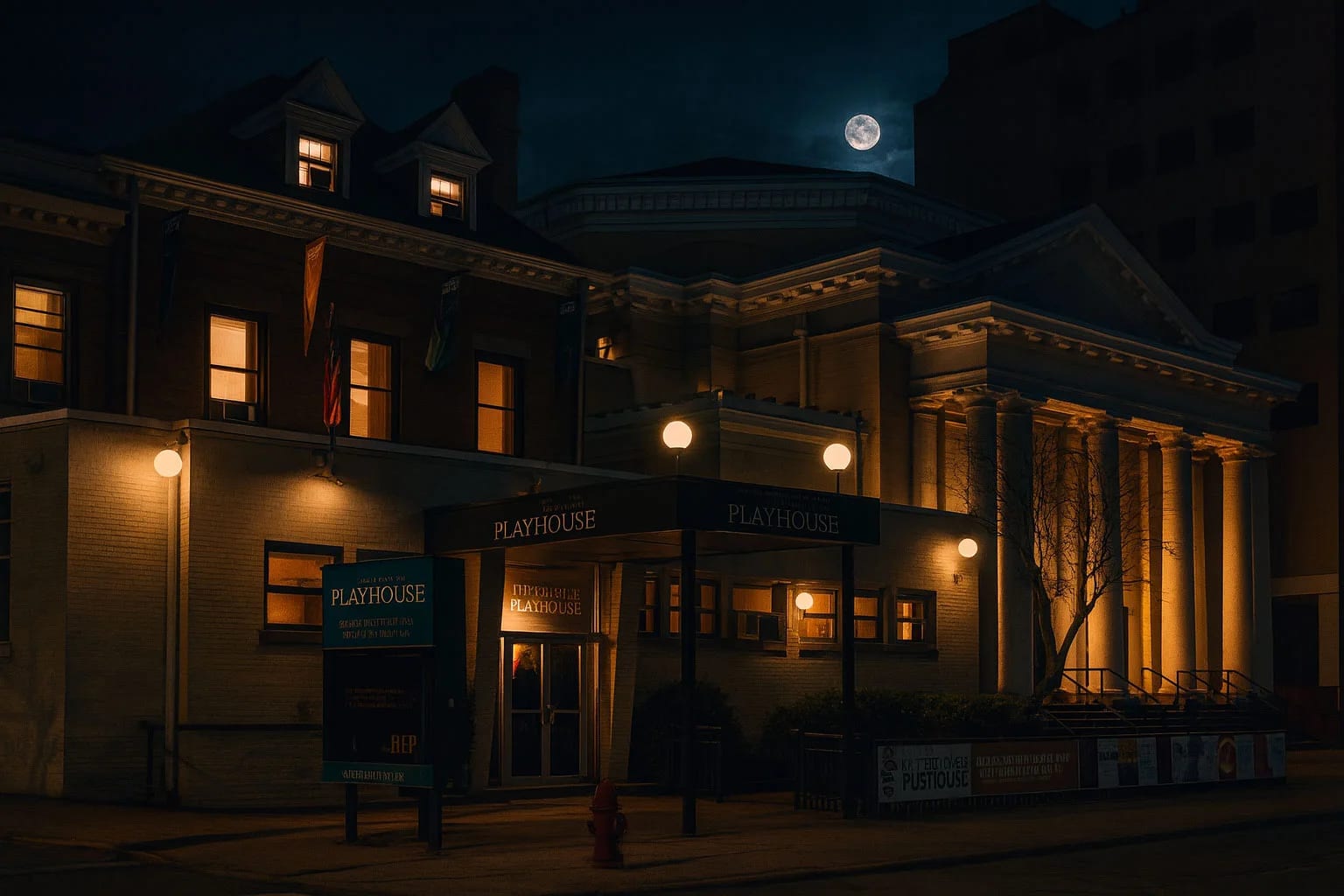
Pittsburgh Playhouse

We write about Pittsburgh but do not run tours there.

1933Phantom seamstress

A Depression-era community theater turned university stage, now Point Park University's three-theater complex on Forbes Avenue downtown. Its storied Oakland home, built partly from a former synagogue, was torn down in 2019, so this entry suits theater students and anyone curious whether ghost stories travel with a company. Its public season mixes plays, dance and music.

The story people tell

The best-known spirit, our article says, is the Seamstress, a wardrobe worker said to have died in the building who still finishes hems overnight and is heard running sewing machines in the empty costume shop. Students also describe an actor waiting in the wings for a cue, a dancer practicing after hours, and phantom applause rising from an empty house.

History we checked · 3 sources
  • Wikipedia says the company began in 1933 as the Pittsburgh Civic Playhouse and moved into its new building at 350 Forbes Avenue in 2018. (Wikipedia)
  • The Playhouse's own history page says Point Park acquired it in 1968 and that one Oakland stage was the original Tree of Life synagogue. (Pittsburgh Playhouse / Point Park University)
  • Patch reported that demolition of the three-building Oakland complex began in August 2019. (Patch)

Today: Open to the public (Point Park University's three-theater arts center with a public season of plays, dance and music) — verified October 29, 2026 (source)

Washington, DC

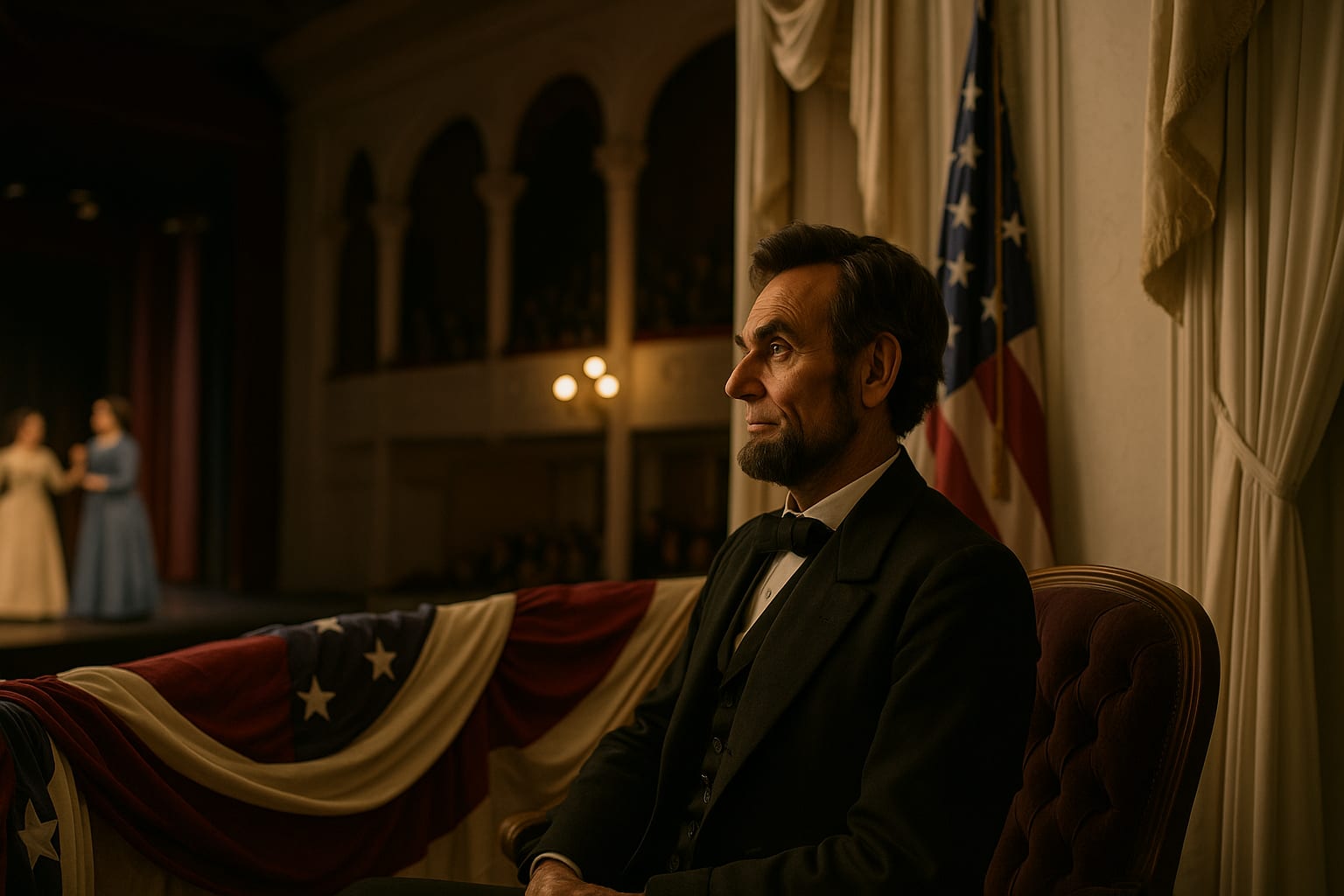
Ford's Theatre

1865Presidential ghost

The only venue on this list that is also a National Historic Site: the playhouse where Lincoln was shot on April 14, 1865, restored and reopened in 1968. Visitors can see the presidential box from inside the theatre, tour the museum holding Booth's derringer, cross to the Petersen House, or attend a show. Essential for history lovers in DC.

The story people tell

Witnesses describe a tall, sorrowful figure in the presidential box and say Booth's footsteps and his cry still echo across the empty stage. Lore holds that the box turns icy around 10:15 PM, the hour of the shooting, with the smell of gunpowder, and some visitors report glimpsing the 1865 audience frozen in shock.

History we checked · 2 sources
  • The National Park Service's assassination FAQ says Booth shot Lincoln about 10:15 p.m. and the president died at 7:22 a.m. on April 15, 1865. (National Park Service)
  • Wikipedia's history of the theatre records the 1893 floor collapse that killed 22 clerks and the restored theatre's reopening in 1968. (Wikipedia)

Today: Open to the public (National Historic Site open daily by timed-entry ticket; working theater with a performance season) — verified October 29, 2026 (source)

The South

Charleston's Dock Street, two Savannah stages, Nashville's Ryman Auditorium and a jazz supper club, and two French Quarter venues: a community playhouse and a jazz hall.

Charleston, SC

Dock Street Theatre

1809 (theatre 1937)Lady in red

A 1930s WPA theater built inside the shell of the 1809 Planter's Hotel, named for the 1736 playhouse that, as the National Park Service puts it, is said to be the first built purely for theater in America. The City of Charleston runs it today; Charleston Stage performs a full season and Spoleto Festival uses the stage each spring.

The story people tell

The building's most famous ghost, according to local lore, is Nettie, a young woman of the hotel days who is said to have stood on the second-floor balcony in a red dress during a storm and been struck by lightning. Visitors claim she still drifts through the theater in red. Others report shadows in the rafters, figures on stage and, some believe, the restless actor Junius Brutus Booth.

History we checked · 2 sources
  • The National Park Service says the main building dates to about 1809 as the Planter's Hotel and that the city added a stage and auditorium in the 1930s as a WPA project. (National Park Service)
  • Wikipedia notes that the theater reopened on March 18, 2010 after a three-year, $19 million renovation by the City of Charleston. (Wikipedia)

Today: Open to the public (operating as a city-owned theater; home stage of Charleston Stage and a Spoleto Festival venue) — verified October 29, 2026 (source)

Savannah, GA

Lucas Theatre for the Arts

1921Phantom applause

Savannah's 1921 movie palace, designed by C.K. Howell, was the first building in town with air conditioning, sat dark after 1976 and came back in 2000 after a long preservation fight. Now run by SCAD and freshly restored in 2025, it hosts the Savannah Philharmonic, film festivals and concerts, with daytime self-guided visits for architecture lovers.

The story people tell

One story told about the Lucas says a ticket-taker shot by gangsters in 1928 still bursts through the doors and collapses in the lobby. Former employees describe applause echoing through the empty building and an unseen presence in a dark room, and renovation workers heard a projector whirring in a booth that had no projector yet.

History we checked · 2 sources
  • Wikipedia's entry on the Lucas Theatre notes it opened December 26, 1921, became Savannah's first air-conditioned building in 1927, closed in 1976 and is now owned and managed by SCAD. (Wikipedia)
  • Cinema Treasures records the theater's reopening on December 1, 2000, after a long restoration. (Cinema Treasures)

Today: Open to the public (SCAD-run performing-arts and film venue; self-guided daytime visits welcome) — verified October 29, 2026 (source)

Savannah, GA

Savannah Theatre

1818Ghost child

Among the oldest working theaters in America, the Savannah Theatre opened on Chippewa Square in 1818 in a William Jay design, survived an 1898 hurricane and fires in 1906 and 1948, and wears its Art Deco front from the 1950 rebuild today. Catch a music revue or seasonal musical; it suits anyone who wants two centuries of stage history in one seat.

The story people tell

Staff say three spirits stay on: Betty, an actress waiting behind the curtain; Ben, a boy who tugs on the spotlight operator's shirt; and The Director, heard critiquing actors. House manager Dru Jones described Ben's tugs for years, and local lore tells of phantom applause heard by police patrols and a lost lucky penny blamed for the 1948 fire.

History we checked · 2 sources
  • The theater's own history page says it opened December 4, 1818, in a building designed by William Jay, and reopened as a movie house in October 1950. (Savannah Theatre)
  • Wikipedia describes it as one of the oldest continually operating theatres in the US, damaged by an 1898 hurricane and by fires in 1906 and 1948. (Wikipedia)

Today: Open to the public (operating live theater with musical revues and seasonal productions) — verified October 29, 2026 (source)

Nashville, TN

Ryman Auditorium

Also known as: Union Gospel Tabernacle

1892Founder's ghost

Built in 1892 as a gospel tabernacle and later the Grand Ole Opry's home from 1943 to 1974, the Ryman is the 'Mother Church of Country Music.' It is the place on this page for music pilgrims: catch a concert under its church-pew rows or take a daytime self-guided or backstage tour through the museum.

The story people tell

As the story goes, founder Thomas Ryman still stomps through the hall when a show turns too risqué, as legend says he did during Carmen. A grey-clad figure, believed to be a Confederate veteran, is reported watching rehearsals from the balcony, and employees describe hearing Patsy Cline singing and Hank Williams's voice late at night.

History we checked · 2 sources
  • The Ryman's own history page says the Union Gospel Tabernacle held its first concert in May 1892 and hosted the Grand Ole Opry from 1943 to 1974. (Ryman Auditorium)
  • Wikipedia notes the balcony was finished for the 1897 United Confederate Veterans reunion and was once called the Confederate Gallery. (Wikipedia)

Today: Open to the public (operating concert hall and museum with daily self-guided and backstage tours) — verified October 29, 2026 (source)

Nashville, TN

Skull's Rainbow Room

1948Murdered proprietor

This intimate 1948 Printers Alley club has been a burlesque room, a speakeasy and a barroom, and it survived a 17-year closure to reopen in 2015. Today it is a supper club with live jazz every night and burlesque on weekends, a good fit for anyone who wants dinner, a cocktail and a taste of old Nashville nightlife.

The story people tell

Some say founder David "Skull" Schulman, the flamboyant "Mayor of Printer's Alley" killed in his club in 1998, never left. People claim to see him strolling the alley led by a small white poodle, believed to be Sweetie, and a later owner described sudden chills inside the stone walls during summer renovations.

History we checked · 2 sources
  • WKRN reports that Schulman opened Skull's Rainbow Room in Printer's Alley in 1948 and was killed there in 1998. (WKRN)
  • PLA Media reports that Johnny Cash Museum founder Bill Miller acquired an interest in the club in 2017, after its 2015 reopening. (PLA Media)

Today: Open to the public (supper club with nightly live jazz and weekend burlesque shows) — verified October 29, 2026 (source)

New Orleans, LA

Le Petit Théâtre du Vieux Carré

1916Opening-night ghost

Founded in 1916 by the Drawing Room Players and housed since 1922 in Richard Koch's Spanish Colonial playhouse a block from Jackson Square, Le Petit is the French Quarter's homegrown stage. Theatergoers can see a full season of plays and musicals, then linger in the courtyard or dine at Tableau, which shares the building.

The story people tell

Actors and staff tell of Caroline, a kindly spirit said to help find missing items, and an actress said to have fallen from the catwalk who still moves in the shadows above the stage. Lore also describes a dapper gentleman called the Captain, announced by pipe smoke and cologne, whose applause after a premiere is believed to promise a hit.

History we checked · 1 source
  • Wikipedia says the Drawing Room Players began in 1916 and bought the St. Peter and Chartres corner in 1922, where Richard Koch designed the Spanish Colonial theatre. (Wikipedia)

Today: Open to the public (operating playhouse with a full season of plays and musicals) — verified October 29, 2026 (source)

New Orleans, LA

Mahogany Jazz Hall

19th centuryBoarding-house spirits

Mahogany Jazz Hall is a modern traditional-jazz room set inside a 19th-century French Quarter building near Canal Street that once served as a boarding house. Come for a late set of trad jazz, an absinthe cocktail, or the weekend burlesque show; it suits night owls more than daytime sightseers.

The story people tell

Staff describe hands touching them, whispers in their ears when no one is near, and shadowy figures crossing the empty club, and glasses are said to fly off the bar. Stories tie the activity to the building's boarding-house years, when two lodgers took their lives upstairs and a man was shot dead at the front door in 1892.

History we checked · 1 source
  • The Southern Spirit Guide says 125 Chartres served for years as a boarding house where two tenants died by suicide, and that a man was shot to death out front in 1892. (Southern Spirit Guide)

Today: Open to the public (live traditional-jazz club with nightly music and weekend burlesque) — verified October 29, 2026 (source)

Texas

Austin's opera house and movie-palace survivors, San Antonio's grand downtown theaters along with one that no longer operates, and a Fort Worth stage that has been dark since 2024.

Austin, TX

Ritz Theatre

Also known as: the Comedy Mothership

1929Backstage presence

A 1929 Sixth Street picture house that has lived several lives: westerns with live country acts, an early-1980s punk club, an Alamo Drafthouse cinema and, since 2023, the Comedy Mothership. The original Ritz sign still hangs out front, so comedy fans buying a ticket get a seat inside a building that has drawn Austin audiences since 1929.

The story people tell

Staff who close the building late describe the quiet kind of haunting: seats creaking as if someone has just sat down, unhurried footsteps behind the stage, lights found switched back on and gear nudged out of place. Above all, employees say, there is the feeling of being watched from the dark corners of the house, which some believe belongs to performers who never took a final bow.

History we checked · 2 sources
  • Wikipedia's history of the Ritz says it opened on October 13, 1929, as the first Austin theater built specifically for talking pictures. (Wikipedia)
  • According to Cinema Treasures, the Alamo Drafthouse ran the Ritz from 2007 until the chain's 2021 bankruptcy closed it for good. (Cinema Treasures)

Today: Open to the public (operating as the Comedy Mothership, a stand-up comedy club with nightly ticketed shows) — verified October 29, 2026 (source)

Austin, TX

Austin Scottish Rite Theater

1871Balcony watcher

German immigrants raised this hall in 1871-72 for gymnastics, dancing and stage shows; Austin's Scottish Rite Masons took it over in 1914 and fitted the stage with painted ritual scenery. Today it is a family theater with a full season of children's shows, which makes it the gentlest haunted night out on this list.

The story people tell

Performers rehearsing on stage say they have looked up to see someone seated in the balcony, watching quietly, only to find the seats empty when they check. Staff describe purposeful footsteps and murmured conversation backstage after hours, and cold spots that seem to cross the stage. Some believe the watcher is a Mason still attending his lodge; others think an old actor never left.

History we checked · 2 sources
  • The Texas Historical Commission's landmark marker says the Austin Turn Verein, a German social society, built the hall as an opera house in 1871-72, and that it passed to Austin's Scottish Rite bodies in 1914. (Texas Historical Commission Atlas)
  • Scenic-art historian Wendy Waszut-Barrett writes that the Masons retrofitted the old Turner Hall around 1914 with painted scenery and counterweight rigging for their degree productions. (Travels of a Scenic Artist and Scholar (Wendy Waszut-Barrett))

Today: Open to the public (operating as a children's and family theater with a full season of shows) — verified October 29, 2026 (source)

Austin, TX

Millett Opera House

Also known as: the Austin Club

1878Fallen actress

Captain Charles Millett's 800-seat limestone hall of 1878 was Austin's grand stage, hosting Edwin Booth, John Philip Sousa and even the Legislature, before becoming a skating rink, a print shop and school-district property. Today it is the private Austin Club, so most visitors see it from Ninth Street or at a wedding or private event.

The story people tell

The club's best-known ghost is Priscilla, said to be a nineteenth-century actress or singer who fell from the catwalk on the eve of her wedding. Staff describe her in a long gown and loose necklace, riding the elevator through the night and tugging curtains from their tiebacks. One employee claims an unseen force slapped a plate from his hands, then pushed and spun him in a sudden chill.

History we checked · 2 sources
  • Wikipedia's entry says Charles Millett built the opera house in 1878 to a design by Frederick Ruffini, and that the Austin Club, which leased it in 1979, now owns the building. (Wikipedia)
  • Texas Escapes notes that the 800 seats could hold about 7% of Austin's population and that Edwin Booth and John Philip Sousa performed there. (Texas Escapes)

Today: Limited public access: now a private members' club; entry for members, guests and booked weddings or private events — verified October 29, 2026 (source)

Austin, TX

Paramount Theatre

Also known as: the Majestic Theatre

1915Phantom usher

John Eberson's 1915 vaudeville house on Congress Avenue, where Houdini and the Marx Brothers played before it became a Paramount picture palace in 1930. Saved and restored from the mid-1970s, it is still a working stage today, with concerts, comedy and summer classic films, so a ticket to almost any show puts you under its ornate ceiling.

The story people tell

The theater's best-known spirit is a courteous usher in 1920s-style bow tie and jacket, who patrons say leads latecomers to their seats and vanishes before he can be thanked. A night guard reported a full vaudeville orchestra playing in the dark auditorium, and crew describe footsteps on the catwalks. In the upper balcony, witnesses claim, a Lady in White watches the show for minutes at a time.

History we checked · 2 sources
  • Wikipedia's history of the theater says it opened as the Majestic on October 11, 1915, designed by John Eberson, and took the Paramount name in 1930. (Wikipedia)
  • The Clio's entry lists the Marx Brothers, Will Rogers and Harry Houdini among the vaudeville-era performers on its stage. (The Clio)

Today: Open to the public (operating as a performing-arts venue with concerts, comedy, classic films and touring shows) — verified October 29, 2026 (source)

San Antonio, TX

Alamo Street Theater

Also known as: Alamo Methodist Church

1912Friendly theater ghosts

The odd one out on this list: a 1912 Methodist church in the King William district that stopped holding services in 1968 and was reborn as a dinner theater, then a music venue and a hot dog bar. The theater days are over and Frank closed in 2018, so this is a sidewalk stop for architecture and neighborhood-history walkers.

The story people tell

Former owner Marcie Larsen called her ghosts friendly, and stories tell of a whole cast: Miss Margaret, a society girl turned actress said to shush chatty audiences and leave a scent of rosewater, her seamstress Henrietta, and Little Eddie, a boy said to have arrived with an antique wicker wheelchair, who staff blamed for flicking lights, pulling hair and switching off the kitchen oven.

History we checked · 3 sources
  • Wikipedia notes the church was built in 1912, joined the National Register in 1979, and has not been a church since 1968. (Wikipedia)
  • The San Antonio Report described the building as a restaurant and theater space whose live-music tenant closed in 2011 before Frank opened in March 2016. (San Antonio Report)
  • KSAT reported that Frank, the building's last known tenant, closed abruptly in January 2018. (KSAT)

Today: We could not confirm whether it is currently open (checked October 29, 2026) — check before you go (source)

San Antonio, TX

Aztec Theatre

1926Phantom projectionist

A 1926 Mesoamerican Revival movie palace with a three-ton chandelier, tucked into a six-story building beside the River Walk. It closed in 1989, was saved by a 1992 National Register listing, and now runs as a Live Nation concert hall, so rock, comedy and Latin music fans can enjoy its temple-like interior during a show.

The story people tell

Lore at the Aztec centers on its projection booth, where a phantom operator was said to play tricks on whoever ran the films. Some tie the haunting to the projectionists fired during a bitter 1932 strike, and a local legend claims a curse drove a string of owners to sell. Accounts say sightings have faded since movies gave way to concerts.

History we checked · 2 sources
  • Wikipedia says the Aztec opened June 4, 1926, was designed by Meyer & Holler, and gained its three-ton chandelier in 1929. (Wikipedia)
  • The same entry notes it closed in 1989, joined the National Register in 1992 and reopened for live music in 2009. (Wikipedia)

Today: Open to the public (Live Nation concert and comedy venue with a busy show calendar) — verified October 29, 2026 (source)

San Antonio, TX

Charline McCombs Empire Theatre

1914Depression-era beggar

Thomas Brady's 1914 vaudeville house stands on a downtown site used for performance since 1879, and it has survived a nine-foot flood, a slide into adult films and a 1978 closing before its 1998 revival. Smaller and more intimate than the Majestic next door, it suits fans of comedy, concerts and family shows.

The story people tell

Most reports at the Empire are the usual theater chills, whispers and shadows, but one story stands out. Lore says a small, shabbily dressed old man approaches patrons outside and asks for twenty-five cents, the price of a Depression-era ticket, then vanishes. The first account, according to the tale, came from a man waiting for a Charlie Chaplin picture in 1931.

History we checked · 2 sources
  • The San Antonio Report says the Empire opened on December 14, 1914, on a site home to theaters since the 1879 Turner Opera House. (San Antonio Report)
  • Wikipedia notes the 1921 flood, the 1978 closing and a 1998 reopening with Kenny Rogers. (Wikipedia)

Today: Open to the public (city-owned performing-arts venue hosting comedy, concerts, plays and family shows) — verified October 29, 2026 (source)

San Antonio, TX

Majestic Theatre

1929Phantom ballet troupe

John Eberson's 1929 atmospheric palace, for years the largest theater in Texas, wraps audiences in a Spanish-Mediterranean village under a starry, cloud-drifting ceiling. A National Historic Landmark since 1993, it now hosts the Broadway in San Antonio touring season, making it the grandest seat in town for musical-theater fans.

The story people tell

Staff and guests say the Majestic's ghosts love a full house. Rumors tell of a showman lingering by the stage, perhaps the magician Zoroastro, and an old stage hand's tale of ballet dancers seen twirling across an empty stage. A visiting medium described a woman, whom he called Magdelene, leaning over a second-level box rail during a show.

History we checked · 2 sources
  • Wikipedia says the Majestic opened June 14, 1929, as Texas's first fully air-conditioned theater and its largest for many years. (Wikipedia)
  • ATG's venue page lists 2,264 seats and the theater's National Historic Landmark status. (ATG Tickets)

Today: Open to the public (city-owned 2,264-seat home of the Broadway in San Antonio touring season, plus concerts and comedy) — verified October 29, 2026 (source)

Fort Worth, TX

William Edrington Scott Theatre

1966Phantom stagehand

A 1966 playhouse wing of the Fort Worth Art Center, paid for by the foundation William Edrington Scott left behind, and one of the newer theaters on this page. For nearly six decades it hosted local theater, opera and dance in the heart of the Cultural District. It is closed now, dark since late 2024 while the city decides the building's future.

The story people tell

Stagehands tell stories of an actor who took his own life in the building and still walks the stage in a brown suit, laughing beneath the boards. One crew member described footsteps into the basement, shelves emptying and a drill switching on by itself. Others believe Scott himself never left and straightens his portraits whenever they tilt.

History we checked · 2 sources

Today: Temporarily closed (dark since late 2024; the city-owned arts center around it is closed pending repairs, future undecided) — check reopening plans before you go; verified October 29, 2026 (source)

The Midwest

Chicago's landmark movie palace, two Indianapolis theaters (one restored, one awaiting rescue) and Kansas City's Folly and Midland.

Chicago, IL

Chicago Theatre

1921Phantom usher

The Balaban & Katz movie palace that gave State Street its famous vertical CHICAGO sign. Rapp and Rapp drew on Versailles and the Paris Opera for the lobby and staircase. It is still a busy concert and comedy hall, and guided tours take you through the lobby and auditorium and show off its century-old Wurlitzer.

The story people tell

Staff and security guards describe a 1920s usher in full uniform walking the balcony aisles late at night. A Woman in White is said to drift down the grand staircase, trailing an old-fashioned perfume. Night crews tell stories of applause and organ music in the empty auditorium, and performers report a lone spectator watching rehearsals from the upper balcony.

History we checked · 2 sources
  • Wikipedia's history of the theatre says it opened on October 26, 1921, designed by Rapp and Rapp for Balaban & Katz. (Wikipedia)
  • According to the same history, it closed in 1985 and reopened in 1986 with a Frank Sinatra show, and it was named a Chicago Landmark in 1983. (Wikipedia)

Today: Open to the public (operating concert and performance venue; guided theater tours offered) — verified October 29, 2026 (source)
Indianapolis, IN

Indiana Repertory Theatre

Also known as: Indiana Theatre

1927Woman in white

A 1927 Spanish Baroque movie palace by Rubush and Hunter that has housed the Indiana Repertory Theatre, a professional regional company, since 1980, when its vast auditorium was reshaped into smaller stages. Downtown visitors can catch a full season of plays, from classics to the holiday staging of A Christmas Carol, inside one of Indianapolis's grandest Jazz Age buildings.

The story people tell

Actors and staff describe a sad young woman in a flowing white gown who drifts through the lobby, wings and balcony, and a dignified gentleman in evening dress who keeps his own seat in the upper balcony. Crews say rehearsals are heard in empty rooms, and the ghost light is never left dark for fear of what the spirits might do.

History we checked · 1 source
  • The Encyclopedia of Indianapolis says Rubush and Hunter designed the Spanish Baroque movie palace, which stopped showing films in 1975 and reopened, heavily altered, for the IRT in 1980. (Encyclopedia of Indianapolis)

Today: Open to the public (operating professional theatre with a full season of plays) — verified October 29, 2026 (source)

Indianapolis, IN

Rivoli Theatre

1927Phantom projectionist

Unlike the grand downtown palaces on this page, the Rivoli is a 1927 neighborhood movie house, built by Universal Pictures in the Spanish Mission Revival style and later a rock-concert stage. It has been closed since 1992 while a nonprofit works toward restoration, so for now its facade on East 10th Street is the only view.

The story people tell

The theatre's best-known ghost is said to be a devoted projectionist, nicknamed "Bob," who still tends the booth and tinkers with equipment. Stories also tell of a woman in 1940s dress watching an empty screen from the balcony, a child heard crying late at night, and organ music drifting from where the old instrument once stood.

History we checked · 2 sources
  • Cinema Treasures says the Rivoli opened on September 15, 1927, with a Robert-Morton organ, and made its final closure in 1992. (Cinema Treasures)
  • Wikipedia notes Henry Ziegler Dietz designed it for Universal Pictures in the Spanish Mission Revival style. (Wikipedia)

Today: Temporarily closed (closed since 1992; nonprofit owner plans to restore and reopen it) — check reopening plans before you go; verified October 29, 2026 (source)

Kansas City, MO

Folly Theater

Also known as: Standard Theatre

1900Phantom stagehand

Kansas City's oldest historic theater opened in 1900 as the Standard, a vaudeville and burlesque house that survived a 1970s parking-lot plan. Restored and reopened in 1981, the intimate hall now hosts the city's long-running jazz series, classical and family shows, and a burlesque festival, making it ideal for music lovers who like their history on stage.

The story people tell

Crew members say a stagehand they call Eddie still works the fly gallery, moving tools out of harm's way and playing the occasional prank. Ushers describe an elegant Lady in Blue who watches from the balcony rail, and stories tell of phantom dancers, tinny ragtime music and applause rising from an empty house.

History we checked · 2 sources
  • Wikipedia says the Standard Theatre opened on September 23, 1900, was renamed the Century in 1902 and reopened as the Folly in 1941. (Wikipedia)
  • The Folly's own history page says that by 1973 it faced demolition for a parking lot before a nonprofit acquired it. (Folly Theater)

Today: Open to the public (nonprofit performing-arts venue hosting jazz, classical, family and burlesque shows) — verified October 29, 2026 (source)

Kansas City, MO

Midland Theatre

Also known as: Loew's Midland

1927Phantom performer

Thomas Lamb designed this gilded 1927 movie palace for Marcus Loew's chain, and it cost about $4 million to build. After a 2006-2008 restoration it reopened as a 3,200-capacity concert hall, so music and comedy fans can catch a touring act beneath the same ornate interior that dazzled Jazz Age moviegoers in downtown Kansas City.

The story people tell

Staff say a lone man in old-fashioned evening clothes appears on the empty stage, performing silently to vacant seats. Crews describe unseen stagehands loosening ropes in the fly gallery overnight, patrons report being shushed by balcony figures in period dress, and a lady in white is said to glide down the grand staircase.

History we checked · 2 sources
  • Wikipedia says Marcus Loew built the Midland, designed by Thomas W. Lamb with the Boller Brothers, for about $4 million. (Wikipedia)
  • Cinema Treasures says it opened on October 28, 1927, with Ramon Novarro in "The Road to Romance" and reopened in 2008 after a two-year refurbishment. (Cinema Treasures)

Today: Open to the public (operating concert and event venue presenting touring music and comedy) — verified October 29, 2026 (source)
The Southwest

Two Orpheums in Arizona, and Tombstone's frontier stages: the Bird Cage and Schieffelin Hall.

Flagstaff, AZ

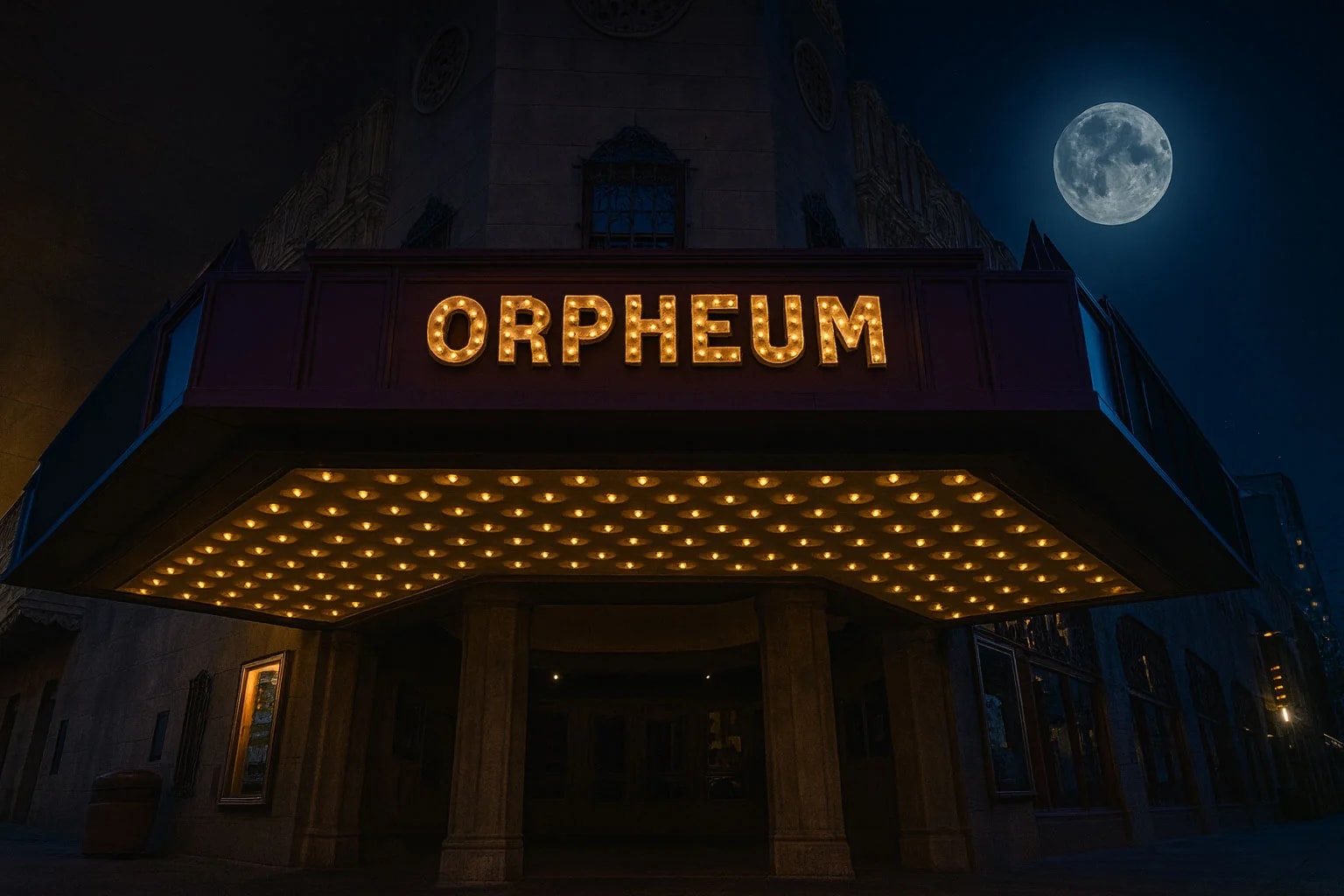
Orpheum Theater

1916Balcony apparitions

A mountain-town movie house that opened in 1916 on the site of the Majestic, an earlier theater crushed under heavy snow. Mary Costigan, reported to be Arizona's first licensed woman broadcaster, ran radio station KFXY from here. Now it is an independent concert and film hall with about 1,000 seats and a huge east-wall mural, a good stop for music fans visiting Route 66.

The story people tell

A late-night janitor reported a dark, shadowy figure gliding through the balcony aisles, and others describe an older woman in white who stands at the railing before she vanishes. Employees tell stories of toilets flushing and sinks running after close. Local lore says a man hanged himself in the crawl space to the marquee, and some believe he still walks the theater.

History we checked · 2 sources
  • The Orpheum's own history page cites newspaper accounts showing the theater opened on August 31, 1916, after snow destroyed the earlier Majestic. (Orpheum Flagstaff)
  • The same page says it closed in 1999 and reopened in 2002 as an entertainment venue under Chris Scully and partners. (Orpheum Flagstaff)

Today: Open to the public (operating live-music and film venue with a full calendar of shows) — verified October 29, 2026 (source)

Phoenix, AZ

Orpheum Theatre

1929Lady in the balcony

A 1929 Spanish Baroque Revival vaudeville palace that the City of Phoenix bought and spent about $14 million restoring before reopening it in 1997. Today it books touring Broadway, concerts and films, and volunteers lead free historic tours in season, so desert-history fans and theatergoers can both get inside.

The story people tell

Local lore says the Orpheum keeps a full company of ghosts: a serene woman in a white gown who watches shows from the balcony, an old stagehand staff call the Old Timer who still tidies ropes on the catwalks, a formally dressed performer seen bowing to an empty house, and the laughter of children in 1930s clothes heard in the lobby.

History we checked · 3 sources
  • Wikipedia's entry says Lescher & Mahoney designed the $750,000 theatre for owner-operators J.E. Rickards and Harry Nace, and that the city bought it in 1984. (Wikipedia)
  • Phoenix LocalWiki notes it later ran as the Paramount and the Palace West, showing Spanish-language films in the 1970s and 1980s. (Phoenix LocalWiki)
  • Friends of the Orpheum say only the blower of the original organ survives; today's Wurlitzer was assembled by a local organ society. (Friends of the Orpheum Theatre)

Today: Open to the public (city-owned performing-arts venue with Broadway tours, concerts and films; free historic tours offered seasonally) — verified October 29, 2026 (source)

Tombstone, AZ

Bird Cage Theatre

1881Phantom gamblers

The rowdiest stop on this list: an 1881 Tombstone theater, saloon, gambling hall and brothel that went dark in 1892 and now runs as a museum, with bullet holes still in its walls and the gilded Black Moriah hearse on display. Come by day to see the artifacts or at night for its own ghost tours; ideal for Old West fans.

The story people tell

Local lore counts 26 deaths inside, and visitors describe hearing chips clicking at the old poker table, music from an empty orchestra pit and voices from the cribs above the floor. Stories tell of Margarita, a murdered working girl in white, of Harry the stagehand, and of a feared spirit called Black Moriah.

History we checked · 1 source
  • Wikipedia's history of the Bird Cage says Lottie and Billy Hutchinson opened it on December 26, 1881, and that it closed in 1892 as the silver mines shut down. (Wikipedia)

Today: Open to the public (historic theater-saloon museum open daily, with nightly ghost tours) — verified October 29, 2026 (source)

Tombstone, AZ

Schieffelin Hall

1881Phantom audience

Tombstone's refined counterpoint to the Bird Cage: an 1881 opera house built by Albert Schieffelin, brother of the town's founder, and called the largest standing adobe building in the Southwest. The City of Tombstone owns it and uses it for plays, meetings and community events, so time a visit to a scheduled show to see inside.

The story people tell

Stories tell of a leading lady in green velvet said to recite Shakespeare on the darkened stage, a pianist heard playing a piano removed long ago, and a stage manager believed to still push actors to their marks. Witnesses describe a hall filled with transparent figures in 1880s dress applauding a show no one living can see.

History we checked · 2 sources
  • Wikipedia's entry says Albert Schieffelin and William Harwood built the hall in 1881 with 450 seats on the main floor and 125 in the gallery. (Wikipedia)
  • The same entry notes the building was deeded to the City of Tombstone in 1979 and hosts plays, council meetings and community events. (Wikipedia)

Today: Limited public access: city-owned hall; interior open during scheduled plays, meetings and events — verified October 29, 2026 (source)

The Pacific Coast

Hollywood's movie palaces, open and closed, a San Diego playhouse, San Francisco's Curran, Portland's ballroom and repertory cinema, and Seattle's Moore.

Los Angeles (Hollywood), CA

TCL Chinese Theatre

Also known as: Grauman's Chinese Theatre

1927Phantom projectionist

Sid Grauman's 1927 pagoda-fronted movie palace, where The King of Kings opened the house and The Wizard of Oz and Star Wars later premiered. Its concrete forecourt of star handprints is free to wander. Today it runs one of North America's biggest IMAX screens, so film lovers can see a new release here or book a short guided tour inside.

The story people tell

Staff lore tells of a devoted projectionist whose pipe smoke still drifts through the booth, and of a voice that whispers 'Watch your framing.' A security guard is said to have met an elderly man asking if the picture was over, later recognizing him as actor Victor Kilian. Others describe a blonde 1930s starlet sitting alone in an empty house.

History we checked · 2 sources
  • Wikipedia's history of the theater says it opened May 18, 1927, with Cecil B. DeMille's The King of Kings. (Wikipedia)
  • The same source says TCL bought the naming rights in 2013, the year the auditorium became a custom IMAX house. (Wikipedia)

Today: Open to the public (operating IMAX movie theater and premiere venue; forecourt open to view and guided tours offered) — verified October 29, 2026 (source)

Los Angeles (Hollywood), CA

Hollywood Pacific Theatre

Also known as: Warner Bros. Theatre

1928Phantom usher

Warner Bros.' own 1928 movie palace on Hollywood Boulevard, a 2,700-seat Spanish Renaissance house by G. Albert Lansburgh that later ran Cinerama. It is closed: shut as a cinema since 1994 Northridge earthquake damage and vacant since a church moved out in 2013. Its ornate facade and marquee are still a striking sight from the sidewalk for lovers of lost movie palaces.

The story people tell

Those who have been inside describe an elderly usher in uniform whose flashlight beam sweeps the dark aisles, and a voice asking, 'How many in your party?' Security guards report a woman sobbing near the restrooms, a silhouette in the projection window, and the roar of a full audience laughing and applauding for a film that isn't playing.

History we checked · 2 sources
  • Wikipedia's account says the theater opened April 26, 1928, with Glorious Betsy, in a Spanish Renaissance and Beaux-Arts design by G. Albert Lansburgh. (Wikipedia)
  • It adds that the theater closed in August 1994, mainly because of Northridge earthquake damage, and has been vacant since a church left in 2013. (Wikipedia)

Today: Closed — no longer open for business; vacant and closed since 1994; exterior and marquee visible from Hollywood Boulevard only — verified October 29, 2026 (source)

Los Angeles (Hollywood), CA

Vogue Theatre

1935Phantom projectionist

A 1935 S. Charles Lee neighborhood cinema with a sleek Streamline Moderne front, steps from Hollywood and Highland. Since closing as a movie house in 1995 it has cycled through psychics, a supper club and two museums. It is now used by a church and is no longer a theater, so this one is for sidewalk admirers of Hollywood Boulevard history.

The story people tell

Hollywood lore says a projectionist named Felix died of a heart attack in the booth in the 1970s and never clocked out. Psychics who used the empty building in the 1990s claimed it was full of activity. Stories also tell of an elegant Leading Lady in 1940s evening wear near the stage and a uniformed usher who still points guests to their seats.

History we checked · 2 sources
  • Cinema Treasures records that the Vogue opened on July 9, 1935, as an 897-seat theater designed by S. Charles Lee, and closed around 1995. (Cinema Treasures)
  • The same history says its fittings were sold off in 2001 and that the building became a church in November 2023. (Cinema Treasures)

Today: Closed — no longer open for business; now used by a church; no longer open as a theater — verified October 29, 2026 (source)
San Diego, CA

Old Town Theatre

1979Woman in white

A 1979 playhouse inside Old Town San Diego State Historic Park, which preserves the city's early adobe town. It was Cygnet Theatre's home stage for nearly two decades and still hosts live productions, so you can catch a show, then wander the historic park outside. A good pick for theater fans visiting San Diego.

The story people tell

Staff and performers say a woman in a white gown sits alone in the balcony, eyes fixed on the stage, fading when anyone points her out. Employees describe a trained male voice reciting monologues in the empty house, and our guides report shadowy figures crossing the windows and the sound of applause and laughter from the dark, locked theater.

History we checked · 2 sources
  • A history of the venue's productions lists it as Old Town Theatre in 1979, the Old Town Opera House in the early 1980s and the Theatre in Old Town from 1986 to 2006. (Steven L. Montgomery)
  • Cygnet Theatre's Wikipedia entry places the Old Town Theatre in Old Town San Diego State Historic Park and records the company's new Liberty Station home opening in September 2025. (Wikipedia)

Today: Open to the public (working playhouse hosting live productions; interior open during shows) — verified October 29, 2026 (source)

San Francisco, CA

Curran Theatre

We write about San Francisco but do not run tours there.

1922Phantom stagehand

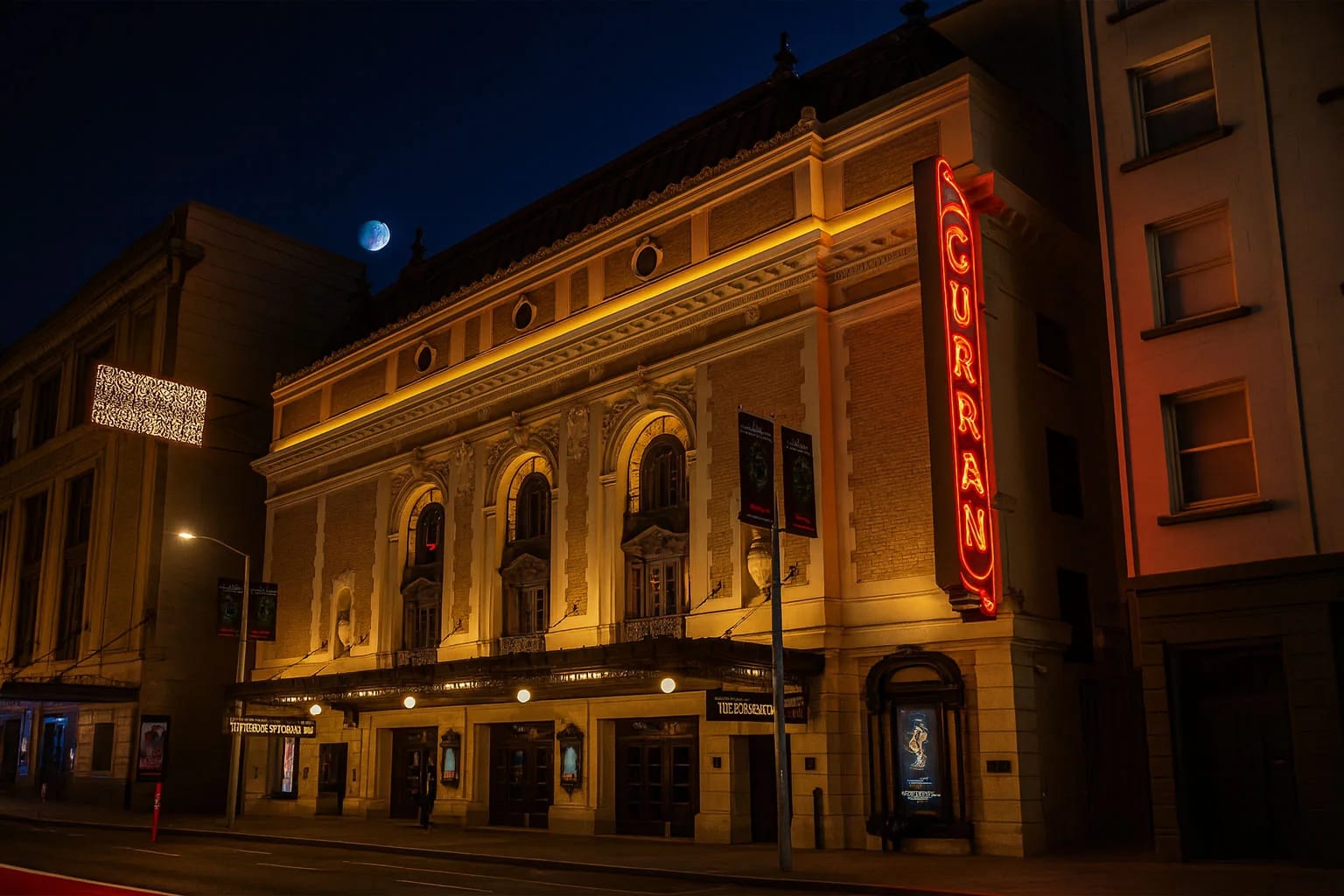
A 1922 Theater District playhouse designed by Alfred Henry Jacobs and restored in a 2015–2017 renovation, the Curran is the place on this list to see a big touring Broadway show in a gilded, century-old house. Now owned by the San Francisco Giants and run by BroadwaySF, it suits anyone pairing a night out near Union Square with theater history.

The story people tell

Theater lore says a stagehand who fell from the catwalks still walks the fly gallery, and some crew describe seeing a figure drop toward the stage and vanish. Ushers tell of a woman in 1920s finery watching from the balcony, performers describe phantom actors waiting in the wings, and staff believe Homer Curran himself still keeps an eye on his theater.

History we checked · 2 sources
  • Wikipedia's history of the Curran records its 1922 opening, a capacity of 1,667, and a renovation that closed it in 2015 before it reopened in January 2017. (Wikipedia)
  • CBS News reported in December 2025 that Carole Shorenstein Hays, who acquired the Curran in 2010, sold it to the San Francisco Giants, with BroadwaySF continuing to operate it. (CBS News Bay Area)

Today: Open to the public (operating Broadway-tour and live-performance house; inside with a show ticket) — verified October 29, 2026 (source)

Portland, OROpen

Crystal Ballroom

Also known as: Cotillion Hall

1914Phantom dancer

Opened in 1914 as Montrose Ringler's Cotillion Hall, this third-floor ballroom rides on a patented ball-bearing-and-rocker floor that still bounces under concert crowds. James Brown and the Grateful Dead played here before nearly three decades of dormancy, and McMenamins revived it in 1997. Music fans can catch a show most weeks and feel the floor move.

The story people tell

The ballroom's best-known ghost, staff and musicians say, is Lily Mae Vance, a young marathon dancer who, according to the story, collapsed on the floor in 1926. People describe a woman in a white 1920s dress waltzing alone after closing, invisible hands asking them to dance, big band music drifting through the empty hall, and the floor swaying when no one is on it.

History we checked · 3 sources
  • Wikipedia says the hall opened in early 1914 as Ringler's Cotillion Hall and joined the National Register of Historic Places in 1979. (Wikipedia)
  • McMenamins explains that the floating floor copies architect F.M. White's patented design from San Francisco's Hotel St. Francis. (McMenamins)
  • Eleven PDX recounts the 1930s renaming by Ralph Farrier and 1960s shows by James Brown and the Grateful Dead. (Eleven PDX)

Today: Open to the public (McMenamins-run concert hall with shows most weeks; history and art tours offered) — verified October 29, 2026 (source)

Portland, OROpen

Hollywood Theatre

1926Phantom projectionist

A 1926 Spanish Colonial Revival movie palace that gave Northeast Portland's Hollywood District its name. Run as a nonprofit since 1997, it is one of the rare places still projecting 35mm and 70mm prints and silents with live Wurlitzer accompaniment, making it the pick for film buffs who want their ghost story with a ticket stub.

The story people tell

Staff say the theater's longtime projectionist, remembered as Walter Grayson, never left the booth after dying at his post in 1958: projectors are heard running in the empty house, reels turn up threaded, and a silhouette appears in the booth window. Lore also tells of a wartime widow watching from her balcony seat and phantom organ music before dawn.

History we checked · 2 sources
  • Wikipedia says the Jensen and von Herberg chain opened the 1,491-seat theater on July 17, 1926, and that the district is named for it. (Wikipedia)
  • Hoodline's centennial coverage describes today's nonprofit repertory programming, including silents played on the Mighty Wurlitzer. (Hoodline)

Today: Open to the public (nonprofit repertory cinema showing 35mm and 70mm films, first-run titles and live-accompanied silents) — verified October 29, 2026 (source)

Seattle, WA

Moore Theatre

1907Lady in Red

Seattle's oldest active theater opened in 1907 for developer James Moore, its E. W. Houghton design mixing Byzantine and Italianate styles. It later became the Moore Egyptian, birthplace of the Seattle International Film Festival, and Seattle Theatre Group now books concerts and comedy there, making it the pick for music fans who want history with their show.

The story people tell

Stories tell of a Lady in Red said to watch rehearsals from the upper balcony, Stagehand Sam, believed to still work the ropes and flies, and a phantom pianist heard accompanying performers. The current theater manager has described hearing footsteps cross the empty stage, and staff describe the Moore's spirits as friendly.

History we checked · 2 sources
  • Wikipedia records the Moore's December 28, 1907 opening for developer James A. Moore, its Byzantine-Italianate design, and the Seattle International Film Festival's 1976 start there. (Wikipedia)
  • Seattle Refined's 2025 feature quotes the theater manager describing footsteps on the empty stage. (Seattle Refined)

Today: Open to the public (Seattle Theatre Group venue presenting concerts, comedy and touring shows) — verified October 29, 2026 (source)

Comparing the venues

  1. Opera houses and frontier halls

    The oldest venues here were built for touring companies, lectures and town gatherings: Charleston's Dock Street, the Savannah Theatre, Austin's Millett Opera House and Scottish Rite Theater, and Tombstone's Bird Cage and Schieffelin Hall. Their stories lean toward performers, gamblers and the towns that grew up around them.

  2. Movie palaces

    Most of the theaters on this page are the grand picture houses of the 1910s and 1920s, built for films and vaudeville, many with ornate auditoriums and theater organs: the Chicago, the Paramount, the Majestic and Aztec in San Antonio, the Midland, the Lucas and the Orpheum in Phoenix among them. Projectionists and ushers turn up in their stories again and again.

  3. Music halls and clubs

    Some venues were made for music rather than plays: Nashville's Ryman Auditorium, Portland's Crystal Ballroom, Skull's Rainbow Room and the Mahogany Jazz Hall. Their legends belong to the musicians and the audiences who filled them.

  4. Dark, private or reborn

    A few entries are no longer theaters you can walk into: venues that are closed or awaiting restoration, a working recording studio, a members' club and buildings now used for comedy or worship. Each entry says what the building is today, and their stories are still part of their cities.

Visiting a haunted theater

  • Buy a ticket

    The surest way inside most of these venues is to see a show. Several also offer daytime or guided tours; check each venue's own site for its season and tour schedule.

  • Respect the stage

    Backstage areas, booths and catwalks are working spaces, and many are off-limits to the public. Follow staff directions, and remember that ghost lights and old superstitions are part of how theater people look after their houses.

  • Closed and private venues

    Venues that are closed, private or repurposed can usually be seen from the street only. A recording studio or a members' club is not open to visitors, and we do not encourage anyone to try to get in.

Compare all 38 places in one table

Every place, its era, its story and its status today, side by side.
Comparison of the places in this collection
PlaceLocationEraThe storyToday
Cutler Majestic TheatreBoston, MA1903Phantom dignitaryOpen
Cherry Lane TheatreNew York, NY1817 building; theater since 1924Lady in WhiteOpen
Electric Lady StudiosNew York, NY1970Rock star ghostLimited access
Pittsburgh PlayhousePittsburgh, PA1933Phantom seamstressOpen
Ford's TheatreWashington, DC1865Presidential ghostOpen
Dock Street TheatreCharleston, SC1809 (theatre 1937)Lady in redOpen
Lucas Theatre for the ArtsSavannah, GA1921Phantom applauseOpen
Savannah TheatreSavannah, GA1818Ghost childOpen
Ryman AuditoriumNashville, TN1892Founder's ghostOpen
Skull's Rainbow RoomNashville, TN1948Murdered proprietorOpen
Le Petit Théâtre du Vieux CarréNew Orleans, LA1916Opening-night ghostOpen
Mahogany Jazz HallNew Orleans, LA19th centuryBoarding-house spiritsOpen
Ritz TheatreAustin, TX1929Backstage presenceOpen
Austin Scottish Rite TheaterAustin, TX1871Balcony watcherOpen
Millett Opera HouseAustin, TX1878Fallen actressLimited access
Paramount TheatreAustin, TX1915Phantom usherOpen
Alamo Street TheaterSan Antonio, TX1912Friendly theater ghostsStatus not confirmed
Aztec TheatreSan Antonio, TX1926Phantom projectionistOpen
Charline McCombs Empire TheatreSan Antonio, TX1914Depression-era beggarOpen
Majestic TheatreSan Antonio, TX1929Phantom ballet troupeOpen
William Edrington Scott TheatreFort Worth, TX1966Phantom stagehandTemporarily closed
Chicago TheatreChicago, IL1921Phantom usherOpen
Indiana Repertory TheatreIndianapolis, IN1927Woman in whiteOpen
Rivoli TheatreIndianapolis, IN1927Phantom projectionistTemporarily closed
Folly TheaterKansas City, MO1900Phantom stagehandOpen
Midland TheatreKansas City, MO1927Phantom performerOpen
Orpheum TheaterFlagstaff, AZ1916Balcony apparitionsOpen
Orpheum TheatrePhoenix, AZ1929Lady in the balconyOpen
Bird Cage TheatreTombstone, AZ1881Phantom gamblersOpen
Schieffelin HallTombstone, AZ1881Phantom audienceLimited access
TCL Chinese TheatreLos Angeles (Hollywood), CA1927Phantom projectionistOpen
Hollywood Pacific TheatreLos Angeles (Hollywood), CA1928Phantom usherClosed
Vogue TheatreLos Angeles (Hollywood), CA1935Phantom projectionistClosed
Old Town TheatreSan Diego, CA1979Woman in whiteOpen
Curran TheatreSan Francisco, CA1922Phantom stagehandOpen
Crystal BallroomPortland, OR1914Phantom dancerOpen
Hollywood TheatrePortland, OR1926Phantom projectionistOpen
Moore TheatreSeattle, WA1907Lady in RedOpen

Ghost tours

Hear these stories in person

We run tours in 20 of the destinations on this page. A tour visits a place only where its entry says “Featured on”.

Show all 20 destinations
See every tour by destination

Researched by the Ghost City Tours editorial team, reviewed by Tim Nealon

History checked against the sources cited with each place on October 29, 2026; approved October 29, 2026. Ghost stories are presented as the accounts people tell, not as established fact.

Opening hours, ownership and access change. Confirm with each place before you travel.