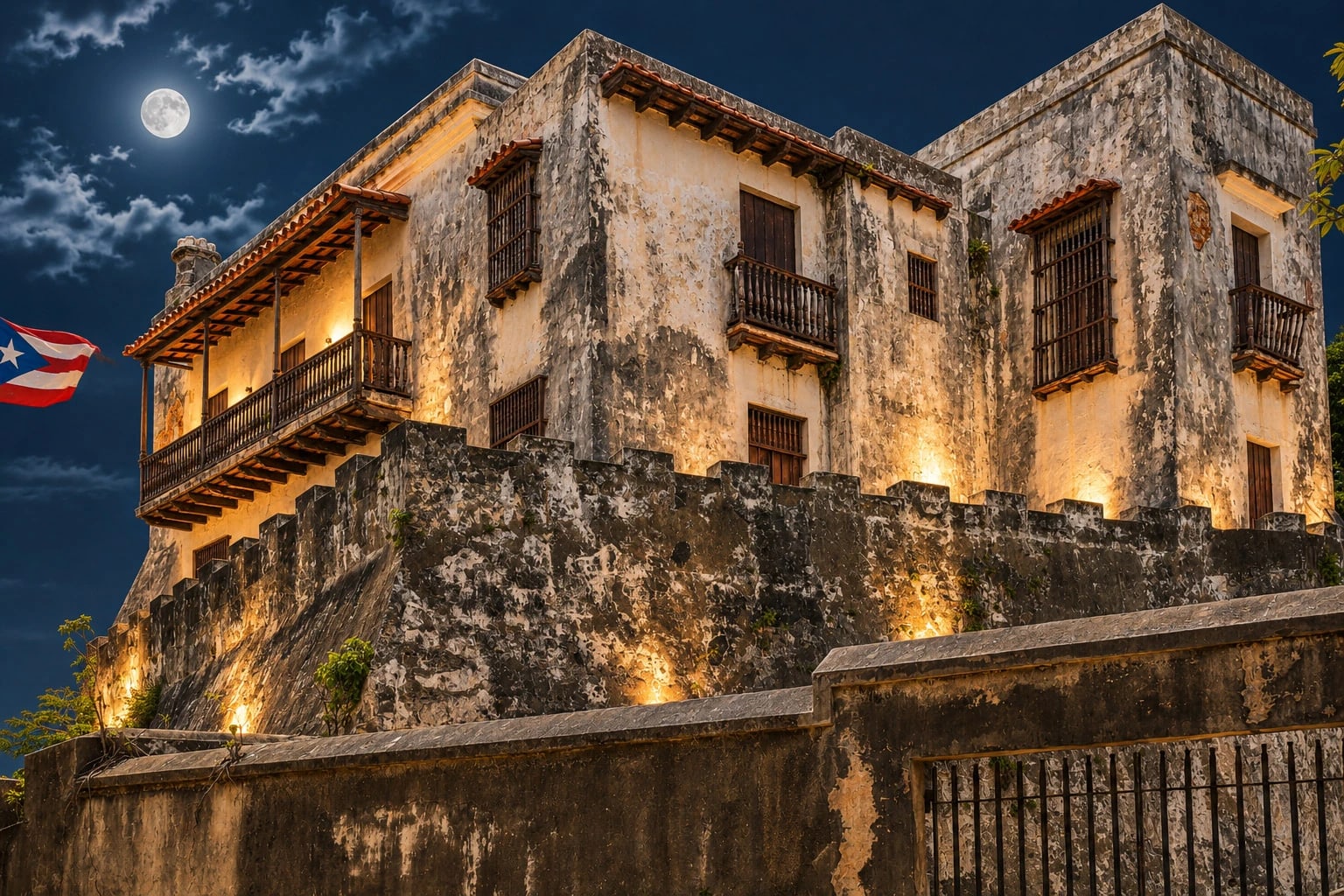
On the night of April 13, 1855, the soldiers guarding Castillo San Cristóbal turned their weapons toward the very city they had sworn to defend.
Shortly after eight o'clock, a group of Spanish artillerymen seized control of the fortress. They occupied its batteries, secured the entrance, and began firing into the darkness. Gunshots echoed over Old San Juan as officers attempted to discover what had happened. Inside the city walls, frightened residents listened to the shooting and wondered whether an invasion or revolution had begun.
The soldiers were not fighting an enemy army. They were rebelling against their own government.
What followed was one of the most extraordinary incidents in the fortress's history. For hours, armed men held military positions overlooking the city. The uprising ended, but its consequences were devastating. Seven participants were eventually executed, others were removed from their posts, and some were sent to distant assignments where disease would claim additional lives.
Today, Castillo San Cristóbal is better known for a different kind of mystery.
Visitors report hearing unexplained noises within its ancient walls. According to accounts published by Puerto Rican newspapers, some people believe they have seen soldiers dressed in eighteenth-century uniforms moving through passages and even passing through the solid masonry. Beneath the main courtyard, a cramped chamber contains mysterious drawings of Spanish ships whose creator has never been conclusively identified.
One story claims that the drawings were made by prisoners involved in the 1855 rebellion. Another attributes them to a Spanish officer who lost his mind. A third version concerns a friar supposedly chained inside the fortress for twenty years after committing murder.
The stories have become tangled together over generations, leaving an unusual mixture of documented military history, prison folklore, and unexplained apparitions.
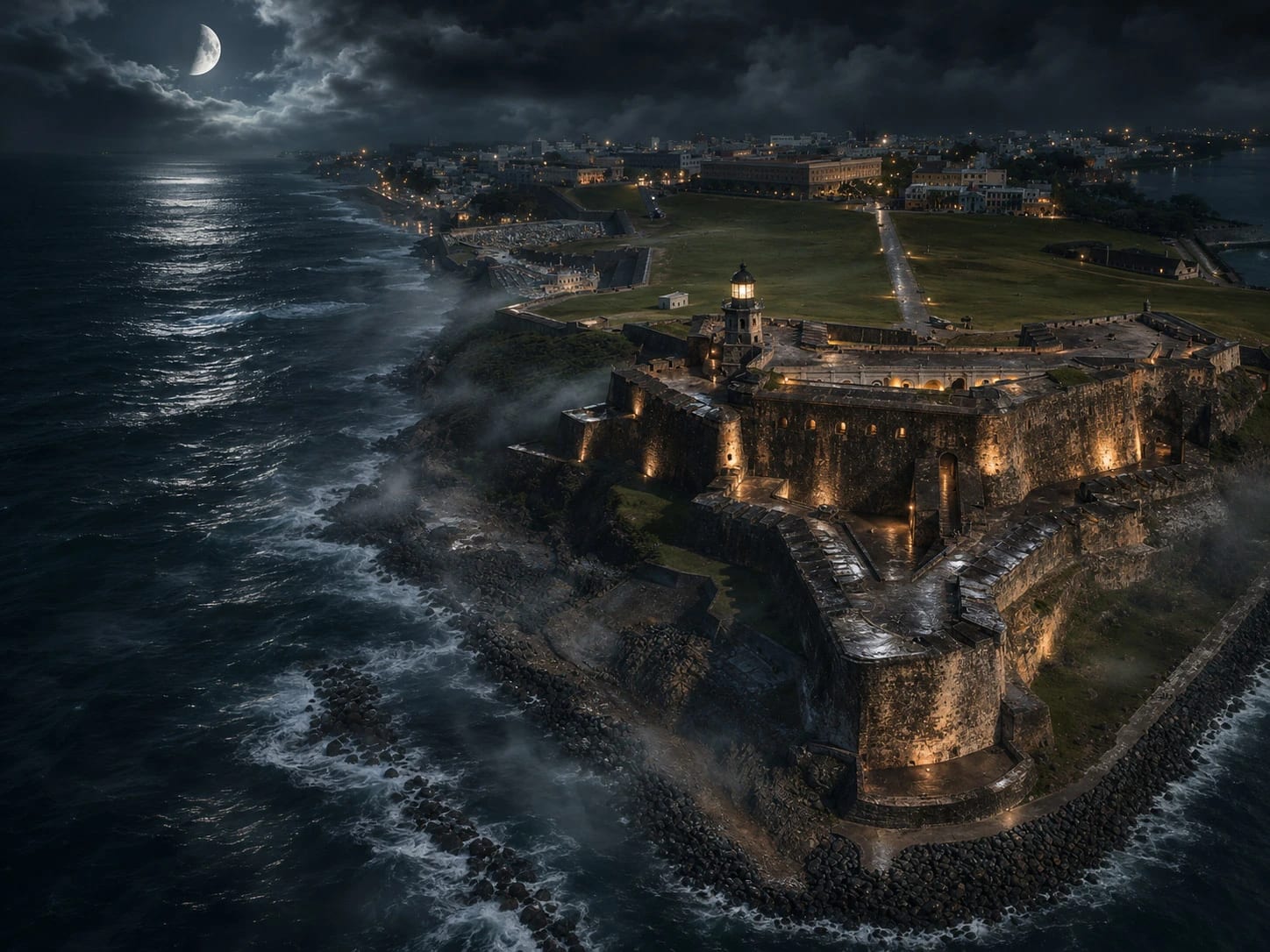
Castillo San Cristóbal stands at the eastern edge of Old San Juan, Puerto Rico. Although its sister fortress, El Morro, receives more international attention, San Cristóbal is the larger of the two. At its greatest extent, the fortification covered approximately 27 acres, making it the largest Spanish-built fortress in the New World.
Its thick walls, dry moats, artillery positions, and underground passages were designed to prevent an invading army from entering the city. The defensive system was so elaborate that some tunnels could be deliberately destroyed with explosives, burying an enemy underground rather than allowing the attackers to advance.
For more than 150 years, Spanish engineers expanded and improved the fortress, creating a military stronghold that would survive invasion attempts, rebellion, and war.
But the most disturbing stories of Castillo San Cristóbal are not all about enemies approaching from outside.
Some concern what happened within the walls themselves.
Why Spain Built Castillo San Cristóbal
To understand the fortress, it helps to begin with a military disaster that occurred long before its principal defenses were completed.
In 1598, an English expedition commanded by George Clifford, Earl of Cumberland, attacked San Juan. Rather than attempt to defeat the heavily armed harbor defenses at El Morro, Clifford landed his troops east of the city and approached the Spanish fortifications from the landward side.
The strategy succeeded.
English soldiers advanced toward the city and eventually captured El Morro, which had been designed primarily to resist attacks from the sea. The occupation lasted approximately six weeks before disease forced the English to withdraw.
Spain regained control of San Juan, but the invasion exposed a serious weakness.
The city's principal fortress guarded the entrance to the harbor. An enemy approaching from the east could threaten the entire settlement without first passing beneath El Morro's cannons.
Another catastrophe followed in 1625.
A Dutch expedition commanded by Boudewijn Hendricksz attacked San Juan and occupied much of the city. Although the Spanish defenders held El Morro, the invaders plundered the settlement and set many of its buildings on fire before departing.
The destruction convinced Spanish authorities that San Juan needed a more comprehensive defensive system.
Beginning in 1634, military engineers developed an artillery position on the elevated ground at the city's eastern approach. The site was named for Saint Christopher, the patron saint traditionally associated with travelers.
Over the following decades, this early defensive position evolved into Castillo San Cristóbal.
The fortress occupied strategically important terrain overlooking the approaches to the walled city. From its upper batteries, soldiers could observe much of the land to the east, while additional positions guarded the coast and adjoining defensive walls.
Its design reflected the lessons of the earlier invasions.
El Morro would continue to guard the harbor entrance. San Cristóbal would make it far more difficult for an enemy army to approach the city from land.
For Spain, the two fortresses formed essential parts of a much larger investment in the defense of Puerto Rico.
For the men stationed inside San Cristóbal, however, the enormous walls were also their workplace, their living quarters, and sometimes their prison.
A Fortress Designed to Trap Its Enemies
Castillo San Cristóbal was built according to a defensive philosophy known as defense in depth.
Rather than depend on a single wall, military engineers created several successive defensive positions. An invading army might capture one outer barrier only to discover another waiting behind it.
The layout used angled bastions, artillery platforms, dry moats, and outlying fortifications that allowed Spanish defenders to attack an approaching enemy from multiple directions.
This was not an ordinary castle surrounded by a single moat.
The system was designed to make every advance costly.
An enemy approaching San Juan would first encounter the outer defensive works. Those positions could be defended with artillery and musket fire while soldiers within the fortress remained protected by substantial masonry.
If attackers succeeded in capturing the first line, they would still face additional walls, elevated firing positions, and steep-sided dry moats.
The moats were deliberately left without water.
Their purpose was to create a physical obstacle while protecting the lower portions of the fortress walls from direct artillery fire. An attacking force entering such a space would be exposed to defenders positioned above it.
During the eighteenth century, two Irish-born officers serving Spain became especially important to the modernization of San Juan's fortifications.
Alexander O'Reilly arrived in 1765 to inspect and reform Puerto Rico's military establishment. He was followed by an extensive program of improvements directed by military engineers, including Thomas O'Daly and Juan Francisco Mestre.
O'Daly was responsible for much of the engineering associated with the fortress's mature design.
The surviving structure reflects military principles influenced by the work of French engineer Sébastien Le Prestre, Marquis of Vauban, whose fortifications transformed European defensive warfare during the seventeenth century.
Much of the construction visible at San Cristóbal today dates to the extensive work completed during the latter half of the eighteenth century.
The project required enormous labor.
According to the National Park Service, the workforce building San Juan's fortifications included civilian craftsmen, soldiers, prisoners, and enslaved people. Hundreds could be employed during periods of intense construction.
Their labor created the thick masonry walls and underground passages that have survived into the present day.
The resulting fortress was a remarkable achievement of military engineering, but it was also the product of a colonial society in which coerced labor helped sustain Spanish imperial power.
The people who built its defenses did not necessarily enjoy the protection those defenses provided.
The Underground Tunnels of Castillo San Cristóbal
Few features of the fortress attract as much curiosity as its tunnels.
Beneath San Cristóbal's courtyards and artillery positions lies a network of passages built to connect different parts of the defensive system.
Some are broad enough for groups of soldiers to move through. Others are narrow, enclosed spaces where the heavy masonry overhead and limited natural light create a very different atmosphere from the open plazas above.
The National Park Service explains that these tunnels allowed soldiers to move between positions while remaining protected from enemy fire.
They were also used to transport ammunition, weapons, and supplies.
During a siege, movement through the open courtyard or across exposed defensive positions could be extremely dangerous. Enemy artillery or rifle fire might prevent reinforcements from reaching the areas where they were needed.
The tunnels reduced that vulnerability.
Their construction also created an unexpected danger.
If enemy soldiers captured an entrance, they could potentially use the passageways to move deeper into the fortress.
Spanish military engineers developed a particularly ruthless response.
Some tunnels were built with features that allowed defenders to place gunpowder at predetermined points. If an enemy penetrated the passage, the powder could be detonated, collapsing a section of the tunnel and blocking the advance.
The National Park Service refers to some of these underground spaces as countermines.
The principle was simple: rather than allow an enemy to reach the interior of the fortification, the defenders could destroy part of their own underground infrastructure.
Today, visitors can observe grooves or divisions in certain tunnel walls associated with this system.
They reveal how carefully the engineers considered the possibility of an attack.
The passages were not merely escape routes or convenient shortcuts. They were designed as part of a defensive network that could become deadly if the situation required it.
In April 2015, Puerto Rican newspaper El Nuevo Día published an account of an organized exploration of San Cristóbal's tunnel system. The article described ten tunnels associated with the fortress, emphasizing their role in military communication, defense, and the movement of supplies.
Not all of the historic passages are necessarily accessible during an ordinary visit.
Some areas are restricted for preservation or safety reasons, while others may be opened only during special educational programs.
The tunnels remain among the most atmospheric parts of Castillo San Cristóbal.
But there is another underground chamber that attracts even more attention.
Its walls contain drawings left by someone whose identity may never be known.
The Mysterious Ships Drawn on the Dungeon Wall
Along one of the fortress's underground passages is a small chamber traditionally called the dungeon.
Inside, visitors can see drawings of Spanish sailing ships etched onto the wall.
There are five vessels, according to the National Park Service's visitor guide.
The drawings are not modern decorative additions. They have been preserved as historic markings, and their presence has inspired several competing explanations concerning the people once confined within the fortress.
The simplest assumption is that a prisoner created them while enduring a long period of confinement.
But which prisoner?
One story attributes the drawings to a Spanish captain who committed an offense and was imprisoned inside the chamber. Another claims that the artist was a friar punished for murder. A third connects the ships to soldiers involved in the artillery rebellion of 1855.
The National Park Service acknowledges the uncertainty surrounding the chamber.
Its official visitor material describes the drawings as the work of an unknown prisoner, while another National Park Service publication repeats the story of a friar confined there for many years.
The agency's frequently asked questions provide an important qualification: San Cristóbal did not contain a purpose-built dungeon resembling the torture chambers familiar from movies.
Different rooms within the fortifications were used to hold prisoners at different times. The chamber containing the ship drawings became known as a dungeon through its historical use and later interpretation.
That distinction makes the markings especially interesting.
The drawings are physical evidence that someone spent time inside the chamber. The precise circumstances under which they were created are much less certain.
The five vessels remain visible, while the person who drew them has effectively disappeared from the record.
For visitors standing inside the small stone chamber, the temptation to imagine that person's circumstances is considerable.
Perhaps he was a soldier longing to return to Spain.
Perhaps he had been punished for abandoning his duties or participating in an uprising.
Or perhaps the ships had a meaning entirely different from the explanations later attached to them.
Without a securely identified artist, the drawings remain an unresolved historical mystery.
The Friar Who Was Supposedly Chained for Twenty Years
One of the most disturbing stories associated with the underground chamber concerns a religious man accused of murder.
According to an account published on the National Park Service's Castillo San Cristóbal history page, a friar was chained to a wall inside the fortress for more than twenty years after committing a killing.
The description emphasizes the suffering imposed by the chamber itself.
The room was dark and poorly ventilated. Heat, insects, rodents, and isolation reportedly made confinement especially unpleasant.
In the traditional account, the prisoner endured these conditions for decades.
A man held in such circumstances would have experienced the fortress very differently from the soldiers who guarded it.
The military chambers above ground provided access to courtyards, fresh air, and the routines of garrison life. A prisoner confined in an underground room would have been separated from much of that activity.
Even the passing of time could become difficult to judge without regular daylight.
The story is particularly unsettling because the supposed prisoner was a friar.
His religious identity creates an obvious contradiction with the crime attributed to him, adding a moral and spiritual dimension to the account.
However, the available National Park Service description does not identify the man by name, establish the date of the murder, or cite a judicial record confirming the sentence.
A separate visitor account attributes the drawings of the ships to a friar, while other interpretations give that credit to a military officer or the soldiers involved in the 1855 mutiny.
These variations should not be combined into one supposedly verified biography.
The historical record supports the existence of the confinement chamber and the drawings. The story of a murderous friar chained there for twenty years remains a reported tradition that would benefit from archival confirmation.
There is no established evidence that the friar's ghost haunts the chamber.
Yet the story has become part of the fortress's darker reputation.
Standing beneath the weight of the masonry, surrounded by the old markings, visitors can appreciate how imprisonment inside such a place might have inspired tales of extraordinary suffering.
Even without a confirmed prisoner, the room is a reminder that the fortress was used to confine people as well as defend a city.
The Night Spanish Soldiers Rebelled Against Their Own Fortress
The rebellion of April 13, 1855, is one of the most compelling documented events in San Cristóbal's history.
It began with a dispute over military service.
During the previous year, political upheaval in Spain had produced reforms affecting soldiers stationed on the Iberian Peninsula. Among them was a reduction in the required period of military service.
Spanish troops serving overseas expected similar treatment.
But the reduction did not apply to their assignments in Puerto Rico.
For artillerymen stationed in San Juan, the distinction was infuriating. They were serving the same Crown as soldiers in Spain, yet they were being denied the benefits granted to men stationed at home.
Complaints continued for months without a satisfactory resolution.
On April 13, tensions finally erupted.
Shortly after eight o'clock that evening, members of the artillery brigade seized control of Castillo San Cristóbal.
They occupied the batteries and blocked officers from entering the fortress.
Gunfire began.
The soldiers fired weapons into the air and toward portions of the city, apparently attempting to encourage infantry units to join their rebellion. They called for support from other regiments stationed in San Juan.
But the expected assistance never came.
Colonel Francisco Zacaguini, commander of the artillery department, approached the fortress and eventually managed to communicate with the rebels.
According to historical research by Andrés Sanfeliú Cruz, drawing on contemporary military records and eyewitness accounts, the artillerymen demanded a two-year reduction in their period of service.
They wanted the same concession that had been granted to soldiers elsewhere in Spain's military establishment.
The rebellion developed into a confrontation that threatened the security of the entire city.
San Cristóbal's cannons and firearms had been intended to repel foreign enemies. Now some of those weapons were controlled by men refusing orders from the Spanish colonial authorities.
Residents had little way of knowing how the confrontation would end.
The city gates were closed at night, and reports of soldiers firing weapons from the fortress caused widespread alarm.
The situation was made worse by uncertainty over whether the uprising represented a larger conspiracy.
Some newspapers in Spain later speculated that the incident might have involved foreign agents or political revolutionaries. Such claims were not established by the evidence examined in modern historical research.
The immediate grievance concerned military service.
But the consequences extended far beyond the artillerymen themselves.
The Panic, the Deaths, and the Seven Executions of 1855
The uprising created panic among residents of San Juan.
Historical accounts describe people attempting to flee the city, some by crossing the water in small boats.
The confusion resulted in additional tragedies.
Andrés Sanfeliú Cruz, drawing on the writings of Governor Andrés García Camba and other historical sources, recounts an incident in which a boat overturned during the evacuation, killing three Black women and an infant.
The four deaths occurred amid the panic surrounding the rebellion, rather than as the result of a direct military attack.
The distinction does not make them less significant.
A dispute over the terms of military service had placed ordinary residents in danger, and people who had no involvement in the rebellion suffered fatal consequences.
The immediate confrontation at San Cristóbal eventually ended, but the government's response continued for months.
Military authorities investigated the participants and determined punishments.
Some soldiers were transferred to other assignments, including posts on Vieques and elsewhere in Puerto Rico.
Others faced much more severe consequences.
Seven artillerymen associated with the broader rebellion were executed by firing squad on September 24, 1855.
Their executions followed the suppression of the uprising and the subsequent investigation of the events, including an attempt by some rebels to seize ammunition at other defensive positions.
The available accounts do not establish that the seven men were executed inside Castillo San Cristóbal itself.
That is an important distinction because the fortress is often treated as though every event connected with its garrison occurred within its walls.
The rebellion began there, but its consequences unfolded across the military establishment.
Some participants were sent to locations where outbreaks of yellow fever and cholera would later cause additional deaths.
The uprising also damaged the career of Governor García Camba, whose handling of the crisis became the subject of criticism and investigation.
The historical record is unusually rich.
An index of Spanish military archives preserved by the National Park Service includes references to the 1855 artillery rebellion, while surviving military memoirs and contemporary newspaper accounts provide additional detail.
Modern research has brought those sources together, demonstrating that the uprising was far more than a brief disturbance inside a fortress.
It involved questions of military discipline, unequal treatment, colonial administration, and the danger of allowing armed troops to turn against their commanders.
That history also gives the mysterious ship drawings a more complicated context.
There really was a mutiny in 1855.
Whether the prisoners who left the drawings had anything to do with it remains unproven.
The Ghostly Soldiers Who Walk Through San Cristóbal's Walls
The fortress's most recognizable supernatural reports concern soldiers who appear to remain on duty long after their deaths.
In October 2015, Puerto Rican news outlet NotiCel published an article identifying six reportedly haunted locations across the island.
Castillo San Cristóbal was among them.
The article described accounts attributed to employees and visitors who reported strange sounds within the old fortifications.
More unusually, it mentioned people who claimed to have seen soldiers dressed in eighteenth-century military clothing moving through the fortress's thick stone walls.
The description is striking.
These are not ordinary reports of a distant figure disappearing around a corner. The legend concerns apparitions that seemingly pass through solid masonry.
To believers, such an experience might suggest that the ghostly soldiers are following routes that existed during their lifetimes, perhaps moving through spaces that have since been altered or blocked.
That interpretation is speculative, but it illustrates how closely the stories are tied to the building's military history.
San Cristóbal was occupied by generations of soldiers. Its rooms served as barracks, offices, storerooms, guard stations, and defensive positions.
Men moved through the same courtyards and passages for decades, following routines established by officers and enforced through strict military discipline.
Some spent years stationed far from their families.
The National Park Service estimates that the garrisons of El Morro and San Cristóbal generally contained several hundred soldiers, although their numbers increased substantially during periods of danger.
The reported apparitions therefore resemble the people most closely associated with the fortress's original purpose.
But the claims remain difficult to verify.
The NotiCel account does not identify a particular soldier's ghost by name or establish the date and circumstances of a specific sighting.
There is also no independent evidence demonstrating that the figures seen by visitors were supernatural.
The report documents the existence of a local ghost tradition rather than proving the presence of an apparition.
The distinction matters because Castillo San Cristóbal contains numerous architectural features that can make familiar scenes appear unusual.
Its walls are thick, its passages change elevation, and its historic chambers connect through openings that may not be visible from every vantage point.
A person moving through an archway, behind a projection of masonry, or into a darkened passage could appear to disappear suddenly.
Such possibilities should be considered before treating an unexplained sighting as evidence of a ghost.
Nevertheless, the story has become part of San Cristóbal's reputation.
The same walls that once protected soldiers from enemy weapons are now said to be crossed by the figures of soldiers who supposedly never left.
What Happened During the British Invasion of 1797?
The greatest test of San Cristóbal's defensive design came in April 1797.
A British expedition commanded by General Ralph Abercromby and Admiral Sir Henry Harvey approached Puerto Rico with the intention of capturing San Juan.
The attackers understood the city's strategic importance and had reason to believe that taking the port would strengthen Britain's position in the Caribbean.
They attempted to approach from the eastern side of the island, following a general strategy similar to the one that had succeeded during the English occupation of 1598.
But the defenses had changed dramatically.
San Cristóbal now formed the center of an elaborate series of fortifications that protected the city's landward approaches.
Its outlying batteries, moats, and walls forced the British to confront multiple defensive positions before reaching the city.
The invaders landed east of San Juan and established artillery positions, but their advance met sustained resistance.
Spanish regular troops and local defenders fought to prevent the attackers from breaking through the defensive perimeter.
The battle continued for approximately two weeks.
By the end of April, the British recognized that the expedition was failing. They withdrew without capturing the city.
San Cristóbal's defensive system had helped prevent another conquest.
The battle also became the source of one of Old San Juan's most famous legends.
According to the story of La Rogativa, a nighttime religious procession led by local women and clergy was mistaken by British forces for approaching reinforcements, contributing to their decision to withdraw.
The procession is remembered through the La Rogativa monument elsewhere in Old San Juan.
The claim that the procession caused the British retreat is a traditional explanation, not a settled military conclusion. The documented defensive operations and the difficulties faced by the British army offer a more substantial explanation for the outcome.
Still, the legend shows how quickly an important military event could acquire religious and supernatural dimensions.
At San Cristóbal, the victory demonstrated that the generations of engineering work had not been wasted.
The fortress was prepared for an enemy who never succeeded in reaching its heart.
The next major threat would arrive more than a century later, when modern warships appeared off the coast.
The First Cannon Shot of the Spanish-American War in Puerto Rico
On May 10, 1898, Captain Ángel Rivero Méndez was on duty at Castillo San Cristóbal when he observed an American vessel approaching the coast.
The ship was the USS Yale, an auxiliary cruiser operating during the Spanish-American War.
Rivero recognized the danger.
Spain and the United States were already at war, and the appearance of an American vessel near San Juan could indicate an attempt to blockade or attack the harbor.
He requested permission to open fire.
According to Rivero's own later account, preserved in his Crónica de la Guerra Hispanoamericana en Puerto Rico, the American ship was initially approximately 6,500 meters away.
Spanish authorities hesitated.
The vessel had not clearly displayed its national flag, and officials worried about accidentally attacking a ship belonging to another country.
The delay lasted more than an hour.
By the time permission arrived, the Yale had moved farther offshore.
Rivero warned that the ship was beyond the effective range of his artillery.
Nevertheless, he was ordered to fire.
At approximately 12:10 p.m. on May 10, 1898, an Ordóñez cannon at San Cristóbal discharged toward the American vessel.
The projectile fell short.
Rivero later described watching the shot strike the water and bounce before disappearing into the sea.
The incident marked the first artillery shot fired by San Juan's defenses during the Spanish-American War in Puerto Rico.
The confrontation has sometimes been described in broader accounts as the beginning of the war in Puerto Rico, although naval encounters involving American and Spanish vessels had already occurred around the island.
Two days later, on May 12, Admiral William T. Sampson's American fleet bombarded San Juan.
The attack struck military installations and portions of the city.
El Morro suffered damage, and San Cristóbal's batteries responded to the American ships.
The episode illustrated how much warfare had changed since the fortress's original construction.
The great stone walls had been designed for an era of sailing ships and muzzle-loading cannons. Modern naval artillery could strike from distances and with destructive power that the eighteenth-century engineers had never fully anticipated.
The Spanish ultimately lost the war, and Puerto Rico passed to United States control.
For the soldiers stationed at San Cristóbal, the result marked the end of more than two and a half centuries of Spanish military authority over the city.
But the fortress did not become an abandoned ruin.
Its military purpose changed again.
The American Bunkers Hidden Inside the Spanish Fortress
After the Spanish-American War, the United States incorporated San Cristóbal and other historic installations into its military defenses in Puerto Rico.
During the twentieth century, the old Spanish fortress became part of Fort Brooke.
American military planners continued to value the elevated position overlooking San Juan's coastline, although modern threats required new defensive equipment.
During World War II, the United States constructed additional observation facilities and a reinforced command bunker at San Cristóbal.
The bunker, built in 1942, was associated with the military's Antilles command structure.
It provided protected space for operations and communications related to the defense of the Caribbean.
The presence of a modern military bunker inside a centuries-old Spanish fortress is one of the building's most unexpected features.
Visitors exploring San Cristóbal move between defensive systems created for entirely different eras of warfare.
The Spanish built tunnels and artillery positions to confront armies moving across the land.
The American military added facilities associated with twentieth-century air and naval operations.
Some of those installations remain visible.
The former command bunker has served as a visitor facility, while observation posts on the upper levels provide evidence of the military adaptations made during the 1940s.
The architecture illustrates the fortress's remarkable longevity.
A position originally developed in the seventeenth century was still considered strategically useful during the Second World War.
Yet the historic site has another layer that visitors rarely consider.
The Spanish walls did not always survive intact.
During the late nineteenth century, portions of San Cristóbal's outer defenses were demolished as San Juan expanded beyond its old boundaries.
The removal of those structures allowed new development, but it also altered the appearance of the original fortification.
Some of the spaces that now seem disconnected from the fortress once formed parts of an integrated defensive network.
That changing geography helps explain why modern visitors sometimes misunderstand the underground passages.
It also contributed to one of San Juan's most persistent myths.
Do Secret Tunnels Connect San Cristóbal to El Morro?
Stories about secret tunnels beneath Old San Juan are common.
Some claim that Castillo San Cristóbal connects underground with El Morro. Others describe passages leading toward La Fortaleza, the city hall, or additional historic buildings.
The idea is appealing.
Old San Juan contains centuries-old structures, underground military chambers, and narrow streets that conceal much of the city's earlier history.
A hidden passage connecting its major landmarks seems entirely plausible in such a setting.
But the National Park Service has addressed the stories directly.
There is no documented secret tunnel connecting Castillo San Cristóbal with El Morro, La Fortaleza, or the other famous buildings of Old San Juan.
The tunnels inside the fortresses were constructed for specific military purposes. They connected defensive positions and allowed troops to move through protected spaces.
They did not form an underground transportation network beneath the city.
The distinction is important because the existence of real military tunnels can make invented connections seem credible.
Visitors who explore one of San Cristóbal's underground passageways may reasonably wonder where it leads.
If the passage disappears into darkness or continues beyond an inaccessible doorway, imagination can supply an answer.
The actual engineering is more interesting.
The tunnels were designed to move soldiers and supplies, protect artillery positions, and, when necessary, prevent enemy troops from advancing by allowing portions of the passageways to be destroyed.
Their purpose was military survival.
No additional secret network is necessary to make them remarkable.
Ghost Hunters and the Paranormal Investigations of San Cristóbal
San Cristóbal's haunted reputation attracted the attention of paranormal investigators in December 2010.
A production associated with the television franchise Ghost Hunters visited the old fortifications to examine reports of unusual activity.
Puerto Rican newspaper Primera Hora reported on the investigation on December 16, 2010.
The article included comments from National Park Service historian Eric López, who described the stories associated with the fortifications and the reports of unusual figures seen by visitors and employees.
According to the newspaper, some witnesses claimed to have photographed strange forms or shadows.
López distinguished those accounts from his own experiences, explaining that he had not personally observed the reported phenomena.
Another newspaper, El Nuevo Día, reported on the production's visit, noting that the dark passages, confinement chambers, isolated sentry boxes, and enormous defensive walls had attracted the paranormal investigators.
The setting was certainly well suited to a television investigation.
A historic fortress offers dark rooms, unusual acoustics, military history, and plenty of visual opportunities for creating suspense.
But television production and historical investigation are not the same thing.
A strange sound recorded inside a tunnel does not demonstrate the presence of a ghost. Nor does an unusual photograph establish that an eighteenth-century soldier has returned.
The production documents the continued interest in San Cristóbal's supernatural reputation.
It does not independently verify the claims that inspired the investigation.
The important point is that the reports have become part of the fortress's modern cultural history.
A site originally built to protect a city against enemy soldiers now attracts visitors interested in the possibility that some of its former defenders remain there.
La Garita del Diablo: The Fortress's Most Famous Legend
No discussion of Castillo San Cristóbal's supernatural reputation would be complete without mentioning La Garita del Diablo.
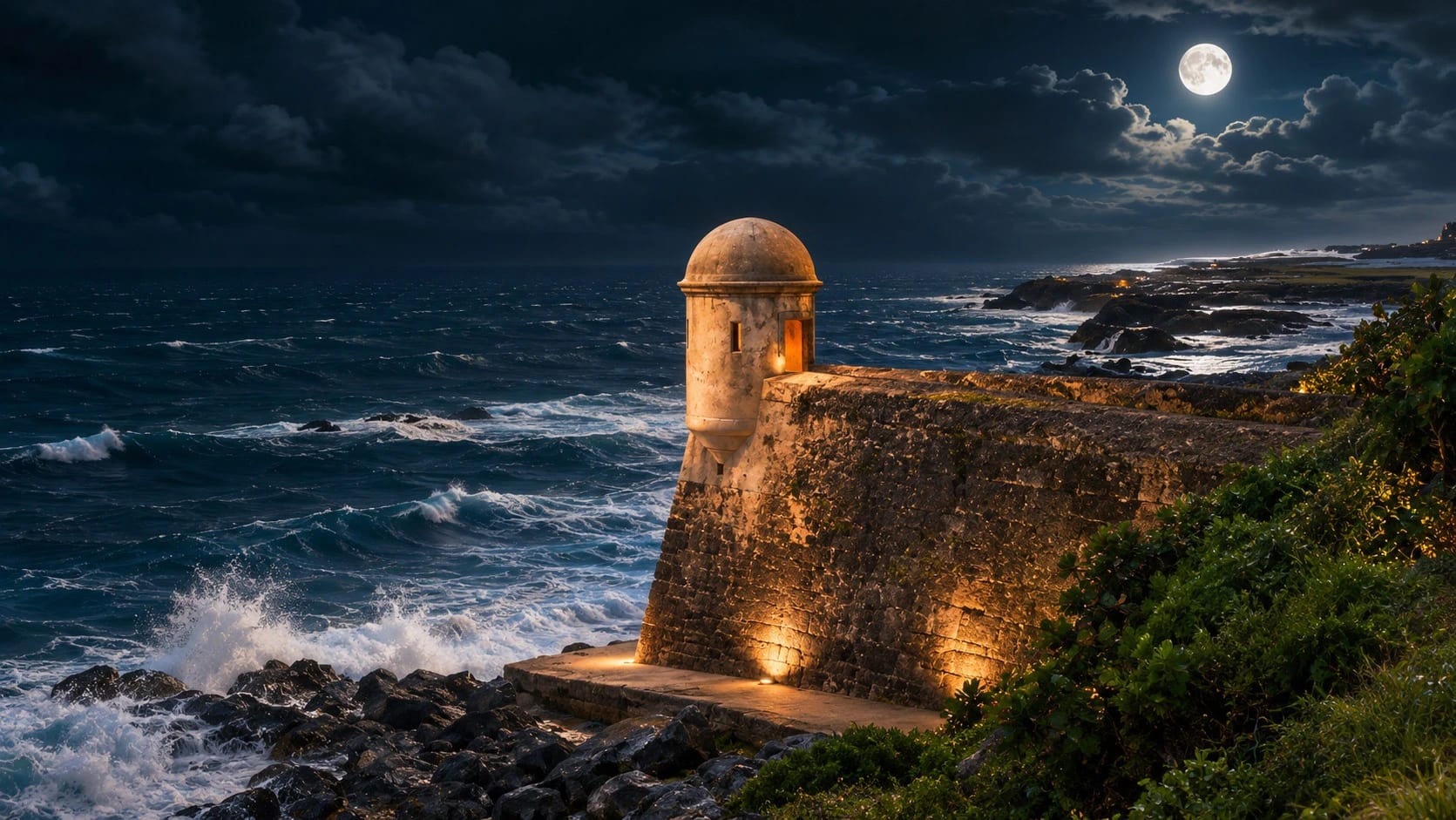
The Devil's Sentry Box stands on the exposed northern coastline beneath the main defensive positions, in an area known as El Espigón.
According to the famous legend, Spanish soldiers assigned to this isolated lookout disappeared during their night watches.
The story became so closely associated with the location that the guardhouse acquired a name suggesting supernatural danger.
But there is more than one version of the legend.
An account published by Manuel Fernández Juncos in 1883 offered a surprisingly human explanation involving a soldier who abandoned his post and fled rather than face military punishment.
Another version, published by Cayetano Coll y Toste in 1924, described a soldier named Sánchez and a young woman named Dina who supposedly escaped together rather than surrender their relationship to the restrictions of military life.
The two literary traditions offer alternatives to the frightening explanation that the Devil carried away the missing soldiers.
La Garita del Diablo deserves its own detailed treatment because its history, setting, and folklore differ from those associated with San Cristóbal's interior chambers and reported phantom soldiers.
You can explore the full story in our article about La Garita del Diablo.
The sentry box is part of the broader fortress landscape, but its legend should not be confused with the mysterious ship drawings or the prisoners reportedly confined inside San Cristóbal.
Those stories have their own origins.
Is Castillo San Cristóbal Really Haunted?
The supernatural claims associated with Castillo San Cristóbal vary considerably in their historical reliability.
The reported figures of eighteenth-century soldiers appear in published Puerto Rican accounts of haunted locations, including the 2015 NotiCel article. However, the identities of the supposed apparitions and the circumstances of the sightings have not been independently established.
Stories about strange noises inside the fortress are similarly difficult to assess.
Historic buildings contain unusual acoustics. Wind moving through openings, sounds traveling between chambers, and the movement of visitors or staff can produce noises that seem to originate from unexpected places.
In a fortress containing long tunnels, vaulted rooms, and thick masonry, those effects can be especially noticeable.
The underground drawings are different.
They are physical objects that can be examined and studied.
The historical question concerns their creator and purpose, not whether the drawings exist.
Likewise, the artillery rebellion of 1855 is supported by military records, memoirs, and historical research. The uprising took place, soldiers seized the fortress, and seven participants were eventually executed.
The 1898 cannon shot is documented through the account of the officer who fired it.
The construction of the tunnels, the military engineering, and the fort's adaptation during World War II are also well established.
Together, those events provide a substantial historical foundation for understanding why San Cristóbal acquired an unsettling reputation.
It was a place where men lived under strict military discipline, where prisoners could be confined, and where soldiers faced the possibility of being ordered into battle.
The fortress also witnessed a rebellion in which the danger came from within the garrison rather than from an invading enemy.
Its history contains fear, violence, punishment, and death.
But those experiences do not automatically establish the existence of ghosts.
What the stories reveal is how people continue to interpret the building long after its military purpose has ended.
A passage designed to transport ammunition becomes a place where visitors imagine hearing footsteps.
A chamber containing historic ship drawings becomes associated with prisoners whose identities may never be established.
A figure glimpsed near a stone wall becomes a soldier who supposedly died centuries ago.
The documented history gives these stories their setting.
Folklore supplies the possibility that the past has not entirely disappeared.
Visiting Castillo San Cristóbal in Old San Juan
Castillo San Cristóbal is located at the eastern end of Old San Juan, near Calle Norzagaray and Avenida Muñoz Rivera.
The fortress is administered by the National Park Service as part of San Juan National Historic Site.
Visitors can explore its main courtyard, artillery positions, historic barracks, selected underground passages, and other areas made accessible by park staff.
Some of the most interesting features include the vaulted casemates, which served as barracks and workspaces, and the underground chambers associated with the fort's defensive tunnel system.
The main courtyard provides an opportunity to appreciate the fortress's military scale.
Eleven casemates line the plaza, while artillery ramps connect different levels. Beneath the courtyard, five historic cisterns were designed to hold approximately 800,000 gallons of rainwater.
The enormous capacity illustrates how carefully Spanish engineers planned for the possibility of a prolonged siege.
A fortress surrounded by an enemy army could not depend on regular deliveries of fresh water.
San Cristóbal's elaborate collection and storage system was intended to keep the garrison supplied when the normal routes into the city were threatened.
The upper levels offer broad views toward the Atlantic, the eastern coastline, and portions of Old San Juan.
Visitors can also observe defensive positions that reveal how the fortification controlled approaches from land and sea.
Can visitors enter the underground tunnels?
Selected historic tunnels are generally included in public access to Castillo San Cristóbal.
However, not every passage is open, and conditions or preservation requirements may affect which areas visitors can explore.
Some spaces may be restricted, while special interpretive programs occasionally provide access or historical explanations beyond those available during self-guided visits.
The tunnel system contains stairs, ramps, enclosed spaces, and uneven surfaces, making comfortable walking shoes advisable.
Anyone with mobility concerns or difficulty navigating confined spaces should consult park staff before entering.
Hours and admission
The National Park Service currently lists Castillo San Cristóbal as open daily from 9:00 a.m. to 5:00 p.m., except for Thanksgiving Day, Christmas Day, New Year's Day, and any temporary closures.
Standard admission is $10 per visitor aged 16 or older, with admission free for children aged 15 and younger.
An individual admission ticket is valid for 24 hours and provides access to both Castillo San Cristóbal and Castillo San Felipe del Morro.
Operating hours, accessibility arrangements, and fees can change.
For current information, consult the National Park Service visitor guide, official operating hours, and admission details.
Ordinary evening access does not include exploring the fortress's interior after it has closed.
Visitors interested in the atmosphere of Old San Juan after dark can experience the surrounding historic district through its public streets and approved walking routes.
The Fortress That Kept Its Enemies Outside
Castillo San Cristóbal was built to protect San Juan from the kinds of invasions that had devastated the city during the sixteenth and seventeenth centuries.
Its enormous walls and layered defenses made an eastern approach far more difficult for enemy armies.
The British invasion of 1797 demonstrated the strength of those defenses.
The fortress survived the Spanish-American War and remained in military use through the twentieth century.
Yet some of the most disturbing events in its history were not caused by foreign enemies.
The rebellion of 1855 began with Spanish soldiers turning their weapons against their own authorities. The prisoners associated with the fortress were confined by the military establishment the walls were designed to protect.
The people who constructed its defenses included workers who were not free to refuse the labor demanded of them.
Those histories complicate the familiar image of an impregnable fortress standing heroically against invasion.
San Cristóbal was a product of military ingenuity, but it was also part of an empire maintained through discipline, confinement, and coercive power.
That complicated past gives its ghost stories an unusual resonance.
The figures supposedly seen walking through the walls resemble the men who once guarded the city.
The mysterious drawings in the underground chamber preserve the presence of someone whose name may have been forgotten.
And the dark tunnels, originally constructed to keep soldiers safe, were designed to become deadly traps if the fortress was overrun.
The ghosts remain unproven.
The danger that once existed inside Castillo San Cristóbal was real.
Discover the Haunted History of Old San Juan
For nearly five centuries, San Juan's fortifications have shaped the lives of the people who lived within their walls.
Military engineers transformed the coastline into one of the most sophisticated defensive systems in the Americas. Soldiers defended the city against invading armies, while ordinary residents lived through wars, political upheaval, and the uncertainties of colonial life.
The stories that survived those centuries include both documented events and supernatural legends.
At El Morro, visitors encounter tales of a mysterious Woman in White and apparitions resembling soldiers who once guarded the harbor.
The isolated lookout known as La Garita del Diablo became associated with sentries who supposedly vanished during their night watches.
Elsewhere in Old San Juan, former convents, historic theaters, churches, and prisons preserve their own unsettling traditions.
At Ghost City Tours, we bring the history and folklore of Old San Juan to life through guided evening walking tours.
Families interested in the city's legends can join The Night of Souls Ghost Tour, a family-friendly exploration of Puerto Rican ghost stories and historic mysteries.
For guests seeking a darker perspective, The Dead at the Gate explores the more unsettling chapters of Old San Juan's history, including the conflicts, deaths, and legends associated with its fortified past.
The stories of Castillo San Cristóbal offer a reminder that history can be more disturbing than anything invented to frighten visitors.
One night in 1855, the soldiers inside the fortress seized its batteries and turned their weapons toward the city.
Seven men eventually faced execution for their participation in the rebellion. Others were punished or sent away, while the fortress continued to stand above San Juan.
More than a century and a half later, visitors walk through the same old passages and wonder who might have occupied them.
The cannons are silent now, and the old military barracks no longer house Spanish soldiers.
But according to the legends, figures in eighteenth-century uniforms sometimes move through the fortress's walls as though nothing has changed.
Perhaps they are only stories.
There is, however, one mystery that remains visible to anyone permitted to enter the old underground chamber.
Five ships are still drawn upon the stone.
The person who put them there has never been conclusively identified.
Historical References and Sources
1. National Park Service — Official History of Castillo San Cristóbal
Castillo San Cristóbal: History and Culture
The principal official source for the fortress's construction, defensive architecture, tunnels, cisterns, casemates, and military history. Also describes the underground chamber containing ship drawings, the tradition concerning a friar imprisoned for murder, and the World War II additions.
2. National Park Service — Frequently Asked Questions
San Juan National Historic Site: Frequently Asked Questions
Particularly important for distinguishing documented history from common misconceptions. Discusses the dungeon chamber, the mysterious ship drawings, the traditional connection to the 1855 mutiny, and the absence of secret tunnels connecting San Cristóbal with El Morro or other landmarks. Also documents the role of enslaved laborers, prisoners, soldiers, and civilian craftsmen in the construction of San Juan's fortifications.
3. National Park Service — Castillo San Cristóbal Visitor Guide
Castillo San Cristóbal Official Visitor Guide (PDF)
A detailed illustrated guide to the fortress's architecture, underground tunnels, military chambers, and defensive systems. Of particular value are the descriptions of the ship drawings, the countermining system, the World War II bunker, and the restored eighteenth-century barracks.
4. Andrés Sanfeliú Cruz — The 1855 Artillery Rebellion, Part One
El secuestro de San Juan (parte 1) — November 29, 2023
An unusually thorough modern historical investigation drawing on Spanish military archives, contemporary newspaper accounts, memoirs, and Puerto Rican historians. Documents the origins of the dispute over military service, the seizure of Castillo San Cristóbal on April 13, 1855, the shooting, the response of military authorities, and the panic among San Juan's population.
5. Andrés Sanfeliú Cruz — The 1855 Artillery Rebellion, Part Two
El secuestro de San Juan (parte 2) — December 7, 2023
Continues the investigation, examining the reaction of Spanish newspapers, the consequences for Governor Andrés García Camba, the punishment of participants, and the execution of seven artillerymen on September 24, 1855. Both parts provide extensive references to original archival material and historical scholarship.
6. Spanish Military Archives — Artillery Rebellion Records
The National Park Service's inventory of Spanish military archival documents includes an 1855 record titled Rebelión de Artilleros en Puerto Rico. The catalog describes military correspondence concerning the April 13 uprising and the involvement of approximately forty artillerymen in attempts to seize ammunition. The listing confirms the existence of original archival records relevant to the rebellion.
7. National Park Planner — The Dungeon and Ship Drawings
Dungeon of Castillo San Cristóbal — March 27, 2024
Detailed visitor documentation, including photographs of the underground chamber, historic ship drawings, and tunnel infrastructure. Especially useful for comparing the competing stories identifying the artist as a friar, Spanish officer, or participant in the 1855 mutiny.
8. NotiCel — Ghostly Soldiers at Castillo San Cristóbal
Los seis lugares más embrujados de Puerto Rico — October 7, 2015
Puerto Rican reporting on the island's supernatural traditions. Specifically describes unusual noises at Castillo San Cristóbal and reports attributed to visitors and employees concerning apparitions dressed as eighteenth-century soldiers passing through the fortress's walls. A useful source for the existence of the folklore, not proof of supernatural activity.
9. Primera Hora — Paranormal Investigations at San Juan's Fortifications
¿Logran cazar fantasmas en Puerto Rico? — December 16, 2010
Contemporary reporting on paranormal television investigators visiting Castillo San Cristóbal and El Morro. Includes comments from National Park Service historian Eric López concerning reports of unusual apparitions and photographs associated with the fortifications.
10. El Nuevo Día — Ghost Hunters at the Fortresses
Buscan fantasmas en El Morro y San Cristóbal — December 15, 2010
Puerto Rican newspaper coverage of the paranormal production at the historic forts, emphasizing the attraction of their dark tunnels, confinement chambers, sentry boxes, and military history.
11. El Nuevo Día — Exploration of the Historic Tunnels
Exploran los túneles ocultos del Castillo San Cristóbal — April 25, 2015
By Cristina del Mar Quiles. Describes an exploration of the fortress's underground tunnel network and identifies its military functions, including communication, transportation, and defense.
12. Ángel Rivero Méndez — Original Account of the Spanish-American War
Crónica de la Guerra Hispanoamericana en Puerto Rico — Digitized Historical Text (PDF)
A primary historical account written by Captain Ángel Rivero Méndez, who served at Castillo San Cristóbal during the Spanish-American War. The chapter on the beginning of the war in Puerto Rico describes the May 10, 1898, incident involving the USS Yale, including the time, cannon, distance, and circumstances of the shot. It is especially valuable because Rivero personally participated in the event.
13. Naval History and Heritage Command — Blockade of Puerto Rico
United States Navy: Blockade of Puerto Rico
Official United States naval historical material covering the American blockade and the May 12, 1898, bombardment of San Juan. Provides a complementary perspective to Captain Rivero's Spanish account.
14. National Park Service — History of San Juan
History of San Juan National Historic Site
Official overview of San Juan's defensive development, including the attacks of 1598 and 1625, the arrival of Alexander O'Reilly, the engineering program associated with Thomas O'Daly, and the British invasion of 1797.
15. National Park Service — The Historic City Walls
San Juan's Historic City Walls
Explains how El Morro, Castillo San Cristóbal, and the defensive walls were integrated into a larger military system. Especially useful for understanding the fortress's purpose as the principal defense against attacks approaching San Juan from the east.
16. UNESCO World Heritage Centre
La Fortaleza and San Juan National Historic Site in Puerto Rico
Official recognition of the historic fortifications, including San Cristóbal, as a UNESCO World Heritage Site. Provides international historical and architectural context.
17. National Park Service — Visitor Information
Official sources for visiting hours, admission, accessibility information, and planning a visit to Castillo San Cristóbal.
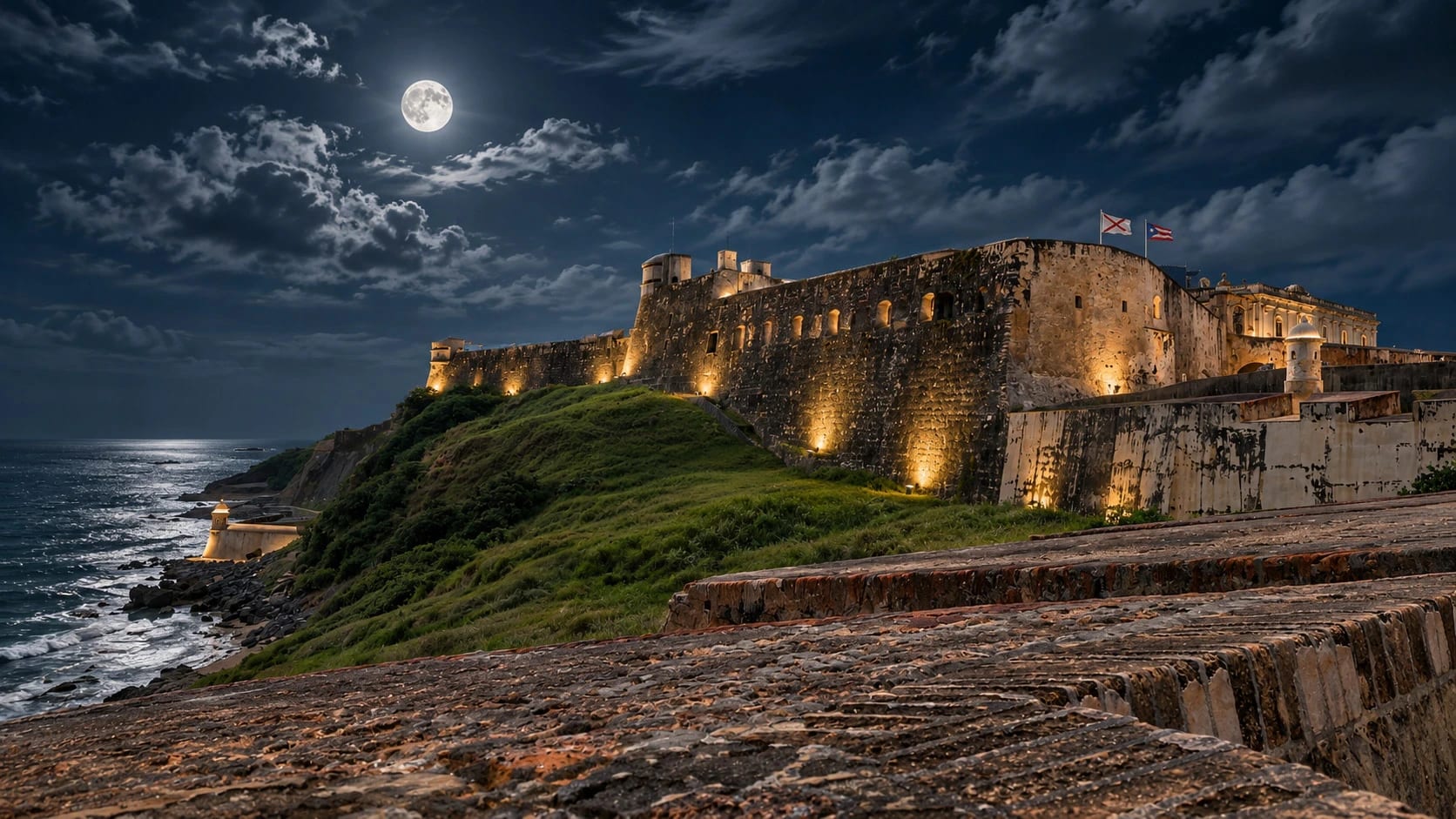
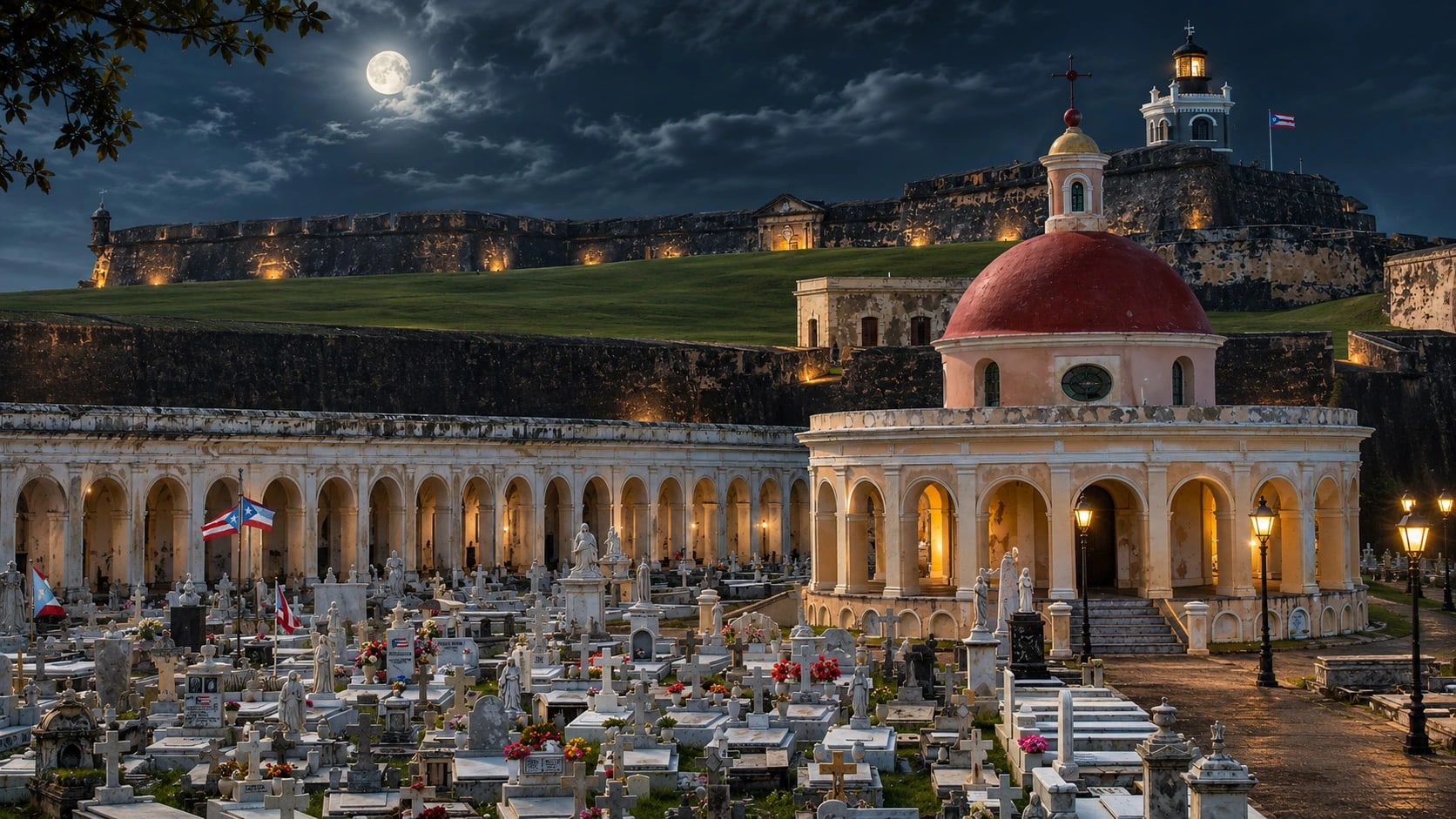
Castillo San Cristóbal at the eastern end of Old San Juan