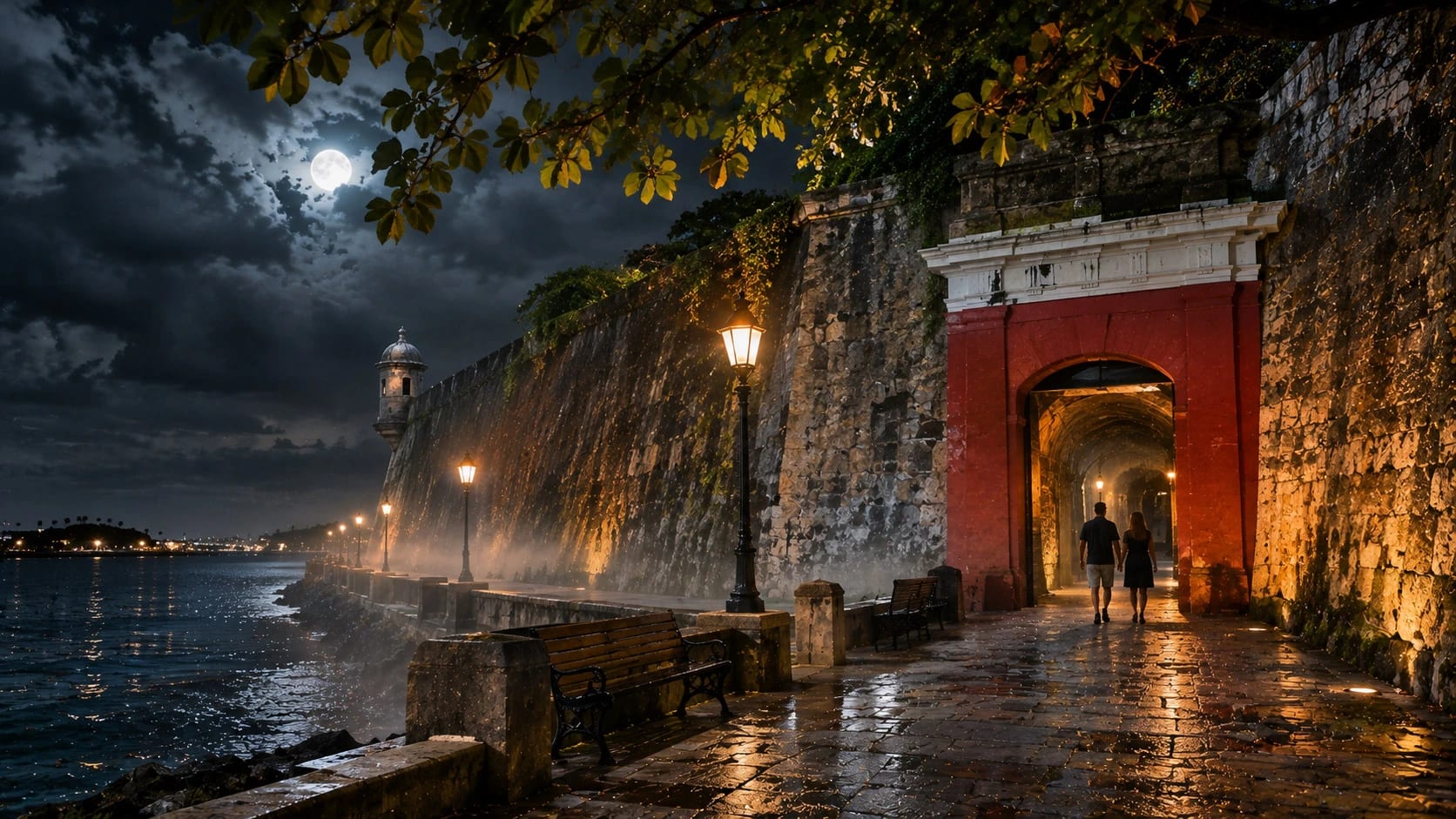
The red San Juan Gate in the old city walls of San Juan at night, a sentry box and the bay beside the lamplit promenade

Explore San Juan's Paranormal History

Haunted San Juan

Discover why Old San Juan is considered haunted: five centuries of forts, sieges, fire and epidemic, and the legends that grew up inside the walls.

Few cities under the American flag are as old as San Juan, and fewer still have been fought over as often. For five centuries its forts, walls and narrow blue-cobbled streets have absorbed sieges, fires, epidemics and the everyday lives and losses of the people who lived inside them. This is the history behind Old San Juan's ghost stories, and the legends that still drift through the old city after dark.

5+ Haunted Locations
Documented Ghost Stories
Book a Ghost Tour
Call: 855-999-0491

Ghost Tours in San Juan

The haunted places below are stops on Ghost City Tours' San Juan ghost tours — guided walks where our local storytellers bring this history to life after dark.

Explore the Paranormal

Haunted Locations in San Juan

Discover the dark history and ghostly encounters at San Juan's most notorious haunted sites

Category:
Sort by:

Showing 5 of 5 locations

FEATURED
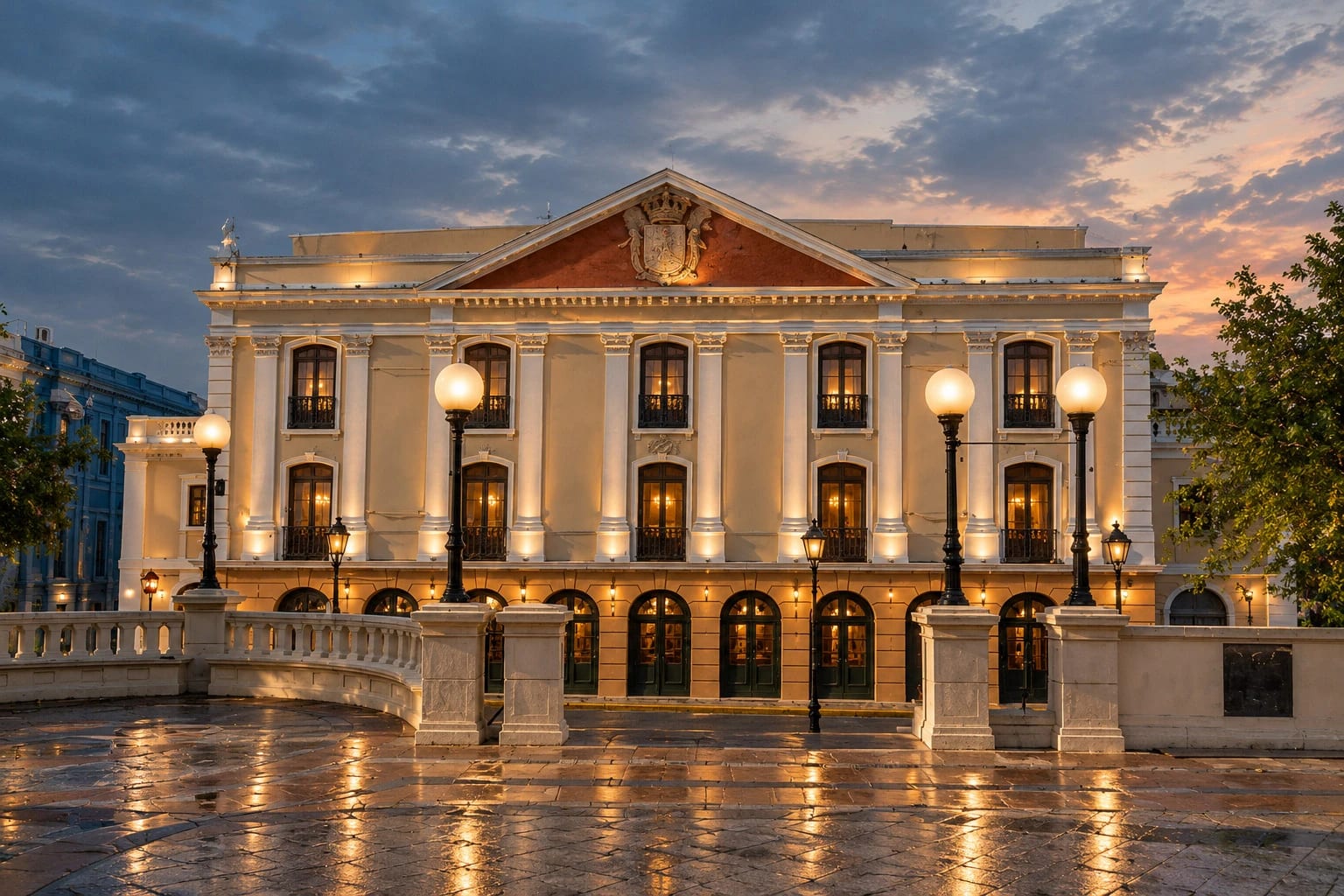
The Haunted Teatro Tapia: The Ghosts Who Never Left San Juan's Historic Theater
Theaters
November 8, 202629 min read

The Haunted Teatro Tapia: The Ghosts Who Never Left San Juan's Historic Theater

Opened 1832•The Woman in Red of Box 105, an actress said to have fallen from the stage, and the 1832 theater San Juan nearly demolished

A woman in a red dress is said to watch performances from Box 105, and an actress who fell from the stage still performs to an empty house. Ghost Hunters International came to investigate in 2011.

Read Full Story
FEATURED
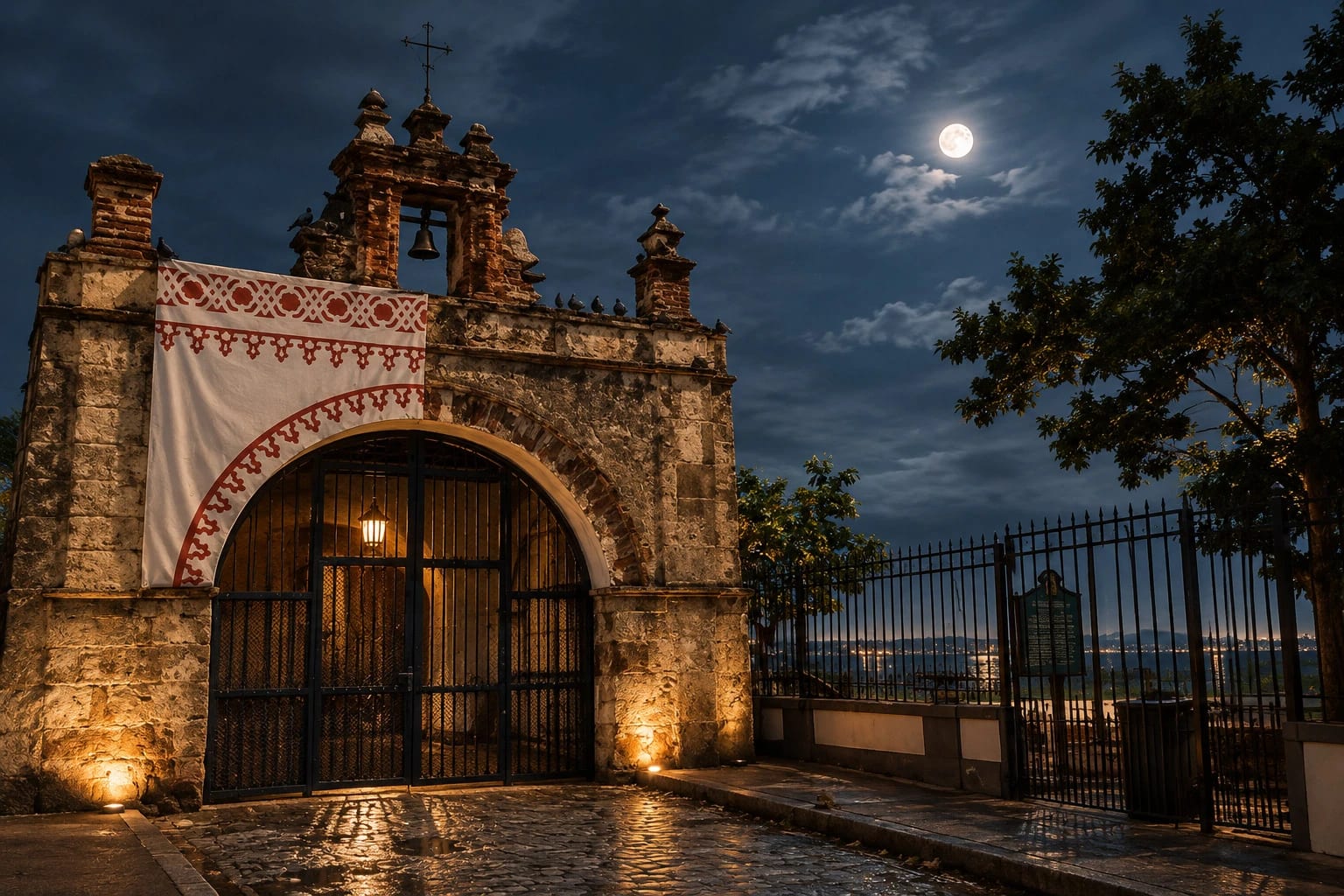
The Legend of Capilla del Cristo: The Miracle, the Dead Rider, and Old San Juan's Chapel
Churches
November 8, 202626 min read

The Legend of Capilla del Cristo: The Miracle, the Dead Rider, and Old San Juan's Chapel

Built from 1753•Baltasar Montañez's fall from the city wall, the prayer to the Santo Cristo de la Salud, and archival research suggesting the rider never survived

Legend says a rider whose horse leaped the city wall survived after a prayer to the Santo Cristo de la Salud, and the chapel was built to give thanks. Church records suggest he died in the fall.

Read Full Story
FEATURED
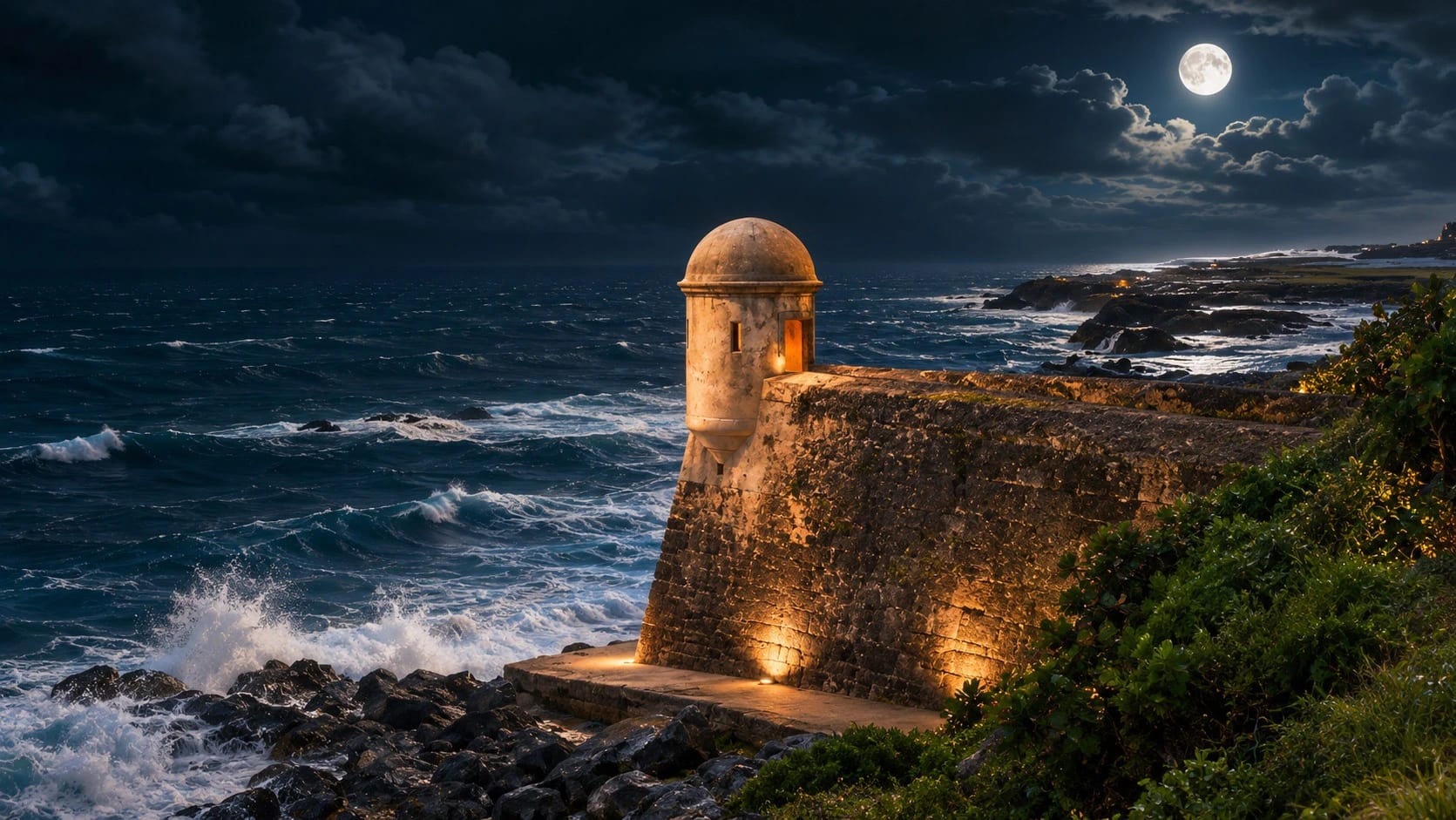
La Garita del Diablo: The Soldier Who Vanished from Old San Juan
Historic Sites
November 7, 202617 min read

La Garita del Diablo: The Soldier Who Vanished from Old San Juan

El Espigón built c. 1634–1650s•A lonely Spanish sentry post below Castillo San Cristóbal, a soldier who never answered the night call, and three very different explanations for his disappearance

A sentry was called from the fortress above and never answered. By morning only his rifle remained. For generations, San Juan has blamed the Devil, but the oldest written versions of the legend suggest far more human explanations.

Read Full Story
FEATURED
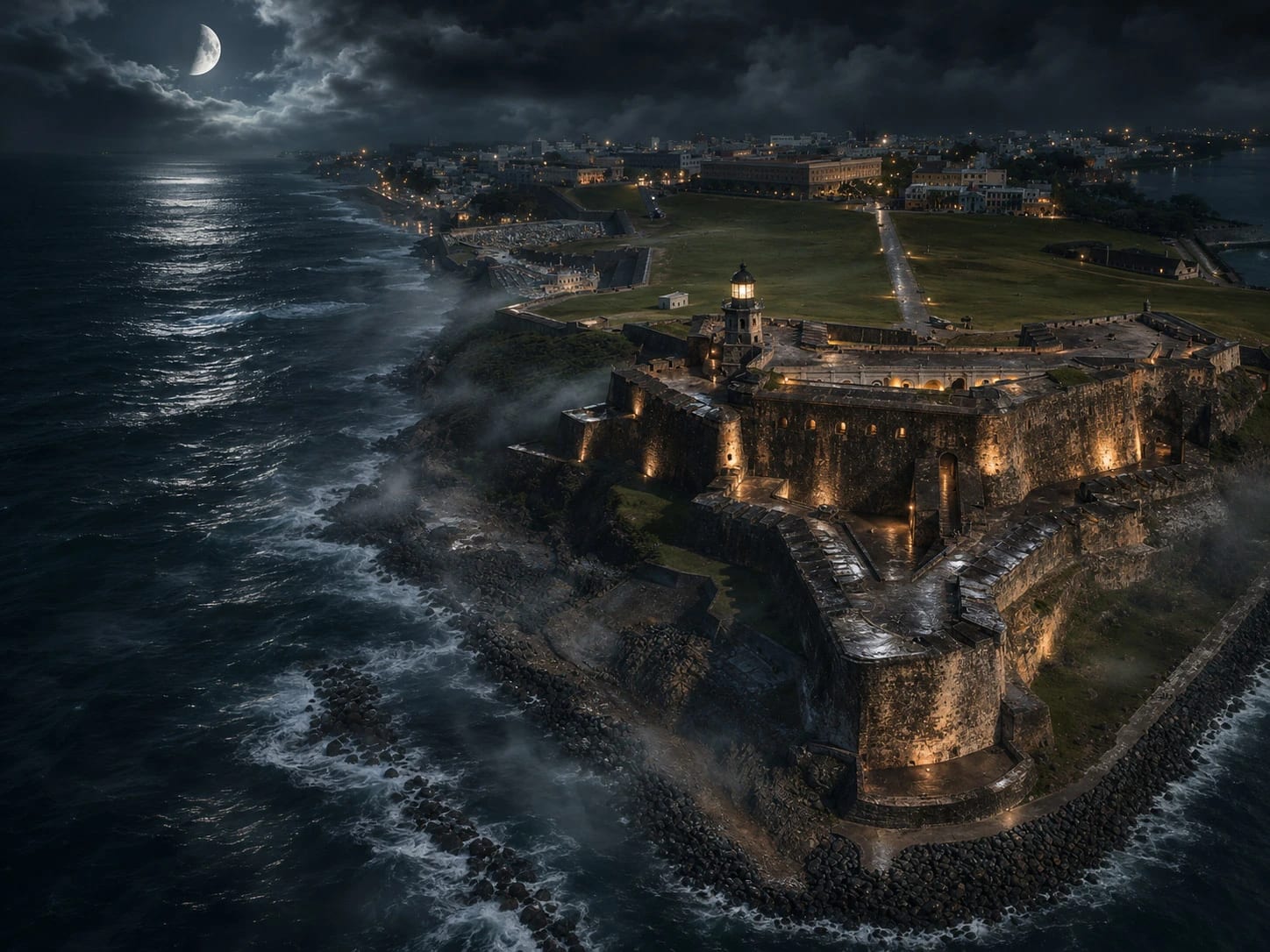
The Ghosts of El Morro: The Haunted History of San Juan's Oldest Fortress
Historic Sites
November 7, 202630 min read

The Ghosts of El Morro: The Haunted History of San Juan's Oldest Fortress

Construction began 1539•Five centuries of sieges, prisoners and bombardment at Castillo San Felipe del Morro, and the Woman in White and phantom soldiers said to remain

A woman in white on the ramparts and soldiers in old uniforms standing guard are the ghost stories. The sieges, the 1898 bombardment and the political prisoners recorded in 1887 are the history behind them.

Read Full Story
FEATURED
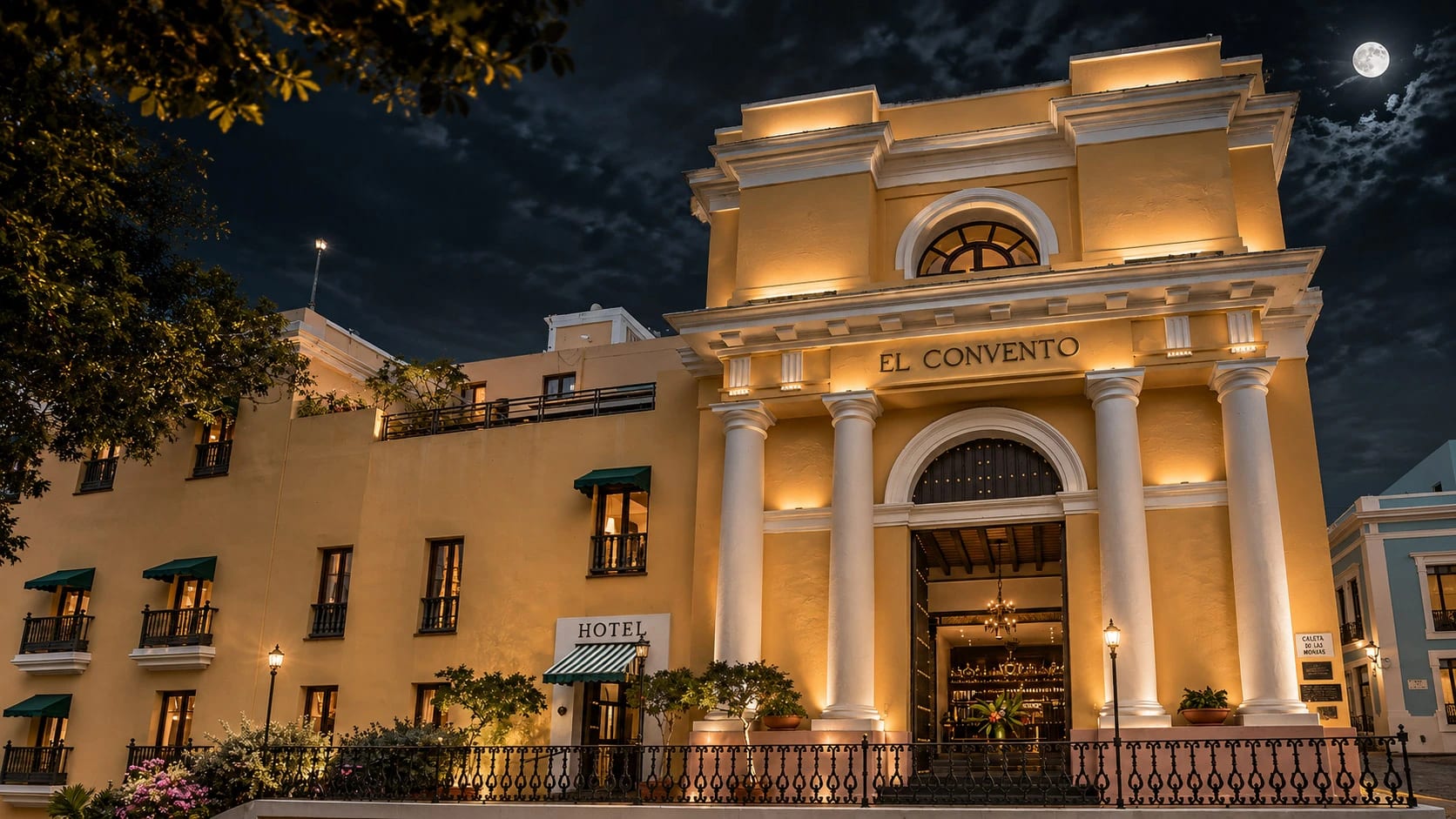
The Haunted Hotel El Convento: Ghostly Nuns and the Dead Beneath Old San Juan
Hotels
November 7, 202629 min read

The Haunted Hotel El Convento: Ghostly Nuns and the Dead Beneath Old San Juan

Monastery opened July 1651•Doña Ana de Lansós's 1651 Carmelite monastery, the empty crypts found during the 1996 renovation, and the founder said to still walk its corridors

Renovation workers found empty crypts beneath the hotel in 1996, and the Carmelite order said more than 100 sisters might still lie below. Guests say the convent's founder still walks the corridors in prayer.

Read Full Story

Why Is San Juan So Haunted?

Discover the dark history and supernatural forces that make San Juan one of America's most haunted cities

1

San Juan's story begins earlier than almost any other city under the American flag. Juan Ponce de León founded the settlement of Caparra in 1508; within a year it was abandoned for a site on the islet guarding the bay, and by 1521 the town carried the formal name Ciudad de Puerto Rico de San Juan Bautista. Its diocese, created in 1511, was among the first in the Americas, and Ponce de León himself now lies in the Cathedral of San Juan Bautista, a few blocks from where the old city began.

2

From the start, San Juan was built to be defended. Work on Castillo San Felipe del Morro began in 1539, and the National Park Service notes that repairs and expansions continued for roughly 250 years. La Fortaleza rose in the 1530s and is still the governor's residence. Castillo San Cristóbal, built from 1634 through 1790, grew into what is often called the largest Spanish fortification in the Americas, and stone walls up to 20 feet thick eventually closed the city in. By 1776 about 6,000 people lived inside them, roughly half of them soldiers.

3

Those walls were tested again and again. Sir Francis Drake attacked in 1595 and was driven off by El Morro's guns. In 1598 the Earl of Cumberland landed troops and held the city for months before sickness and exhaustion forced him out. In 1625 Dutch forces sacked San Juan and set La Fortaleza and much of the city on fire, though El Morro never fell. In 1797 a British army under Sir Ralph Abercromby laid siege and withdrew in defeat, and in May 1898, during the Spanish-American War, American warships exchanged fire with the forts; on May 10, Spanish guns at San Cristóbal fired on the USS Yale, the first attack on Americans in Puerto Rico during the war. Every one of those battles left dead soldiers, sailors and townspeople behind.

4

The quieter killers took even more. When cholera reached Puerto Rico in 1855, an estimated 20,000 to 50,000 people died across the island, somewhere between four and ten percent of the population. So many bodies needed burial that a cemetery was opened outside the walls of El Morro. It lay undisturbed for more than a century; today, researchers from UC Berkeley have documented erosion there severe enough that hundreds of human bone fragments have surfaced along the ground. Few places make the city's losses so literal.

5

Just beyond El Morro's walls, overlooking the Atlantic, lies the Santa María Magdalena de Pazzis Cemetery, begun in 1863. Its white tombs and chapels hold patriots, poets and statesmen, including Pedro Albizu Campos, José Celso Barbosa and the actor José Ferrer. Tradition holds that it was placed facing the ocean to symbolize the spirit's journey into the afterlife, and many visitors find it hard to stand there at dusk, between the fortress and the sea, without feeling that the old city's dead are very near.

6

Not all of San Juan's history is written in battles. Behind the colorful facades are centuries of colonial power and enslavement, disease and hardship, and generations of Puerto Rican families who lived, worked and mourned within the same streets visitors walk today. Our guides believe those lives matter as much as the sieges do, and many of the city's ghost stories begin with genuine human loss rather than with anything spectacular.

7

Some of San Juan's most enduring stories sit on the line between faith and folklore. At the foot of Calle del Cristo stands the tiny Capilla del Cristo, built between 1753 and about 1780. Religious tradition says a young rider named Baltazar Montañez went over the edge of the street's precipice during the races held for the feasts of St. John and St. Peter and was miraculously saved, and the chapel was raised in his honor. Versions disagree about who called out for divine help and whether the horse survived, but the chapel has stood watch over the bluff for more than two centuries.

8

Then there is La Garita del Diablo, the Devil's Sentry Box, perched at the water's edge below Castillo San Cristóbal. Local lore says that in the early days of Spanish rule a soldier took the lonely night watch there with a sense of dread and was never seen again. The man sent to relieve him assumed he had deserted, until a flash and a scream came from inside the box, leaving sooty walls, the smell of sulfur and no trace of the second soldier either. The post, the story goes, was never manned again. Skeptics have long preferred a simpler explanation, desertion, but the legend has outlived every argument against it.

9

San Juan even has a legend in which the city's own people became the ghosts. During the British siege of 1797, the story goes, the bishop led a rogativa, a torchlit procession of prayer, through the streets at night, with the women of the city carrying candles and ringing bells. Watching from offshore, the British are said to have mistaken the sea of moving lights for fresh Spanish reinforcements and abandoned the attack. Whether or not it happened that way, the tale is cherished enough that a bronze sculpture of the procession, La Rogativa, was completed in 1971 and still stands in the old city, a silent line of figures forever walking toward the walls.

10

Around these landmarks, guides, residents and visitors tell of footsteps on empty ramparts, figures glimpsed in old doorways and voices in buildings that have stood since the Spanish crown ruled the island. Some of these accounts are tied to documented events; others survive as local folklore and unexplained encounters. On our walks through Old San Juan, our guides are clear about which is which and leave the rest for you to decide. That is why San Juan feels haunted. It is not one tragedy but five hundred years of them, layered inside the same walls: soldiers who died defending the harbor, families lost to fire and fever, and the people whose stories were never written down. When the day-trippers leave and the streetlights come on over the cobblestones, it is easy to believe that some of them never left.

1521

Year the city was named San Juan Bautista

1539

Construction begins on El Morro

1855

Cholera epidemic that filled a cemetery outside El Morro

Ready to Explore San Juan's Dark Side?

Don't miss out on the #1 rated ghost tour experience in San Juan. Book your adventure today!

Why Book With Ghost City Tours?

Multiple Tour Options

Choose from family-friendly, adults-only, or pub crawl experiences.

Top-Rated Experience

From the world's #1 ghost tour company.

Tours 7 Days a Week

Rain or shine, we run tours every single night of the year.

Money-Back Guarantee

Love your tour or get a full refund - that's our promise!

Tours Sell Out Daily

San Juan is a popular destination. Book now to guarantee your spot!

Book Your Ghost Tour Today

Book Online Now

SAVE TIME
  • Choose from all available tour times
  • Instant email confirmation
  • Secure, encrypted checkout
  • 100% Money Back Guarantee
VIEW TOURS & BOOK NOWOpens booking calendar

Prefer to Call?

Our Guest Services team is available 7 days a week to help you book the perfect tour.

CALL 855-999-04917am - 11:30pm Daily
SSL Secure
9M+ Guests Since 2012