The horse was running too fast to stop.
At the southern end of a narrow street in eighteenth-century San Juan, a young rider named Baltasar Montañez was losing control of his animal. The horse had broken into a gallop, carrying him toward the stone wall that marked the edge of the city. Beyond that wall was a precipitous drop to the rocks below.
Spectators watched helplessly as the animal approached the barrier. There was nowhere to turn, and the distance was closing rapidly.
Among those witnessing the approaching disaster was Tomás Mateo Prats, a government official watching the festivities from a nearby balcony. According to the legend, he cried out to the Santo Cristo de la Salud, the Holy Christ of Health, begging for the young man's life.
The horse leaped over the wall.
For a moment, both animal and rider disappeared from sight. The spectators expected to find them dead at the bottom.
Instead, the story claims that something extraordinary had happened. The horse was killed, but Montañez survived the fall without injury.
Prats believed his prayer had been answered. To honor the miracle, he arranged for a small chapel to be constructed at the end of the street, overlooking the place where the young man had nearly lost his life.
The chapel still stands in Old San Juan, Puerto Rico. Its name is Capilla del Santo Cristo de la Salud, although most people simply call it Capilla del Cristo.
There is one unsettling problem with the story.
Historical research indicates that Baltasar Montañez did not survive.
According to studies of ecclesiastical records, the young man died in the accident, and the chapel was constructed not to celebrate his miraculous rescue but to prevent another fatal fall.
That would mean one of Old San Juan's most beloved legends commemorates a miracle that never happened. For generations, people have repeated a story of divine intervention at a place where a young man may have died despite the prayers offered for him.
The contradiction makes Capilla del Cristo one of the city's most fascinating historical landmarks. It is a small religious building with a surprisingly complicated past, a centuries-old painting associated with miraculous protection, and a history that nearly ended when authorities considered demolishing it in the 1920s.
The original tragedy has become difficult to separate from the legend. Yet the little chapel at the end of Calle del Cristo has survived both, preserving a story about the difference between what people remember and what may actually have happened.
A Dangerous Street in Eighteenth-Century San Juan
The modern Calle del Cristo is among the most recognizable streets in Old San Juan. Its colorful buildings, wrought-iron balconies, churches, and shops attract visitors throughout the year. At its southern end, near the intersection with Calle Tetuán, the street terminates at a small chapel adjoining the historic city walls.
The setting looked very different during the middle of the eighteenth century.
San Juan was still a fortified Spanish colonial settlement whose streets had developed within a restricted area on a small island. The surrounding walls were military defenses, intended to protect the city against foreign attacks, but they also created physical boundaries that could make everyday activities dangerous.
The roads were not the smooth, carefully maintained streets familiar to modern visitors. Some were unpaved, uneven, and affected by seasonal rainfall. Horses and people moved through spaces that were never designed for modern traffic or public safety.
Calle del Cristo was particularly hazardous because it descended toward the southern waterfront. At its lower end, a parapet stood above the steep exterior of the city wall.
According to Puerto Rican historian Cayetano Coll y Toste, the street became an informal racing ground during local festivals.
In his account, young men gathered on horseback and competed against one another, riding at considerable speed through the city. Riders normally traveled uphill toward the Dominican church of Santo Tomás de Aquino, later known as Iglesia San José, before returning at a more controlled pace.
Occasionally, however, their enthusiasm overcame their caution.
The races were part of the social celebrations surrounding religious feast days. Coll y Toste associated the event with festivities honoring Saints Peter and Paul, while other accounts connect it with the celebration of San Juan Bautista, the city's patron saint.
The exact date of the accident is uncertain. Some modern descriptions place it around 1750, while Coll y Toste's account refers to approximately 1753.
The disagreement does not substantially change the central story, but it reveals how much of the event survives through tradition rather than a single universally accepted contemporary record.
In the version preserved by Coll y Toste, the dangerous moment came when several young riders began racing downhill, toward the wall rather than away from it.
That decision placed them on a collision course with the edge of the city.
The Terrible Fall of Baltasar Montañez
Baltasar Montañez was one of the young men participating in the race.
Coll y Toste describes him as an arrogant or daring young rider mounted on a powerful horse. The animal, already moving at considerable speed, became uncontrollable as it approached the southern wall.
The people watching the race realized what was about to happen.
The horse reached the parapet, leaped over it, and carried Montañez into the open space beyond the city.
A fall from that height could easily kill both rider and animal.
Tomás Mateo Prats, then associated with the colonial administration, supposedly witnessed the disaster from the balcony of a nearby house. He reacted by calling upon the Santo Cristo de la Salud to save the falling young man.
The exact wording of the prayer varies slightly between retellings, but Coll y Toste preserves the appeal as:
¡Sálvalo, Santo Cristo de la Salud!
Save him, Holy Christ of Health.
When witnesses looked toward the rocks below, they reportedly discovered that the horse had died. Montañez, however, was alive.
The traditional story goes further, claiming that he had escaped the extraordinary fall unharmed.
It was the sort of event that would naturally spread through a small colonial community. The young man had apparently faced certain death, a respected government official had appealed for divine intervention, and the rider had survived in circumstances that seemed impossible.
Prats interpreted the outcome as a miracle.
He sought permission from the appropriate civil and religious authorities to establish a chapel at the scene. The building would house an image of the Santo Cristo de la Salud and serve as a permanent expression of gratitude.
The chapel also became associated with public devotion. Coll y Toste described religious celebrations funded by local residents in honor of the sacred image.
For those who accepted the story, the little sanctuary was evidence that prayer had saved a human life.
But the account of Montañez's survival is not the only version preserved in the historical record.
Did the Rider Really Survive?
The most revealing detail in the history of Capilla del Cristo comes from researchers who examined the story more critically.
Adolfo de Hostos, a Puerto Rican historian whose work included the development and architecture of Old San Juan, challenged the traditional account of the miraculous rescue.
According to historical summaries of his findings, Montañez died after falling from the city wall. Prats arranged for the chapel to be built as a precaution against future accidents, not as a celebration of the rider's survival.
The Puerto Rico Historic Buildings Drawings Society presents this interpretation in its historical account of the chapel.
More significantly, a scholarly publication issued by Puerto Rico's Office of State Historic Preservation in 2020, La ciudad en el tiempo: cinco siglos de representaciones artísticas de San Juan, cites research by historian María de los Ángeles Castro Arroyo.
The publication explains that Coll y Toste's oral tradition described Montañez as surviving the fall, but research in ecclesiastical archives confirmed the young man's death.
That is a substantial difference.
It suggests that the account of the rider's survival was not simply an alternative historical interpretation. According to the archival research cited by the preservation office, the celebrated miracle contradicted evidence concerning the fate of the person involved.
The original ecclesiastical record is not reproduced in the accessible historical summary, so its wording and full circumstances cannot be independently examined here. Still, the preservation office's citation provides a firmer basis for questioning the miracle than the unsupported versions commonly repeated in visitor guides.
The possibility that the rider died also makes practical sense of the chapel's location.
A building constructed at the dangerous end of the street would create a physical obstruction, preventing another rider from reaching the exposed section of wall at full speed.
It could serve as a religious memorial and a protective barrier simultaneously.
Those purposes would not have been incompatible in eighteenth-century San Juan. A Catholic community might respond to a fatal accident through prayer, the construction of a shrine, and changes intended to prevent another tragedy.
What remains uncertain is how the story of death became a story of survival.
Perhaps the details were confused as they passed between generations. It is also possible that the miraculous version became more appealing to people who associated the chapel with divine protection.
There is no surviving evidence establishing exactly when the account changed or who first introduced the claim that Montañez escaped unharmed.
But the difference is profound.
In one version, the chapel celebrates a life saved.
In the other, it marks a death that the community could not prevent.
Tomás Mateo Prats and the Decision to Build a Chapel
The man traditionally credited with building Capilla del Cristo was not an anonymous spectator.
Tomás Mateo Prats was a government official associated with the administration of Spanish colonial Puerto Rico. Historical research places him in service under Governor Felipe Ramírez de Estenós during the middle of the eighteenth century.
The chapel's construction is generally dated to the period beginning in 1753, with subsequent alterations and additions continuing through approximately 1780.
Prats's connection to the building is particularly important because it provides a documented institutional context for a story otherwise dominated by folklore.
The decision to construct a religious building on San Juan's defensive walls would not ordinarily have been a private matter.
Those walls formed part of the city's military infrastructure. Alterations could affect the movement of soldiers, the operation of defensive positions, or the integrity of structures intended to resist enemy attack.
A small chapel might seem insignificant compared with the enormous fortifications at El Morro and San Cristóbal, but even modest construction on the defensive perimeter required consideration.
The traditional account explains that Prats obtained permission from the governor and the bishop before arranging for the chapel's construction.
The original sanctuary was much smaller than the building visible today. It consisted of a religious niche or chamber built into the southern wall, containing an image of the Santo Cristo de la Salud.
Later construction added an arched portico and other architectural features, gradually producing the chapel's recognizable appearance.
The site also had an earlier religious connection. The State Historic Preservation Office identifies a nearby chapel dedicated to Saint Catherine of Alexandria, located lower along the wall, which preceded the present sanctuary.
Capilla del Cristo therefore emerged where military defenses and neighborhood religious devotion met.
Its location was unusual, but the decision to build a shrine there was consistent with the religious practices of the period.
Prats wanted the dangerous end of the street to become a place associated with sacred protection.
Whether that protection had already saved Montañez is the question historians continue to raise.
A Small Chapel Built on a Fortress Wall
Despite its modest size, Capilla del Cristo is one of Old San Juan's most distinctive surviving examples of eighteenth-century religious architecture.
The building is constructed of brick and masonry and occupies a narrow space beside the southern city wall. Its exterior is recognizable by a broad arched opening, a small bell tower, and decorative details that reflect elements of the Spanish Baroque tradition.
The chapel's architecture developed in stages.
According to the State Historic Preservation Office, the original structure was a small chamber associated with the sacred image. The arched portico was added later, creating a covered space where more worshippers could gather.
That evolution explains the building's unusual proportions. It was not conceived as a large parish church with a broad nave and extensive interior spaces. It developed from a comparatively modest shrine into a more elaborate devotional structure.
The portico and its arches also changed the appearance of the street.
Instead of ending abruptly at an exposed stretch of defensive wall, Calle del Cristo acquired a recognizable architectural terminus. The chapel occupied the very place where the dangerous approach to the parapet had once existed.
The building's artistic details are easy to overlook.
Inside, the altar is framed by an ornamental wooden retablo influenced by the Rococo style. The religious paintings and decorative elements have been maintained and restored at different points in the chapel's history.
The current retablo incorporates reconstructed elements of an earlier installation. The work was undertaken by sculptor Francisco Vázquez Díaz, known as Compostela, during preservation efforts associated with the Institute of Puerto Rican Culture in the 1960s.
The chapel also contains a particularly important painting.
It is older than the miracle traditionally said to have inspired the building.
The Painting of the Santo Cristo de la Salud
At the heart of Capilla del Cristo's religious identity is a painting of the crucified Christ.
The work is generally attributed to Manuel García, an early Puerto Rican painter believed to have been associated with the San Germán region.
Its exact date remains a matter of scholarly discussion.
Art historians have proposed dates ranging from the latter half of the seventeenth century to the first half of the eighteenth. The State Historic Preservation Office notes that the painting has been regarded as one of the oldest signed works by a local Puerto Rican artist.
That makes it significant for reasons extending beyond the legend of Montañez.
Puerto Rico's colonial artistic record is relatively limited compared with those of larger Spanish American centers. Religious paintings were often imported, commissioned from visiting artists, or produced by craftsmen whose names have not survived.
A signed work attributed to an early local painter is therefore an important part of the island's artistic heritage.
The painting depicts the Crucifixion, with Christ positioned at the center of a landscape inspired by traditional Christian representations of Calvary.
Its composition reflects European religious imagery, adapted through the artistic practices available in colonial Puerto Rico.
Over time, the image acquired a reputation for miraculous intercession.
The connection between the painting and the supposed rescue of Montañez helped reinforce the chapel's spiritual importance, but the veneration of the Santo Cristo de la Salud extended beyond that single story.
The title itself speaks to protection and healing. For believers, such an image could become the focus of prayers during illness, danger, or personal hardship.
The chapel also contains other religious paintings, including representations of saints and the Virgin Mary. Some have been associated with the artistic circle of José Campeche, Puerto Rico's celebrated eighteenth-century painter, although the central Crucifixion should not be casually attributed to him.
That distinction is often lost in general visitor descriptions.
The chapel houses art associated with more than one period and artistic tradition. Its most important image has its own history, and that history may precede the accident from which the building's legend developed.
The painting was not merely an object installed after the supposed miracle.
It was a sacred image around which generations of religious devotion took shape.
Why People Came to Pray at Capilla del Cristo
In colonial Puerto Rico, religious life was woven deeply into the routines of the city.
Churches, chapels, processions, saints' feast days, and devotional images provided a shared framework through which many residents understood illness, danger, death, and unexpected events.
A sudden escape from death might be interpreted as an act of divine mercy. Families facing sickness could seek the intercession of a saint or sacred image. Public prayers and religious celebrations brought neighborhoods together around beliefs that connected personal experiences with larger spiritual traditions.
Capilla del Cristo participated in that world.
Its location at the end of a busy street made it accessible to residents, while the image of the Santo Cristo de la Salud provided a focus for prayer.
The tradition of offering ex-votos is especially relevant.
An ex-voto is an offering made in fulfillment of a vow or in gratitude for a favor believed to have been received through divine intervention. Such offerings can take many forms, including paintings, plaques, ornaments, or objects associated with a particular experience.
The practice was widespread in Catholic communities throughout Europe and the Americas.
At shrines dedicated to healing or protection, ex-votos could serve as public expressions of gratitude. They also became a way for individuals to preserve their own experiences within the devotional life of a community.
The State Historic Preservation Office discusses ex-voto traditions in connection with Puerto Rican religious sites, including the chapel of the Santo Cristo de la Salud.
The custom helps explain why the story of Montañez remained so meaningful.
A chapel founded in response to danger naturally became associated with protection from danger. The story of a miraculous survival reinforced the religious purpose of the place, even if later research suggested the supposed beneficiary had actually died.
For generations of worshippers, the chapel's significance did not depend entirely on the precise details of an eighteenth-century horse race.
It represented the possibility of receiving help in circumstances beyond human control.
That belief gave the building a continued purpose long after horses stopped racing toward the southern wall.
The Legend That Cayetano Coll y Toste Preserved
One reason the story of Capilla del Cristo survived is that Puerto Rican writers deliberately collected and preserved traditional narratives.
Among the most influential was Cayetano Coll y Toste, a physician, historian, and author whose Tradiciones y leyendas puertorriqueñas helped establish a literary record of Puerto Rican folklore.
His story El Santo Cristo de la Salud provides one of the most detailed surviving versions of the miraculous rescue.
Coll y Toste described the old street before it was paved, the young riders racing toward the Dominican church, and the reckless decision to gallop downhill toward the southern wall.
He gave the rider a name, Baltasar Montañez, and placed Tomás Mateo Prats on a nearby balcony.
The moment of the accident became the centerpiece of the story. The horse leaped over the parapet, both animal and rider plunged toward the rocks, and Prats cried out for the intervention of the Santo Cristo.
In Coll y Toste's version, the horse was killed while Montañez survived.
The author then described the construction of the chapel and the religious celebrations that developed around the sacred image.
But Coll y Toste's account contains another detail that is particularly interesting today.
He lamented the chapel's neglect.
Writing about the sanctuary's condition in his own era, he described a place where religious observances had declined. The flowers, lamps, and offerings associated with earlier devotion had disappeared, and the building itself was deteriorating.
The contrast is striking.
The chapel had supposedly been created because of an extraordinary miracle, yet by the time Coll y Toste wrote about it, the building was losing the attention that had once sustained it.
His narrative was therefore more than a retelling of an old story. It was also a lament for a religious and architectural landmark that seemed to be slipping out of public memory.
Those concerns were justified.
Within the early decades of the twentieth century, the chapel would face a threat almost as final as the fall that inspired it.
The Woman Who Saved Capilla del Cristo from Demolition
In June 1925, Puerto Rican newspapers reported that Capilla del Cristo might be demolished.
The building had deteriorated, and authorities were concerned about its condition. It also occupied a position that could obstruct traffic, making the small sanctuary vulnerable to arguments that it no longer served a practical purpose.
For officials concerned with modernizing the city, the chapel might have appeared to be an aging and inconvenient structure standing in the way of progress.
Not everyone agreed.
A woman named Isabel Alonso de Mier helped organize a campaign to save it.
Working with the Club Cívico de Damas and other supporters, she sought permission to restore the historic building rather than allow its destruction.
The effort succeeded.
Architect Rafael Carmoega supervised the restoration, which required approximately two years to complete.
On August 6, 1927, the Feast of the Transfiguration, religious observances resumed at the chapel.
The date was significant for the building's future. What had appeared to be a deteriorating remnant of colonial San Juan was once again a functioning religious landmark.
Further restorations followed.
Carmoega supervised additional work in 1952. In 1963, the chapel underwent another restoration associated with Ricardo Alegría, the influential Puerto Rican historian and cultural preservationist who helped establish the Institute of Puerto Rican Culture.
The Hermandad del Cristo de la Salud, a brotherhood founded in 1941 to care for the chapel, contributed to its preservation.
These efforts illustrate an important chapter in Puerto Rico's architectural history.
During the twentieth century, many colonial buildings were threatened by neglect, redevelopment, and changing attitudes toward the value of historic structures. Preserving Old San Juan required more than recognizing the importance of great fortresses and government buildings.
It also required defending small churches, ordinary residences, streets, and public spaces that collectively gave the city its distinctive character.
Capilla del Cristo survived because people considered it worth saving.
In a sense, its twentieth-century preservation offers a more readily documented rescue story than the eighteenth-century miracle.
The young rider may not have survived his fall.
The chapel built in his memory survived its own threatened destruction.
A Monument That Outlived Its Original Story
Capilla del Cristo's preservation did more than save a building.
It ensured that the legend associated with the site would remain part of the physical landscape of Old San Juan.
A story preserved only in a book can become disconnected from the place where it supposedly happened. Streets change, buildings disappear, and later generations lose the opportunity to see the setting that gave a narrative its meaning.
Here, the connection remains unusually direct.
Visitors walking south along Calle del Cristo eventually arrive at the chapel standing where the dangerous street once approached the city's edge.
The surrounding architecture has changed, but the essential geography of the legend is still recognizable.
To one side is the historic city wall. Beyond the southern edge lies the harbor and the lower ground toward which the horse and rider reportedly fell.
Nearby is Parque de las Palomas, the small public space famous for the pigeons that gather around visitors. The park occupies part of the historic waterfront landscape adjoining the chapel.
Tourists often visit the area to enjoy the views, photograph the architecture, or spend time among the birds.
Many never realize that the quiet chapel beside them is associated with a story of sudden death.
The building also possesses an important place in the visual memory of Old San Juan.
Its arched entrance, small bell tower, and weathered masonry have appeared in historical photographs, drawings, and works of art. The Library of Congress preserves photographs and measured architectural drawings of the chapel through the Historic American Buildings Survey, including documentation associated with its eighteenth-century construction.
These records provide an opportunity to study the structure beyond the familiar modern tourist photographs.
They also demonstrate why the building's survival matters.
Old San Juan's history is not preserved only in written accounts of battles, governors, and colonial institutions. It is visible in the smaller architectural decisions made by people responding to the concerns of their own time.
Tomás Mateo Prats, according to the historical tradition, wanted to prevent another tragedy.
Isabel Alonso de Mier wanted to prevent the destruction of an irreplaceable landmark.
The chapel still stands because both kinds of concern became part of its history.
Is Capilla del Cristo Haunted?
Capilla del Cristo is more accurately described as a place associated with supernatural folklore than as a location with a well-established tradition of ghost sightings.
Its central legend concerns a miraculous intervention, not an apparition of a dead person.
There is no reliable historical evidence establishing that Baltasar Montañez's ghost appears at the chapel, that his horse can be heard racing down Calle del Cristo after dark, or that mysterious figures regularly emerge from its walls.
Such details might make for an entertaining ghost story, but they should not be invented and presented as local tradition.
The documented contradiction between the supposed miracle and the evidence of the rider's death is interesting enough.
Religious legends often preserve the meaning that communities assign to events, even when the factual details change.
For believers who visited Capilla del Cristo, the chapel represented protection, healing, and the possibility of divine assistance. The miraculous rescue of Montañez reinforced those ideas.
For historians, the more important questions concern what actually happened during the race, when the story of survival emerged, and how it became so firmly established in public memory.
Both perspectives form part of the chapel's cultural history.
The story is also a reminder that the supernatural traditions of Old San Juan extend beyond conventional accounts of ghosts.
The city's folklore includes apparitions, disappearing soldiers, religious miracles, unexplained deaths, and events whose meanings have been disputed for centuries.
Capilla del Cristo belongs to the latter group.
A young man reportedly fell from the city wall during a festival. A government official arranged for a chapel to be built nearby. Over time, the story of a fatal accident became associated with a miraculous rescue.
The chapel survived.
The version of the event most people remember may not be the one that happened.
Visiting Capilla del Santo Cristo de la Salud
Capilla del Santo Cristo de la Salud is located at the southern end of Calle del Cristo, near its intersection with Calle Tetuán, in Old San Juan, Puerto Rico.
The building is a relatively small chapel, and visitors can easily overlook it while exploring the city's larger religious and military landmarks.
Its historic exterior can be viewed from the surrounding public streets.
Interior access is more limited. The chapel has traditionally opened on selected days, including Tuesdays and certain religious observances, but access depends on the arrangements maintained by its caretakers and should not be assumed without checking locally.
When the entrance is open, visitors may be able to see its religious artwork and historic altar. The interior remains a place of devotion and should be treated respectfully.
The chapel sits beside Parque de las Palomas, and the surrounding neighborhood offers excellent opportunities to explore Old San Juan on foot.
Several other important landmarks are within walking distance.
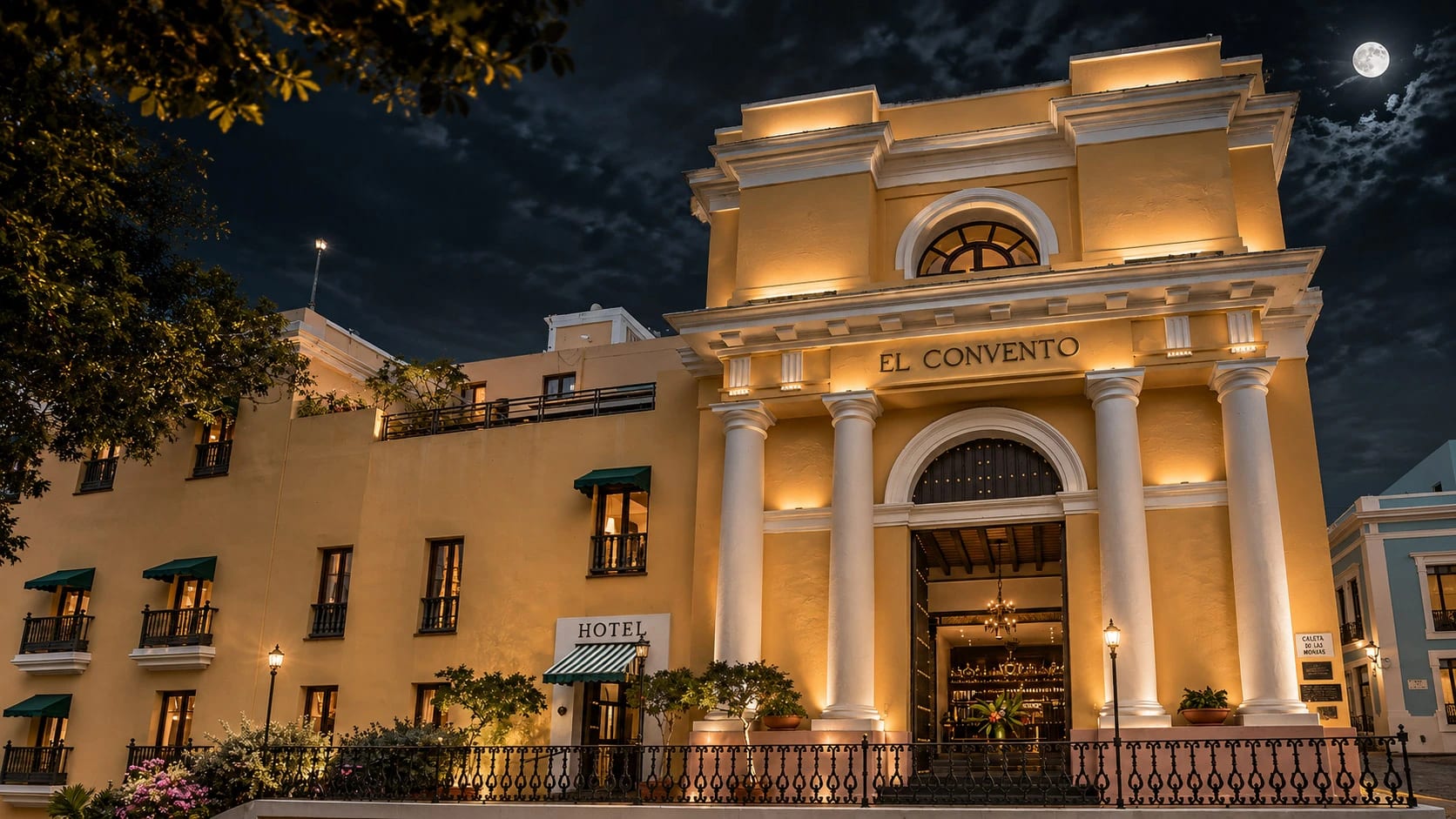
The Cathedral Basílica Menor de San Juan Bautista, one of the oldest cathedral buildings in the Americas, stands farther north along Calle del Cristo. Nearby Hotel El Convento occupies the former Monastery of Saint Joseph, where generations of Carmelite nuns lived between the seventeenth and twentieth centuries.
The surrounding streets also lead toward the former Spanish defensive walls, La Fortaleza, and the historic San Juan Gate.
Visitors interested in the city's legends will find that relatively short distances separate places associated with very different stories.
There are accounts of disappearing soldiers near the old fortifications, ghostly religious figures in historic buildings, and stories of desperate prayers uttered at moments when death seemed unavoidable.
Capilla del Cristo is among the best places to consider how those stories developed.
Its legend began with an accident. Its religious significance grew through centuries of devotion, and its survival depended on people who refused to allow the building to disappear.
The chapel's history is considerably richer than the simple description of a miraculous horse race found in many visitor guides.
Discover the Legends and Ghost Stories of Old San Juan
The story of Capilla del Cristo offers a revealing glimpse into the world of eighteenth-century San Juan.
The city was enclosed by defensive walls, governed through Spanish colonial institutions, and shaped by a Catholic religious culture in which miracles, sacred images, and prayers for protection held considerable importance.
Within that world, an unexpected death could become a matter of public remembrance.
A dangerous street could acquire a chapel. A sacred painting could become associated with miraculous intervention, and a story repeated over generations could gradually change the way people understood an event.
Other San Juan legends followed similarly complicated paths.
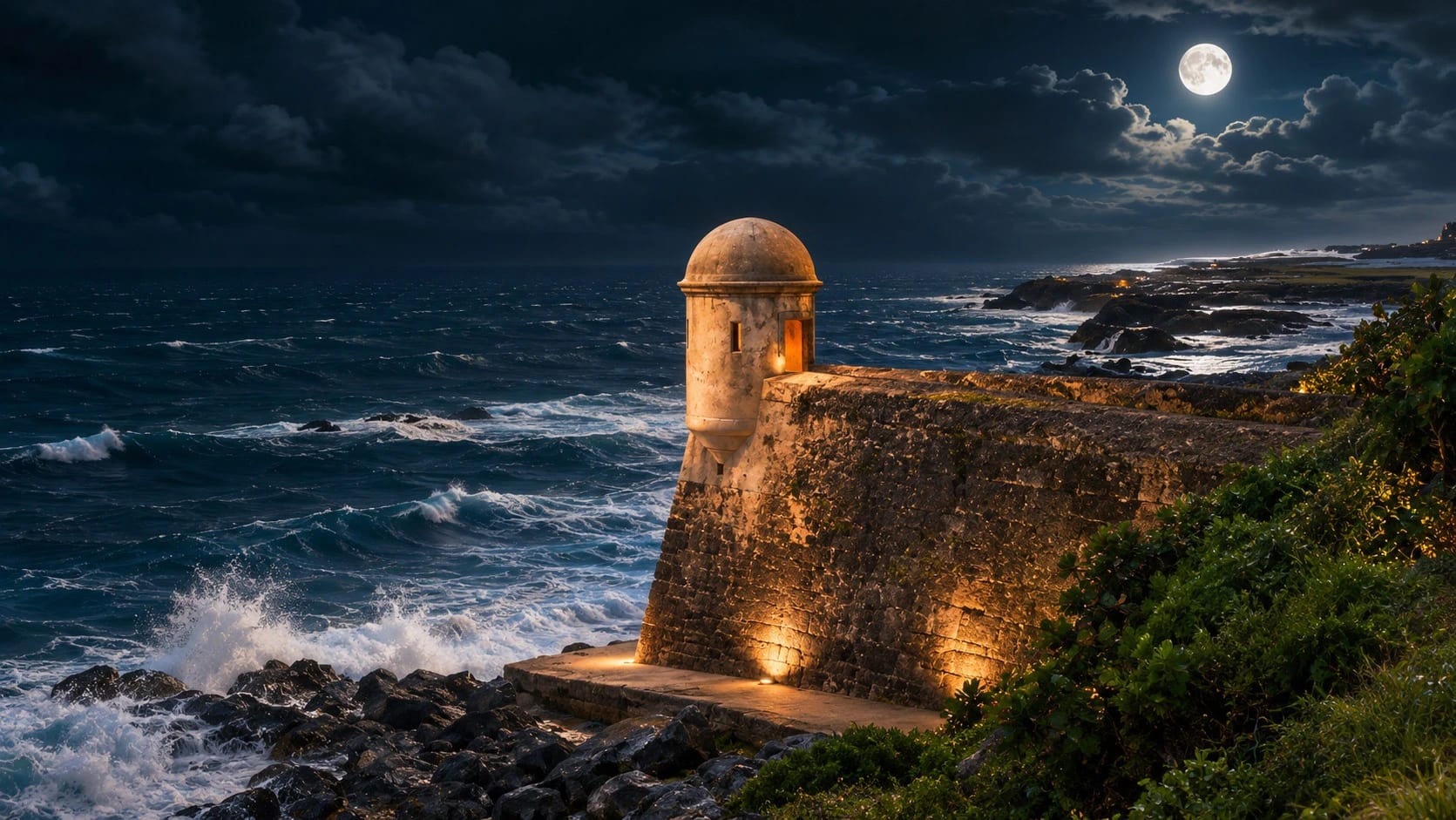
At Castillo San Cristóbal, the isolated sentry box known as La Garita del Diablo became associated with soldiers who supposedly disappeared during their night watches.
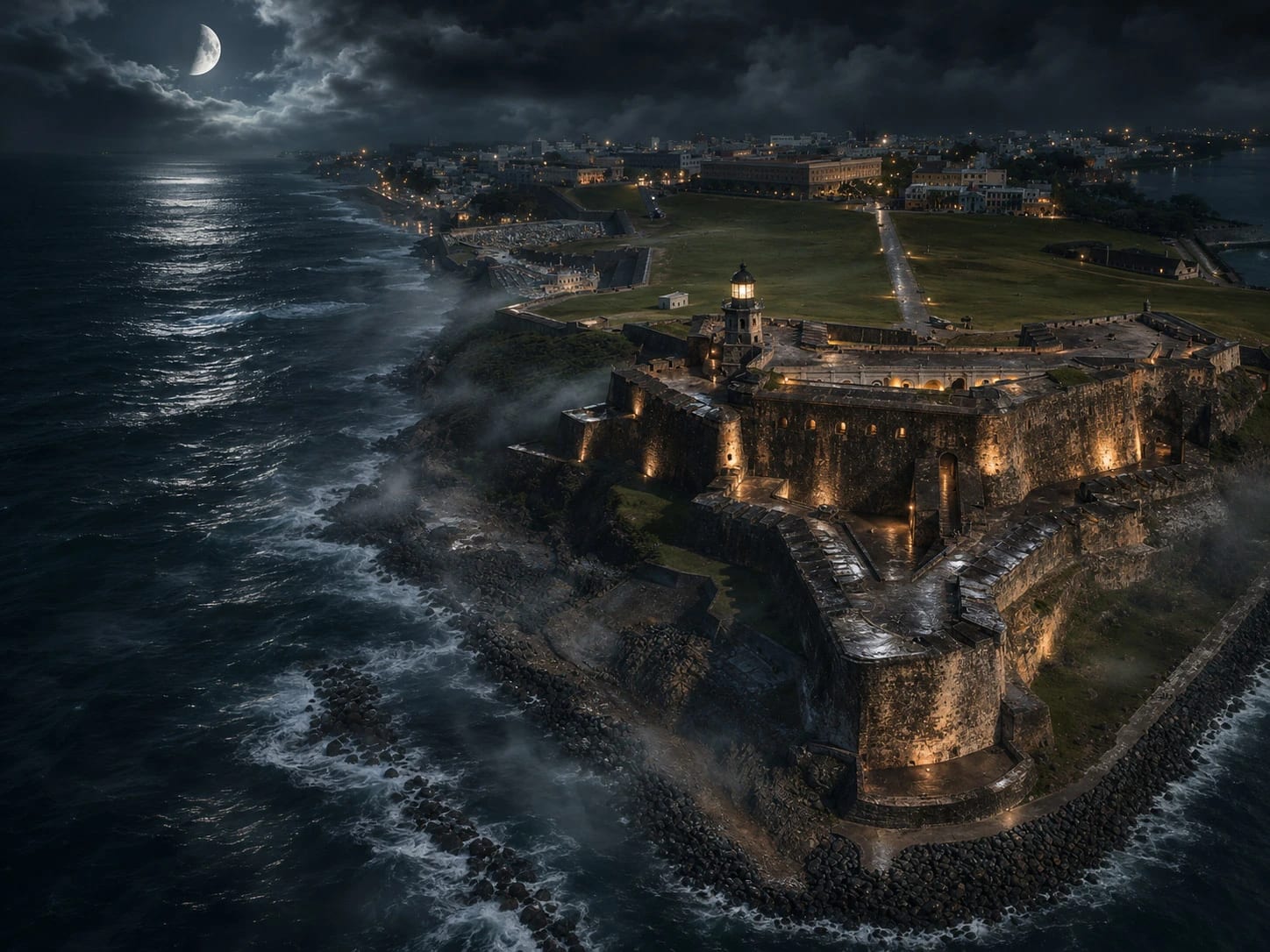
At El Morro, modern ghost stories describe a mysterious Woman in White and apparitions resembling Spanish soldiers.
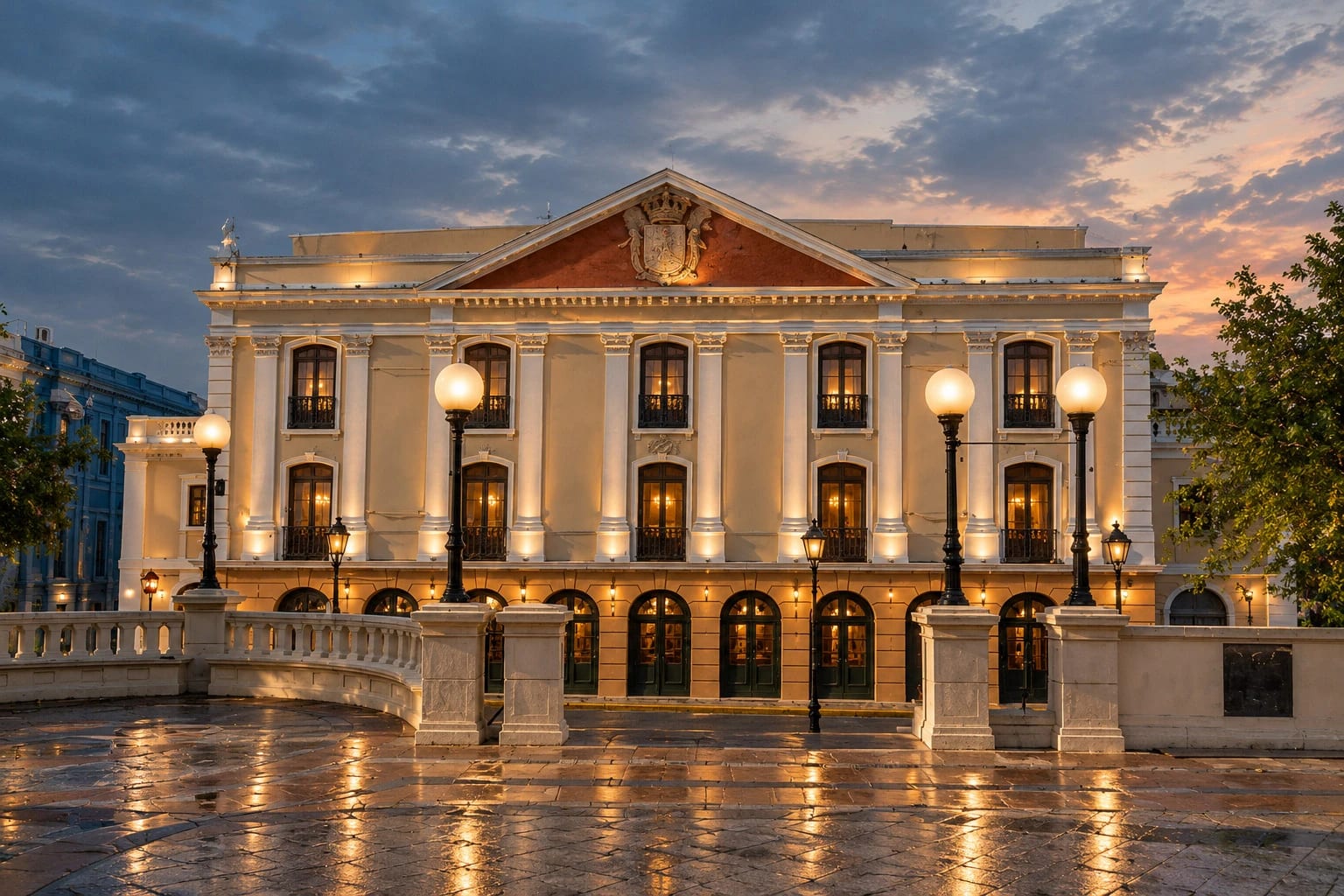
Hotel El Convento, once a Carmelite monastery, is associated with stories of ghostly nuns, while Teatro Tapia has its own legends involving mysterious spectators and performers who seemingly never left the stage.
Each of these stories developed around a real historic place. Understanding what happened there makes the supernatural traditions more meaningful.
At Ghost City Tours, we explore Old San Juan's history and legends through evening walking tours that introduce visitors to the people, events, and mysteries associated with the old city.
Our family-friendly Night of Souls Ghost Tour is designed for guests who enjoy fascinating history, Puerto Rican folklore, and a little supernatural intrigue.
For visitors who prefer a darker exploration of the city's past, The Dead at the Gate examines the more unsettling chapters of San Juan's history alongside the legends that have endured within its walls.
You do not have to believe every story to appreciate the people and places that inspired them.
Capilla del Cristo makes that point especially well.
For nearly three centuries, the little sanctuary has stood near the place where Baltasar Montañez reportedly rode toward his death. Its walls have survived storms, neglect, changing governments, and an effort to demolish it.
Generations of people have visited the chapel believing that a young man's life was saved there.
The historical evidence suggests a different ending.
Perhaps that is the most haunting part of the story: a man remembered for a miraculous escape may have died at the very place where people still celebrate his survival.
Historical References and Sources
1. Puerto Rico Office of State Historic Preservation — Scholarly History of the Chapel
La ciudad en el tiempo: cinco siglos de representaciones artísticas de San Juan — 2020 (PDF)
Published by the Oficina Estatal de Conservación Histórica de Puerto Rico. See the section titled La Capilla del Cristo, pages 88–89.
This is one of the strongest sources for the article. It documents the shrine's architectural development, the patronage of Tomás Mateo Prats, its religious artwork, and the attribution of the central painting to Manuel García. Footnote 35 cites María de los Ángeles Castro Arroyo's 1980 historical research, which relied on ecclesiastical archival evidence indicating that Baltasar Montañez died.
2. Cayetano Coll y Toste — Original Literary Version of the Legend
Tradiciones y Leyendas Puertorriqueñas, Volume I — Rutgers University Digital Collection (PDF)
See the story El Santo Cristo de la Salud, pages 101–104 in the digitized edition.
Coll y Toste's narrative describes the dangerous horse races on the unpaved street, identifies Baltasar Montañez and Tomás Mateo Prats, and recounts the traditional miraculous rescue. The account also discusses the subsequent religious celebrations and the author's concerns about the chapel's deterioration. It is essential for understanding the legend's literary form but should not be treated as a contemporary eyewitness record of the supposed accident.
3. Puerto Rico Historic Buildings Drawings Society — The Legend and Historical Correction
Capilla del Santo Cristo de la Salud — July 8, 2014
By Carlos Mergal. Provides English and Spanish accounts of the legend and attributes the historical correction concerning Montañez's death to research by Adolfo de Hostos. Especially useful for comparing the miraculous version with the interpretation that the chapel was built to prevent future accidents.
4. Periódico El Adoquín — The Chapel's Remarkable Preservation
La Capilla del Cristo de la Salud en Viejo San Juan — April 18, 2017
Puerto Rican cultural newspaper documenting the 1925 threat of demolition, the preservation campaign led by Isabel Alonso de Mier and the Club Cívico de Damas, the 1927 reopening, and subsequent restorations. Also records the role of Rafael Carmoega, Ricardo Alegría, and the Hermandad del Cristo de la Salud. This source is particularly valuable because most modern summaries of the chapel omit the story of the people who saved it.
5. Library of Congress — Historic American Buildings Survey
Capilla del Cristo, Cristo & Tetuán Streets, San Juan — Survey HABS PR-42
Official Library of Congress architectural documentation. Includes historic photographs, eight measured drawings, written historical information, and a construction date of 1753. Useful for verifying the chapel's historic architectural form and locating early photographic material.
6. Discover Puerto Rico — Official Visitor Information
Capilla del Santo Cristo de la Salud
Puerto Rico's official destination-marketing organization provides the chapel's location, general construction period, and traditional miracle story. Notably, its description also acknowledges that the young rider was subsequently reported to have died.
7. Primera Hora — The Chapel and San Juan's Legends
Leyendas sanjuaneras — Puerto Rico
Puerto Rican newspaper coverage of local legends, including the miraculous horse race, the involvement of Tomás Mateo Prats, and the chapel's architecture. Discusses the construction attributed to military engineer Francisco Mestre, the building's original decorative colors, and its unusual location on the city wall.
8. Ars Iesum — The Sacred Painting of the Santo Cristo
Contextos e iconografía del Santo Cristo de la Salud — April 25, 2016
An art-historical discussion of the sacred painting attributed to Manuel García, its religious iconography, and its significance in Puerto Rican devotional art. Useful for distinguishing the chapel's central artwork from later paintings and for understanding the relationship between religious images and stories of miraculous protection.
9. Periódico El Adoquín — Calle del Cristo's History
Historia del Viejo San Juan: La Calle del Cristo de la Salud — September 5, 2019
Provides additional information about the historic street, religious dedication, chapel architecture, and artwork associated with the sanctuary.
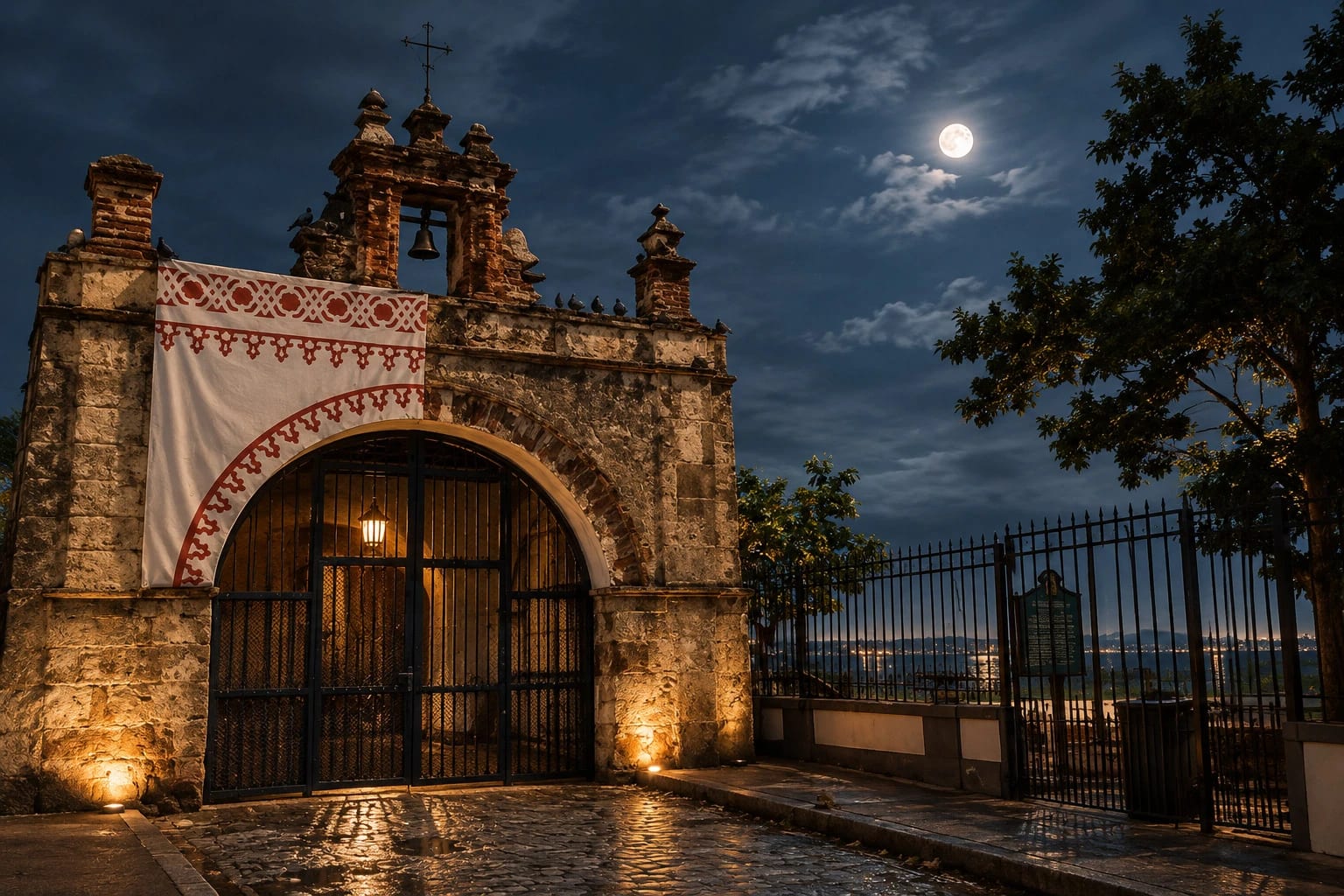
Capilla del Cristo at the southern end of Calle del Cristo, beside Parque de las Palomas