On the morning of May 12, 1898, American warships began firing on San Juan. Their shells struck the city's centuries-old fortifications, shattered masonry, and sent soldiers scrambling for cover.
At Cuartel de Ballajá, the enormous Spanish military barracks near El Morro, the bombardment tore through the northern wall. Part of the structure collapsed, exposing sleeping quarters where Spanish troops had been stationed only moments before.
Captain Ángel Rivero Méndez, an artillery officer who witnessed the attack, later described the building as riddled with projectiles. One wall had been brought down, and the barracks had suffered serious damage.
It was a violent episode in the final months of Spanish colonial rule over Puerto Rico. Yet the destruction was only one chapter in the history of a building that would later become a United States Army hospital, fall into abandonment, and acquire a reputation for being haunted.
According to modern ghost stories, some of the soldiers who once occupied the barracks never entirely departed. Visitors have reported unexplained footsteps and unusual sensations along its long corridors. Other accounts describe the spirits of former servicemen wandering through rooms that now house cultural exhibitions.
One particularly intriguing story concerns a photograph taken by tourists at the Museo de las Américas, the museum occupying the building's second floor. A mysterious figure allegedly appeared in the image. Was it a soldier from the Spanish colonial period, a nurse from the American military hospital, or something else?
No one has established that the photograph captured a ghost. Nevertheless, the story has become part of the supernatural folklore surrounding Cuartel de Ballajá.
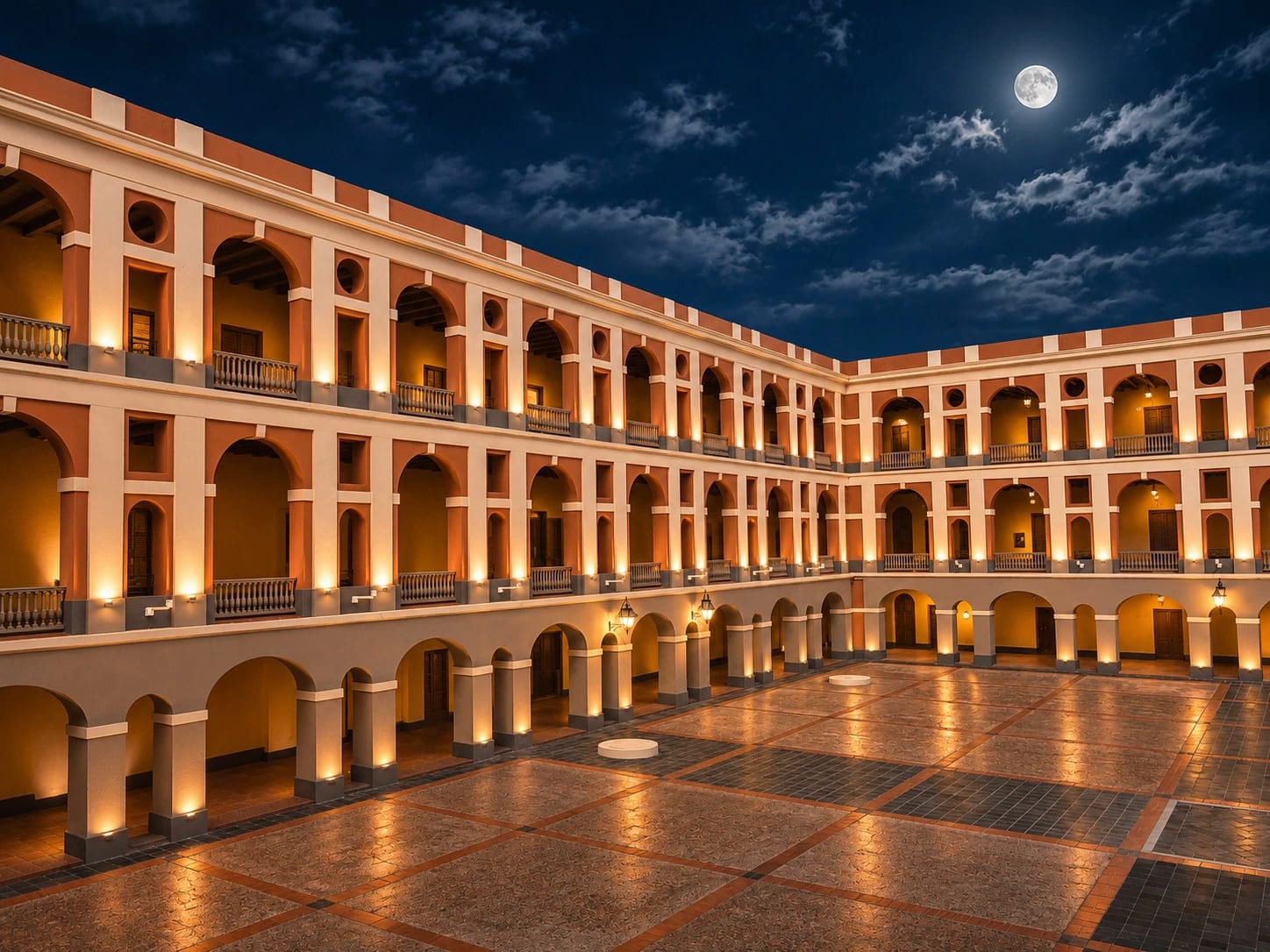
Today, the former barracks stands near the northwestern edge of Old San Juan, Puerto Rico. Its enormous central courtyard is surrounded by three levels of arched galleries, forming one of the city's most impressive examples of nineteenth-century military architecture.
The building now contains museums, cultural organizations, restaurants, and public gathering spaces. Its transformation is so complete that visitors may have difficulty imagining the soldiers, patients, and military officers who once occupied its rooms.
But Cuartel de Ballajá's most unsettling history began before the first soldier ever moved in.
To construct the barracks, the Spanish colonial government cleared an established neighborhood. Homes were demolished, residents were displaced, and an entire section of Old San Juan was transformed into military property.
Archaeologists have since recovered evidence of the community that disappeared beneath the enormous building.
The soldiers' ghosts may be impossible to verify. The destruction of the neighborhood, the bombardment, the military hospital, and the people whose lives were changed by them are part of the historical record.
Before the Barracks, There Was a Neighborhood Called Ballajá
Long before the enormous military building dominated this corner of San Juan, the land was occupied by homes, workshops, and small businesses.
The neighborhood was known as Ballajá, although historical documents also preserve the earlier spelling Bayajá.
It developed near the western edge of the city, close to the Dominican religious complex and the open ground surrounding El Morro.
Unlike some of San Juan's more prosperous residential streets, Ballajá was home to a substantial working-class population.
Many residents were free Black Puerto Ricans. Others belonged to families of Spanish, African, and Caribbean ancestry whose livelihoods depended on the city's everyday economy.
They worked as carpenters, masons, shoemakers, tobacco workers, laborers, merchants, and food vendors. Some residents made and sold clothing or prepared food for customers in the surrounding neighborhood.
The area contained small gardens and informal marketplaces where families sold whatever surplus they could produce.
This was not an empty parcel of land awaiting development.
It was a functioning community.
In 1995, archaeologists Mark Barnes and Norma Medina Carrillo published Ballajá: Arqueología de un Barrio Sanjuanero, a detailed study of the neighborhood's history and material remains.
Their research drew on census records, property documents, historical maps, and archaeological investigations.
The findings revealed a neighborhood whose residents had been largely overlooked in conventional histories of Old San Juan.
According to the 1846 census, approximately 670 people lived in Ballajá, occupying around 120 residential units.
Women and children formed a substantial proportion of the population. Many households rented their dwellings rather than owning them, reflecting the community's limited financial resources.
The census also recorded enslaved people living or working in the neighborhood. Some performed domestic labor, while others worked in trades or sold goods.
Ballajá therefore contained both free and enslaved residents, often living within a few streets of one another.
The neighborhood's population was economically diverse, although many families occupied modest wooden houses rather than the larger masonry residences associated with San Juan's wealthier inhabitants.
Their homes were closely arranged, with narrow streets connecting residential blocks, shops, and workplaces.
Then the Spanish military decided it needed the land.
The Government That Demolished an Entire Community
By the middle of the nineteenth century, San Juan's military authorities wanted a new infantry barracks.
Existing accommodations for soldiers were scattered among older buildings, including former religious properties. The military needed a large, purpose-built facility capable of housing hundreds of troops while providing the kitchens, storerooms, stables, and administrative spaces required by a permanent garrison.
Ballajá appeared to offer an ideal location.
The neighborhood stood near El Morro, allowing troops to be quartered close to one of San Juan's principal defensive installations.
Its position within the fortified city also provided convenient access to military facilities and the surrounding road network.
But there was a problem.
People already lived there.
Spanish authorities responded through expropriation.
Beginning during the 1850s, the government acquired properties and demolished residential blocks to make room for the proposed barracks.
Some of the displaced families had occupied the neighborhood for generations.
The archaeological study by Barnes and Medina Carrillo preserves the names of property owners affected by the project. Among those identified in surviving records were Petrona Miró, María García, Merced León, Antonia de la Cruz, Pascuala Delgado, and Cecilia Sánchez.
These names are especially important because they restore individual identities to a process that is often described simply as urban development.
The destruction of the neighborhood was not an abstract change.
It involved the loss of homes and familiar surroundings for people whose lives were already shaped by limited economic opportunity.
The government's attitude toward the neighborhood was revealing.
Historical documentation surrounding the project described the replacement of modest wooden homes with a monumental military structure as an improvement to the city's appearance.
The poverty of the residents was treated as an architectural problem.
Their displacement became part of a campaign to make San Juan appear more orderly and impressive.
The demolition affected approximately six city blocks, eliminating a substantial portion of the existing neighborhood.
Other homes survived nearby, and some streets continued developing during the following decades, but the construction fundamentally altered Ballajá's social and physical character.
The military gained an enormous new building.
Many residents lost the neighborhood they had known.
Today, tourists admire the barracks' massive courtyard and symmetrical architecture without realizing that the ground beneath it once supported an entirely different community.
It is one of the most important parts of Cuartel de Ballajá's history, and one of the least frequently discussed in accounts of the supposedly haunted building.
Building One of Spain's Largest Caribbean Barracks
Construction of Cuartel de Ballajá began during the 1850s and continued into the following decade.
Most official histories date the project from 1854 to 1864, although preservation research identifies planning and preliminary work as early as 1853.
The project was undertaken by the Spanish military engineering establishment under the direction of commander José López Bago, with contributions from other architects and engineers.
The resulting building was enormous.
Its approximately 7,700-square-meter footprint formed a large quadrilateral around a central courtyard. Three levels of arched corridors overlooked the open space, creating a striking example of nineteenth-century institutional architecture.
The courtyard served as a military parade ground.
Soldiers could assemble there for inspections, formations, and other activities associated with garrison life.
The surrounding rooms accommodated the many functions necessary to maintain a substantial military population.
There were living quarters for soldiers, apartments for officers and their families, kitchens, dining rooms, storerooms, stables, and rooms used for confinement.
The building was designed to accommodate approximately 1,000 soldiers, along with military families and support functions.
The scale reflected San Juan's importance to Spain.
By the nineteenth century, the city was no longer simply a vulnerable Caribbean settlement. It was a heavily fortified colonial capital whose defenses had required enormous expenditures over generations.
Cuartel de Ballajá became one of the last major military buildings constructed by Spain in Puerto Rico.
Its architecture was impressive even by the standards of a city famous for imposing fortifications.
But unlike El Morro or Castillo San Cristóbal, the barracks was not primarily designed to withstand an enemy siege.
It was built to accommodate the daily life of a military garrison.
That distinction shaped everything that happened inside it.
What Life Was Like for Soldiers at Ballajá
The lives of soldiers stationed at Cuartel de Ballajá were governed by military discipline.
Their days included inspections, drills, maintenance assignments, guard duties, and other responsibilities associated with the defense of San Juan.
Some troops served at the nearby fortifications, while others performed duties within the city.
Military service was not always voluntary, and the circumstances under which men entered the Spanish Army varied according to the period and the laws governing recruitment.
For soldiers stationed far from their families, military life could be particularly difficult.
Puerto Rico's tropical climate presented challenges unfamiliar to men recruited in Spain. Heat, humidity, disease, and seasonal storms could make even routine duties uncomfortable.
The barracks offered shelter, but it was also a highly regulated environment.
Men slept in shared quarters, ate according to military schedules, and lived under the authority of officers who controlled much of their daily routine.
The building's kitchens and dining areas had to serve large numbers of people. Storerooms required constant supervision, while stables, equipment, weapons, and uniforms demanded regular maintenance.
Not every resident was a soldier.
The barracks also contained accommodations for officers and their families, creating a small community whose everyday concerns extended beyond military duties.
Children and spouses could live within the same building as hundreds of troops.
That mixture of military and domestic activity complicates the way Cuartel de Ballajá is commonly described.
It was not simply a fortress filled with men waiting to fight.
It was a place where people worked, slept, ate, raised families, received orders, and tried to maintain ordinary routines within an institution designed around military discipline.
Some modern ghost stories imagine soldiers continuing to walk the corridors after death.
The historical reality is that those corridors once carried far more than marching troops.
They were part of a building inhabited by an entire military community.
The Rooms Where Soldiers Were Punished
One of the lesser-known features of Cuartel de Ballajá was its provision for military confinement.
The State Historic Preservation Office's architectural history identifies calabozos, or confinement cells, among the facilities originally incorporated into the barracks.
Their presence was consistent with the disciplinary requirements of nineteenth-century military life.
Soldiers who violated regulations could face a range of penalties, including restrictions, loss of privileges, detention, and other punishments imposed under military law.
Desertion, insubordination, and serious offenses could result in severe consequences.
A permanent garrison therefore needed space to hold men awaiting disciplinary proceedings or serving sentences.
The existence of confinement rooms does not establish that prisoners were tortured or executed inside them.
Those claims require specific historical documentation, and the available sources do not identify a particular execution associated with the barracks' cells.
It is nevertheless worth considering what confinement meant in such an environment.
A soldier assigned to Ballajá ordinarily lived among hundreds of others. His days were filled with noise, activity, orders, and constant movement.
Being placed in a confinement room separated him from much of that routine.
The building's thick masonry, restricted openings, and institutional design could make even a relatively ordinary detention unpleasant.
Modern haunted-tour accounts sometimes describe troubled spirits or the lingering presence of punished soldiers in former military buildings.
At Ballajá, those stories should not be expanded into invented accounts of executions, mysterious deaths, or brutal jailers.
The documented history already establishes that the building was designed to enforce military authority.
Its confinement spaces were one expression of that power.
But the greatest danger the soldiers at Ballajá would face came from outside the walls.
And it arrived in May 1898.
The Morning American Warships Attacked San Juan
On May 12, 1898, an American naval squadron commanded by Rear Admiral William T. Sampson approached San Juan.
The United States and Spain were at war.
American forces hoped to weaken Spain's Caribbean military positions, while Spanish defenders prepared to resist an attack against the city's historic fortifications.
El Morro and Castillo San Cristóbal possessed artillery batteries overlooking the approaches to San Juan Bay.
The Americans brought modern warships armed with powerful naval guns.
When the bombardment began, shells struck fortifications and other buildings throughout the city.
Cuartel de Ballajá was directly affected.
Captain Ángel Rivero Méndez, a Puerto Rican artillery officer serving Spain, later wrote a detailed account of the Spanish-American War.
His Crónica de la Guerra Hispanoamericana en Puerto Rico contains one of the most revealing descriptions of the damage inflicted on the barracks.
Rivero explained that American projectiles struck the northern façade of Ballajá, damaging it so severely that part of the wall collapsed.
The fallen masonry exposed the sleeping quarters of two military companies.
He described soldiers struggling in darkness and dust as the bombardment continued.
The scene would have been terrifying.
The building had been designed as a residence and administrative center for military personnel, not as a fortress capable of resisting sustained fire from modern warships.
Walls that ordinarily provided protection from the weather and the outside world were suddenly being struck by explosive projectiles.
Rivero's account also described other damage throughout the city.
The lighthouse at El Morro was hit. Castillo San Cristóbal suffered artillery damage, and several important civilian buildings were struck.
The nearby cemetery received shells that damaged burial structures and exposed human remains.
The bombardment therefore affected the entire historic landscape surrounding Ballajá.
The barracks, the forts, religious buildings, and burial grounds all experienced the destructive effects of modern naval warfare.
Sampson's fleet eventually withdrew.
The United States did not capture San Juan during that bombardment, but the attack demonstrated the vulnerability of Spain's colonial defenses.
Puerto Rico would soon pass into American hands.
For the soldiers who occupied Ballajá, the damage marked the beginning of the end of their military community.
The Final Months of Spanish Rule
Spain's position in Puerto Rico deteriorated rapidly during the summer of 1898.
American troops landed at Guánica on July 25, beginning a campaign that advanced through parts of the island.
The military situation changed when Spain and the United States agreed to a peace protocol in August.
Although formal hostilities ended, Puerto Rico's transfer to American administration required additional negotiations and ceremonies.
On October 18, 1898, American forces formally assumed control of San Juan.
Spanish military authority over the capital ended.
The change affected every major installation in the city, including Cuartel de Ballajá.
Buildings that had served Spanish regiments were transferred to the United States military.
The men who had occupied them faced reassignment, repatriation, or changes in their circumstances as the old colonial administration withdrew.
The transition was especially significant at Ballajá because the structure had been built during the later decades of Spanish rule.
It represented the Spanish government's determination to maintain a substantial military presence in Puerto Rico.
Less than forty years after its completion, the building passed to a foreign army.
The architectural features remained.
The uniforms, commands, and institutional responsibilities changed.
For visitors interested in the reported ghosts of Spanish soldiers, 1898 provides an obvious historical setting.
An army departed a building it had occupied for decades, leaving behind the physical evidence of its presence.
But there is no reliable evidence identifying a specific soldier who died during the bombardment and subsequently appeared as a ghost at Ballajá.
The building's wartime damage is documented.
The identities of its supposed supernatural occupants are not.
American Soldiers Move Into the Barracks
Following the transfer of Puerto Rico to the United States, Cuartel de Ballajá became part of the American military installation known as Fort Brooke.
American infantrymen occupied the building, continuing its use as military accommodation.
The transition introduced new routines, personnel, and administrative practices, but the basic purpose of the structure remained largely unchanged.
Soldiers still needed living quarters, dining facilities, storage rooms, and spaces for military operations.
The courtyard remained an imposing place for assembly.
Archival photographs from the early twentieth century show military personnel gathered inside the building, providing a glimpse of the barracks during the American period.
One photograph preserved by the Puerto Rico Architectural Heritage Archive depicts soldiers and a military band assembled in the courtyard.
Another, dating to approximately 1900, shows the massive building as viewed from the grounds of El Morro.
These images are especially useful because they document how the property appeared before the extensive restoration undertaken during the late twentieth century.
They also demonstrate that Ballajá remained an active military space rather than becoming an abandoned colonial relic after 1898.
For approximately four decades, American troops continued using the building.
Then a new global conflict changed its purpose.
The barracks would become a hospital.
The World War II Hospital Inside Cuartel de Ballajá
As the threat of a new world war grew during the late 1930s, the United States began reconsidering its military facilities throughout the Caribbean.
Puerto Rico occupied a strategically important position for the defense of shipping routes, naval installations, and American interests in the Atlantic.
The military needed medical facilities capable of supporting personnel stationed throughout the region.
Cuartel de Ballajá offered a large existing structure with substantial interior space.
Beginning around 1939, the Army adapted the former infantry barracks for medical use.
The building became associated with the Fort Brooke General Hospital, which provided services to military personnel.
Rooms once occupied by soldiers were converted to accommodate hospital functions.
The transformation must have changed the daily atmosphere of the building considerably.
A barracks is organized around military schedules, formations, equipment, and preparation for service.
A hospital operates around medical treatment, patients, nurses, physicians, supplies, and the continual demands of caring for people who are ill or injured.
The same long corridors that once connected soldiers' quarters now served a medical institution.
During World War II, the hospital became part of the American military's medical infrastructure in Puerto Rico.
The exact character of every patient's illness or injury is not established by the general histories of the building.
It would be inaccurate to imply that the hospital was filled exclusively with soldiers wounded in combat or that large numbers of patients died there during the war.
Military hospitals treated a wide range of medical conditions, and the surviving administrative records would need to be examined to establish particular patterns of hospitalization or mortality.
The building's use as a hospital is documented.
The dramatic ghost stories sometimes attached to that period are much less certain.
That distinction becomes important when considering one of Ballajá's most curious modern legends.
The Military Hospital Named for a Puerto Rican Doctor
In 1944, the United States Army renamed the hospital in honor of Major Fernando E. Rodríguez Vargas, a Puerto Rican military dentist and pioneering researcher.
Rodríguez Vargas was born in Adjuntas, Puerto Rico, in 1888.
He pursued a career in dentistry and became associated with important research into the microorganisms responsible for dental disease.
His work helped advance the understanding of bacteria involved in tooth decay.
He served in the United States Army's Dental Corps and became recognized for his scientific contributions.
In 1932, Rodríguez Vargas died of pneumonia at the age of forty-four.
More than a decade later, the War Department honored him.
On August 31, 1944, General Order No. 71 designated the Fort Brooke hospital as the Rodríguez General Hospital, also identified in archival material as the 161st General Hospital.
The distinction is important because the hospital's name is sometimes mentioned in historic descriptions without explaining the man behind it.
Rodríguez Vargas was not a famous general killed on a battlefield.
He was a Puerto Rican medical professional whose research contributed to military and civilian dentistry.
His name became part of the building's history because of his accomplishments in medical science.
The National Archives' guide to Puerto Rican records documents the hospital's designation and its eventual closure.
According to that source, Rodríguez General Hospital closed on February 14, 1949, as part of the reorganization of Fort Brooke.
Some general historical summaries describe continued medical or military activity around the Ballajá complex into later decades. Those accounts should not be confused with the documented closure date of the named general hospital.
The original institution had ceased operations.
Its name lived on elsewhere.
A military medical clinic at Fort Buchanan was subsequently named in honor of Rodríguez Vargas, preserving his association with American military medicine in Puerto Rico.
Back at Ballajá, the former hospital building entered another period of military and administrative change.
Its years as a medical facility would eventually become part of the explanation offered for its supposed supernatural activity.
The Ghostly Nurse in the Tourist Photograph
One modern ghost story associated with Cuartel de Ballajá concerns a photograph taken inside the Museo de las Américas.
The story appears in a promotional description for a San Juan ghost tour.
According to that account, a group of tourists photographed part of the museum and later noticed a mysterious figure in the image.
The description offers two possible identities for the apparent apparition.
One is a ghost associated with the former Dominican convent nearby.
The other is a nurse from the building's World War II hospital period.
Both explanations reflect recognizable elements of Old San Juan's history.
The former Dominican convent is an important historic building in the same neighborhood, and Ballajá itself did serve as a military hospital.
But the available promotional account does not provide enough information to establish what appeared in the photograph.
There is no independently authenticated original image, documented photographic analysis, or verified identity for the figure.
Nor is there evidence demonstrating that the supposed apparition was actually a nurse.
It is therefore impossible to conclude that the photograph captured a supernatural presence.
The story also illustrates how easily histories of nearby buildings can become confused.
The Dominican convent and Cuartel de Ballajá are separate historic structures. Their proximity does not mean that a person associated with one building lived or died in the other.
The suggestion that the figure could be a nurse is similarly speculative.
The former barracks served as an Army hospital, but that fact alone does not establish that a medical worker's spirit remains inside it.
The possibilities make an intriguing ghost story.
They should not be presented as the results of a verified paranormal investigation.
What is interesting is how the building's successive uses provide different identities for an otherwise unexplained figure.
If someone imagines a ghost in an old barracks, the apparition becomes a soldier.
If the same building once served as a hospital, the imagined figure may become a nurse.
The architecture remains unchanged.
The story depends on which chapter of the building's history the observer chooses to remember.
The Phantom Soldiers of Cuartel de Ballajá
The most common supernatural tradition associated with Ballajá concerns soldiers who supposedly continue to occupy the former military barracks.
Modern ghost-tour descriptions refer to restless spirits wandering its halls, unexplained footsteps, and sensations of cold in areas of the building.
Some accounts associate the reported activity with the Spanish-American War.
Others connect it more generally with the hardships of military service or the American occupation.
One contemporary San Juan ghost-tour operator describes the spirits of fallen soldiers as continuing to fight a war after death.
The phrase is dramatic, but it should not be mistaken for a historically verified account.
There is no established evidence identifying a particular soldier killed inside the barracks whose ghost has subsequently been observed.
Nor have the available descriptions documented a consistent apparition with a name, military rank, uniform, or established circumstances of death.
The reports are best understood as modern folklore.
Nevertheless, the legend is closely connected to the building's physical design.
Cuartel de Ballajá has long, repetitive corridors overlooking the central courtyard. The same architectural pattern appears across three levels, with arches and doorways creating views that extend through multiple sections of the building.
During its military years, thousands of footsteps would have echoed through those galleries.
Soldiers crossed the balconies to reach sleeping quarters, dining areas, storage rooms, and offices.
Military formations assembled in the courtyard below.
After the building was converted into a hospital, nurses, physicians, patients, and other personnel used many of the same spaces.
Today, visitors hear the sounds of ordinary life from cultural organizations, museum rooms, shops, and public events.
The architecture has preserved the setting of those earlier routines even though the people and institutions have changed.
That continuity is part of what makes the ghost stories appealing.
A person hearing footsteps in an otherwise quiet gallery may imagine the sound of soldiers walking to their posts.
There is no need for an actual apparition to understand why the setting encourages such an interpretation.
But the story has survived because the building once was full of soldiers.
And according to the legends, some still walk its corridors.
The Barracks That Fell Into Abandonment
After the American military reduced its activities in Old San Juan, Cuartel de Ballajá gradually lost the institutional purpose that had sustained it.
The building had been constructed for a large military population and later adapted for hospital use.
Maintaining such an enormous structure required substantial investment.
Once those functions disappeared, its size became a liability.
The government of Puerto Rico acquired the former barracks from the federal government in 1976, with the intention of placing the property into cultural, educational, and tourism-related use.
But ownership alone did not solve its problems.
For years, portions of the building remained unused or inadequately maintained.
The tropical climate was particularly damaging.
Moisture, salt air, rain, and vegetation accelerated the deterioration of masonry, plaster, wood, and metal components.
A building that had once symbolized Spanish military power became increasingly difficult to maintain.
The enormous courtyard and galleries, so impressive when occupied by soldiers or patients, now emphasized the absence of activity.
This period of neglect provides another reason the barracks acquired an unsettling reputation.
Abandoned institutional buildings often seem haunted even without a specific supernatural tradition.
Empty corridors amplify ordinary sounds. Damaged shutters may move in the wind, loose materials can produce unfamiliar noises, and buildings designed for large populations feel unusually strange when no one occupies them.
Cuartel de Ballajá presented precisely that contrast.
Its architecture suggested a place built for hundreds of people.
For a time, the people were largely gone.
Fortunately, Puerto Rican preservationists recognized that the building's deterioration did not have to be permanent.
The Restoration That Saved Ballajá
The preservation of Cuartel de Ballajá became part of a broader effort to protect Old San Juan's historic architecture.
Ricardo Alegría, the influential Puerto Rican archaeologist, anthropologist, and cultural preservationist, played a central role in developing the vision for the former military complex.
Alegría had spent much of his career advocating for the preservation of historic buildings and the recognition of Puerto Rico's cultural heritage.
He helped establish the Institute of Puerto Rican Culture and promoted the conservation of Old San Juan during a period when modernization threatened many older structures.
At Ballajá, the opportunity was especially significant.
The enormous former barracks could be transformed from an abandoned military building into a center for museums, education, and cultural activities.
The concept gained momentum during preparations for the 1992 commemoration of the 500th anniversary of Christopher Columbus's first voyage to the Americas.
Rather than allow the building to deteriorate further, preservation officials developed a plan to restore its historic architecture and introduce new public uses.
The rehabilitation was undertaken primarily between 1990 and 1993.
The work required attention to the building's masonry, floors, galleries, staircases, roofs, and other architectural features.
The Puerto Rico State Historic Preservation Office later described the project in an article titled Un fénix en Ballajá, or A Phoenix in Ballajá.
The title was appropriate.
The building had survived bombardment, military occupation, conversion into a hospital, and decades of changing use.
Now it was being brought back into public life.
The restoration preserved the enormous central courtyard, the arched galleries, and the distinctive architectural proportions of the original barracks.
New functions were introduced without entirely concealing its military origins.
The result was one of the most striking adaptive-reuse projects in Old San Juan.
A building constructed to house an occupying military institution had become a place dedicated to Puerto Rican and American cultural history.
The transformation was profound.
And it also created the setting in which modern visitors began reporting some of the building's alleged supernatural activity.
The Museo de las Américas: Art and History Inside the Old Barracks
One of the most important institutions established at Cuartel de Ballajá is the Museo de las Américas.
Founded in 1992 through the efforts of Ricardo Alegría, the museum occupies the building's second floor.
Its purpose is to explore the history, art, and cultures of the Americas, with particular attention to Puerto Rico.
The museum is an appropriate occupant for a building whose own history reflects centuries of colonialism, military authority, and cultural transformation.
Its five permanent exhibitions examine different aspects of American history and cultural identity.
They include Indigenous peoples of the Americas, African heritage, popular arts, Puerto Rican religious carving traditions, and the history of conquest and colonization.
The museum also hosts temporary exhibitions, workshops, lectures, and cultural events.
Visitors entering its rooms encounter artifacts, paintings, sculptures, historical objects, and artistic traditions drawn from across the Americas.
The exhibition devoted to Indigenous cultures provides an opportunity to learn about the societies that existed before European colonization.
Its exploration of African heritage examines the enormous contributions of African peoples and their descendants to the cultures of the Americas.
The permanent exhibition on conquest and colonization addresses the historical forces that transformed Puerto Rico after the arrival of Europeans.
These subjects are particularly meaningful inside Ballajá.
The building was constructed by a colonial military government after displacing a community that included free Black residents and enslaved people.
Its architecture represented Spanish authority, while its later history reflected Puerto Rico's transition to American rule.
Today, the museum examines many of the historical processes that made the building possible.
That is a far more significant transformation than a simple change of tenants.
It represents a different understanding of what historic architecture should accomplish.
The former barracks no longer exists primarily to serve military power.
It helps visitors understand the people and cultures whose histories were shaped by that power.
The Historic Courtyard Where Soldiers Once Gathered
The central courtyard remains Cuartel de Ballajá's most recognizable feature.
It is enormous, open to the sky, and enclosed by three levels of arched galleries.
The surrounding walls create a nearly symmetrical architectural composition, with repeated columns and openings giving the space a sense of extraordinary scale.
During the Spanish military period, the courtyard served as the principal assembly ground.
Soldiers gathered there for formations, inspections, and other activities connected with their service.
Officers could observe the movement of troops from the galleries above, while the surrounding rooms provided convenient access to the facilities required by the garrison.
Today, the space is known as Patio Don Ricardo Alegría, honoring the preservationist whose efforts helped give the building its new cultural identity.
The courtyard hosts festivals, performances, exhibitions, markets, and other events.
Its atmosphere changes dramatically according to the occasion.
During the day, sunlight illuminates the walls and casts strong shadows beneath the arches.
In the evening, artificial lighting transforms the long corridors and emphasizes the repetitive geometry of the building.
Visitors standing in the middle of the courtyard can look up toward the balconies and imagine the hundreds of people who once lived and worked behind the surrounding doors.
It is easy to see why ghost-tour descriptions favor this location.
The architecture lends itself naturally to stories about movement through empty galleries, figures appearing in upper-level openings, and sounds that seem to come from distant corridors.
But the courtyard is also a public space with an active cultural life.
It should not be mistaken for an abandoned military compound.
The people gathering there today are participating in a transformation that would have been difficult to imagine when Spanish soldiers first assembled on the same ground.
A Building That Celebrates the Dead Without Claiming to Be Haunted
One of the museum's most interesting modern traditions is its celebration of Noche de Catrinas, a cultural event inspired by Mexico's Día de los Muertos.
The Museo de las Américas has organized the event for years, using music, artistic performances, altars, and exhibitions to explore traditions of remembrance.
In 2026, the museum scheduled its Noche de Catrinas celebration for October 29.
The event brings together Puerto Rican and wider Latin American cultural traditions within the historic galleries of the former barracks.
This is a meaningful distinction.
Día de los Muertos is not a ghost-hunting exercise.
It is a cultural tradition centered on remembering deceased relatives, celebrating their lives, and maintaining emotional and symbolic connections between generations.
The museum's event reflects that tradition through art and public participation.
Some altars have honored influential Puerto Rican cultural figures, while others have addressed contemporary social concerns.
The celebration demonstrates that an institution can explore death, memory, and spiritual traditions without presenting them as evidence of paranormal activity.
Inside Ballajá, that approach is especially appropriate.
The building's history includes military conflict, displacement, illness, and the lives of people who were often excluded from conventional historical narratives.
Remembering those people requires more than imagining anonymous ghosts in the corridors.
It requires an understanding of their experiences.
The cultural events now held at Cuartel de Ballajá provide a different way of engaging with that past.
A building originally constructed to house soldiers has become a place where communities gather to celebrate history, art, and remembrance.
The people are no longer marching to military commands.
They are choosing how to tell their own stories.
Is Cuartel de Ballajá Really Haunted?
The supernatural reputation of Cuartel de Ballajá is less firmly documented than the haunted histories of some other Old San Juan landmarks.
Modern ghost-tour descriptions refer to wandering soldiers, unexplained footsteps, cold sensations, and a mysterious figure appearing in a tourist photograph.
Those accounts demonstrate that the building has become associated with paranormal folklore.
They do not establish that ghosts have been observed.
The available published material does not identify a consistent apparition with a verified historical identity.
Nor is there an independently documented investigation establishing that a particular death inside the building produced a haunting.
The photograph described in a ghost-tour listing cannot be properly evaluated without access to the original image, information about the camera and circumstances, and a reliable account from the photographer.
The suggestion that the figure might be a nurse is especially uncertain.
Cuartel de Ballajá served as a military hospital, but no evidence connects the reported photograph with a specific member of its medical staff.
The building's history is much better established.
The Spanish colonial government displaced residents to construct it. Soldiers occupied its rooms for decades. American shells struck its northern wall during the bombardment of 1898, and it later became part of Fort Brooke.
During World War II, the former barracks operated as an Army hospital named for a pioneering Puerto Rican dentist.
The building then entered a period of decline before being restored as a cultural institution.
Those chapters provide a substantial historical foundation for understanding its reputation.
The ghost stories tend to imagine the return of soldiers and medical personnel.
Yet the people who disappeared most completely from the familiar history of the site were not necessarily the soldiers at all.
They were the residents of the neighborhood demolished to make room for the barracks.
Their homes vanished. Their streets were altered, and much of their community disappeared beneath the new military complex.
Archaeological research has helped restore some of their names and experiences to the historical record.
That may be the most haunting part of Ballajá's story.
The best-documented disappearance involved an entire neighborhood, not a ghost.
Where Is Cuartel de Ballajá, and Can You Visit It?
Cuartel de Ballajá is located in the historic Ballajá district of Old San Juan, Puerto Rico, near the intersection of Calle Norzagaray and Calle Beneficencia.
The building stands opposite the grounds of Castillo San Felipe del Morro, within walking distance of several of San Juan's most important historic landmarks.
The main courtyard and portions of the ground-floor galleries are used for cultural and commercial activities, although access may vary during special events or maintenance.
The second floor houses the Museo de las Américas.
Other portions of the building are occupied by cultural and educational organizations, government preservation offices, and private businesses.
Visitors can admire the building's historic architecture from the surrounding streets, and public areas of the courtyard are often accessible during the day.
The former barracks is not an abandoned property or an unrestricted paranormal attraction.
Its offices, exhibition rooms, and private spaces have their own access requirements.
Museo de las Américas hours and admission
According to the museum's official website, its regular schedule is:
- Tuesday through Friday: 9:00 a.m. to noon, and 1:00 p.m. to 4:00 p.m.
- Saturday and Sunday: 11:00 a.m. to 4:00 p.m.
- Monday: Closed.
General admission is currently listed at $8 for adults, with a reduced price of $5 for children, students, teachers, and seniors.
These hours apply to the museum, not necessarily to every other part of the Cuartel de Ballajá complex.
Special events, holidays, exhibitions, and maintenance may affect access.
For current admission information, consult the Museo de las Américas official visitor page.
Visitors interested in the larger building can also consult the Puerto Rico State Historic Preservation Office, which administers the property and provides information about its cultural functions.
What else is nearby?
Cuartel de Ballajá stands in one of the most historically significant sections of Old San Juan.
Immediately to the west are the grounds of Castillo San Felipe del Morro, whose massive fortifications overlook the Atlantic and the entrance to San Juan Bay.
Nearby Casa Blanca preserves one of the earliest Spanish colonial residences on the San Juan islet.
Iglesia San José and the former Dominican religious complex are also within walking distance.
The Plaza del Quinto Centenario, completed during the commemorations surrounding the 500th anniversary of Columbus's voyage, provides another prominent landmark adjoining the Ballajá district.
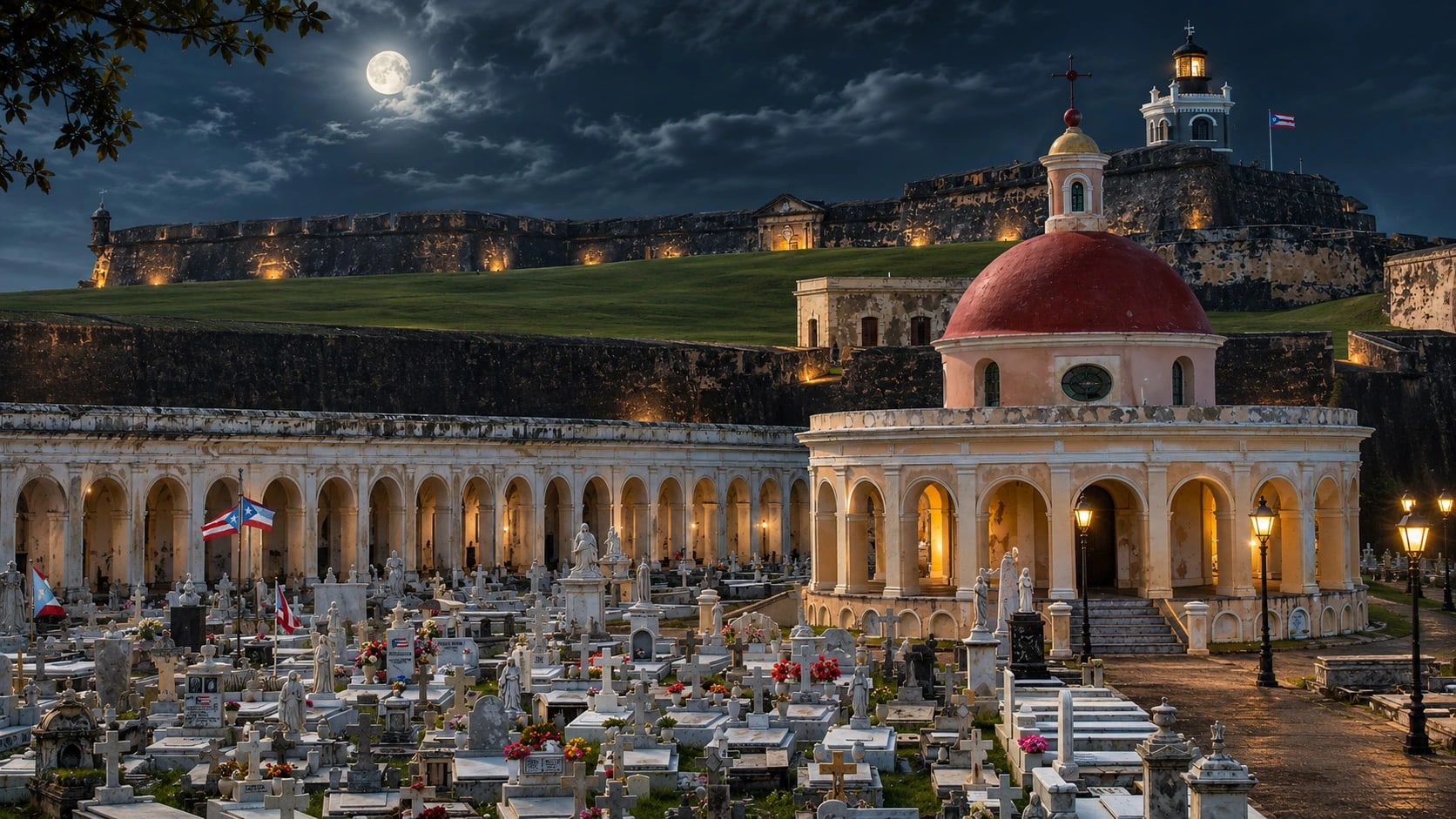
A short walk north and west also reveals views toward the coastal cemetery of Santa María Magdalena de Pazzis.
The concentration of historic buildings makes this neighborhood particularly rewarding for visitors interested in the development of Spanish colonial San Juan.
The barracks represents the nineteenth-century military establishment.
The nearby fortresses represent earlier centuries of defensive construction, while the religious buildings and historic residences reflect different aspects of daily life under colonial rule.
Together, the landmarks reveal a city whose physical appearance has been shaped by centuries of overlapping institutions and conflicts.
The People Who Never Returned to Ballajá
Cuartel de Ballajá has survived for more than a century and a half.
During that time, its rooms have accommodated Spanish soldiers, American troops, military patients, government officials, museum workers, artists, and visitors from around the world.
The building has been damaged, abandoned, restored, and adapted for purposes its original architects never imagined.
Its history is unusually visible.
The three levels of arched galleries still surround the courtyard. The massive masonry walls remain, and the scale of the structure continues to reflect the ambitions of the Spanish military establishment that built it.
But there is another history beneath the architecture.
Before construction began, the site was home to a community of working people.
Their houses were demolished, their neighborhood was transformed, and their presence was gradually displaced from the familiar story of Old San Juan.
The names of some residents survived in property records and census documents.
Others remain unknown.
Later, the barracks itself became a place of military occupation and wartime danger.
In 1898, the northern wall was struck by American artillery. Spanish troops departed, and American soldiers took their place.
During World War II, the building became a hospital where medical personnel cared for patients under a new military administration.
Then the hospital closed, and the old barracks eventually fell into decline.
Today, the courtyard is alive again.
People visit museums, attend performances, enjoy food and music, and gather beneath the same arches where soldiers once marched.
The building's transformation offers a rare opportunity to see how a place associated with colonial military authority can acquire an entirely different role in public life.
The ghost stories imagine that former soldiers still walk its corridors.
But Ballajá's history contains a more unsettling question.
How many people have occupied this ground over the centuries without leaving behind anything more substantial than a name in a forgotten document?
Discover the Ghost Stories of Old San Juan
Cuartel de Ballajá is one of the historic landmarks that make Old San Juan an extraordinary place to explore after dark.
The surrounding neighborhood contains centuries of military history, colonial architecture, religious institutions, and stories that have become part of Puerto Rican folklore.
At Castillo San Felipe del Morro, visitors encounter legends of a mysterious Woman in White and soldiers whose apparitions reportedly remain along the old fortifications.
Castillo San Cristóbal is associated with unexplained sounds, ghostly figures in military uniforms, and an underground chamber containing mysterious drawings of Spanish ships.
The isolated lookout known as La Garita del Diablo became famous for stories of sentries who supposedly disappeared during their night watches.
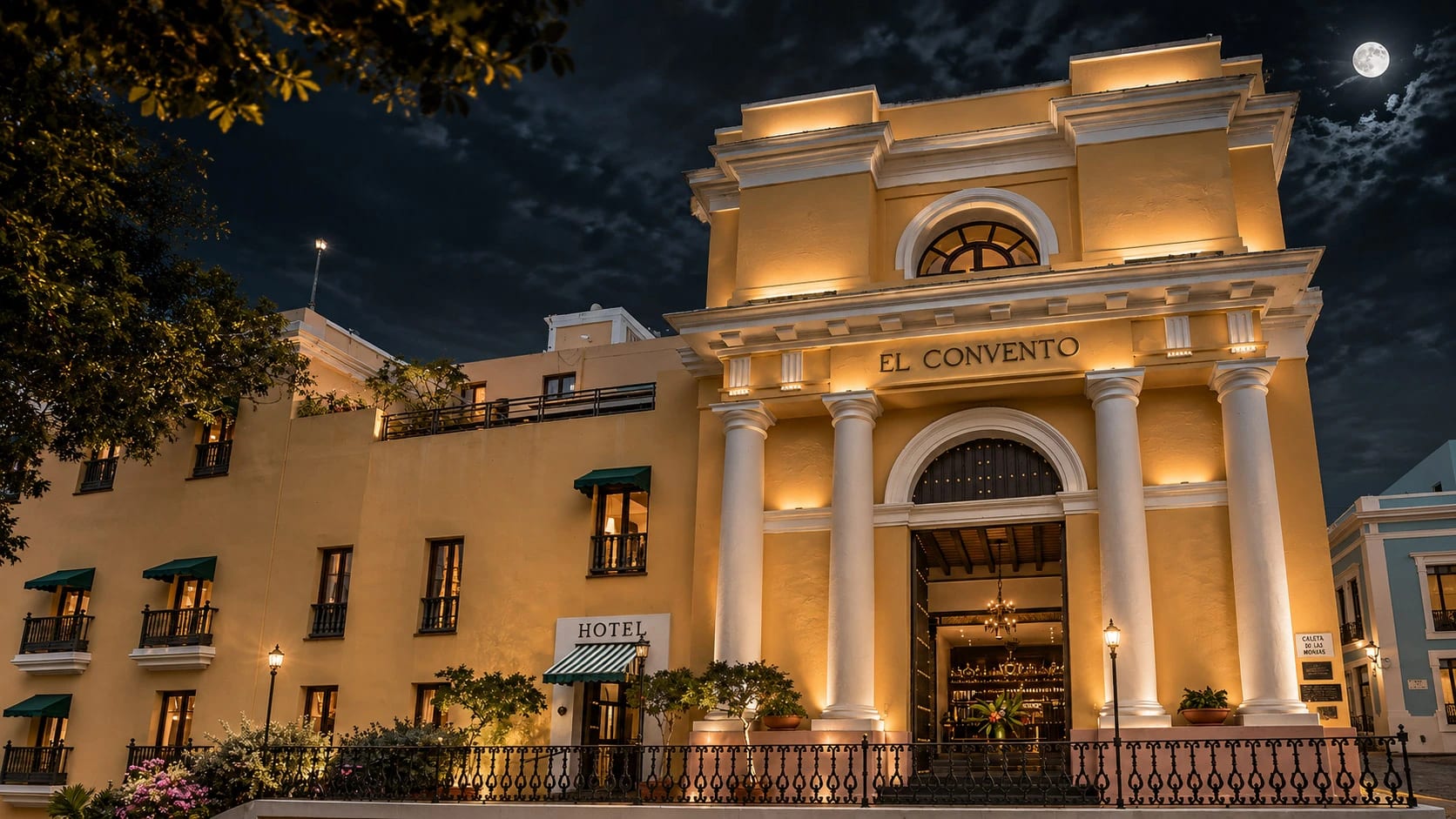
Historic residences such as Casa Blanca and former religious institutions such as Hotel El Convento have developed their own supernatural traditions.
Cuartel de Ballajá belongs to this larger landscape.
Its ghosts are less clearly identified, but its history contains unmistakable episodes of destruction, displacement, military conflict, and institutional change.
At Ghost City Tours, we explore the legends and darker history of Old San Juan through guided evening walking tours.
Our family-friendly Night of Souls Ghost Tour introduces visitors to the mysterious stories, folklore, and historical landmarks of Puerto Rico's capital.
For guests interested in the city's more unsettling past, The Dead at the Gate offers an adults-only exploration of the history and ghost stories associated with Old San Juan.
The enormous barracks near El Morro serves as a reminder that the most compelling stories do not always begin with a supernatural event.
Sometimes they begin with something that really happened.
A neighborhood was demolished. An army occupied the land. Warships struck the building, and another army eventually moved in.
For a time, patients lay in rooms where soldiers had once slept.
Then the building fell silent.
Today, people gather in the restored courtyard, surrounded by the same three levels of arches that have overlooked Ballajá for generations.
According to the ghost stories, the sounds of military footsteps can sometimes still be heard along those galleries.
Whether anyone remains there from the building's earlier years is impossible to establish.
But before there were soldiers, there were families. Before the barracks, there were homes.
And the people who once lived on that ground never had the opportunity to return to the neighborhood they lost.
Historical References and Sources
1. Puerto Rico State Historic Preservation Office — The Restoration and History of Ballajá
Patrimonio, Volume I (2010): Un fénix en Ballajá — PDF
Documents the history of the barracks, including the working-class neighborhood displaced by construction, the architectural design, the 1898 bombardment, the American military occupation, the hospital period, and the twentieth-century rehabilitation.
2. Mark Barnes and Norma Medina Carrillo — Archaeology of the Lost Neighborhood
Ballajá: Arqueología de un Barrio Sanjuanero — 1995 (PDF)
Published by Puerto Rico's State Historic Preservation Office. A detailed archaeological and documentary investigation of the neighborhood that occupied the site before the construction of the barracks. Includes census records, property ownership information, occupations, slavery, urban development, and the displacement of residents through expropriation. Essential for understanding the history of Ballajá beyond its military architecture.
3. Ángel Rivero Méndez — Eyewitness Account of the 1898 Bombardment
Crónica de la Guerra Hispanoamericana en Puerto Rico — Digitized Historical Text (PDF)
A primary historical account written by a Puerto Rican Spanish Army artillery officer who participated in the defense of San Juan. Describes the bombardment of May 12, 1898, including the damage inflicted on Cuartel de Ballajá, the collapse of part of its northern wall, and the exposure of soldiers' quarters.
4. National Park Service — Spanish Military Archival Collection
Documentación de Puerto Rico en el Archivo General Militar de Madrid (PDF)
See archival entry 5628.2, Construcción, ampliación y reformas del Cuartel de Infantería de Ballajá en San Juan de Puerto Rico. The catalog identifies an 876-page collection of historical documents covering planning, construction, modification, repairs, and maintenance between 1838 and 1900. Includes records concerning the conversion of the Dominican convent for military use, planning of the new barracks, cistern repairs, earthquake damage, and construction of a chapel.
5. National Archives — Rodríguez General Hospital
Guide to Puerto Rican Records in the National Archives at New York City — 2011 (PDF)
See the section Rodriguez U.S. Army Hospital, Fort Brooke. Documents General Order No. 71, issued August 31, 1944, naming the Army hospital after Major Fernando Rodríguez Vargas. Also identifies February 14, 1949, as the hospital's closure date and describes surviving medical administration records.
6. El Nuevo Día — The History of Fernando Rodríguez Vargas
A Puerto Rican newspaper profile explaining the scientific accomplishments of Major Fernando Rodríguez Vargas, his connection with the American military, and the decision to name the former Ballajá military hospital in his honor.
7. Revista Galenus — Biography of Major Fernando E. Rodríguez
El doctor Fernando E. Rodríguez Vargas, descubridor y pionero
A medical-history article describing Rodríguez Vargas's career, research into dental bacteria, military service, death in 1932, and the subsequent naming of the hospital at Fort Brooke.
8. Puerto Rico State Historic Preservation Office — Cuartel de Ballajá Today
Cuartel de Ballajá — Official Property Information
Official information about the building's restoration, administration, cultural organizations, public uses, and current tenants. Identifies the courtyard as Patio Don Ricardo Alegría and provides the building's address and contact details.
9. Museo de las Américas — Official Museum History
Official museum history documenting its founding in 1992 and its mission of interpreting the history and cultures of the Americas. Identifies its five permanent exhibitions and cultural programs.
10. Museo de las Américas — Official Visitor Information
Horario, Costos y Localización
The museum's official schedule, current admission prices, address, and visitor information. This is the preferred source for verifying operating hours before a visit.
11. Museo de las Américas — Noche de Catrinas
Official description of the museum's Día de los Muertos-inspired cultural celebration, the use of altars and artistic performances, and the 2026 event schedule. Relevant to the building's modern connection with cultural traditions of death and remembrance.
12. Puerto Rico Architectural Heritage Archive — Historic Courtyard Photograph
Patio del Cuartel de Ballajá — Archival Photograph
Archival photograph documenting the courtyard during military use, with soldiers and a military band assembled inside the building. Useful visual evidence of its function as an active barracks.
13. Puerto Rico Architectural Heritage Archive — Ballajá Around 1900
Ballajá Barracks Viewed from El Morro — Historic Photograph
A photograph dating to approximately 1900, preserved among the San Juan National Historic Site's visual records. Documents the barracks' exterior and its relationship to the surrounding military and institutional landscape shortly after the Spanish-American War.
14. Discover Puerto Rico — Ballajá Barracks
Official Puerto Rican destination-marketing information confirming the general construction period, Spanish and American military occupations, hospital conversion, government acquisition, and subsequent cultural restoration.
15. TripAdvisor — Published Tourist Photograph Ghost Story
Daytime San Juan Ghost Walking Tour
A tour listing describing a purportedly mysterious figure photographed by tourists at the Museo de las Américas. The description speculates about a ghost associated with the nearby Dominican convent or a nurse from the American military hospital period. This is a source for the circulating story, not independent verification of the photograph.
16. US Ghost Adventures — Ballajá Ghost Tradition
A contemporary ghost-tour operator's account describing the supposed spirits of soldiers lingering inside Cuartel de Ballajá. Useful for documenting the existence of the modern haunting narrative, but the claims are not independently verified.
17. Puerto Rican Guide — Ballajá Ghost-Tour Stories
San Juan Ghost Tour: Shrieks in the Sugarcane
Discusses the site's presentation on a ghost tour and the relationship between its military history and reported supernatural activity. A secondary travel source rather than a primary historical account.
18. Historic Ballajá Neighborhood — Public Historical Marker
Plaza del Cuartel Historical Marker — Photographed March 2026
Documents a public historical marker describing the neighborhood before the barracks, including its earlier connection to Dominican property and the expropriation and demolition of residential blocks beginning in 1853. Provides additional context for the loss of the original community.
The arcaded courtyard of Cuartel de Ballajá in Old San Juan