People who have spent time inside Ybor City's Italian Club have reported seeing a man wandering through the old auditorium and basement cantina. He apparently doesn't bother anyone, and there haven't been any reports of him behaving in a threatening manner. He simply walks through the rooms as though he still has something to do there. Some members believe they know exactly who he is: Paolo Longo, a former club president who spent more than seventy years helping run the organization.
Longo was one of those people who seemed to be involved in everything. He served several terms as president, managed the club's baseball team, helped prepare meals, and organized events. He even delivered eulogies for deceased members. The Italian Club was such an important part of his life that he once described it as his family, second only to his own relatives. Considering how much time he devoted to the place, the idea that he might still be checking on the building after his death isn't especially surprising to people familiar with his story.
The reports of Longo's ghost date back at least to 2011, when a writer collecting Ybor City ghost stories documented the alleged sightings. Other paranormal accounts mention activity throughout the building, including the kitchen, upper floors, and rooms at the rear of the clubhouse. There's even a separate story about a young soldier who reportedly appeared at the Italian Club Cemetery, helped a woman to her feet, and then disappeared before she could learn his name.
What makes the Italian Club interesting is that its ghost stories aren't built around a particularly gruesome murder or some terrible accident that supposedly left a spirit seeking revenge. The most recognizable ghost is associated with a man who loved the place. And considering what the organization meant to Tampa's Italian immigrants, there's quite a bit of history that helps explain why someone might become so attached to it.
The building at 1731 East Seventh Avenue was completed in 1918, replacing an earlier clubhouse destroyed by fire. It was built by immigrants and their families, many of whom had arrived in Florida with very little money. They worked in cigar factories, opened businesses, and contributed what they could to create an organization that would help their community survive. Within a generation, they had built one of the most impressive social clubs in Tampa.
More than a century later, L'Unione Italiana is still operating. The enormous columns, theater, ballroom, and other rooms remain, although the building's purpose has changed considerably. And according to some of the people who have spent time inside, a few of its former members may still be around.
The History of Ybor City's Italian Club
How Sicilian Immigrants Ended Up in Tampa
The Italian Club's history begins in Sicily, particularly in the agricultural communities surrounding the Magazzolo Valley in the province of Agrigento. During the nineteenth century, the region was experiencing substantial poverty, and many families had few opportunities to improve their circumstances. Agricultural work was seasonal, land ownership was concentrated among relatively few people, and the prospect of owning property or establishing a successful business was beyond the reach of many ordinary workers.
The towns of Santo Stefano Quisquina and Alessandria della Rocca were especially important to the migration that eventually established Tampa's Italian community. Residents from these communities began leaving Sicily for the United States, frequently traveling to New Orleans, where a substantial Italian population was already developing. Some found work on farms or in businesses connected to the city's port, while others discovered that life in America wasn't quite what they had expected.
Meanwhile, something unusual was happening in Tampa.
In 1885, Vicente Martínez-Ybor, a Spanish-born cigar manufacturer who had previously operated factories in Cuba and Key West, purchased land northeast of Tampa. His intention was to establish a new cigar-manufacturing community with better transportation connections and fewer of the problems that had affected his operations in Key West. By 1886, his first major factory was operating, and other cigar manufacturers were beginning to move into the area.
The factories attracted workers from Cuba and Spain, but the rapidly growing town needed far more than experienced cigar makers. Buildings had to be constructed, businesses opened, streets developed, and goods transported. There were opportunities for laborers, merchants, craftsmen, and people willing to work in industries supporting the cigar factories. News of those opportunities eventually reached the Sicilian communities in New Orleans and elsewhere.
Beginning around 1887, Italian immigrants started arriving in Tampa in significant numbers. Many came directly from Sicily, while others had spent time in New Orleans before moving to Florida. The earliest arrivals often worked outside the cigar industry, but as the neighborhood grew, Italians increasingly found employment in the factories themselves.
Their presence helped create a community unlike most others in the American South. Ybor City's residents spoke several languages, maintained different religious and cultural traditions, and brought political ideas from Cuba, Spain, and Italy. The cigar factories provided a common source of employment, but the workers established their own institutions to preserve the customs they had brought with them.
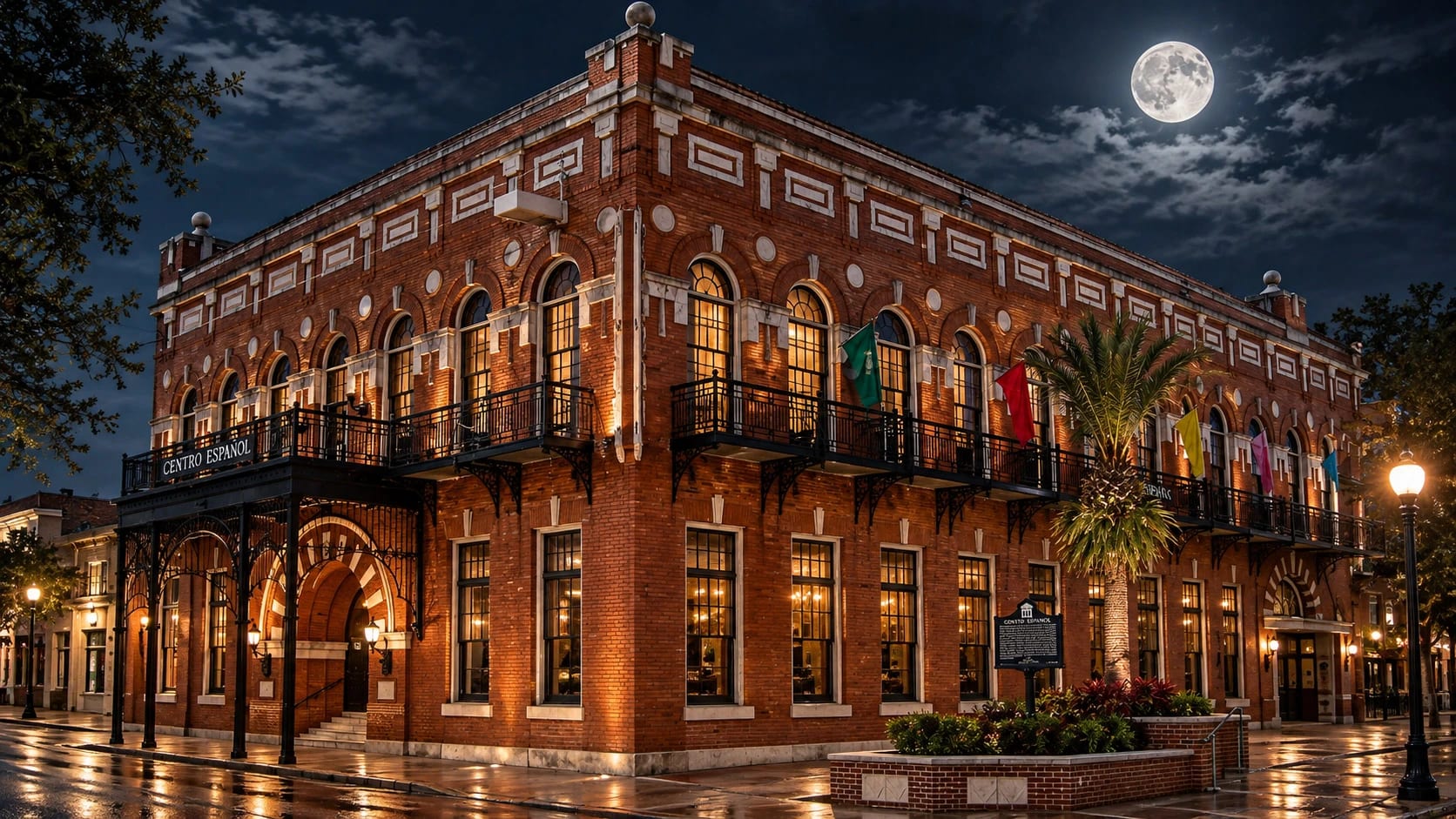
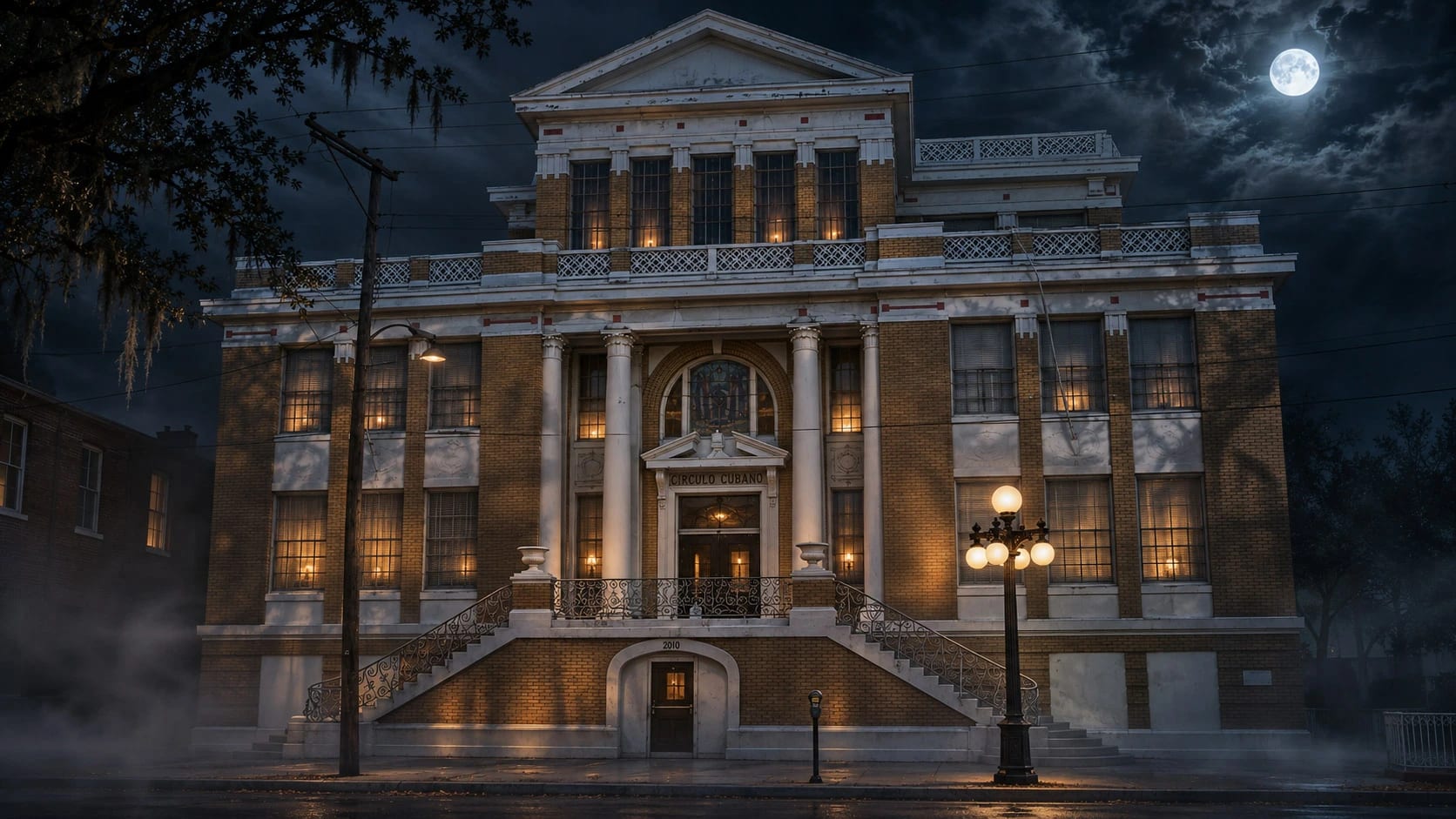
Spanish immigrants organized El Centro Español in 1891. Cubans would eventually establish El Círculo Cubano, while other organizations developed to serve different groups within the neighborhood.
By the early 1890s, Tampa's Italian population had become large enough to consider establishing a society of its own.
The Problems Italian Immigrants Faced
Although Tampa offered employment, Italian immigrants encountered many of the same difficulties they had experienced elsewhere in the United States. They faced language barriers, unfamiliar laws, and prejudice directed toward southern Europeans. Sicilians were frequently stereotyped as criminals, and their social customs were sometimes viewed with suspicion by native-born Americans.
The prejudice could become violent. In March 1891, a mob in New Orleans lynched eleven Italians following the acquittal or mistrial of defendants accused in the killing of the city's police chief. The episode attracted international attention and damaged relations between Italy and the United States. For immigrants who had hoped America would offer greater security, it demonstrated that their position in their adopted country could be dangerously uncertain.
Tampa was not immune to these attitudes. In September 1910, two Sicilian immigrants, Angelo Albano and Castenge Ficarotta, were taken from law enforcement officers and lynched near West Tampa. The men had been arrested in connection with the shooting of a cigar factory employee, but neither had been convicted. A mob seized them while they were being transported to jail and hanged them from a tree.
The killings became the subject of diplomatic correspondence between the United States and Italy. Historian Stefano Luconi later examined the case in the Florida Historical Quarterly, documenting the circumstances surrounding the deaths and their effect on Tampa's Italian-American community.
These incidents weren't connected to the Italian Club's reported hauntings, and there is no reason to suggest that either man is a spirit associated with the clubhouse. They are important, however, because they illustrate the environment in which the organization developed. Italian immigrants needed a community they could depend on, especially when the institutions around them offered limited protection.
There were also more ordinary problems to consider. Medical care was expensive, and workers had little financial protection if they became sick or injured. When a family member died, funeral expenses could be devastating. Many immigrants had relatives overseas and lacked the extended support networks that might have helped them during difficult periods.
The Italian Club was created to address those needs.
The Founding of L'Unione Italiana
On April 4, 1894, a group of Italian immigrants established L'Unione Italiana, the Italian mutual-aid society of Tampa. The founding group included 116 Italians and eight Spaniards who had previously been associated with El Centro Español. Historical accounts generally identify 127 people as the organization's initial membership, with Bartolomeo Filogamo elected as its first president.
Filogamo had followed a path familiar to many of Tampa's earliest Sicilian residents. Born in Sicily, he arrived in New Orleans in 1885 and moved to Tampa four years later. He became involved in the developing Italian community and helped establish the organization that would eventually construct the building still standing on Seventh Avenue.
The club's original charter outlined several practical responsibilities. Members would receive assistance during periods of illness, families would be helped with burial expenses, and the organization would promote social activities and cooperation among members. The society also offered educational opportunities, including classes intended to help immigrants learn English and become familiar with American government.
These benefits were financed primarily through membership dues. Rather than waiting for outside assistance, members contributed money to a common fund that could be used when someone needed help. The arrangement allowed working families to obtain services that might otherwise have been beyond their means.
Medical care became one of the organization's most important responsibilities. The Italian Club eventually maintained a walk-in clinic, pharmacy, and other services intended to meet the needs of members and their families. The organization also helped members navigate the naturalization process, providing instruction in English, arithmetic, and American government.
Similar systems were operating through Ybor City's Spanish and Cuban mutual-aid societies. Collectively, these organizations established some of the earliest examples of cooperative medical care in the United States, long before health insurance became a familiar part of American employment.
The social side of the organization was equally important. Members organized dinners, dances, athletic competitions, and outings throughout the Tampa Bay area. The club provided an opportunity to maintain relationships with people from the same towns in Sicily while developing friendships with other families who had settled in Tampa.
It wasn't long before the society needed a permanent home.
The First Italian Clubhouse
By 1910, L'Unione Italiana had grown substantially, and its members began planning a building large enough to accommodate the organization's activities. The property selected was located at 1724 East Seventh Avenue, across the street from the site of the present Italian Club.
The first permanent clubhouse opened in 1912, although some municipal records give an opening date in October 1911. The Italian Club's own historical account identifies October 11, 1912, as the beginning of a three-day celebration marking the building's completion.
The clubhouse cost approximately $60,000, according to the society's history, and included a theater, recreational areas, and rooms for meetings and social activities. Considering that many of the approximately 900 members were working-class immigrants, raising that amount of money was a substantial accomplishment.
Paolo Longo later recalled his first impression of the building. In Sicily, he had been accustomed to seeing grand structures associated with churches and wealthy landowners. The idea that ordinary workers had financed a clubhouse of comparable importance astonished him. For immigrants who had left home because they saw little opportunity for themselves or their families, the building represented tangible evidence of what they had achieved in America.
Unfortunately, they didn't get to enjoy it for very long.
In May 1914, fire destroyed the clubhouse. Historical accounts consistently identify the destruction of the building, although the precise circumstances of the fire are not described in sufficient detail to establish how it started. There is also no verified account of someone dying inside during the disaster.
The organization had spent years raising the money to construct its first permanent home, only to lose it after roughly two years. The financial consequences were enormous, and there must have been serious questions about whether members could afford to undertake another construction project.
They decided to rebuild.
The Italian Club Building of 1918
Construction of the replacement clubhouse began in April 1917 under the leadership of Philip Licata, who served as president of L'Unione Italiana for seventeen consecutive years. Licata had arrived in Tampa from Italy as a teenager and became one of the organization's most influential leaders, eventually serving on the Tampa City Council.
Rather than reconstruct the same building, the club purchased property on the opposite side of Seventh Avenue and commissioned something considerably more ambitious.
Architects M. Leo Elliott and Bayard C. Bonfoey designed the new clubhouse. Both were established Tampa architects whose work included the city's 1915 City Hall and the nearby Cuban Club. They developed a Neoclassical structure incorporating architectural influences from Italy, Spain, and Greece.
The most prominent feature is the series of enormous white columns rising above Seventh Avenue. The design was influenced partly by the ancient Greek temples of Agrigento, a region of Sicily that held particular importance for many members whose families had emigrated from nearby towns.
Completed in 1918, the building was substantially larger than its predecessor. The Italian Club's historical account estimates construction costs at approximately $120,000, while Florida's official historical marker gives a figure of $80,000. The discrepancy has not been conclusively resolved, but either amount represented a major investment for the organization.
The interior contained a large theater with balcony seating, an elegant ballroom, a cantina, library, meeting rooms, classrooms, and administrative offices. The building also accommodated a gymnasium, billiard rooms, bowling lanes, handball courts, and steam rooms at various points in its history. A medical facility occupied part of the clubhouse, and in 1920 the organization acquired an adjoining three-story building to expand its medical services.
The club also provided space for a public library branch. This was particularly valuable in a community where many immigrants were learning English while their children were attending American schools.
Its members had created a building that served the needs of several generations simultaneously. Older immigrants could read Italian newspapers, socialize with friends, and participate in traditional activities. Their American-born children could attend dances, sporting events, and educational programs while maintaining connections to their families' heritage.
By 1924, membership had grown to approximately 1,800. The society organized a large picnic at the farm of cigar manufacturer Val Antuono to celebrate a successful membership campaign, with members and their families posing for a panoramic photograph that is still associated with the club's historical collection.
The organization also participated in Tampa's civic celebrations. In 1911, before the present building existed, the Italian Club entered the Gasparilla parade with a decorated carriage carrying Sara Puglisi as the club's queen and Lena Caruso as her maid of honor. That appearance helped establish a tradition of Italian participation in Tampa's annual festivities.
For the people who belonged to it, the building represented an investment in their families' future. They expected it to provide services for decades, perhaps even generations, and they were right.
Life Inside the Italian Club
The Italian Club was a busy place during the first half of the twentieth century. Members visited the cantina after work, played cards and dominoes, attended meetings, and spent time discussing events in Tampa and back in Italy. The building offered recreation that many families could not afford to provide in their own homes, and its facilities were considerably more elaborate than those found in an ordinary neighborhood association.
The theater hosted plays, musical performances, and other entertainment. It later operated for a period as the Broadway Theatre, showing films and providing another destination for residents of Ybor City's growing entertainment district. The ballroom was used for weddings, dances, banquets, and special celebrations.
Saturday nights were especially lively.
The club's historical records describe occasions when two bands performed at the same time. Traditional music was played upstairs for older members, while younger people gathered in the downstairs cantina to hear more contemporary songs. The arrangement reflected the changing tastes of a community whose first generation of immigrants was growing older while their children became increasingly Americanized.
The club organized outings to places such as Ballast Point, DeSoto Park, Pass-a-Grille, and Anna Maria Island. These events attracted hundreds of members and relatives, providing opportunities for families to spend time together outside the factories and residential neighborhoods.
For many residents, membership was a central part of everyday life. People attended dances as teenagers, celebrated weddings in the ballroom, received medical treatment through the society, and eventually had their funerals arranged with assistance from the organization.
Some families maintained connections with the Italian Club for several generations.
That history is important when considering the building's ghost stories, particularly those associated with Paolo Longo. He wasn't simply a former officer who happened to spend a few years there. He belonged to a generation of members whose personal lives were closely tied to the society, and he remained involved long enough to watch the organization change dramatically.
Paolo Longo: The Man Said to Haunt the Italian Club
Paolo P. Longo, frequently referred to as Paul Longo in American records, was among the most important figures in the Italian Club's history. He served as president on three separate occasions, first in 1933, again in 1945, and then during 1949 and 1950.
His service extended far beyond those years. According to the Italian Club's official history, Longo remained involved with the organization for more than seven decades and participated in nearly every aspect of its operations.
He helped prepare meals for events, managed the baseball team, assisted with recreational activities, and delivered eulogies when members died. His responsibilities were varied, and his involvement wasn't limited to the formal duties of an officer.
Longo also held leadership positions in other Italian-American organizations. He helped establish the Columbus Association, served as president of the Nuova Sicilia Lodge, and became Grand Master of the Florida Order of Sons of Italy. His work promoting Italian culture earned him the Star of Solidarity from the Italian government.
During the 1930s, the Italian Club merged with a rival Sicilian organization in West Tampa, substantially increasing its membership. Longo was involved in the organization during that period of expansion and remained an influential figure throughout the following decades.
His work wasn't limited to preserving cultural traditions. He was deeply involved in the practical responsibilities of the club, including its cemetery and the support offered to families who had lost relatives.
The University of South Florida's historical collections contain numerous documents associated with Longo, including correspondence, speeches, and his own accounts of the organization's history.
One particularly interesting document is a draft of a speech Longo prepared for a Memorial Day ceremony on May 28, 1950. The document includes the names of Italian Club members who had lost their lives during World War II. Other records describe his efforts to establish a memorial cemetery area honoring veterans.
These materials offer a much clearer understanding of Longo than most ghost stories provide about the people supposedly haunting a building.
We know who he was, the responsibilities he held, and the importance he placed on the Italian Club. The society eventually established the Paolo Longo Award in his honor, recognizing individuals who have contributed to preserving Italian culture and heritage in Tampa.
Longo considered the Italian Club an extension of his family. That attachment is central to the story of his supposed ghost.
Sightings of Paolo Longo in the Auditorium
In October 2011, MCFilm published a collection of Ybor City ghost stories gathered through conversations with local residents and people familiar with the neighborhood's businesses.
The article included an account involving Paolo Longo and the Italian Club.
According to the writer, several club members had reported seeing figures associated with former leadership walking through the building's auditorium and basement bar. The account named Longo and also referred to a longtime board member whose service extended across much of the twentieth century.
The wording leaves some uncertainty about whether witnesses were describing Longo and another former board member as separate apparitions or whether the stories had become combined. What is clear is that members associated the reported activity with people who had spent many years maintaining the organization.
The apparitions reportedly appeared in areas that would have been familiar to former officers and members, particularly the large auditorium and the basement cantina.
There was no suggestion that the figures were attempting to frighten anyone. The writer described them as continuing to look after the building, as though the responsibilities they had carried during life had never really ended.
That's a rather different kind of haunting from those associated with Ybor City's murdered gangsters or victims of violent crimes.
Longo's ghost, assuming the sightings are accurately reported, doesn't appear to be angry about his death or seeking revenge against anyone. Witnesses simply believe they have seen a familiar former member going about his business.
There are limitations to the account. The original witnesses are not identified individually, and the report doesn't provide dates or detailed circumstances for each sighting. It is impossible to determine whether the observers saw the same figure or whether the identity was suggested to them afterward.
Still, the story has a specific historical connection that makes it interesting. Longo's documented involvement in the organization explains why members might identify a figure in the building with him.
Whether that identification is correct is another matter.
Did Longo Really Return to the Club?
There is no established evidence that Paolo Longo's spirit remains inside the Italian Club, and no verified recording or photograph has been conclusively connected to him.
But the circumstances surrounding the story raise an interesting question about how hauntings become associated with particular people.
When a well-known member dies, people who spent years working alongside that person naturally remember where they would expect to encounter him. Longo had been involved with the organization's everyday operations for so long that seeing him in the auditorium or cantina would have seemed entirely ordinary during his lifetime.
After his death, an unexpected figure glimpsed in one of those locations might remind an observer of the former president.
That doesn't mean the witness invented the experience. People can genuinely see something they cannot explain while making an incorrect assumption about what it was.
The difficulty is determining whether the figure was actually present, and if so, who or what the witness encountered.
In Longo's case, the reported sightings have become part of the organization's folklore, much like the memories of former members who continue to be discussed years after their deaths.
For a man who devoted so much of his life to L'Unione Italiana, it's a fitting legend.
The Other Ghosts of the Italian Club
Longo may be the building's most recognizable spirit, but other reports suggest that the activity isn't limited to the auditorium or cantina.
Paranormal investigators have described claims involving nearly every part of the building, including former kitchen areas, upper-floor rooms, and spaces toward the rear of the clubhouse.
One team, Paranormal Bad Boys, documented an overnight investigation at the Italian Club. The group's published account describes rumors of activity on multiple floors and explains that members were able to explore the building after ordinary activities had ended.
The investigators anticipated finding evidence of hauntings, but their experience was considerably less convincing than they had hoped.
The Italian Club is located directly on Seventh Avenue, one of Tampa's busiest nightlife corridors. Bars and entertainment establishments operate nearby, and loud music and conversation can continue late into the night.
The investigators discovered that those sounds traveled through the old building, making it difficult to determine where noises originated.
They eventually ended the investigation early.
Although some team members reported personal experiences, the group concluded that it had found little or no convincing evidence of paranormal activity.
The experience is worth mentioning because it offers a useful counterpoint to the more enthusiastic accounts associated with the building.
Investigators who enter a historic property hoping to encounter something supernatural may interpret unusual sounds differently from someone unfamiliar with its reputation. In this case, the team recognized that the surrounding nightlife made it difficult to obtain reliable recordings or separate unexplained noises from ordinary activity.
Other investigators have reached different conclusions.
GhostStop, a company specializing in paranormal investigation equipment, has described the Italian Club as one of its favorite investigation locations. In promotional material for an organized investigation, the company stated that its team had explored the building for years and considered it unusually active.
The event offered participants access to four floors of the historic property, with investigators encouraged to bring their own equipment.
Those statements establish that the Italian Club has attracted serious interest from paranormal enthusiasts and that investigators have been permitted to explore parts of the building. They do not establish the existence of ghosts or provide independently verified evidence of supernatural activity.
The disagreement between investigators also demonstrates how subjective paranormal experiences can be.
Two teams can spend hours inside the same building and reach very different conclusions about what happened.
Virginia, the Ghost on the Staircase
Another story associated with the Italian Club concerns a woman named Virginia.
According to the haunted-location directory Haunted Places, Virginia was once employed as a member of the building's cleaning staff. Her apparition supposedly appears near the front staircase.
The account doesn't provide much additional information. There is no surname, employment date, or documented death associated with the woman. It is also unclear whether the original story came from an employee, a visitor, or someone repeating an older local legend.
Still, the story has circulated widely enough to become part of the building's reputation.
A visitor posting a comment on the Haunted Places listing in August 2016 disputed the story, suggesting that the staircase haunting might have been invented. The commenter offered other claims involving a presence near an upstairs restroom and a young girl's laughter.
Those additional accounts are even less substantiated.
There is no verified historical information connecting a deceased child to the Italian Club's second floor, and no evidence that the figure described near the restroom belongs to a particular former employee.
The disagreement is a useful example of how easily local ghost stories can become complicated. One source identifies a former cleaning woman; another disputes her existence and describes entirely different activity.
Without reliable witness interviews or historical records, the identities remain speculative.
The Italian Club has been occupied for more than a century, and generations of employees have cleaned its rooms, prepared events, maintained the building, and worked in its offices. It wouldn't be difficult for a ghost story to develop around one of those former workers.
Determining whether Virginia was a real person who worked there would require additional research into the club's employment records.
Until then, she remains one of the lesser-documented spirits associated with the property.
The Italian Club Cemetery and the Ghost of the Young Soldier
The Italian Club's paranormal reputation extends beyond the building on Seventh Avenue.
A separate ghost story is associated with the organization's historic cemetery, located approximately two miles northeast of Ybor City.
The cemetery was established in 1896 after the club purchased land from the Armwood family, a prominent African-American family with deep roots in Tampa. Burial records indicate that Italian immigrants had already been interred in the area as early as 1893.
For the organization's members, the cemetery served an essential purpose.
Funeral and burial expenses were among the original reasons the Italian Club had been established. Immigrants who had come to America without substantial resources wanted to ensure that their families would receive assistance when someone died.
The society eventually developed an elaborate system of funeral customs and benefits.
A member's funeral could involve hundreds of people walking through the neighborhood in a procession. The deceased was sometimes carried past the family home and the Italian Club, where the Italian and American flags were lowered to half-staff.
A brass band might accompany the procession to the cemetery, followed by relatives, fellow club members, and people from the deceased person's hometown in Sicily.
The ceremonies honored the dead while demonstrating the support of the community for the surviving family.
Many of the cemetery's monuments were designed to resemble graves in Sicily. Some feature photographs of the deceased set into ceramic medallions, while inscriptions were written in Italian or Sicilian.
These details made the cemetery an important cultural institution, preserving traditions that families had brought with them from Europe.
It also became the setting for one of the Italian Club's more unusual ghost stories.
The Soldier Who Offered to Help
The account dates to the early 1980s, although it was documented publicly years later.
According to a story published by MCFilm in October 2011, several women associated with the Italian Club were working in the cemetery, preparing the grounds for an annual gathering.
They were planting flowers, trimming vegetation, and cleaning around the family graves.
One woman had been kneeling beside a grave while working. When she attempted to stand, a young man wearing a military uniform approached and offered his hand.
The woman accepted his assistance.
She thanked him and asked his name, assuming he was a relative of someone else working in the cemetery.
The young man didn't provide an answer that she later recalled.
When she looked around again, he had disappeared.
The woman reportedly called to the other workers, attempting to determine whether anyone knew the soldier or had seen where he went. Nobody could account for his disappearance.
The story became particularly memorable because the encounter had involved physical contact. The woman believed the young man had actually helped her stand, rather than merely appearing at a distance.
The same source claimed that other people had reported seeing a similarly dressed soldier in the cemetery on separate occasions.
There is no independently verified identification of the young man, and the original witness has not been identified in the published account.
The soldier's military uniform provides an obvious connection to the cemetery's history, but it doesn't establish who he was.
Many members of the Italian Club served in the United States military during both world wars. According to the organization's official history, 265 members served during World War II, and the club contributed substantial funds through war-bond purchases.
Longo's 1950 Memorial Day speech also commemorated members who had lost their lives in the war.
The cemetery contains memorials connected to military service, making the appearance of a soldier an especially compelling element of the story.
However, no specific deceased serviceman has been connected to the apparition.
The account also raises an interesting possibility that has nothing to do with the supernatural. The woman may have encountered an ordinary visitor who left the area without her noticing.
The cemetery is large enough that someone could move beyond sight relatively quickly, particularly when other people are working among the monuments.
But according to the story, the woman's experience was sufficiently unusual that it continued to be discussed many years later.
Whether she met a living person or someone who had died decades earlier remains unknown.
The Cemetery's Connection to the Living Community
The cemetery's history is much more extensive than its ghost story.
The grounds contain the graves of generations of Italian immigrants and their descendants, including families whose names remain familiar throughout Tampa.
The cemetery also contains the grave of Blanche Armwood, the nationally recognized educator and civil-rights advocate who died in 1939. Her burial reflects the property's connection to the Armwood family, from whom the Italian Club originally purchased the land.
The organization continues to maintain the cemetery and preserve its historical importance.
For families whose relatives are buried there, it remains a place of remembrance rather than a paranormal attraction.
Visitors interested in the cemetery's history should respect its status as a burial ground and observe any restrictions established by the organization.
The story of the young soldier is part of its folklore, but the people buried there have histories that are far more substantial than any ghost story.
The Italian Club During the World Wars
The club's involvement in American military history deserves particular attention because the organization was established by immigrants who sometimes faced questions about their loyalty to the United States.
During World War I, Italy fought alongside the Allied Powers, and Tampa's Italian community participated enthusiastically in patriotic activities.
On May 24, 1918, President Woodrow Wilson proclaimed Italian Day in recognition of Italy's wartime alliance with the United States.
The Italian Club and its Ladies Auxiliary organized a large parade through Ybor City and downtown Tampa. According to the organization's official history, approximately 8,000 people participated in the procession, which began near the newly constructed clubhouse and continued toward the former Hillsborough County Courthouse.
The event was an enormous public demonstration of Italian-American identity and patriotism.
Later that year, Tampa suffered a tragedy involving the United States Coast Guard cutter Tampa, which was torpedoed off the coast of Wales in September 1918.
Everyone aboard was killed.
Among the victims was fifteen-year-old Tampa resident Jimmy Ross, whose family name was Guerrieri. His death affected the local Italian community, which joined the rest of the city in mourning.
The Italian Club's members continued participating in civic and military activities during World War II.
Many served in the armed forces, while those remaining in Tampa contributed through fundraising, war-bond purchases, and support for military families.
The organization purchased approximately $62,600 in war bonds, a substantial financial contribution for a local mutual-aid society.
These activities are documented in the club's historical records and help explain the later establishment of military memorials associated with the cemetery.
They also provide context for the soldier ghost story, although there is no reliable way to connect the apparition to a particular serviceman.
The members who served in the wars belonged to families that had helped establish the neighborhood. Their military service became another part of the Italian Club's history, preserved through documents, ceremonies, and the memories of surviving relatives.
The Decline of Ybor City and the Italian Club's Survival
By the middle of the twentieth century, the economic circumstances that had created Ybor City's mutual-aid societies were changing.
The cigar industry was declining as manufacturing methods became increasingly automated and demand shifted toward machine-made products.
Factories closed, and many workers moved to other parts of Tampa or left the industry entirely.
The neighborhood also suffered from urban-renewal projects and highway construction that destroyed homes and businesses. Families who had lived in Ybor City for generations began relocating to newer residential communities.
As the Italian-American population became more established, younger generations were less dependent on ethnic mutual-aid organizations.
Medical insurance was becoming available through other means, and recreational opportunities were no longer limited to neighborhood social clubs.
Membership declined, and maintaining the Italian Club's enormous historic building became increasingly expensive.
The organization faced a challenge familiar to many of Ybor City's older institutions: how to preserve a building designed for thousands of members when the surrounding community no longer operated the way it had in 1918.
Some of the other historic social clubs struggled with similar problems.
Buildings were sold, converted to commercial uses, or allowed to deteriorate. Several disappeared entirely.
The Italian Club survived.
Its leaders worked to preserve the historic clubhouse while developing new uses that could support the expense of maintaining it.
Weddings, receptions, corporate events, and cultural celebrations gradually became important activities.
The organization continued promoting Italian heritage through educational programs, community events, and celebrations such as Festa Italiana.
Although the club no longer provides the same comprehensive medical and financial benefits that characterized its early decades, it remains an active cultural institution.
That continuity distinguishes the Italian Club from several other historic buildings in Ybor City.
The organization that built the clubhouse is still associated with it, and the descendants of Tampa's original Italian immigrants continue participating in its activities.
Today, visitors attending an event can enter rooms that were constructed more than a century ago for essentially the same purpose: bringing people together.
Some of those visitors, according to the ghost stories, believe they may encounter someone who attended events there many decades earlier.
Is the Italian Club Really Haunted?
There are several reasons the Italian Club has developed a reputation for paranormal activity, but the quality of the evidence varies considerably.
The most recognizable account concerns Paolo Longo and the apparitions reportedly seen in the auditorium and cantina. Longo was a real person whose association with the building is well documented, although the published sighting accounts don't establish that witnesses actually encountered his spirit.
The story of Virginia, the supposed former cleaning woman, has a weaker historical foundation. Her identity remains uncertain, and the account provides little information about the circumstances of her reported appearances.
Additional reports concerning unexplained activity on the upper floors and in former service areas come largely from paranormal websites and investigators. Those claims are difficult to evaluate because detailed evidence is rarely made available for independent examination.
The Italian Club Cemetery's young soldier is another interesting case. The account describes a specific encounter involving physical contact, but the original witness isn't identified in the published story, and the alleged apparition has not been connected to a documented burial.
Professional and amateur paranormal investigators have also reached conflicting conclusions after exploring the clubhouse.
Some describe it as an unusually active location, while others have reported finding little convincing evidence. One team's investigation was complicated by the amount of noise coming from nearby nightlife establishments, a problem that would be familiar to anyone who has spent a weekend evening on Seventh Avenue.
These limitations don't necessarily mean that every witness was mistaken.
People can experience something unusual without understanding its cause. A person seen briefly in a hallway might genuinely resemble a deceased club president. Unexplained sounds may seem to originate from an empty room, and an investigator might encounter something that remains difficult to account for.
But identifying an experience as supernatural requires more than the absence of an immediate explanation.
The Italian Club is an old building with complicated acoustics, substantial interior spaces, and a long history of renovations. Ordinary activity can produce sounds and visual effects that seem strange when encountered in an unfamiliar environment.
There's also the influence of the building's history.
People who know the story of Paolo Longo may be more inclined to associate an unexpected figure with the former president. Someone who has heard about Virginia might interpret an unusual experience on the staircase as evidence that she is nearby.
These possibilities don't settle the question, but they deserve consideration.
The historical record provides no established explanation for every reported encounter, and there is insufficient evidence to conclude that the building is genuinely haunted.
The stories remain part of the Italian Club's local reputation.
And unlike some haunted locations whose legends concern people who died violently or under mysterious circumstances, the Italian Club's best-known ghost is remembered because of how much he cared about the organization.
If Paolo Longo really is still wandering the auditorium, it's difficult to imagine that he would be particularly unhappy about finding the club still operating more than a century after its founding.
Visiting the Haunted Italian Club in Ybor City
The Italian Club is located at 1731 East Seventh Avenue in Ybor City, Tampa, Florida, near the intersection of Seventh Avenue and Eighteenth Street.
Its imposing Neoclassical facade makes it one of the neighborhood's most recognizable historic buildings. The enormous white columns, decorative windows, and red-brick exterior reflect the architectural ambitions of the Italian immigrants who financed its construction.
The building remains an active event venue and cultural organization. Weddings, banquets, corporate functions, and other events take place inside, while the club continues supporting programs intended to preserve Tampa's Italian heritage.
Access to the interior depends on scheduled events, tours, and arrangements with the organization. Visitors should not assume that the building is open for unscheduled paranormal investigations.
The Italian Club is also located close to several other historic Ybor City landmarks, including the Cuban Club and Centro Español. Together, these buildings illustrate the extraordinary social institutions developed by Tampa's immigrant communities during the late nineteenth and early twentieth centuries.
The Italian Club Cemetery is located separately, near North Twenty-sixth Street and East Twenty-third Avenue. It remains an important historic burial ground and should be treated respectfully.
Explore the Ghosts of Ybor City With Ghost City Tours
Ybor City has no shortage of buildings with interesting histories, but the Italian Club offers something a little different. Its ghost stories are closely connected to the people who helped build and maintain the organization, rather than to an alleged murder or other violent tragedy.
The same neighborhood also contains the haunted Cuban Club, historic cigar factories, former gambling establishments, and buildings associated with Tampa's organized-crime history. Many have been standing for more than a century, and the stories associated with them have been passed down through generations of residents.
Ghost City Tours explores the neighborhood's history and supernatural folklore through two guided walking experiences.
Our Ghosts of Ybor City Tour is an all-ages walking tour that introduces guests to the immigrants who built Ybor City, the historic buildings they left behind, and the ghost stories that developed around them.
For those interested in a darker side of the neighborhood, The Darkness Between Us Ghost Tour explores Ybor City's organized crime, violence, illegal gambling, and more disturbing local legends. This tour is designed for guests sixteen and older.
Both tours take place outdoors along the historic streets of Ybor City, where many of the original buildings remain.
Explore our Ybor City Ghost Tours and discover the history behind one of Tampa's most fascinating neighborhoods.
Frequently Asked Questions About the Haunted Italian Club
Is the Italian Club in Ybor City haunted?
The Italian Club has a longstanding reputation for paranormal activity, including reports of apparitions in its auditorium, basement cantina, and other parts of the building. Its best-known ghost is believed to be former club president Paolo Longo. Although multiple accounts have been published, there is no independently verified evidence establishing that the building is haunted.
Who is the ghost of Paolo Longo?
Paolo P. Longo was a longtime Italian Club member and former president who served the organization for more than seventy years. According to local ghost stories, his apparition has been seen walking through the auditorium and basement bar, apparently continuing to look after the building.
When was the Italian Club built?
The present Italian Club building was completed in 1918. It replaced an earlier clubhouse constructed across Seventh Avenue in approximately 1911–1912 and destroyed by fire in May 1914. The present building was designed by architects M. Leo Elliott and Bayard C. Bonfoey.
Did anyone die in the Italian Club fire?
The first Italian Club building was destroyed by fire in May 1914, but reliable historical sources do not establish that anyone died in the disaster. The present building was constructed several years afterward on the opposite side of Seventh Avenue.
Who is Virginia, the ghost of the Italian Club?
Virginia is described in some paranormal accounts as a former cleaning employee whose apparition supposedly appears near the front staircase. Her full identity, employment history, and circumstances of death have not been verified.
Is the Italian Club Cemetery haunted?
A local ghost story describes a young soldier who supposedly appeared at the cemetery during the early 1980s and helped a woman stand after she had been working among the graves. According to the account, he disappeared before she could learn his name. The story has not been independently verified, and the soldier has not been connected to a specific burial.
Can you go inside the Italian Club?
The Italian Club remains an active cultural organization and event venue. Interior access is generally associated with scheduled events, appointments, and authorized activities. Visitors should contact the organization before attempting to enter, particularly if they are interested in historical or paranormal investigations.
Historical References and Sources
1. The Italian Club of Tampa — Official History
The Italian Club of Tampa — Official History
The organization's historical account, drawing on research by retired Judge E. J. Salcines. Provides information about the founding of L'Unione Italiana, the original clubhouse, the 1914 fire, construction of the present building, and the organization's leaders. Particularly valuable for the biographical information concerning Paolo Longo, Philip Licata, and the club's involvement in Tampa's civic and military history.
2. University of South Florida — L'Unione Italiana Records
University of South Florida — L'Unione Italiana Records
University archival collection documenting the organization from its establishment in 1894. Includes membership materials, correspondence, organizational histories, and historical photographs.
3. Ybor City Chamber of Commerce — Historic Social Clubs
Ybor City Chamber of Commerce — Historic Social Clubs
Detailed historical research on Tampa's immigrant mutual-aid societies, including the Italian Club's origins, medical and burial benefits, social traditions, cemetery, and early clubhouse construction. Includes recollections from former members describing everyday life within the organization.
4. Florida Division of Historical Resources — L'Unione Italiana Historical Marker
Florida Division of Historical Resources — L'Unione Italiana Historical Marker
Official state historical documentation describing the club's founding, the destruction of its first building, the 1918 clubhouse, its architectural influences, and its significance to the Italian immigrant community.
5. AIA Tampa Bay — Architecture of Tampa Bay: The Italian Club
AIA Tampa Bay — Architecture of Tampa Bay: The Italian Club
Architectural history of the current clubhouse, including the work of Elliott and Bonfoey, recreational facilities, medical clinic, and connections to Italian-American cultural history.
6. MCFilm — Ybor Lore & Ghost Stories, 2011
MCFilm — Ybor Lore & Ghost Stories, 2011
One of the earliest identifiable published sources for the Italian Club's reported hauntings. Includes the accounts involving Paolo Longo and a former board member, as well as the story of the unidentified soldier who reportedly appeared at the Italian Club Cemetery.
7. MCFilm — Ybor Ghost Stories, 2016
MCFilm — Ybor Ghost Stories, 2016
Later compilation of paranormal reports from Ybor City, including the Italian Club apparitions and the cemetery soldier. Useful for tracing how the stories continued circulating, although it substantially repeats earlier material rather than establishing independent confirmation.
8. Paranormal Bad Boys — The Italian Club Investigation
Paranormal Bad Boys — The Italian Club Investigation
Account of an overnight paranormal investigation inside the Italian Club. Describes reported activity in different parts of the building, the difficulties created by surrounding nightlife noise, and the team's conclusion that it had found little convincing paranormal evidence.
9. GhostStop — Italian Club Investigation Tag-Along
GhostStop — Italian Club Investigation Tag-Along
Promotional material documenting organized paranormal investigations inside the building, including access to multiple floors and the investigators' assessment of the location's activity.
10. Haunted Places — L'Unione Italiana, The Italian Club
Haunted Places — L'Unione Italiana, The Italian Club
A paranormal directory containing the story of Virginia, the supposed former cleaning employee, and additional unverified visitor comments about activity on the upper floors. These claims should be treated as folklore rather than established historical facts.
11. The Italian Club of Tampa — Cemetery History
The Italian Club of Tampa — Cemetery History
Official information about the establishment of the Italian Club Cemetery, its connection to the Armwood family, traditional Sicilian funeral customs, and historic burial markers.
12. Florida Division of Historical Resources — Il Cimitero dell'Unione Italiana
Florida Division of Historical Resources — Il Cimitero dell'Unione Italiana
Official historical marker documenting the cemetery's acquisition in 1896, Italian burial traditions, and the development of the organization's burial-benefit system.
13. University of South Florida — Paul Longo's 1950 Memorial Cemetery Speech
University of South Florida — Paul Longo's 1950 Memorial Cemetery Speech
Archival record containing Longo's draft address for the May 28, 1950 Memorial Day ceremony, along with a list of Italian Club members who died during World War II.
14. University of South Florida — Paul P. Longo's History of the Italian Club
University of South Florida — Paul P. Longo's History of the Italian Club
Historical manuscript attributed to Longo, preserved in the university's mutual-aid society collections. Provides an additional primary-source connection to the former president associated with the building's principal ghost story.
15. Florida Historical Quarterly — Tampa's 1910 Lynching: The Italian-American Perspective and Its Implications
Stefano Luconi's scholarly study of the September 1910 lynching of Angelo Albano and Castenge Ficarotta. Documents anti-Italian prejudice, the circumstances surrounding the killings, and their effect on the immigrant community.
16. United States Department of State — The Tampa Lynching, 1911
United States Department of State — The Tampa Lynching, 1911
Primary government documentation concerning the lynchings and the diplomatic dispute between Italy and the United States.
17. The Italian Club of Tampa — Current Website
The Italian Club of Tampa — Current Website
Official information on the organization's continuing operations, membership, preservation activities, events, and current use of the historic clubhouse.
18. University of South Florida — L'Unione Italiana Records Collection
University of South Florida — L'Unione Italiana Records Collection
Additional primary-source materials concerning the club's leadership, correspondence, historical records, military commemorations, and community activities.
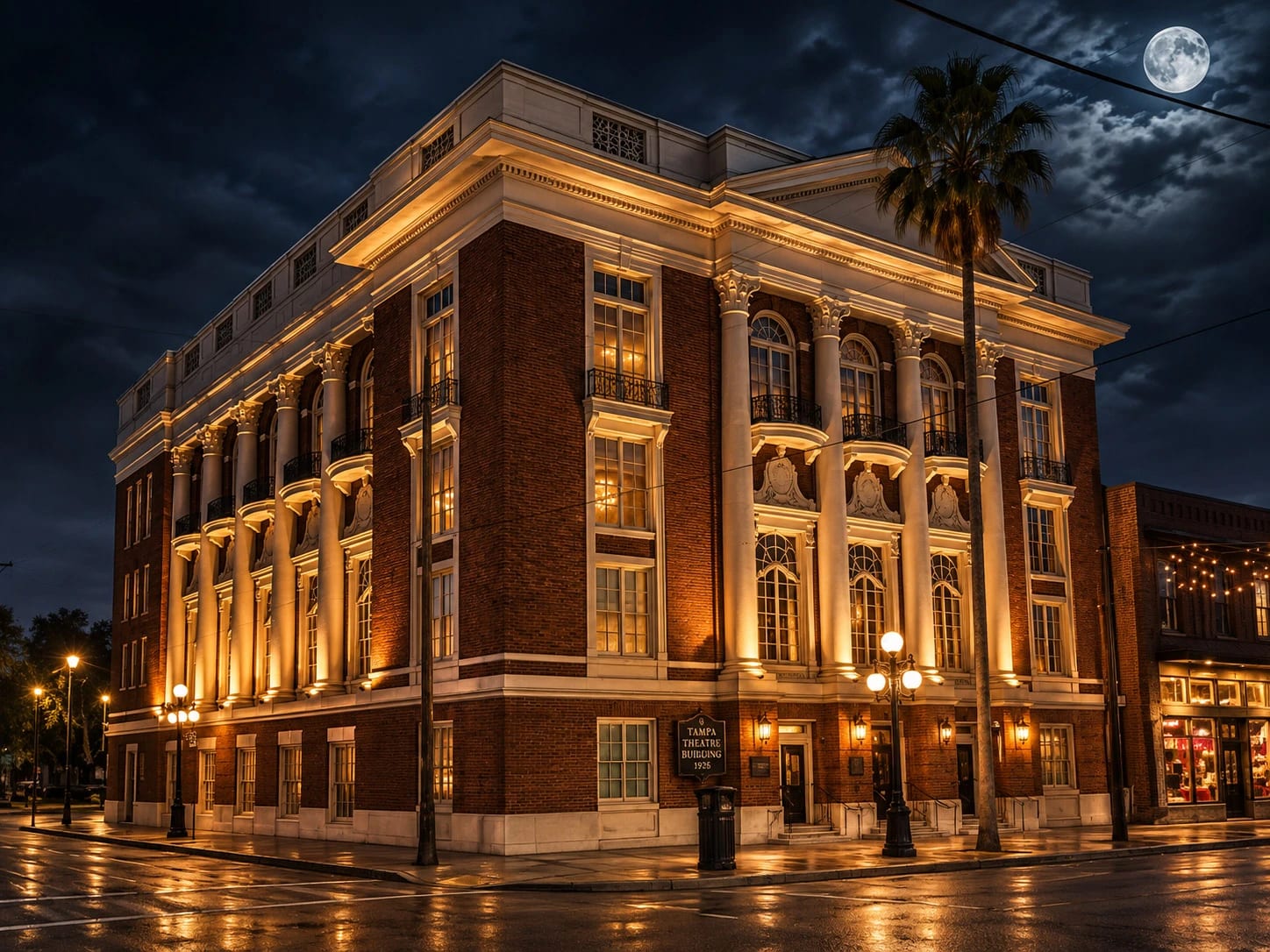
L'Unione Italiana, the Italian Club, at 1731 East Seventh Avenue, completed in 1918