There's a building on North Fifteenth Street in Ybor City that has been a church, a nightclub, a restaurant, and just about everything in between. For much of the twentieth century, it was a place where Cuban immigrants came to worship, attend Sunday school, and receive help from a Baptist mission. These days, the same building is filled with skulls, horror-movie decorations, gothic furniture, and people drinking cocktails beneath the street in a bar called The Catacombs.
The transformation is unusual enough on its own, but according to the people who operate the SpookEasy Lounge, the building has another distinction. They believe it is home to at least seventeen ghosts.
That's a substantial number of spirits for a single property, even in a neighborhood with as many haunted locations as Ybor City. The claim comes from the lounge's owners and has been discussed in paranormal investigations and interviews, including an episode of the Phantom History podcast in May 2023. Some of the activity is said to be associated with the building's former life as a church, while other experiences have been connected to the years when it housed different businesses.
What makes the stories particularly interesting is that the SpookEasy wasn't the first establishment to claim the building was haunted. Before the lounge moved into its current location in September 2022, the property operated as a restaurant called The Loft. Its former owner, Lisa Lawson, told Creative Loafing Tampa Bay that she had experienced encounters she believed involved spirits. The owners of the SpookEasy were already aware of the building's reputation when they agreed to take it over.
There's something worth considering about that. The SpookEasy is deliberately designed to look frightening. It has horror-themed decorations, skeletons, and rooms intended to resemble the sort of place where you might encounter Dracula. A strange experience in that environment could easily be influenced by what people expect to find. But the building's reported paranormal activity predates the current business, which makes the claims harder to dismiss as nothing more than clever marketing.
Its history provides plenty of material for investigation, although not necessarily the kind that appears in the usual ghost stories. The structure was completed in 1911 as Clark Memorial Baptist Church, serving Spanish-speaking residents of a neighborhood dominated by the cigar industry. It later became associated with the Baptist Goodwill Center, survived the decline of Ybor City, and went through numerous commercial transformations before becoming the SpookEasy.
Some paranormal accounts also claim that the property once served as an orphanage. That part of its history is less certain. The church and its community-service operations are documented, but the available historical records do not establish that the building operated as a residential orphanage.
The distinction matters, particularly when people attempt to identify the spirits supposedly occupying the place. It's easy to hear that an old building was once an orphanage and begin telling stories about the ghosts of children. Establishing that children actually lived and died there is another matter entirely.
For now, the SpookEasy's reputation rests on the experiences of former occupants, the claims of its present owners, and the investigations conducted by people who believe something remains inside the old church.
The History of the SpookEasy Building
A Church Built for Ybor City's Cuban Immigrants
The history of 1909 North Fifteenth Street begins during one of the most important periods in Tampa's development.
In 1885, Vicente Martínez-Ybor purchased land northeast of the existing city and began establishing a manufacturing community centered on the production of hand-rolled cigars. Martínez-Ybor had previously operated cigar factories in Cuba and Key West, but labor difficulties and transportation problems convinced him that Tampa offered better opportunities.
His decision brought thousands of immigrants to the area. Cuban workers arrived with the skills necessary to manufacture cigars, followed by Spaniards, Italians, and people from other backgrounds. As the factories expanded, Ybor City developed into an industrial community with its own stores, restaurants, social clubs, schools, churches, and residential neighborhoods.
The cigar industry dominated daily life, but the people who worked in the factories needed institutions outside their workplaces. They established mutual-aid societies that provided medical care and recreational opportunities, opened businesses serving their communities, and organized religious congregations where they could worship in familiar languages.
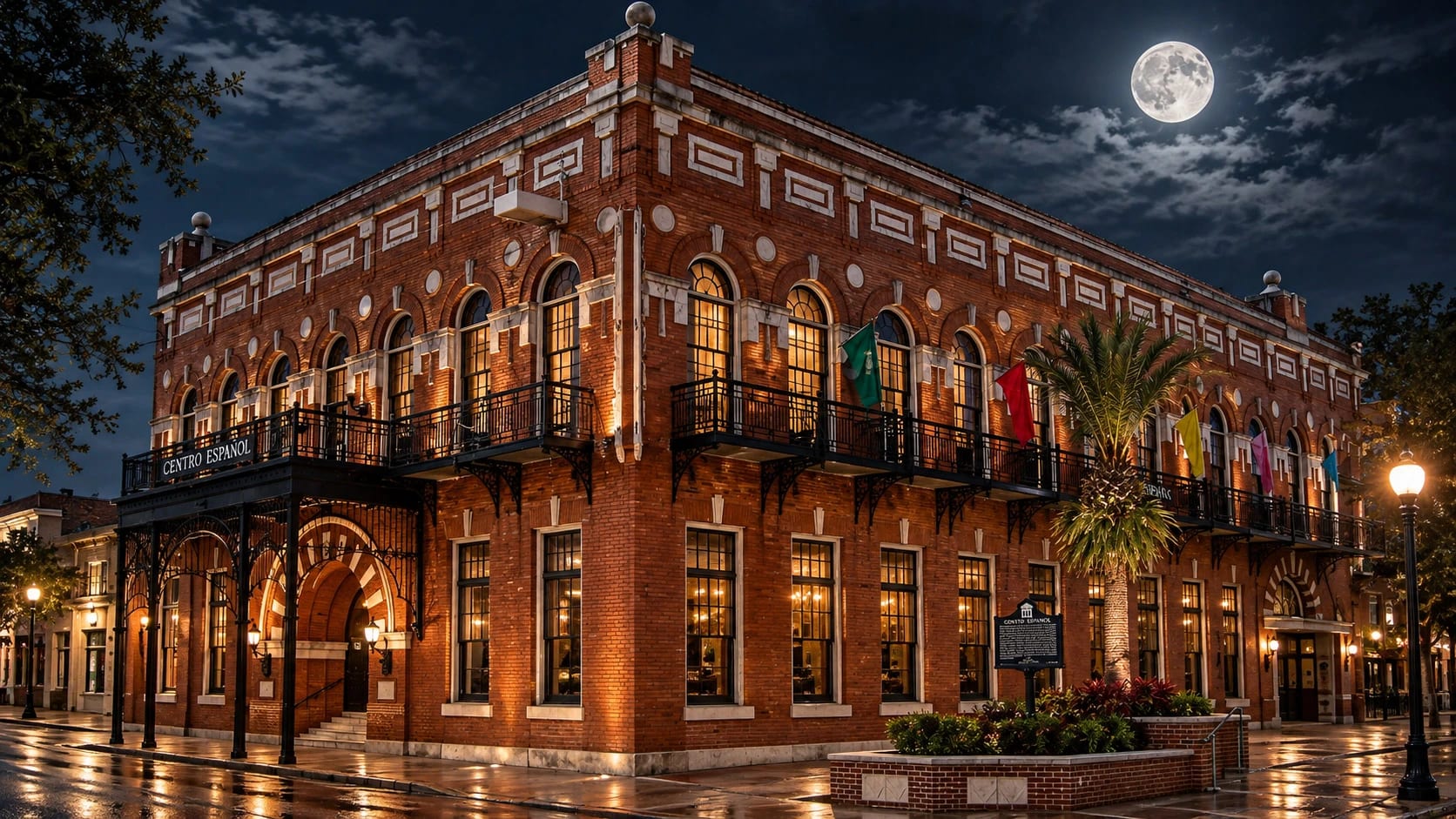
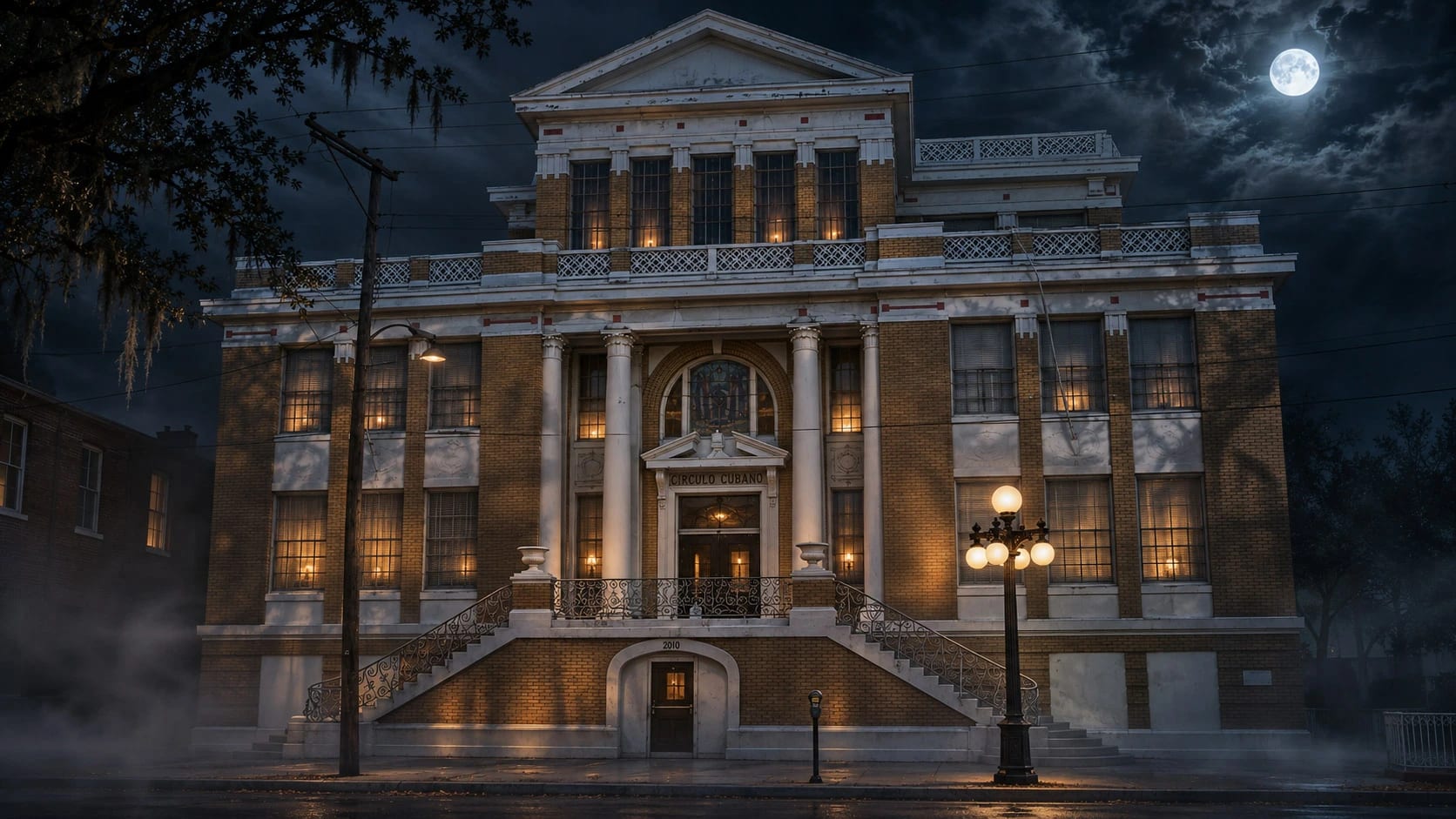
The Cuban Club and Centro Español became two of the most prominent examples of the mutual-aid system. Religious organizations played a different but equally important role, particularly among immigrants who wanted to maintain connections with the faith traditions they had known before arriving in Florida.
Catholic churches served much of Ybor City's Cuban, Spanish, and Italian population, but Protestant congregations were also active in the neighborhood.
Baptist missionaries had been working with Cuban communities in Florida since the nineteenth century, initially in Key West and later in Tampa. Their efforts expanded as cigar manufacturing brought larger numbers of Cuban immigrants to the state.
Some of those missionaries had previously worked in Cuba. Others were American ministers who recognized the importance of providing religious services in Spanish.
By the beginning of the twentieth century, Baptist organizations were establishing permanent institutions in Ybor City.
One of those institutions would eventually occupy the building now known as the SpookEasy Lounge.
The Construction of Clark Memorial Baptist Church in 1911
Clark Memorial Baptist Church was dedicated in 1911 at the corner of Fifteenth Street and Ninth Avenue.
The brick building cost approximately $12,000 to construct, a considerable investment for a religious mission serving a working-class immigrant neighborhood.
Its dedication was attended by local clergy and visiting ministers from Texas and Cuba, demonstrating the congregation's connections to Baptist missionary work beyond Tampa.
The church wasn't intended simply as a place where people gathered for a weekly religious service. It also housed Sunday school activities and supported missionary efforts among Spanish-speaking residents of Ybor City.
Many of the people attending were employed in the cigar industry or belonged to families whose livelihoods depended on it.
The original structure was more elaborate than the building visitors see today. Historical photographs preserved in the Burgert Brothers collection show a substantial brick church with architectural features that no longer survive, including prominent upper sections and decorative towers.
The photographs are especially valuable because they make it possible to compare the building's original appearance with its later commercial transformations.
Much of the structure's religious character has disappeared. The present building has been adapted repeatedly for restaurants, nightclubs, and entertainment venues, and its interior bears little resemblance to what a visitor would have encountered in 1911.
But the address remains the same.
For several decades, people entered the building to worship, attend religious instruction, and participate in community activities. Children who attended Sunday school there grew into adults, raised families, and watched the neighborhood around them change.
It's a history considerably different from the one suggested by the gothic decorations now occupying its rooms.
The Cuban Baptist Mission
The congregation had connections to a broader effort to establish Baptist churches among Cuban immigrants in Florida.
Missionary activity among Cubans in Key West began during the 1880s, when the Florida Baptist Convention and other Baptist organizations supported religious work in the immigrant community.
As Tampa's cigar industry expanded, some of that attention shifted north.
Church records and historical directories identify a Cuban Baptist Mission operating at 1909 Fifteenth Street during the early twentieth century. The 1922 Tampa city directory lists both Clark Memorial Church and the Cuban Baptist Mission at that address, identifying Reverend J. G. Chastain as pastor.
This is useful historical evidence because it confirms the building's religious role well after its dedication in 1911.
The congregation was part of a neighborhood where immigration and religion were closely connected. Cuban families arriving in Tampa had often experienced political upheaval, economic uncertainty, and separation from relatives who remained on the island.
Churches offered opportunities for worship, but they also created relationships between people facing similar circumstances.
A family unfamiliar with Tampa might find assistance through other members of the congregation. Children could attend religious instruction, and adults could develop connections extending beyond their workplaces.
The church was therefore part of the same larger network of immigrant institutions that made Ybor City unusual.
There is no evidence that Clark Memorial operated on the scale of the neighborhood's major mutual-aid societies, but its religious and educational services were important to the people who attended.
Those connections help explain why the building remained in use as a church for more than forty years.
The Baptist Goodwill Center
A photograph taken in 1947 identifies the property as Clark Memorial Baptist Church and the Baptist Goodwill Center.
The image, preserved by the Tampa-Hillsborough County Public Library System, documents an additional community-service function associated with the building.
That detail is significant because the property's later paranormal stories sometimes refer to its use as an orphanage or facility for children.
A Baptist Goodwill Center could provide different forms of community assistance, including educational, charitable, or religious services. The name itself doesn't establish that the building housed children overnight or operated as a residential institution.
The distinction has become increasingly important as the SpookEasy's haunted reputation has grown.
In a 2023 episode of Phantom History, the property's earlier uses were described as including churches and an orphanage. The episode featured an interview with SpookEasy co-owner Kat Traver, who had been researching the building's history and reported hauntings.
The podcast provides evidence that the orphanage story has become associated with the property. It does not, by itself, establish the existence of a licensed orphanage at that address.
No contemporary institutional records, census documents, or official reports confirming a residential orphanage have been identified in the historical sources reviewed for this article.
That doesn't mean the building couldn't have provided services to children. It clearly had a Sunday school, and the Baptist Goodwill Center may have offered assistance to young people or families.
But a church with children's programs and an orphanage where children lived are two very different things.
Without supporting documentation, the orphanage account should be treated as part of the building's developing folklore rather than an established chapter of its history.
For anyone investigating its alleged ghosts, this is an important place to begin. If a witness reports encountering a child inside the building, the experience deserves to be described accurately. It shouldn't automatically be attributed to a deceased orphan simply because someone heard that the building had once been an orphanage.
The Church Leaves Fifteenth Street
Clark Memorial Baptist Church continued serving Ybor City's residents into the middle of the twentieth century.
By the 1950s, however, the neighborhood was changing.
The cigar industry had been declining for years. Manufacturing methods were becoming increasingly automated, traditional cigar factories were closing, and many families were moving to other parts of Tampa.
The original immigrant communities had also changed. Children and grandchildren of the first Cuban, Spanish, and Italian workers were establishing themselves in neighborhoods beyond Ybor City, where newer housing and employment opportunities were becoming available.
In 1955, the Clark Memorial congregation relocated to a new building at 910 Columbus Drive, operating as Ybor City Baptist Temple.
The old church property was placed on the market.
Its departure ended more than four decades of religious use at Fifteenth Street.
The building survived, but the years that followed are not as thoroughly documented as its earlier history.
Historical photographs show that some of its original architectural features were eventually lost. The towers and upper portions visible in early images are absent from the structure today.
One local architectural-history account suggests that a major fire may have destroyed those features. That remains a theory rather than a documented event, and no reliable date or casualty record has been established for such a fire.
There is no basis for claiming that people died in the building during the suspected incident.
What can be established is that the property changed considerably after its congregation moved away.
Its next major transformation would take it in a direction that the church's original founders probably never imagined.
From a Baptist Church to Ybor City's Nightlife
During the 1960s and 1970s, Ybor City suffered many of the economic problems affecting older industrial neighborhoods throughout the United States.
Cigar manufacturing had declined dramatically, and the businesses that depended on factory workers struggled to survive.
Urban renewal projects and highway construction damaged the neighborhood further. Historic buildings were demolished, residential blocks disappeared, and many longtime families moved elsewhere.
The properties that survived were often expensive to maintain and difficult to adapt for new uses.
By the 1980s, however, Ybor City was beginning to develop a different identity.
Artists, musicians, entrepreneurs, and nightclub operators discovered that the neighborhood's older commercial buildings offered unusual spaces for entertainment businesses. Former stores and industrial properties could be converted into bars, music venues, galleries, and restaurants.
Seventh Avenue gradually became associated with nightlife, and the entertainment district spread into surrounding streets.
The former Clark Memorial Baptist Church eventually became part of that transformation.
The Nightclubs That Occupied the Old Church
The building's documented commercial history includes several bars and nightclubs, although the available records don't establish every tenant or the precise dates of each business.
In 1996, Tampa approved an alcohol permit for L. C. Hicks to operate a social club for patrons thirty-five and older at the property.
Over the following years, the building housed establishments including Red Star, The Mission, and Flirt Nightclub.
Their names reflected the neighborhood's changing character.
A building designed for religious services and Sunday school was now being used for music, dancing, drinking, and late-night entertainment.
The contrast makes for an interesting story, although there's no reason to assume that changing the use of a church somehow caused it to become haunted.
Old churches throughout the country have been converted into restaurants, bars, apartments, performance venues, and offices. Most don't acquire elaborate ghost stories simply because the congregation has moved away.
The more relevant question is whether people occupying this particular building reported unusual experiences before the SpookEasy arrived.
According to interviews conducted during its later commercial history, at least some did.
The property's reputation for paranormal activity eventually became familiar enough that the owners of different businesses discussed it publicly.
That history was already circulating when SpookEasy's owners began looking for a larger location in Ybor City.
The Restaurant Years: Cheezy's, Cerealholic, and The Loft
In 2017, Cheezy's Bistro and Speakeasy opened in the former church building.
The restaurant served Italian-inspired food and incorporated a speakeasy-style lounge into the lower level. Its interior took advantage of the property's unusual layout, adapting spaces that had previously served other commercial purposes.
Cheezy's closed approximately two years later.
The next prominent occupant was Cerealholic Cafe and Bar, a business built around an unusual concept: serving food and drinks inspired by breakfast cereals.
The restaurant opened around the beginning of 2020, with Lisa and Mike Lawson involved in its operation.
Cerealholic attracted attention for its colorful menu and unconventional approach to restaurant entertainment, but the business struggled financially.
By early 2022, its owners were reportedly losing approximately $9,000 each month.
The property became the subject of an episode of Bar Rescue, the television series in which hospitality consultant Jon Taffer attempts to improve struggling bars and restaurants.
During the show's involvement in May 2022, Cerealholic was transformed into a new concept called The Loft Elevated Bar + Food.
The renovation changed the restaurant's presentation, but it didn't resolve the business's underlying difficulties.
The Loft closed in August 2022.
Only a short time later, the SpookEasy Lounge was preparing to take over the building.
The Former Owner Who Reported Seeing Spirits
One of the more important details concerning the property's haunted reputation emerged during interviews about the SpookEasy's relocation.
In an August 24, 2022 article for Creative Loafing Tampa Bay, journalist Kyla Fields interviewed people involved in the transition from The Loft to the SpookEasy.
The report noted that Lisa Lawson, the former owner of The Loft, believed the building was haunted because she had experienced encounters she interpreted as involving spirits.
The article didn't provide a detailed account of every incident, and it would be misleading to invent descriptions of what Lawson supposedly saw or heard.
But her statement is still important.
She had operated a business in the property before the SpookEasy moved in and before its current owners developed the gothic-themed interior.
Her reported experiences therefore weren't simply the result of visitors reacting to the SpookEasy's decorations.
That doesn't establish that ghosts were responsible, of course. But it does give the property's paranormal reputation a history separate from the business that would later promote it.
SpookEasy co-owner Evan Christopher also told the publication that the building had a reputation for ghost activity and had previously been included on local ghost tours.
The owners were not moving into an ordinary commercial space and inventing a haunted reputation from nothing.
They were taking over a property where people had already been discussing unusual experiences.
How the SpookEasy Lounge Began
The SpookEasy itself was established several years before it moved into the former church.
In September 2018, Kathleen "Kat" Traver and her husband opened the original SpookEasy Lounge above the Stone Soup Company at 1919 East Seventh Avenue.
The concept was unusual for Ybor City.
While the historic district was filled with bars and nightclubs, the SpookEasy offered a gothic-themed environment centered on kava and other nonalcoholic beverages.
Kava is prepared from the roots of a plant traditionally used in parts of the South Pacific. It has become popular in American kava bars as an alternative to alcohol, although it has its own effects and health considerations.
Traver had become interested in kava after giving up drinking alcohol and discovering that Ybor City offered relatively few places where someone could spend an evening socializing without drinking.
She wanted to create a business that offered an alternative.
The horror theme came naturally because the owners were already interested in gothic culture and supernatural subjects.
According to an October 2018 FOX 13 Tampa Bay interview, Traver had been developing the idea for approximately four years before the original lounge opened.
The first SpookEasy was concealed behind a bookcase on the second floor of the Stone Soup Company.
Customers entered through what appeared to be an ordinary bookshelf and found themselves inside a room decorated with skulls, dark furnishings, gothic artwork, and other horror-inspired objects.
The space was designed to resemble a haunted Victorian lounge.
It became popular with people interested in alternative nightlife, including horror enthusiasts and customers who preferred nonalcoholic drinks.
The business hosted events, games, live entertainment, and other activities that helped establish a loyal following.
By the time it closed in 2021, the SpookEasy had become a recognizable part of Ybor City's entertainment scene.
Why the Original SpookEasy Closed
The closure wasn't caused by a ghost or an unexplained event.
According to an August 2022 interview with Creative Loafing, the owners encountered difficulties involving zoning and permitted commercial uses.
They attempted to relocate the business to other properties in Ybor City, including a space above Mama Rosa's Pizza and another potential location near the Boneyard bar.
Those attempts also ran into difficulties.
Evan Christopher explained that the business had spent considerable money on renovations and legal assistance while trying to obtain the necessary approvals.
After approximately a year without a permanent location, the owners finally secured the former Loft property on North Fifteenth Street.
The new building offered substantially more space than the original lounge.
It also had a basement.
For a business already known for its horror theme, the combination of a historic former church, an underground entertainment space, and a reputation for ghosts was particularly attractive.
The SpookEasy reopened at 1909 North Fifteenth Street in September 2022.
The SpookEasy's New Home: A Haunted Church With a Basement
The new SpookEasy occupied two principal levels, each with a different purpose.
The upper lounge continued the original business's emphasis on kava, tea, coffee, and other beverages. The gothic decorations remained an important part of the atmosphere, with skulls, dark furniture, candles, and horror-themed artwork appearing throughout the rooms.
Downstairs, the owners established The Catacombs, a bar and entertainment space serving alcoholic beverages.
The name was deliberately chosen to fit the building's atmosphere.
A basement beneath an old church is a natural setting for horror stories, especially when the owners are already interested in paranormal investigations.
But the name shouldn't be mistaken for a literal description.
The Catacombs is a commercial bar, not a documented burial chamber or underground cemetery. There is no evidence that the church used its basement to store bodies, conceal graves, or conduct funerary practices resembling the European catacombs from which the bar takes its name.
Its unusual history comes from the building above it.
For decades, Clark Memorial Baptist Church occupied the property, and the basement may have served different practical functions during that period. The available records don't establish exactly how every part of the lower level was used.
Later restaurant and nightclub operators adapted the space for entertainment.
By 2022, it had become an important part of the SpookEasy's new identity.
Visitors could move between a gothic lounge upstairs and an underground bar whose appearance was deliberately more theatrical.
Meanwhile, the owners continued researching the building's history and exploring the stories of the spirits supposedly occupying it.
And according to the claims they would soon make publicly, there were quite a few.
The Seventeen Ghosts of the SpookEasy Lounge
In May 2023, Phantom History released an episode devoted to the SpookEasy Lounge.
The program featured an interview with co-owner Kat Traver, who discussed the building's history and the paranormal activity that she and others believed was occurring there.
The episode's published description made a striking claim: at least seventeen spirits were believed to inhabit the property.
The reported entities were associated with different periods in the building's history, from its years as a church to the businesses that occupied it afterward.
The number immediately sets the SpookEasy apart from many haunted locations in Ybor City.
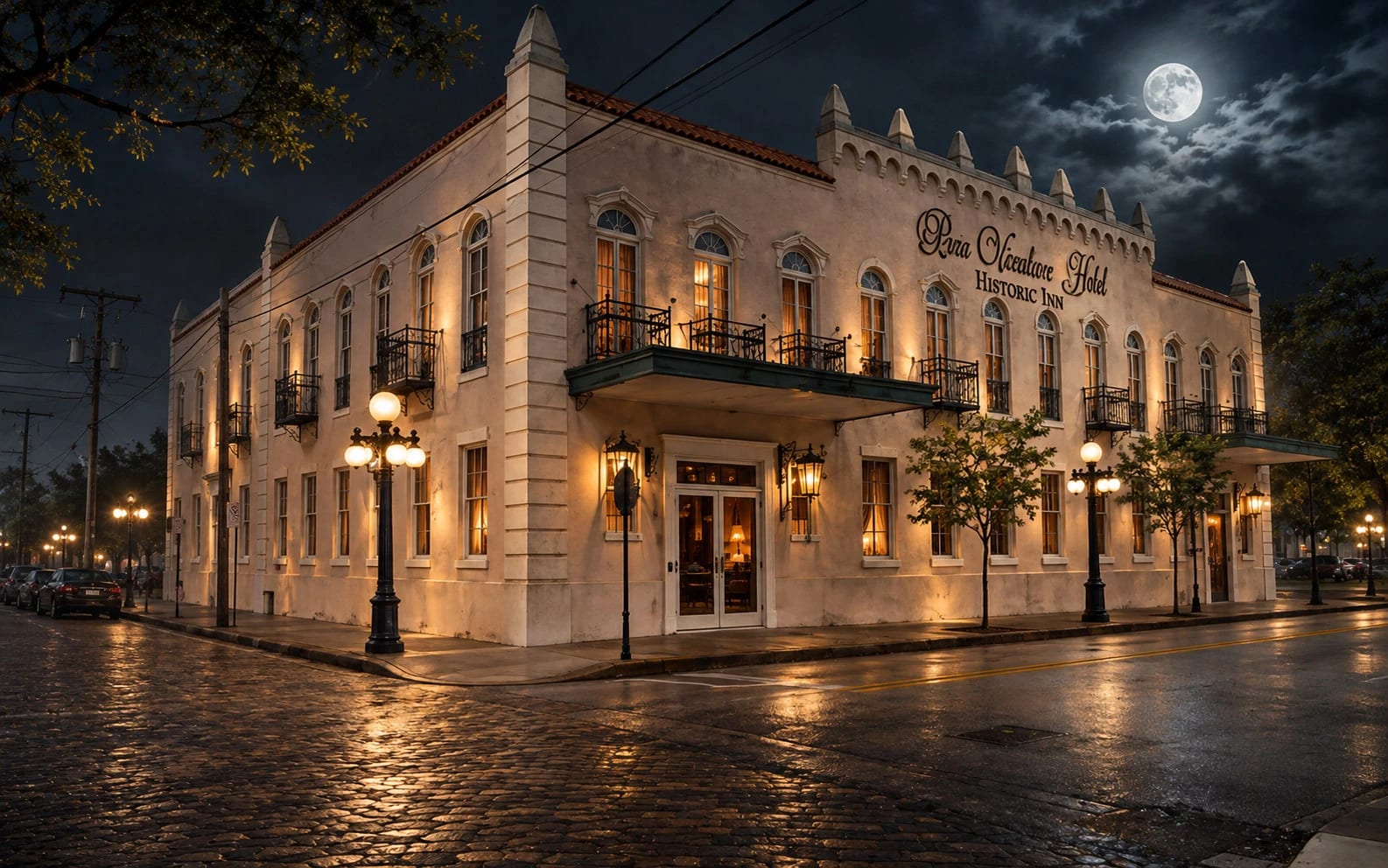
The Cuban Club has several well-known ghost stories involving identifiable figures. The Italian Club's principal apparition is said to resemble a former president. At the former Don Vicente Inn, the reported spirits are frequently connected to its history as a medical clinic.
The SpookEasy's claim is considerably broader.
Rather than identifying one or two prominent ghosts, the owners believe the building is occupied by a large collection of spirits.
There is an important limitation, however. The publicly available episode description doesn't provide a complete independently documented list of seventeen deceased individuals, nor does it establish the historical identity of each supposed spirit.
Without names, death records, or other supporting documentation, the number should be understood as a claim arising from paranormal research and personal experiences.
It's not a historical count of people known to have died in the building.
How Do Investigators Determine How Many Spirits Are Present?
Paranormal investigators use different methods to identify what they believe are individual spirits.
Some attempt to communicate with supposed entities through electronic voice phenomena, often called EVPs. These are sounds recorded during an investigation that participants interpret as voices responding to questions.
Others use devices that detect changes in electromagnetic fields, temperature fluctuations, or movement.
Some investigators also rely on personal experiences, including sensations of being touched, the impression that someone is nearby, or what they believe are apparitions.
The difficulty is that none of these methods reliably establishes the presence or identity of a deceased person.
A recording that sounds like a name doesn't prove that a person with that name is present. An electromagnetic-field detector may respond to electrical equipment, wiring, or other ordinary environmental conditions.
Even if an investigator experiences something they genuinely cannot explain, determining that it came from a particular ghost requires additional assumptions.
Counting spirits is therefore especially difficult.
If investigators obtain several apparently different voices during an evening, that doesn't necessarily mean they have encountered several separate entities.
The same uncertainty applies to reports of apparitions.
One witness may describe an older man, while another describes a woman or a child. Those accounts could reflect unrelated experiences, misidentifications, or the influence of stories people have heard about the property.
They do not establish an exact number of supernatural occupants.
The seventeen-spirit claim is an important part of the SpookEasy's reputation, but it remains unverified.
Are the Ghosts Connected to the Former Church?
The building's religious history provides one possible explanation offered by people who believe it is haunted.
Churches tend to become emotionally significant places for the people who attend them.
Members gather for weddings, funerals, baptisms, and important family events. Children attend Sunday school, friendships develop over many years, and congregations may become central to the lives of people who have few other sources of community support.
Clark Memorial Baptist Church served Ybor City's immigrant residents for more than forty years.
Some families may have maintained connections with the congregation across several generations.
For people who believe that a strong emotional attachment can cause a spirit to remain in a particular place, the church's long history offers a possible explanation.
But there is no established historical record connecting the SpookEasy's reported activity to a specific deceased pastor, congregant, or missionary.
The idea that former church members are haunting the building is an interpretation, not a documented fact.
There is also no reason to assume that the presence of religious activity would make a building more susceptible to hauntings.
The same building might be described as peaceful or spiritually significant by one person and frightening by another.
The physical surroundings remain the same.
What changes is the meaning people attach to them.
The Orphanage Story
One of the claims surrounding the SpookEasy deserves additional examination because it has the potential to become a much larger ghost story.
In the Phantom History episode description, the building's history is summarized as including an orphanage.
The claim is intriguing. If accurate, it would introduce an entirely different period of occupancy and suggest that children may have lived inside the former church.
But the available historical documentation doesn't establish that use.
The building's original purpose as Clark Memorial Baptist Church is supported by contemporary records. The Baptist Goodwill Center is documented in historical photography, and the congregation's relocation in 1955 is also established.
An orphanage, however, would have operated under a different set of responsibilities.
A residential institution caring for children would ordinarily have staff, residents, financial records, and some form of public or organizational oversight.
It might appear in city directories, census records, church correspondence, or newspaper reports.
Those records could provide the names of people who worked there and help determine the years during which children lived at the property.
Without them, there's no reliable way to establish the institution's existence.
It's possible that the orphanage story originated from the church's charitable work or services provided through the Baptist Goodwill Center. A Sunday school, children's ministry, or community assistance program might have become confused with a residential facility as the building's history was repeated.
That is one possibility, not an established explanation.
The important point is that the claim requires additional research before it can be treated as fact.
And until that research has been completed, any ghost story involving supposed orphan children should be approached cautiously.
There's no need to invent a tragedy involving children to make an old church interesting. The documented history is substantial enough to deserve attention on its own.
The Basement and the Catacombs
Of all the spaces inside the SpookEasy, the basement has become one of the most recognizable.
It has several characteristics that make it appealing to people interested in paranormal investigations.
The lower level is enclosed, separated from much of the activity above, and decorated to create an atmosphere that feels quite different from an ordinary bar. Depending on the event and lighting, the space can appear considerably darker than the surrounding rooms.
The basement also has a history extending beyond the current business.
Cheezy's Bistro used the lower level as part of its speakeasy-themed operation, while subsequent businesses adapted the area for their own purposes.
When the SpookEasy reopened, The Catacombs became the section of the property most closely associated with alcoholic beverages and late-night entertainment.
The owners have also allowed the building to be used for organized paranormal investigations.
In September 2024, the SpookEasy advertised a paranormal lock-in that gave participants access to both the upstairs lounge and The Catacombs after ordinary business operations had ended.
The event was scheduled to begin in the early morning hours of September 2 and offered participants approximately ninety minutes of private investigation time.
These events are significant because they demonstrate that the owners have encouraged visitors to explore the building's reported hauntings rather than simply displaying horror decorations.
But access to an old basement doesn't automatically produce useful paranormal evidence.
An investigator would need to account for the building's electrical equipment, refrigeration systems, plumbing, ventilation, and nearby businesses before attributing unexpected sounds or environmental changes to a supernatural presence.
That can be difficult in a historic entertainment district.
Ybor City's nightlife continues well after midnight, and noise can travel through old masonry buildings in ways that are not immediately obvious.
A faint voice recorded in the basement might originate from another room, the street, or a nearby business.
A sudden temperature change could be caused by air-conditioning equipment.
These ordinary possibilities don't explain every experience that witnesses might report, but they should be considered before concluding that a ghost was responsible.
Why the Basement's History Matters
There is another reason the lower level deserves attention.
The building has undergone substantial changes since 1911, and its present layout doesn't necessarily reflect how the original church used the space.
Rooms may have been altered, walls moved, entrances changed, and mechanical systems replaced.
An area currently presented as a gothic bar may once have been an ordinary service or storage room.
Understanding those changes would help investigators determine whether reported activity is associated with a specific historical space or simply with the building's current appearance.
It would also help separate genuine architectural history from the assumptions that often become attached to old buildings.
For example, there is no established evidence of a burial crypt beneath Clark Memorial Baptist Church.
The current name, The Catacombs, is part of the SpookEasy's theme rather than evidence of an underground burial site.
The distinction may seem obvious, but it matters when paranormal stories are repeated online.
A building with a basement becomes a building with catacombs. The catacombs become an old burial chamber, and eventually someone begins claiming that people were buried beneath the floor.
None of those additional details would be justified by the available historical evidence.
The basement is interesting because it belongs to a building with more than a century of documented history.
It doesn't require an invented cemetery to be worth exploring.
Paranormal Investigations at the SpookEasy
The SpookEasy has actively encouraged paranormal enthusiasts to visit the property.
In addition to the 2024 lock-in, the venue has worked with investigators and hosts events involving equipment intended for paranormal research.
Some advertised investigations provide participants with access to both floors after the business closes to ordinary customers.
For enthusiasts, the opportunity is appealing.
The building is historic, the owners are receptive to paranormal investigations, and the property already has a reputation for unexplained activity.
Participants can spend time in areas that are normally occupied by customers and employees, reducing some of the confusion created by ordinary business operations.
That doesn't make the environment completely controlled.
The property is still a functioning commercial establishment with electrical systems, mechanical equipment, and access points connecting it to the surrounding neighborhood.
Investigators also bring their own expectations.
Someone who has been told that seventeen ghosts occupy a building may interpret an unexplained sound differently from someone who hasn't heard the story.
That is one reason investigations should document environmental conditions, identify potential sources of interference, and preserve original recordings.
The most interesting evidence would involve experiences that could be independently verified.
If an object moves unexpectedly, a continuous video recording showing the surrounding environment would provide more useful information than a photograph taken afterward.
If a voice is heard, recording its source and comparing it with nearby rooms could help determine whether the sound originated within the building.
And if someone reports seeing an apparition, a detailed interview conducted before the witness hears other people's accounts would be particularly valuable.
These methods don't guarantee that a haunting can be confirmed or disproved, but they make it easier to separate what happened from what people believe happened.
For the SpookEasy, that distinction is especially important because the business's entire appearance is designed around supernatural themes.
The setting is entertaining, but entertainment and evidence aren't the same thing.
Does the SpookEasy's Haunted Reputation Pre-Date Its Owners?
Yes, although the available public reporting provides limited details about earlier experiences.
The clearest evidence comes from the August 2022 Creative Loafing interview, published before the SpookEasy reopened in the former church.
Lisa Lawson, who had operated The Loft and Cerealholic in the property, acknowledged that she believed the building was haunted and had experienced encounters she interpreted as involving spirits.
Evan Christopher also described the building as having an established reputation for paranormal activity.
Those accounts are valuable because they connect the haunting to people who occupied the building before its current incarnation.
However, the earlier reports don't establish the identities of the supposed ghosts or connect them to particular historical events.
There is also a difference between a location having a reputation for being haunted and possessing independently documented evidence of a haunting.
Local ghost tours may include a building because employees have described strange experiences or because its history seems particularly appropriate for supernatural storytelling.
That reputation can develop over time as new occupants hear the stories and begin paying closer attention to unfamiliar sounds or unexpected events.
In the case of the SpookEasy, the building's history as a church and nightclub offers plenty of reasons for people to find it interesting.
Its unusual architecture, changing interior layout, and long period of commercial occupancy also create opportunities for experiences that might be difficult to explain immediately.
None of those factors proves that the property contains spirits.
But the fact that its haunted reputation existed before the current owners moved in is worth recognizing.
It means the SpookEasy inherited at least part of its ghost story rather than creating the entire reputation itself.
The Modern SpookEasy Lounge
Today, the SpookEasy continues operating at 1909 North Fifteenth Street.
The owners have maintained the gothic atmosphere that made the original business recognizable, while the larger building allows them to accommodate different kinds of entertainment.
The upstairs lounge serves kava, coffee, tea, and other beverages. The Catacombs operates downstairs, offering alcoholic drinks and an atmosphere more closely associated with a nightclub.
The venue hosts themed entertainment, including music, performances, games, and other events appealing to people interested in horror, gothic culture, and alternative nightlife.
The business has become a distinctive part of Ybor City's modern entertainment scene.
Unlike the neighborhood's older social clubs, which were established to provide medical care and mutual assistance to immigrant workers, the SpookEasy was created primarily as a place for people to socialize and enjoy themselves.
There is nevertheless an interesting connection between those different periods of the neighborhood's history.
When Clark Memorial Baptist Church opened in 1911, it provided a gathering place for people whose cultural and religious identities were important to them.
More than a century later, the building serves a different community, one whose members share interests in horror, music, art, and alternative culture.
The circumstances are different, but the building continues bringing people together.
That isn't evidence of anything supernatural. It's simply an example of how historic structures can survive by adapting to the needs of new generations.
And considering the number of historic buildings Ybor City lost during the twentieth century, the continued use of the former church is worth appreciating.
Is the SpookEasy Lounge Really Haunted?
The SpookEasy's reputation is supported by several identifiable sources, but the evidence does not establish the existence of ghosts.
We know that the property was constructed as Clark Memorial Baptist Church in 1911. We know it remained associated with religious and community-service activities for decades, and that it later became a commercial entertainment venue.
We also know that people associated with the property believed it was haunted before the SpookEasy moved in.
Former owner Lisa Lawson reported experiences she interpreted as encounters with spirits, and the current owners have encouraged paranormal investigators to explore the building.
The claim involving seventeen ghosts is more difficult to evaluate.
Without a documented list of the supposed entities, reliable information about their identities, or independently verifiable evidence of the experiences used to identify them, there is no reason to accept the number as an established fact.
The same caution applies to the stories about the property's supposed orphanage.
Historical sources confirm that children attended religious activities in the building, but they do not establish that it operated as a residential orphanage.
Those distinctions are important because the history of a location should not be rewritten to accommodate its ghost stories.
The property doesn't need a fabricated murder, a nonexistent burial chamber, or an imaginary tragedy involving children to be interesting.
Its actual history is unusual enough.
A building originally intended for Cuban Baptist worship became a nightclub, changed commercial identities repeatedly, appeared in the orbit of a reality television restaurant renovation, and eventually reopened as a gothic lounge whose owners believe seventeen spirits occupy the premises.
There probably aren't many properties in Tampa that can claim a history quite like that.
As for the ghosts themselves, the question remains unresolved.
People have reported experiences they believe were paranormal, and the property's reputation has attracted investigators interested in determining what might be happening.
But no reliable evidence has established that deceased church members, former employees, or other spirits are responsible for the activity.
The SpookEasy is certainly designed to make visitors think about ghosts.
Whether any are actually there is another matter.
Visiting the Haunted SpookEasy Lounge in Ybor City
The SpookEasy Lounge is located at 1909 North Fifteenth Street, Tampa, Florida, near the intersection of Fifteenth Street and Ninth Avenue in the historic Ybor City district.
The business occupies the former Clark Memorial Baptist Church, constructed in 1911.
Visitors can see the building's exterior from the surrounding public streets, although substantial architectural changes have altered its appearance since it operated as a church.
Inside, the business offers two different experiences. The upstairs area is a gothic-themed lounge serving kava and other beverages, while the lower level, known as The Catacombs, functions as a bar and entertainment space.
According to the venue's published policies, the lounge is restricted to guests eighteen and older after 7 p.m., and alcohol is available to customers of legal drinking age.
The business maintains a schedule of entertainment and special events, and hours may change during holidays or private functions.
Visitors interested in the venue can find current information through the SpookEasy Lounge's official website.
The surrounding neighborhood is also worth exploring.
Ybor City contains numerous buildings associated with the cigar industry, immigrant social clubs, early Tampa businesses, and organized crime.
Several are located within walking distance of the former church, making the SpookEasy part of a much larger collection of historic properties with unusual stories.
Explore the Haunted History of Ybor City With Ghost City Tours
The SpookEasy is one example of how Ybor City's history continues to shape the stories people tell about the neighborhood.
Some of its haunted locations, such as the Cuban Club and Italian Club, have connections to immigrants who helped establish the community. Others are associated with historic bars, abandoned industrial buildings, gambling establishments, and events from Tampa's more violent past.
The neighborhood also has a remarkable history of political activism, labor struggles, religious institutions, and businesses that have survived decades of change.
Ghost City Tours explores those stories through guided nighttime walking experiences led by local guides familiar with Ybor City's past.
Our Ghosts of Ybor City Tour is an all-ages experience that introduces visitors to the neighborhood's original immigrant communities, historic buildings, and supernatural folklore.
For guests interested in a darker experience, The Darkness Between Us Ghost Tour explores the criminal organizations, violence, illegal gambling, and disturbing stories associated with Ybor City's history. This tour is intended for guests sixteen and older.
Both tours take place outdoors along the neighborhood's historic streets, where many of the buildings associated with these stories still stand.
Explore our Ybor City Ghost Tours and discover the history and hauntings of Tampa's old cigar district.
Frequently Asked Questions About the Haunted SpookEasy Lounge
Is the SpookEasy Lounge in Ybor City haunted?
The SpookEasy has a reputation for paranormal activity, and its owners have publicly claimed that as many as seventeen spirits occupy the property. Former occupants also reported experiences they believed were supernatural. However, there is no independently verified evidence establishing that the building is haunted.
How many ghosts are at the SpookEasy Lounge?
The owners have claimed that at least seventeen spirits inhabit the building. The number was discussed in a 2023 Phantom History episode featuring co-owner Kat Traver. It is a paranormal claim rather than a documented count of people known to have died at the property.
Was the SpookEasy Lounge originally a church?
Yes. The building was constructed in 1911 as Clark Memorial Baptist Church, serving Spanish-speaking residents of Ybor City. It also housed Sunday school activities and was associated with the Baptist Goodwill Center. The congregation relocated in 1955.
Was the SpookEasy building once an orphanage?
Some paranormal accounts claim that the building operated as an orphanage, but reliable historical documentation establishing that use has not been identified. The property was a church and community-service facility, and those activities may have contributed to the later story.
What are The Catacombs at SpookEasy?
The Catacombs is the name of the bar and entertainment space in the building's basement. Despite the name, there is no evidence that the lower level was used as an actual burial chamber or cemetery.
When did the SpookEasy Lounge open?
The original SpookEasy opened in September 2018 above the Stone Soup Company on East Seventh Avenue. After closing in 2021, the business reopened at its present location on North Fifteenth Street in September 2022.
Can you investigate the ghosts at SpookEasy?
The SpookEasy has hosted organized paranormal investigations and lock-in events that provide participants with access to parts of the building. Visitors interested in these activities should contact the venue for current availability and access requirements.
Is the SpookEasy Lounge still open?
Yes. As of November 2026, the SpookEasy continues advertising its lounge, entertainment, and events at 1909 North Fifteenth Street in Ybor City. Current operating hours and event schedules are available through its official website.
Historical References and Sources
1. Old Tampa Photos — Clark Memorial Baptist Church
Old Tampa Photos — Clark Memorial Baptist Church
The most valuable historical source for the building itself. Includes Burgert Brothers photographs of the original church, its 1911 dedication, the $12,000 construction cost, its association with Cuban immigrants, and the congregation's relocation in 1955. Also documents later businesses operating at the property, including Red Star, The Mission, Flirt Nightclub, Cheezy's, Cerealholic, and The Loft.
2. Phantom History — The SpookEasy Lounge, Ybor City
Phantom History — The SpookEasy Lounge, Ybor City
May 16, 2023. Interview with SpookEasy co-owner Kat Traver concerning the building's history and reported hauntings. The episode identifies the property as a former church and describes the owner's claim that at least seventeen spirits occupy the building. It also mentions the purported orphanage history, which requires additional documentation.
3. Creative Loafing Tampa Bay — SpookEasy Lounge Will Reopen Out of The Loft's Former Ybor City Space
Creative Loafing Tampa Bay — SpookEasy Lounge Will Reopen Out of The Loft's Former Ybor City Space
Kyla Fields, August 24, 2022. An important contemporary source documenting the business's relocation, its ownership, the commercial history of the building, and statements from former Loft owner Lisa Lawson concerning paranormal encounters she believed occurred at the property.
4. FOX 13 Tampa Bay — Hidden SpookEasy Lounge Serving Kava in Ybor City
FOX 13 Tampa Bay — Hidden SpookEasy Lounge Serving Kava in Ybor City
October 4, 2018. Reporting on the original SpookEasy Lounge above the Stone Soup Company, including its hidden bookshelf entrance, gothic decorations, and an interview with co-owner Kathleen Traver about the origins of the business.
5. FOX 13 Tampa Bay — SpookEasy Lounge Haunted Kava Bar Reopens in Ybor City
FOX 13 Tampa Bay — SpookEasy Lounge Haunted Kava Bar Reopens in Ybor City
Tony Sadiku, September 20, 2022. Confirms the reopening at 1909 North Fifteenth Street, the previous occupancy by The Loft, and the two-level configuration featuring a kava lounge and basement bar.
6. That's So Tampa — SpookEasy Lounge, a Haunted Speakeasy, Opening in Ybor City
That's So Tampa — SpookEasy Lounge, a Haunted Speakeasy, Opening in Ybor City
Andrew Harlan, August 25, 2022. Reporting on the business's history, its move to the former church property, the gothic decor, and the introduction of The Catacombs.
7. SpookEasy Lounge — Official Website
SpookEasy Lounge — Official Website
Current business information, including the address, operating hours, age restrictions, beverages, and general description of the lounge and The Catacombs.
8. SpookEasy Lounge — Paranormal Lock-In, September 2024
SpookEasy Lounge — Paranormal Lock-In, September 2024
Official event listing documenting an organized paranormal investigation at the property. Establishes that the venue has allowed participants to investigate both the upstairs lounge and the basement outside ordinary business hours.
9. R. L. Polk's Tampa City Directory, 1922 — Church Listings
R. L. Polk's Tampa City Directory, 1922 — Church Listings
Historical directory listing Clark Memorial Church and the Cuban Baptist Mission at 1909 Fifteenth Street, with Reverend J. G. Chastain identified as pastor. Supports the building's documented religious use during the early twentieth century.
10. R. L. Polk's Tampa City Directory, 1922 — Clark Memorial Baptist Church
R. L. Polk's Tampa City Directory, 1922 — Clark Memorial Baptist Church
Additional contemporary directory entry confirming the congregation, its pastor, and its Fifteenth Street address.
11. National Park Service — Ybor City Historic District
National Park Service — Ybor City Historic District
Federal historical overview of the district, including its cigar factories, immigrant population, churches, commercial institutions, and historic preservation. Provides context for the neighborhood in which Clark Memorial Baptist Church was established.
12. Library of Congress — Birth of Ybor City, the Cigar Capital of the World
Library of Congress — Birth of Ybor City, the Cigar Capital of the World
Historical background on Vicente Martínez-Ybor, the development of Tampa's cigar industry, and the immigrant communities that established the neighborhood.
13. City of Tampa — Ybor City History
City of Tampa — Ybor City History
Official municipal history explaining the neighborhood's establishment, its industrial development, twentieth-century decline, and subsequent commercial revival.
14. Old Tampa Photos — Historical Tampa Photograph Collection
Old Tampa Photos — Historical Tampa Photograph Collection
Historical photography collection containing images of Clark Memorial Baptist Church and the Baptist Goodwill Center. Valuable for comparing the original religious structure with the building's later commercial appearance.

The SpookEasy Lounge in the former Clark Memorial Baptist Church, 1909 North Fifteenth Street