Along Zillicoa Street in Asheville's historic Montford neighborhood, a patch of open ground marks the site of a building that disappeared in a terrible fire. There are no ruined hospital wards to explore, no abandoned patient rooms, and no long corridors stretching into darkness.
The building where nine women died on March 10, 1948, was destroyed that night. It was never rebuilt on the same spot.
Nearby, however, parts of the old Highland Hospital campus remain. Historic houses and former institutional buildings recall a time when this quiet neighborhood was home to one of the country's better-known private psychiatric hospitals.
And according to local ghost stories, some of Highland's former patients never entirely left.
The most famous is Zelda Fitzgerald, the writer, artist, and celebrated wife of novelist F. Scott Fitzgerald. She was forty-seven when the fire swept through the hospital's Central Building, trapping patients on its upper floors.
Zelda was among seven women who never escaped the burning structure. Two others died after being rescued.
Her death made headlines across America. The woman who had once danced through the ballrooms of New York and Paris, helped define the Jazz Age, and inspired some of her husband's most celebrated writing had died in an institution far from the world that first made her famous.
Decades later, people began telling stories about a woman seen wandering the former hospital grounds.
Some described an apparition in old-fashioned clothing. Others claimed to hear footsteps or voices near the place where the Central Building once stood.
One account describes a woman who appeared to recognize a witness but could not quite remember her name.
The figure is frequently identified as Zelda.
Yet the history of Highland Hospital is considerably larger than its most famous patient. It includes an unconventional physician who believed outdoor exercise could heal the mind, a music school connected to one of America's greatest singers, a disastrous failure of institutional fire safety, and an investigation that raised the possibility that the deadly blaze had been deliberately set.
The cause of the fire was never conclusively established.
Neither were the hauntings.
But the events of March 10, 1948, are documented in disturbing detail, and they remain among the most tragic chapters in Asheville's history.
The History of Highland Hospital
Asheville's Reputation as a Place of Healing
By the late nineteenth century, Asheville had become one of the South's most fashionable health resorts.
The city's growing reputation rested largely on its mountain climate.
Doctors frequently recommended Western North Carolina to patients suffering from tuberculosis, respiratory illnesses, and conditions then described as nervous exhaustion.
The idea was that fresh mountain air, moderate temperatures, sunlight, rest, and proper nutrition could help patients recover.
For people living in polluted industrial cities, the promise was appealing.
The railroad's arrival in Asheville in 1880 made the region considerably easier to reach. Wealthy visitors began traveling south for extended stays, while entrepreneurs built hotels, boardinghouses, and medical facilities to accommodate them.
The Grove Park Inn would eventually become the city's best-known luxury resort.
But Asheville's reputation as a place of recovery developed well before that hotel opened.
Sanatoriums and private hospitals appeared throughout the city, particularly in neighborhoods with enough land to provide gardens, walking paths, and places for patients to spend time outdoors.
Not all the institutions treated tuberculosis.
Some specialized in mental and emotional disorders, alcoholism, and other conditions that were poorly understood by physicians of the period.
Among those who saw opportunity in Asheville was psychiatrist Dr. Robert Sproul Carroll.
His approach to mental health care would help establish one of the city's most unusual medical institutions.
Dr. Robert S. Carroll Establishes a Sanatorium
In 1904, Dr. Robert S. Carroll founded a private psychiatric facility in Asheville known as Dr. Carroll's Sanatorium.
Carroll believed that mental health depended on more than medication and confinement.
He advocated a program combining physical exercise, structured work, nutritious food, regular sleep, and time outdoors.
His approach was built around the conviction that physical well-being and mental well-being were closely connected.
At a time when many psychiatric institutions emphasized restraint and long-term custodial care, Carroll promoted the possibility that patients could improve through purposeful activity.
His facility treated people experiencing mental illness, depression, anxiety, substance abuse, and what physicians of the era broadly classified as nervous disorders.
Many patients came from wealthy families able to afford private psychiatric treatment.
Highland eventually attracted people from across the country.
Carroll's methods were considered unusually progressive in some respects, although that description requires historical context.
The hospital also employed treatments that would be viewed very differently today. Its medical programs eventually included electroconvulsive therapy, insulin shock treatments, hydrotherapy, and other experimental or invasive approaches to psychiatric illness.
Some methods offered patients relief. Others carried significant risks and reflected the limited medical understanding of their time.
The idea of a hospital where patients gardened, exercised, painted, and attended music classes was appealing.
The treatments administered behind closed doors were sometimes considerably harsher.
The Move to Montford in 1909
Carroll originally operated his sanatorium closer to downtown Asheville.
In 1909, he relocated the institution to a larger property in the Montford neighborhood, north of the city center.
The site offered several advantages.
There was room for multiple buildings, recreational facilities, gardens, and outdoor activities. The location provided a quieter environment than the increasingly busy downtown streets.
It also offered views of the surrounding mountains.
Historical sources differ slightly on when the institution formally adopted the name Highland Hospital. Duke University's archival chronology dates the change to 1906, while other historical accounts place it around 1912.
By the early twentieth century, however, Highland Hospital had become an established name in Asheville medicine.
The property grew into a substantial campus.
At various times, its buildings included Highland Hall, Oak Lodge, Brushwood Bungalow, the Central Building, and facilities for staff, education, and recreation.
The Central Building housed female patients as well as treatment rooms, kitchens, and other medical facilities.
Oak Lodge primarily accommodated male patients.
Brushwood Bungalow offered more private accommodations, while Highland Hall contained additional rooms and institutional functions.
There were tennis courts, an outdoor swimming pool, greenhouses, and workshops.
Patients could participate in gardening, pottery, athletics, music, and other activities.
A hospital brochure from the 1940s described the benefits of rest, climate, water, diet, work, and recreation.
The language sounds almost like advertising for a mountain resort.
That was partly the point.
Highland presented itself as a different kind of psychiatric institution, one where patients would participate in daily life rather than simply remain isolated from the world.
For some, the treatment was genuinely beneficial.
For others, the experience was less positive.
The hospital's later history would reveal just how complicated its reputation could be.
Famous People Connected to Highland Hospital
The Carroll Family and Homewood
Dr. Carroll's influence extended beyond the hospital itself.
He and his wife, Grace Potter Carroll, lived at Homewood, a distinctive stone residence near the Highland campus.
With its rough-hewn masonry, steep rooflines, and castle-like architectural details, the house became a recognizable landmark in Montford.
Grace was an accomplished concert pianist and music teacher.
She had studied in Europe and developed a substantial reputation as a performer before settling in Asheville.
At Homewood, she established a music school and hosted recitals, concerts, and gatherings that attracted musicians and prominent residents.
The house became an important part of Asheville's cultural life.
Composer Béla Bartók is associated with performances at Homewood, and historical accounts describe visits by members of the Vanderbilt family and the Fitzgeralds.
Grace's teaching also connected the property to a young musician who would eventually become internationally famous.
Nina Simone's Connection to Homewood
Before she became Nina Simone, she was Eunice Kathleen Waymon, a gifted pianist from Tryon, North Carolina.
Born in 1933, Eunice demonstrated remarkable musical ability from childhood.
She attended the Allen High School for Girls in Asheville, where she continued her classical music education.
During her years in the city, she received piano instruction from Grace Potter Carroll at Homewood.
She also studied with pianist Clemens Sandresky, who helped develop her technical abilities and encouraged her ambition to become a classical concert pianist.
Eunice graduated from Allen in 1950.
She later studied at the Juilliard School in New York before beginning the career that would make her famous as Nina Simone.
Her connection to Homewood is one of the more surprising pieces of Highland Hospital's history.
The property remembered for its psychiatric institution also contained a center of musical education connected to one of America's most influential performers.
Simone was not a patient at Highland Hospital.
Her association was with the Carroll family's music school, and the distinction matters.
There was much more happening on the hospital grounds than medical treatment alone.
Highland Hospital Becomes Part of Duke University
By the late 1930s, Highland Hospital had expanded considerably.
Its programs attracted national attention, but maintaining the institution required substantial financial resources.
In 1938, Dr. Carroll arranged to donate the hospital to Duke University. The gift was publicly announced in 1939.
The arrangement connected Highland with Duke's developing Department of Neuropsychiatry.
For years, Highland continued functioning largely as an independent institution, despite its university affiliation.
The hospital maintained its own staff, facilities, and treatment programs.
Dr. Carroll remained closely involved until his retirement in 1947.
Dr. Basil T. Bennett subsequently served as medical director.
By the time of the fire, Highland was both a prominent psychiatric facility and an institution facing financial and operational challenges.
Staffing shortages, expensive building maintenance, and the demands of modern medical treatment placed increasing pressure on its administrators.
Yet none of the hospital's patients attracted as much public attention as Zelda Fitzgerald.
Zelda Fitzgerald: The Woman Behind the Legend
From Alabama Society to the Jazz Age
Zelda Sayre was born in Montgomery, Alabama, on July 24, 1900.
Her father, Anthony Dickinson Sayre, served as a justice of the Alabama Supreme Court.
The family was prominent in Montgomery society, and Zelda grew up surrounded by the expectations placed upon young women of her social class.
She developed a reputation for independence.
Zelda enjoyed dancing, swimming, social gatherings, and challenging the conservative conventions of her upbringing.
When she met F. Scott Fitzgerald in 1918, he was a young Army officer stationed near Montgomery.
The two began a passionate and often difficult relationship.
They married in New York on April 3, 1920, shortly after the publication of Fitzgerald's first novel, This Side of Paradise.
Success came quickly.
Fitzgerald became one of the most celebrated young writers in America, while Zelda attracted attention for her beauty, wit, and unconventional behavior.
Together, they became symbols of the Jazz Age.
They attended fashionable parties, traveled through Europe, and moved among writers, artists, and wealthy expatriates.
Their daughter, Frances Scott Fitzgerald, known as Scottie, was born in 1921.
The family's public image suggested glamour and excitement.
Privately, the marriage was becoming increasingly troubled.
Zelda's Life as an Artist and Writer
Zelda was never simply an accessory to her husband's literary success.
She wrote short stories and essays, painted, and pursued dance with extraordinary intensity.
In Paris during the late 1920s, she resumed formal ballet training.
She hoped to develop into a professional dancer, despite beginning the demanding work at an age when most accomplished dancers had already trained for years.
The physical and emotional strain was considerable.
By 1930, Zelda was experiencing severe mental health difficulties.
She entered psychiatric treatment in Europe and spent much of the following decade moving between hospitals, periods at home, and attempts to resume her artistic work.
In 1932, she published her novel Save Me the Waltz.
The book drew heavily on her marriage and experiences in Europe.
Its publication caused conflict with Fitzgerald, who was working on his own novel using some of the same material.
He later published Tender Is the Night in 1934.
The relationship between the Fitzgeralds' creative lives has been the subject of considerable literary debate.
Scholars have examined the ways they influenced, borrowed from, encouraged, and sometimes undermined each other's work.
Zelda's artistic achievements are now taken more seriously than they were during her lifetime.
Her paintings have been exhibited, her writing has been reassessed, and her personal letters provide a more complicated portrait than the familiar image of a reckless Jazz Age socialite.
Her medical diagnosis remains a subject of debate.
Physicians of the period diagnosed her with schizophrenia. Some later specialists have suggested bipolar disorder may better explain aspects of her illness.
Neither retrospective interpretation can resolve every question about her condition.
What is certain is that Zelda spent many years receiving psychiatric treatment.
In 1936, that treatment brought her to Asheville.
Zelda Arrives at Highland Hospital in 1936
Zelda entered Highland Hospital on April 8, 1936.
F. Scott Fitzgerald arranged her admission while spending time in Asheville.
He stayed nearby at the Grove Park Inn, where he occupied rooms in the historic hotel and attempted to restore his health and writing career.
His own difficulties were serious.
Alcohol dependence, recurring illness, financial pressures, and professional disappointment had left him struggling.
Zelda remained at Highland for an extended period.
Her treatment included structured daily activities and opportunities to paint, write, exercise, and spend time outdoors.
Accounts of her years at Highland describe tennis, swimming, walks through the grounds, and visits to her mother in nearby Saluda.
She maintained an interest in art and continued corresponding with family members.
Her condition fluctuated.
There were periods of creativity and apparent stability, followed by episodes in which she required more intensive medical care.
The hospital administered treatments that included insulin shock therapy, a method used during the period to treat certain psychiatric conditions.
The procedure deliberately lowered a patient's blood sugar to induce unconsciousness.
It was dangerous and eventually fell out of widespread use as safer psychiatric treatments developed.
Zelda's life at Highland therefore contained stark contrasts.
She might spend an afternoon painting or walking through the gardens, then undergo an invasive medical treatment intended to manage her symptoms.
She remained at the hospital until April 1940.
The Death of F. Scott Fitzgerald
After leaving Highland in 1940, Zelda returned to Alabama.
F. Scott Fitzgerald had moved to Hollywood, where he worked as a screenwriter and began writing what would become his unfinished novel The Last Tycoon.
Their marriage had grown increasingly distant.
On December 21, 1940, Fitzgerald died of a heart attack in Hollywood.
He was forty-four.
Zelda was devastated.
Although their relationship had been marked by considerable conflict, their correspondence reveals a lasting emotional attachment.
She continued struggling with her health in the years that followed.
In August 1943, Zelda returned to Highland Hospital for another period of treatment.
She left in February 1944, but subsequent difficulties brought her back.
During the 1940s, she also spent time with her daughter and grandson and made visits to family in Alabama and North Carolina.
On November 2, 1947, she entered Highland for what would become her final stay.
She was forty-seven years old.
By early March 1948, her condition had apparently improved.
Doctors believed she was ready to leave the hospital.
Zelda decided to remain for a few additional weeks, hoping to ensure that her recovery would continue.
On March 9, she wrote a letter to her daughter describing the approaching spring and the changing weather in the mountains.
It was a hopeful piece of correspondence.
The following night, the hospital caught fire.
The Highland Hospital Fire of March 10, 1948
The Central Building Before the Fire
The Central Building was one of Highland Hospital's most important facilities.
It housed female patients, treatment rooms, kitchens, and administrative areas.
Its construction included substantial amounts of combustible material, particularly in the upper portions of the building.
The structure had multiple levels, including upper rooms frequently described in contemporary accounts as the fifth floor.
On March 10, 1948, twenty-nine female patients occupied the building.
Some required close supervision.
Others were able to move about more independently.
Certain doors were kept locked, while windows had protective screens or restricted openings intended to prevent patients from escaping or injuring themselves.
These precautions were common in psychiatric institutions of the period.
They would have devastating consequences during a fire.
The Final Hour of March 10
The evening began routinely.
Two nurses, Doris Anderson and Ruth Dunn, came on duty at approximately 10 p.m.
Both were relatively new employees.
Anderson had arrived at Highland on March 1 and was working her first night in charge of the Central Building.
Willie Mae Hall, the hospital's night supervisor, reviewed procedures with the nurses.
During her rounds, Anderson administered sedating medication to several patients, including Zelda Fitzgerald.
Such medications were part of the hospital's ordinary nighttime treatment practices.
At approximately 11:30 p.m., Anderson noticed the smell of smoke.
She began searching the building.
The odor seemed to be coming from the dumbwaiter, a small service elevator used to transport food and other items between floors.
Anderson and Dunn investigated.
Around 11:35 p.m., Anderson entered the diet kitchen on the third floor.
She discovered flames around a table near the dumbwaiter shaft.
At that moment, according to her later testimony, the visible fire was still relatively small.
Anderson became frightened.
She did not attempt to extinguish it.
Instead, she returned to the nurses' station and began making telephone calls.
Her first attempt to contact Oak Lodge, another building on the hospital campus, was unsuccessful.
She then reached the fire department and notified other hospital personnel.
By the time the alarm had been raised, the fire was spreading rapidly through the structure.
Flames Race Through the Dumbwaiter
The dumbwaiter shaft became a major pathway for the fire.
Flames and hot gases traveled upward through the vertical opening, reaching the upper floors and cutting off escape routes.
The building's interior construction allowed the flames to spread with frightening speed.
Firefighters were called at approximately 11:44 p.m.
They arrived within minutes.
By then, flames were already breaking through the roof.
Inside the building, nurses and staff attempted to wake patients and lead them outside.
Some women were able to escape using stairways and exterior routes.
Others required assistance.
Neighbors and people passing nearby rushed toward the burning hospital when they saw the flames.
Among those who helped were two Biltmore High School students, Lawrence Mitchell and Kenneth Haynes.
The teenagers were returning from a Naval Reserve meeting when they encountered the emergency.
They assisted in rescuing four patients.
Both suffered the effects of smoke inhalation.
Their actions were among numerous efforts made by people who entered a dangerous building to save strangers.
But not everyone could be reached.
The Women Trapped on the Upper Floor
The most desperate rescue attempts involved patients on the upper floors.
Zelda Fitzgerald was among eleven women housed on the top level.
She had received sedating medication earlier that evening.
As smoke filled the corridors, nurses tried to reach the patients and unlock rooms.
Anderson managed to lead several women to safety from lower portions of the building.
She then attempted to reach the top floor.
Smoke forced her back.
Firefighters encountered additional obstacles outside.
Heavy screens and chains restricted the opening of some windows, making it difficult to reach trapped patients with ladders.
Measures originally intended to protect vulnerable patients had become barriers to their escape.
Contemporary testimony indicates that some rooms were locked, although accounts differ on the exact circumstances of Zelda's room and the extent to which individual patients were confined.
The widely repeated claim that every patient was locked inside a room is not supported by the full record.
But the locked doors and restricted windows undoubtedly complicated rescue efforts.
Seven women remained trapped in the upper part of the building.
Two more were rescued but later died from their injuries.
By the time the fire was extinguished, nine women had lost their lives.
The disaster continued into the early hours of March 11.
Firefighters and volunteers worked through the night.
The following morning, portions of the building were still too dangerous for recovery crews to enter.
The Nine Women Who Died at Highland Hospital
Much of the attention surrounding the Highland Hospital fire has focused on Zelda Fitzgerald.
Her fame ensured that the tragedy appeared in newspapers across the country.
But she was only one of nine victims.
According to the March 13, 1948, edition of The Asheville Citizen, the women who died were:
- Janice Borocoff, 19
- Marthina DeFriece, 20
- Jules Doering, 38
- Ida Engle, 67
- Zelda Fitzgerald, 47
- Sarah Neeley Hipps, 49
- Virginia Ward James, 28
- Ethlyn A. Kennedy, 42
- Oma Womack, 49
Their ages ranged from nineteen to sixty-seven.
Seven died in the building. Sarah Hipps and Ethlyn Kennedy died after being brought outside.
Each had a life beyond Highland Hospital.
They had families, friends, experiences, and reasons for seeking treatment.
The surviving historical sources provide considerably more information about Zelda than about the others.
That imbalance is understandable given her celebrity, but it should not determine how the tragedy is remembered.
The fire killed nine women.
All nine deserve recognition.
The Identification of Zelda's Remains
The destruction of the Central Building complicated efforts to identify the dead.
Intense heat had severely damaged portions of the structure.
Recovery crews had to contend with collapsed beams, unstable masonry, and debris.
The search could not proceed safely until some damaged sections were cleared.
On the evening of March 11, workers recovered remains from the building's south wing.
Zelda Fitzgerald was identified through dental evidence, according to the Asheville Museum of History's examination of the historical record.
Other accounts describe a slipper as an important clue in identifying her remains.
The slipper has become a memorable part of the story, and some versions of the haunting even describe an apparition carrying one.
The historical accounts are not entirely consistent on the identification details.
What is certain is that Zelda's remains were recovered and returned to Maryland.
She was buried beside her husband at St. Mary's Church Historic Cemetery in Rockville.
Her grave bears the famous closing words of The Great Gatsby.
Nearly eight years after F. Scott Fitzgerald's death, Zelda was laid to rest beside him.
What Caused the Highland Hospital Fire?
The fire's rapid spread was understood almost immediately.
Investigators established that flames traveled through the dumbwaiter shaft and into the building's upper floors.
Determining what ignited the fire was much more difficult.
The Coffee Urn Theory
One of the earliest explanations involved an electrical appliance in the third-floor diet kitchen.
Witnesses suggested that a coffee heater or urn might have malfunctioned.
The idea appeared in contemporary newspaper reporting.
The theory was plausible because the fire was first discovered near the kitchen's service equipment.
But investigators did not establish that an electrical appliance had started it.
Anderson testified that she had seen no obvious electrical hazard on the burning table.
Other employees described appliances in the room, but their statements were not entirely consistent.
The building had also experienced smaller fires or fire-related incidents before March 1948.
At least three earlier fires had reportedly been extinguished without significant damage.
Those incidents later became important to the investigation.
The Investigation into Willie Mae Hall
The most troubling development came more than a month after the disaster.
On April 12, 1948, Willie Mae Hall, Highland's night supervisor, approached authorities and expressed fear that she might have been responsible for the fire.
She was visibly distressed.
Hall had worked at Highland for years and had been involved in supervising the nurses on the night of the tragedy.
She told investigators that she had been thinking obsessively about fires and had experienced disturbing dreams involving patients who died.
Her uncertainty led police to reopen the investigation.
During questioning, Hall did not provide a consistent confession.
At times, she wondered whether she had caused the fire.
At others, she insisted that she had not.
Investigators placed her in custody and arranged a psychiatric evaluation.
The examining psychiatrist, Dr. Wesley Taylor, concluded that Hall was experiencing severe emotional distress.
He did not believe there was sufficient evidence to treat her statements as a reliable admission of criminal responsibility.
Hall was sent to Graylyn Mental Hospital in Winston-Salem for observation and rest.
During her stay, physicians used interviews and techniques then believed capable of revealing concealed memories, including questioning under the influence of pentothal.
The results remained contradictory.
Sometimes Hall expressed responsibility.
At other times, she denied setting the fire.
The uncertainty was never resolved.
She was released after a short period of observation.
No criminal charges were filed against her.
The investigation illustrates how quickly the search for an explanation became entangled with fear, guilt, and the emotional consequences of the disaster.
Hall had been present at the hospital that night.
She had lost patients she knew.
Her distress was genuine.
Whether it reflected involvement in starting the fire was never established.
The Coroner's Findings and the Question of Negligence
The coroner's investigation examined the hospital's fire precautions, employee training, emergency procedures, and the rapid spread of the flames.
Particular attention focused on the actions of the nursing staff.
Anderson and Dunn had been employed at Highland for little more than a week.
Both testified that they had not received meaningful fire-response training.
Investigators also questioned the delay between the first signs of smoke and the arrival of firefighters.
Fire Chief J. C. Fitzgerald believed the fire might have been burning for considerably longer than the initial staff estimates suggested.
That raised questions about when the flames began and whether an earlier alarm might have improved the chances of escape.
The coroner's jury eventually concluded that negligence had occurred, but not to a degree warranting a finding of culpable negligence.
The decision did not establish a definitive cause of ignition.
Civil lawsuits followed.
Families of several victims pursued claims against the hospital and its employees.
Those cases were ultimately settled outside court.
No one was criminally charged with causing the fire.
The question of whether it began accidentally or through deliberate action remains unresolved.
What Happened to Highland Hospital After the Fire?
The destruction of the Central Building did not end Highland Hospital.
Other facilities on the campus continued operating.
Patients were accommodated in surviving structures, and the institution gradually reorganized its programs.
Dr. Basil Bennett left Highland later in 1948.
On December 20, Dr. Charman Carroll, the adopted daughter of the hospital's founder, was appointed director.
She had trained in medicine and psychiatry and became an important figure in Highland's postwar administration.
The hospital continued changing throughout the 1950s, 1960s, and 1970s.
Its services eventually included adolescent residential programs, outpatient treatment, day care, and supervised transitional living.
A program known as Homewood School provided treatment and education for young people.
The Halfway House allowed some patients to live under supervision while working or studying outside the institution.
Psychiatric medicine was also changing.
New medications, different approaches to hospitalization, and growing attention to patients' rights reshaped the field.
Highland's history reflects many of those developments.
The institution was not uniformly progressive or uniformly harmful.
Some former patients described valuable care and supportive staff.
Others recalled difficult or damaging experiences.
Like many psychiatric hospitals operating over such a long period, Highland was shaped by changing medical practices, institutional policies, and social attitudes.
Duke University gradually reconsidered its involvement.
In 1979–1980, it transferred its interest in Highland to Psychiatric Institutes of America.
The hospital continued operating under subsequent ownership.
It finally closed in 1993.
After nearly ninety years, Highland Hospital had ceased to exist as a medical institution.
The property was divided and adapted for other purposes.
Some buildings survived.
Others were demolished or substantially altered.
The location of the 1948 fire remained a memorial space.
And as the hospital faded from daily life in Asheville, the stories about what happened there began taking on a different character.
The Ghosts of Highland Hospital
Highland Hospital's paranormal reputation centers on the former Central Building and its most famous victim.
Unlike an operating haunted hotel, the site offers no room where visitors can spend the night hoping to encounter a ghost.
The structure associated with the fire no longer stands.
Nevertheless, the surrounding grounds have inspired reports of apparitions, unexplained sounds, and unusual sensations.
Most of these accounts come from later ghost-story collections, local folklore, and people describing experiences around the former hospital property.
They are not part of the documented record of the 1948 fire.
The Ghost of Zelda Fitzgerald
The best-known Highland Hospital ghost is a woman believed to be Zelda Fitzgerald.
According to the legend, her spirit walks through the former hospital grounds, sometimes appearing among the trees or near the location of the destroyed Central Building.
Descriptions vary.
Some people report a woman wearing clothing associated with the middle decades of the twentieth century.
Others describe a pale figure who appears briefly before disappearing.
The apparition is generally portrayed as quiet.
She does not threaten witnesses or attempt to frighten them.
Instead, she seems preoccupied, as though continuing an ordinary walk through the hospital grounds.
The identification with Zelda may reflect a genuine memory preserved in local storytelling.
During her years at Highland, Zelda frequently spent time outdoors.
She enjoyed walks, gardens, and the surrounding landscape.
People who remembered her described an interest in wildflowers and the changing seasons.
A woman wandering the grounds therefore fits what is known about her daily life.
But there is no verified evidence identifying any reported apparition as Zelda.
The connection between the sightings and the famous writer is an interpretation made by storytellers and witnesses.
The woman in the ghost stories has never been conclusively identified.
The Woman Who Seemed to Recognize Someone
One of the more interesting Highland Hospital ghost accounts appears in Randy Russell's book The Ghost Will See You Now: Haunted Hospitals of the South.
Russell collected accounts involving unusual experiences at former medical institutions across the region.
A story associated with Highland concerns an encounter with a woman believed to be Zelda Fitzgerald.
The witness described the figure looking directly at her with an expression suggesting recognition.
According to the account, the apparition seemed as though she knew the witness but could not remember her name.
The moment was not described as violent or threatening.
Its unsettling quality came from the woman's apparently familiar behavior.
Rather than a dramatic ghost attempting to communicate a message, the witness encountered someone who seemed to be struggling to recall an acquaintance.
A similar version of the story has circulated through Asheville ghost-tour accounts, sometimes attributed to a former employee.
The surviving retellings do not provide enough information to establish exactly when the encounter occurred or whether they all describe the same original experience.
The story's personal quality, however, has helped distinguish Highland's haunting from the more elaborate legends associated with some other Asheville locations.
Footsteps and Voices Near the Former Hospital
Not every reported experience involves a visible apparition.
Stories associated with the Highland grounds include unexplained footsteps, faint voices, and sounds that seem to come from areas where the former hospital buildings stood.
Some visitors have described hearing movement when nobody else appeared to be nearby.
Others report voices that cannot be traced to an obvious source.
The accounts generally lack precise dates and independently identified witnesses, making them difficult to assess.
They are nevertheless familiar elements of Highland's modern ghost lore.
The setting contributes to their effect.
Montford is a historic residential neighborhood with mature trees, narrow streets, and buildings from several different periods.
Sound can travel unpredictably between structures and across open ground.
Ordinary activity may be difficult to locate, especially at night.
A noise that would attract little attention elsewhere can seem different when heard near a place associated with a fatal fire.
According to the ghost stories, however, the sounds sometimes resemble people still moving through the hospital.
Whether they belong to former patients, employees, or simply the ordinary life of the neighborhood remains a matter of interpretation.
Cold Spots and Shadowy Figures
Other accounts describe sudden cold sensations near the former hospital grounds.
Some visitors claim to feel an unexplained change in temperature or an uncomfortable sense that someone is nearby.
Dark shapes and indistinct figures have also been reported around surviving buildings.
These experiences are usually presented as evidence that more than one spirit remains at Highland.
The idea is understandable.
Hundreds of patients passed through the hospital during its long existence.
Nine women died during the fire.
Other patients undoubtedly experienced illness, loss, and distress while receiving treatment there.
But the presence of historical suffering is not evidence of supernatural activity.
Nor does it establish that an unidentified figure must belong to someone who died at Highland.
The stories are part of the location's folklore.
Their precise origins and the explanations for individual experiences remain uncertain.
The Legend of Zelda's Slipper
Some modern versions of the Highland Hospital haunting include an unusual detail.
The ghost of Zelda Fitzgerald is described as appearing with a slipper.
Occasionally, the slipper is said to be red.
This seems to have developed from historical accounts of the identification of her remains after the fire.
The slipper became a memorable element of the tragedy, and later storytellers incorporated it into descriptions of the apparition.
There is no verified eyewitness account establishing that Zelda's ghost carries a slipper.
The detail is best understood as an example of how a real historical object can become part of a supernatural legend.
Over time, elements of a person's documented life and death are woven into descriptions of an alleged haunting.
The result may be an effective ghost story, even when the specific detail has no independent support.
Why Is Zelda Fitzgerald Said to Haunt Highland Hospital?
The most common explanation is that Zelda died suddenly, in a place where she had spent a significant part of her adult life.
She was recovering.
She had been told she could leave soon.
She was looking forward to seeing her family.
Then a fire destroyed the building where she was sleeping.
In traditional ghost lore, unexpected or violent deaths are frequently associated with spirits who remain near the location of their final moments.
For Zelda, the story has another dimension.
Her entire adult life was shaped by the tension between freedom and confinement.
She became famous as an unusually independent young woman, yet spent years in psychiatric institutions.
She was an artist whose work was overshadowed by her husband's reputation.
She pursued dance, writing, and painting with enormous determination, but experienced long periods when illness and treatment limited her ability to work.
It is easy to see why later storytellers imagined her spirit walking freely through the grounds of the hospital.
The image offers a kind of freedom that much of her life denied her.
There is no evidence that this interpretation reflects Zelda's actual wishes or that her spirit remains at Highland.
It does, however, help explain why her haunting has become such an enduring story.
The legend is not simply about a famous person who died in a fire.
It is about a woman whose life was repeatedly constrained, supposedly wandering through a place where she once sought treatment.
What About the Other Eight Women?
The stories concerning Highland's ghosts rarely identify anyone other than Zelda.
That is a consequence of her fame.
Most people visiting the site know the name Fitzgerald. Few know the names of the other patients who died.
Yet there is no historical reason to assume Zelda would be the only person associated with the location's alleged paranormal activity.
Some versions of the folklore describe unidentified female apparitions or voices rather than a specific spirit.
Those reports are sometimes attributed to the other women killed in the fire.
There is no reliable evidence connecting any particular sighting to one of the eight victims.
Assigning identities to unexplained phenomena would be speculation.
The broader historical question is more worthwhile.
Why have the lives of the other women received so little attention?
Their names appear in contemporary newspaper accounts, but detailed biographies are not readily available in the sources most often consulted by ghost-story writers.
The Duke University Medical Center Archives holds extensive administrative records, photographs, correspondence, and other material relating to Highland Hospital.
Those records offer opportunities to learn more about the institution's patients, staff, and daily operations.
The history of the women who died should not disappear simply because one of them was famous.
Highland Hospital in Books and Popular Culture
The events of 1948 have inspired more than local ghost stories.
Zelda Fitzgerald's life has attracted generations of biographers, historians, novelists, and literary scholars.
Her death at Highland Hospital is among the most frequently discussed episodes in her biography.
In 2013, North Carolina author Lee Smith published Guests on Earth, a novel inspired in part by Zelda's years at Highland and the hospital fire.
The book uses fiction to explore the lives of psychiatric patients, the restrictions placed on women, and the social attitudes surrounding mental illness during the twentieth century.
Its title and setting reflect the author's interest in people whose lives were shaped by institutions and circumstances beyond their control.
The novel is not a documentary account of the fire, and its fictional characters and invented scenes should not be treated as historical evidence.
Zelda also appears in numerous biographies and works examining her relationship with F. Scott Fitzgerald.
Nancy Milford's Zelda: A Biography, published in 1970, helped revive interest in her life as an artist and writer.
Later scholars expanded that work, questioning assumptions about her illness and the degree to which her husband's literary reputation overshadowed her achievements.
Highland Hospital appears in discussions of the history of psychiatric treatment as well.
Duke University's archival exhibition contains photographs of the campus, hospital brochures, records relating to medical treatments, and information about its educational programs.
Those materials reveal a facility far more complex than the haunted asylum often imagined in popular storytelling.
Highland was a working hospital, not an abandoned institution designed to frighten visitors.
Its patients were people seeking medical care.
That reality makes the circumstances of the fire considerably more disturbing than any invented horror story.
What Remains of Highland Hospital Today?
Highland Hospital no longer operates, and its original campus has been divided among several different uses.
The Central Building destroyed in 1948 is gone.
The site where the deadly fire occurred remains an open area associated with the memory of the nine women who died.
Other historic structures connected with the hospital survive nearby.
Among the most recognizable is Homewood, the stone residence associated with Dr. Robert and Grace Potter Carroll.
The building is now used as a private event venue.
Highland Hall and other surviving properties in the former hospital complex have undergone changes of ownership and use.
Some have been adapted for offices, residential treatment, or other purposes.
Not every building visible along Zillicoa Street dates from the same period, and visitors should not assume that every historic structure was part of the Central Building where Zelda died.
The distinction is especially important when examining the haunting.
Some websites imply that visitors can still enter the hospital ward where Zelda was trapped.
They cannot.
That building was destroyed.
No preserved room or corridor from the fatal upper floor remains open for exploration.
The former hospital grounds are part of a living neighborhood, with privately owned buildings and active properties.
Visiting the Former Highland Hospital in Asheville
The former Highland Hospital campus is located along Zillicoa Street in Asheville's Montford neighborhood, north of downtown.
The address most often associated with the historic hospital is 75 Zillicoa Street, Asheville, North Carolina.
The location is relatively close to Riverside Cemetery and other historically significant sites in Montford.
Visitors can view portions of the former campus and surviving architecture from public streets and sidewalks where access is permitted.
A memorial marker associated with Zelda Fitzgerald is also located in the area.
Anyone interested in visiting should remember that the hospital no longer operates as a public attraction.
The surviving properties are privately owned or occupied.
They are not open for unrestricted entry, and the former grounds should not be treated as an abandoned site available for paranormal investigations.
Visitors should remain on public rights-of-way unless they have permission to enter a particular property.
It is also worth seeing the site during daylight.
The remaining buildings and landscape are easier to understand when viewed as part of Montford's architectural history.
For those interested in Zelda's time in Asheville, the Grove Park Inn provides another important connection.
F. Scott Fitzgerald stayed there while Zelda was receiving treatment at Highland Hospital.
The hotel still operates, and its history includes the rooms the writer occupied during the 1930s.
The two properties tell very different stories about the Fitzgeralds' years in North Carolina.
One was a mountain resort where Scott struggled with his health, finances, and writing.
The other was the hospital where Zelda spent years receiving treatment and where her life ended.
Is Highland Hospital Really Haunted?
The stories associated with Highland Hospital have survived because the history behind them is so unsettling.
A woman who helped define one of America's most celebrated cultural eras died in a psychiatric hospital.
Eight other patients died beside her.
The fire spread through a building where some of the women were sedated and where restricted doors and windows complicated their escape.
Investigators questioned the hospital's preparedness.
They examined possible negligence.
They considered whether someone had intentionally started the blaze.
The cause was never conclusively determined.
Those are the established facts.
The ghost stories arrived afterward.
People described women walking near the former hospital, unexplained sounds, sudden changes in temperature, and the feeling of being watched.
Some identified the apparent spirit as Zelda Fitzgerald.
No reliable evidence proves that these experiences were supernatural or that any apparition was the famous writer.
The most interesting question may not be whether Zelda continues walking through Montford.
It may be why the story of her death has so completely overshadowed the other women.
Their names have been preserved in old newspapers, but most visitors know nothing about them.
The former Highland Hospital grounds are now quiet.
The Central Building is gone. The fire damage has long since been cleared, and the institution itself closed decades ago.
Yet the history remains.
Nine women died there on a March night in 1948.
Their loss deserves to be remembered without embellishment.
And if the stories of a woman wandering among the trees continue to circulate, perhaps they will bring more people to learn what happened at Highland Hospital.
Not simply to look for Zelda Fitzgerald's ghost.
But to remember the lives of everyone who never made it out of the fire.
For more of the city's haunted history, read about the Grove Park Inn, where F. Scott Fitzgerald stayed, the Battery Park Hotel, Helen's Bridge and Chicken Alley, explore our guide to haunted Asheville, or join one of our Asheville ghost tours.
Research Sources and Further Reading
-
Duke University Medical Center Archives: Highland Hospital Exhibition. An extensive digital exhibition covering the hospital's founding, campus, patient treatments, educational programs, administration, and history under Duke University.
-
Duke University Medical Center Archives: Highland Hospital Timeline. Important dates concerning the institution's ownership, leadership, fire, development, and eventual closing.
-
Asheville Museum of History: Inside the 1948 Highland Hospital Fire That Killed Zelda Fitzgerald. One of the most valuable historical investigations of the disaster, including contemporary testimony, the investigation into Willie Mae Hall, and archival documents.
-
North Carolina Department of Natural and Cultural Resources: Zelda Fitzgerald. Official state historical research about Zelda's life, medical treatment in Asheville, and death.
-
828 News NOW: Zelda Fitzgerald Said to Haunt Highland Hospital. Local reporting containing historical newspaper details, the names of the nine victims, information about the investigation, and later ghost stories.
-
Duke University Medical Center Archives: A Closer Look at the Highland Hospital Brochure. Original hospital promotional material describing patient activities, psychiatric treatments, and Highland's approach to mental health care.
-
NPR: For F. Scott and Zelda Fitzgerald, a Dark Chapter in Asheville, N.C. Reporting on the Fitzgeralds' Asheville years, including interviews with people connected to Highland Hospital.
-
Randy Russell: The Ghost Will See You Now: Haunted Hospitals of the South. A collection of regional hospital ghost stories that includes accounts of the apparitions associated with Highland.
-
Lee Smith: Guests on Earth (2013). A historical novel inspired by Zelda Fitzgerald and the hospital fire. It provides literary context rather than primary historical evidence.
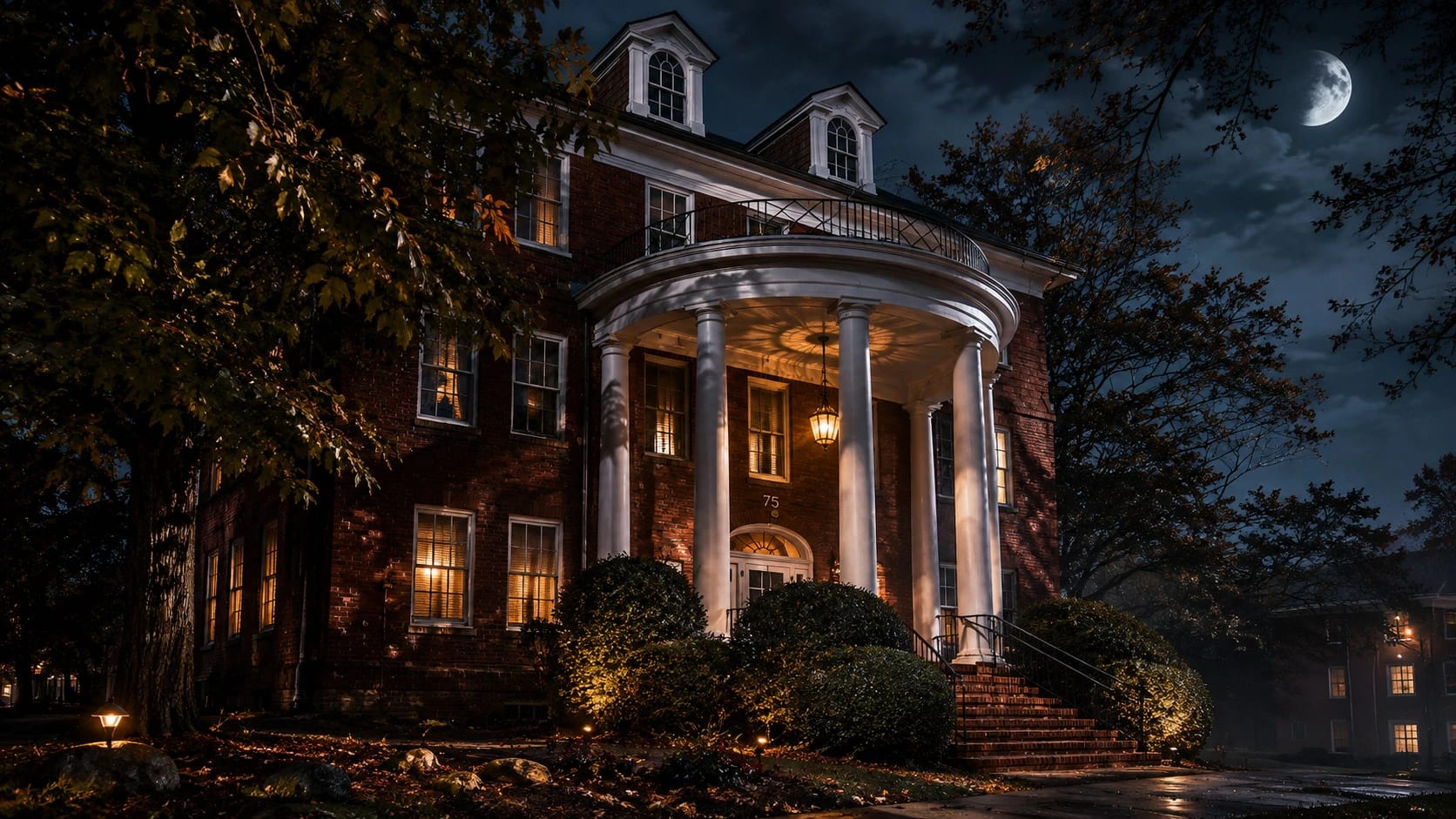
The former Highland Hospital grounds on Zillicoa Street in Asheville's Montford neighborhood