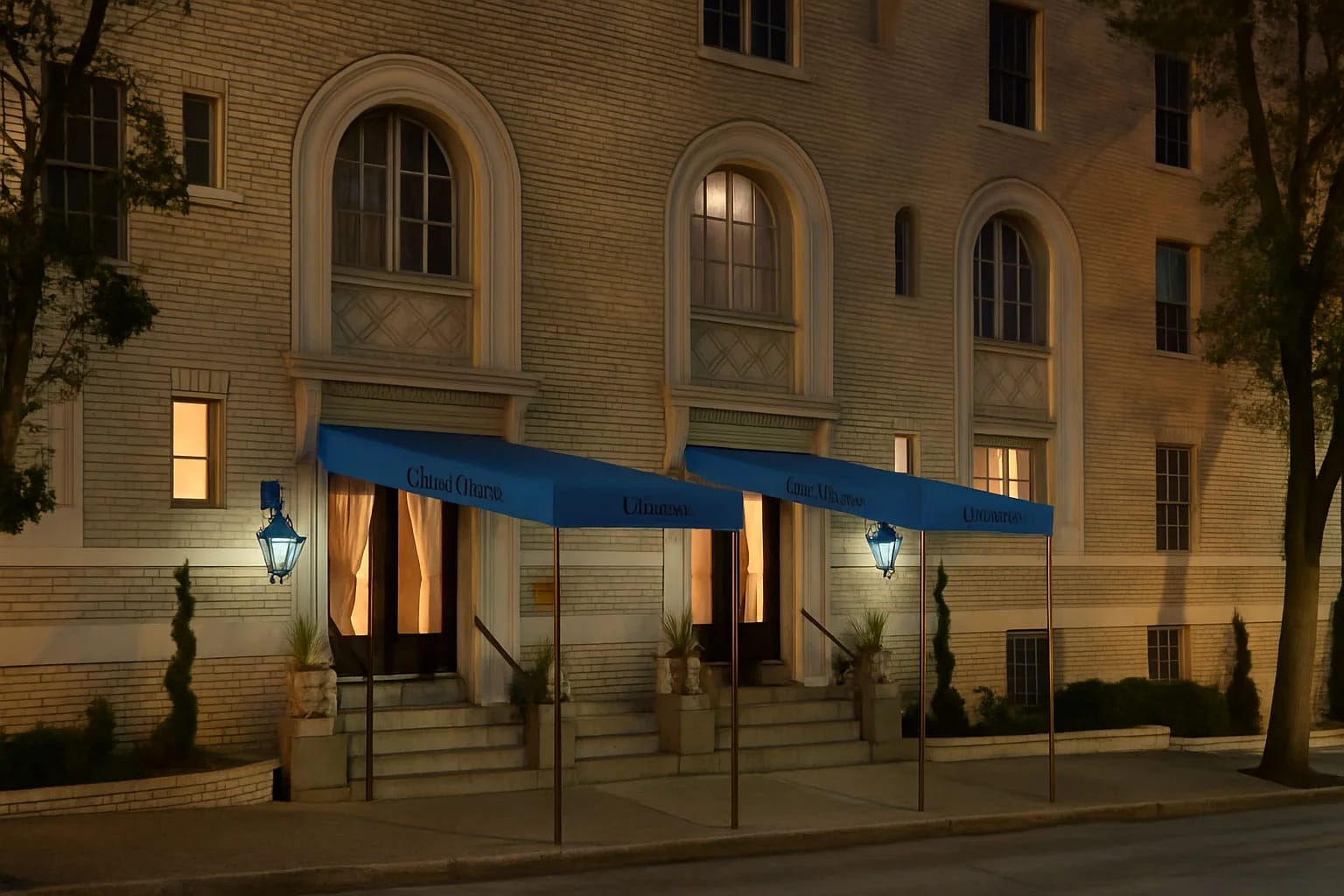
Walk into the Ulysses after dark and the first thing you notice is the mood. The lighting is low and warm, the design dense and theatrical — patterned wallpapers, vintage furniture, art crowding the walls, rooms that feel staged for a film set somewhere between the 1920s and a dream. It doesn't feel like a typical historic hotel, and it doesn't feel quite like a new one either. It feels like a building caught between eras, which is a large part of the point.
The Ulysses is one of Baltimore's most distinctive places to stay, a design-forward boutique hotel in the historic Mount Vernon neighborhood that opened only recently and made an immediate impression. And almost as quickly, it began to attract a quieter kind of attention: rumors, odd guest experiences, the sense among some visitors that the building holds more than its furnishings.
This is a different sort of haunted-hotel story. The Ulysses has none of the centuries-old ghost lore of a place like the Poe House or the waterfront taverns of Fells Point. Its reputation is new, still forming, tied as much to the strange experiences of modern guests as to anything documented in the building's past. That makes it a useful case study in how ghost stories actually begin.
We'll look at the hotel itself, the older building it occupies, the historic neighborhood around it, and the reports that have started to gather — keeping a clear eye on what's known and what's merely rumored. It's one of the newest entries in our Haunted Baltimore collection, and a reminder that the city's tradition of ghost stories is still being written.
What Is the Ulysses Hotel?
The Ulysses is a boutique hotel in Mount Vernon, the historic cultural district just north of downtown Baltimore. It opened in the early 2020s, the work of a hospitality company known for installing atmospheric, maximalist hotels inside older buildings in American cities, and it brought that signature aesthetic to a substantial historic structure in the heart of one of Baltimore's grandest neighborhoods.
What sets the Ulysses apart is its design. Where many historic hotels aim for tasteful restraint, the Ulysses goes the other direction entirely — layered, eclectic, deliberately moody, full of antiques, bold color, and a kind of curated clutter that makes each room feel like a stage set. There's a restaurant and bar that draw locals as much as overnight guests, and the whole property leans into a theatrical, almost haunted-by-design atmosphere that has made it a destination in its own right.
That reception matters to the ghost stories. The Ulysses arrived as an event — widely covered, much-photographed, immediately popular with travelers seeking something other than a standard hotel. It pulled a steady stream of guests and locals into an old, dim, atmospheric building and invited them to feel they'd stepped into another time. A property designed to feel like it exists between eras is, almost by definition, a property primed to generate stories about the people who came before.
Before any of those stories, though, the Ulysses is simply one of the more interesting hotels to open in Baltimore in years — a serious piece of contemporary hospitality housed in a genuinely old building. The neighborhood around it, and the structure itself, are where the deeper history lives.
The History of the Building Before the Ulysses Hotel
Here honesty requires a caveat. The Ulysses occupies a genuinely historic Mount Vernon building, but the property's deeper documentary history is not the source of its haunted reputation, and it deserves to be handled carefully rather than embroidered.
What can be said with confidence is the setting. Mount Vernon's building stock is overwhelmingly 19th- and early-20th-century — substantial brick and stone structures raised during Baltimore's wealthiest decades, when the neighborhood was home to much of the city's elite. Buildings of this kind rarely served a single purpose across their lives. Over a century or more, a large Mount Vernon structure might pass through use as residences, apartments, offices, clubs, or institutions, changing hands and functions as the neighborhood's fortunes shifted through prosperity, mid-century decline, and recent revival. The building that became the Ulysses belongs to that pattern: an older structure with multiple earlier chapters, given a dramatic new life through restoration and reinvention as a hotel.
That layered past is exactly the kind of history that primes a building for ghost stories, even when the specific records are thin. A structure that has stood for generations in a dense urban neighborhood has, by simple arithmetic, been the site of countless lives — people who lived, worked, aged, and in some cases died within its walls long before it held a hotel. The documentary trail for any one of those lives is often faint, scattered across deeds, city directories, and the occasional newspaper notice, but the cumulative human weight is real.
The restoration itself is part of the story. Mount Vernon spent much of the late 20th century in the same decline that hollowed out so many American urban cores, and a number of its great buildings sat underused or empty for years. The wave of preservation and reinvestment that has revived the neighborhood — turning old mansions, institutions, and commercial buildings into apartments, museums, restaurants, and hotels — is what made the Ulysses possible. The hotel is a product of that revival: an old building rescued and reanimated, its long past deliberately kept visible in the new design.
It's worth resisting the temptation to invent a tidy tragic backstory to explain the hauntings, which is what many haunted-hotel accounts do. The Ulysses doesn't need one, and the honest record doesn't supply one. What it has is the ordinary, accumulated history of an old building in an old neighborhood — and, as it turns out, that is more than enough to start people talking.
Mount Vernon and Baltimore's Historic Core
To understand the Ulysses, it helps to understand Mount Vernon, because the neighborhood is the deepest layer of the story.
Mount Vernon was, for much of the 19th century, the most fashionable address in Baltimore. It grew up around the Washington Monument — the nation's first major monument to George Washington, begun in 1815, decades before the more famous obelisk in the District of Columbia. Around that landmark rose the townhouses and mansions of Baltimore's wealthiest families, along with the cultural institutions that still define the district: the Peabody Institute, one of the country's oldest conservatories of music, and the art collection that became the Walters Art Museum. This was the city's center of wealth, taste, and culture.
Neighborhoods like this generate ghost stories for reasons that have nothing to do with the supernatural. They are old, dense, and architecturally dramatic — full of grand, dimly lit interiors and buildings that have outlived many generations of occupants. They have layers: each great house and institution has held lives and deaths across a century or more. And they carry an atmosphere of the past so strong that visitors feel it physically, which the mind readily translates into a sense of presence.
Baltimore's oldest neighborhoods, Mount Vernon among them, are where the city's ghost stories concentrate precisely because they are where its history is most visible and most intact. The Ulysses, dropping a deliberately old-feeling hotel into the middle of all that, tapped directly into the neighborhood's deep reservoir of atmosphere — and inherited its tendency toward the uncanny.
Why Is the Ulysses Hotel Considered Haunted?
So how does a hotel only a few years old come to be called haunted?
The Ulysses's reputation has grown the way modern ghost stories grow: through guest experiences, staff anecdotes, and the online afterlife of both. Visitors mention odd moments in reviews and on social media — a sound they couldn't place, a feeling of being watched, a sense that a room was occupied when it shouldn't have been. Staff, as in any hotel, accumulate their own quiet stories from the overnight hours. Those accounts circulate, get repeated, and slowly harden into a reputation, accelerated by the internet in a way that would have taken generations a century ago.
The building's character does the rest. The Ulysses was designed to feel atmospheric, even a little eerie — low light, antique furnishings, the deliberate sense of stepping into another time. That aesthetic is wonderful for ambiance and, as it happens, perfect for generating paranormal impressions. Guests primed by the setting to feel they've traveled backward in time are exactly the guests most likely to read an ordinary creak or chill as something more.
All of which is to say: the Ulysses's hauntings should be understood as reported experiences and emerging folklore, not established fact. The reputation is genuine in the sense that people really are telling these stories. Whether anything beyond atmosphere and suggestion lies behind them is, at this early stage, entirely unproven.
Paranormal Experiences Reported by Guests
The reports that circulate about the Ulysses fall into the familiar categories of hotel hauntings everywhere. They're offered here as exactly that — guest accounts, online mentions, and staff anecdotes rather than verified events.
Apparitions
The most striking, and least common, reports involve figures. A handful of accounts describe glimpsing someone in a hallway or a room — a figure at the edge of sight, a shadowy form, an individual who seems present for a moment and then isn't. In a hotel full of antique mirrors, layered furnishings, and dramatic low lighting, the conditions for misreading a shape are everywhere, and honest witnesses often say as much, describing something they're genuinely unsure they saw. These are the rarest of the Ulysses stories and the hardest to assess.
Strange Sounds
More common are sounds. Guests report footsteps in hallways or rooms above when those spaces should be empty, doors that seem to open or close on their own, and voices or murmurs with no clear source. Hotels are acoustically complicated places — sound travels through old walls and floors in confusing ways, and a neighbor two rooms over can seem to be standing in the hall. In an older building, that ordinary confusion is amplified, and a late-night noise takes on a weight it wouldn't carry by day.
Unusual Feelings
The largest category, as always, is the hardest to pin down: feelings. Guests describe sudden cold spots, a prickle of being watched, an unease in a particular room or corridor that they can't explain. This is the most subjective kind of report and the most shaped by the setting — a moody, dim, deliberately old-feeling hotel is practically engineered to produce exactly these sensations. That doesn't make them less real to the people who feel them. It does mean they're the least useful as evidence of anything beyond a building doing precisely what its design intends.
The Most Persistent Ghost Stories Surrounding the Hotel
Because the Ulysses is so new, it hasn't yet developed the kind of signature ghost story that defines older haunted hotels — no named spirit, no famous tragic figure, no single room everyone warns you about. Its folklore is still in its early, formless stage, and honesty requires saying so plainly.
What exists instead are tendencies rather than legends. Certain kinds of reports recur — the upper-floor footsteps, the watched feeling in quiet corridors, the sense of a presence in particular rooms — and over time, repetition is how the named legends of older hotels were born. It's entirely possible that a decade from now the Ulysses will have its own woman in white or resident gentleman, assembled gradually out of exactly these scattered accounts. Right now, it has the raw material and not yet the finished myth.
That in-between state is genuinely interesting, and it's the real reason the Ulysses belongs in a serious discussion of haunted Baltimore. We usually encounter ghost stories only after they've fully formed, their origins lost to time. The Ulysses lets us watch the process happen in real time: a historic building, an atmospheric hotel, a stream of guests, a scattering of odd experiences, and the slow accumulation that turns individual moments into shared folklore. Whether or not it's haunted, it is becoming a ghost story — and that's worth paying attention to.
Historic Hotels and the Psychology of Hauntings
The Ulysses raises a question worth sitting with: why do hotels, of all buildings, generate so many ghost stories?
Part of the answer is the people. A hotel is a building of strangers, full of temporary occupants in a heightened state. Travelers are away from home, often anxious or excited, sleeping poorly in an unfamiliar bed in an unfamiliar room. Their senses are alert and their guard is down — a combination that turns an ordinary night noise into something ominous. Add the strong emotions that travel carries — celebration, grief, exhaustion, loneliness — and a hotel becomes a place where heightened experience is the norm.
Then there's the building itself. Historic hotels are old, dim, and full of the sounds and drafts of aging construction. Their long hallways and many identical doors are subtly disorienting. And they carry, in the case of a place like the Ulysses, a deliberate atmosphere of the past, designed to transport guests out of the present. Every one of those qualities nudges the mind toward the uncanny.
The skeptic and the believer can agree on the mechanism even if they disagree on the cause. A nervous traveler, alone at night, in an old and atmospheric building engineered to feel like another era, will sometimes have experiences that feel genuinely paranormal — whether the source is a spirit or simply the powerful collaboration of architecture, exhaustion, and expectation. The Ulysses, built for atmosphere above almost all else, is an unusually pure example of the type.
Ulysses Hotel and Baltimore's Haunted Hospitality Tradition
The Ulysses joins a long Maryland tradition of haunted places to spend the night, but it occupies a distinctive spot within it.
The region's classic haunted lodgings earn their reputations through age and accumulated history. The Admiral Fell Inn down in Fells Point is a knot of centuries-old waterfront buildings, a former sailors' boarding house thick with maritime ghosts. Down the bay, the Governor Calvert House in Annapolis reaches back to the colonial capital and the founding of Maryland, with a preserved colonial heating system beneath its floors. These are places whose hauntings rest on long, documented pasts and generations of accumulated lore.
The Ulysses is the opposite case, and that's what makes it interesting. Its building is old, but its identity as a hotel — and its haunted reputation — are brand new. It hasn't inherited a centuries-old legend; it's generating one, live, out of the experiences of contemporary guests. Where the Admiral Fell Inn's ghosts arrive with the weight of history, the Ulysses's arrive with the immediacy of an online review.
Both belong to the same Baltimore tradition, though. The city has always told ghost stories about its hotels, taverns, and inns, from the colonial era to the present, and the Ulysses is simply the newest chapter — proof that the tradition is alive and still adding to itself. You'll find it among the rest of these stories in our Haunted Baltimore collection, the modern bookend to legends that began centuries ago.
Can You Stay at the Ulysses Hotel Today?
Yes — and the Ulysses is worth a stay regardless of whether you're chasing ghosts. It operates as a full boutique hotel in Mount Vernon, with the design, dining, and atmosphere that made it a destination from the day it opened.
The appeal is broad. Architecture and design lovers come for the building and the maximalist interiors. History travelers come for Mount Vernon, with the Washington Monument, the Peabody, the Walters, and the neighborhood's grand streets all within an easy walk. And a growing number of guests come precisely for the atmosphere of mystery — drawn by the rumors, hoping the eerie ambiance turns into something more. The hotel's restaurant and bar make it a stop for locals too, not only overnight guests.
If you stay, take the building on its own terms: a genuinely old structure dressed in a deliberately haunting style, in one of Baltimore's most historic neighborhoods. Whether or not you have an unexplained moment of your own, you'll be sleeping inside the city's newest ghost story. To set it against the older ones, our Baltimore ghost tour and our Haunted Baltimore collection are the places to keep exploring.
Baltimore's Newest Ghost Story
The Ulysses is a different kind of haunted hotel — not an ancient inn weighed down by centuries of legend, but a brand-new property in an old building, accumulating its ghost stories in real time. That novelty is its strength. It lets us see, clearly and without the fog of distance, how a place becomes haunted: take a historic structure in an atmospheric old neighborhood, fill it with a deliberately uncanny design, move a steady stream of travelers through it, and wait. The stories follow.
Whether the unusual experiences guests report at the Ulysses have any supernatural explanation is unknown and, for now, unknowable. What's certain is that the building has already crossed a threshold: it has entered Baltimore's living tradition of ghost stories, joining the taverns, mansions, and inns that came before it. The legend is young, but it's real, and it's still being written — one guest, one strange night, one retold story at a time.
Come see how Baltimore's haunted tradition keeps growing. Explore the rest of our Haunted Baltimore stories, or walk the city's haunted history with us on one of our Baltimore ghost tours, such as the Ghosts of Baltimore Tour.
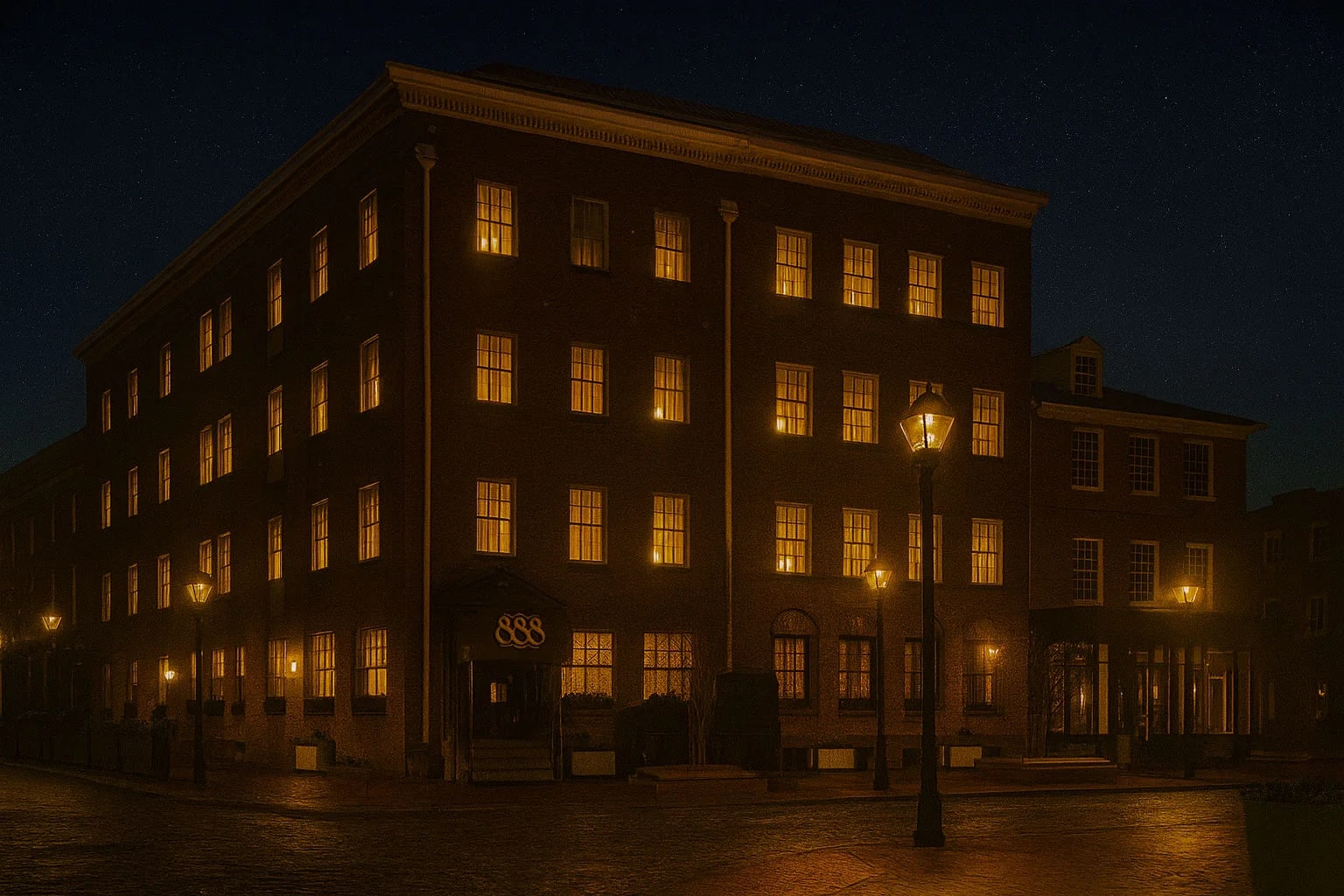
The Ulysses Hotel, a design-forward boutique property in historic Mount Vernon and one of Baltimore's newest ghost stories