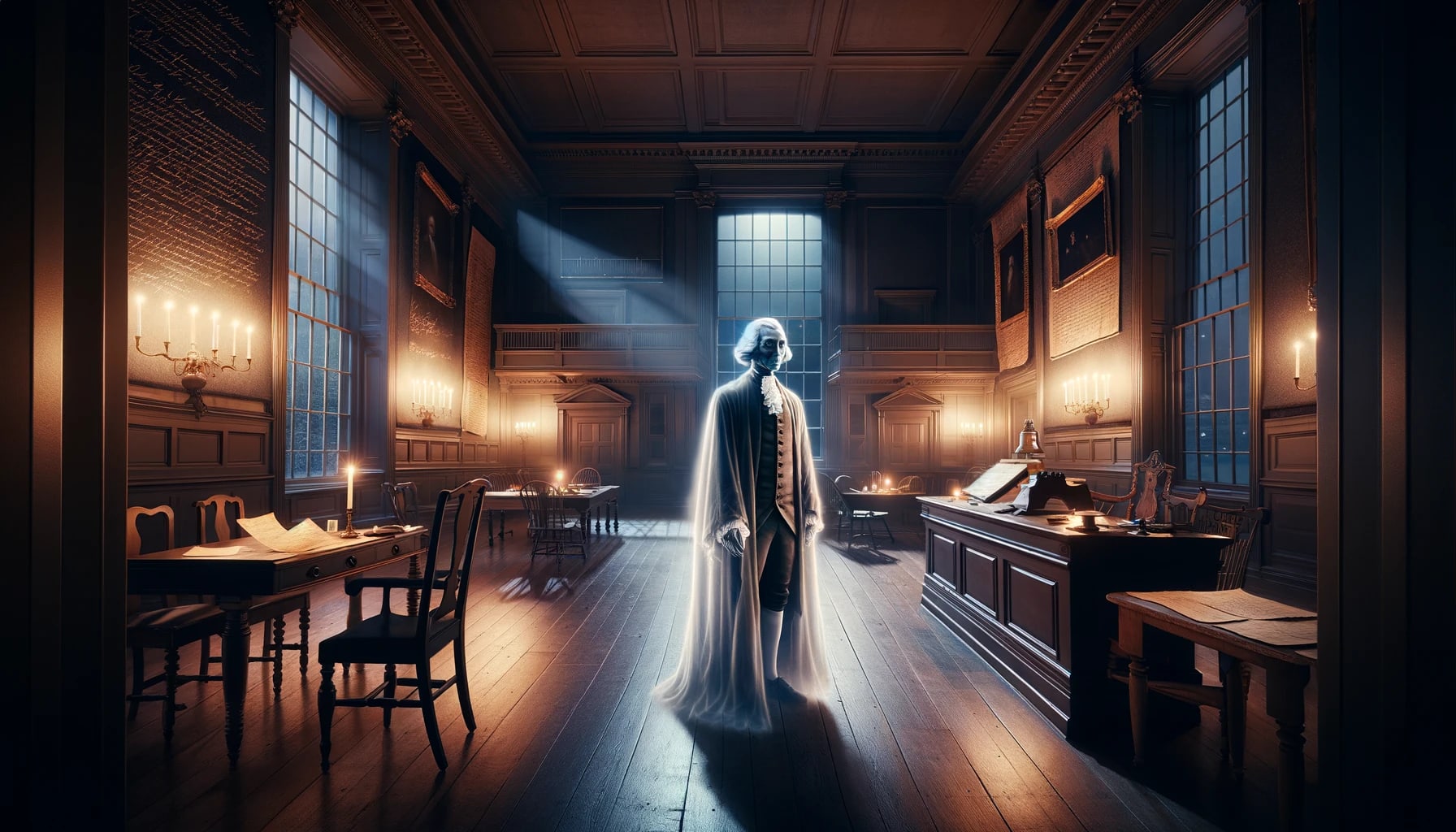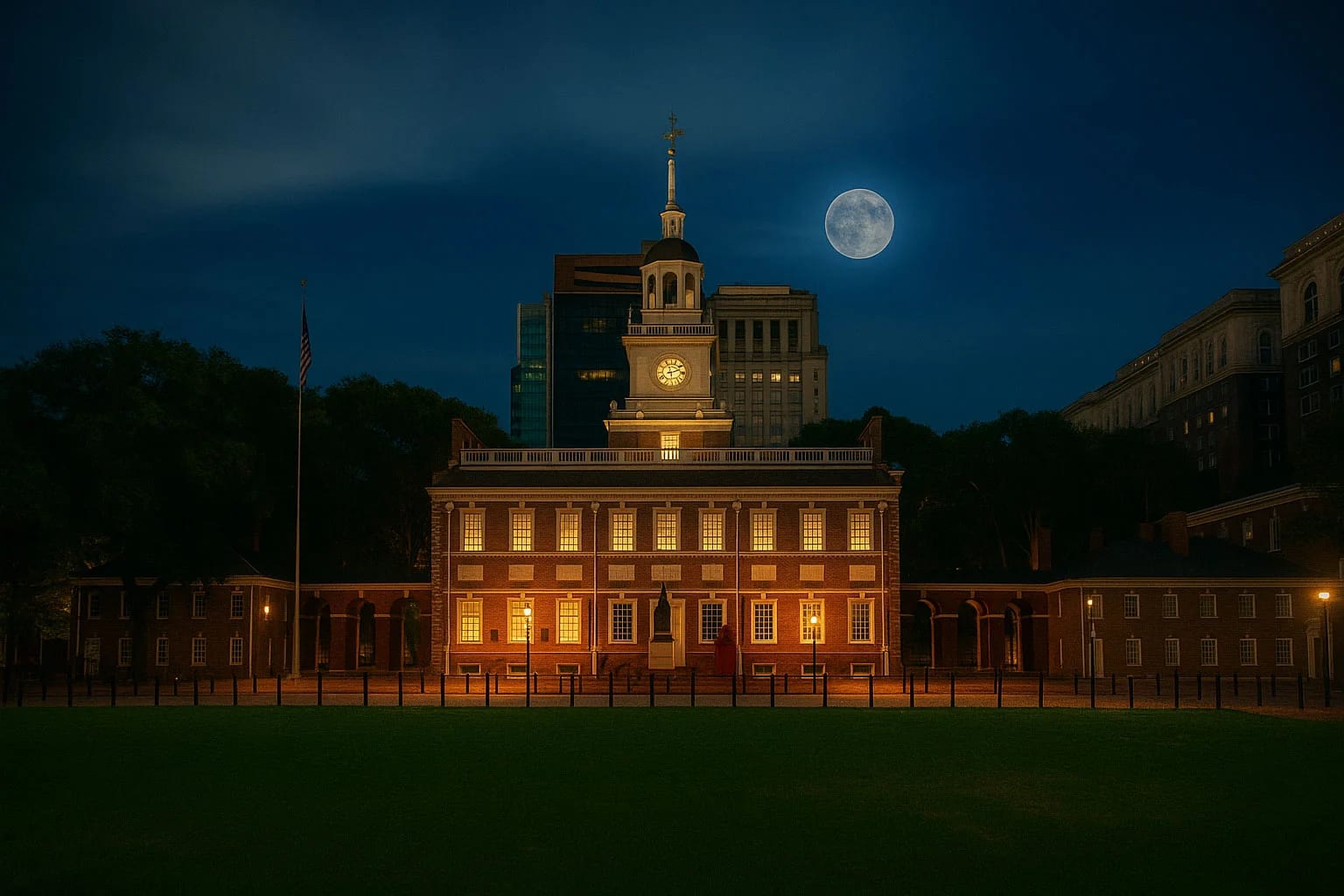
Commissioned in 1771, Philadelphia's Fort Mifflin stands as a chilling testament to America's tumultuous history, earning a reputation as one of the most haunted locations in Pennsylvania. Fort Mifflin stood witness to the valiant stand of hundreds of Revolutionary War soldiers who met their demise during its siege. The memories of their bravery are overshadowed by the grim fate of thousands of Civil War soldiers who later endured unimaginable suffering within its walls. Locked away in dark, damp prisons, these men slowly succumbed to starvation and disease, their spirits eternally etched into the fabric of the fort.
The air around Fort Mifflin is thick with the weight of death and despair, making it a popular destination for Ghost Hunters and people who are fascinated by the paranormal. Visitors to Fort Mifflin have been reporting eerie encounters and unexplained phenomena, from the sounds of ghostly footsteps to the chilling whispers of unseen figures, for centuries.
So, is Fort Mifflin actually haunted, or are the stories simply the result of suggetive minds and overactive imaginations? Tales of spectral soldiers seen patrolling the grounds and the mournful cries of prisoners trapped in an endless cycle of suffering suggest that the fort is home to more than just historical artifacts. This article delves into the haunted legacy of Fort Mifflin, exploring the stories of those who linger long after their deaths, forever guarding the secrets of one of America's most haunted landmarks.
Is Fort Mifflin Haunted?
Paranormal investigators say Fort Mifflin is one of the most haunted places in the world.
Staff at the museum don't shy away from the ghostly rumors.
In an interview with CBS 3 in Philadelphia, employee Lorraine Donahue-Irby said Fort Mifflin is definitely haunted.
"It doesn't matter where you are," Donahue-Irby told CBS 3. "It doesn't matter what part of the Fort you are in. They don't come on demand, but people have experiences morning, noon, and night."
The abandoned Fort has sent some overnight ghost hunters running in the middle of the night. Teams have captured orbs of light floating with their camera, gotten glimpses of apparitions behind door frames, and recorded disembodied voices.
Visitors who explore the Fort often see soldiers cleaning their guns, even when no historical actors are present. Many will catch a whiff of a mysterious aroma like bread baking or wood fire.
An unexplained noise that sounds like a woman's scream fills the air unexpectedly at all hours of the day.
Some visitors even claim to have been touched, pushed, and pulled by phantom hands.
The Legend of the Faceless Man
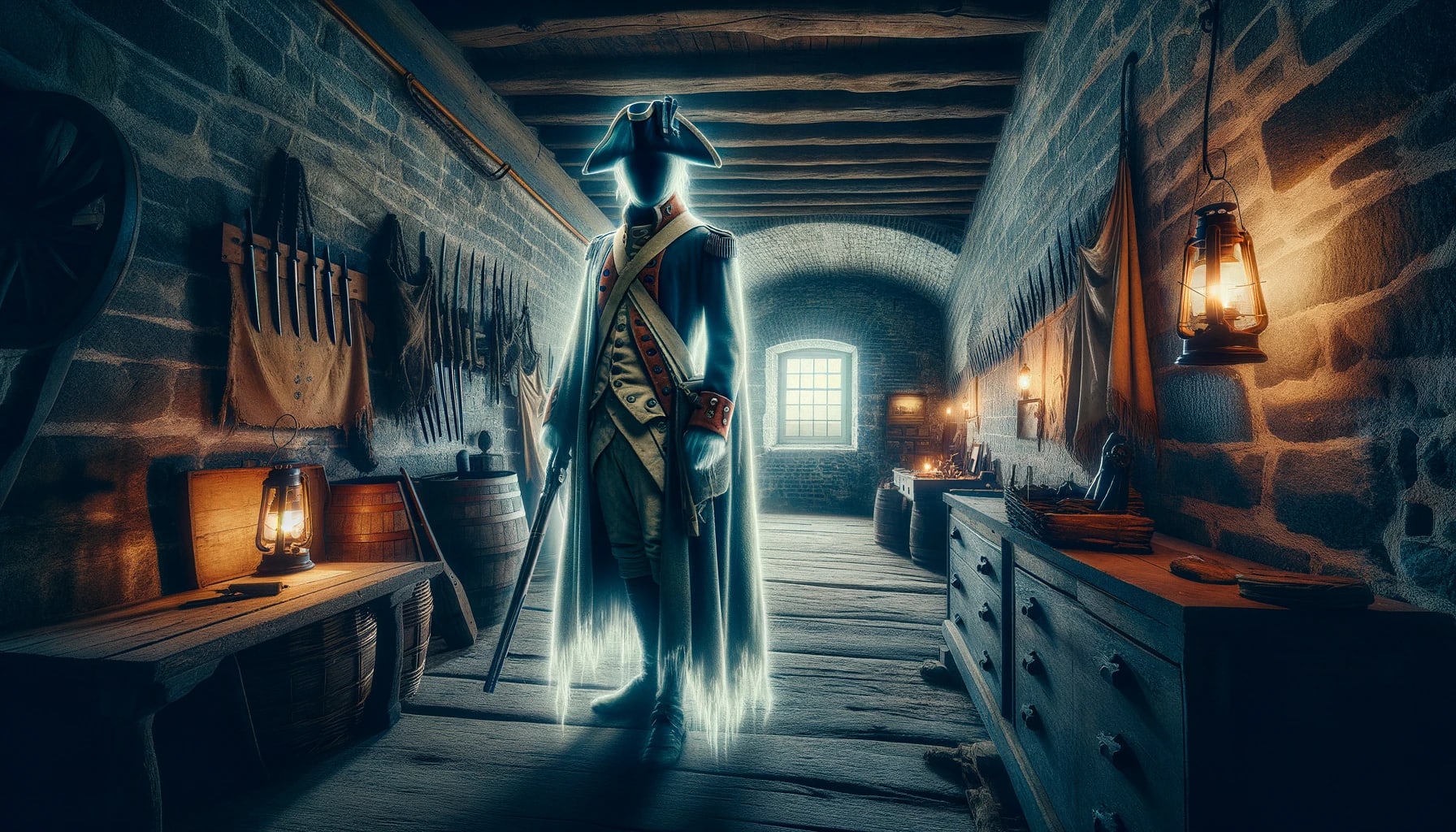
The most infamous ghost of Fort Mifflin is the "Faceless Man." Visitors spot his apparition roaming throughout the property in Civil War attire.
Many people believe the spirit belongs to William H. Howe. Howe was notoriously executed at the Fort during the Civil War.
Some ghost hunters are quick to paint a grizzly picture of Howe as a treacherous, murdering outlaw. They claim his spirit is an evil force that stalks the fort ruins for vengeance.
This spooky story may be enough to keep kids up at night. But the truth about Howe is much more interesting.
The True Story of the Faceless Man, William H. Howe
According to historical documents, Howe was a 25-year-old German farmer who joined the Union Army. Known as a great marksman, he won accolades for his bravery in Fredericksburg, determined to stay on the battlefield day and night.
His friends were impressed with his "personal courage" and "indomitable will."
But all the will in the world couldn't save him from the battle going on within his own body. He came down with an "attack of inflammation of the bowels." Nowadays, we call it dysentery.
The disease eventually became the number one killer of all Civil War soldiers. It caused uncontrollable bloody diarrhea. In some cases, it would get so severe that its victims would die from dehydration.
Maybe it was Howe's indomitable will that made him insistent on not letting his condition get the best of him. When his regiment's medical tent burnt down in battle, he left with a group of other soldiers to seek treatment in Washington.
After seeing a doctor, Howe went home to recover, stuck in bed for two months. He didn't realize how much trouble was coming his way for being unable to report back to his unit.
Howe's enrolling officer came looking for him, but the officer's intentions seem questionable at best. According to historical accounts, the officer and three other men showed up at Howe's house drunk at midnight to fetch him.
Howe picked up his gun and fired two shots at the rowdy crowd outside his bedroom window to scare them off. He didn't realize that both of his shots directly struck his enrolling officer, fatally wounding him.
Howe was arrested and imprisoned in the equally haunted Eastern State Penitentiary during his trial before being sentenced to death. He was granted a stay of execution as he pleaded for mercy. He desperately wrote to Abraham Lincoln for help.
That mercy never came. Today, it's widely believed authorities did not give Howe any leniency because they felt they needed to make an example of him.
An increasing number of soldiers had begun to desert the Union Army. According to records, 200,000 men left their regiments before the war was over.
According to newspapers, the community sided with Howe and attended his execution in a show of support.
In his final moments, Howe made a statement to the crowd.
I never sought the life of the man I killed. I never wished it, and I feel god will pardon me for taking it as I did. I know my fellow soldiers and officers in the army never blamed my leaving as I was an invalid and had no hospital to go to in my regiment.
Then a bag was placed over his head (which is why his apparition appears faceless), and his neck snapped in the gallows.
Howe's story is far different from the sinister version shared in recent folklore. He's not an evil specter, just a man whose life ended in tragedy.
History of Fort Mifflin
Construction of Fort Mifflin started in 1772 when the British created it to protect the Philadelphia colony. When the Revolutionary War started, Americans claimed the Fort as their own and completed construction.
The Fort was used to hold off the British Fleet after Washington's army was defeated at Brandywine. Soldiers here fought off the British so American soldiers could flee to safety to train and rebuild their force.
The sacrifice of the soldiers stationed in the Fort was immeasurable. Nearly 250 men, almost 70 percent of crew stationed, were killed or wounded in musket fire and explosions.
The survivors set the Fort on fire and escaped across the river in small boats, slipping past the British fleet in the darkness.
Much of the Fort was dismantled when the British took control of it, but it was rebuilt in 1798 under orders from then-President John Adams.
The American Civil War
The Fort was active again in 1863, but this time as a military prison. There was a breakdown in prisoner exchanges during the Civil War, forcing both sides to hold on to thousands of prisoners.
They would stuff them into any available contained building.
This didn't end well. Throughout the war, 56,000 prisoners died due to unsanitary conditions, overcrowding, and a lack of food and water.
In Fort Mifflin, prisoners were held in the three largest bomb-proof shelters.
A letter from a prisoner published in the Cincinnati Enquirer in 1864 described the conditions at Fort Mifflin:
The cell at this time is dripping with water from the arch over us. Even the sides are all wet. The soundest old man living could not remain in here without becoming injured in health, much less weakly old men, as many of us are. We have done nothing to deserve such punishment.
Forty-five prisoners were jammed into a cell that was about 50 by 80 feet. It was so dark that even in daylight, nothing could be seen without a candle. There were no beds or cots; prisoners would lay on boards.
They were only fed pork, bread, and beef, but the meat was often spoiled, which could cause disease and digestive issues. The men would have to release their bowels in the same room they were kept in.
It's believed that the prisoner's inhumane conditions at the time of death hindered them from crossing over. Their souls left to wander Fort Mifflin aimlessly for eternity.
Fort Mifflin Today
In 1915, the War Department declared Fort Mifflin a national historic monument.
During World War I, it served as an ammunition depot. After the war, the community was uncomfortable with the ammunition being stored so close to their neighborhoods, so the Fort was empty by 1929.
During WWII, the Fort housed several anti-aircraft guns. In 1954, it was decommissioned after 183 years of service. The US Department of the Interior named Fort Mifflin a historical landmark in 1970.
In 1969, the Olde Fort Mifflin Historical Society began hosting guided tours and living history programs. The Fort is open to the public for tours, events, historical reenactments, and even paranormal investigations.
Conduct a Paranormal Investigation at Fort Mifflin
Paranormal enthusiasts can access Fort Mifflin to conduct their own ghost hunt. The historical society offers paranormal investigation packages that range from six hours to overnight. A fee is required to book a reservation.
Shorter programs are also available for the paranormally curious, including public programs and workshops held by paranormal experts.
Visiting the Haunted Fort Mifflin
If you visit the only remaining Revolutionary War battlefield, let us know if you experience anything supernatural. We'd love to hear all about it on our Ghost City Tours Facebook page!