Thanksgiving Supernatural Traditions
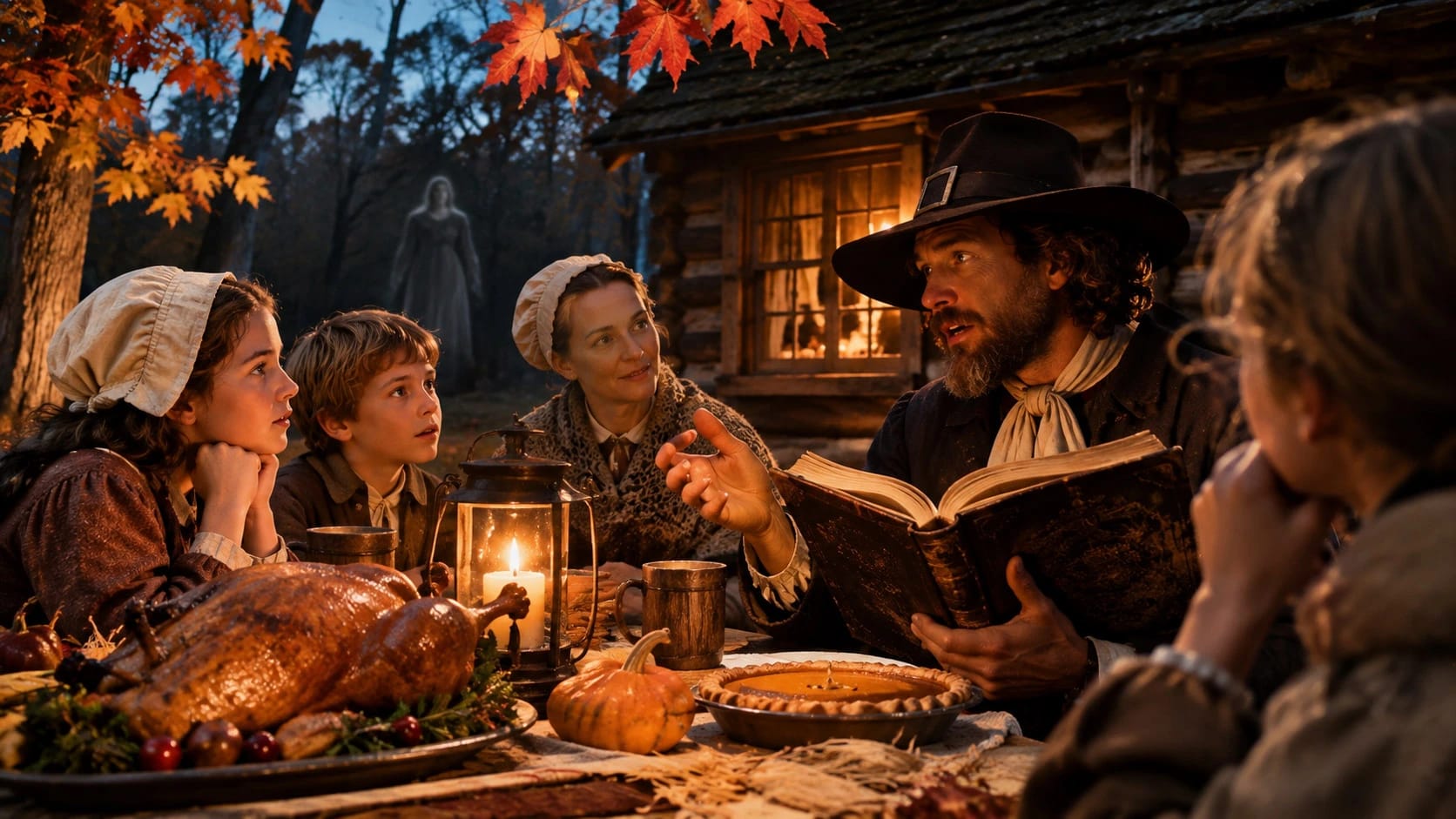
Long before Thanksgiving became a national holiday, the end of the harvest was a time when many cultures turned their thoughts to the dead. In the Celtic world, Samhain marked the close of the harvest and the start of winter, a night when the boundary between the living and the dead was believed to grow thin. The Christian feasts of All Saints' Day and All Souls' Day, at the beginning of November, set aside the same weeks of the year to remember those who had died. In early America, the harvest season brought long evenings and gatherings around the fire, and storytelling was part of them. Washington Irving's "The Legend of Sleepy Hollow," published in 1820, is set in exactly that season: an autumn harvest party in a Dutch farming community in New York, followed by a lonely ride home past a haunted churchyard and the Headless Horseman. Many autumn customs that survive today carry the same idea. The jack-o'-lantern comes from the Irish tale of Stingy Jack, a man doomed to wander the dark with only a glowing coal in a carved turnip to light his way — you'll find his story in our Irish ghost stories. We are gathering Thanksgiving-season ghost stories for this collection. In the meantime, explore our Irish and Christmas ghost stories, or spend an autumn night on one of our ghost tours.