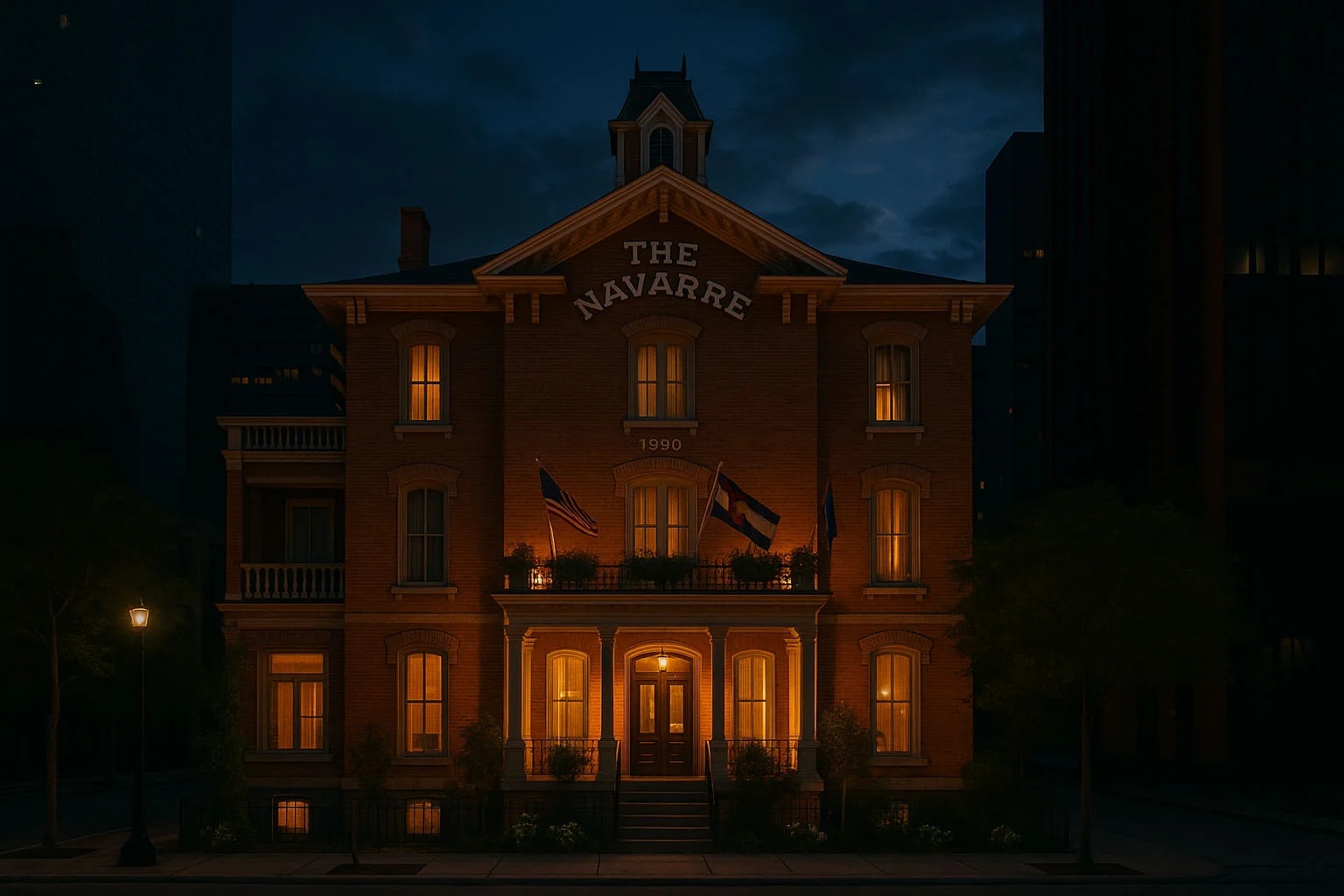
The Peabody-Whitehead Mansion rises elegantly on one of Denver's historic streets, its Victorian architecture a stunning reminder of the city's Gilded Age prosperity. But within these ornate walls, spirits from the past refuse to leave the home they loved in life.
Fast Facts
- Built in 1889 during Denver's Gilded Age
- Home to Dr. William Whitehead and, later, Governor James H. Peabody
- Site of multiple tragic deaths
- Known for full-body apparitions and residual hauntings
Is The Peabody-Whitehead Mansion Haunted?
From ghostly footsteps echoing through empty rooms to the mysterious Lady in Black, the Peabody-Whitehead Mansion has earned its reputation as one of Denver's most haunted Victorian estates. The spirits here seem trapped in time, reliving their lives within these elegant walls.
The Lady in Black
The most frequently reported apparition at the Peabody-Whitehead Mansion is that of a woman dressed entirely in black Victorian mourning attire. She's been seen gliding through the hallways, particularly on the second floor, appearing translucent yet detailed enough for witnesses to describe the intricate beadwork on her dress.
According to local legend, she is Margaret Peabody, said to have lost her young son to illness in the mansion in 1891, and the story holds that she wore mourning clothes for the rest of her life, never recovering from the grief of losing her child. No record of that loss has been found, and Governor Peabody's family lived in the house only from 1903 to about 1905, so her identity remains part of the legend.
Witnesses report that the Lady in Black seems to be searching for something—or someone. She's often seen peering into rooms, opening doors that were closed moments before, and standing at windows overlooking the garden where her son used to play.
Some have reported hearing the sound of a woman weeping late at night, the sorrowful cries echoing from the nursery that has long since been converted to other uses. The smell of lavender, Margaret's favorite perfume, often accompanies these encounters.
The Former Owner's Spirit
According to the legend, James Peabody made his fortune in Colorado silver mining, built this mansion as a symbol of his success, and died in the house in 1917. The historical James H. Peabody was a Colorado governor who lived here only from 1903 to about 1905; the man known to have died in the mansion was its first resident, Dr. William Whitehead, in 1902. Even so, many believe the spirit of a former owner never left the home he loved.
Visitors and subsequent owners have reported seeing a distinguished gentleman in period clothing standing in the library, appearing to read or smoke a cigar. When approached, he simply fades away, leaving behind the distinct scent of expensive tobacco.
The sound of footsteps pacing in the study has been heard countless times, following the same pattern—from the desk to the fireplace and back again. Some believe James is still conducting business, perhaps unaware that his earthly affairs ended over a century ago.
One particularly compelling account comes from a restoration worker in the 1970s who reported having a full conversation with an older gentleman in the library about the mansion's architecture. It wasn't until he described the encounter to the building's manager that he learned the man he'd spoken with matched James Peabody's description perfectly—and Peabody had been dead for over 50 years.
The Servant Ghosts
The Peabody-Whitehead Mansion employed numerous servants during its heyday, and several seem to continue their duties in death. Staff and visitors report seeing phantom figures carrying trays, cleaning windows that were cleaned moments before, and tending to fireplaces that no longer exist.
One particular spirit, said in the story to be a young maid who died in a fall down the servants' staircase in 1895, is frequently encountered on the back stairs. Witnesses describe feeling a sudden cold presence and hearing the sound of someone rushing past them, followed by a sickening thud—yet investigation reveals no one there.
In the kitchen area, converted to other uses over the years, people report the smell of baking bread, the sound of pots and pans clanging, and even the sensation of being gently pushed aside as if someone needs to pass by quickly. These phenomena seem to be residual hauntings, echoes of the busy household that once operated here.
The Children's Laughter
Perhaps the most poignant paranormal activity in the mansion involves the sounds of children playing. Multiple witnesses have reported hearing children's laughter, the patter of small feet running through hallways, and the sound of a ball bouncing—always on the second floor where the nursery was located.
These playful spirits seem harmless, even joyful, leading some paranormal investigators to believe they represent happy memories imprinted on the house rather than troubled souls. Some psychics report sensing the presence of at least three child spirits, all seeming content to play eternally in the home they loved.
One office worker who once used the former nursery as workspace reported arriving one morning to find children's toys—a wooden horse and a rag doll—placed carefully in the center of the room. Security footage showed no one entering or leaving the building overnight.
The History of The Peabody-Whitehead Mansion
The Peabody-Whitehead Mansion was built in 1889 of stone from Colorado Springs' Red Rock Canyon. Its first resident was Dr. William Whitehead, who died in the mansion in 1902; Colorado Governor James H. Peabody moved in the following year and lived there for about two years.
Local legend tells a different story, casting James Peabody as a successful silver mining magnate who built the mansion as a showpiece that would cement his family's place in Denver high society.
The Gilded Age Legacy
In the legend, James and Margaret Peabody spared no expense in building their dream home. The mansion featured the finest materials—Italian marble, imported wood paneling, crystal chandeliers from Europe, and state-of-the-art amenities for the time including gas lighting and indoor plumbing.
The Peabody family hosted elaborate parties and social gatherings, making the mansion a center of Denver's Gilded Age society. According to the story, tragedy struck when their young son died of pneumonia in 1891, casting a shadow over the household that never fully lifted.
After the Peabodys moved out, the mansion passed through several other owners and served various purposes over the years, reportedly including a boarding house and professional offices, and later nightclubs, restaurants and bars, before being converted back into living space. Each new occupant seemed to encounter the spirits said to haunt the house, adding to the mansion's haunted reputation.
Visiting The *Peabody-Whitehead Mansion* in Denver
The Peabody-Whitehead Mansion has been converted back into living space and now offers luxury rental apartments. These are private homes, so please view the mansion only from Grant Street and do not approach the building or try to enter.
According to those who have spent time inside, the second floor, the library, and the former servants' quarters—these are the areas with the most reported paranormal activity. The spirits seem most active during twilight hours and late at night.

The Peabody-Whitehead Mansion, where spirits from Denver's Gilded Age still reside