A Hotel Where Nobody Truly Checks Out
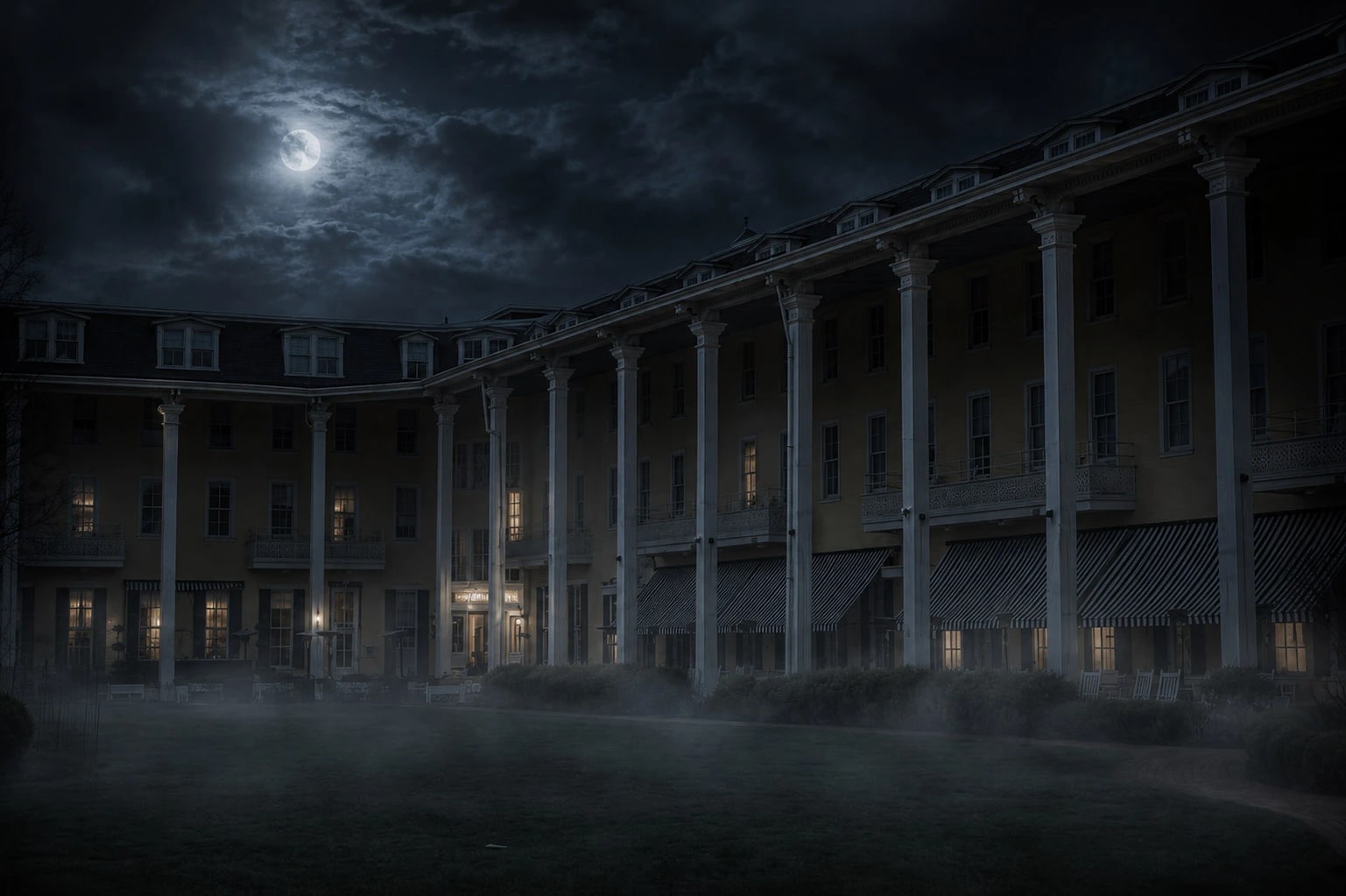
The ocean is right there, close enough that you can hear it from the porch once the cars stop and the town settles down. By midnight the lobby has gone quiet. The day's guests are up in their rooms, the bar has thinned out, and the long yellow building that has stood at the edge of the sand since before your great-great-grandparents were born goes still.
The hallways are different at that hour. Anyone who has walked them late will tell you so. They're long, and old, and they carry sound in ways that don't always add up, and you start to notice how many doors there are — and how many people have stood at each one over the years, fumbling for a key.
Congress Hall is one of the oldest hotels in the country and one of the most recognizable buildings in Cape May. It opened in 1816, which means it has been collecting guests for more than two centuries. Sit with that number a second. Two hundred years of people arriving at the biggest moments of their lives — weddings, escapes, reunions, last vacations — and then leaving again.
A building absorbs that. It has to. And the question the staff here have been quietly asking each other for generations is a simple one: when a hotel has welcomed that many people for that long, how many of their stories actually end when they pack the car and drive home?
How many of them are still here?
To understand why people keep asking, you have to go back to the start — to a man and a building half the town thought was a terrible idea.
The Birth of America's First Seaside Resort
The Founding of Congress Hall
In 1816, a man named Thomas H. Hughes built an enormous boarding house on the Cape May beachfront, betting that people would pay to come to the shore. It was a strange bet at the time. The place was so big, and the idea so unproven, that locals took to calling it Tommy's Folly. Nobody, they figured, would travel all the way down here to sleep in a barn by the ocean.
They were wrong, and Hughes knew it before they did. People came. They came for the salt air, which doctors of the day genuinely believed could cure what ailed you, and they came to escape the heat and sickness of the cities in summer. The folly filled up.
Becoming a National Destination
As the decades passed, Cape May became the country's first great seaside resort, and Hughes's hotel sat at the center of it. Hughes himself went into politics and won a seat in Congress, and the hotel took its name from his time in Washington. Congress Hall. The name stuck even as the building grew and changed around it.
By the middle of the 1800s this was one of the most fashionable addresses in America. The wealthy summered here. So did the powerful. The hotel kept expanding to keep up with demand, and Cape May's whole identity grew up around the idea that this was where the right people went when the weather turned warm.
A Hotel Unlike Any Other
What made Congress Hall matter wasn't only its age, though it had plenty of that. It was the role it played. The hotel more or less invented the Cape May vacation, set the template the rest of the town would follow, and outlasted nearly everything built around it.
Most buildings serve one family, or one purpose, and then they're gone. Congress Hall served everyone. Generation after generation crossed the same lobby, climbed the same stairs, looked out at the same water. That kind of continuous, layered human use is rare. It's also, if you believe the stories, exactly the sort of thing that leaves a residue.
Presidents, Politicians, and Powerful Guests
You can learn a lot about a place from who bothered to show up, and Congress Hall's guest list reads like a slice of American history.
Presidents came here. Ulysses S. Grant visited. So did Franklin Pierce and James Buchanan before him. But the one who really tied himself to the place was Benjamin Harrison, who liked Cape May enough to make Congress Hall his Summer White House in 1890 and 1891 — running part of the country's business from a hotel beside the New Jersey surf. For a stretch there, the work of the nation ran partly through these rooms.
It wasn't only politicians. John Philip Sousa, the march king himself, performed at Congress Hall and was taken enough with it to write a piece he called the Congress Hall March. Wealthy families made the hotel a fixture of their summers, coming back year after year until the staff knew them by name and the children grew up and brought children of their own.
Here's something worth chewing on. A house belongs to one family. It holds their joys and their griefs, and when they're gone, the next family starts fresh. A hotel is different. A hotel never belongs to anyone. It belongs to everyone who ever stayed in it, all at once — the president and the honeymooners and the grieving widow and the bored teenager, layered one on top of another in the same handful of rooms.
Two centuries of that have stacked up inside Congress Hall. Thousands upon thousands of people, each one bringing their best day or their worst, sleeping a few nights and moving on. The staff who work the late shifts tend to feel the weight of all those lives more than the guests do. They're the ones still in the building after everyone else has gone to bed.
Fire, Change, and Reinvention
The Fire of 1878
In November of 1878, fire broke out in Cape May and tore through the resort, taking block after block of the town with it. Congress Hall — the original wooden building, the one Hughes had raised and that had grown into a national landmark — burned with the rest.
The town could have ended there. Plenty of resort towns did, after a fire like that. Instead Cape May rebuilt, and Congress Hall rebuilt with it, this time in brick, reopening in 1879 as the grand structure that still stands today. The new building was sturdier, but it rose on the same ground, over the same memories, with the same ocean at its door.
Surviving the Decades
What followed was a long, uneven century. Tastes changed. Vacationers started going elsewhere. Cape May slid out of fashion, and the grand old hotels along the shore struggled through hard times, neglect, and the constant temptation to knock them down for something newer. Congress Hall took its lumps with the rest of them. There were lean years when the future of the place looked genuinely uncertain.
It held on. A major restoration around the turn of the millennium brought the hotel back to its former grandeur and anchored Cape May's historic district once more. Today it's full again, with guests who mostly have no idea how close the building came to being lost more than once.
A place that has burned, rebuilt, declined, and come back has lived several lives in one footprint. The people who believe Congress Hall is haunted will tell you not all of those lives ended cleanly, and that some part of each of them is still inside.
The Ghost Stories of Congress Hall
The Woman in the Hallway
The story you'll hear most often is a woman.
Guests describe seeing her in the upstairs hallways, a figure in old-fashioned dress moving away from them, unhurried, before she turns a corner and is simply gone. People have followed, thinking they'd startled another guest, only to find the corridor empty and no door that could have closed in time. She doesn't seem startled herself. By most accounts she barely acknowledges the living at all.
Who is she? Nobody knows, and the honest tellers of the story don't pretend to. Some think she was a guest who loved the place. Some think she worked here. The lack of a name hasn't hurt the legend — if anything it's kept it alive, because there's nothing to disprove.
The Unoccupied Rooms
Then there are the rooms that aren't supposed to have anyone in them.
Staff report sounds from behind the closed doors of rooms with no guests checked in — footsteps, the scrape of furniture, a voice. Doors found open that were shut. A housekeeper finishes a room, leaves it perfect, and comes back to find something moved. In a hotel there's always an easy explanation. A guest wandered into the wrong room. A door didn't latch. Somebody misremembered.
Most of the time that's all it is, and the staff are the first to say so. It's the cases that don't fit — the empty wing, the locked door, the room nobody had a key to — that keep getting retold.
Guests Who Were Never Registered
Every old hotel has its stories of people who don't show up in the books.
At Congress Hall it's the figure glimpsed in a doorway or at the end of a corridor, there for a moment and then not, dressed a little wrong for the year. A guest steps off the elevator and passes someone who's gone when they look back. A family describes a friendly older man who chatted with them on the porch and whom no one on staff can place.
These encounters turn up in haunted hotels all over the country, and skeptics have a fair point that a building full of strangers is a building full of people you can't identify. Congress Hall just seems to produce more of them than most, and the descriptions have a way of repeating.
Late-Night Encounters Reported by Staff
If you want the real backbone of the hotel's reputation, talk to the people who work here.
Guests stay a few nights. Employees spend years inside these walls, often during the hours when the building is at its emptiest. Housekeepers, front desk workers, maintenance crews, security — they're the ones with the stories, and they tend to start out skeptical and end up quiet on the subject.
They describe lights and elevators acting on their own. Names called in empty rooms. The sense, on an overnight shift, of not being alone in a hallway the cameras swear is empty. What's striking isn't any single account. It's that new employees keep arriving, working the late shift, and eventually coming back with their own versions of the stories the last ones told.
Footsteps After Midnight
Almost everyone who spends a night in the older part of the hotel mentions the footsteps.
They come from the floor above when the floor above is empty. They move down hallways and along staircases, steady and purposeful, the sound of someone with somewhere to be. Guests have called the front desk to complain about the people stomping around upstairs, only to be told, gently, that there's no one upstairs to stomp.
A single report of footsteps is nothing. A century and a half of guests and staff describing the same footsteps, in the same places, at the same hours, is a good deal harder to set aside.
The Feeling That Someone Is Still Here
Plenty of people leave Congress Hall having seen nothing at all and still talk about it afterward.
It's the atmosphere. A particular hallway that lifts the hair on your arms. A room you couldn't quite relax in. The sudden, specific sense of being watched while you're brushing your teeth at two in the morning. None of it shows up in a photograph. None of it makes the news. But it's common enough among guests who came purely for the beach that the staff stopped being surprised by it long ago.
Those are the accounts I trust most, honestly. The guest who arrived knowing none of the legends, who just felt something off on an upper floor, has no reason to invent it.
Paranormal Investigations
Like any famous haunted hotel, Congress Hall has drawn its share of investigators with recorders, cameras, and EMF meters. They've reported the familiar list — cold spots, strange readings, EVPs that seem to hold a word or two no one in the room said out loud.
It deserves an honest hearing in both directions. A recorder in an old beachfront hotel will catch drafts, plumbing, stray radio, and the ordinary creak of a settling building, and a careful skeptic can account for a great deal of what gets offered as evidence. What's harder to wave off is how neatly the investigators' findings line up with what the housekeepers and the guests have been saying for generations, none of them comparing notes.
Why Historic Hotels Produce So Many Ghost Stories
Step back from Congress Hall for a moment and look at haunted hotels in general, because there are a lot of them, and that's no accident.
A home holds one family's life. A hotel holds thousands of them, stacked in the same rooms over decades. And people don't check into hotels on ordinary days. They come at the hinges of their lives. They honeymoon in these rooms and grieve in them. They close the biggest deal of a career and take the worst phone call of a lifetime. They run away, they reconcile, they celebrate, they fall apart. Affairs begin and end behind these doors. A family gathers for a wedding one year and a funeral the next.
Congress Hall has seen all of it, on repeat, for more than two hundred years. Every kind of human high and low has passed through this building, often at full volume, and then walked back out to the car as if nothing happened.
If you believe intense human experience can leave something behind in a place — and a lot of people who never thought of themselves as believers come around to it after a night in an old hotel — then a building like this is about the most concentrated source of it you could picture. It isn't strange that Congress Hall has ghost stories. Given everything it has taken in, it would be stranger if it didn't.
A Room With a View—and a Few Questions
Walk back out to the porch in the morning and the spell loosens a little. The ocean is still there. The building is still there, yellow and grand and full of people checking in, hauling beach bags across the same lobby travelers have crossed for two centuries. Most of them came for exactly that — the sand, the history, the long porch and the view.
A fair number of them will go home talking about something else. A figure in a hallway. Footsteps overhead in an empty wing. The night they were sure, absolutely sure, that someone was in the room with them.
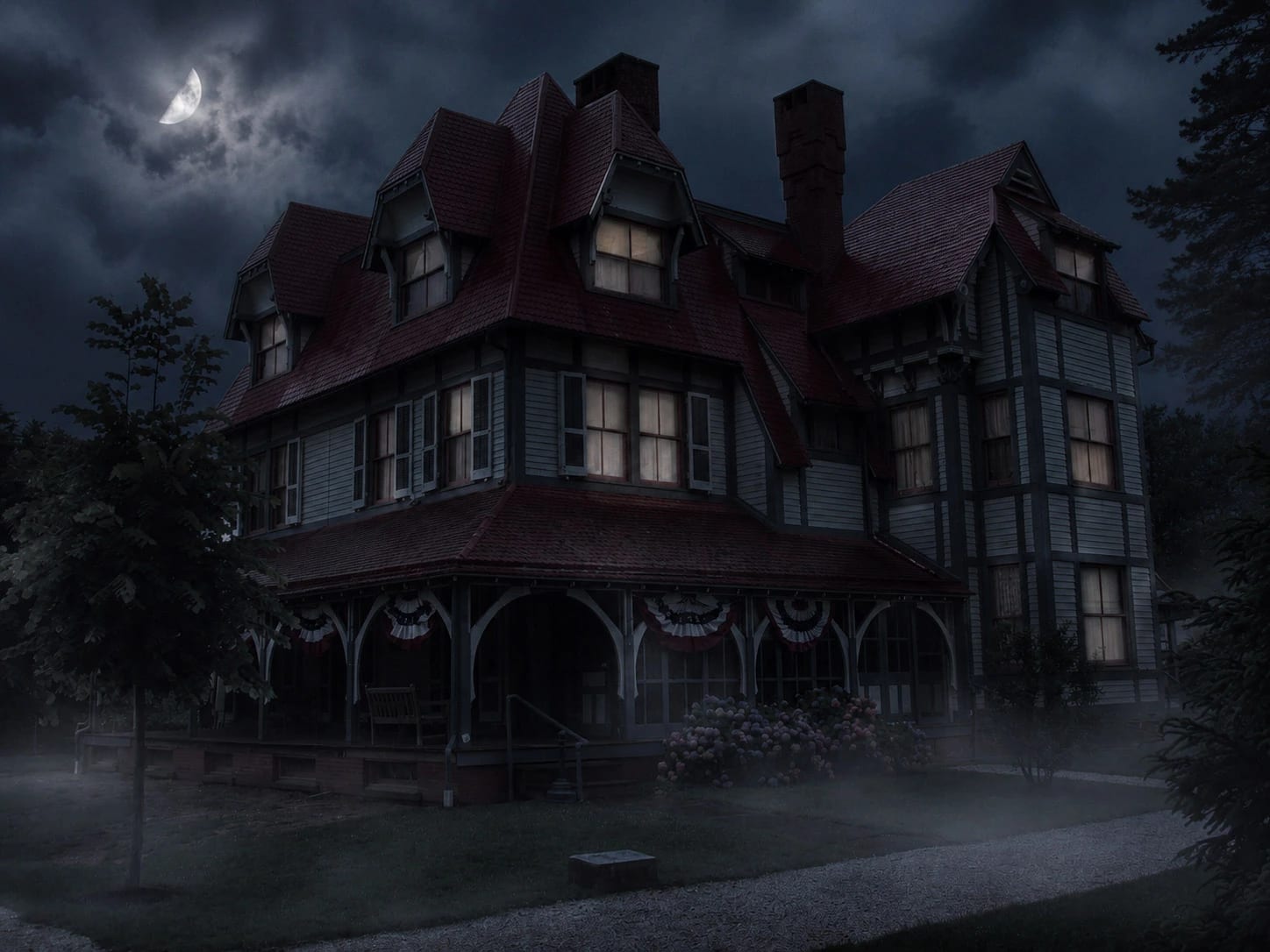
It's one piece of a town full of these stories. If Congress Hall pulls you in, the Emlen Physick Estate and the Cape May Lighthouse are waiting with their own, and our guides walk all of it after dark on a Cape May ghost tour.
After two hundred years of arrivals and departures, maybe the question isn't whether Congress Hall is haunted. Maybe it's this: how many stories can one building take in before a few of them decide they aren't leaving?