Walk into Club Charles on a weeknight and the first thing that happens is your eyes adjust. The light is low and red, the Art Deco fixtures throw odd shadows, and the whole room feels pitched somewhere between 1947 and last week. There's a particular kind of Baltimore bar that doesn't change with the times because changing was never the point, and Club Charles is the patron saint of the type — a narrow, dim, beautifully worn room on North Charles Street that has been pouring drinks for artists, musicians, filmmakers, bartenders, insomniacs, and assorted night people for the better part of a century.
Spend enough hours in a place like that and you start to feel the layers. The regulars who've been coming since the Reagan administration. The smell of cigarettes from before the indoor ban. The sense that a few of the people at the bar belong to an earlier version of the city. So it's no real surprise that Club Charles has collected its share of ghost stories along with everything else.
This is less a haunted-house tale than a piece of Baltimore itself: how a beloved dive bar became a local landmark, why a room like this gathers legends, and what to make of the figure some patrons swear they've seen after the crowd thins out. The bar turns up in our wider Haunted Baltimore stories and on our Baltimore ghost tour, but it earns its place there for reasons that are as much about culture as the paranormal.
The History of Club Charles
Club Charles sits at 1724 North Charles Street, in the stretch of the city now branded the Station North Arts District, just up from the grandeur of Mount Vernon and a short walk from Penn Station. A bar has operated in the building since around the early 1950s, but the Club Charles that Baltimoreans love took its current shape in the early 1980s, when the Martin family took it over and gave it the identity it carries now. Esther Martin, who ran the place for decades and became something close to Baltimore royalty in the process, presided over the bar until her death, and her family kept it going afterward.
What the Martins built was less a business than a clubhouse for the city's creative underground. Club Charles became the unofficial living room of Baltimore's arts scene — the kind of place where a struggling painter, a touring musician, a film crew, and a retired longshoreman might all end up at the same end of the bar. John Waters, Baltimore's patron filmmaker, has been a longtime regular, and the bar's connection to his world gave it a permanent place in the city's cultural mythology.
The neighborhood around it changed constantly. Charles North went through decades of decline and slow reinvention, the area emptying out and then refilling as the arts-district designation drew galleries, theaters, and students. Through all of it, Club Charles stayed essentially the same: same red glow, same Deco fittings, same refusal to become anything other than itself. A bar that survives that many versions of its own neighborhood tends to accumulate stories the way the walls accumulate nicotine — and not all of those stories are about the living.
Why Historic Bars Attract Ghost Stories
There's a reason so many ghost stories are set in bars, and it has little to do with anything supernatural. Think about what a bar actually is: a room where, night after night for decades, people bring the most charged moments of their lives. First dates and breakups. Celebrations and wakes. The best night of someone's year and the worst. Multiply that by the tens of thousands of patrons who pass through a long-lived place like Club Charles, and you get a building saturated with human emotion.
Bars are also where stories get told and retold, polished and exaggerated, by people who are — let's be honest — not always at their most rigorous. A strange noise becomes a presence. A regular who died becomes a regular who never left. A trick of the low light becomes a figure at the end of the bar. The same qualities that make a dive bar a great place to spend an evening — the dimness, the long history, the loose and convivial atmosphere — make it a perfect incubator for legend. None of that proves a place is haunted. But it explains why a place like Club Charles would almost inevitably come to feel that way.
Is Club Charles Haunted?
So is it? The honest answer is that Club Charles has the reputation of a haunted bar without much in the way of documented proof — which is exactly what you'd expect, and exactly what makes it interesting.
The accounts are the kind that circulate in any old bar, traded between bartenders and passed to curious regulars over a drink. People describe the feeling of being watched, particularly late, once the room has emptied and only a few stragglers remain. Staff closing up alone have mentioned sounds they couldn't place — a clink, a shuffle, a sense of movement in a room they knew to be empty. Glasses and bottles turning up out of position. The occasional cold draft in a spot where there shouldn't be one. A few patrons, nursing a last drink in a quiet corner, have reported the distinct sensation that someone was sitting nearby who wasn't there when they looked again.
What you won't find is a tidy, verified story with names and dates — no famous murder, no documented tragedy that anchors the haunting. The Club Charles legends live almost entirely in the oral tradition of the bar itself: staff stories, regulars' anecdotes, the kind of lore that grows in a place people love and spend a lot of late nights in. I think that's worth saying plainly rather than dressing it up. The hauntings here are folklore, and folklore is interesting precisely because of what it tells us about the people doing the telling.
Ghost Stories and Urban Legends of Club Charles
Within that oral tradition, a few stories come up more than others. I'll lay them out for what they are — the bar's folklore — and try to keep the line clear between a staff member's firsthand account and a tale that's been embroidered over many years and many drinks.
The Mysterious Patron
The most enduring legend involves a figure at the bar. Over the years, regulars and staff have described a man who appears briefly — seated among the crowd or alone at the end of the bar — and is gone moments later, with no one having seen him leave. Some versions give him a name; a ghost that staff and regulars have long called Frenchie surfaces again and again in Club Charles lore, though who he was, or whether he was anyone at all, no one can say with any confidence. He's described as quiet, unremarkable, easy to overlook until you notice he's vanished. It's the most repeated of the bar's ghost stories and the hardest to pin down.
Unexplained Activity After Hours
Then there are the closing-time stories, which come from the people best positioned to notice something off: the staff who lock up. Bartenders and barbacks have described hearing movement after the last patron left — footsteps, the creak of the floor, the suggestion of activity in an empty room. Objects not quite where they were set down. The old fixtures behaving strangely. These are the accounts I'd weight most heavily, simply because they come from people who know the room cold and have every reason to want a quiet, uneventful close to a long shift.
The Feeling of a Presence
Running under all of it is the simplest report of all: the feeling of not being alone. Patrons who linger after the crowd has thinned, or who find themselves in a quiet stretch of the bar, sometimes describe an awareness of a presence — nothing seen or heard, just a certainty that the room holds more than it appears to. It's the vaguest kind of paranormal claim and the easiest to explain away. It's also, oddly, the most common, and the one longtime regulars seem least inclined to argue with.
Club Charles and Baltimore's Haunted Nightlife Scene
Club Charles doesn't haunt in a vacuum. It sits in a city that has been telling ghost stories about its bars and streets for two centuries, and it belongs to a particular Baltimore tradition — the haunted watering hole.
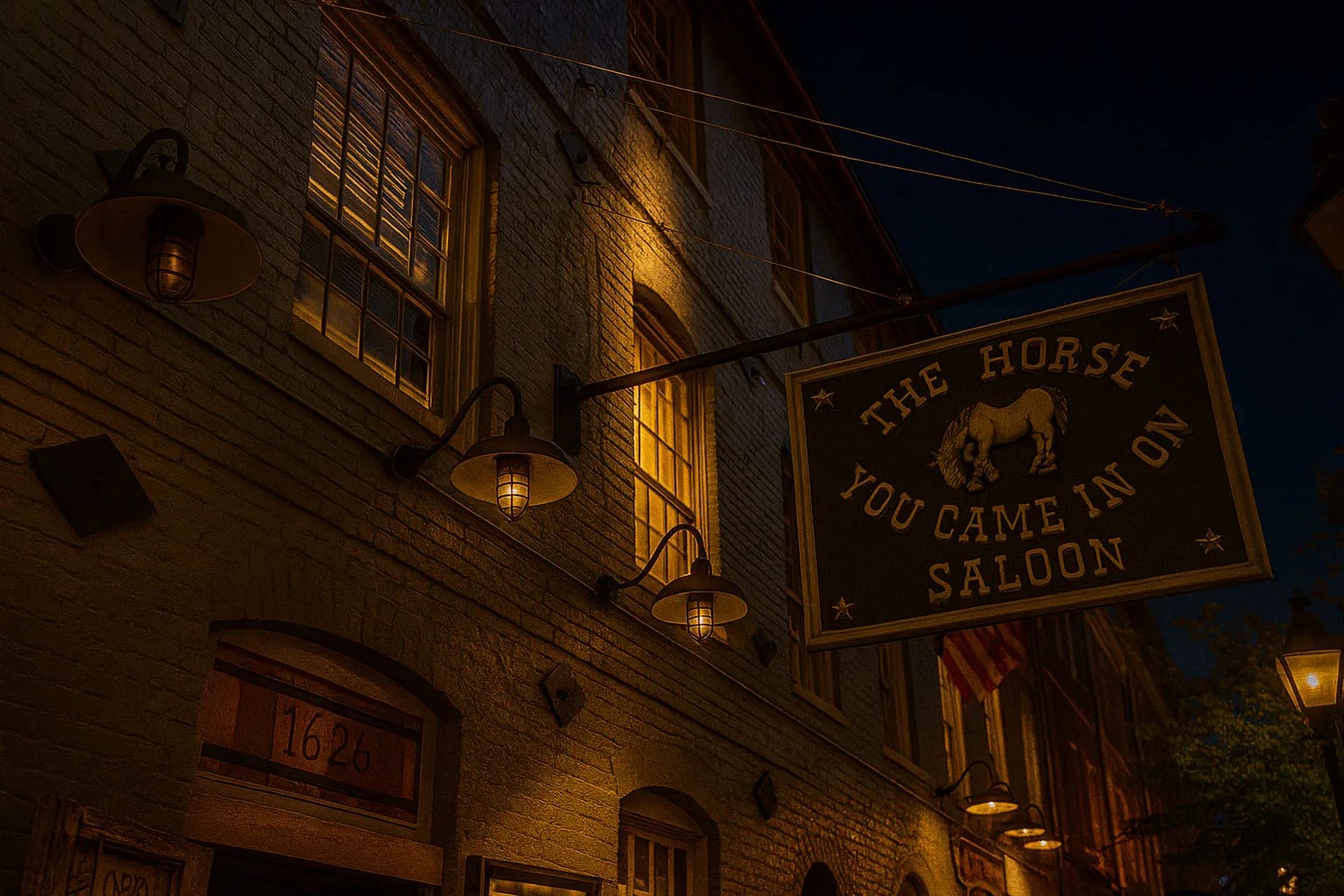
The most famous example is across town and much older: down in Fells Point, the waterfront's tangle of taverns includes The Horse You Came In On Saloon, where regulars have long claimed the ghost of a man they call Edgar keeps a barstool warm. A short walk away, the Admiral Fell Inn carries its own crowd of phantom sailors. Mount Vernon and the blocks around Station North have their share of old buildings and old stories too, and the whole city sits under the long shadow of Edgar Allan Poe, who died in Baltimore in 1849 and lies buried at the Westminster Burying Ground.
What sets Club Charles apart is that its legends are modern and homegrown. The Fells Point hauntings reach back to the age of sail; the Club Charles stories belong to the era of jukeboxes, art-school dropouts, and John Waters films. It's a 20th-century bar with 20th-century ghosts, which is its own kind of Baltimore history.
Why Places Like Club Charles Feel Haunted
It's worth pausing on why a room like this produces these experiences, because there are good explanations that don't require a single ghost — and good reasons the stories persist anyway.
Start with the obvious. Club Charles is dim, lit largely in red, full of vintage angles and mirrored surfaces and decades-old fixtures. Low, colored light is exactly the condition under which human vision turns unreliable; the brain fills the gaps with shapes, and a coat on a stool or a reflection in old glass becomes a figure. Add a few drinks, add the late hour, add the suggestion already planted by everyone who's told you the place is haunted, and a strange sensation is nearly guaranteed. A skeptic has plenty to work with here, and an honest writer should admit it.
But there's a second layer the skeptical view tends to miss. Old, beloved places carry real emotional weight. Nostalgia is powerful, and a bar where generations of Baltimoreans have spent their nights becomes a kind of memory vault, thick with the presence of people who are gone — some dead, some simply moved away. When a regular says Club Charles feels haunted, part of what they may be describing is that sense of accumulated absence, of all the nights and all the people the room has outlived. Whether you call that a ghost or a memory probably says more about you than about the bar.
Can You Visit Club Charles Today?
Club Charles is still open, still on North Charles Street, still doing what it has always done. It remains one of the anchors of Baltimore nightlife and a near-required stop for anyone trying to understand the city's creative culture — the bar where the arts scene goes to be itself.
Most people who come aren't there for ghosts. They come for the atmosphere: the red light, the Deco room, the strong drinks, the particular Baltimore mix of people you'll find at the bar on any given night. The ghost stories are a layer on top of that, an extra reason for the curious to push open the door. If you go, go for the place first. Order a drink, take in the room, talk to whoever's behind the bar — and if the conversation drifts toward the figure some swear they've seen at the end of the bar, so much the better. You'll get a more authentic version of the legend from a Club Charles bartender at midnight than from anything written down.
If you'd rather hear Baltimore's stories in order and on foot, our Baltimore ghost tour covers the city's haunted side, and our Haunted Baltimore collection rounds up the rest.
Last Call
Strip away the ghost stories and Club Charles is still one of the most interesting rooms in Baltimore — a survivor, a holdout, a dim red constant in a neighborhood that has reinvented itself a dozen times over. The legends are real in the way that matters most: people genuinely tell them, genuinely feel them, and pass them down across generations of regulars. Whether a figure named Frenchie actually lingers at the end of the bar is almost beside the point. What lingers, for certain, is the weight of everyone who has ever spent a night here.
That's the thing about a bar like this. Decades of memories don't simply evaporate at last call. Come see it for yourself — and while you're at it, explore the rest of the city's after-dark history on our Baltimore ghost tours — including the family-friendly Ghosts of Baltimore Tour — and in our Haunted Baltimore stories.
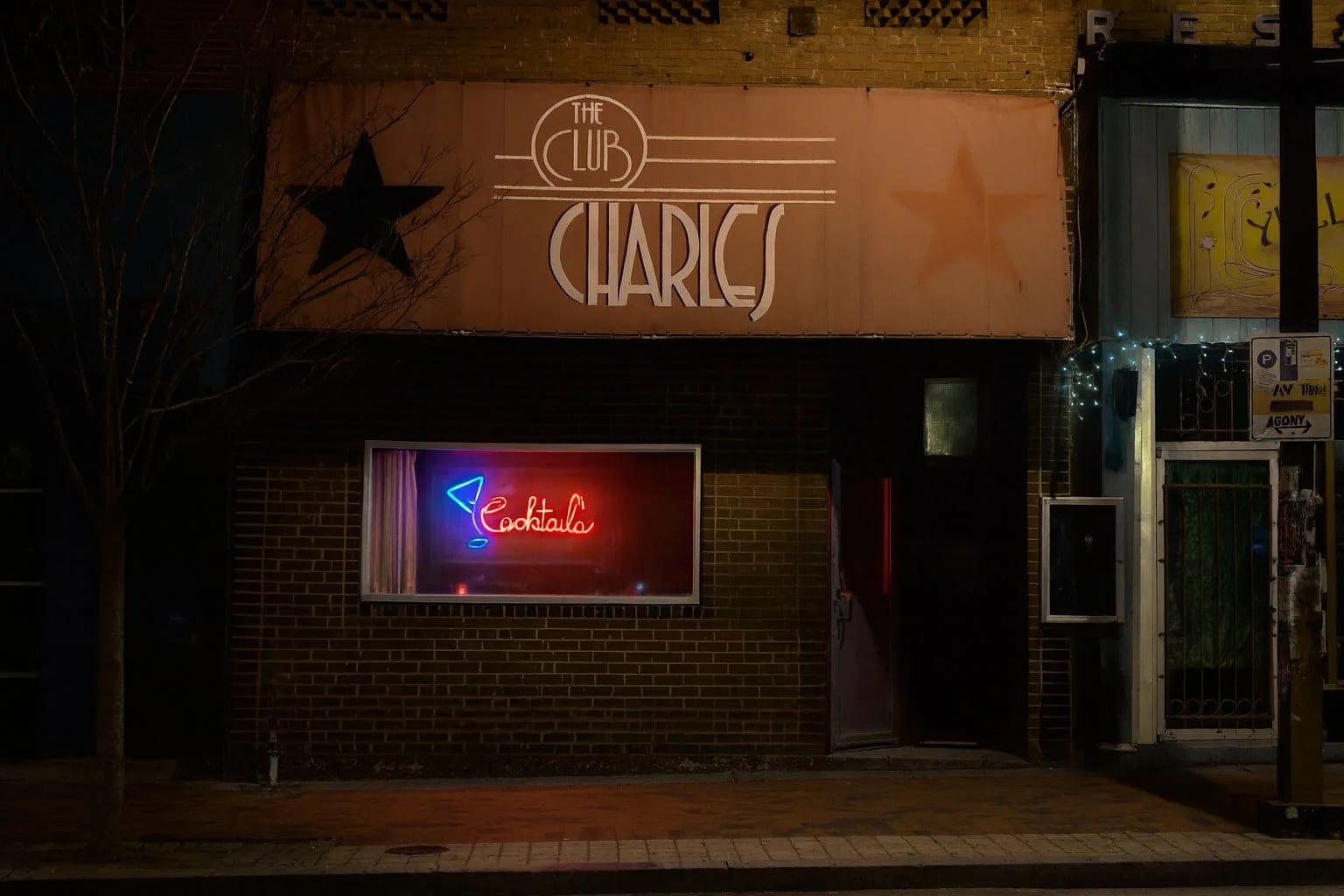
Club Charles on North Charles Street, a fixture of Baltimore nightlife and one of the city's most quietly storied haunted bars