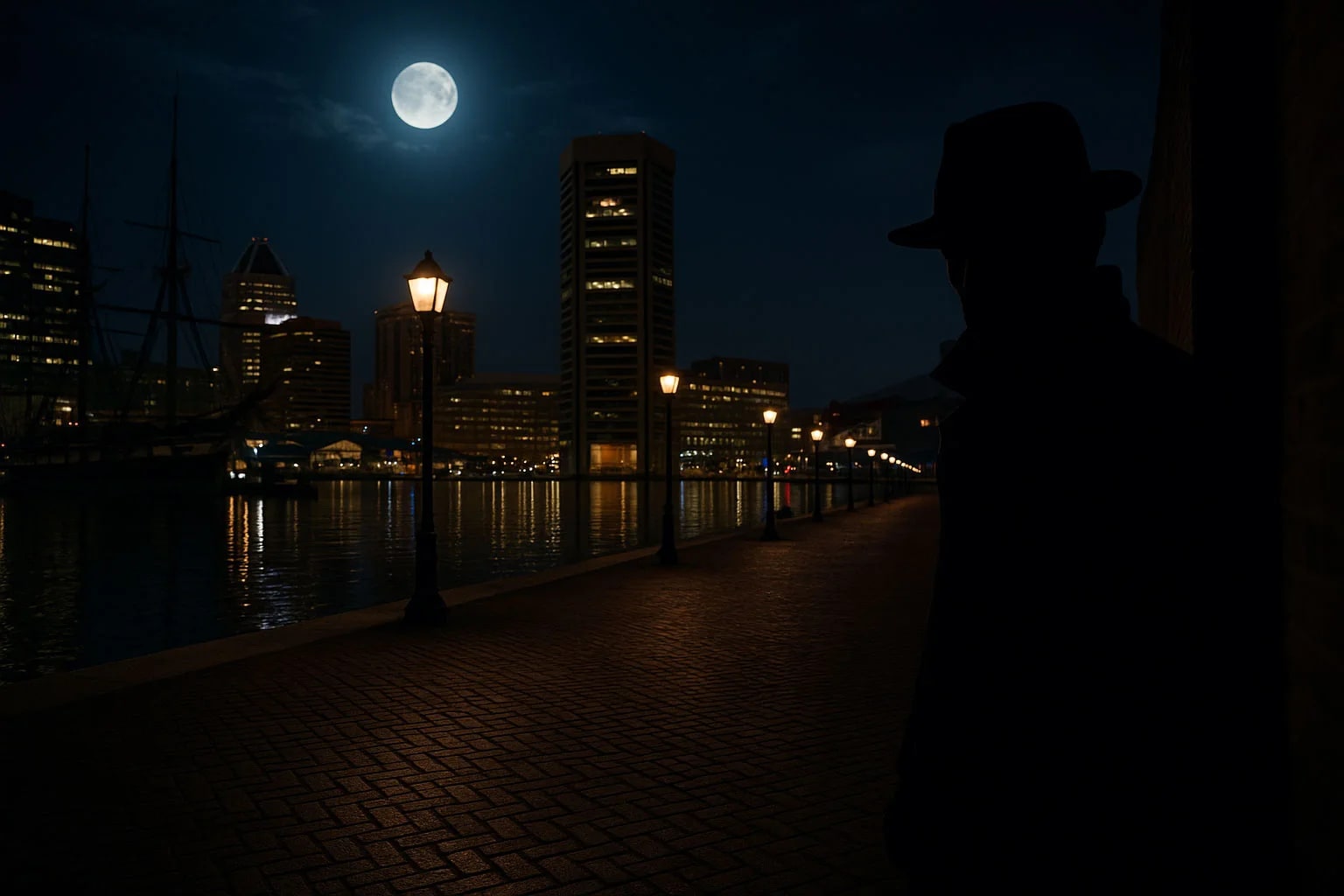
After the harbor crowds thin and the lights come up along the water, the USS Constellation becomes a different thing. Three tall masts rise black against the glow of the Inner Harbor, the rigging ticking and creaking in the wind off the water, the long dark decks empty beneath the harbor lights. Tied up among the paddleboats and the glass towers of modern Baltimore, the ship looks like a piece of another century that refuses to leave — which, in a sense, is exactly what it is.
The USS Constellation is one of Baltimore's most iconic landmarks and one of the most famous reputedly haunted ships in the United States. A genuine 19th-century warship, the last of its kind built by the U.S. Navy, it spent decades at sea before coming to rest as a museum in the Inner Harbor. Sailors have always told ghost stories — the sea breeds them — and many people believe some of the Constellation's followed it home to Baltimore.
This is a story best told the way a good ship's history should be: hull first, ghosts second. We'll cover what the Constellation actually is — including a genuine historical mix-up worth clearing up — what life and death aboard a sail warship were really like, the ship's remarkable service record, and the hauntings reported on her decks, keeping the documented separate from the legendary throughout. It's one of the cornerstones of our Haunted Baltimore collection and a fixture of the harbor's haunted reputation that we return to on our Baltimore ghost tour.
What Is the USS Constellation?
The Constellation moored at Pier 1 in the Inner Harbor is a sloop-of-war, launched in 1854 at the Gosport Navy Yard in Norfolk, Virginia. She was the last all-sail warship built by the United States Navy — completed just as steam and iron were about to make her entire class obsolete, which is part of why she survived to become a museum rather than scrap.
Here a long-running confusion has to be cleared up, because it shapes the ghost stories. There were two American warships named Constellation. The first was a celebrated frigate launched in 1797, one of the original six ships of the United States Navy, commanded early on by Commodore Thomas Truxtun. For much of the 20th century, the ship in Baltimore was promoted as that 1797 frigate, supposedly rebuilt over the years. She is not. A detailed investigation by the Navy's own historians in the 1990s established conclusively that the Baltimore Constellation is a separate ship — the 1854 sloop — and not a reconstruction of the frigate at all. The two vessels are distinct, a fact that matters enormously when we reach the hauntings, because several of the most famous Constellation ghost legends actually belong to the 1797 frigate, not to the ship you can board today.
What you can board today is remarkable in its own right: an intact wooden sail warship, one of very few left anywhere in the world, preserved and restored over decades and now operated as part of Historic Ships in Baltimore. She ranks among the city's most visited attractions, drawing people who want to walk real gun decks and descend into the cramped spaces where sailors actually lived. Before any ghost, that is the Constellation's true significance — a rare survivor from the last age of fighting sail.
Life Aboard a Nineteenth-Century Warship
To understand why people sense ghosts aboard the Constellation, you first have to understand what it was to live on her.
A sail warship was a small, crowded, brutally hard world. Several hundred men lived packed into a wooden hull, sleeping in hammocks slung shoulder to shoulder on the berth deck with barely room to swing. Privacy did not exist. The space was dark, damp, and poorly ventilated, lit by lanterns and heavy with the smell of tar, bilge, livestock, and unwashed men. In heavy weather the whole world heaved and streamed with water.
The routine was relentless. Crews stood watches around the clock, four hours on and four off, their sleep chopped into fragments for months at a time. Work meant hauling on lines, climbing the rigging high above the deck in all weather, and drilling endlessly at the great guns. A fall from aloft or a parted line could kill or cripple in an instant. The food was salt beef and pork, hard biscuit riddled with weevils, and whatever else could be kept from spoiling on a long cruise; scurvy and other deficiency diseases shadowed any extended voyage.
Discipline was severe and, by modern standards, savage. The Navy ran on a code enforced by punishment, and for serious offenses that meant flogging — a man stripped to the waist and lashed across the back with a cat-o'-nine-tails before the assembled crew. Lesser offenses brought confinement, extra duty, or public humiliation. Flogging was formally abolished in the U.S. Navy in 1850, just before the Constellation's launch, but the culture of harsh discipline it came from still defined shipboard life, and the memory of the lash was fresh.
Medical care was primitive. The ship's surgeon worked with the limited knowledge of the age, in a cramped sick bay, against infection, accident, and disease he could rarely cure. For a sailor, serious injury or illness far from any real hospital was a genuine threat to life. All of this — the confinement, the danger, the discipline, the constant nearness of death — is the human reality beneath the ghost stories. Men suffered, and sometimes died, in these spaces. And the spaces survive.
The USS Constellation's Service History
The Constellation's career spanned nearly a century of active and ceremonial service, and several chapters of it were genuinely consequential.
Her most important early duty came almost at once. In 1859 she became the flagship of the U.S. African Squadron, the naval force charged with suppressing the transatlantic slave trade off the coast of West Africa. Patrolling those waters from 1859 through 1861, the Constellation chased and captured slave ships. In one notable action she took the brig Cora, which was carrying hundreds of enslaved Africans bound for sale; the captives were freed and the slavers' voyage broken. It is a striking record for a vessel later wrapped in ghost stories — that among her most concrete achievements was the liberation of enslaved people.
When the Civil War began, the Constellation was reassigned to the Mediterranean Squadron, where she protected United States commerce and watched for Confederate raiders abroad. In the decades after the war she served in a variety of roles, and in 1880 she carried a very different cargo: relief supplies of food sent across the Atlantic to Ireland during a period of famine and hardship, a humanitarian mission far from her warlike origins.
In her later life the old sail warship became a teacher. She served as a training vessel for the United States Naval Academy at Annapolis, where generations of midshipmen learned seamanship aboard her, and she continued in subordinate and stationary roles as the Navy modernized around her. During the Second World War, in a final dignified turn, she was designated the relief flagship of the U.S. Atlantic Fleet — a symbolic honor for a ship by then far too old to fight.
That long and varied service — slave-trade suppression, wartime patrol, famine relief, naval training, and ceremonial flagship — is what filled the ship with the human history visitors feel today. Each role brought new crews aboard, and each crew left something of itself in the wood. By the time she came to Baltimore as a museum in the 1950s, the Constellation had carried, sheltered, trained, and buried a great many people across nearly a hundred years.
Death, Disease, and Danger at Sea
Death was not an exception aboard a 19th-century warship. It was a constant, expected feature of the life.
The dangers were everywhere. Falls from the rigging killed men outright or left them broken. Lines under enormous strain could part and lash across a deck with lethal force. The great guns, with their recoil and powder, maimed and killed in accidents even when no enemy was near. Fire — the terror of every wooden ship — could destroy a vessel and her entire crew. And simply working a ship in a storm, on wet and pitching decks, was perilous in ways that are hard to imagine now.
Disease was deadlier still. Ships were closed, crowded, unsanitary environments, ideal for the spread of illness, and a vessel that put into foreign ports could carry contagion back aboard. Fevers, dysentery, and the deficiency diseases of long voyages thinned crews steadily. On a deployment of months or years, a ship could lose men to sickness without ever firing a shot.
When a sailor died at sea, far from home and any cemetery, the Navy followed the old custom: burial at sea. The body was sewn into his own hammock, weighted, and committed to the deep after a brief service, often within a day of death. It was practical, and dignified in its way, but it meant a man could vanish from the world with little more than a splash and a line in the log to mark him. Countless sailors met that end across the age of sail.
This is the emotional weight the Constellation carries. She is not a stage set; she is a real vessel where real men lived under hard discipline, suffered real injury and illness, and sometimes died. Whatever you believe about ghosts, the human reality of death aboard her is beyond dispute, and it is the true foundation of everything that follows.
Why Is the USS Constellation Considered Haunted?
Given all that, the Constellation's haunted reputation needs little explanation. Historic ships are among the most reliably 'haunted' places anywhere, and the reasons are built into what they are.
A warship is a sealed world that witnessed extremes of human experience — fear, exhaustion, violence, death — concentrated in a small wooden space over many years. The Constellation then spent decades as a museum, visited by millions, with staff and volunteers aboard at all hours, including the quiet times after closing when an old ship makes its strongest case for being haunted. Out of that combination come the reports.
There is also the deep tradition sailors brought with them. Seafaring is among the most superstitious of all human occupations, and naval folklore is thick with phantom crews, ghost ships, and the returning dead. A ship was always a place where the line between the living and the lost felt thin, and that sensibility came aboard the Constellation with every crew.
As always, the reports that follow are best understood as exactly that — reported experiences, museum lore, and maritime folklore rather than established fact. But the Constellation has been called haunted for the better part of a century, by visitors, staff, and investigators alike, and the stories are a genuine part of the ship's modern identity.
The Most Famous Ghosts of the USS Constellation
A handful of figures recur in the Constellation's lore. Some belong genuinely to the Baltimore ship and her museum years; others, as we'll see, were borrowed from the older frigate and grafted on. It's worth telling them apart.
Phantom Sailors and the Old Commodore
The most common reports are of sailors and officers. Visitors and staff have described crew members glimpsed briefly on deck or below — a figure in period naval dress, there for a moment and then gone. The grandest version is an apparition taken for a captain or commodore, sometimes identified by tellers as Thomas Truxtun, who commanded the 1797 frigate. That identification is almost certainly misplaced: Truxtun never set foot on the 1854 sloop, which did not exist in his lifetime. The figure people report may feel real to them, but the famous name attached to it belongs to a different ship.
The Watchman
More firmly tied to the Baltimore vessel is the watchman. The best-documented of the Constellation's ghosts is Carl Hansen, a night watchman who looked after the ship during her early museum years in the mid-20th century and, by all accounts, loved her deeply. After his death, staff and visitors began to report a figure still keeping watch — an older man in period or watchman's dress, seen on deck at night, often described as helpful or protective rather than frightening. Because Hansen was a real person genuinely connected to the ship, his is the legend that fits the Baltimore Constellation most naturally, and the one staff still tell most often.
The Surgeon, the Boy, and Neil Harvey
Other recurring figures include a ship's surgeon, glimpsed below in the spaces where the sick and injured were treated, and a young boy — a powder monkey, in the old term, one of the children who carried powder to the guns — reported on the lower decks. And then there is Neil Harvey, the most famous Constellation ghost of all, said to be a sailor brutally executed for falling asleep on watch and condemned to haunt the ship. The Harvey legend is dramatic, durable, and almost entirely attached to the 1797 frigate's lore rather than the 1854 sloop's documented history — a borrowed ghost, in effect, that migrated onto the Baltimore ship along with the mistaken belief that she was the old frigate. It's a perfect illustration of how these legends actually travel: not always with the facts, but with the name.
Paranormal Activity Reported Aboard the Ship
Beyond the named figures, the Constellation generates the full catalog of shipboard phenomena, reported by visitors, staff, and investigators over many decades.
Footsteps on Empty Decks
Footsteps are the most common report. Staff and visitors describe the sound of someone walking the gun deck or the decks above when no one is there — measured, deliberate steps, the tread of a person rather than the random working of the ship. On a vessel of creaking wood that shifts constantly at her moorings, ordinary explanations abound, which is exactly why footsteps are both the most frequent report and the hardest to evaluate.
Voices Heard Below Deck
Voices come next. People report hearing them in the lower compartments — a murmur of conversation, a snatch of a command or a cry, the indistinct sound of men where no men are present. The enclosed, echoing spaces belowdecks carry and distort sound in confusing ways, and a voice from the pier or another part of the ship can seem to rise from an empty hold.
Apparitions in the Crew Quarters
The berth deck and crew spaces — where sailors slept, ate, and lived in their hundreds — produce their share of apparition reports: a figure seen among where the hammocks once hung, or in a passage, gone when approached. These are the spaces where the ship's human life was most concentrated, and where visitors most often describe the feeling that they are not alone.
Cold Spots and Unexplained Sounds
Finally, the familiar atmospherics: sudden cold spots in particular parts of the ship, and unexplained sounds beyond footsteps and voices — knocks, the groan of the rigging when the air is still, the sense of movement at the edge of sight. A wooden ship on the water is never truly silent or still, and that restlessness is the raw material from which much of the lore is built. One often-cited piece of the legend is a photograph taken aboard in the 1950s by a naval officer, said to show a ghostly figure on deck — the kind of artifact that circulates for decades and fuels belief while remaining impossible to verify.
Maritime Ghost Lore and Haunted Ships
The Constellation belongs to one of the oldest and richest branches of ghost lore: the supernatural tradition of the sea.
No workers were ever more superstitious than sailors, and for good reason. They labored in a place of constant danger, at the mercy of weather they couldn't control, far from home and help, where death could come without warning and the dead were given to the water rather than the ground. Out of that life grew an enormous body of belief — omens and rituals, lucky and unlucky acts, and above all stories of the returning dead.
Maritime folklore overflows with phantom crews, ghost ships sailing on after their men have died, drowned sailors seen on deck or in the rigging, and vessels condemned to sail forever, like the legendary Flying Dutchman. Sailors read strange lights, sounds, and sightings at sea through this lens; a glimmer in the rigging became a death omen, an unexplained figure a lost shipmate come back. These weren't idle tales but a way of making sense of a world saturated with sudden death.
The Constellation sits squarely within that tradition. Whatever specific ghosts are said to walk her decks, her haunted reputation draws on the deep, ancient unease of the sea itself — the sailor's certainty that ships hold their dead, and that the line between the living crew and the lost one is never quite solid. She is a haunted ship in the fullest folkloric sense, heir to centuries of belief that long predate any single sighting reported aboard her.
Paranormal Investigations of the USS Constellation
As one of the country's most famous haunted ships, the Constellation has drawn paranormal investigators for decades, and turns up regularly in books, articles, and television programs about haunted places.
The reported results are the standard ones: recordings interpreted as voices, temperature drops, instrument readings, and the occasional photograph or video offered as evidence. The mid-century photograph of a supposed figure on deck is the most famous single artifact, and it has been reproduced and argued over for generations. Investigators who spend nights aboard tend to come away with accounts of footsteps, voices, and the feeling of presence that match what visitors report by day.
A fair assessment has to weigh against all of it the simple nature of the thing being investigated. A wooden warship more than 170 years old, floating in a working harbor, is an investigator's nightmare of false positives: she creaks, shifts, and groans constantly; sound carries strangely through her decks and in from the pier; temperatures swing widely between her open decks and closed holds; and nearly every visitor arrives already primed by the ship's fame to expect the uncanny. Ordinary explanations are available for essentially everything reported, and none of the evidence rises to proof.
What the investigations do confirm is the durability of the reputation. People keep coming to test the Constellation precisely because the stories refuse to die, and they tend to leave with new stories of their own. The evidence stays inconclusive. The legend stays very much alive.
The USS Constellation and Baltimore's Haunted Waterfront
The Constellation is the flagship, so to speak, of Baltimore's haunted waterfront — the largest and most literal embodiment of the maritime ghost tradition that runs through the whole harbor.
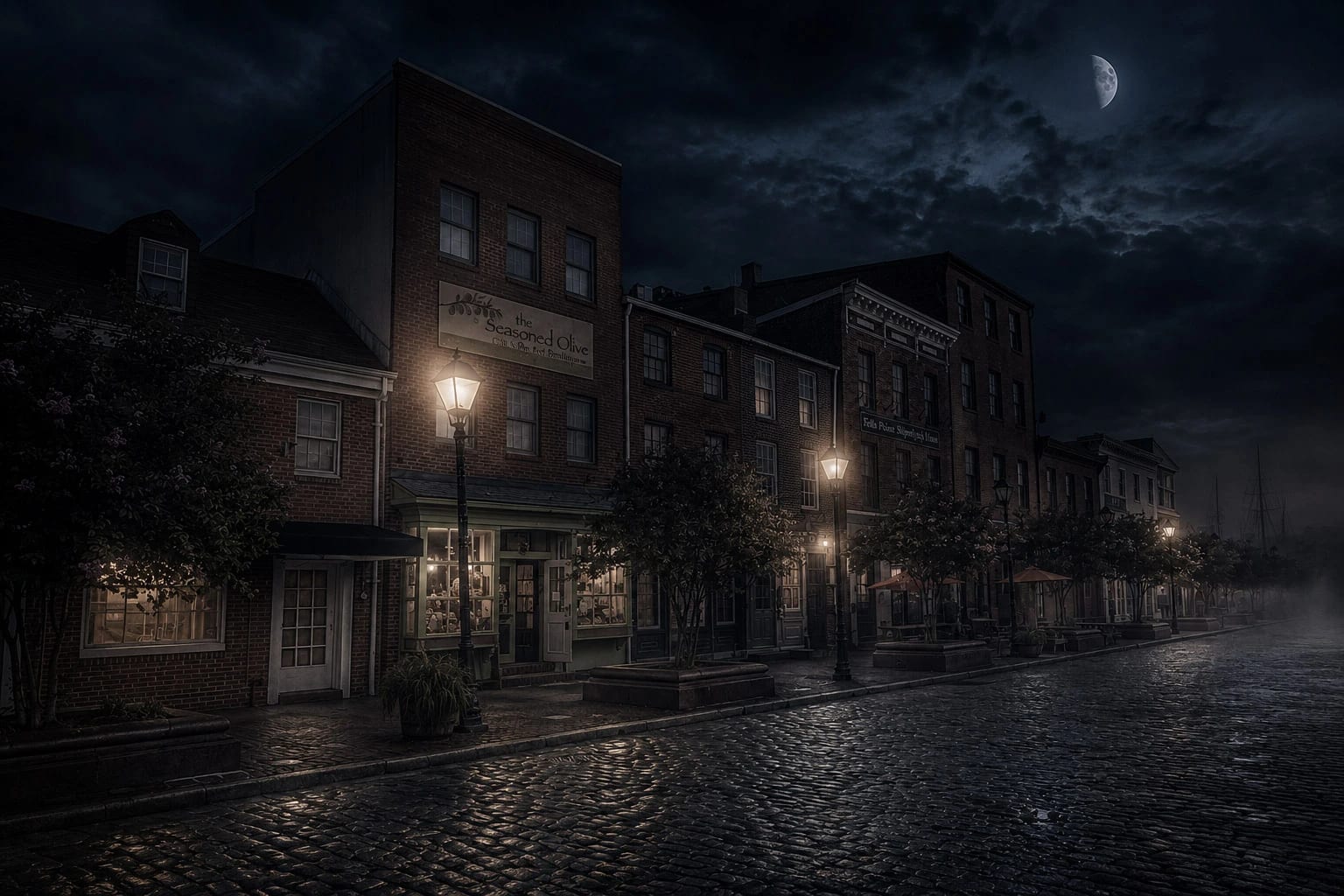
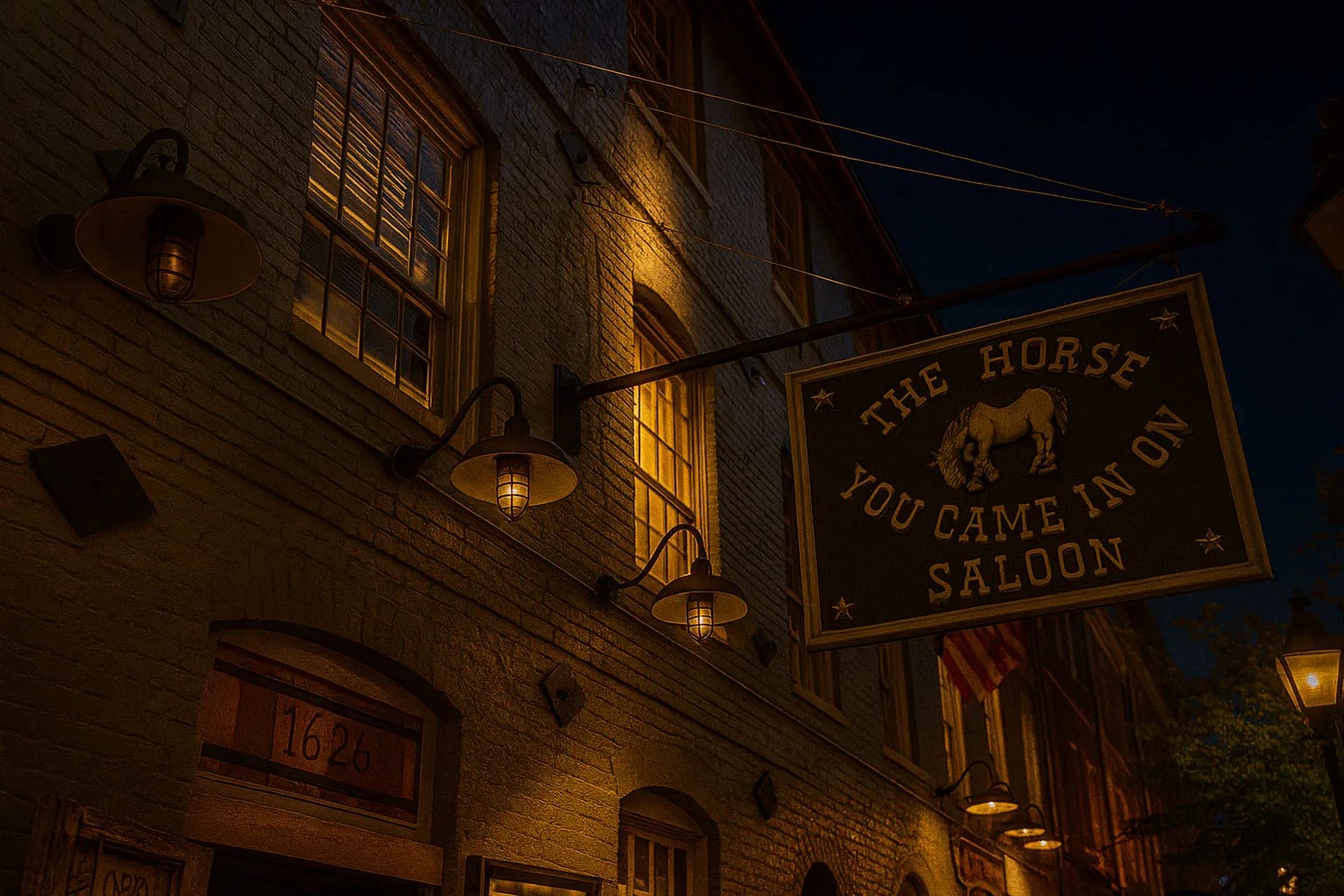
Baltimore's haunted identity is, at its core, a waterfront identity. The taverns and streets of Fells Point are thick with the lore of sailors and the sea. The Admiral Fell Inn, a former boarding house for seamen, is said to host phantom sailors of its own. The Horse You Came In On poured drinks for the men who worked these waters for two centuries. The harbor itself carries old stories of drowned sailors and ships lost in the fog. Baltimore was built by the sea, and so were its ghosts.
The Constellation gathers all of that into a single object. She is the actual vessel, the real thing the waterfront legends only gesture at — a warship that carried hundreds of sailors through danger and death and then settled into the heart of the harbor. Where the taverns and inns hold the memory of the men who came ashore, the Constellation holds the world they came ashore from.
That makes her central to how Baltimore understands itself as a haunted city. She anchors the maritime end of the tradition the way the Poe House anchors the literary end. You'll find her among the rest of these stories in our Haunted Baltimore collection — the haunted heart of the Inner Harbor.
Can You Visit the USS Constellation Today?
Yes. The USS Constellation is open to the public as a museum ship, part of Historic Ships in Baltimore at the Inner Harbor, and visiting her is one of the essential Baltimore experiences. You can walk the gun deck, stand among the great guns, and descend into the cramped lower compartments where the crew lived — the same spaces where every story in this article unfolded.
The ship draws a wide audience. Naval and maritime history enthusiasts come for one of the last sail warships on earth and her remarkable service record. General visitors come for a vivid, physical encounter with the 19th century. And paranormal enthusiasts come for the ghosts, hoping to feel the presence of the watchman or hear footsteps on an empty deck. The museum offers regular tours and educational programs, and on occasion special after-hours and seasonal events that lean into the haunted reputation.
Go for the ship first. Stand on her decks, take in the scale of the rigging and the smallness of the spaces below, and the human stories — and any ghosts — will follow naturally. To set the Constellation in the wider context of the city's haunted waterfront, our Baltimore ghost tour and our Haunted Baltimore collection are the places to keep exploring.
The Haunted Heart of the Harbor
The USS Constellation is, before anything else, an extraordinary survivor — the last all-sail warship the United States Navy built, a veteran of slave-trade suppression, war, famine relief, and the training of generations of sailors, preserved against long odds in the heart of Baltimore. To walk her decks is to step directly into the vanished world of the 19th-century sailor: the danger, the discipline, the confinement, and the ever-present nearness of death.
That world is the true source of her ghosts. Whether or not a watchman still keeps his rounds, whether or not footsteps cross her empty gun deck at night, the Constellation carried and buried real people across nearly a century of hard service, and those people are the reason the stories feel true. The hauntings are a natural extension of the ship's long and often difficult life — folklore grown from genuine history.
Whether you encounter a ghost or not, the Constellation offers something rare: the chance to board the actual vessel at the center of Baltimore's maritime past. Come explore the haunted waterfront with us. Read the rest of our Haunted Baltimore stories, wander the legends of Fells Point, or walk the harbor's history on one of our Baltimore ghost tours, like the Ghosts of Baltimore Tour.
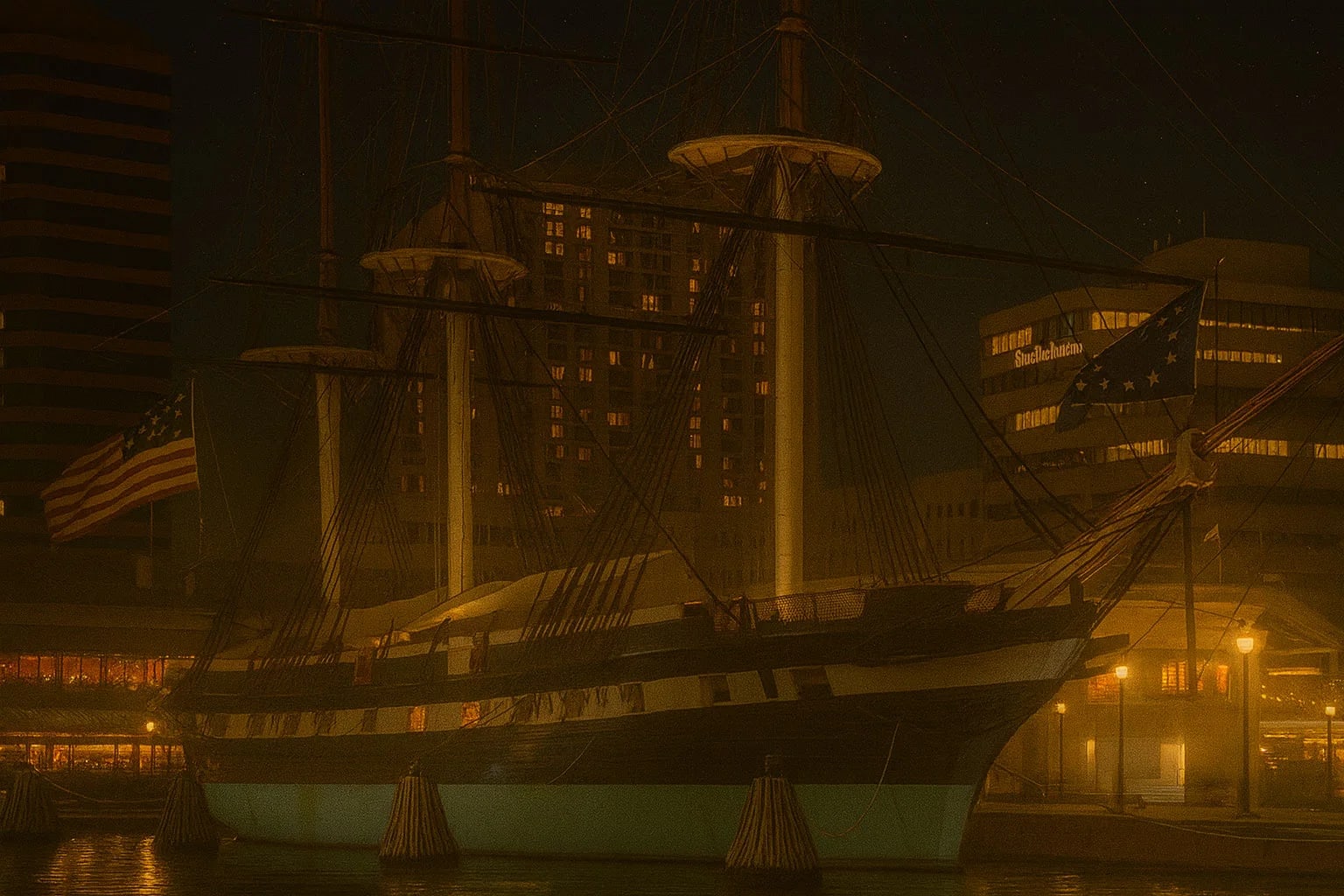
The USS Constellation, the last all-sail warship built by the U.S. Navy, now a museum ship and one of America's most famous haunted vessels