There's an old saying in theater: the show must go on. At the Pittsburgh Playhouse, some performers have taken this maxim quite literally - continuing to appear on stage and in the wings long after their final curtain call in life.
Theaters are inherently magical places, spaces where ordinary people transform into characters, where stories come alive, and where audiences suspend disbelief to enter other worlds. Perhaps it's this transformative energy that makes theaters so frequently haunted. Or perhaps the intense emotions of performers - the triumphs, the heartbreaks, the standing ovations and the crushing disappointments - leave imprints on these spaces that never fully fade.
The Pittsburgh Playhouse has a particularly rich history of supernatural encounters. Students, faculty, and staff at this theater - now part of Point Park University - have reported ghostly sightings for decades. The most famous spirit is a seamstress who died in the building and is said to still tend to the costume shop, but she's far from alone. Phantom footsteps echo through empty hallways. Lights flicker on stages where no one stands. Props move on their own. And sometimes, in the darkness of an empty theater, figures are seen sitting in seats or standing in the wings - watching, always watching.
For those who love theater, the idea of spirits who can't leave is not entirely sad. After all, what actor doesn't dream of being on stage forever? At the Pittsburgh Playhouse, some have achieved that dream - though perhaps not in the way they expected.
Did you know?
- The Pittsburgh Playhouse was founded in 1933 during the Great Depression by a group of dedicated theater enthusiasts who believed art could uplift the community.
- The Playhouse has operated in several locations throughout its history, and paranormal activity has been reported at multiple sites.
- Famous alumni of Point Park University's theater program have reported strange experiences at the Playhouse, though most prefer to remain anonymous.
- The tradition of leaving a 'ghost light' on stage when the theater is empty is taken very seriously at the Playhouse - some say it's to appease the spirits who dwell there.
- Students have reported hearing applause in empty theaters and music playing from orchestra pits where no musicians sit.
The History of the Pittsburgh Playhouse
Birth of a Theater
The Pittsburgh Playhouse was founded in 1933, in the depths of the Great Depression, by a group of theater lovers who believed that art was not a luxury but a necessity - especially in difficult times. They established a community theater dedicated to bringing quality productions to Pittsburgh audiences who might not be able to afford Broadway shows.
From its earliest days, the Playhouse attracted passionate people - actors, directors, designers, and crew members who poured their hearts into every production. This intensity of emotion and dedication would become a hallmark of the institution, creating an atmosphere where the line between life and art was perpetually blurred.
The Playhouse operated in several locations during its early decades, building a reputation for excellence and nurturing generations of theater talent. Each location seemed to accumulate its own collection of ghost stories, as if the spirits of departed performers followed the institution from building to building.
The Oakland Era
For many years, the Pittsburgh Playhouse was located in the Oakland neighborhood, occupying a complex of buildings that included multiple performance spaces and extensive backstage facilities. It was during this era that many of the most famous ghost stories originated.
The Oakland location was a labyrinth of rooms, hallways, and hidden spaces - perfect for a haunting. The buildings had been repurposed for theater use, and their previous lives left traces that mingled with the energy of countless productions. Dressing rooms, costume shops, prop storage areas, and winding corridors created an atmosphere where anything seemed possible - including encounters with the supernatural.
Generations of students and professionals passed through the Oakland Playhouse, and many took stories of strange encounters with them when they left. The tales were consistent enough to suggest something more than imagination: specific spirits, specific locations, specific phenomena that repeated over decades.
Point Park University
The Pittsburgh Playhouse became affiliated with Point Park University, which has one of the most respected conservatory theater programs in the country. The university's involvement brought new life to the institution - and perhaps stirred up old spirits.
In 2018, a brand new Pittsburgh Playhouse opened in downtown Pittsburgh as part of Point Park University's campus. The state-of-the-art facility includes multiple theaters, rehearsal spaces, and production facilities. Some wondered whether the ghosts of the old Playhouse would follow to the new location - or whether they would remain behind in Oakland.
Reports suggest that paranormal activity occurs in both places. The old Oakland buildings, now used for different purposes, still have their share of unexplained phenomena. And the new downtown Playhouse has already begun accumulating its own ghost stories, as if the spirits of theater are drawn to wherever the art is practiced.
This dual haunting raises interesting questions about the nature of theatrical ghosts. Are they attached to specific buildings, or to the institution itself? Do they follow the performers and the passion, or do they remain where they died? At the Pittsburgh Playhouse, the answer may be: yes to all of the above.
The Ghosts of the Pittsburgh Playhouse
The Seamstress
The most famous ghost of the Pittsburgh Playhouse is a woman known simply as 'the Seamstress.' According to legend, she was a costume designer or wardrobe mistress who worked at the Playhouse for many years and died in the building - some say of natural causes, others whisper of a fall or accident in the costume shop.
Whatever the circumstances of her death, the Seamstress never left. Students and staff working late in the costume shop have reported numerous encounters:
Sewing Sounds: The distinct sound of a sewing machine operating is sometimes heard in the costume shop when all machines are off and no one is present. The rhythmic whir of the needle and the clatter of the mechanism are unmistakable.
Helpful Hands: Students have reported finding costumes that were left unfinished suddenly completed overnight. Buttons that were missing appear sewn on. Hems that needed adjustment are found perfectly altered. It's as if the Seamstress can't stop doing her job.
Cold Presence: The costume shop is known for inexplicable cold spots, particularly near the sewing machines and fabric storage areas. Some students refuse to work alone in the shop after dark, claiming they can feel someone watching them.
Apparition: On rare occasions, the Seamstress herself is seen - an older woman in period clothing, bent over a sewing machine or examining a costume on a rack. She doesn't seem to notice the living, absorbed in her eternal work. When approached, she fades away.
Most who encounter the Seamstress find her presence comforting rather than frightening. She seems benevolent, a guardian spirit who continues to care for the costumes and the performers who wear them. Some students even thank her before leaving the costume shop at night - just in case.
The Phantom Performers
Beyond the Seamstress, the Pittsburgh Playhouse is home to multiple spirits who seem to be former performers - actors, dancers, and musicians who can't quite leave the stage:
The Actor in the Wings: A male figure in old-fashioned clothing has been seen standing in the wings during performances, watching intently. He appears to be an actor waiting for his entrance, but when crew members approach him, he vanishes. Some believe he's waiting for a cue that will never come.
The Dancer: In the dance studios and on stages where dance performances are held, a female figure has been seen moving gracefully after hours. She appears to be practicing or performing, her movements fluid and professional. Music sometimes accompanies her appearances - faint strains of classical pieces that no one is playing.
The Audience Members: Perhaps most unsettling are the phantom audience members - figures seen sitting in empty theaters, watching empty stages. They appear to be dressed in clothing from various eras, as if audiences from throughout the Playhouse's history have gathered for a show that exists only in the spirit world.
The Applause: Students working late in the theaters sometimes hear the sound of applause - hands clapping, voices cheering - coming from the empty house. The sound is faint but unmistakable, as if ghostly audiences are showing their appreciation for performances only they can see.
Backstage Phenomena
The backstage areas of the Pittsburgh Playhouse are particularly active with paranormal phenomena:
Moving Props: Props left in specific positions are frequently found moved to different locations. Sometimes this could be explained by forgetful stage managers, but often there's no natural explanation - props move during periods when no one has accessed the space.
Flickering Lights: Stage lights and work lights flicker unexpectedly, sometimes in patterns that seem deliberate. Some technicians believe the spirits are trying to communicate, though no one has cracked the code.
Footsteps and Voices: The sound of footsteps in empty hallways is commonly reported, along with the murmur of voices engaged in conversation. The voices are never quite clear enough to understand, but they have the cadence of theatrical discussions - perhaps directors giving notes or actors running lines.
The Ghost Light: Theaters traditionally keep a single light burning on an empty stage, ostensibly for safety but also, according to superstition, to give the ghosts light to perform by. At the Pittsburgh Playhouse, the ghost light is treated with particular respect. There are stories of productions plagued with problems after someone forgot to turn it on - as if the spirits were offended by being left in the dark.
Dressing Room Encounters: Actors preparing for performances have reported feeling they're not alone in their dressing rooms - the sensation of being watched, cold touches on their shoulders, glimpses of movement in mirrors. Some take these experiences as good luck omens; others find them deeply unsettling.
Why Theaters Are Haunted
The Pittsburgh Playhouse is far from the only haunted theater - in fact, ghost stories are remarkably common in the theatrical world. But why should theaters be such hotbeds of paranormal activity?
Emotional Intensity: Theater involves the deliberate creation and expression of intense emotions. Actors open themselves to feelings - love, grief, rage, joy - that most people keep carefully controlled. This emotional energy may leave impressions on the space itself.
Dedication and Passion: Theater people are famously devoted to their craft, often to the point of obsession. People who spend their lives on stage may find it difficult to leave, even after death.
The Nature of Performance: In a sense, theater is already about defying death - bringing characters to life, telling stories that transcend time, creating moments that live in memory long after they end. Perhaps this makes theaters more permeable to the supernatural.
Energy of Audiences: The focused attention of hundreds of audience members, all directing their energy toward the stage, may create a kind of collective power that lingers in the space.
Theatrical Superstition: Theater people are notoriously superstitious. They don't say 'Macbeth' in a theater. They don't whistle backstage. They believe in the ghost light. This culture of belief may make theatrical spaces more receptive to paranormal phenomena - or may simply make people more likely to interpret experiences as supernatural.
Whatever the reason, the Pittsburgh Playhouse continues a long tradition of haunted theaters - a place where the drama extends beyond the stage and into realms we can barely understand.
Experiencing the Pittsburgh Playhouse Today
The Pittsburgh Playhouse is an active theater venue, home to Point Park University's Conservatory of Performing Arts and presenting numerous productions each season. Visitors can attend performances and may have their own supernatural encounters in the process.
The main Playhouse is now located in downtown Pittsburgh at 350 Forbes Avenue, in a stunning facility that opened in 2018. The complex includes multiple performance spaces, and while it's a new building, reports of strange phenomena have already begun circulating among students and staff.
Public tours of the facility are occasionally offered, particularly during Point Park University events. These tours focus on the architecture and theatrical capabilities of the space, but guides may share ghost stories if asked.
For the best chance of a supernatural encounter, attending an evening performance is recommended. Arrive early and explore the lobbies and public spaces. During intermission, pay attention to your surroundings - the spirits of the Playhouse are most active when theater magic is in the air.
Whether or not you encounter a ghost, the Pittsburgh Playhouse offers an opportunity to experience excellent theater in a space dedicated to the art form. And if you feel a cold spot, hear footsteps where no one walks, or glimpse a figure watching from the shadows - well, perhaps you've met some of the Playhouse's most devoted patrons, the ones who loved theater so much they never left.
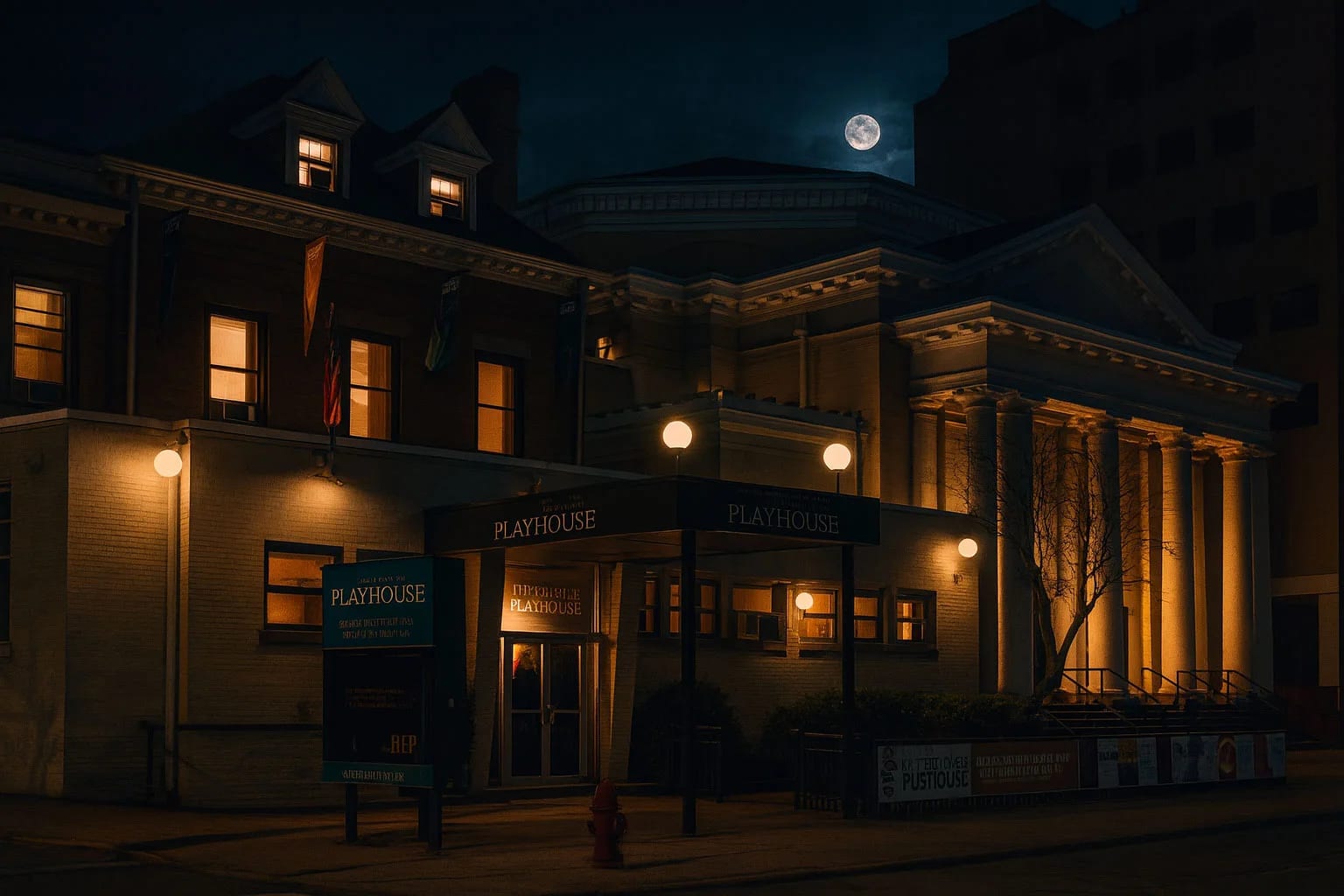
The Pittsburgh Playhouse, where theater spirits never take their final bow
