In the annals of American haunted history, few places have earned as dark a reputation as the Congelier House of Pittsburgh. Located in the working-class Manchester neighborhood on the city's North Side, this Victorian mansion became known as 'the most haunted house in America' - though 'haunted' may be too gentle a word for the malevolence that seemed to infest its walls.
From the moment it was built in the 1860s until its destruction in a mysterious explosion in 1927, the Congelier House was a place of death, madness, and terror. Multiple families who lived there met violent ends. Servants went insane. Neighbors reported hearing screams in the night and seeing faces in the windows of empty rooms. Animals refused to approach the property, and plants withered and died in its yard.
What made the Congelier House so evil? Was it built on cursed ground? Did something terrible happen during its construction? Or did the accumulated violence and suffering of its residents somehow corrupt the very fabric of the building, creating a vortex of negative energy that fed on human misery?
We may never know the answers. The house was destroyed nearly a century ago, and most of those who could testify to its horrors are long dead. But the legend of the Congelier House endures - a reminder that some places are touched by something darker than ghosts, something that defies explanation and survives even death.
Did you know?
- The Congelier House was featured in Ripley's Believe It or Not as 'the most haunted house in America.'
- At least six people died violently within the house's walls over a span of roughly 60 years.
- The house was destroyed in a massive explosion in 1927 that was so powerful it damaged buildings blocks away, yet investigators never determined the cause.
- Neighbors reported that no birds would land on the property and that dogs would howl when passing the house.
- A railroad executive who lived in the house in the 1900s allegedly conducted séances that may have awakened something malevolent.
The Dark History of the Congelier House
The Congelier Family Tragedy
The house that would become infamous was built in the 1860s by Charles Wright Congelier, a prosperous businessman who had made his fortune in Pittsburgh's booming industrial economy. Congelier constructed an impressive Victorian mansion in Manchester, then an affluent neighborhood, for his wife Lyda and their household staff.
By all accounts, the Congeliers seemed to be a respectable family living a comfortable life. Charles was known as a shrewd businessman but a devoted husband. Lyda was active in local society. They employed several servants, including a young maid named Essie, who would become central to the house's first recorded tragedy.
The precise details of what happened vary depending on the source, but the outcome is consistent: Charles Congelier began an affair with Essie, the young maid. When Lyda discovered the infidelity, something in her snapped.
In 1871, Lyda Congelier took an axe and murdered both her husband and Essie, hacking them to pieces in what newspapers of the era described as a scene of 'unimaginable horror.' Some accounts claim she dismembered their bodies and hid the pieces throughout the house. Others say she displayed their remains as some kind of grotesque trophy.
Lyda was found days later, covered in blood, rocking back and forth and singing lullabies to herself. She was committed to an asylum, where she died shortly after. The house sat empty for years, its reputation already tainted by the butchery that had occurred within its walls.
But this was only the beginning.
The House Changes Hands
After the Congelier murders, the house proved difficult to sell. The story of the axe murders had spread throughout Pittsburgh, and few wanted to live where such violence had occurred. The property sat vacant for years, falling into disrepair as the neighborhood around it changed.
Eventually, in the 1890s, the house was purchased at a steep discount by a railroad executive whose name has been lost to history. This man, according to local legend, was fascinated by the supernatural and the occult - interests that were surprisingly common among the upper classes during the Spiritualist movement of the late 19th century.
The railroad executive supposedly conducted séances in the Congelier House, attempting to contact the spirits of the murdered. Whether he succeeded in reaching the dead Congeliers or awakened something far worse is a matter of speculation. What is documented is that the executive's household began experiencing disturbing phenomena almost immediately.
Servants reported objects moving on their own, cold spots in rooms with roaring fires, and the sound of a woman singing lullabies in empty hallways. Several maids quit in terror, refusing to spend another night in the house. One reportedly went mad, claiming that 'something in the walls' was watching her.
The railroad executive himself began to change. Once gregarious and successful, he became withdrawn, obsessed with the house and its secrets. He was found dead in his study one morning, the apparent victim of a heart attack - though some whispered that the expression of terror frozen on his face suggested he had seen something that literally frightened him to death.
Dr. Adolph Brunrichter and the House of Horrors
The most disturbing chapter in the Congelier House's history began in the early 1900s when it was rented by a man calling himself Dr. Adolph Brunrichter. Brunrichter claimed to be a scientist and physician, but his true nature was far more sinister.
Brunrichter lived alone in the house, rarely venturing out during the day but often seen at night, lurking around the neighborhood. Neighbors noticed strange lights in the windows, heard peculiar sounds, and smelled chemical odors emanating from the property. Some reported seeing Brunrichter carrying large bundles into the house after dark.
In 1901, a massive explosion rocked the Congelier House. When neighbors and authorities arrived, they discovered Brunrichter's true activities: he had been conducting grotesque medical experiments in the basement, including attempts to reanimate severed human heads using electricity. The explosion had occurred when one of his experimental apparatus malfunctioned.
Even more horrifying was the discovery of a young woman's headless body in the basement, along with evidence that Brunrichter had been keeping her head alive through some unknown means, subjecting it to his experiments. Additional human remains suggested this was not his first victim.
Brunrichter fled before he could be arrested, disappearing into the night and never seen again. Some say he died in the explosion and his body was simply never found. Others believe he escaped to continue his experiments elsewhere. A few even whisper that he made some kind of dark bargain with whatever evil resided in the Congelier House - that he didn't just live there, he served it.
The Brunrichter scandal made national news, cementing the Congelier House's reputation as a place of unspeakable evil. Ripley's Believe It or Not featured it as 'the most haunted house in America.' Yet somehow, the house remained standing, as if refusing to be destroyed.
The Final Years
After the Brunrichter incident, the Congelier House was converted into an apartment building - apparently, Pittsburgh's housing shortage was severe enough that people were willing to live even in an infamous murder house. The conversion divided the mansion into multiple units, bringing more families into contact with whatever darkness dwelled there.
Residents of the apartment building reported constant paranormal activity. Doors opened and closed on their own. Footsteps echoed in empty hallways. The temperature in certain rooms was always cold, regardless of the weather. Some tenants reported seeing apparitions - a woman with wild eyes carrying an axe, a headless figure wandering the basement, shadows that moved against the light.
Children who lived in the building were particularly affected. They complained of nightmares, of invisible friends who told them terrible things, of being touched by cold hands in the dark. Several families moved out after their children began exhibiting disturbing behavior - speaking in strange voices, knowing things they couldn't possibly know, displaying violent tendencies that appeared out of nowhere.
By the 1920s, the Congelier House had become a blight on the neighborhood. It was perpetually in disrepair, no matter how much maintenance was performed. Paint peeled, wood rotted, and a pervasive smell of decay hung over the property. Neighbors avoided walking past it, and the few remaining tenants were mostly transients who had nowhere else to go.
The Hauntings and Evil of the Congelier House
The Woman with the Axe
The most frequently reported apparition at the Congelier House was a woman in Victorian-era clothing, carrying an axe. This figure - presumably the ghost of Lyda Congelier - was seen both inside and outside the house, always with the same wild-eyed expression and blood-stained dress.
Some witnesses reported that she would appear suddenly, swinging the axe at them before vanishing. Others saw her standing at windows, staring out at the street with an expression of pure madness. A few claimed to have heard her singing lullabies in an off-key voice that sent chills down their spines.
What made this haunting particularly terrifying was its apparent malevolence. Unlike ghosts that simply repeat actions from the past, Lyda's spirit seemed aware of the living - and hostile toward them. Multiple residents reported being awakened by the sensation of cold hands around their throats, of being pushed down stairs, of hearing a woman's voice whispering threats in their ears.
The Basement Horror
The basement of the Congelier House was considered the most dangerous part of the building - a place where even the bravest feared to go. This was where Brunrichter had conducted his experiments, and where the headless remains of his victims had been found.
Tenants reported that the basement was always cold, even in summer, and that a foul smell seemed to emanate from its walls. Strange sounds came from below - mechanical humming, as if Brunrichter's equipment was still running, and occasionally, a woman's muffled screaming.
Those who ventured into the basement often emerged changed. Some reported seeing a headless figure standing in the corner, watching them despite having no eyes. Others felt an overwhelming compulsion to hurt themselves or others. One man allegedly walked into the basement and never came out - his body was never found, though the building was thoroughly searched.
The basement also seemed to be a focal point for the house's malevolent energy. Paranormal researchers who later studied the Congelier House theorized that whatever evil resided there was centered in the basement, perhaps connected to the ground itself or to the terrible acts that had been committed below.
The Influence of Evil
Perhaps the most disturbing aspect of the Congelier House was not its ghosts, but its apparent ability to influence the living. Time and again, people who lived in the house began behaving in ways they never had before - becoming violent, paranoid, obsessed.
The pattern was consistent enough to suggest something more than coincidence. Lyda Congelier had no history of violence before she butchered her husband and his mistress. The railroad executive was successful and stable before moving into the house. Even Brunrichter, for all his evil, may have been drawn to the house by something that recognized a kindred darkness in him.
Neighbors noticed that those who lived in the Congelier House often seemed different - that they would stop making eye contact, would mutter to themselves, would be seen at their windows at all hours of the night, staring into space. It was as if the house was slowly consuming them, feeding on their sanity and their souls.
Animals, it seemed, could sense the danger better than humans. Dogs would howl and strain at their leashes when walking past the property. Cats would hiss and arch their backs. Birds never landed on the roof or in the yard. Even insects seemed to avoid the place - a house that should have been infested with vermin was strangely, ominously empty of them.
The Mysterious Destruction
On November 14, 1927, the Congelier House was destroyed in a massive explosion that shook the entire Manchester neighborhood. The blast was so powerful that it damaged buildings several blocks away, shattered windows throughout the area, and was heard across Pittsburgh.
When the smoke cleared, the Congelier House was simply gone - reduced to a smoldering crater. The explosion had killed everyone inside: estimates range from 11 to 23 victims, mostly poor tenants of the rooming house that the mansion had become.
Investigators were baffled by the explosion. There was no gas line to the building. No explosives were stored there. No natural explanation could account for the sheer destructive power that had annihilated the structure so completely.
The official cause was never determined. Some speculated that a tenant had been manufacturing illegal alcohol or explosives. Others whispered that the house had finally destroyed itself - that whatever evil had accumulated there over six decades had reached a critical mass and detonated.
A few witnesses claimed to have seen something impossible in the moments before the explosion: a column of flame rising from the basement, accompanied by the sound of screaming that seemed to come from everywhere at once. Whether this was the result of the explosion or its cause, no one could say.
The site was cleared, and for years it remained an empty lot. Local children avoided it, claiming the ground itself felt wrong. Eventually, new buildings were constructed on the site, and the location of Pittsburgh's most evil house was forgotten by all but a few historians and ghost enthusiasts.
Theories About the Congelier House
What made the Congelier House so malevolent? Over the years, researchers and paranormal investigators have proposed various theories:
Portal Theory: Some believe the house was built on or near a 'portal' - a thin spot between our world and some other dimension. This portal may have allowed negative entities to enter our world and take up residence in the house, influencing those who lived there toward violence and madness.
Residual Energy Theory: Others suggest that the initial murders by Lyda Congelier created such intense negative energy that it became self-perpetuating, attracting more violence and feeding on the suffering of subsequent residents.
Demonic Presence: Some paranormal researchers believe the railroad executive's séances summoned something demonic - an entity that took up residence in the house and actively worked to cause harm to anyone who entered.
Cursed Ground Theory: A few historians have speculated that the land itself was cursed - perhaps by Native Americans who had been displaced, or by some event that occurred before Pittsburgh was even founded.
Psychological Contagion: Skeptics argue that the house's reputation created a self-fulfilling prophecy - that people who knew the stories about the Congelier House were psychologically primed to experience problems, and that confirmation bias kept the legend alive.
Whatever the truth, the Congelier House remains one of America's most terrifying supernatural legends - a place where the line between the living and the dead, between sanity and madness, between good and evil, seemed to disappear entirely.
The Congelier House Today
The Congelier House no longer exists - it was completely destroyed in the 1927 explosion, and the site has been built over multiple times since then. The exact location is difficult to pinpoint, as addresses and street layouts in Manchester have changed over the past century.
However, the area around where the house once stood has its own reputation for being unsettling. Some residents of Manchester report feelings of unease in certain spots, cold breezes on still nights, and occasional glimpses of figures that shouldn't be there. Whether this is residual energy from the Congelier House or simply the power of suggestion is impossible to say.
For those interested in Pittsburgh's haunted history, the Manchester neighborhood is worth visiting, though you should be respectful of the residents who live there today. The area has undergone significant changes since the days of the Congelier House, and many locals may not be familiar with the legend.
The story of the Congelier House lives on in Pittsburgh folklore, a reminder that some places seem to attract evil - and that even destruction may not be enough to completely erase the darkness. On certain nights, old-timers say, you can still hear a woman singing lullabies if you stand in the right spot in Manchester - the sound drifting on the wind from a house that no longer exists, carrying the echo of horrors that will never be forgotten.
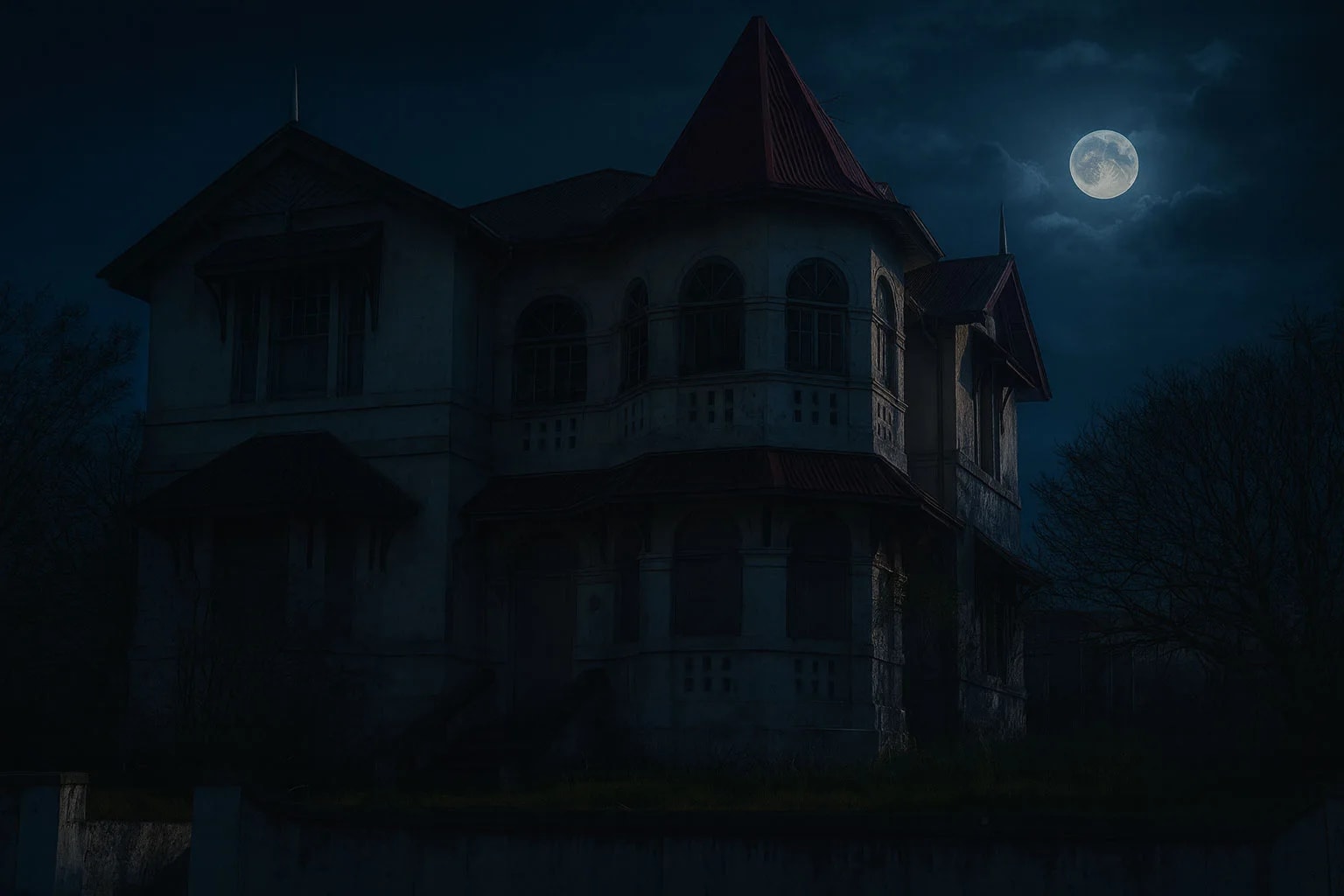
The infamous Congelier House, once known as the most haunted house in America
