The Casket Girls: Where New Orleans' Vampire Legend Begins
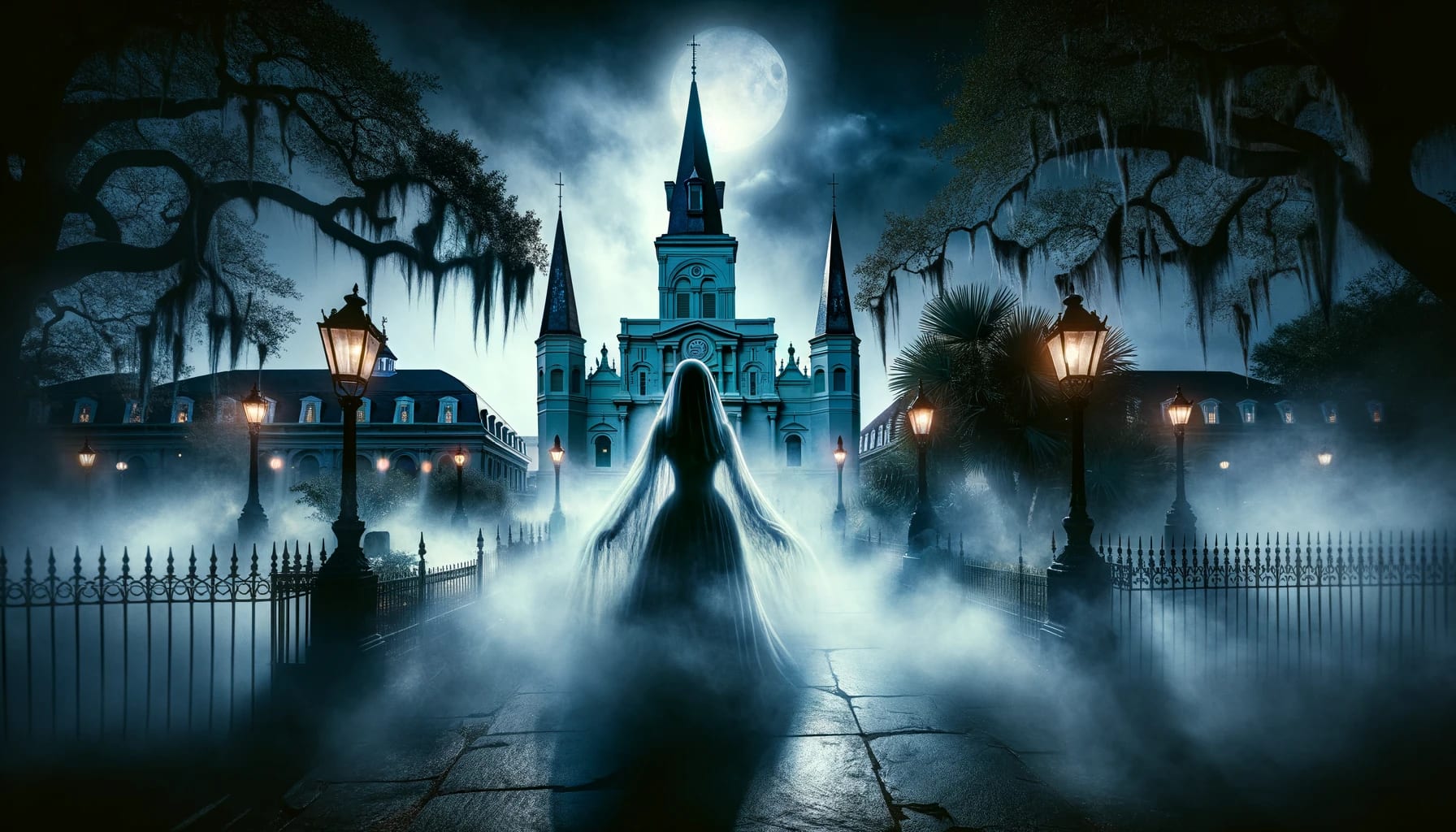
The oldest vampire legend in New Orleans dates to 1728, when a group of young French women arrived in the colony as prospective brides for settlers. They were known as les filles a la cassette — the casket girls — named for the small, coffin-shaped chests they carried containing their belongings and dowries provided by the French government.
The women were housed temporarily at the Ursuline Convent in the French Quarter, and their casket-like trunks were stored in the convent's upper floors. Almost immediately, rumors began to circulate. Locals whispered that the trunks contained something other than clothing and linens. Some said they held creatures — pale, bloodthirsty beings brought across the Atlantic from the Old World.
The legend grew over the centuries. Residents noted that the third-floor shutters of the Ursuline Convent were perpetually nailed shut — not merely latched, but sealed with blessed nails by the church itself. The explanation offered by the Ursuline nuns was practical: storage and preservation. But storytellers offered a darker theory — that whatever was locked inside those trunks had never truly been contained.
Historically, the casket girls were real. They were young women, many of them orphans, recruited by the French crown to help populate the struggling Louisiana colony. Their arrival is well documented. But the transformation of their luggage into coffins carrying the undead is pure New Orleans invention — a city that has always preferred the version of history that makes the best story.
The Old Ursuline Convent still stands today at 1100 Chartres Street, the oldest surviving building in the Mississippi River Valley and one of the oldest in North America. Whether its upper floors still hold secrets is a question New Orleans has been asking for nearly three hundred years.
Jacques Saint Germain: The Immortal of Royal Street
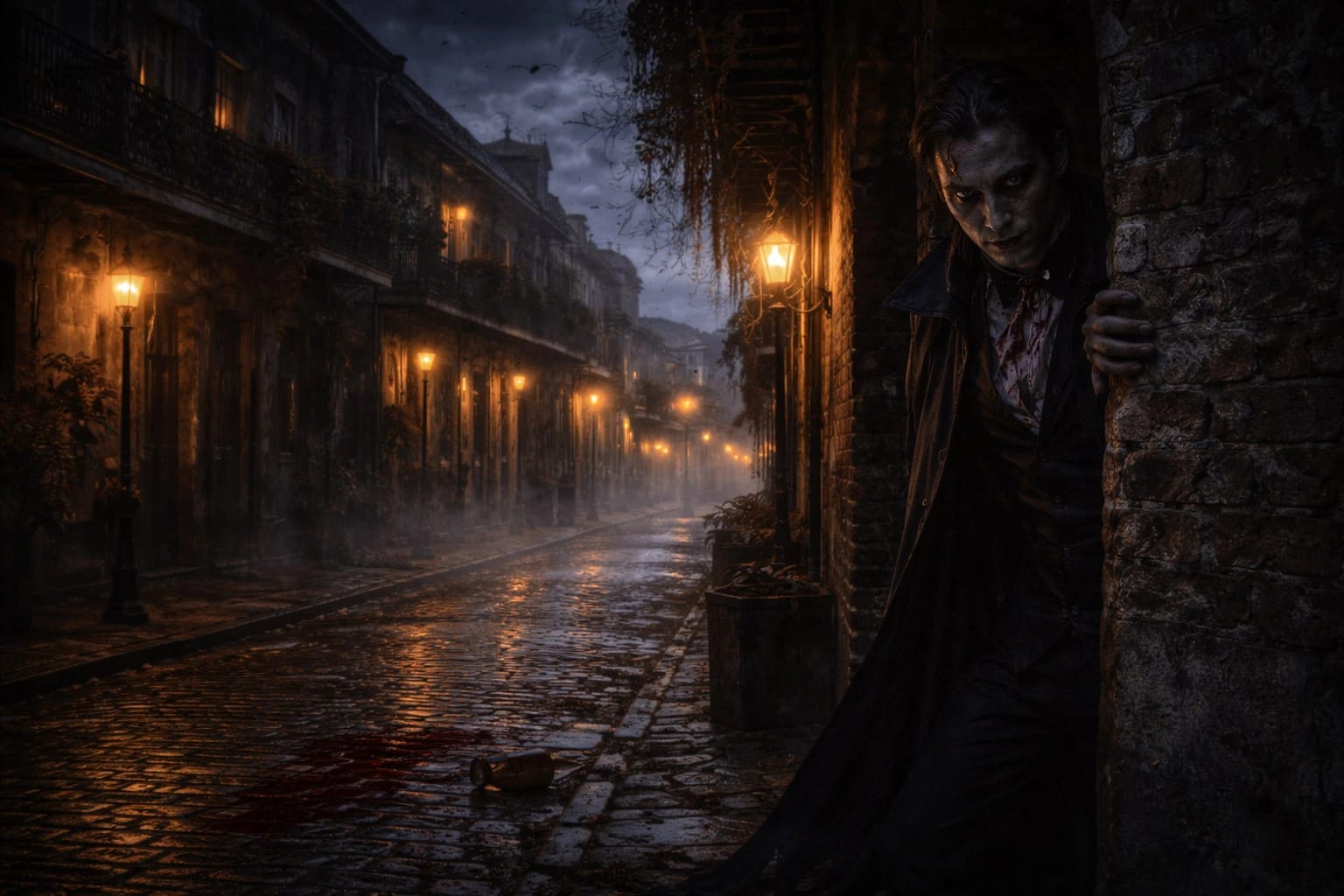
In 1902, a man calling himself Jacques Saint Germain arrived in New Orleans and took up residence in a fine house at 1039 Royal Street in the French Quarter. He was cultured, wealthy, and hosted lavish dinner parties — yet guests noticed he never ate. He would pour wine for his company but only sipped from his own glass, which held a dark red liquid that no one could quite identify.
The story took a sinister turn when a young woman was found on the street below his balcony, bleeding from puncture wounds on her neck. She claimed Saint Germain had attacked her and that she had jumped to escape. When police arrived at the Royal Street residence, they found it abandoned. Saint Germain had vanished. Inside, investigators reported finding bottles filled with what appeared to be a mixture of wine and human blood. No food was found anywhere in the home.
What made the story truly unsettling was the name itself. The historical Comte de Saint Germain was an eighteenth-century European adventurer and alchemist who claimed to have discovered the secret of immortality. He appeared at royal courts across Europe for decades, never visibly aging, and reportedly died in 1784 — though sightings of him continued well into the nineteenth century.
Was Jacques Saint Germain the same man, or merely someone trading on a famous name? The historical record offers no definitive answer. What it does offer is a perfectly New Orleans story: a mysterious stranger, a beautiful house in the French Quarter, blood-stained wine glasses, and a disappearance that left more questions than answers.
The building at 1039 Royal Street still stands and is now a private residence. It remains one of the most photographed buildings in the Quarter, its wrought-iron balconies seemingly unchanged from the night Jacques Saint Germain vanished into the Louisiana dark.
The Carter Brothers: New Orleans' Most Infamous Vampire Case
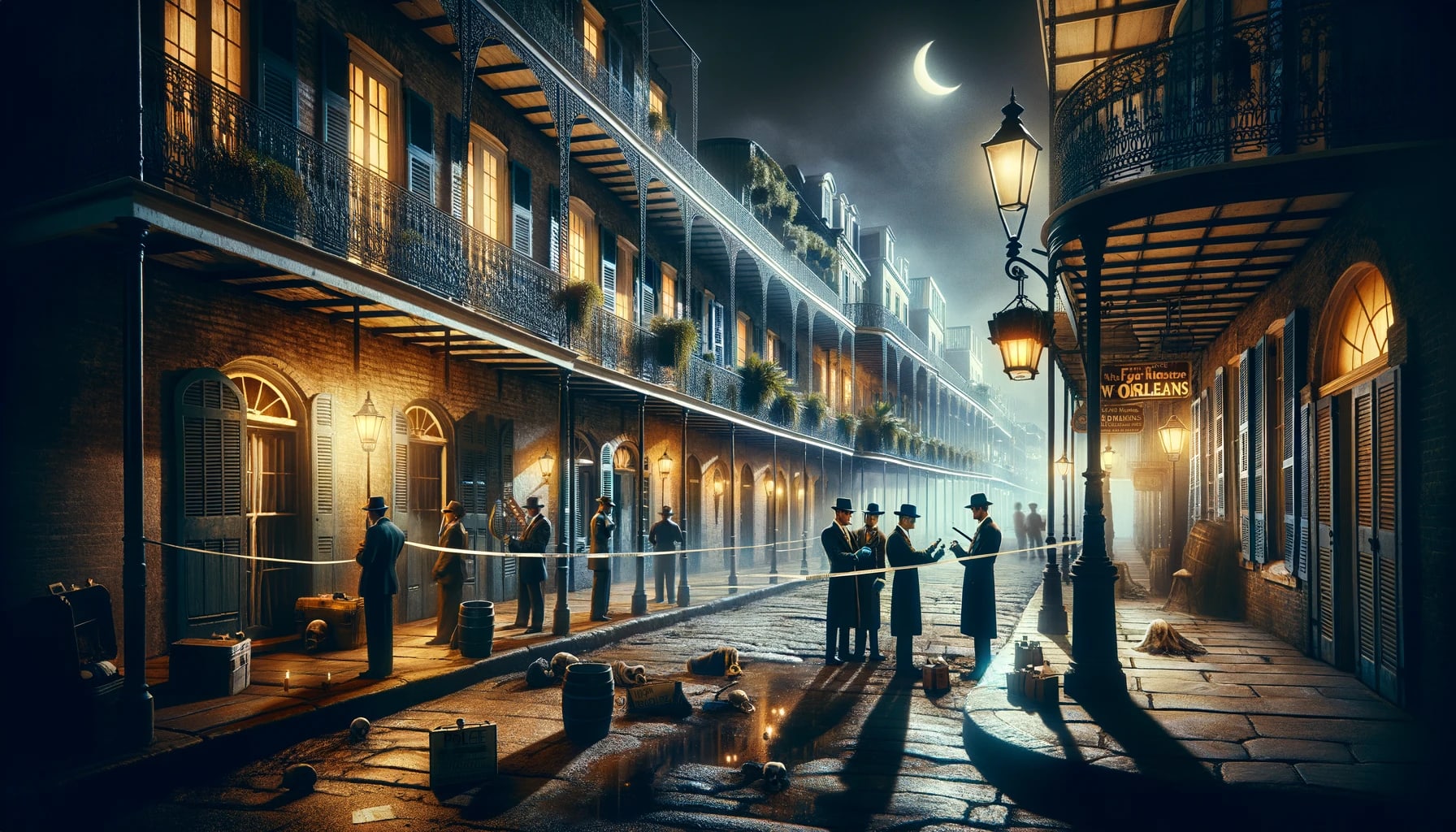
If the Casket Girls represent New Orleans' oldest vampire legend, the Carter Brothers represent its most disturbing. In 1932, a young woman stumbled into a New Orleans hospital, severely weakened from blood loss. She told a harrowing story: she had been held captive in an apartment on Royal Street by two brothers, John and Wayne Carter, who had been draining her blood over a period of days.
Police raided the apartment and found a scene out of a horror novel. Multiple victims were discovered bound to chairs, all showing signs of severe blood loss from wounds at their wrists. The Carter Brothers, by all accounts, had been kidnapping people from the streets of the French Quarter and systematically draining them of blood, which they stored and apparently consumed.
The brothers were convicted and, according to local legend, executed. But the story didn't end there. Rumors persisted that the Carter Brothers had escaped or been released, and sightings of men matching their descriptions continued to circulate in the Quarter for decades. Some versions of the story claim the brothers were never truly human at all.
The historical facts are difficult to verify completely — newspaper records from the era are incomplete, and the story has been embellished significantly over the decades. What is documented is that the apartment existed, that victims were found, and that the case generated widespread panic in the French Quarter during the early 1930s.
The Carter Brothers case is significant because it represents a bridge between folklore and crime. Unlike the Casket Girls or Jacques Saint Germain, this was not a legend built on rumor and atmosphere. Real people were harmed by other real people engaging in behavior that, whether motivated by delusion or something darker, mirrored the vampire mythology that had been building in New Orleans for two centuries.
Anne Rice and the Literary Vampire Renaissance
No discussion of vampires in New Orleans is complete without Anne Rice. Born Howard Allen Frances O'Brien in 1941 and raised in the Irish Channel neighborhood, Rice grew up steeped in the atmosphere of New Orleans — the crumbling Garden District mansions, the above-ground tombs of St. Louis Cemetery, the heavy subtropical air that made everything feel ancient and slightly decayed.
When Rice published Interview with the Vampire in 1976, she didn't merely write a novel — she reimagined what a vampire could be. Her vampires were not the mindless predators of Eastern European folklore or the camp villains of B-movies. They were sophisticated, tormented, philosophical creatures who grappled with immortality and loneliness. And she set their world firmly in New Orleans.
The novel's protagonist, Louis de Pointe du Lac, was a Louisiana plantation owner turned vampire in the late eighteenth century. His maker, Lestat de Lioncourt, became one of the most iconic characters in modern fiction. Through their story, Rice painted New Orleans as the natural habitat of the vampire — a city where beauty and death coexisted, where the past never truly died, and where the line between the living and the dead was always blurred.
The impact on New Orleans tourism was enormous. Fans from around the world began making pilgrimages to the city, visiting the Garden District homes that inspired the novel, touring the cemeteries where Rice set key scenes, and searching the French Quarter for traces of Lestat. Rice herself became a local institution, purchasing the Brevard-Rice House on First Street and hosting legendary Halloween parties that drew thousands.
Rice's influence extended far beyond a single book. The Vampire Chronicles, which eventually spanned thirteen novels, cemented New Orleans as the vampire city in the popular imagination. When the 1994 film adaptation starring Tom Cruise and Brad Pitt was shot on location, the association became permanent. A generation of readers and moviegoers who had never been to New Orleans nevertheless felt they knew its streets, its cemeteries, and its ghosts — because Anne Rice had shown them.
Rice passed away in 2021, but her legacy in New Orleans is everywhere. The city she loved and immortalized in fiction loved her back, and the vampire mythology she amplified continues to draw visitors to this day.
Why New Orleans Is the Perfect Setting for Vampire Legends
New Orleans did not become America's vampire capital by accident. The city possesses a unique combination of historical circumstances that made it fertile ground for tales of the undead — and understanding those circumstances reveals why the vampire legends feel so plausible here, even to skeptics.
Yellow Fever and the Appearance of Death
Between 1817 and 1905, yellow fever killed more than 41,000 people in New Orleans. The disease was so devastating and so poorly understood that it created widespread confusion about when someone was truly dead. Victims of yellow fever could fall into comas so deep they appeared lifeless, only to revive hours or even days later — sometimes after being placed in coffins. Reports of people clawing their way out of premature burial were not urban legends in nineteenth-century New Orleans. They were documented medical events. In a city already primed for supernatural thinking, the sight of the supposedly dead returning to life was all the evidence some people needed.
Above-Ground Burial and the Cities of the Dead
New Orleans buries its dead above ground in elaborate stone tombs and mausoleums, creating the famous "Cities of the Dead" that tourists visit today. The practical reason is the high water table — coffins buried underground had a tendency to resurface during floods. But the visual effect is unmistakable: rows upon rows of what appear to be small stone houses for the dead, complete with doors and iron gates. The tombs function as natural ovens in the Louisiana heat, essentially cremating their occupants over time. But to a visitor walking through St. Louis Cemetery No. 1 at dusk, they look exactly like the kind of place a vampire might call home.
Cultural Crossroads
New Orleans was built at the intersection of French, Spanish, African, Caribbean, and Native American cultures. Each brought its own supernatural traditions — French revenant legends, African spiritual practices, Caribbean voodoo, and more. This created a city where belief in the supernatural was not merely tolerated but woven into daily life. Marie Laveau, the Voodoo Queen of New Orleans, was a real historical figure whose legacy still draws visitors to the city. In a place where voodoo, hoodoo, and Catholic mysticism coexisted openly, adding vampires to the mix required no great leap of imagination.
As we explored in our deep dive into why New Orleans is considered America's most haunted city, these overlapping layers of history, death, and cultural belief created a supernatural ecosystem unlike anywhere else in the country. Vampires are simply one thread in a much larger tapestry.
The Modern Vampire Subculture in New Orleans
New Orleans today is home to an active community of people who identify as vampires. This is not folklore or fiction — it is a documented subculture with its own social structures, gathering places, and belief systems.
The New Orleans Vampire Association (NOVA) operated openly in the city for years, organizing charitable events and serving as a point of contact between the vampire community and the general public. Members distinguish between "sanguinarians" — those who claim to consume small amounts of blood from willing donors — and "psychic vampires" — those who claim to feed on emotional or spiritual energy rather than blood.
The French Quarter has historically been the center of this subculture. Shops along the lower Quarter sell vampire-themed merchandise, books, and artwork. Boutique bars and clubs have catered to the vampire aesthetic, and annual events draw vampire enthusiasts from around the world.
It is worth noting that this community exists alongside, and sometimes in tension with, the city's broader tourism industry. For many residents of the French Quarter, the vampire subculture is simply another expression of New Orleans' long tradition of embracing the unconventional. For others, it represents an uncomfortable blurring of entertainment and sincere belief.
Regardless of where one stands, the existence of an organized vampire community in New Orleans is itself a testament to the power of the city's mythology. The legends that began with the Casket Girls in 1728 and were amplified by Anne Rice in the 1970s have taken on a life of their own — creating a community of people for whom the vampire identity is not fiction but lived experience.
Separating Legend from History: Ghost City Tours' Approach
At Ghost City Tours, we believe the most compelling stories are the ones rooted in truth. Our position on vampires is straightforward: we do not believe vampires are real. The legends and lore surrounding vampires in New Orleans are fascinating, culturally significant, and absolutely worth preserving — but they are legends, not history.
This distinction matters to us because authenticity is the foundation of everything we do. Our ghost tours in New Orleans are built on documented history, real events, and the genuine experiences reported at the city's most haunted locations. We take pride in the fact that our guides don't need to embellish. The real history of New Orleans — the yellow fever epidemics, the horrors of the slave trade, the fires that reshaped the city, the crimes committed behind the doors of the French Quarter's most beautiful buildings — is more frightening than any vampire novel.
At this time, Ghost City Tours does not offer vampire-specific tours in New Orleans. We made this decision deliberately, because so much of what passes for "vampire history" in New Orleans tourism is actually fiction presented as fact. We would rather tell you the real story of the LaLaurie Mansion than a fabricated tale about bloodsucking aristocrats.
That said, we recognize that the vampire legends of New Orleans are genuinely interesting from a historical and cultural perspective. The Casket Girls legend tells us something real about colonial anxiety and the immigrant experience. The Carter Brothers case reflects real crime and real human suffering. Anne Rice's impact on New Orleans tourism and culture is a legitimate piece of the city's modern history. These stories deserve to be told — they just deserve to be told honestly.
We haven't ruled out the possibility of offering a vampire-themed experience in the future — one focused on the historical context of these stories rather than presenting them as supernatural fact. If and when we do, it will meet the same standard of authenticity that our guests expect from every Ghost City Tours experience.
The Enduring Power of the Vampire Myth
What makes the vampire legends of New Orleans so enduring? It isn't just Anne Rice, though her contribution is immeasurable. It isn't just the Gothic architecture or the above-ground cemeteries, though they certainly help. The real reason is that New Orleans has always been a city where the boundary between life and death feels thinner than anywhere else in America.
This is a city that celebrates its dead with jazz funerals and second lines. It is a city that builds elaborate tombs and visits them regularly, leaving offerings and decorating them on All Saints' Day. It is a city where the past is not buried but displayed openly — in its architecture, its cuisine, its music, and its stories.
Vampires, at their core, are about the refusal to die. They are about the past persisting into the present, about hunger that can never be satisfied, about beauty that conceals something dangerous. In that sense, vampires are the perfect metaphor for New Orleans itself — a city that has survived hurricanes, epidemics, fires, floods, and the passage of centuries, and yet remains stubbornly, defiantly alive.
Whether you believe in vampires or not — and to be clear, we at Ghost City Tours do not — there is no denying that their legends have become an inseparable part of what makes New Orleans one of the most fascinating cities in the world. The stories deserve to be remembered, and the history behind them deserves to be understood.
Frequently Asked Questions About Vampires in New Orleans
Are vampires in New Orleans real?
No. While New Orleans has a rich tradition of vampire legends and an active community of people who identify with vampire culture, there is no credible evidence that supernatural vampires exist. The legends are rooted in real historical events — yellow fever epidemics, colonial immigration, and documented criminal cases — that were interpreted through a supernatural lens over time.
What is the Casket Girls legend?
The Casket Girls (les filles a la cassette) were young French women who arrived in New Orleans in 1728 carrying small, coffin-shaped trunks. Legend holds that the trunks contained vampires brought from the Old World. In reality, the trunks held clothing and dowries provided by the French government. The women were housed at the Ursuline Convent, which still stands in the French Quarter.
Did Anne Rice live in New Orleans?
Yes. Anne Rice was born in New Orleans in 1941 and spent much of her life in the city. She purchased and lived in the historic Brevard-Rice House in the Garden District on First Street. Her novel Interview with the Vampire (1976) is set largely in New Orleans and was instrumental in cementing the city's association with vampire culture.
Does Ghost City Tours offer vampire tours in New Orleans?
Not at this time. Ghost City Tours focuses on authentic, historically documented experiences. While we find the vampire legends of New Orleans culturally interesting and worth preserving, we do not currently offer a vampire-specific tour. We may offer one in the future focused on the historical context of these stories.
Where are the famous vampire locations in New Orleans?
Key locations associated with vampire legends include the Old Ursuline Convent (1100 Chartres Street), the Jacques Saint Germain house (1039 Royal Street), and various locations in the French Quarter associated with the Carter Brothers case. Many of these sites are in the same area covered by our haunted New Orleans tours.
Why is New Orleans associated with vampires?
New Orleans' vampire association stems from a combination of factors: the Casket Girls legend of 1728, the yellow fever epidemics that caused confusion about death, above-ground burial practices, the city's multicultural supernatural traditions, documented cases like the Carter Brothers, and Anne Rice's enormously influential Vampire Chronicles novels.