A Place That Never Quieted
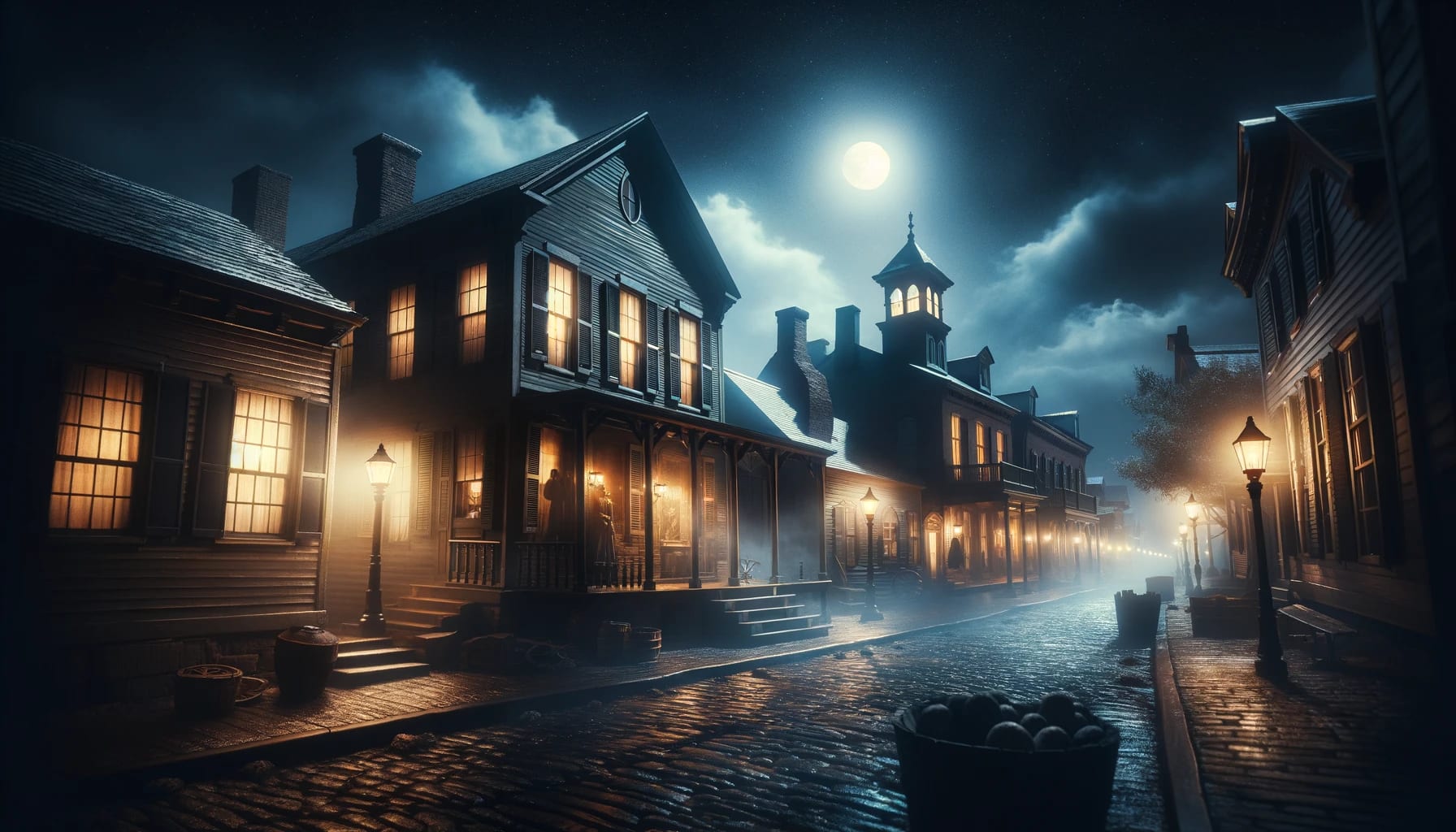
You are standing on the edge of a field at dusk. The tourists have gone home. The interpretive signs are impossible to read in the fading light. The only sound should be crickets and the occasional car on a distant road. But that is not what people describe when they stand in these fields after dark.
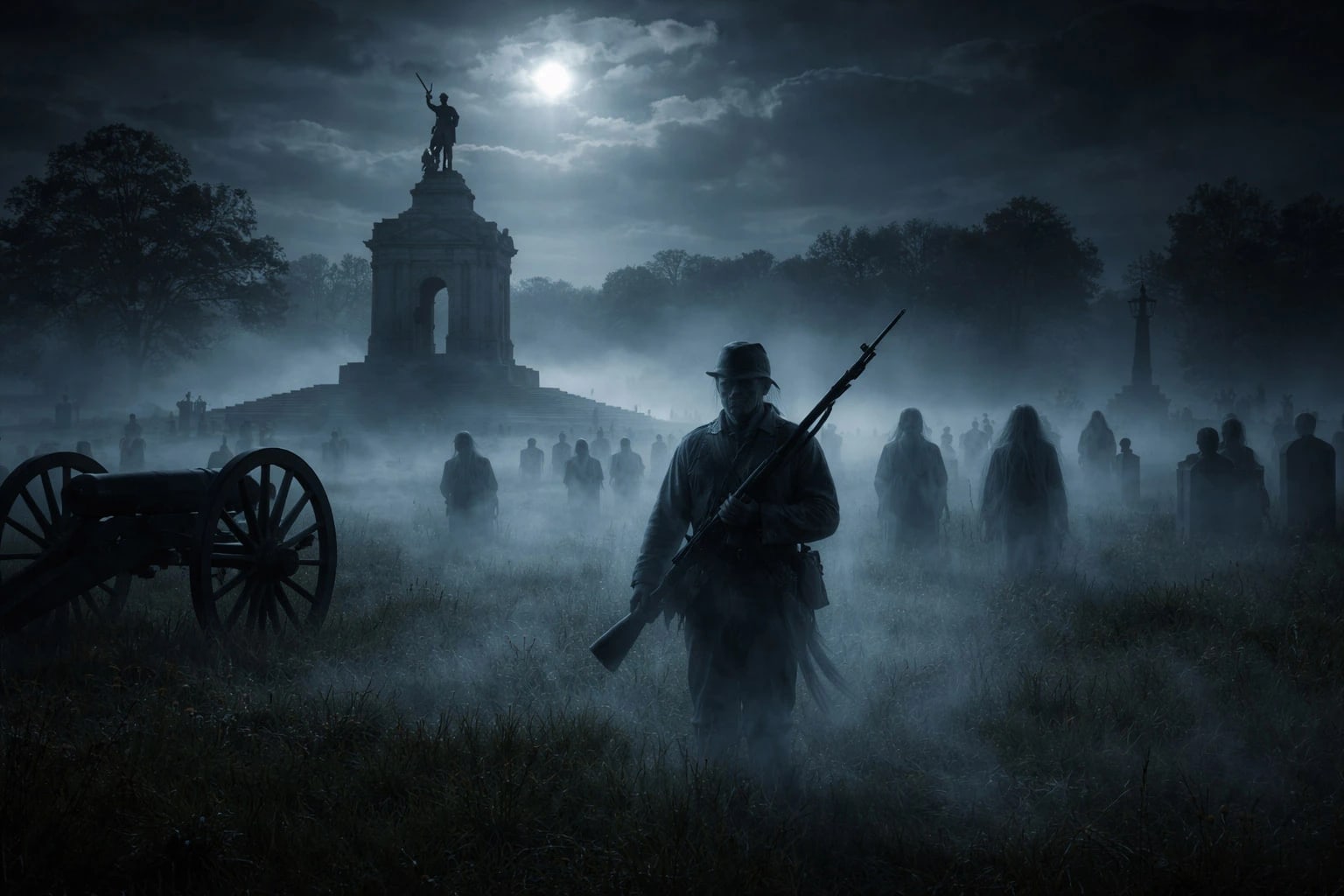
They hear footsteps — not one set, but dozens, moving in formation across ground where no one is walking. They hear what sounds like distant drumming, muffled and rhythmic, carried on air that has gone suddenly, inexplicably cold. They see shapes moving at the tree line — dark figures that do not resolve into deer or hikers or shadows cast by passing headlights. The figures move with purpose, and then they are gone.
Gettysburg is not just a historic site. It is a place that feels different. Ask anyone who has walked the battlefield at twilight, stood in the basement of a building that served as a field hospital, or driven the roads that wind through the monuments after the park has emptied for the night. There is a weight here that has nothing to do with the solemnity of a memorial. It is older than reverence. It is the feeling of standing in a place where something massive and terrible happened, and where — according to thousands of witnesses over more than a century and a half — something of that event is still happening.
Ghost City Tours guides have walked these fields hundreds of times, leading visitors through the most active locations on the battlefield and in the town itself. They are historians, researchers, and in many cases, people who have had their own unexplained experiences in these places. They will tell you, without exaggeration, that Gettysburg is unlike any other location they have investigated. The activity here is not sporadic or subtle. It is persistent. It is layered. And it shows no signs of diminishing.
So why? Why is Gettysburg so haunted? Why does this particular place, above all the battlefields and historic sites in America, generate so many reports of paranormal activity, year after year, decade after decade?
The answer is not simple. It never is, with Gettysburg. But it begins with understanding the sheer scale of what happened here — and what was left behind when the armies moved on.
The Scale of Death — Why Gettysburg Is Different
Numbers, at a certain point, stop meaning anything. The human mind is not designed to comprehend 51,000 casualties. It is a figure that historians cite and students memorize and visitors read on plaques, but it resists genuine understanding. So consider it differently.
Imagine the entire population of a small city — every man, woman, and child — killed, wounded, or missing in the space of seventy-two hours. That is what happened at Gettysburg between July 1 and July 3, 1863. The Battle of Gettysburg was one of the bloodiest engagements in American history, and it unfolded with a speed and ferocity that overwhelmed every system designed to manage its aftermath.
The Union Army suffered approximately 23,000 casualties. The Confederate Army suffered approximately 28,000. These were not abstract statistics. They were men — most of them young, many of them teenagers — who had marched for days to reach this small Pennsylvania crossroads town, and who died in fields they had never seen before, fighting for ground that held no personal significance to them whatsoever.
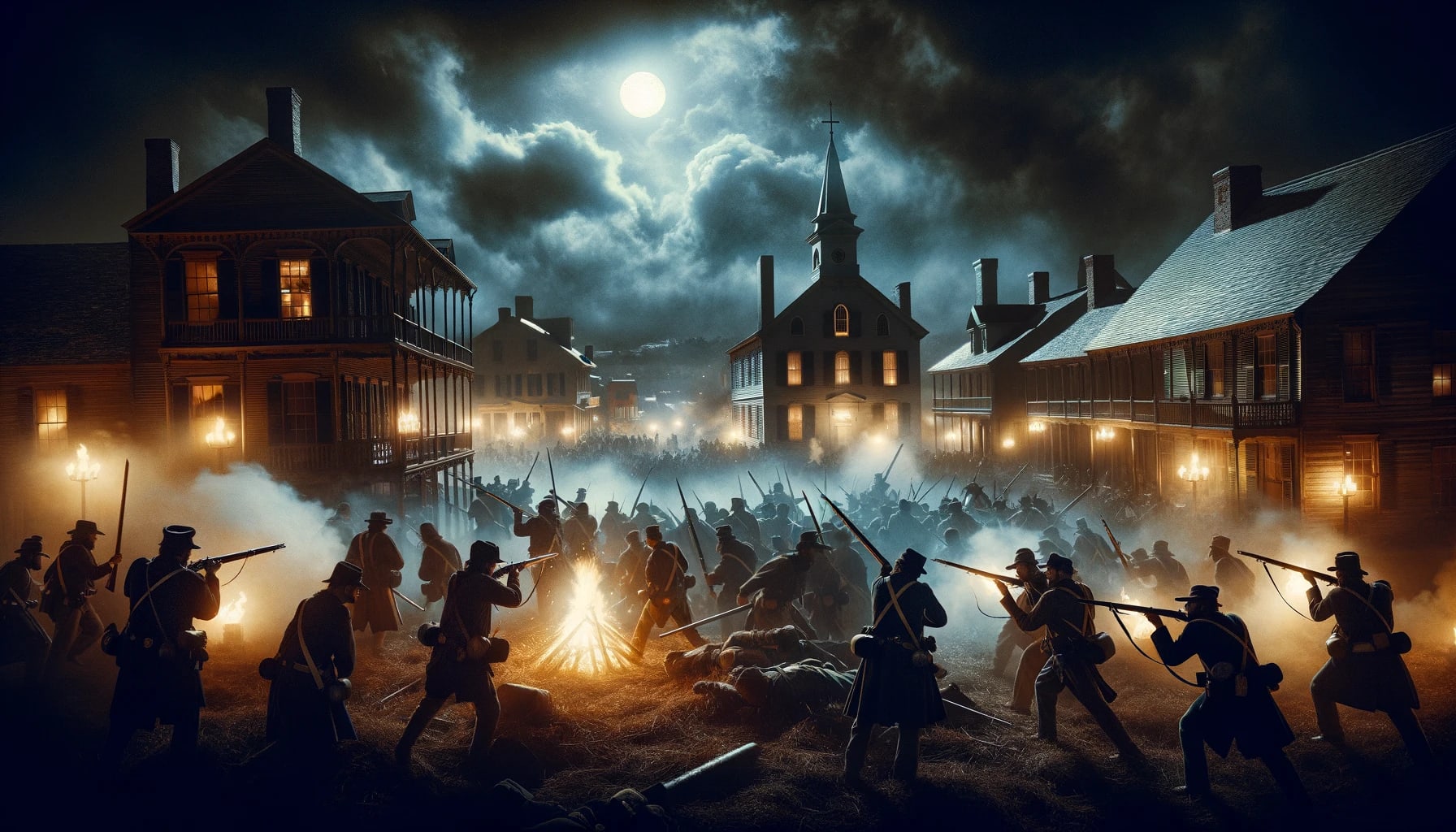
The killing was not orderly. It was chaos. Men advanced into artillery fire that tore through their ranks like a scythe. They fought hand to hand among boulders and behind stone walls, bayoneting and clubbing each other in spaces so confined that the dead piled on top of each other. Cannon fire shook the ground for miles in every direction. The smoke was so thick that soldiers on both sides reported firing blindly into the haze, unable to see what they were shooting at.
And then there was Pickett's Charge — the doomed assault on the afternoon of July 3, in which approximately 12,500 Confederate soldiers marched across nearly a mile of open ground under relentless artillery and rifle fire. The slaughter was catastrophic. Entire regiments were annihilated. The survivors who reached the Union line were overwhelmed. The field they had crossed was carpeted with the dead and dying.
Paranormal researchers have long theorized that locations where death occurs on a massive scale — and where that death is accompanied by extreme emotional and physical suffering — are more likely to produce lasting spiritual imprints. If that theory holds, Gettysburg is not just a candidate for paranormal activity. It is the single most saturated site in North America.
Why is Gettysburg considered haunted? Gettysburg is considered haunted because of the extraordinary concentration of violent death and human suffering that occurred here over three days in July 1863. More than 51,000 soldiers were killed, wounded, or went missing in one of the bloodiest battles in American history, and the trauma of that event — compressed into a small geographic area — has produced consistent reports of paranormal activity for over 160 years.
The soldiers who died here did not die peacefully. They died in terror, in agony, in confusion. Many of them died not understanding whether their side had won or lost. Many of them died calling for help that never came. Many of them died slowly, over hours or days, in fields where no one could reach them. The psychological dimension of this suffering is critical to understanding why Gettysburg feels the way it does. This was not just physical death. It was death saturated with fear, confusion, grief, and unfinished intent — the most potent combination of emotions that paranormal theory identifies as fuel for residual and intelligent hauntings alike.
Death Without Closure — The Human Element
The battle ended. The armies moved on. But the dead did not.
In the days following the battle, Gettysburg was transformed into something out of a nightmare. The town's population of approximately 2,400 people was suddenly responsible for dealing with the aftermath of a battle that had produced tens of thousands of casualties. The dead lay everywhere — in the fields, in the orchards, along the roads, in the yards of private homes. The July heat accelerated decomposition with horrifying speed. The smell, according to contemporary accounts, was so overwhelming that residents miles away reported being unable to eat.
Burial details worked around the clock, but the task was impossible to complete quickly. Many soldiers were buried where they fell, in shallow graves that were little more than scrapes in the earth, covered with a thin layer of dirt that the next rain would wash away. Others were placed in mass graves with no identification. Confederate dead, in particular, were often buried with little ceremony and no markers — their identities lost permanently.
The chaos of the burial process meant that thousands of soldiers were never properly identified. Families across the North and South waited for news that never came. Letters went unanswered. Bodies were described in official reports as "unknown" and buried in plots that would never bear a name. The emotional toll on the families left behind is difficult to overstate. Mothers, wives, and children spent years searching for information about loved ones who had simply vanished into the machinery of war.
This absence of closure — this incompleteness — is a recurring theme in Gettysburg's haunted history. Paranormal researchers often point to unfinished business as one of the primary drivers of intelligent hauntings: the idea that a spirit remains tied to a location because something was left unresolved at the moment of death. At Gettysburg, that unresolved element is not a single story. It is thousands of stories, layered on top of each other, each one representing a life that ended without a final word, a last letter, a proper burial, or a goodbye.
The concept of lingering presence — of something remaining in a place long after the physical body is gone — is central to understanding why Gettysburg continues to produce reports of unexplained activity. These are not random ghost stories. They are, in a very real sense, the echoes of lives that were interrupted so violently and so suddenly that whatever was left behind has never fully departed.
Visitors to the battlefield often describe a feeling that goes beyond simple eeriness. They describe sadness — a profound, unexpected wave of grief that seems to come from outside themselves, settling over them without warning as they walk through areas where the fighting was heaviest. Ghost City Tours guides have heard these reports hundreds of times, and many of them have experienced the same sensation themselves. It is one of the things that sets Gettysburg apart from every other haunted location in America: the hauntings here are not just visual or auditory. They are emotional.
A Battlefield Turned Open-Air Hospital
The horror of Gettysburg did not end when the guns fell silent. In many ways, it intensified.
The town itself became an open-air hospital. Every church, every barn, every public building, and dozens of private homes were commandeered to treat the wounded. Surgeons worked without rest, performing amputations by the hundreds — without anesthesia in many cases, with nothing more than a slug of whiskey and a leather strap to bite down on. The screams of men undergoing surgery could be heard throughout the town, day and night, for weeks after the battle.
Piles of amputated limbs accumulated outside improvised operating rooms. Blood soaked through floorboards and into the earth beneath. Civilians — women, children, the elderly — were pressed into service as nurses, holding men down during procedures, carrying water to the dying, and wrapping wounds with whatever cloth could be found. The psychological trauma inflicted on the civilian population of Gettysburg was immense, and it is a dimension of the battle's aftermath that is often overlooked.
The Farnsworth House is one of the most vivid examples of this civilian horror. Built in 1810, the house was occupied by Confederate sharpshooters during the battle, and its brick walls still bear more than 100 bullet holes from the fighting. After the battle, the house was used to treat wounded soldiers, and the suffering that occurred within its walls has left a mark that visitors and investigators continue to report experiencing today. Guests have described hearing footsteps in empty rooms, feeling sudden drops in temperature, and encountering the apparition of a Confederate soldier in the building's upper floors.
[INSERT HAUNTED LOCATION CARD: Farnsworth House]
The Jennie Wade House tells an even more personal story. Jennie Wade was the only civilian killed during the Battle of Gettysburg, struck by a stray bullet that passed through two doors while she was baking bread for Union soldiers on the morning of July 3, 1863. She was twenty years old. The house where she died has become one of the most visited — and most haunted — locations in Gettysburg. Visitors have reported the smell of fresh bread in rooms where no one is baking, the sound of a woman's voice humming softly, and the sensation of being touched by unseen hands. The story of Jennie Wade is a reminder that the Battle of Gettysburg did not only claim soldiers. It reached into the homes of ordinary people and took their lives as well.
[INSERT HAUNTED LOCATION CARD: Jennie Wade House]
These locations — and dozens like them throughout the town — represent a layer of haunting that extends far beyond the battlefield itself. The suffering that occurred in Gettysburg's buildings was intimate and prolonged, unfolding over weeks and months as wounded soldiers lingered, deteriorated, and died in rooms where families had once eaten dinner and children had once played. The imprint of that suffering is, according to those who have experienced it firsthand, unmistakable.
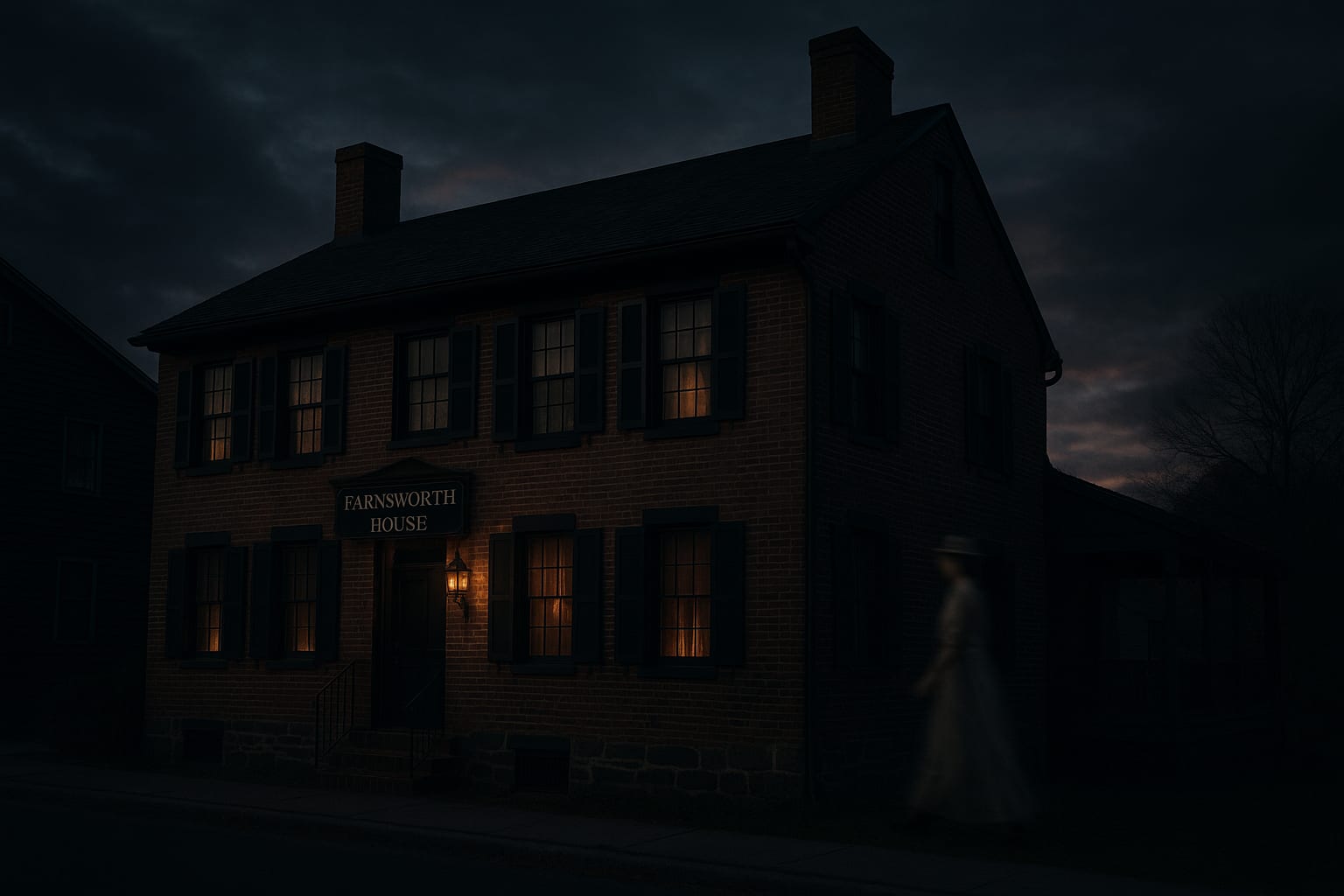
The Haunted Farnsworth House
This 1810 house bears over 100 bullet holes from Confederate sharpshooters. After the battle, it served as a field hospital. Guests report footsteps, cold spots, and the apparition of a Confederate soldier.
Read More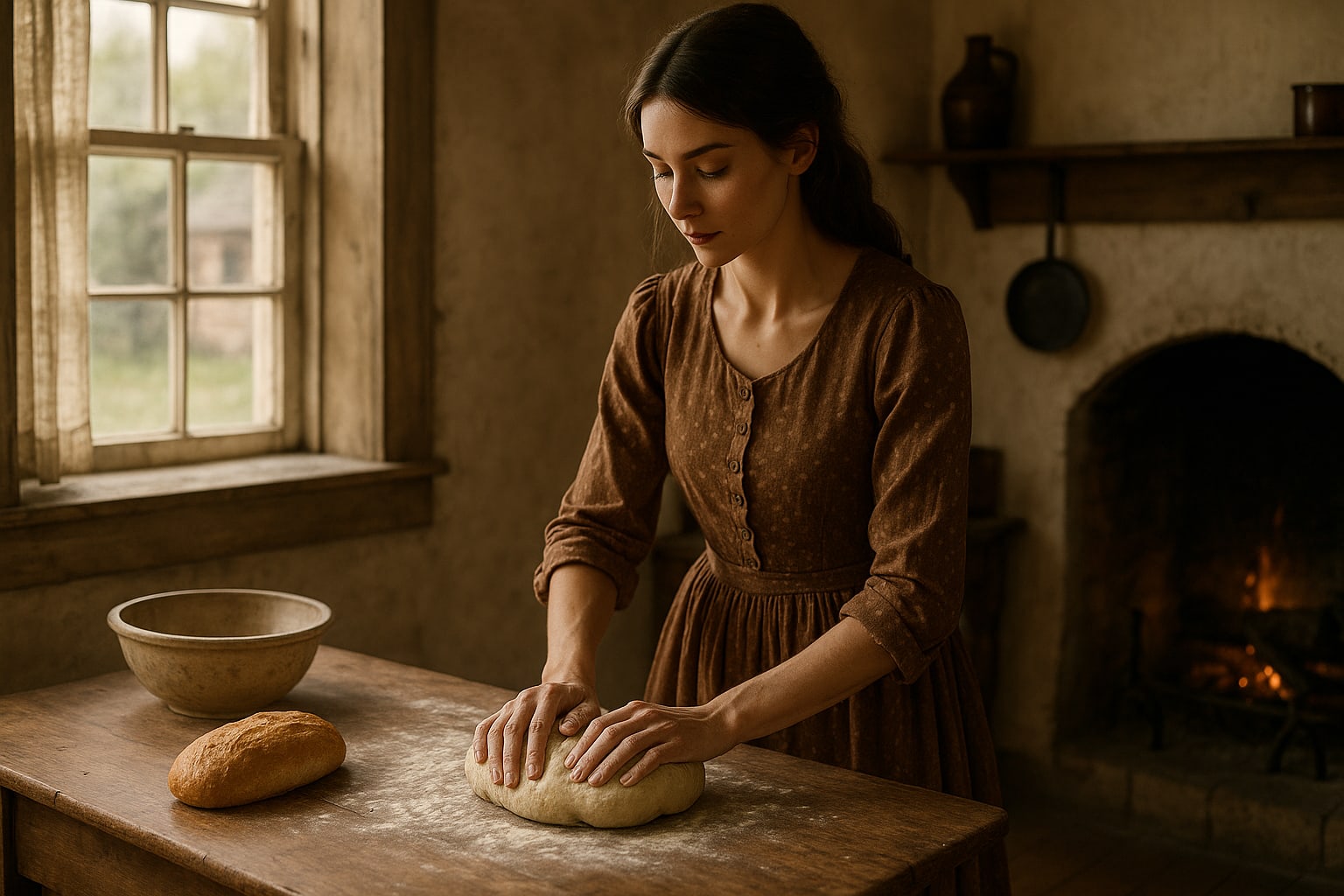
The Ghost of Jennie Wade
The only civilian killed during the Battle of Gettysburg, struck by a stray bullet while baking bread. Visitors report the smell of fresh bread, a woman's humming, and the sensation of invisible hands.
Read MoreTypes of Hauntings in Gettysburg
Not all hauntings are the same, and Gettysburg demonstrates the full spectrum of paranormal phenomena that researchers have identified and categorized over decades of investigation. Understanding the different types of hauntings reported here is essential to understanding why this location is considered so extraordinary by those who study the paranormal.
Residual Hauntings
The most commonly reported type of haunting at Gettysburg is the residual haunting — the apparent replaying of past events, as though the energy of the original experience has been recorded into the environment and plays back under certain conditions.
At Gettysburg, residual hauntings take forms that are strikingly consistent across decades of reports. Visitors hear the sound of marching — dozens or hundreds of feet moving in unison across ground where infantry once advanced. They hear cannon fire that has no source, rolling across the fields in deep, percussive waves that rattle windows in nearby buildings. They hear gunfire — sharp, staccato cracks that echo across valleys where no one is shooting. They hear drums, fifes, and the distant sound of men shouting orders.
These sounds are not heard by everyone, and they do not occur on a predictable schedule. But they have been reported by thousands of visitors over more than a century, and the descriptions are remarkably uniform. The marching always sounds the same. The cannon fire always comes from the same directions. The residual hauntings of Gettysburg behave as though the battle is being replayed on a loop that only some people are able to perceive.
Intelligent Hauntings
Unlike residual hauntings, intelligent hauntings involve apparent interaction between the living and the dead. At Gettysburg, these interactions take several forms.
Visitors have reported being spoken to by figures in period clothing who vanish when approached. Voices have been captured on EVP recorders that respond directly to questions — answering with names, regiment numbers, or simple pleas. Apparitions have been seen that appear to be aware of the living, turning to look at visitors, stepping aside to let them pass, or gesturing as though trying to communicate something urgent.
One of the most frequently reported intelligent haunting phenomena at Gettysburg involves soldiers who appear to be lost or confused, asking for directions or requesting water. These encounters are described by witnesses as feeling completely real in the moment — the figure looks solid, speaks clearly, and behaves like a living person — until it disappears, often mid-sentence or mid-step, leaving the witness standing alone in a suddenly empty field.
Crisis Apparitions
Perhaps the most unsettling type of haunting reported at Gettysburg is the crisis apparition — the appearance of a figure that seems to be caught in the moment of death or extreme suffering.
Visitors and investigators have described encountering soldiers who appear wounded — bleeding, limping, clutching injuries that are visible and realistic. These figures sometimes ask for help, reaching out to the living with expressions of pain and desperation that witnesses describe as deeply disturbing. Unlike intelligent hauntings, where the figure seems aware of the present, crisis apparitions appear to be trapped in their final moments, reliving the trauma of their death in an endless, unbroken cycle.
These reports are particularly common in areas where the fighting was most intense — Devil's Den, the Wheatfield, Little Round Top, and the field where Pickett's Charge took place. The emotional impact on witnesses is often profound. People who encounter crisis apparitions at Gettysburg frequently describe the experience as life-changing, not because they saw a ghost, but because they felt, for a moment, the full weight of what happened here.
Ghost City Tours guides have experienced many of these phenomena firsthand. Sudden temperature drops that occur without any change in weather or wind. Equipment anomalies — fully charged batteries draining in seconds, EMF meters spiking in locations far from any electrical source, audio recorders capturing sounds that no one present heard at the time. And repeated sightings — shadow figures that appear in the same locations, night after night, behaving in the same patterns, as though they are following orders that were given more than 160 years ago.
The Most Haunted Locations in Gettysburg
Gettysburg's haunted reputation is not evenly distributed across the battlefield. Certain locations have become focal points for paranormal activity — places where the reports are so frequent, so consistent, and so vivid that they have earned reputations as some of the most haunted sites in America. These are the places where the veil between past and present feels thinnest, where visitors are most likely to experience something they cannot explain.
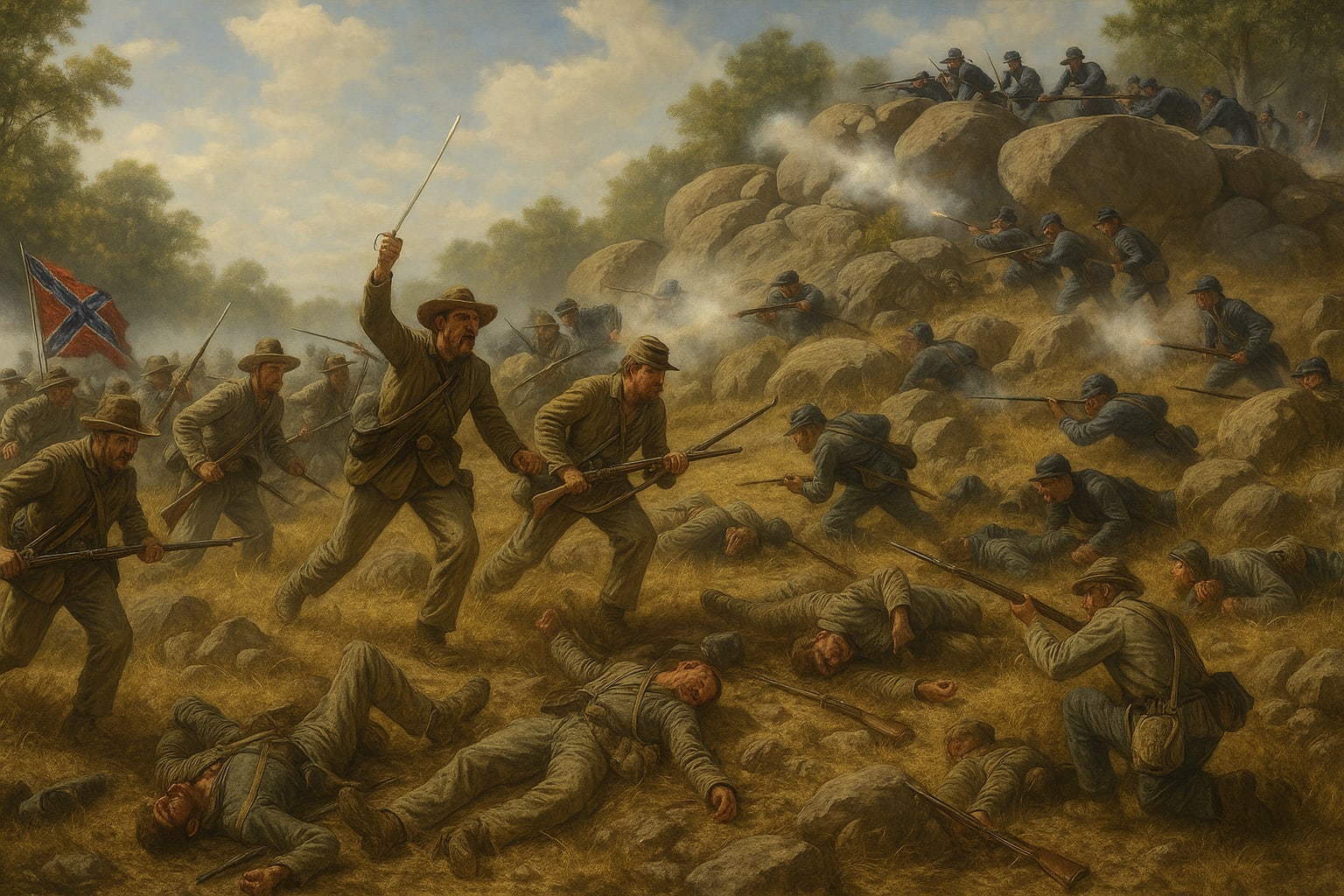
The Ghosts of Little Round Top
Site of the 20th Maine's legendary bayonet charge. Visitors report the smell of gunpowder, spectral soldiers in formation, and the clang of bayonets on quiet evenings.
Read More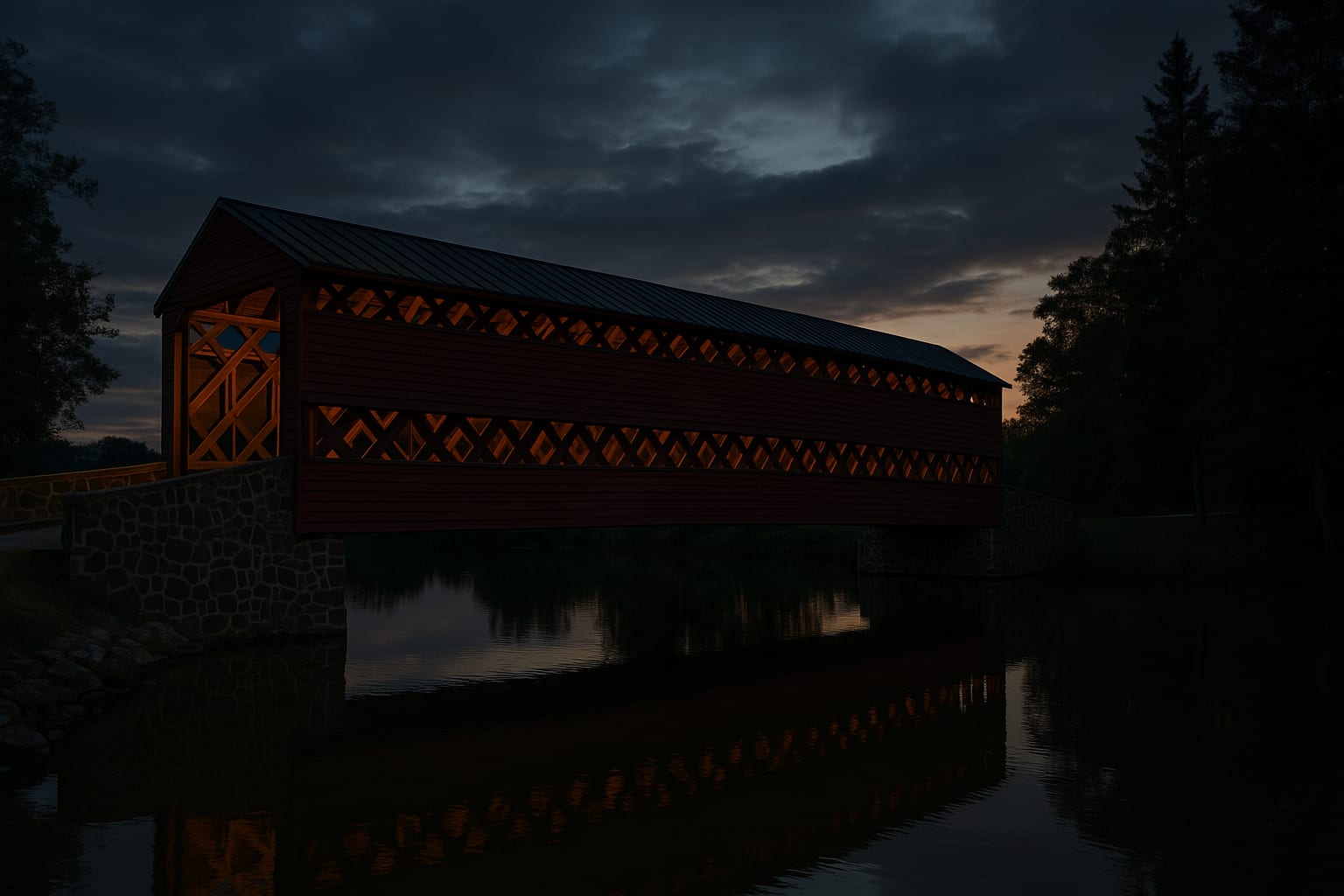
Sachs Covered Bridge
Historic covered bridge used by both armies during the battle. Three Confederate soldiers were reportedly hanged here. Visitors report apparitions, phantom hoofbeats, and unexplained lights.
Read More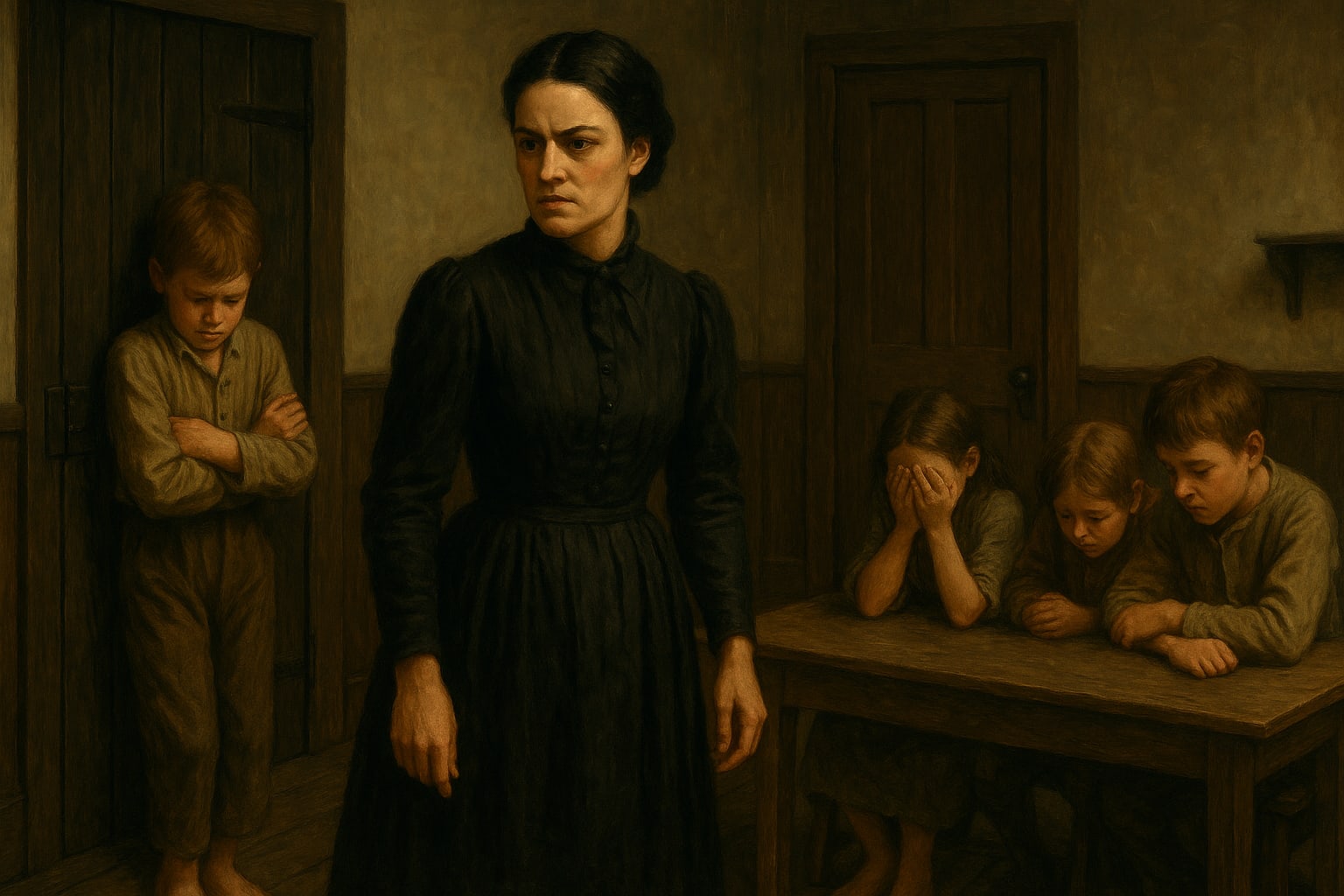
The Ghosts of the Gettysburg Children's Orphanage
Established to shelter children orphaned by the war, the Orphanage became a place of abuse. Visitors report children's voices, chains rattling in the basement, and the sensation of small hands grasping theirs.
Read More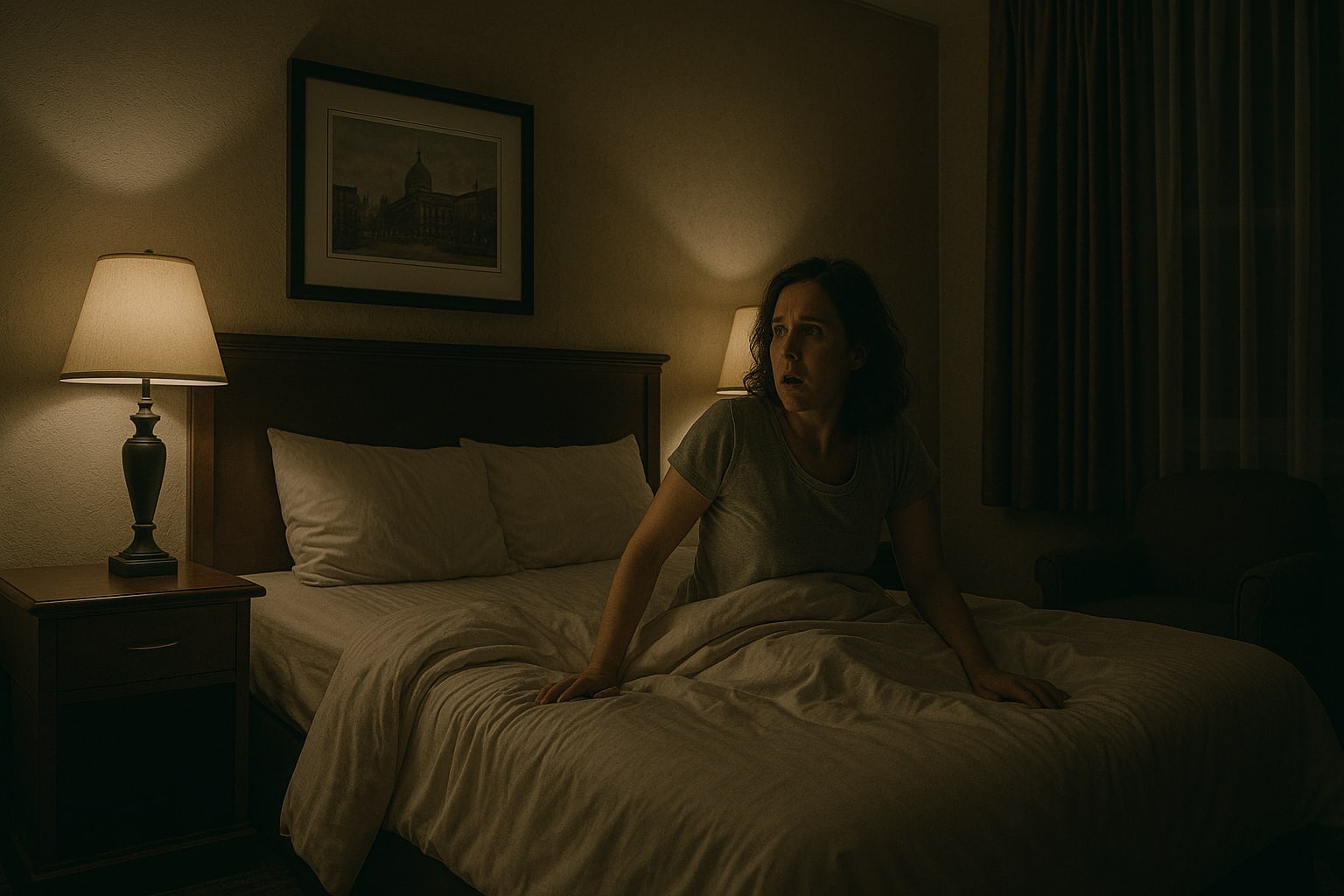
The Ghosts of the Gettysburg Hotel
Established in 1797, this hotel served as a hospital during the battle and hosted Lincoln before the Gettysburg Address. Guests report Civil War apparitions, phantom footsteps, and a ghostly nurse.
Read MoreDevil's Den
Devil's Den is a jumbled landscape of massive boulders at the southern end of the battlefield, and it is one of the most paranormally active locations in Gettysburg. On July 2, 1863, Confederate and Union forces fought a vicious engagement among these rocks, and the casualties were staggering. The boulders created natural fortifications, but they also created killing grounds — narrow spaces where soldiers were trapped, shot at close range, and left where they fell.
The most famous ghost of Devil's Den is the barefoot soldier — a figure described as a young man in ragged Confederate clothing, barefoot, with long unkempt hair, who has been photographed and encountered by visitors for decades. He has been described as helpful, sometimes pointing visitors toward areas of interest or gesturing in a friendly manner before disappearing. Other reports from Devil's Den include shadow figures moving among the boulders after dark, the sound of gunfire echoing through the rocks, and cameras and electronic equipment malfunctioning without explanation in the same locations repeatedly.
Devil's Den is a place where even skeptics pause. The atmosphere among the boulders is heavy, oppressive, and unmistakably different from the open fields nearby. Something about the confined spaces, the history of close-quarters violence, and the sheer number of reports makes Devil's Den one of the essential locations for anyone seeking to understand why Gettysburg is so haunted.
Little Round Top
Little Round Top is a rocky, wooded hill at the southern end of the Union line, and it was the site of one of the most famous engagements of the entire Civil War. On the evening of July 2, 1863, the 20th Maine Infantry Regiment, commanded by Colonel Joshua Lawrence Chamberlain, held the extreme left flank of the Union Army against repeated Confederate assaults. When they ran out of ammunition, Chamberlain ordered a bayonet charge that swept the Confederates off the hill and saved the Union position.
The fighting on Little Round Top was desperate and brutal, and the hill has been a hotspot for paranormal reports ever since. Visitors have reported the smell of gunpowder, the sound of men shouting, and the sight of ghostly figures moving through the trees in formation. On quiet evenings, the clang of metal — bayonets, rifle butts, canteens — has been heard by visitors standing on ground where the hand-to-hand fighting was fiercest.
[INSERT HAUNTED LOCATION CARD: Little Round Top]
Sachs Covered Bridge
Sachs Covered Bridge, built in 1854, was used by both armies during the Battle of Gettysburg. Confederate forces crossed the bridge during their retreat after the battle, and according to local tradition, three Confederate soldiers were hanged from the bridge's rafters for desertion during the withdrawal.
The bridge, which spans Marsh Creek about three miles from the center of town, has become one of the most photographed — and most haunted — locations in the Gettysburg area. Visitors have reported seeing apparitions on and around the bridge, hearing the sound of horses' hooves crossing the wooden deck when no horses are present, and experiencing sudden, intense cold spots that move through the covered structure as though something is passing through. Orbs, mists, and unexplained lights have been captured in photographs taken at the bridge with such frequency that it has become a destination for paranormal investigators from across the country.
[INSERT HAUNTED LOCATION CARD: Sachs Covered Bridge]
The Orphanage
The National Soldiers' Orphan Homestead — known locally as "The Orphanage" — was established after the battle to house children who had been orphaned by the war. What should have been a place of refuge became, under the direction of a cruel headmistress named Rosa Carmichael, a place of abuse and terror. Children were beaten, confined in a dungeon-like basement, and subjected to punishments that shocked investigators when the abuse was finally exposed in 1876.
The building has been the subject of intense paranormal activity for decades. Visitors have reported hearing children's voices — laughing, crying, calling out for help — in rooms that are empty. The sound of chains rattling in the basement has been reported by investigators, and several visitors have described the sensation of a small hand grasping their own as they walk through the building's narrow hallways.
[INSERT HAUNTED LOCATION CARD: The Orphanage]
The Gettysburg Hotel
The Gettysburg Hotel, established in 1797, is one of the oldest buildings in town and has been a witness to every chapter of Gettysburg's history. During the battle, the hotel served as a hospital, and it hosted President Abraham Lincoln on the night before he delivered the Gettysburg Address in November 1863.
The hotel's long history and its direct connection to the battle have made it one of the most actively haunted locations in town. Guests have reported encounters with apparitions in Civil War-era clothing, doors that open and close on their own, and the sound of footsteps in hallways that are empty when investigated. The ghost of a nurse — believed to be a woman who tended to wounded soldiers during the battle's aftermath — has been reported on multiple floors, described as a translucent figure in period dress who moves through the hallways with purpose before vanishing through a wall.
[INSERT HAUNTED LOCATION CARD: Gettysburg Hotel]
Why Gettysburg Feels Different
There are haunted cities across America. Savannah has its elegant, moss-draped ghost stories — centuries of colonial history, yellow fever epidemics, and a culture that has always embraced its relationship with the dead. New Orleans pulses with a spiritual energy that reflects its unique blend of Creole, Voodoo, and Catholic traditions. Charleston carries the quiet weight of plantations, wars, and hurricanes that have shaped its architecture and its hauntings alike.
Gettysburg is different from all of them.
The hauntings in Savannah unfold over centuries. The hauntings in New Orleans are woven into the fabric of a living, breathing city that has never stopped changing. Gettysburg's haunting is rooted in a single, cataclysmic event — three days in July 1863 — and everything that followed from it. The concentration of death here is staggering. Other haunted locations accumulate their ghosts over decades or centuries. Gettysburg accumulated most of its ghosts in less than seventy-two hours.
That concentration matters. Paranormal researchers have long noted that the intensity of a haunting often correlates with the intensity of the original event. A single murder can haunt a house. A plague can haunt a neighborhood. But a battle that kills and wounds 51,000 people in three days, on a field you can walk across in an afternoon — that haunts the ground itself.
Visitors to Gettysburg frequently describe an atmosphere that distinguishes it from any other historic site they have visited. It is not the reverence of a memorial. It is not the solemnity of a cemetery. It is something more visceral — an oppressive heaviness in the air, an emotional weight that settles over them without warning. Some visitors describe sudden waves of sadness or anxiety that have no apparent cause. Others describe a sense of being watched, of not being alone, even when they can see that no one else is nearby.
These experiences are reported so consistently, by such a wide variety of visitors — skeptics and believers, first-time visitors and longtime researchers — that they cannot be attributed solely to expectation or suggestion. Something about this place affects people on a level that goes beyond what they expected to feel. Whether that something is paranormal energy, the psychological weight of standing on ground where so many people died, or some combination of both, the effect is real and it is powerful.
Gettysburg does not just have ghost stories. It has an atmosphere — a presence — that envelops anyone who spends time here after dark. And once you have felt it, you do not forget it.
Paranormal Investigations in Gettysburg
Gettysburg has been the subject of more formal paranormal investigations than almost any other location in the United States, and the body of evidence collected here over the decades is substantial.
Investigators use a range of tools and methods when working in Gettysburg. EVP recorders — devices designed to capture sounds below or above the range of normal human hearing — have produced some of the most compelling recordings in the field. Investigators at Gettysburg have captured voices that speak in the cadences and vocabulary of the Civil War era, responding to questions with names, regiment numbers, and fragments of conversation that correspond to documented historical events. These recordings are not proof of the paranormal — no single piece of evidence is — but their consistency and their correlation with historical records make them some of the most studied EVP recordings in existence.
EMF meters, which detect fluctuations in electromagnetic fields, are another standard tool of paranormal investigation, and they produce striking results at Gettysburg. Investigators routinely document EMF spikes in locations far from any electrical source — in the middle of open fields, inside stone-walled buildings with no wiring, and along paths where soldiers are known to have marched and fought. These spikes often correlate with other phenomena: a sudden temperature drop, a visual anomaly captured on camera, or the subjective sense among investigators that something has changed in the environment.
What sets Gettysburg apart from many other investigated locations is the rigor that investigators bring to their work here. The battlefield's history is meticulously documented — troop positions, casualty reports, personal letters, and official records provide a detailed map of what happened and where. This allows investigators to cross-reference their findings with historical data in ways that are rarely possible elsewhere. When an EVP recording captures a voice that gives a regiment number, investigators can check that number against the roster of units that fought in that specific location. When a visual anomaly is photographed near a particular monument, investigators can determine exactly what happened on that spot and who died there.
Ghost City Tours guides are not passive observers of this process. Many of them actively participate in investigations, using the same tools and methods as formal paranormal research teams. They bring a unique advantage: familiarity. Having walked the same ground hundreds of times, they know where activity tends to concentrate, what times of night produce the most reports, and which locations are most likely to yield results. They are not just storytellers — they are participants in an ongoing effort to understand what is happening at Gettysburg.
During tours, guides and guests alike have reported shadow figures that appear and disappear in the same locations with striking regularity. Guests have captured photographs that they did not expect — anomalous lights, misty shapes, and in some cases, figures that were not visible to the naked eye but appeared clearly in the image. These experiences are not guaranteed, but they occur with enough frequency that our guides have come to regard them not as anomalies but as part of the fabric of what it means to walk through Gettysburg after dark.
The Founder's Connection to Gettysburg
For Tim Nealon, Gettysburg was never just a historic site. It was the place where everything started.
Growing up in the towns and farmland surrounding Gettysburg, Tim developed an obsession with the Civil War that went far beyond what most kids his age were interested in. While his friends were playing sports or watching television, Tim was reading accounts of Pickett's Charge, studying the terrain of Little Round Top, and memorizing the names of regiments that had fought and died in the fields he could see from the highway on the drive to school. The battlefield was not a distant abstraction. It was the landscape of his childhood — a place he visited so often that its geography became as familiar as his own backyard.
But it was the nighttime visits that changed everything.
Gettysburg at night is a different world. The monuments cast long shadows. The fields stretch into darkness that feels absolute. The sounds of the town — cars, voices, the normal noise of a small community — fade away, and what replaces them is a silence that is not quite silence. It is a silence that feels occupied.
Tim began exploring the battlefield after dark as a teenager, driven by a fascination that was equal parts historical curiosity and something harder to name. He wanted to see if the stories were true — the stories that locals told about ghostly figures on the fields, about cannon fire heard on still summer nights, about the feeling of being watched by something that was not supposed to be there. He walked the paths alone, stood among the boulders at Devil's Den, sat on the slopes of Little Round Top, and waited.
What he experienced during those nights — the sounds, the sensations, the moments when the boundary between the present and the past seemed to dissolve — planted a seed that would eventually grow into something much larger. Tim realized that these stories needed to be told. Not as campfire tales or cheap thrills, but as what they actually were: the continuation of a history that had never really ended. The soldiers who fought and died at Gettysburg had stories that deserved to be heard, and the experiences that people continued to have on this ground deserved to be taken seriously.
That realization — born on the battlefield at night, in the silence that was not quite silence — was the spark that eventually became Ghost City Tours. Tim's vision was simple: create an experience that honored the history, respected the dead, and gave visitors the opportunity to encounter Gettysburg the way he had encountered it — not as a museum, but as a living, breathing place where the past is not past at all.
Why Ghost City Tours Is Different
Ghost City Tours was built on the conviction that ghost tours should be more than entertainment. They should be an experience that leaves you knowing something you did not know before — about the place, about the history, and perhaps about what you believe is possible.
The guides who lead Ghost City Tours in Gettysburg are not actors reading scripts. They are historians who have spent years researching the Battle of Gettysburg and its aftermath. They are paranormal researchers who have conducted investigations on the battlefield and in the town's most haunted buildings. And in many cases, they are people who have had their own unexplained experiences — encounters that deepened their commitment to understanding what is happening here.
Every story told on a Ghost City Tours experience is grounded in real history. The dates are accurate. The names are real. The events described actually happened, documented in official records, personal letters, and contemporary accounts. When a guide describes a haunting, they can tell you exactly who died there, how they died, and why the location has been associated with paranormal activity ever since. This foundation of historical accuracy is what distinguishes Ghost City Tours from operations that trade in fiction and sensationalism.
But the guides bring more than research. They bring firsthand experience. They have stood in the places they are describing. They have felt the temperature drops, heard the sounds, and seen the shadow figures that they tell their guests about. When a guide on a Ghost City Tours experience says, "This is where we see them" — they are not reciting a script. They are sharing something they have witnessed with their own eyes.
Guests on our Gettysburg tours have reported a wide range of experiences — from the subtle (a chill, a feeling of presence, a photograph that captured something unexpected) to the dramatic (apparitions, audible voices, physical sensations that have no explanation). Not every guest experiences something unexplained, and no responsible tour operation promises that they will. But the combination of historically grounded storytelling, expert-led investigation, and the sheer intensity of Gettysburg's paranormal activity creates an experience that is unlike anything else available.
This is not a haunted hayride. This is Gettysburg, told by people who know it, respect it, and have dedicated themselves to sharing its most extraordinary stories.
Can You Experience the Hauntings Yourself?
Gettysburg is active year-round. Unlike locations where paranormal activity is associated with specific dates or seasons, the battlefield and the town produce reports of unexplained phenomena in every month of the year, in every type of weather, at every time of day — though the nighttime hours are, by far, the most active.
There is a profound difference between reading about Gettysburg's ghosts and standing on the ground where they are reported. The written word can describe the sounds, the sightings, the sensations — but it cannot replicate the feeling of walking across a field at ten o'clock at night, knowing what happened there, and hearing something move in the darkness ahead of you. It cannot replicate the moment when your breath clouds in air that was warm thirty seconds ago, or the moment when you look at a photograph you just took and see something in it that was not there when you pressed the shutter.
Gettysburg demands to be experienced in person. The battlefield is open. The town is welcoming. And the dead, if the reports of more than a century and a half are to be believed, are still here — still walking the fields, still standing at the windows of buildings that served as hospitals, still carrying out the duties of a war that ended for everyone else a long time ago.
If you are ready to experience Gettysburg for yourself, explore our Gettysburg Ghost Tours and discover why thousands of visitors have called this the most powerful paranormal experience of their lives.
Frequently Asked Questions About Gettysburg's Hauntings
Is Gettysburg the most haunted place in America?
Gettysburg is widely considered one of the most haunted places in America, and many paranormal researchers rank it as the single most active location in the country. The concentration of 51,000 casualties in just three days — combined with over 160 years of consistent paranormal reports from visitors, investigators, and residents — gives Gettysburg a density of haunted activity that few other locations can match. While cities like Savannah, New Orleans, and Salem also have strong haunted reputations, Gettysburg's hauntings are rooted in a single cataclysmic event that produced more documented death and suffering per square mile than almost any other site in American history.
What is the most haunted location in Gettysburg?
Devil's Den, the boulder-strewn landscape at the southern end of the battlefield, is frequently cited as the most haunted single location in Gettysburg. The area was the site of intense close-quarters fighting on July 2, 1863, and visitors have reported shadow figures, the famous 'barefoot soldier' apparition, unexplained sounds, and persistent equipment malfunctions for decades. Other highly active locations include the Farnsworth House, the Jennie Wade House, Little Round Top, Sachs Covered Bridge, and the Gettysburg Hotel.
Can you see ghosts at Gettysburg?
Thousands of visitors have reported visual encounters at Gettysburg over the past 160 years, ranging from shadow figures and misty shapes to fully formed apparitions in Civil War-era clothing. While no one can guarantee a sighting, the sheer volume of reports — particularly in locations like Devil's Den, Little Round Top, and the Farnsworth House — suggests that visual phenomena occur at Gettysburg with a frequency that is unusual even among famously haunted locations. Many visitors who do not see apparitions with the naked eye later discover unexplained anomalies in photographs taken during their visit.
Why do people see shadow figures in Gettysburg?
Shadow figures — dark, humanoid shapes that move with apparent purpose before disappearing — are among the most commonly reported phenomena at Gettysburg. Paranormal researchers theorize that shadow figures may represent a form of residual haunting, in which the energy of soldiers who fought and died on the battlefield is replayed under certain conditions. The figures are most frequently reported at dusk and after dark, in areas where the fighting was heaviest, and they often appear to move in formation, as though carrying out military maneuvers that were performed more than 160 years ago.
Are Gettysburg ghost stories real?
The ghost stories of Gettysburg are rooted in real historical events — documented battles, verified casualties, and recorded eyewitness accounts of the suffering that occurred here. Whether the paranormal experiences reported by visitors are evidence of genuine supernatural activity is a question that each person must answer for themselves. What is not in question is the consistency and volume of these reports. Thousands of visitors, residents, and investigators — including many with no prior belief in the paranormal — have described unexplained experiences at Gettysburg that they could not attribute to natural causes.
A Battlefield That Never Ended
Stand on Cemetery Ridge at sunset. Look south, across the field where Pickett's men made their charge. The monuments are dark silhouettes against the fading sky. The grass is the same grass — or grass like it — that grew here in 1863, watered by the same rain, rooted in the same soil. The distance from the tree line to the stone wall is exactly what it was on July 3, when 12,500 men stepped off into the open and walked into history.
Nothing about that distance has changed. And if the reports that have accumulated over 160 years are to be believed, nothing about what happened here has entirely stopped.
Gettysburg is not haunted because of ghosts — not in the simple, storybook sense of the word. It is haunted because something here never finished. The battle ended, but the dying did not stop for weeks. The burials were incomplete. The identifications were never made. The letters home were never written. The goodbyes were never said. Thousands of lives were interrupted in the most violent way imaginable, and the stories of those lives were left without endings.
That is what you feel when you walk these fields. That is what you hear in the silence that is not quite silence. That is what visitors have been trying to describe for more than a century and a half — the sense that Gettysburg is not a place where something happened. It is a place where something is still happening.
The memory of what occurred here is not fading. It is not growing quieter with each passing year. If anything, it is growing louder — as more people visit, as more stories are shared, as more investigators bring their tools and their questions to a battlefield that has never run out of answers.
Gettysburg is haunted because it remembers. And because, perhaps, the dead remember too.
They are still here. Walking the fields. Standing at the windows. Waiting for something that the living may never fully understand.
And if you listen — really listen — you might hear them.