This Is Not Just Another City
There are cities where ghost tours feel like entertainment — a fun addition to a weekend trip, something to do after dinner. There is nothing wrong with that. Ghost tours can be a wonderful way to discover the history of a place you are visiting.
Gettysburg is not one of those cities.
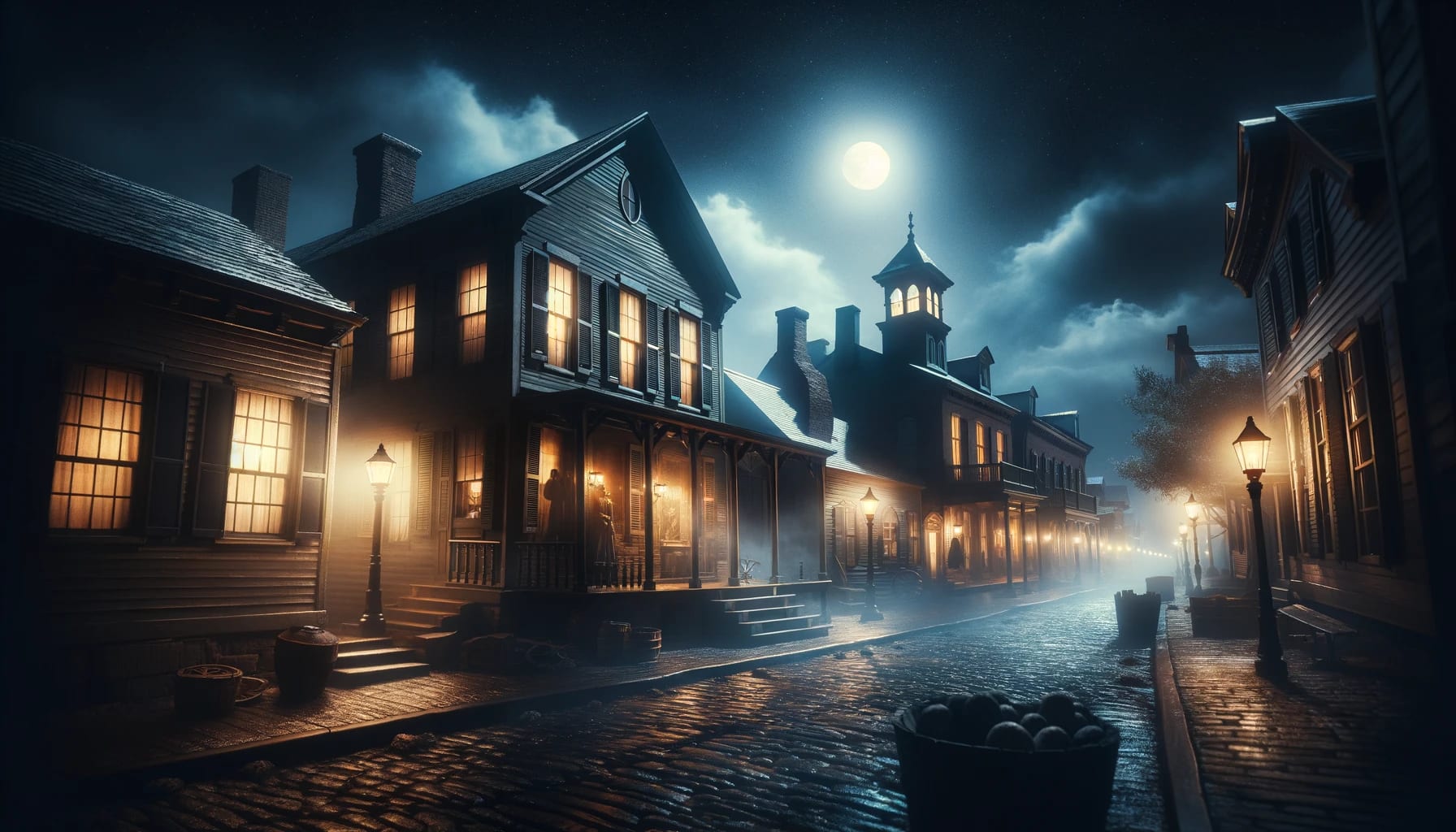
You feel it the moment you arrive. There is a weight here that has nothing to do with the monuments or the visitor center or the carefully maintained park roads. It is something in the air itself — a heaviness, a stillness, a quality of silence that is not quite silence. Visitors describe it in different ways. Some call it reverence. Some call it sadness. Some simply say that Gettysburg feels different from any other place they have been.
They are right. It does.
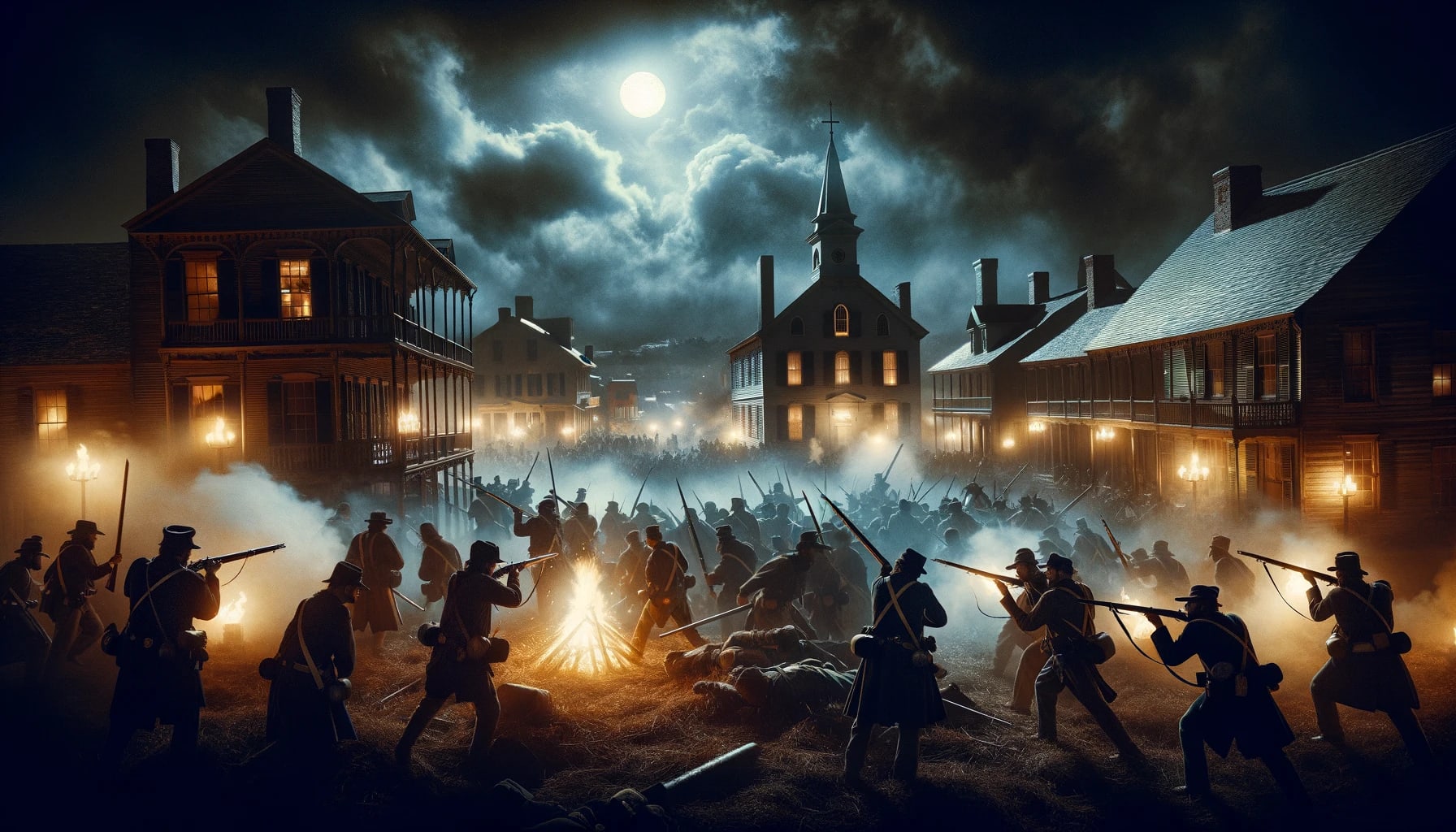
Some places are visited. Gettysburg is experienced. The difference is not about tourism or marketing. It is about what happened here — the scale of it, the intensity of it, the fact that 51,000 human beings became casualties on these fields in three days — and what that event left behind in the ground, in the buildings, and in the atmosphere that envelops anyone who spends time here after dark.
For Ghost City Tours, Gettysburg is not just another city in our network. It is the reason the company exists. It is the standard against which everything we do is measured. And it is a responsibility that we carry with a seriousness that begins with the story of one person's lifelong relationship with this place.
A Personal Beginning — Growing Up with Gettysburg
Tim Nealon did not discover Gettysburg. He grew up with it.
Raised in the towns and farmland surrounding the battlefield, Tim's earliest memories include the landscape of Gettysburg — the rolling fields, the stone walls, the monuments that appear around every bend in the road. For most kids growing up in the area, the battlefield was background — something you drove past on the way to school, something that brought tourists in the summer, something that was always there but easy to take for granted.
Tim never took it for granted.
His fascination with the Civil War began early and deepened quickly into something that was not casual interest — it was obsession. While his friends were doing what kids do, Tim was reading first-person accounts of the battle. He was memorizing regiment numbers, troop movements, and the names of officers who had fought and died on ground he could walk to from his house. He was not studying history as an academic exercise. He was absorbing it the way some people absorb music or language — instinctively, constantly, and with an appetite that could not be satisfied.
The battlefield was his classroom. He walked it for hours at a time — not with a tour group, not with a guidebook, but alone, following the routes that the soldiers had taken, standing in the positions they had held, looking at the terrain from the angles they had seen it. He learned the land the way a farmer learns a field — by walking it in every season, in every kind of weather, until the geography was no longer something he read about but something he felt in his body.
Thousands of Hours on Sacred Ground
Over the years, Tim's time on the Gettysburg battlefield accumulated into thousands of hours. Not a figure of speech. Thousands.
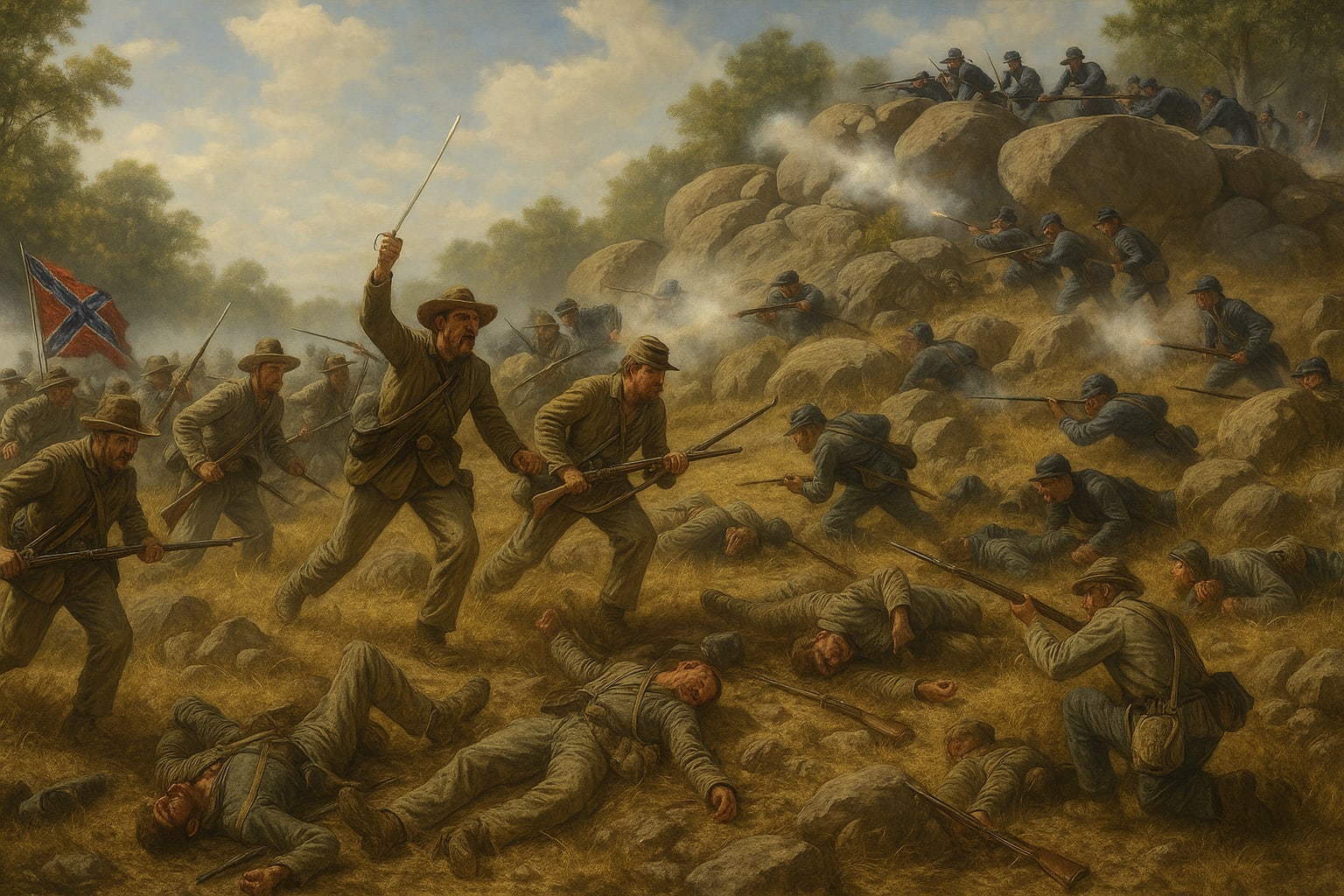
He spent countless afternoons among the boulders at Devil's Den, studying the terrain that had created such devastating killing grounds during the fighting on July 2, 1863. He learned where the Confederate sharpshooters had positioned themselves, where the Union line had buckled, and where the bodies had been found in the days after the battle. He did not learn these things from a distance. He stood in the places where they happened and let the geography teach him what the books could not.
[INSERT HAUNTED LOCATION CARD: Devil's Den]
He spent hours on Little Round Top — the rocky, wooded hill where Colonel Chamberlain and the 20th Maine had held the extreme left of the Union line in one of the most desperate engagements of the war. He walked the slope that the Maine men had charged down with fixed bayonets. He stood on the crest and looked south across the Valley of Death, tracing the routes of the Confederate assaults, understanding the terror of the men who had defended that position and the courage it required to hold it.
[INSERT HAUNTED LOCATION CARD: Little Round Top]
Gettysburg, for Tim, became more than history. It became personal. The soldiers who had fought and died here were not abstract figures in a textbook. They were people whose stories he had absorbed so deeply that their experiences felt like something he carried with him. He knew their names. He knew their ages. He knew what they had written in their letters home. And he knew, with a certainty that grew stronger with every visit, that these stories mattered — not just as history, but as something alive, something still present in the landscape, something that demanded to be told with the respect and accuracy it deserved.
The Moment Everything Changed
Tim's early exposure to ghost tours in Gettysburg was not inspiring. It was the opposite.
He attended tours where guides told stories that were historically inaccurate — dates wrong, names wrong, events conflated or invented entirely. He listened to guides who treated the Battle of Gettysburg as a backdrop for cheap thrills, reducing the suffering of real people to entertainment designed to produce gasps and nervous laughter. He watched tourists leave these tours believing they had learned something about Gettysburg, when in fact they had been fed a version of the history that was distorted, sensationalized, and in some cases, completely fabricated.
The frustration was immediate. The disappointment was deeper.
Tim had spent years — years — learning the real history of this place. He had read the letters. He had walked the ground. He had sat in the archives and the libraries and the quiet corners of the battlefield where the weight of what happened was most palpable. He knew what the real stories were, and he knew that those real stories were more powerful, more haunting, and more important than anything a guide could invent.
The thought that crystallized during those early experiences was simple and unshakeable:
If this is how people learn about Gettysburg — through inaccurate, disrespectful, sensationalized ghost tours — then something is fundamentally wrong. And it needs to be fixed.
The Problem with Most Ghost Tours
The ghost tour industry, like any industry, contains a spectrum of quality. At its best, a ghost tour is a powerful form of public history — an experience that brings people into physical contact with the past and creates emotional connections that no textbook or documentary can replicate. At its worst, a ghost tour is entertainment dressed up as education, trading on fear and fabrication while the real history goes untold.
The problems that Tim observed in the ghost tours of his youth were not unique to Gettysburg. They are common across the industry:
Over-sensationalization. Turning real human suffering into theatrical spectacle. Making the stories scarier, gorier, or more dramatic than the documented facts support — because the truth, apparently, is not exciting enough.
Fabricated stories. Inventing ghost encounters, manufacturing historical details, and presenting fiction as fact. Guests leave believing they have learned something real, when in fact they have been told a story that someone made up to fill time on a walking route.
Entertainment over truth. Prioritizing audience reaction — laughs, screams, photo opportunities — over the accurate and respectful presentation of history. The dead become props. The suffering becomes spectacle. The educational potential of the experience is sacrificed for short-term engagement.
Gettysburg deserves better than this. The men who fought and died here — on both sides — deserve better. The civilians who survived the battle and carried its trauma for the rest of their lives deserve better. And the visitors who come to Gettysburg seeking a genuine connection with one of the most important events in American history deserve better.
The Founding Principle of Ghost City Tours
We tell the real story.
That is not a tagline. It is the founding principle of Ghost City Tours — the conviction that emerged from Tim Nealon's lifelong relationship with Gettysburg and that has guided every decision the company has made since its inception.
The principle is built on three commitments:
Research-driven storytelling. Every story told on a Ghost City Tours experience is grounded in documented history. The dates are verified. The names are real. The events described actually happened, confirmed by primary sources — letters, diaries, official records, contemporary accounts. When a guide tells you what happened in a specific location, they are not improvising. They are drawing on research that has been conducted, reviewed, and refined over years.
Respect for the dead. The people whose stories we tell were real. They had families, fears, hopes, and lives that were interrupted by violence. We do not use their suffering as entertainment. We do not embellish their deaths for dramatic effect. We tell their stories with the gravity and care that real human lives deserve.
Honor for the truth. The real history of Gettysburg is more powerful than anything we could invent. The true accounts of what happened here — the bravery, the terror, the suffering, the aftermath — do not need to be sensationalized. They need to be told accurately, completely, and with the emotional honesty that the events demand.
You cannot tell ghost stories without honoring the lives that came before them. That is not just our philosophy. It is our obligation.
Why Gettysburg Is a Spiritual Place
This is not a religious statement. It is an observation shared by virtually everyone who has spent significant time on the Gettysburg battlefield — historians, park rangers, veterans, visitors, and yes, paranormal investigators.
Gettysburg is a spiritual place.
The feeling is difficult to articulate, which is part of what makes it so powerful. It is the sensation of standing on ground where something immense happened — where thousands of people experienced the most extreme moments of their lives, where courage and terror and grief and death all converged in a space you can walk across in an afternoon. The landscape holds that energy. It does not dissipate with time. If anything, it seems to intensify, concentrating in certain locations — among the boulders of Devil's Den, on the slopes of Little Round Top, in the open fields where Pickett's men walked into history — with a weight that visitors feel in their bodies before they can name it in their minds.
Tim Nealon felt this weight from his earliest visits. It was not something he had to be told about. It was something the place itself communicated — directly, unmistakably, and with an authority that no book or lecture could match. That feeling — that sense of being in the presence of something larger than yourself, something that demands respect and attention and care — is what drives the way Ghost City Tours approaches Gettysburg.
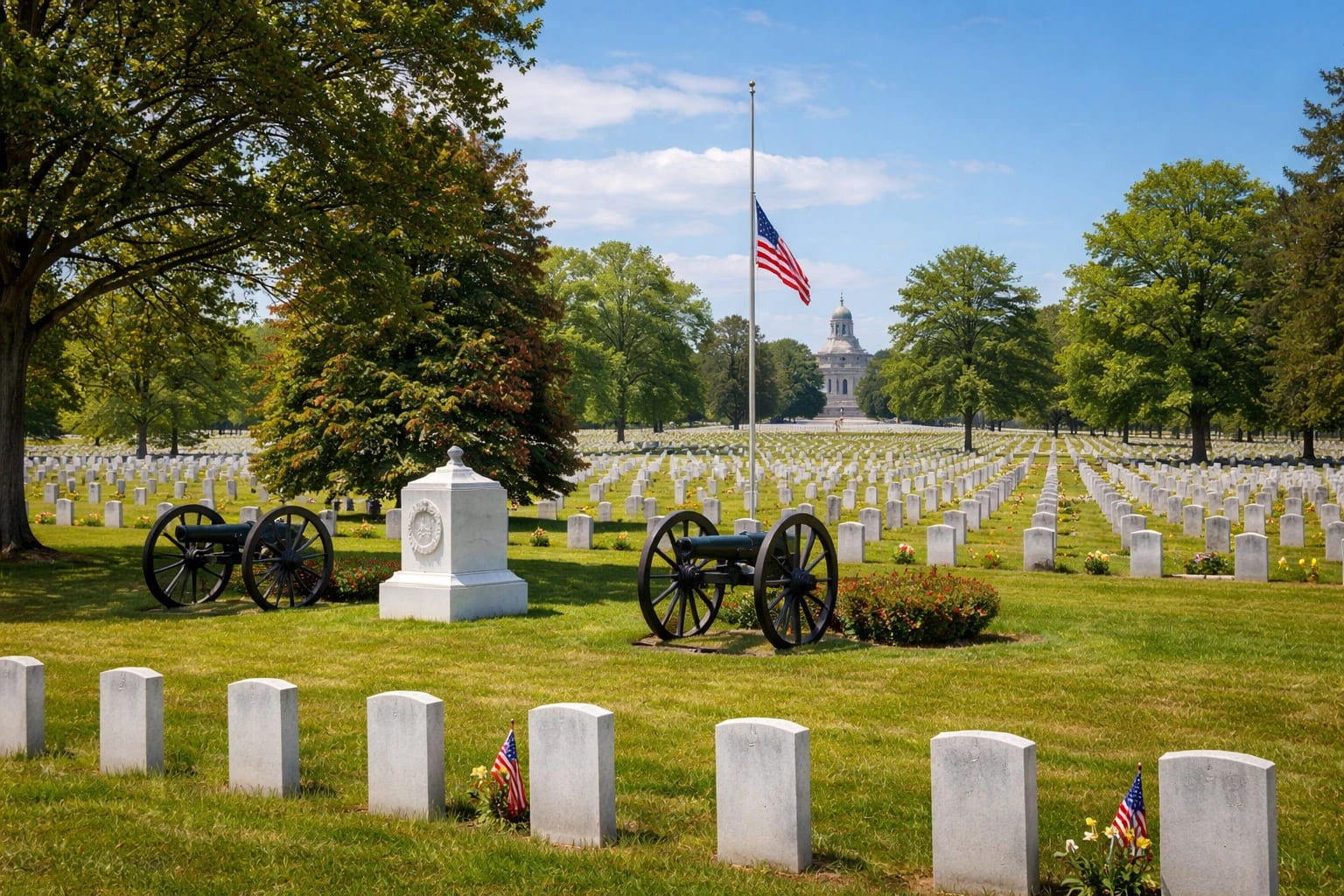
We do not treat this as just another haunted location. We treat it as what it is: sacred ground.
The Men Who Fought Here — Moments of Courage
Respecting Gettysburg's history means honoring the people who lived it.
On the evening of July 2, 1863, Colonel Joshua Lawrence Chamberlain and the roughly 350 remaining men of the 20th Maine Infantry held the extreme left flank of the Union Army on Little Round Top. If they broke, the entire Union position could be rolled up from the south. The Confederates attacked five times. The Maine men held, despite mounting casualties and dwindling ammunition. When Chamberlain realized his men had nothing left to fire, he ordered a bayonet charge downhill — a desperate, almost suicidal gamble that succeeded only because the men who executed it had more courage than any reasonable person should be asked to demonstrate.
On the afternoon of July 3, the men of Pickett's division stepped off from Seminary Ridge and began their march across three-quarters of a mile of open ground toward the Union line on Cemetery Ridge. They knew what was waiting for them. They could see the cannon. They could see the infantry behind the stone wall. They walked anyway — not because they were foolish, but because they had been ordered to, and because the men beside them were walking, and because in that moment, the only thing worse than going forward was the idea of being the one who stopped.
These were not abstract acts of heroism. They were terrified, exhausted, hungry young men doing things that no one should ever have to do, in a place they had never been, for reasons that many of them did not fully understand. Honoring their courage does not mean glorifying war. It means acknowledging that human beings are capable of extraordinary things under unimaginable pressure — and that the memory of what they did deserves to be preserved with accuracy and respect.
This is what Ghost City Tours carries into every experience we offer in Gettysburg. The stories we tell are not just about ghosts. They are about people — real people who deserve to be remembered as they were, not as characters in a ghost story.
Why Gettysburg Must Be Treated Differently
Ghost City Tours operates in cities across the country. Each city has its own history, its own culture, and its own relationship with the paranormal. We approach every city with respect and rigor.
But Gettysburg occupies a unique position.
The scale of death here — 51,000 casualties in three days — is virtually unmatched in American history. The historical importance of the battle — a turning point that shaped the outcome of the Civil War and the future of the nation — gives the site a significance that extends far beyond the paranormal. The emotional weight of the place — the sadness, the heaviness, the profound sense of loss that visitors describe after spending time on the battlefield — is more intense here than anywhere else we operate.
Gettysburg is not just another haunted location. It is a place where the history and the hauntings are inseparable — where the paranormal activity that has been reported for more than 160 years is a direct expression of the suffering that occurred here. You cannot separate the ghost stories from the history. You cannot tell one without honoring the other. And you cannot approach this place with the same casual attitude that might be appropriate in a city where the hauntings are tied to a single building or a single event.
For a deeper understanding of why Gettysburg is so haunted, we have written extensively about the connection between the battle, the aftermath, and the ongoing paranormal activity. That connection is the foundation of everything we do here.
Addressing the Critics — Are Ghost Tours Disrespectful?
It is a fair question. And we take it seriously.
There are people — Civil War historians, battlefield preservationists, veterans, and visitors with deep personal connections to the history — who believe that ghost tours have no place at Gettysburg. Their argument is straightforward: the Battle of Gettysburg was a real event in which real people suffered and died, and turning that event into a ghost tour trivializes the sacrifice and disrespects the memory of those who were lost.
We respect this perspective. We understand where it comes from. And we agree with its underlying premise — that the history of Gettysburg must be treated with reverence and that any experience that trivializes the suffering of the people who lived and died here is wrong.
Where we respectfully disagree is in the assumption that all ghost tours are, by nature, trivializing.
When done wrong — when a ghost tour fabricates stories, sensationalizes suffering, or treats the dead as entertainment — then yes, it is disrespectful. We have seen those tours. They are the reason Ghost City Tours exists.
But when done right, a ghost tour can be one of the most powerful forms of public history available. It brings people physically to the places where history happened. It creates an emotional connection that no textbook or documentary can replicate. It reaches audiences — young people, international visitors, people who might never read a Civil War history book — and gives them an experience that makes the past feel real, immediate, and important.
A well-researched, respectfully told ghost tour does not diminish the history of Gettysburg. It amplifies it. It brings people into the story in a way that inspires respect, empathy, and a desire to learn more. It creates stewards of the history — people who leave the experience caring more about Gettysburg than they did when they arrived.
That is what Ghost City Tours strives to do. Every night. On every tour.
What Ghost City Tours Does Differently
The guides who lead Ghost City Tours in Gettysburg are not performers reading scripts. They are historians who have spent years researching the Battle of Gettysburg and its aftermath. They are paranormal researchers who have conducted investigations at the battlefield and in the town's most haunted buildings. And they are passionate storytellers who understand that the power of a story comes not from embellishment but from truth.
Every story told on a Ghost City Tours experience has been researched in primary sources and verified against the historical record. When a guide tells you the name of a soldier who died in a specific location, that name is real. When they describe the events that took place in a building, those events are documented. When they share a ghost story, it is rooted in reports that have been collected, cross-referenced, and evaluated over years of investigation.
Our guides also bring something that cannot be found in a book: first-hand experience. Many of them have had their own unexplained encounters on the battlefield and in the town — shadow figures seen during tours, sudden temperature drops in locations with no environmental explanation, sounds that have no identifiable source. These experiences are shared honestly and without exaggeration, because the truth of what our guides have witnessed is more compelling than anything they could invent.
We do not separate history and hauntings. We connect them. The paranormal activity reported at Gettysburg is not a separate subject from the battle — it is a continuation of it. The ghosts, if that is what they are, are the soldiers who fought here. Their stories are historical stories. And telling those stories with accuracy and respect is not just our approach — it is our obligation.
For a guide to all of the haunted locations in Gettysburg that our research has documented, explore our comprehensive resource.
The Responsibility of Telling These Stories
Every story we tell at Gettysburg represents a real person.
A nineteen-year-old from Maine who held a rocky hillside with a bayonet because he had run out of ammunition. A twenty-year-old woman from Gettysburg who was baking bread when a stray bullet passed through two doors and ended her life. A Confederate soldier from Alabama who walked across three-quarters of a mile of open ground knowing he would probably not survive the crossing. A surgeon who amputated limbs for eighteen hours straight, without sleep, without adequate supplies, knowing that many of the men he was trying to save would die anyway.
These were real people. Real lives. Real deaths.
The responsibility of telling their stories is not something we take lightly. It requires research — deep, ongoing, primary-source research that verifies every detail and corrects every error. It requires emotional honesty — the willingness to tell the hard parts, the ugly parts, the parts that make people uncomfortable, because the truth of what happened at Gettysburg is uncomfortable, and sanitizing it would be its own form of disrespect. And it requires restraint — the discipline to tell the story as it was, without adding drama that was not there, without inventing details that cannot be verified, without turning real suffering into performance.
This is what ethical storytelling looks like. Not cautious. Not sanitized. But honest. Researched. Grounded in documented truth. And driven by a conviction that these people — all of them, on both sides — deserve to have their stories told the way they actually happened.
Why Gettysburg Shaped the Entire Company
Ghost City Tours now operates in cities across the United States. Each city presents its own history, its own culture, and its own paranormal landscape. But the philosophy that guides every experience we offer — in every city, with every guide, on every tour — was forged at Gettysburg.
The commitment to research-driven storytelling started at Gettysburg, where the documented history is so rich and so detailed that there is no excuse for getting it wrong.
The commitment to respecting the dead started at Gettysburg, where the dead are not abstract figures from a distant past but young men whose names, faces, and final letters home are preserved in the historical record.
The commitment to truth over sensationalism started at Gettysburg, where the real history is so powerful that embellishment is not just unnecessary — it is an insult to the events themselves.
Every city we enter, we ask the same questions that Gettysburg taught us to ask: What really happened here? Who were the people involved? What do the documented sources tell us? And how do we tell this story in a way that honors the truth while creating an experience that our guests will carry with them long after the tour ends?
Gettysburg did not just inspire Ghost City Tours. It defined it. The standards we hold ourselves to, the philosophy we operate under, the kind of company we are — all of it traces back to one person's lifelong relationship with one battlefield, and the conviction that the stories it holds deserve nothing less than our absolute best.
Experiencing Gettysburg the Right Way
If you are coming to Gettysburg, we want you to experience it the way it deserves to be experienced — with respect for the history, an open mind about what this place carries, and a guide who knows the difference between a story that is true and a story that is merely entertaining.
Ghost City Tours in Gettysburg offers nightly walking experiences led by guides who embody the philosophy that this article describes. They are historians. They are researchers. They are people who have spent years on this ground and who carry the weight of its history with the seriousness it demands.
Whether you choose our family-friendly tour or our adults-only experience, you will hear stories that are grounded in documented history, told with emotional honesty, and delivered by guides who believe — as we do — that the best ghost tours are the ones that leave you knowing something real about the place you are visiting and the people who shaped it.
This is not a haunted hayride. This is Gettysburg. And we treat it accordingly.
A Commitment That Will Never Change
Ghost City Tours will never fabricate a story and present it as history.
We will never sensationalize suffering for the purpose of entertainment.
We will never misrepresent the events that occurred at Gettysburg or any other location where we operate.
We will never treat the dead as props in a performance.
These are not aspirational statements. They are commitments — made at the founding of this company, reinforced by every tour we have conducted, and non-negotiable regardless of what trends, pressures, or business considerations might suggest otherwise.
Our commitment is to the history. To the people whose stories we tell. To the places where those stories happened. And to the guests who trust us to tell them the truth.
That commitment started at Gettysburg. It will never change.
More Than a Battlefield
Gettysburg is not just where something happened.
It is where something still matters.
The battle that was fought here in July 1863 changed the course of the Civil War and the future of the nation. The suffering that occurred here — among the soldiers, the civilians, the wounded, the dying, and the dead — left marks on this landscape that time has not erased and may never erase. The stories that emerged from this place — stories of courage, of terror, of sacrifice, of loss — are not relics of a distant past. They are living stories, still being told, still being felt, still being experienced by the people who come here seeking something that only Gettysburg can provide.
Ghost City Tours exists because of Gettysburg. Because one person grew up in its shadow, walked its fields for thousands of hours, learned its stories from the ground up, and decided that those stories deserved to be told with the accuracy, the respect, and the emotional honesty that the people who lived and died here earned.
That is why Gettysburg matters to Ghost City Tours.
Not as a product. Not as a market. Not as another pin on a map.
As the place where everything we believe was forged — and as the standard we hold ourselves to, every night, in every city, on every tour we will ever conduct.
Gettysburg matters because the people who suffered here matter. Their stories matter. And the truth of what happened here — all of it, including the parts that are difficult to hear — matters more than comfort, more than entertainment, and more than anything we could ever invent.
That is our promise. It always has been. It always will be.