A Place Filled with Stories
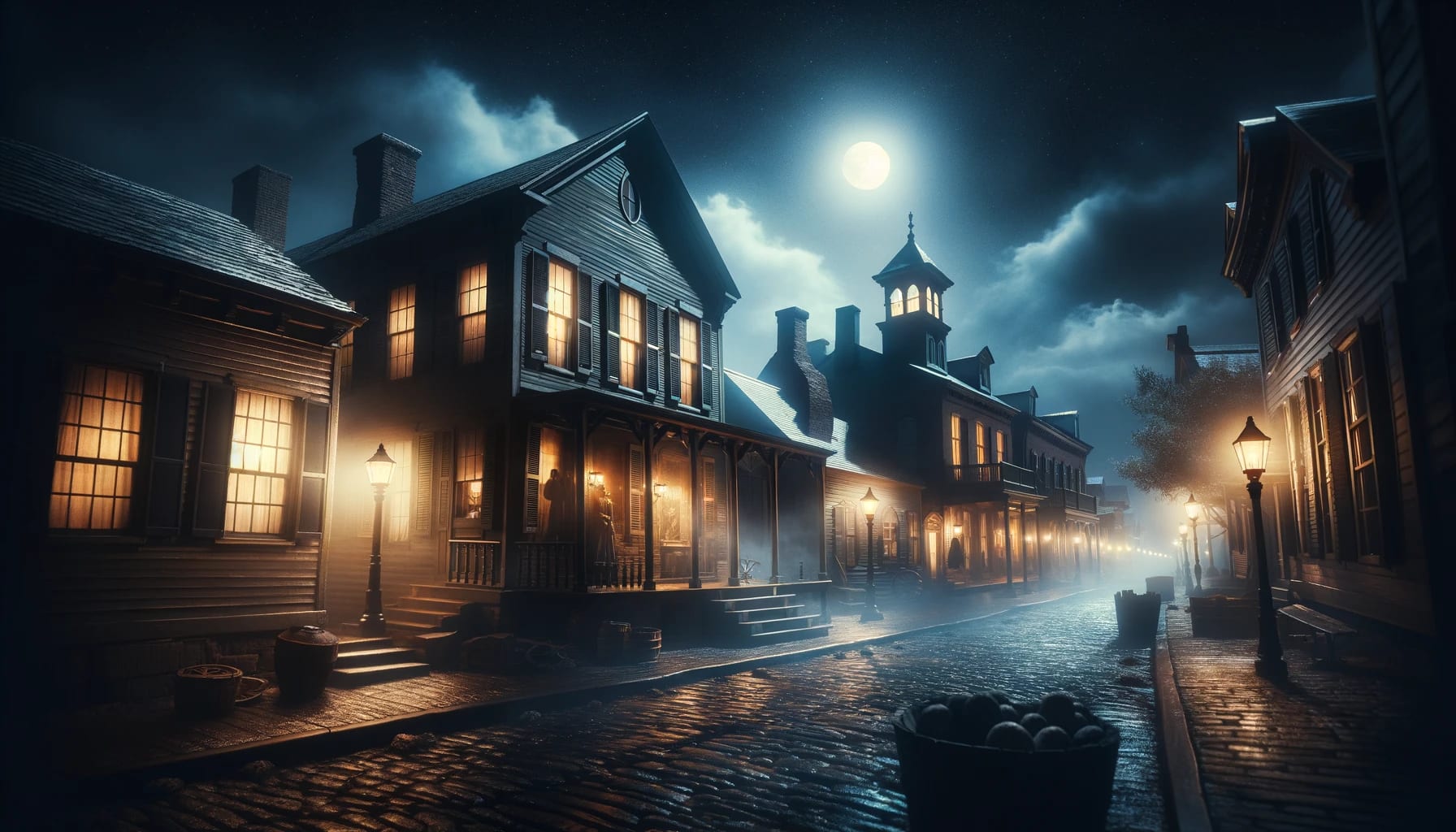
Gettysburg generates more ghost stories per square mile than almost any other location in America. The sheer volume is staggering — sightings reported by visitors, accounts shared by residents, investigations conducted by paranormal researchers, stories told on ghost tours that run nightly through the town and across the battlefield's edges.
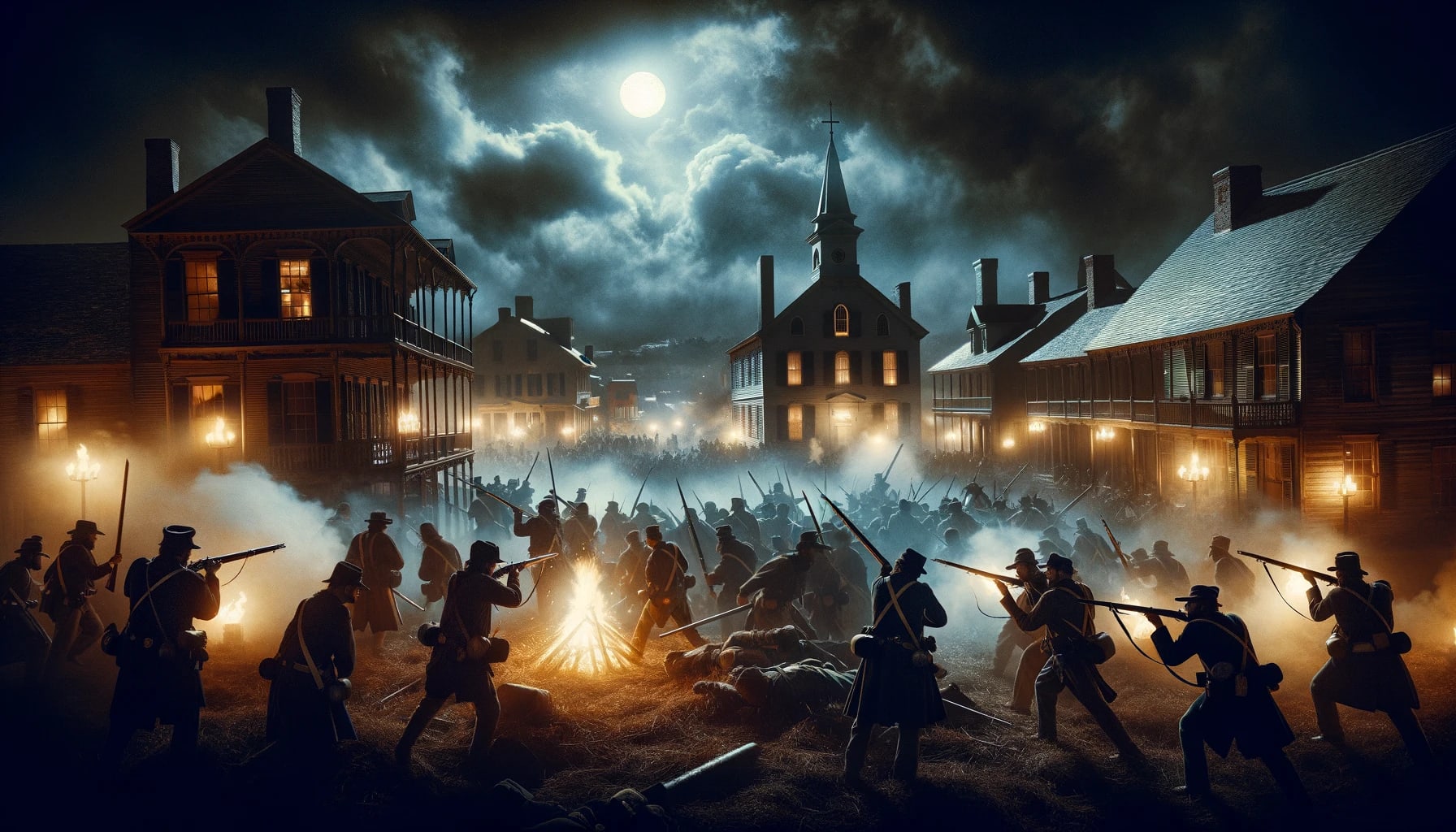
Some of these stories are remarkable. They describe shadow figures moving in formation across fields where infantry once advanced. They describe voices captured on recording devices — voices that respond to questions with names and regiment numbers that match the historical record. They describe apparitions so vivid and so detailed that witnesses believed they were looking at a living person until the figure vanished.
Other stories are less remarkable. They are vague. They are secondhand. They are suspiciously dramatic. They are, in some cases, clearly made up.
Gettysburg is one of the most haunted places in America. It may be the most haunted place in America. But not every story you hear about it is true. And if you care about what actually happened here — if you care about the real history and the real experiences that people continue to have on this ground — then the difference between the stories that are grounded in truth and the stories that are not matters enormously.
This article is about that difference.
Why Gettysburg Has So Many Ghost Stories
Before we can evaluate individual stories, we need to understand why Gettysburg produces so many of them.
The answer begins with the scale of what happened here. Over three days in July 1863, more than 51,000 soldiers were killed, wounded, captured, or went missing in and around a small Pennsylvania farming town. The violence was concentrated in a geographic area that you can drive across in twenty minutes. The emotional intensity — the terror, the pain, the grief, the confusion — was compressed into a span of seventy-two hours that overwhelmed every human system designed to cope with it.
Paranormal researchers have long observed that locations associated with sudden, violent death on a massive scale tend to produce the highest concentration of reported activity. The theory — and it remains a theory — is that extreme emotional and physical trauma leaves a kind of imprint on a location, an energetic residue that manifests as the phenomena we call hauntings. Whether you accept that framework or not, the correlation between traumatic history and paranormal reports is consistent across cultures and centuries.
Gettysburg satisfies every condition that this theory identifies. Massive, sudden death. Extreme emotional suffering. Lack of closure — thousands of soldiers who died without being identified, without proper burial, without their families ever learning what happened to them. Prolonged aftermath — wounded soldiers dying in improvised hospitals for weeks after the battle, civilians traumatized by experiences they could not process.
For a comprehensive exploration of why Gettysburg is so haunted, we have written extensively about the connection between the battle, the aftermath, and the ongoing reports of paranormal activity. The short version: Gettysburg has so many ghost stories because it has so much history — and that history is saturated with exactly the kind of human experience that tends to produce lasting reports of the unexplained.
Yes — Some Gettysburg Ghost Stories Are Real
When we say a ghost story is "real," we mean something specific. We do not mean that it constitutes scientific proof of the supernatural. We mean that the story is grounded in documented history, supported by repeated and consistent reports from multiple independent witnesses over time, and connected to events that actually occurred in the location where the experiences are reported.
By that standard, Gettysburg has some of the most credible ghost stories in America.
Devil's Den — the boulder-strewn landscape at the southern end of the battlefield — is one of the most frequently cited locations. On July 2, 1863, Confederate and Union forces fought a brutal close-quarters engagement among these rocks, producing devastating casualties in a confined space. The dead were left among the boulders for days, inaccessible in the July heat.
The ghost stories of Devil's Den are not vague or anonymous. The most famous — the "barefoot soldier" — describes a figure in ragged Confederate clothing, barefoot, with unkempt hair, who has been reported by visitors for decades. He has been described as friendly, sometimes gesturing to visitors or pointing toward areas of interest before disappearing. What makes this story credible is not any single sighting but the accumulation: dozens of independent witnesses, over a span of decades, describing the same figure in the same location with the same details. Photographs have been taken that appear to show the figure. The descriptions are consistent in ways that are difficult to attribute to suggestion or coincidence.
[INSERT HAUNTED LOCATION CARD: Devil's Den]
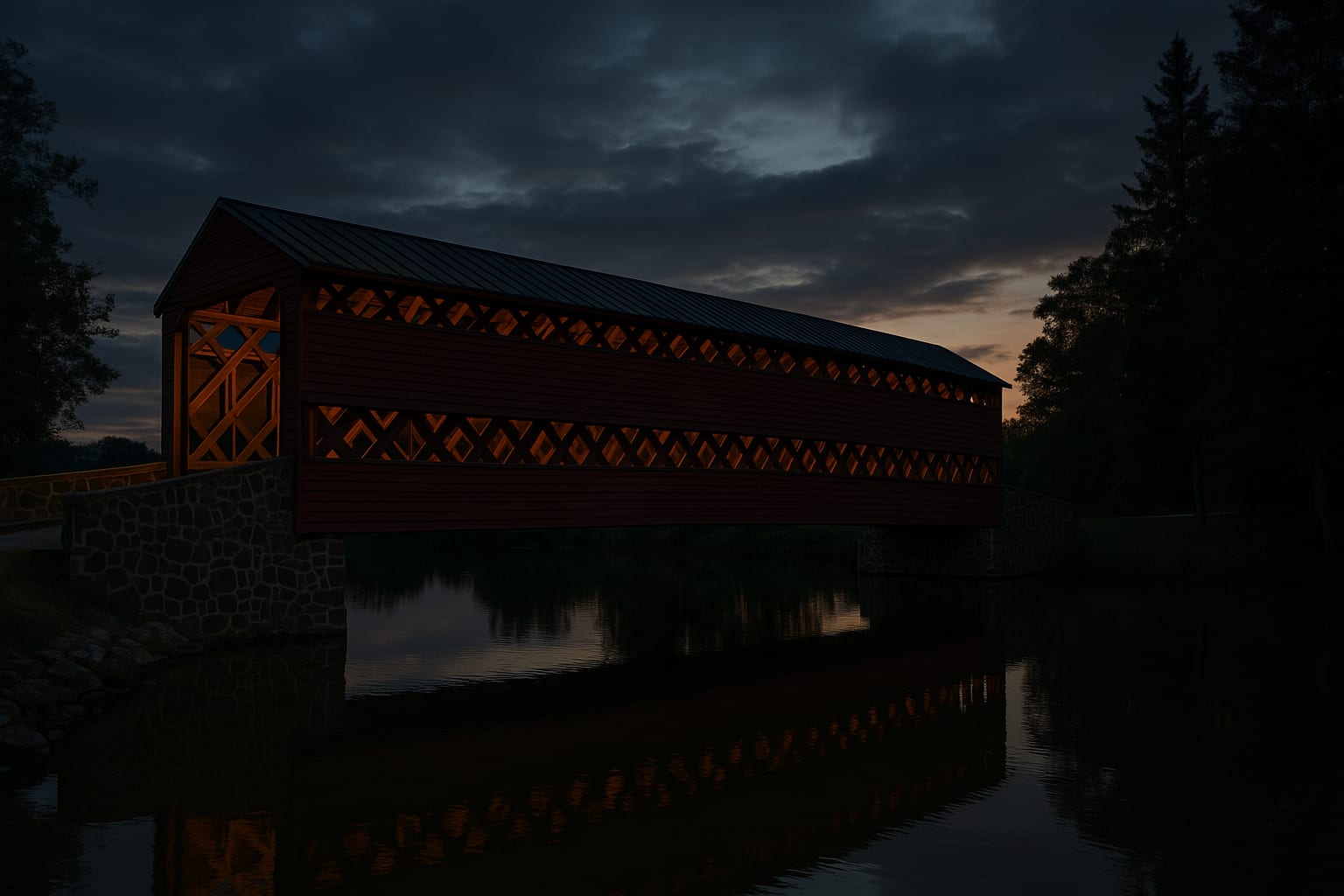
Sachs Covered Bridge — built in 1854 and used by both armies during the battle — is another location where the reports are consistent enough to take seriously. Visitors have described apparitions on and around the bridge, the sound of horses crossing the wooden deck when no horses are present, and sudden, intense cold spots that move through the covered structure. The bridge's association with the Confederate retreat and the reported hanging of three deserters from its rafters provides a historical context that aligns with the types of experiences being reported.
[INSERT HAUNTED LOCATION CARD: Sachs Covered Bridge]
These are not isolated incidents. They are patterns — repeated, consistent, historically connected patterns that have been building for more than a century. That does not make them proof. But it does make them real in the sense that the experiences are genuine, the witnesses are credible, and the stories deserve to be taken seriously.
The Problem — Not All Stories Are Created Equal
Here is where honesty requires a shift in tone.
Gettysburg has real ghost stories — stories grounded in history, supported by repeated reports, and consistent enough to warrant serious attention. But Gettysburg also has stories that are exaggerated, distorted, embellished, or entirely fabricated. And the volume of those lesser stories threatens to undermine the credibility of the legitimate ones.
This is not a problem unique to Gettysburg. It is a problem that affects every haunted location that attracts significant public interest. The more famous a place becomes for paranormal activity, the more stories accumulate around it — and the more pressure there is to keep producing new, exciting, dramatic stories to feed the demand.
The result is a phenomenon that paranormal researchers call "story drift." A real experience — a genuine sighting, a documented encounter, a historically grounded report — gets told and retold, and with each retelling, it changes. Details are added. Context is lost. A single, quiet experience becomes a dramatic narrative that bears little resemblance to the original report.
The more a story is told, the more it changes. And in a place like Gettysburg, where stories have been circulating for 160 years, the gap between what was originally reported and what is currently being told can be enormous.
How Ghost Stories Get Distorted
Understanding how ghost stories evolve from fact to fiction is essential for anyone who wants to approach Gettysburg's paranormal reputation with intellectual honesty.
The Entertainment Effect
Ghost stories are, among other things, a form of entertainment. And the incentives of entertainment push stories in a specific direction — toward the dramatic, the frightening, and the extreme. A quiet, ambiguous experience does not hold an audience the way a vivid, terrifying encounter does. So stories get adjusted. A shadow in the peripheral vision becomes a full-bodied apparition. A cold spot becomes a hand on the shoulder. A strange sound becomes a voice calling a name.
This adjustment is not always conscious or malicious. It is the natural tendency of storytelling — the impulse to make a narrative more compelling, more complete, more satisfying. But the cumulative effect, over years and decades, is a body of ghost stories that has drifted significantly from the original experiences they are based on.
Word-of-Mouth Evolution
Gettysburg ghost stories circulate through an ecosystem of tour guides, book authors, television producers, online forums, social media posts, and casual conversation. At each stage of transmission, the story changes slightly. A detail is added here. A qualification is dropped there. The original source becomes obscured as the story is attributed to "a visitor" or "someone on a tour" or simply presented as established fact.
After enough iterations, the story may bear little resemblance to whatever experience originally inspired it. The core elements may survive, but the context, the nuance, and the uncertainty that accompanied the original report are lost.
Lack of Historical Research
Many ghost stories in Gettysburg are told without any attempt to verify the historical claims they contain. A story might reference a specific soldier, a specific regiment, or a specific event — but when you check the historical record, the details do not match. The soldier did not exist. The regiment was not at that location. The event described never happened.
These inaccuracies are not always intentional fabrications. Sometimes they result from honest mistakes, from conflating different events, or from accepting previous retellings at face value without going back to the primary sources. But the effect is the same: a ghost story that sounds historically grounded but is not.
Pure Fabrication
And then there are stories that were simply made up.
This is the uncomfortable truth about the ghost tour industry — not just in Gettysburg, but everywhere. Some stories are created from whole cloth because they fill a gap in a tour route, because they are dramatic enough to hold an audience's attention, or because there is commercial pressure to have a ghost story for every location on a walking tour, regardless of whether any genuine reports exist.
These fabricated stories are presented as fact. Guests have no way of knowing that the dramatic tale they just heard has no basis in historical reality, no supporting reports, and no connection to the documented events that actually occurred at the location being described. The guests leave believing they learned something real. They share the story with others. And the fabricated story enters the ecosystem of Gettysburg ghost lore, where it circulates alongside legitimate accounts and eventually becomes indistinguishable from them.
The Reality of Some Ghost Tours
Not all ghost tour companies approach Gettysburg with the same level of rigor. Some invest heavily in historical research, verify their stories against primary sources, and train their guides to distinguish between documented accounts and unsubstantiated claims. Others prioritize entertainment over accuracy, favoring dramatic storytelling over historical truth.
This is not an accusation directed at any specific company. It is a description of a spectrum that exists in every city where ghost tours operate. Some companies take history seriously. Others do not. The difference matters, particularly in a place like Gettysburg, where the history is real, the suffering was real, and the stories deserve to be told with the accuracy and respect that real events demand.
In some cases, stories are created simply because they sound good. A building on a tour route needs a ghost story, so one is provided — not from research or documented reports, but from imagination. The story is told with conviction. The audience has no reason to doubt it. And a piece of fiction is added to Gettysburg's paranormal canon, where it displaces or dilutes the genuine accounts that deserve attention.
The result is a landscape of ghost stories where the real and the fabricated exist side by side, and where the average visitor has no reliable way to distinguish between them — unless they know what to look for.
How to Tell if a Ghost Story Is Credible
If you want to approach Gettysburg's ghost stories with the seriousness they deserve — neither dismissing them wholesale nor accepting them uncritically — here is a framework that can help you evaluate what you hear.
1. Is It Historically Grounded?
A credible ghost story at Gettysburg should connect to real, documented events. The location should have a verifiable history — a building that actually served as a hospital, a field where a specific engagement took place, a bridge that was actually used by retreating forces. If a story claims that a specific soldier haunts a specific location, that soldier should appear in the historical record, and they should have a documented connection to that location.
If the historical claims in a ghost story cannot be verified — or if they contradict the documented record — that is a significant red flag.
2. Are There Repeated Reports?
A single reported sighting, no matter how dramatic, is not strong evidence of anything. People misidentify shadows. Imaginations fill in details that are not there. Expectations shape perception. A single report, standing alone, could be anything.
But when multiple independent witnesses — people who do not know each other, who visited at different times, who had no prior knowledge of previous reports — describe the same phenomenon in the same location with the same details, that pattern is much harder to dismiss. The most credible ghost stories at Gettysburg are the ones with the deepest accumulation of independent reports.
3. Is It Consistent Over Time?
Credible reports tend to remain stable over time. The barefoot soldier at Devil's Den has been described in essentially the same way for decades. The sounds of marching reported on the battlefield have maintained the same characteristics across generations of witnesses. If a story changes dramatically from one telling to the next — gaining details, becoming more dramatic, incorporating new elements that did not appear in earlier versions — that evolution suggests embellishment rather than genuine experience.
4. Does It Respect the History?
This may seem like an unusual criterion for evaluating the credibility of a ghost story, but it is revealing. Stories that are grounded in real research tend to be told with a gravity and specificity that reflects genuine engagement with the historical record. Stories that are fabricated or heavily embellished tend to be told with a theatrical flourish that prioritizes entertainment over accuracy. The tone of a story — its relationship to the documented history — can tell you a great deal about its reliability.
What Ghost City Tours Believes
We believe Gettysburg is genuinely haunted.
We believe this not because it is good for business — although Gettysburg is one of our most important cities — but because the evidence is substantial. The volume of reports. The consistency of those reports across decades. The correlation between reported activity and documented historical events. The firsthand experiences of our own guides, who have spent years on this ground and have encountered phenomena that they cannot explain.
We also believe that truth matters more than theatrics. We do not need to exaggerate what happens at Gettysburg. We do not need to invent stories to fill gaps in our tour routes. We do not need to embellish the experiences of our guests or our guides. The real history of Gettysburg — and the real paranormal activity that has been reported here for more than 160 years — is more powerful, more compelling, and more meaningful than anything we could fabricate.
This belief is not just a preference. It is a philosophy — one that we have written about extensively in our article on why Gettysburg matters to Ghost City Tours. That article explains the personal history, the founding convictions, and the ethical commitments that shape everything we do. If you want to understand the standard that Ghost City Tours holds itself to, start there.
We don't need to make things up. Gettysburg is powerful enough on its own.
Real Experiences Still Happen
The paranormal activity at Gettysburg is not a thing of the past. It is ongoing, and it is reported with a frequency that distinguishes Gettysburg from almost every other haunted location in the country.
Guests on Ghost City Tours experiences report unexplained phenomena on a regular basis. Shadow figures — dark, humanoid shapes that move with purpose and disappear when approached — are seen in the same locations, tour after tour, with a consistency that is difficult to attribute to imagination or environmental factors. Guests capture photographs containing anomalies that were not visible to the naked eye. They feel sudden, dramatic temperature drops in locations with no environmental explanation. They hear sounds — footsteps, whispered words, distant commands — that no one present can account for.
Our guides experience the same phenomena. They are not embellishing for the benefit of their guests. They are reporting what they observe — clearly, honestly, and without dramatic amplification. When a guide says they saw a shadow figure cross a specific location during a tour, they are describing what they saw. When they report that an EMF meter spiked in a location far from any electrical source, they are reporting the reading. When they say that a guest's fully charged phone battery drained to zero in a matter of seconds at a historically active location, they are stating a fact.
These are not exaggerated accounts. They are observed experiences, documented over years of nightly tours in one of the most paranormally active locations in the country. For a comprehensive guide to the locations where these experiences concentrate, explore our Haunted Gettysburg resource.
Why This Matters
The distinction between real and fabricated ghost stories is not an academic exercise. It matters for reasons that go beyond the paranormal.
Gettysburg is a place where real people suffered and died. More than 51,000 soldiers became casualties here in three days. Civilians were traumatized. Families were shattered. The history that produced Gettysburg's ghost stories is a history of genuine human anguish — and that anguish deserves to be treated with respect.
When ghost stories are fabricated — when someone invents a dramatic tale and attaches it to a real location where real suffering occurred — it diminishes the actual history. It replaces the documented truth with fiction, and it teaches visitors something false about a place that has more than enough real stories to tell. The fabricated story does not just mislead the visitor. It displaces the real story — the one that honors the people who actually lived and died here.
When stories are exaggerated — when a quiet, genuine report is inflated into a theatrical spectacle — the same displacement occurs. The real experience, which was meaningful precisely because it was subtle and unexplained, is replaced by a dramatic narrative that is satisfying as entertainment but dishonest as history.
The people who died at Gettysburg deserve better than fiction. They deserve to have their real stories told — including the paranormal dimensions of those stories — with accuracy, respect, and the kind of intellectual honesty that distinguishes a genuine account from an invented one.
The Balance Between History and Haunting
Some people believe that ghost stories and serious history are incompatible — that exploring the paranormal at a place like Gettysburg inherently disrespects the history.
We disagree.
The ghost stories of Gettysburg are not separate from the history. They are an extension of it. The paranormal activity reported at Devil's Den is connected to the fighting that occurred there on July 2, 1863. The apparitions seen at the Farnsworth House are connected to the sharpshooters who occupied it and the wounded soldiers who suffered within its walls. The sounds of marching heard on the battlefield at night are connected to the infantry assaults that crossed those fields more than 160 years ago.
You can respect history and explore the paranormal. They are not in conflict — they are connected. The key is how you do it. If you approach the paranormal with the same rigor, the same commitment to accuracy, and the same respect for the people involved that you would bring to any serious historical inquiry, then the exploration of Gettysburg's hauntings becomes an extension of historical understanding, not a departure from it.
This is the balance that Ghost City Tours strives to maintain: deep respect for the history, genuine openness to the paranormal, and an unwavering commitment to telling the truth about both.
What You Should Take Away
If you are planning a visit to Gettysburg — or if you are simply trying to make sense of the enormous body of ghost stories associated with this place — here is what we believe you should carry with you:
Yes, Gettysburg has real ghost stories. The volume of reports, the consistency of those reports over time, and their correlation with documented historical events constitute a body of evidence that deserves serious attention. People are experiencing something at Gettysburg that they cannot explain, and they have been experiencing it for more than 160 years.
No, not all stories are true. Some Gettysburg ghost stories have been exaggerated, distorted, or fabricated. The entertainment industry, the tourism industry, and the natural tendencies of oral storytelling have all contributed to a landscape of ghost lore in which the genuine and the invented are difficult to distinguish.
You should approach with curiosity, skepticism, and respect. Curiosity, because the real experiences that people have at Gettysburg are genuinely fascinating. Skepticism, because not every story you hear will withstand scrutiny. And respect, because behind every ghost story — real or otherwise — is a piece of history that involves real people who suffered real consequences, and that history demands to be treated with care.
The framework in this article — historical grounding, repeated reports, consistency over time, and respect for the documented record — will serve you well, whether you are evaluating a story you hear on a ghost tour, read in a book, or encounter online. Apply it generously. The real stories of Gettysburg are worth finding.
Frequently Asked Questions
Are Gettysburg ghost stories real?
Some are, and some are not. Gettysburg has a substantial body of ghost stories that are historically grounded, supported by repeated independent reports from multiple witnesses over decades, and connected to documented events from the Battle of Gettysburg and its aftermath. However, Gettysburg also has stories that have been exaggerated, distorted through retelling, or entirely fabricated. The key is evaluating each story against the historical record and the consistency of the reports.
Do ghost tours make things up?
Some do, and some do not. The ghost tour industry, like any industry, contains a range of quality. Some companies invest heavily in historical research and tell stories that are verified against documented sources. Others prioritize entertainment over accuracy and may present fabricated or heavily embellished stories as fact. Ghost City Tours is committed to research-driven storytelling and does not fabricate or embellish ghost stories.
What is the most credible ghost story in Gettysburg?
The 'barefoot soldier' of Devil's Den is widely considered one of the most credible ghost stories in Gettysburg. The figure — described as a young man in ragged Confederate clothing, barefoot and with unkempt hair — has been reported by dozens of independent witnesses over a span of decades. The descriptions are remarkably consistent, the location has a well-documented history of brutal combat, and the sightings have been corroborated by photographs.
How can you tell if a ghost story is fake?
Look for four indicators: (1) Historical grounding — does the story connect to real, verifiable events? (2) Repeated reports — has the experience been reported by multiple independent witnesses, or is it a single claim? (3) Consistency over time — do the details remain stable, or does the story change dramatically between tellings? (4) Respect for the record — does the story align with documented history, or does it contradict or ignore it? Stories that fail on multiple criteria should be viewed with significant skepticism.
Are Gettysburg ghost tours worth it?
A well-researched ghost tour in Gettysburg is one of the most powerful ways to experience the town's haunted history. The best tours combine documented history with genuine paranormal accounts, led by guides who have spent years researching the battle and its aftermath. Ghost City Tours offers nightly experiences grounded in real history and real experiences, and guests frequently describe the tours as among the most meaningful experiences of their visit to Gettysburg.
Truth Matters Here
Gettysburg does not need embellishment.
The real history of this place — the scale of the violence, the intensity of the suffering, the incompleteness of the aftermath — is more powerful than anything a storyteller could invent. And the real paranormal experiences that people continue to have here — the sightings, the sounds, the sensations that thousands of visitors have described over more than a century and a half — are more compelling than any fiction because they are true.
The temptation to embellish is understandable. Ghost stories are a form of entertainment, and the instinct to make them scarier, more dramatic, more memorable is natural. But at Gettysburg, that instinct is not just misguided — it is a disservice to the people whose stories are being told.
The soldiers who died on these fields deserve to have their real stories preserved — not replaced by inventions. The civilians who survived the battle and carried its trauma deserve to be remembered accurately — not turned into characters in a ghost story. And the visitors who come to Gettysburg looking for truth deserve to receive it — not a polished fiction dressed up as fact.
The truth is powerful enough.
If you come to Gettysburg with curiosity, with healthy skepticism, and with respect for the history that makes this place what it is, you will find something real here. Not every story you hear will be true. But the ones that are — the ones grounded in history, supported by evidence, and told with honesty — will stay with you in ways that fiction never could.
That is what Ghost City Tours is built on. Not the promise that you will see a ghost. But the promise that everything you hear from us will be the truth — researched, verified, and told with the respect that this place and its history demand.
Gettysburg has earned that standard. And we will never lower it.