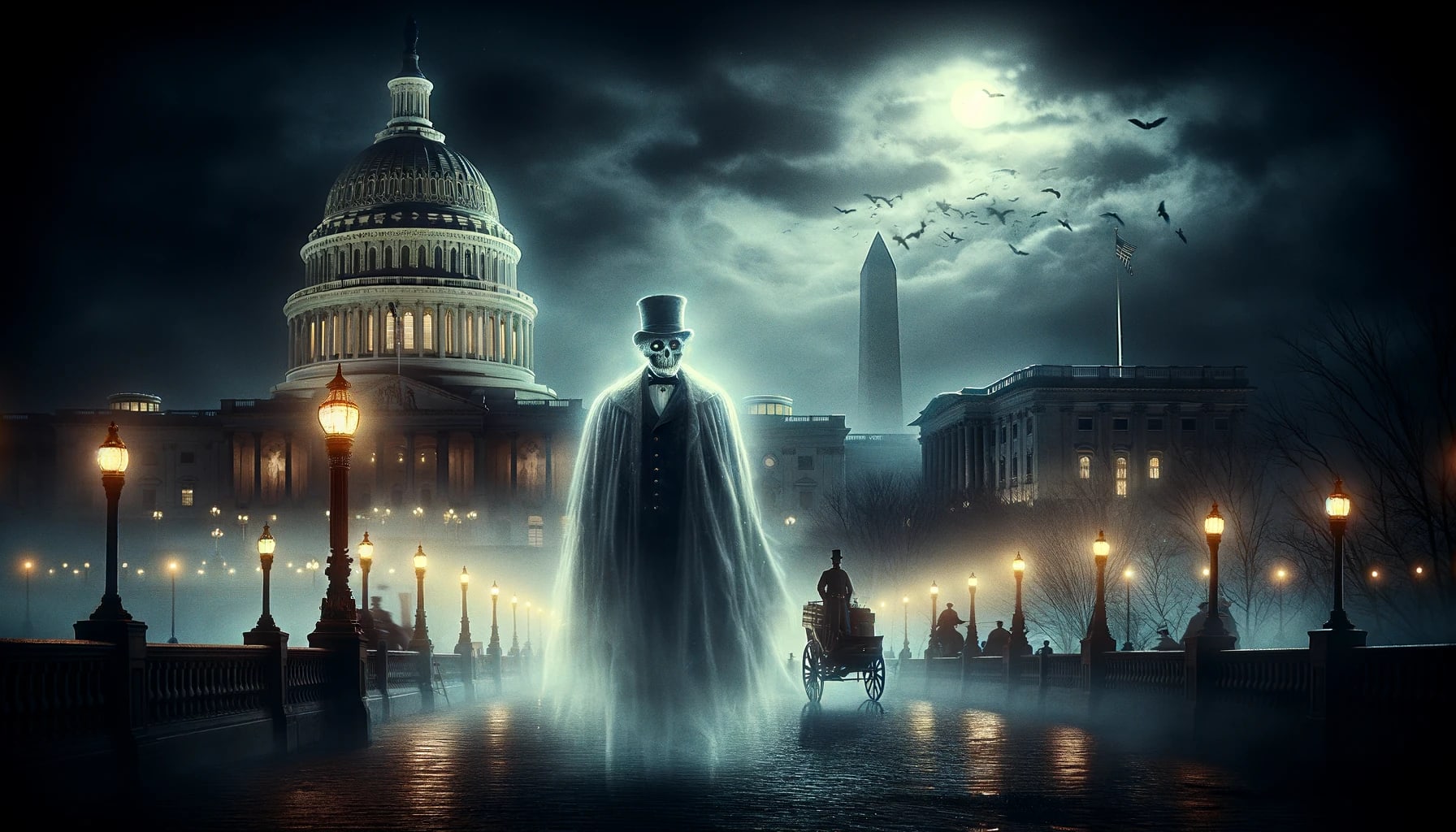
A Capital Built on Conflict
Washington DC was never meant to be comfortable. It was meant to be a compromise.
The site chosen for the nation's capital in 1790 was a stretch of swampy, mosquito-infested land along the Potomac River — selected not because it was suitable for habitation but because it sat on the border between North and South, a geographic middle ground in a nation that was already divided before its capital was built.
The construction of the city was an exercise in hardship. Enslaved laborers — men and women whose names were rarely recorded — quarried the stone, hauled the timber, and laid the foundations of the buildings that would house the government of a nation founded on the principle that all men are created equal. The contradiction was embedded in the city's DNA from the beginning, and the suffering of the people who built it is a dimension of Washington's haunted history that is often overlooked.
Disease was rampant. The swampy terrain bred malaria. Yellow fever moved through the population. The workers — enslaved and free alike — died of illness, exhaustion, and the accumulated toll of building a capital city from raw wilderness. The dead were buried in plots that were later paved over, built upon, or simply forgotten as the city expanded.
Washington DC was born in struggle. It was a city built by the suffering of people who had no choice, on land that resisted habitation, for a government that was itself an experiment with no guarantee of survival. That origin story — conflict, suffering, and unresolved injustice — set the foundation for everything that followed.
A City Where Decisions Meant Death
What makes Washington DC fundamentally different from every other haunted city in America is the nature of the emotional energy concentrated here.
Other cities are haunted by events — battles, epidemics, disasters. Washington DC is haunted by decisions. The men and women who worked in this city's most important buildings did not experience the violence directly. They ordered it. They authorized it. They debated it in committee rooms and signed it into law in offices that still stand today.
War strategies that sent hundreds of thousands of soldiers to their deaths were conceived in these buildings. Policies that displaced entire populations were drafted at these desks. Intelligence operations that cost agents their lives were approved in these rooms. The emotional weight of these decisions — the knowledge that a signature on a document could determine the fate of thousands — is a type of psychological burden that is unique to seats of power.
Paranormal researchers have long noted that locations where intense emotional experiences are concentrated tend to produce the strongest reports of unexplained activity. Washington DC concentrates a type of emotional intensity that is found nowhere else: the weight of decisions that shaped the course of history, made by people who understood the consequences and carried the burden of them for the rest of their lives.
For a comprehensive guide to the haunted locations of Washington DC, explore our full resource.
The War That Never Left Washington
The Civil War transformed Washington DC from a small, unfinished capital into a military fortress — and the trauma of that transformation has never fully dissipated.
During the war, the city was ringed with forts and filled with soldiers. Hospitals occupied every available building — churches, hotels, government offices, and private homes were commandeered to treat the wounded who arrived in a continuous stream from battlefields across Virginia and Maryland. The city became an open-air hospital where soldiers died by the thousands, far from home, in buildings that were never designed to contain so much suffering.
The emotional landscape of wartime Washington was defined by fear, grief, and exhaustion. Families in the city lived with the constant awareness that the Confederate Army was only miles away. The sound of artillery from nearby battles could be heard in the streets. The sight of ambulance wagons carrying the wounded and the dead became a daily occurrence that residents learned to endure but never fully accepted.
Washington DC is haunted differently than battlefields like Gettysburg. At Gettysburg, the hauntings are tied to physical violence — to the experience of soldiers who fought and died on specific ground. In Washington DC, the hauntings are tied to decision-making trauma — to the experience of leaders who ordered the violence, received the casualty reports, visited the hospitals, and carried the weight of knowing that their decisions had produced the suffering they witnessed.
That distinction matters. The ghosts of Washington DC are not soldiers reliving their final moments. They are the leaders, the planners, the decision-makers — people whose emotional burden was not physical pain but the knowledge that their choices determined who lived and who died.
The White House — America's Most Haunted Home
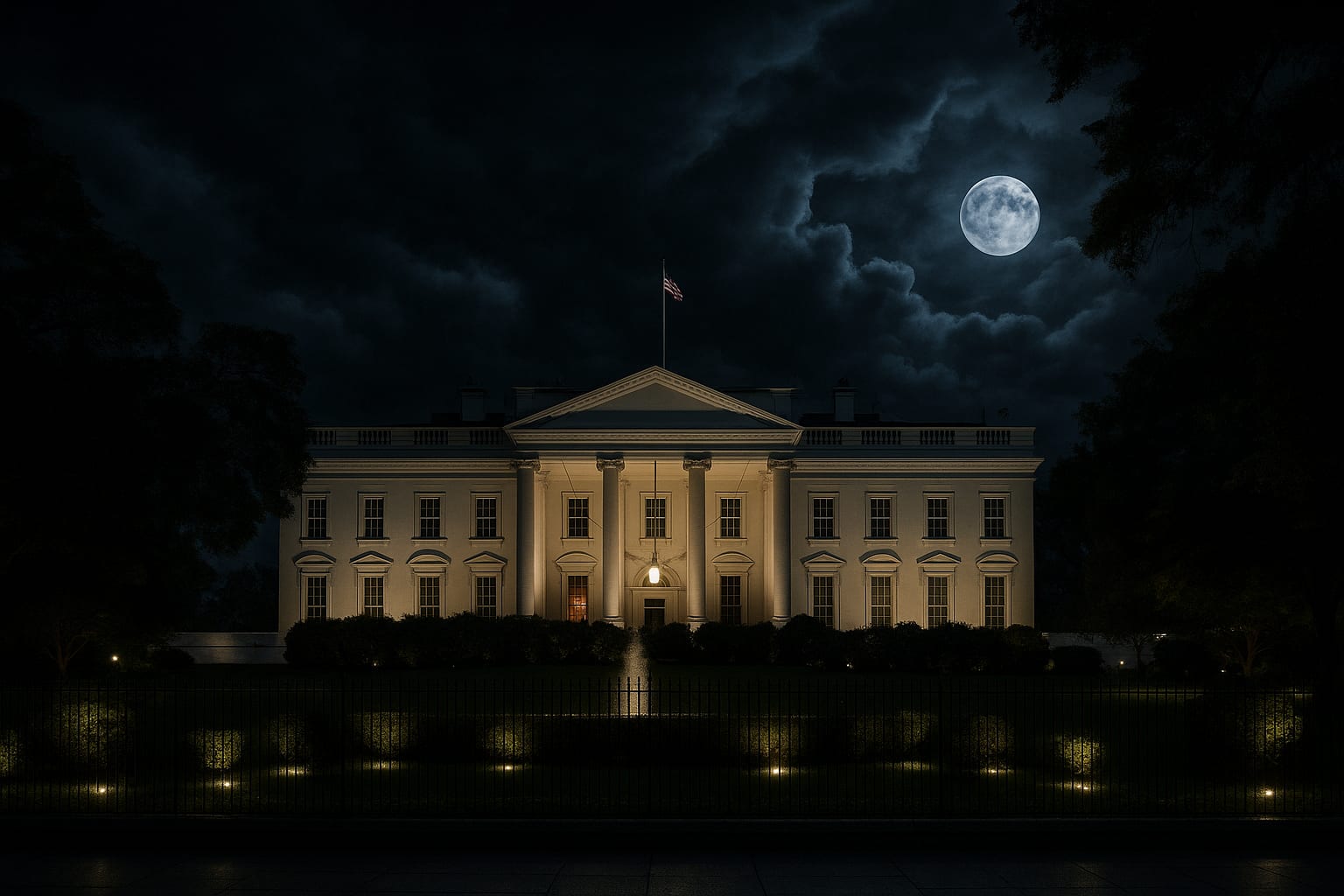
The White House is not just the most famous residence in America. It is, by most accounts, the most haunted.
Every president since John Adams has lived within its walls, and the cumulative weight of more than two centuries of concentrated political power, personal tragedy, and national crisis has produced a building that generates more credible reports of paranormal activity than almost any other structure in the country.
The White House has been the site of death, grief, and emotional extremes that are difficult to comprehend. Presidents have lost children within its walls. First Ladies have mourned husbands assassinated in office. Leaders have paced its hallways through sleepless nights, making decisions that would send young men to die on battlefields they would never see. The emotional density of the White House — the sheer volume and intensity of human experience concentrated in a single building over two centuries — is virtually unmatched.
[INSERT HAUNTED LOCATION CARD: White House]
The Ghost of Abraham Lincoln
The most famous ghost in Washington DC — and arguably the most famous ghost in America — is Abraham Lincoln.
Lincoln's spirit has been reported in the White House by an extraordinary roster of witnesses. First Lady Grace Coolidge described seeing Lincoln's figure standing at a window in the Oval Office, looking out toward the Potomac. Queen Wilhelmina of the Netherlands, staying as a guest during World War II, reported answering a knock at her bedroom door to find the full-bodied apparition of Lincoln standing in the hallway — an experience that reportedly caused her to faint.
Winston Churchill refused to sleep in the Lincoln Bedroom after an encounter he described but declined to elaborate on. Eleanor Roosevelt reported feeling Lincoln's presence in the room where she worked. White House staff across multiple administrations have reported cold spots, the sound of footsteps, and the sensation of being watched in the areas of the building most closely associated with Lincoln's presidency.
The consistency of these reports — spanning decades, involving witnesses of unimpeachable credibility, and describing the same figure in the same locations — makes the Lincoln haunting one of the most documented and most credible ghost stories in American history.
Lincoln carried a burden that no other president has matched — the weight of a civil war that killed more than 600,000 Americans, a conflict that he prosecuted with full knowledge of its human cost. That burden, according to those who have encountered his ghost, did not end with his death.
Other Spirits of the White House
Lincoln is the most famous, but he is not alone.
Abigail Adams — the wife of John Adams, the first president to occupy the White House — has been reported in the East Room, where she reportedly hung laundry during the early, unfinished days of the building. Her apparition has been described as a woman in colonial dress, moving purposefully through a room that she occupied during a period when the White House was barely habitable.
Andrew Jackson has been reported in the Rose Bedroom — the room he occupied during his presidency. Staff have described hearing raucous laughter and what sounds like a party in the room when it is unoccupied. Jackson's temperament — forceful, confrontational, and intensely emotional — is consistent with the type of presence that paranormal researchers associate with intelligent hauntings.
The White House accumulates ghosts the way it accumulates history — in layers, each administration adding its own emotional weight to a building that has absorbed more concentrated human experience than any other residence in the Western Hemisphere.
The United States Capitol — Shadows of Power
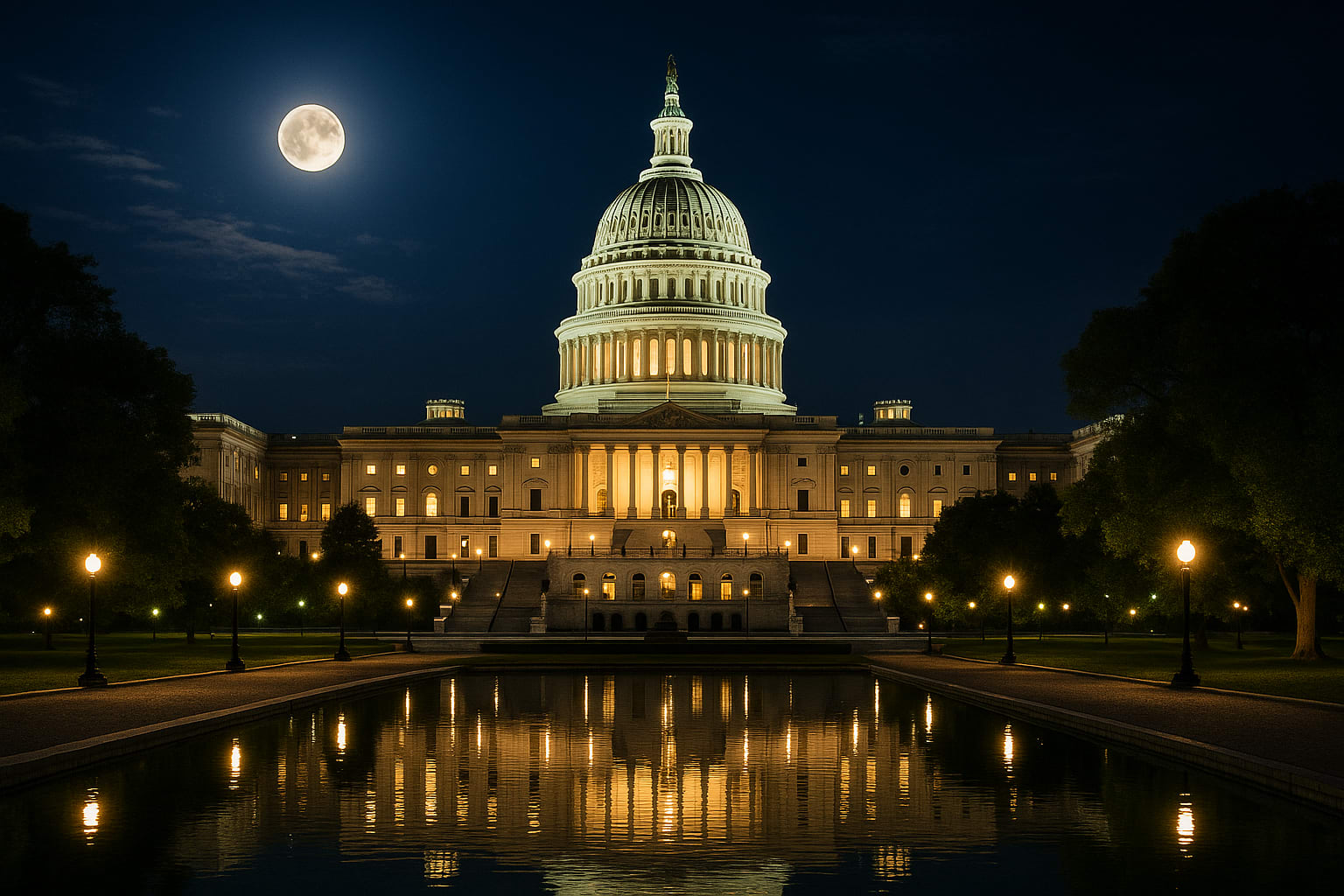
The US Capitol Building is where the laws of the nation are written — and where the spirits of those who wrote them appear to remain.
The Capitol has been the site of political drama, personal tragedy, and the kind of high-stakes decision-making that concentrates emotional energy with extraordinary intensity. Debates that determined the fate of slavery, the prosecution of wars, and the impeachment of presidents have unfolded within its chambers. The building has also been the site of death — from construction accidents during its building to the violence of the January 1814 burning by British forces.
Phantom guards have been reported in the Capitol's corridors — figures in period uniforms who patrol hallways that have been empty for hours. Unexplained footsteps echo through the Rotunda after the building has closed for the night. Staff working late have described the sensation of being watched from the galleries above, and several have reported seeing figures seated in the chamber when no session is in progress.
The Capitol's most famous ghost story involves a phantom cat — a spectral feline that has been reported in the building's basement since the 19th century. According to tradition, the cat appears before national tragedies, growing in size as it approaches before vanishing entirely. The story has been told by Capitol police for generations.
[INSERT HAUNTED LOCATION CARD: US Capitol]
The Library of Congress — Knowledge and Restless Spirits
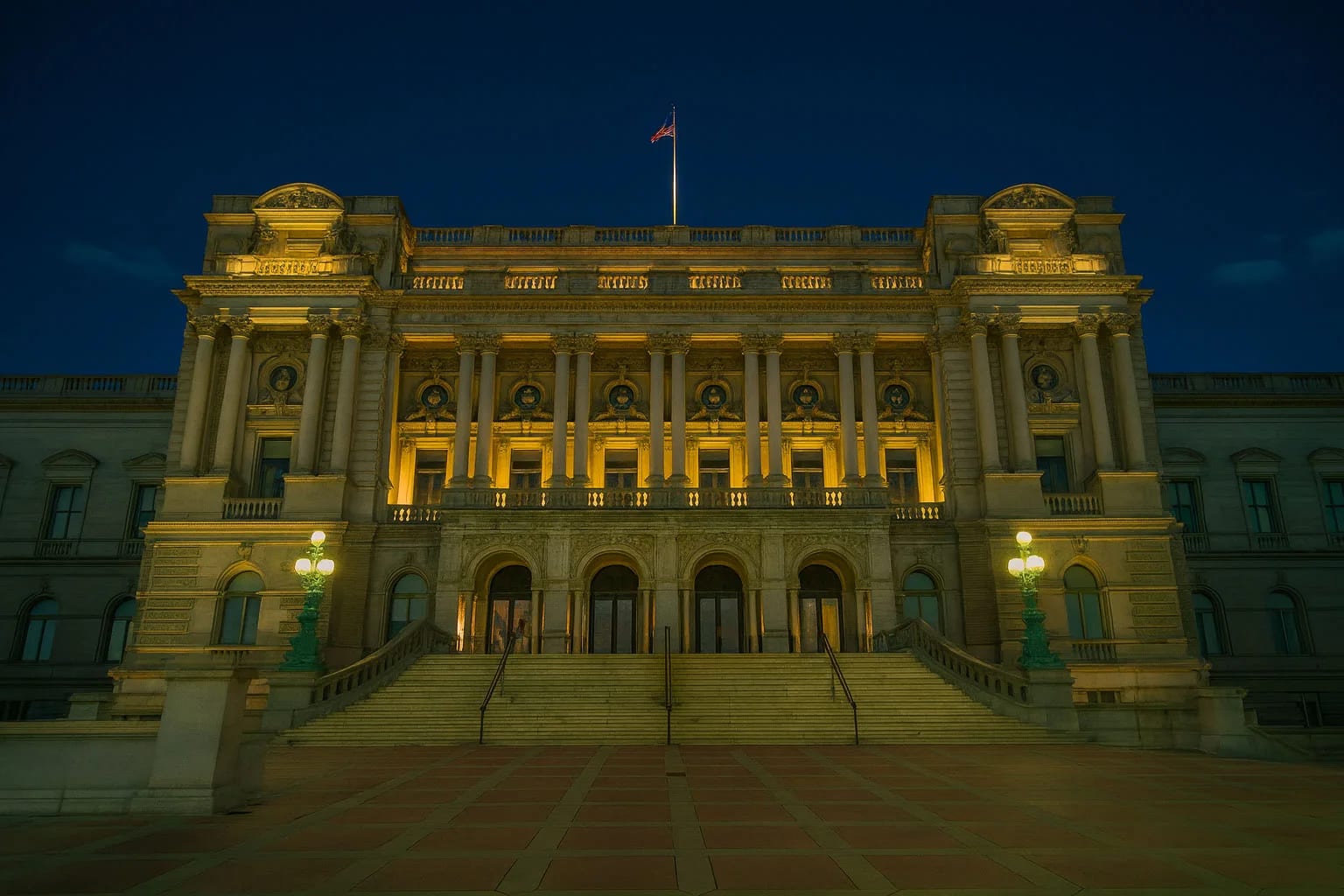
The Library of Congress is the largest library in the world — a vast repository of human knowledge housed in one of the most architecturally magnificent buildings in Washington DC. It is also, according to those who work within its walls, one of the city's most quietly haunted locations.
The library's hauntings are not dramatic. They are subtle — consistent with a building whose character is defined by silence, preservation, and the accumulated weight of centuries of recorded human thought. Staff working after hours have reported the sound of footsteps in empty reading rooms, books that appear to have been moved from their shelved positions overnight, and the occasional glimpse of a figure moving between the stacks that vanishes when pursued.
The most persistent reports describe what staff have come to call the phantom librarian — a figure seen in the main reading room during the quiet hours, appearing to browse the shelves with the purposeful movements of someone who knows exactly where they are going. The figure is described as translucent, dressed in clothing that is difficult to date precisely, and gone before anyone can approach.
The Library of Congress is a place where the energy of preservation — the human impulse to collect, protect, and transmit knowledge across generations — is concentrated with an intensity that few other buildings can match. Whether that energy has a paranormal dimension is a question the library's ghosts seem determined to answer.
[INSERT HAUNTED LOCATION CARD: Library of Congress]
Ford's Theatre — Where History Stopped
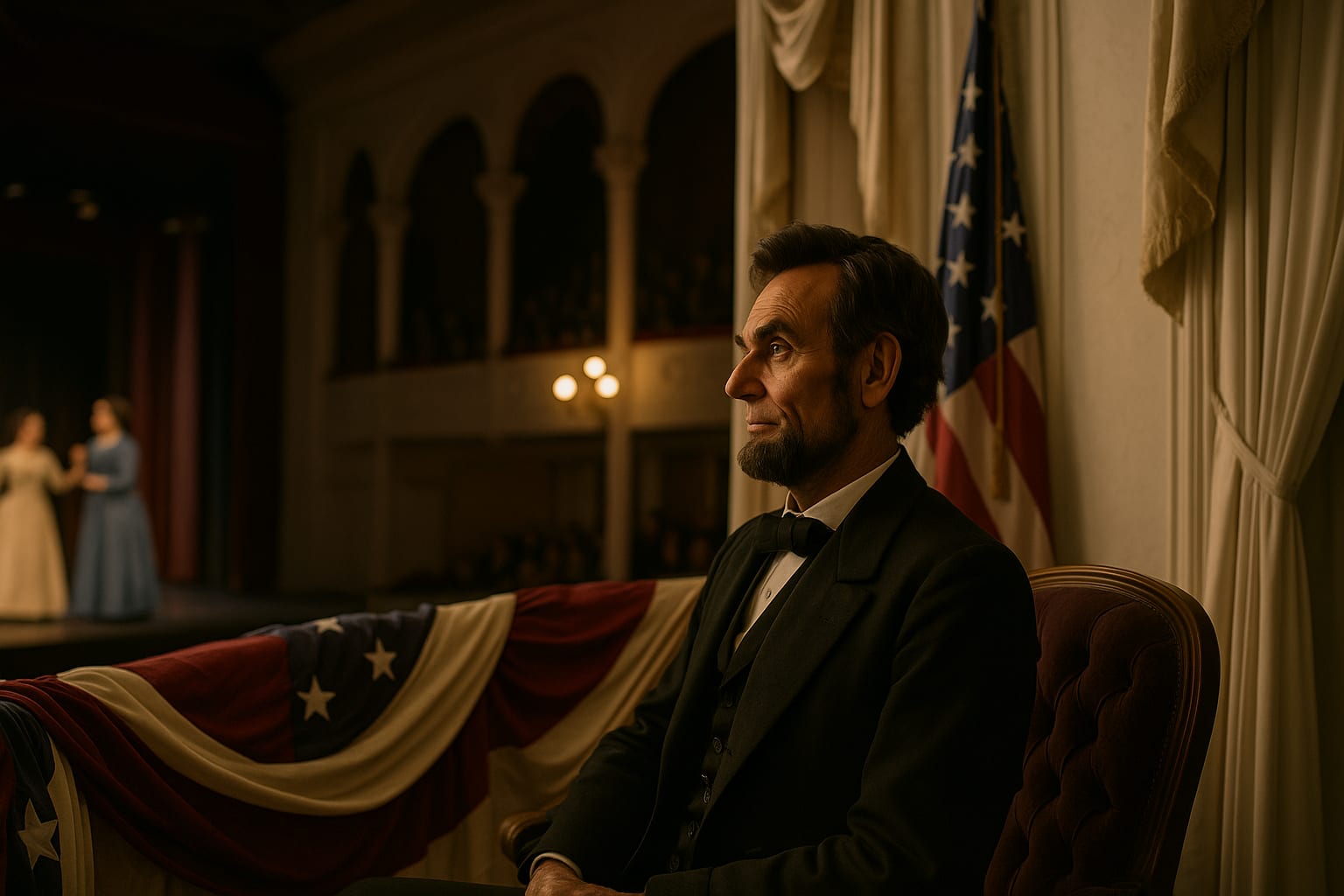
On the evening of April 14, 1865, President Abraham Lincoln was shot by John Wilkes Booth while attending a performance at Ford's Theatre. He died the following morning in a boarding house across the street. The nation was five days past the end of the Civil War.
The assassination of Lincoln was a trauma that affected the entire country — but it was concentrated, with devastating physical immediacy, in the theatre where it happened. The audience heard the shot. They saw the president slump. They watched Booth leap from the box to the stage. The emotional shock of that moment — the collective horror of hundreds of people witnessing the murder of the president in real time — was compressed into a single building in a single instant.
Ford's Theatre has been the subject of paranormal reports since the night of the assassination. Visitors and staff have described cold spots in the presidential box, the sound of a single gunshot echoing through the empty theatre, and the sensation of overwhelming sadness that descends without warning on people standing in the area where Lincoln sat.
The theatre is a textbook case of what paranormal researchers call a crisis imprint — a single, catastrophically intense emotional event that stamps itself into the physical environment with such force that it continues to replay, under conditions that are not fully understood, for decades or centuries after the original event.
[INSERT HAUNTED LOCATION CARD: Ford's Theatre]
Lafayette Square — A Park Filled With Ghosts
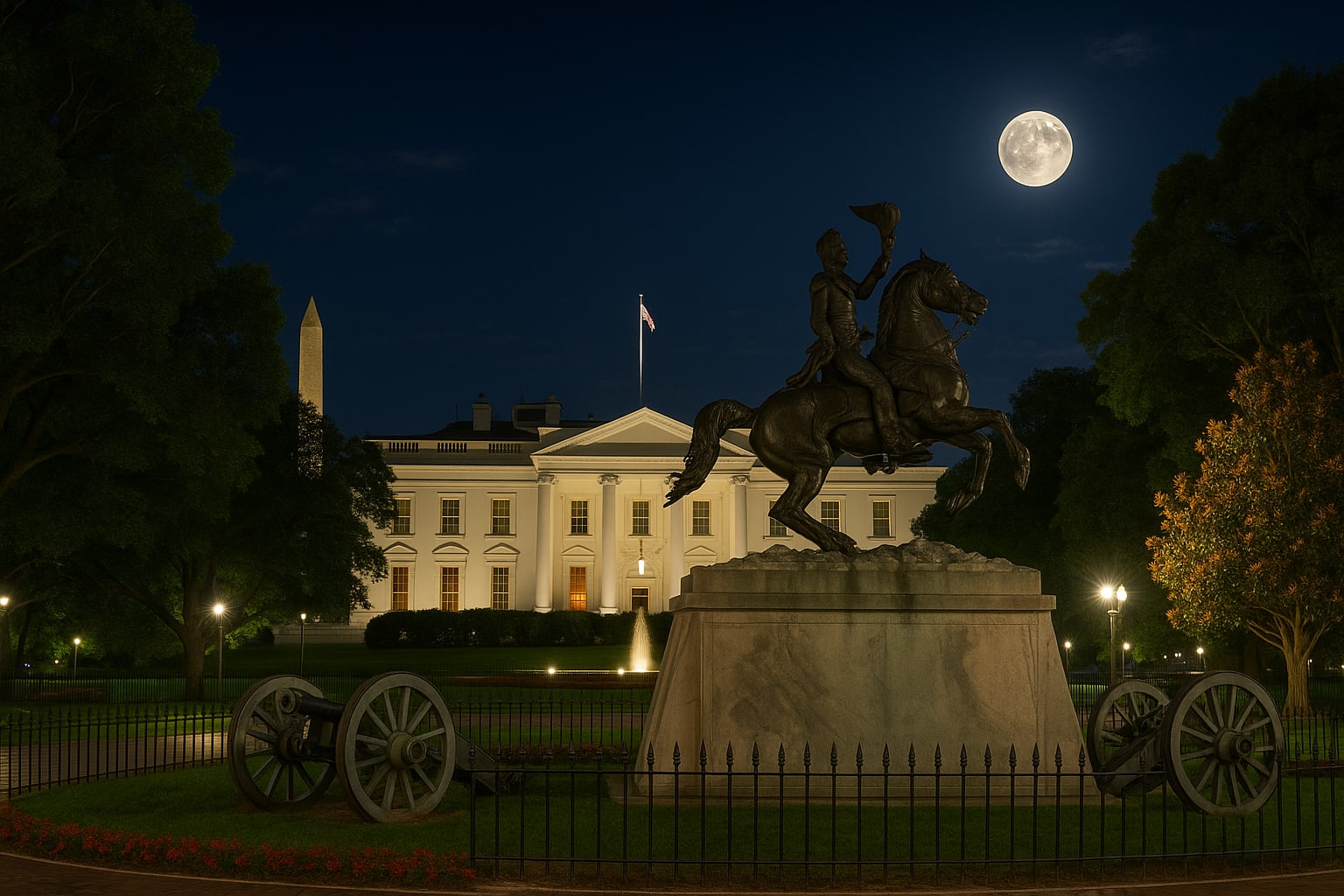
Lafayette Square sits directly across from the White House — a small, elegant park that has witnessed more political violence, personal tragedy, and concentrated human drama than any comparable public space in America.
The park's most famous ghost story involves Philip Barton Key II — the son of Francis Scott Key, author of "The Star-Spangled Banner." In 1859, Key was shot and killed in Lafayette Square by Congressman Daniel Sickles, who had discovered that Key was having an affair with his wife. The murder was public, brutal, and sensational — and the trial that followed was the first in American history to use temporary insanity as a defense. Sickles was acquitted.
Key's ghost has been reported in Lafayette Square for more than 160 years — a figure in period clothing who appears near the spot where he was killed, sometimes gesturing as though trying to communicate, sometimes simply standing and watching before fading from view.
But Key is not the only ghost associated with the square. The park has been the site of duels, political confrontations, and the kind of intense public drama that was common in 19th-century Washington. The emotional energy of these events — concentrated in a small public space adjacent to the most powerful address in the world — has produced reports of unexplained phenomena that span generations.
[INSERT HAUNTED LOCATION CARD: Lafayette Square]
The Hay-Adams Hotel — Lincoln's Shadow Returns
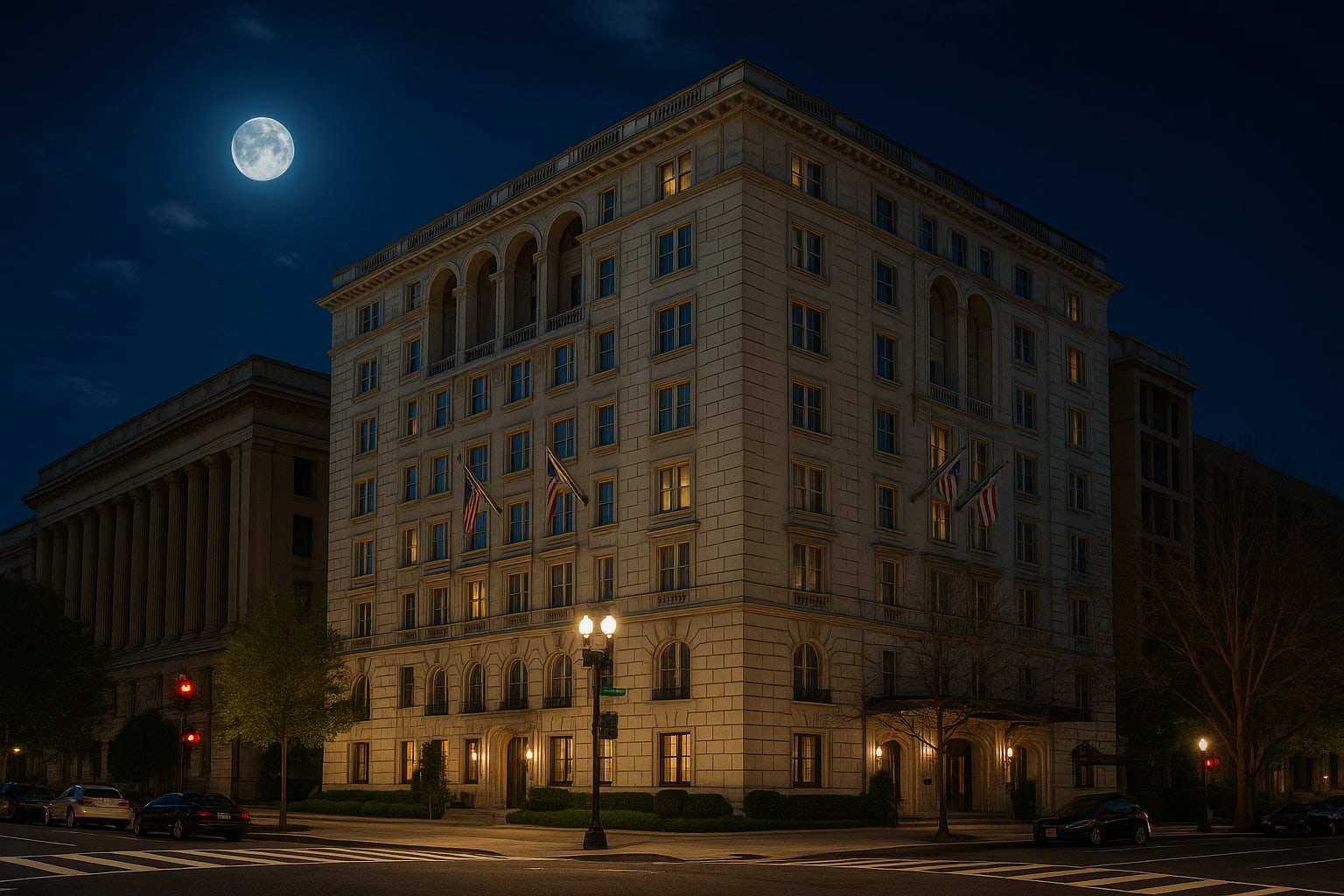
The Hay-Adams Hotel stands on the site where two of the most influential men in Lincoln's Washington lived and died — John Hay, Lincoln's private secretary, and Henry Adams, grandson of John Quincy Adams and great-grandson of John Adams.
The hotel, built in 1928, replaced the homes of Hay and Adams — homes that had been gathering places for Washington's intellectual and political elite during some of the most consequential decades in American history. The site's connection to Lincoln is particularly strong: Hay served as Lincoln's personal aide throughout the Civil War, witnessing firsthand the toll that the conflict took on the president he served.
Guests at the Hay-Adams have reported a range of unexplained experiences — knocking on doors with no one present, the sound of a woman's voice in empty hallways, and the sensation of a presence in rooms that are demonstrably unoccupied. The most persistent reports describe a female presence — believed by some to be Marian "Clover" Adams, Henry Adams's wife, who died by suicide in their home on this site in 1885.
The Hay-Adams is a reminder that Washington's hauntings extend beyond the government buildings and monuments. The private lives of the people who shaped this city — their grief, their losses, their personal tragedies — left marks on the ground they lived on, and those marks persist in the buildings that replaced their homes.
[INSERT HAUNTED LOCATION CARD: Hay-Adams Hotel]
Why DC Feels Different From Other Haunted Cities
Every haunted city has its own character. Savannah's hauntings are elegant and melancholic — shaped by centuries of Southern culture, epidemic disease, and a city that has always maintained an intimate relationship with its dead. New Orleans pulses with spiritual energy that reflects its unique blend of Creole, Voodoo, and Catholic traditions. Gettysburg is saturated with the residual trauma of the bloodiest battle in American history.
Washington DC is different from all of them.
The hauntings here are not primarily tied to tragedy — although tragedy is present in abundance. They are tied to responsibility. The people who lived and worked in Washington's most haunted buildings were not victims of circumstance. They were decision-makers. They were the people who determined the fate of millions through choices that they made deliberately, under extraordinary pressure, with full awareness of the consequences.
That type of emotional burden — the weight of power, the fear of failure, the knowledge that your decisions will determine who lives and who dies — produces a specific type of spiritual imprint. It is not the sharp, sudden trauma of a battlefield. It is the slow, grinding accumulation of responsibility that builds over years and decades, saturating the environments where it is carried.
Power leaves a mark. The buildings where that power was exercised — the White House, the Capitol, the offices and hotels and parks where Washington's leaders lived, worked, and died — carry the weight of decisions that shaped the course of human history. That weight does not dissipate when the decision-makers leave. It remains — embedded in the walls, the floors, and the atmospheric fabric of a city that was designed, from its founding, to concentrate the most consequential human activity on the planet.
Truth vs. Legend in Washington DC
Washington DC has no shortage of ghost stories. Some of them are among the most credible in America — documented by witnesses of unimpeachable reputation, supported by repeated independent reports, and grounded in historical events that are thoroughly verified.
Others are less reliable. Like any city with a strong paranormal reputation, Washington has accumulated stories that have been embellished, distorted, or invented over the years. The line between documented account and urban legend is not always clear, and the city's status as a center of power and intrigue has made it a magnet for stories that prioritize drama over accuracy.
The distinction matters. The real ghost stories of Washington DC — the ones tied to documented history, supported by credible witnesses, and consistent over time — are more powerful and more meaningful than any fiction. When fabricated stories circulate alongside legitimate accounts, they dilute the credibility of the genuine reports and disrespect the real history that produced them.
Not every ghost story is real. But the ones worth telling are grounded in history. Ghost City Tours is committed to telling only those stories — researched, verified, and delivered by guides who understand that the truth about Washington's hauntings is more compelling than anything that could be invented.
Walking Through History After Dark
Washington DC after dark is a different city. The monuments, lit from below, cast long shadows across empty plazas. The government buildings — imposing in daylight — become monolithic silhouettes against the night sky. The streets that were crowded with tourists and commuters hours earlier are quiet, and in that quiet, the city's history becomes palpable in a way that daylight does not permit.
The best way to experience haunted Washington DC is on foot, at night, in the company of a guide who knows the history behind every building, every park, and every shadow.
Ghost City Tours in Washington DC offers three distinct experiences:
The Ghosts of Washington DC Tour — A 90-minute walking tour suitable for all ages. The stories are historically grounded, the atmosphere is immersive, and the experience is designed to be accessible for families and groups. Nightly at 9:00 PM, $29.99.
The Dark Nights in DC Ghost Tour — An adults-only (16+) experience that explores the darker, more intense stories of Washington's haunted history. This is the tour for people who want the unfiltered version — the political violence, the personal tragedies, and the paranormal activity that the family-friendly tour does not cover. Nightly at 9:00 PM, $34.99.
The Washington DC Haunted Pub Crawl — A 2-hour experience (21+) that combines haunted history with the social energy of DC's nightlife, visiting historic establishments with documented ghost stories. Nightly at 8:00 PM, $34.99.
All three tours are led by guides who are historians first — researchers and storytellers who connect the hauntings to real events, real people, and the documented history that makes Washington DC one of the most haunted cities in America.
The stories come alive in the real locations. Reading about them is one thing. Standing where they happened, after dark, hearing them told by someone who has spent years researching their truth — that is something else entirely.
If you want to experience these haunted locations in person, our nighttime itinerary for haunted Washington DC maps a complete evening route from sunset at the Lincoln Memorial through the most paranormally active streets of the capital.