Washington DC After Dark is a Different City
During the day, Washington DC belongs to tourists, commuters, and government officials. The sidewalks are crowded. The Metro is loud. The monuments feel like backdrops for family photos. Everything is legible, organized, and well-lit.
Then the sun sets.
The monuments, bathed in artificial light, take on a gravity that daytime visits never quite achieve. The Lincoln Memorial — a building designed to feel like a temple — actually becomes one. The Reflecting Pool turns into a mirror of dark glass. The Washington Monument stands alone against the sky like a needle pinning the city to something older and heavier than politics.
The crowds thin. The tour buses leave. And the city begins to feel like what it is: a place built on contested ground, shaped by war, assassination, plague, and political violence that stretches back to its founding. The ghosts of Washington DC are not relics of a distant past. They are the residue of a history that never stopped accumulating.
Presidents have died here — in office, by assassination, by illness. Soldiers have been buried in mass graves within the city limits. Epidemics swept through the capital in waves, filling hospitals that no longer exist with suffering that left marks on the ground itself. And the people who shaped this country — Lincoln, Lafayette, Adams, the enslaved men and women who built the city's most iconic structures — left behind something more than monuments.
For a deeper understanding of what made this city so haunted, start with Why is Washington DC Haunted? and our guide to the Dark History of Washington DC. This itinerary is about how to experience it — step by step, location by location, from the last light of day into the deepest hours of the night.
Plan Your Night the Right Way
This itinerary is flexible. It is not a rigid schedule — it is a framework designed to help you experience Washington DC's haunted side in the order that builds the most atmosphere and delivers the most impact. You can follow it exactly, or you can adapt it to your group, your energy level, and the amount of darkness you are comfortable with.
Who This Itinerary is For
Families: Focus on the early evening phase — sunset at the Lincoln Memorial, a walk along the Mall at nightfall, and the family-friendly Ghost Tour at 8:00 PM. The atmosphere is magical without being frightening, and younger visitors will experience the monuments in a way they will never forget.
Couples: Start at sunset, linger through the haunted locations around Lafayette Square and the Hay-Adams Hotel, and join either the family ghost tour or the adults-only Dark Nights of DC tour. The combination of history, atmosphere, and storytelling makes for a date night that is unlike anything else in the city.
Paranormal Enthusiasts: Follow the full itinerary from sunset through the late-night phase. Hit every haunted location. Take the Dark Nights of DC ghost tour for the deeper, darker stories. Then walk Capitol Hill after midnight when the streets are empty and the energy shifts. This is the full experience.
Best Nights and Timing
Best days: Weeknights — Tuesday through Thursday — offer the quietest streets and the most atmospheric conditions. Weekend nights bring more foot traffic, which can dilute the sense of isolation that makes haunted DC so effective.
Ideal start time: Arrive at the Lincoln Memorial approximately 30 minutes before sunset. In spring and fall, this means starting around 6:00–6:30 PM. In summer, closer to 7:30 PM. In winter, as early as 4:30 PM.
Seasonal considerations: Fall is the best season for this itinerary. The air is cool, sunset comes early enough to build a full evening, and the trees along the Mall create a canopy effect that deepens the atmosphere after dark. Summer evenings are warm and long — ideal for extended walks, but the late sunset pushes the timeline later. Winter nights are cold and stark, but the early darkness and bare trees create an intensity that no other season matches.
Start with Washington DC's Most Atmospheric Locations (6:00–8:00 PM)
The early evening is about setting the stage. You are not hunting ghosts yet — you are building the atmosphere that will make the rest of the night resonate. Washington DC's monuments were designed to inspire awe, and at sunset, they do something more than that. They create a feeling of weight, of presence, of being surrounded by history that is not finished with this place.
The Lincoln Memorial at Sunset
Begin here. There is no better starting point for a haunted evening in Washington DC.
The Lincoln Memorial at sunset is one of the most powerful atmospheric experiences in the country. The western light pours through the columns and illuminates the seated figure of Lincoln in warm gold that fades, minute by minute, into shadow. The Reflecting Pool stretches east toward the Washington Monument, its surface darkening as the sky changes color. The crowd thins. The voices grow quieter. And the building — a structure intentionally modeled after a Greek temple — begins to feel less like a monument and more like a threshold.
Lincoln's presence in Washington DC extends far beyond this memorial. His ghost is the most frequently reported apparition in the city — seen in the White House by presidents, first ladies, and heads of state over more than a century. Winston Churchill reportedly refused to sleep in the Lincoln Bedroom after an encounter. Eleanor Roosevelt said she could feel him standing behind her while she worked late at night.
Standing in the memorial at sunset, you understand why. The scale of the figure. The weight of the words carved into the walls. The silence that settles as the light fades. Even without a ghost sighting, this place feels heavy — charged with something that goes beyond architecture and history. It feels occupied.
Spend 20–30 minutes here. Watch the light change. Read the inscriptions. Let the atmosphere build. Then walk east along the Reflecting Pool as nightfall begins.
Walking the National Mall at Nightfall
The walk from the Lincoln Memorial east along the Reflecting Pool is the transition point of the evening — the moment when daylight tourism ends and something else begins.
As you walk, the light drops. The monuments on either side of the Mall become silhouettes, then shapes lit from below by ground-level floodlights. The Washington Monument rises ahead of you, impossibly tall and glowing white against the darkening sky. The sounds of the city — traffic, voices, the distant hum of a functioning capital — begin to recede.
This is when most visitors leave. The families with strollers head for the Metro. The tour groups board their buses. And the Mall, which during the day feels like a public park, begins to feel like something older. The open space between the monuments is not comforting at night. It is vast, exposed, and silent in a way that reminds you that this ground has been the site of protests, encampments, inaugurations, and mourning for over two centuries.
The National Mall was built on reclaimed swampland — a marshland so unhealthy that early residents of the city called it a breeding ground for disease. Yellow fever, malaria, and cholera swept through Washington in waves during the 19th century, filling hospitals and cemeteries faster than the city could expand them. The ground beneath your feet holds more than monuments. It holds the residue of suffering that preceded the marble.
Walk at whatever pace feels right. Stop at the World War II Memorial or the Vietnam Veterans Memorial if they are on your path. Both are profoundly affecting at night — the names on the Vietnam wall, lit by small ground lights, seem to float in the darkness. Then continue north toward the White House and the haunted ground that surrounds it.
Enter the Most Haunted Areas of DC (8:00–10:00 PM)
By 8:00 PM, the atmosphere has shifted. The monuments are behind you. The streets around the White House are quieter. And the locations you are about to visit are not monuments — they are places where people lived, worked, suffered, and died. The hauntings here are not abstract. They are personal.
The Haunted Lafayette Square Park
This park across from the White House hosts more presidential ghosts per square foot than any location in America. Duels, murder, and political betrayal left marks that haven't faded.
Read More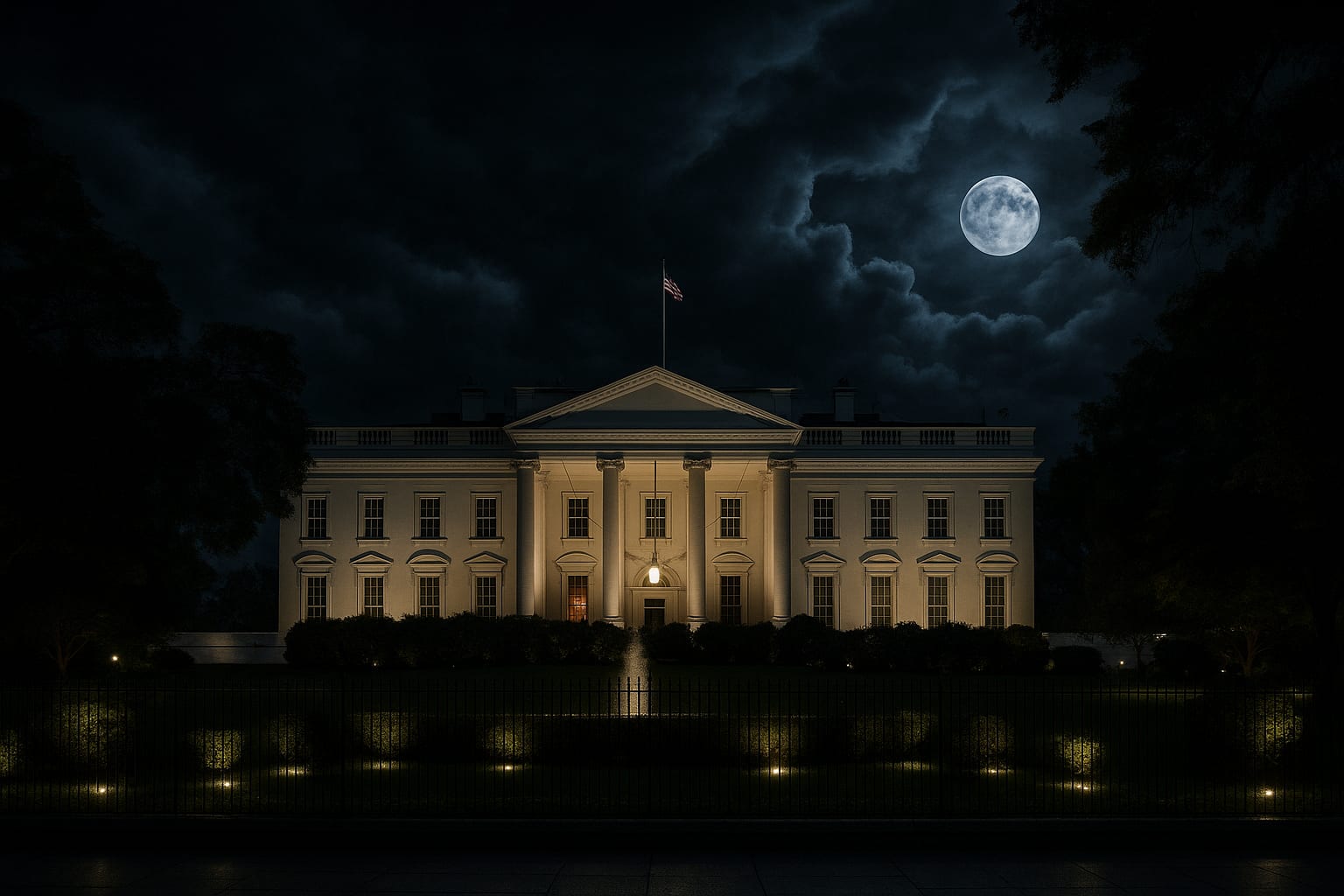
The Ghosts of the White House
Every president since John Adams has reported paranormal experiences in the Executive Mansion, where Lincoln walks the halls and phantom first ladies still host gatherings.
Read More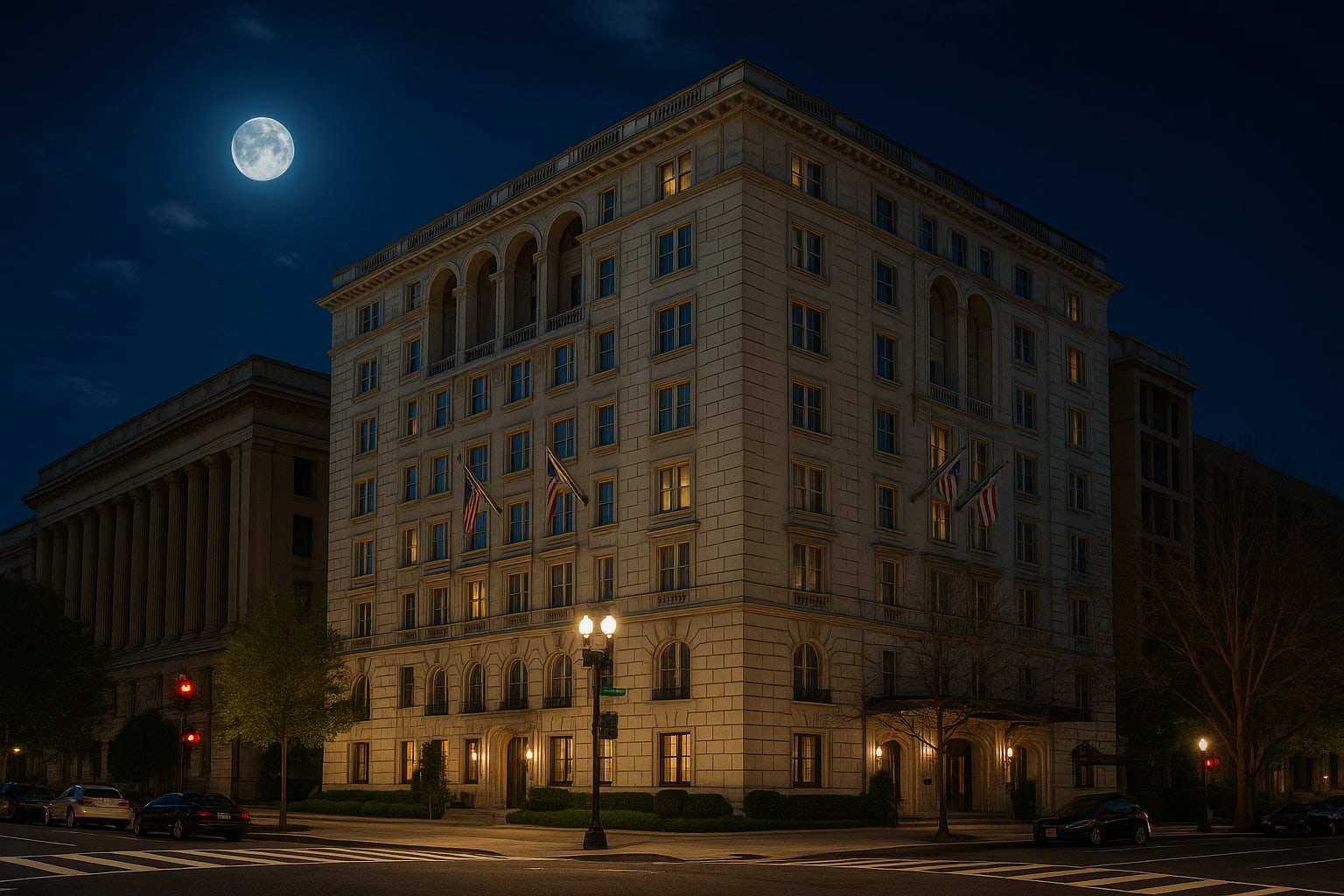
The Haunted Hay Adams Hotel
Built on the site where Henry Adams and John Hay lived and died, this luxury hotel hosts the most sophisticated ghosts in the capital. The scent of almonds drifts through empty hallways.
Read MoreLafayette Square
Lafayette Square sits directly across Pennsylvania Avenue from the White House, and it has witnessed more concentrated violence, political intrigue, and death than almost any other public space in America.
This is where Philip Barton Key II — the son of Francis Scott Key, who wrote "The Star-Spangled Banner" — was shot and killed in broad daylight by Congressman Daniel Sickles in 1859, after Sickles discovered Key's affair with his wife. It is where political duels were settled, where protests turned violent, and where the proximity to presidential power created an atmosphere of ambition, betrayal, and consequence that left marks on the ground itself.
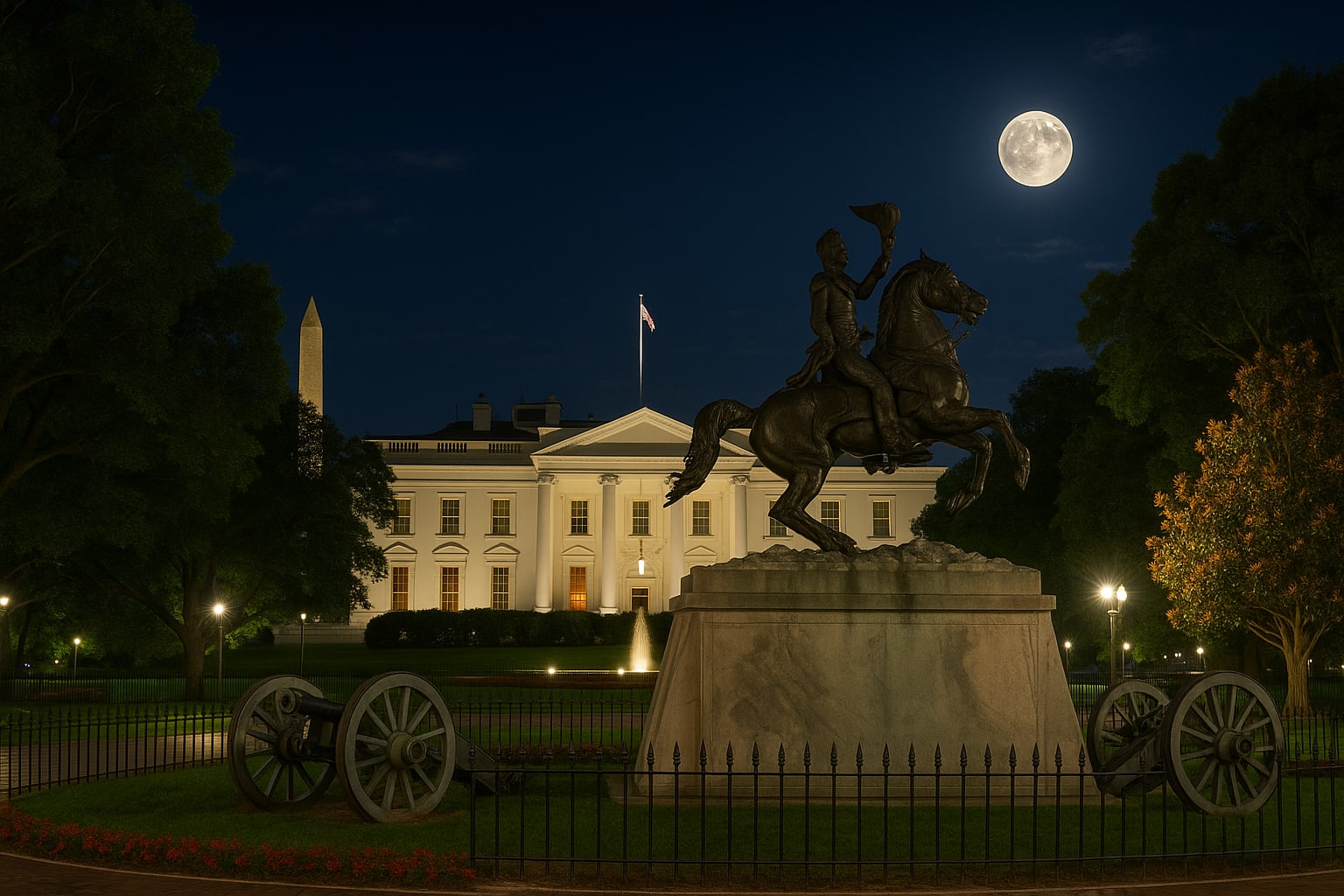
At night, Lafayette Square is one of the most paranormally active locations in Washington DC. Visitors have reported seeing figures in 19th-century clothing walking the paths, only to vanish when approached. The sound of arguing voices — heated, urgent, and sourceless — has been reported by people crossing the square after dark. The statue of Andrew Jackson on horseback, lit from below, casts shadows that seem to move independently of the wind.
Stand in the square and face the White House. The proximity is striking — you are closer to the president's residence than you might expect, separated by a fence and a stretch of Pennsylvania Avenue that feels, at night, like a boundary between the visible and the invisible.
[INSERT HAUNTED LOCATION CARD: Lafayette Square]
The White House at Night
You cannot enter the White House on this itinerary, but you do not need to be inside to feel its weight at night.
The White House is the most haunted building in Washington DC. Every president since John Adams has lived within its walls, and more than a few have died there. The ghosts reported inside the building read like a roster of American history: Abraham Lincoln, seen by dozens of witnesses over more than a century. Abigail Adams, spotted hanging laundry in the East Room. Andrew Jackson, heard laughing in the Rose Room. A British soldier from the War of 1812, seen in the hallways he once stormed.
From the north side of Lafayette Square, the White House is visible through the iron fence — a pale, glowing structure that looks deceptively calm from the outside. At night, the floodlit facade creates a contrast with the surrounding darkness that is both beautiful and unsettling. The building looks isolated, almost suspended in light, while the grounds around it disappear into shadow.
Lincoln's ghost remains the most persistent. He has been seen by Harry Truman, Lyndon Johnson, and multiple members of the White House staff across administrations. The Lincoln Bedroom — which was actually his office, not his sleeping quarters — is the epicenter of the reports. But Lincoln has been seen throughout the building, always standing or walking, always silent, always vanishing before anyone can speak to him.
[INSERT HAUNTED LOCATION CARD: White House]
The Hay-Adams Hotel
Walk one block north from Lafayette Square and you will find the Hay-Adams Hotel — one of the most elegant and most haunted hotels in the country.
The hotel was built on the site where Secretary of State John Hay and historian Henry Adams once lived as neighbors and intellectual companions. But the haunting that dominates the Hay-Adams is tied to Marian "Clover" Adams, Henry's wife, who died by suicide in their home on this exact site in 1885. She had been suffering from depression following her father's death, and her loss devastated Henry Adams so completely that he never spoke her name again in public.
Clover has not been as silent.
Guests at the Hay-Adams have reported the scent of almonds — associated with the potassium cyanide that caused her death — drifting through hallways with no identifiable source. Doors open and close in rooms on the upper floors. Housekeeping staff have found items rearranged in unoccupied rooms. And on the fourth floor, where the Adams home once stood, guests have reported a female presence — not threatening, not aggressive, but unmistakably there. A woman who lingers in the space where her life ended, in a building that was constructed over the ground where she suffered.
The Hay-Adams is worth visiting even if you are not staying there. Stand on the sidewalk and look up at the facade. The building is beautiful — one of the finest examples of Italian Renaissance architecture in Washington. But beauty does not prevent haunting. If anything, the elegance of the Hay-Adams makes the sadness of Clover Adams's story more acute. This is not a decaying asylum or an abandoned prison. It is a place where grief embedded itself in luxury and refused to leave.
[INSERT HAUNTED LOCATION CARD: Hay-Adams Hotel]
Why Exploring Alone Only Tells Part of the Story
You can walk past the White House at night. You can stand in Lafayette Square and feel the atmosphere shift. You can read the plaques and look up the history on your phone. But you will miss most of what makes these locations haunted.
The stories that bring Washington DC's ghosts to life are not on the plaques. They are not in the guidebooks. They are the details that only come from years of research, firsthand experience, and the kind of storytelling that transforms a walk past a building into an encounter with the people who lived and died inside it.
This is where a guided ghost tour becomes the centerpiece of the night — not as entertainment, but as context. A good guide does not just tell you that the White House is haunted. They tell you which room, which ghost, which president saw it, and what they said afterward. They tell you the stories that make the darkness meaningful.
This is the moment the night becomes real.
Family-Friendly Ghost Tour
The Ghost of Washington DC Ghost Tour is a walking tour designed for all ages — families, couples, and anyone looking for an experience that is atmospheric, educational, and genuinely compelling without being too intense for younger visitors.
The tour covers the most haunted locations in the heart of the city, with stories grounded in real history and told by guides who know both the facts and the legends. It is the perfect complement to the early evening portion of this itinerary — a structured, guided experience that takes the locations you have already visited and fills them with the stories you could not find on your own.
This tour runs in the early evening and is ideal for families who want to experience haunted DC without keeping young children out past their comfort zone.
Adults Only — Dark Nights of DC
The Dark Nights of DC Ghost Tour is for visitors who want the full, unfiltered history of haunted Washington. This is the tour that goes deeper — into the assassinations, the political violence, the epidemics, and the personal tragedies that produced the most intense hauntings in the capital.
The stories on this tour are darker, the history is more detailed, and the experience is designed for adults who want to understand not just that a place is haunted, but why. What happened in these buildings. Who suffered. What was lost. And what, according to decades of reports, remains.
This is the tour for couples on a date night, for history enthusiasts who want substance over spectacle, and for anyone who came to Washington DC looking for something the daytime tours do not provide.
Haunted Pub Crawl
The Haunted Pub Crawl combines ghost stories with some of the most historically significant bars and taverns in the capital. Washington DC's drinking establishments have witnessed political deals, conspiracies, and encounters with the paranormal for over two centuries — and some of them are still pouring drinks in buildings where the dead have never fully departed.
This experience is social, fun, and uniquely Washington. It is the ideal option for groups of friends, for visitors who want a less formal structure to their evening, and for anyone who believes that the best ghost stories are told with a drink in hand.
Where to Pause Before the Night Deepens
Between the early evening exploration and the late-night phase, consider a dinner break. The areas around Lafayette Square and the White House offer a range of dining options — from casual spots to more refined experiences. Georgetown, a short walk or rideshare west, offers historic restaurants in buildings that predate the capital itself.
The break is not just practical — it is strategic. A pause between the atmospheric early evening and the quieter, more intense late-night phase gives you time to reset, to process what you have already seen and felt, and to prepare for the shift that happens in Washington DC after 10:00 PM. The city changes again at that hour. The restaurants close. The streets empty further. And the locations that felt atmospheric earlier begin to feel something closer to occupied.
Eat well. Rest your feet. The night is not over.
The Quiet Hours of Washington DC (10:00 PM+)
After 10:00 PM, Washington DC undergoes its final transformation of the night. The restaurants close. The Metro thins. The streets around Capitol Hill, which during the day are crowded with staffers and tourists, become nearly deserted. The buildings — massive, marble, and lit from below — stand in a silence that feels deliberate, as though the city itself has decided to stop pretending that it is only a place of government and legislation.
This is when the weight arrives. The feeling that Gettysburg visitors describe on the battlefield at dusk, that New Orleans visitors describe in the French Quarter after midnight — Washington DC has its own version, and it concentrates on Capitol Hill after the living have gone home.
The Ghosts of the US Capitol Building
From demon cats to presidential ghosts, the Capitol hosts more spirits per square foot than any other government building in the world.
Read More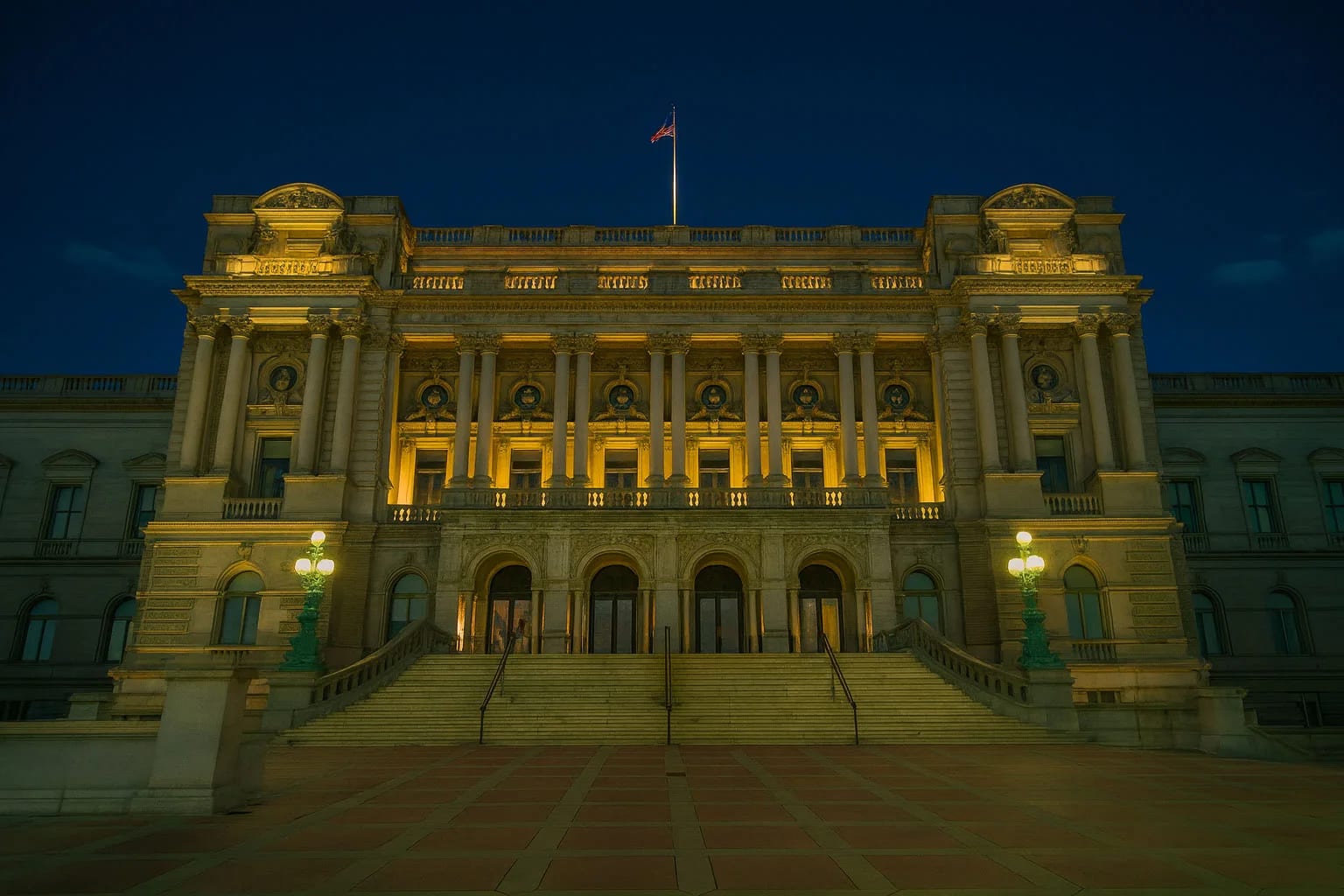
The Ghosts of the Library of Congress
In America's temple of knowledge, ghostly librarians still shelve books and phantom scholars continue research that death interrupted but couldn't end.
Read MoreThe US Capitol After Dark
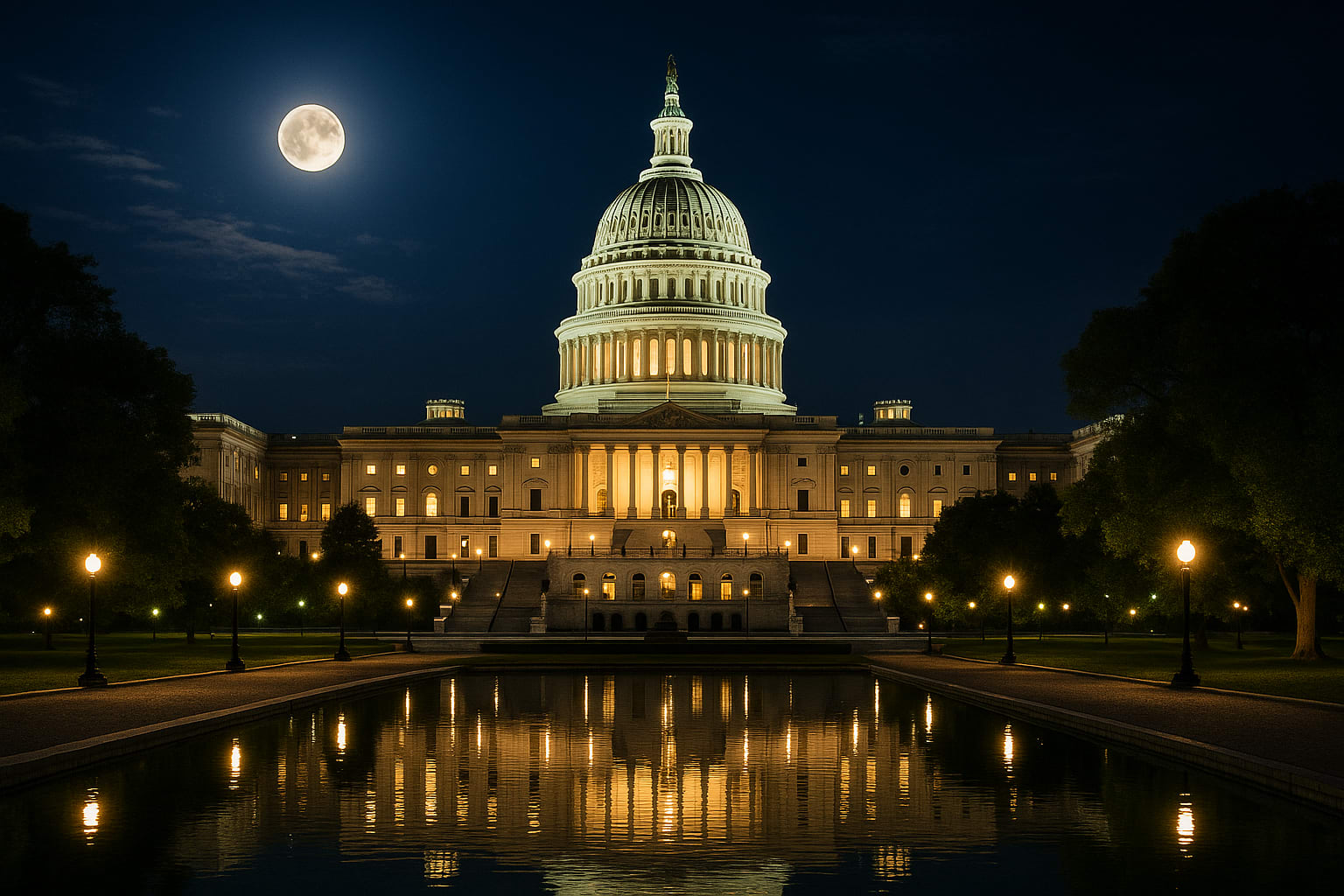
The United States Capitol is the most imposing building in Washington DC, and at night, it is the most haunting.
Lit from below and above, the dome glows white against the dark sky — a beacon visible from miles away. But up close, the building's scale and silence create an atmosphere that is less inspiring and more unsettling. The plaza is empty. The steps are deserted. The windows are dark. And the building, which during the day feels like the working heart of democracy, feels at night like a mausoleum for every ambition, compromise, and failure that has passed through its chambers.
The Capitol's ghost stories are among the oldest and most persistent in the city. The Demon Cat — a spectral black cat that appears in the basement before national tragedies — has been reported by Capitol Police, maintenance workers, and security staff for over a century. The ghost of John Quincy Adams, who collapsed on the House floor and died in a nearby room, has been heard giving speeches in an empty chamber. Workers have reported footsteps in corridors that are locked and sealed, and the sound of hammering from the crypt level where construction workers labored — and sometimes died — during the building's expansion.
Stand on the east side of the building and look up at the dome. The Statue of Freedom at the top, a bronze figure representing armed liberty, was raised into place in 1863 — the same year Lincoln signed the Emancipation Proclamation. At night, silhouetted against clouds or stars, the statue looks less like a symbol and more like a sentinel. Watching. Waiting. Guarding something that the living cannot see.
[INSERT HAUNTED LOCATION CARD: US Capitol]
The Library of Congress at Night
A short walk from the Capitol, the Library of Congress is the largest library in the world — and one of the quietest places in Washington DC after dark.
The Thomas Jefferson Building, with its ornate Beaux-Arts facade, is stunning during the day. At night, it becomes something else entirely. The exterior lighting casts deep shadows across the elaborate sculptural decorations, and the building seems to withdraw into itself, becoming a sealed vault of knowledge surrounded by silence.
Inside — though you cannot enter at night — the Library holds more than 170 million items. Books, manuscripts, maps, photographs, and recordings accumulated over more than two centuries. Staff members who work late have reported phenomena that defy easy explanation: books found in wrong locations despite being cataloged moments before, the sound of pages turning in empty reading rooms, footsteps in closed stacks, and a persistent sense of being watched in certain corridors of the oldest sections.
The most frequently reported presence is that of a figure in early 20th-century clothing — a man seen sitting at desks in the main reading room, hunched over work that apparently death could not interrupt. Researchers, scholars, and obsessive bibliophiles spent their lives in this building. Some of them, it seems, never left.
From the outside at night, the Library of Congress looks like a temple guarding something sacred. Walk the perimeter. Look at the windows. Notice the silence. In a city full of noise and urgency, the Library after hours exists in a pocket of stillness that feels intentional — as though the building is protecting not just books, but the people who could not stop reading them.
[INSERT HAUNTED LOCATION CARD: Library of Congress]
Romance Meets the Paranormal
Washington DC is full of date night options — dinner reservations, rooftop bars, museum galas. But none of them offer what a haunted evening provides: a shared experience that is genuinely unexpected, emotionally resonant, and unlike anything you have done together before.
The combination of sunset at the Lincoln Memorial, a walk through the haunted locations around the White House, and a guided ghost tour creates an evening that is atmospheric without being artificial. The stories are real. The history is heavy. And the darkness that settles over the city as you walk together creates a sense of intimacy that crowded restaurants cannot replicate.
Recommended couples itinerary:
- Sunset at the Lincoln Memorial — stand at the top of the steps and watch the light change together
- Walk the Mall to the White House as darkness falls
- Lafayette Square and the Hay-Adams Hotel — the story of Clover Adams is one of the most affecting ghost stories in the city
- Dark Nights of DC Ghost Tour — the adults-only experience is the ideal shared adventure
- Late-night walk past the Capitol — the dome lit against the sky is one of the most romantic and haunting views in Washington
This is not a typical date night. It is a night you will both remember — and talk about — for years.
Keeping It Fun and Not Too Frightening
Washington DC's haunted side does not have to be scary for younger visitors — and in many ways, the family-friendly version of this itinerary is the most magical.
Children experience the monuments differently at night. The Lincoln Memorial becomes a place of genuine wonder — the enormous seated figure, the dramatic lighting, the echo of voices in the marble chamber. The walk along the Mall is an adventure. And the stories told on a family ghost tour are fascinating without being nightmare-inducing — tales of presidents, historical figures, and buildings with secrets, told in a way that sparks curiosity rather than fear.
Recommended family itinerary:
- Arrive at the Lincoln Memorial before sunset — let younger children explore the steps and the Reflecting Pool while the light is still warm
- Walk the Mall together as the monuments light up — the transition from day to night is genuinely exciting for kids
- Ghost of Washington DC Ghost Tour — the family-friendly tour is designed for all ages, with stories that are engaging, historically rich, and appropriate for younger audiences
- End with ice cream or hot chocolate (depending on the season) near the Mall — a sweet ending to a night of history and mystery
The family-friendly ghost tour is the centerpiece of this itinerary for families. It provides structure, storytelling, and a guided experience that transforms a nighttime walk into something children will remember long after they have forgotten the daytime museum visits.
Washington DC Feels Different at Night
Every city changes after dark. But Washington DC changes in a way that goes beyond the visual.
During the day, the city is functional. It is a machine — efficient, organized, purposeful. The buildings serve their roles. The streets carry their traffic. The monuments stand as symbols of ideals that the country aspires to embody.
At night, the function fades and the feeling arrives. The monuments stop being symbols and start being presences. The buildings stop being offices and start being repositories of every argument, decision, tragedy, and triumph that occurred within their walls. The streets stop carrying traffic and start carrying silence — a silence that is not empty but full, weighted with the accumulated energy of a city that has been the seat of American power for more than two centuries.
This is not imagination. This is what visitors report, year after year, across generations. The feeling that Washington DC at night is not the same place as Washington DC during the day. The feeling that something is here — in the marble, in the ground, in the air between the monuments — that cannot be seen but can absolutely be felt.
For the full story of what makes this city so haunted, read Why is Washington DC Haunted?. For the history behind the hauntings, explore the Dark History of Washington DC. And for the most powerful account of the spirit that dominates this city's paranormal landscape, read The Ghost of Abraham Lincoln.
Build Your Perfect Haunted Itinerary
Here is the full timeline, condensed for planning:
6:00–6:30 PM — Arrive at the Lincoln Memorial. Watch the sunset from the top of the steps. Walk the Reflecting Pool east as darkness falls.
7:00–8:00 PM — Walk the National Mall. Stop at the war memorials. Let the atmosphere build as the monuments light up and the crowds thin.
8:00–9:00 PM — Explore Lafayette Square, view the White House at night, and walk past the Hay-Adams Hotel. These three locations — within a single block of each other — are the most concentrated haunted zone in the city.
9:00–10:30 PM — Join a Ghost City Tours experience. Choose the family-friendly Ghost Tour, the Dark Nights of DC adults-only tour, or the Haunted Pub Crawl depending on your group.
10:30 PM+ — Walk Capitol Hill. See the US Capitol and the Library of Congress in their late-night silence. This is the final phase — the quiet, heavy, unmistakable feeling that Washington DC carries after the living have gone home.
Adjust the timeline to your season and your group. The structure matters more than the exact times — sunset first, haunted locations second, guided experience third, late-night atmosphere last.
Don't Miss the Most Important Part
You can walk past every haunted building in Washington DC on your own. You can read the plaques, check the Wikipedia articles, and take photographs of monuments in the dark. But you will leave with a fraction of the experience.
The ghost tour is where the night comes together. It is where the locations you have already visited become inhabited — filled with the stories of the people who lived, worked, suffered, and died in them. It is where the silence of the Mall, the weight of the White House, and the darkness of Capitol Hill stop being atmospheric and start being personal.
Book a Ghost Tour in Washington DC — and experience the night the way it was meant to be experienced. Not as a spectator. Not as a tourist reading a plaque in the dark. But as someone who walked into the night looking for something, and found it.
Washington DC is waiting. It always is.
Frequently Asked Questions
What is the most haunted place in Washington DC?
The White House is the most haunted building in Washington DC, with reports of ghostly activity dating back to the early 1800s. Abraham Lincoln is the most frequently sighted ghost, seen by presidents, first ladies, and White House staff across more than a century. Lafayette Square, the Hay-Adams Hotel, the US Capitol, and Ford's Theatre are also among the most actively haunted locations in the city.
Are ghost tours in Washington DC family-friendly?
Yes. Ghost City Tours offers a family-friendly Ghost Tour suitable for all ages, with stories grounded in history and told in a way that is fascinating without being too frightening for younger visitors. For adults seeking a more intense experience, the Dark Nights of DC tour explores the darker side of the city's haunted history.
What is the best time to experience haunted Washington DC?
The best time is from sunset onward. Arriving at the Lincoln Memorial around 30 minutes before sunset and following a planned itinerary through the evening allows you to experience the full atmospheric transformation of the city. Fall offers the best combination of early sunsets, cool weather, and atmospheric conditions.
Can you visit the White House at night?
You cannot enter the White House at night without a scheduled tour or event invitation. However, viewing the White House from the north side of Lafayette Square or from the Ellipse to the south provides a powerful nighttime experience. The floodlit facade against the surrounding darkness is one of the most striking views in the city.
How long does a haunted itinerary in Washington DC take?
The full itinerary — from sunset at the Lincoln Memorial through late-night Capitol Hill — takes approximately 4 to 5 hours. The timeline is flexible and can be shortened for families with young children or extended for visitors who want to explore every haunted location at a leisurely pace.