Swamps, Disease, and Death
The land chosen for the nation's capital in 1790 was not a promising site. It was a stretch of low-lying, marshy terrain along the Potomac River — humid, mosquito-infested, and prone to flooding. The choice was political, not practical: a compromise between Northern and Southern states that placed the capital on the border between them.
The early years of Washington DC were defined by hardship. The swampy conditions bred malaria and other mosquito-borne diseases. Yellow fever moved through the population with devastating regularity. Sanitation was primitive — open sewers, contaminated water, and the constant presence of disease-carrying insects made the capital one of the unhealthiest cities in the young nation.
Workers who came to build the city — many of them voluntarily, many of them not — died of illness, exhaustion, and the accumulated toll of constructing a capital from raw, hostile terrain. The dead were buried in plots that were later paved over, built upon, or simply lost as the city expanded. The foundations of American democracy were laid, quite literally, on top of the dead.
Built by the Enslaved
The most uncomfortable truth about Washington DC's origins is one that the city has only recently begun to confront openly: the capital of the nation founded on the principle that all men are created equal was built, in significant part, by enslaved people.
Enslaved laborers quarried the sandstone that forms the walls of the White House. They hauled timber, mixed mortar, and laid the bricks of the US Capitol. They worked under conditions that were brutal even by the standards of an era defined by brutality — long hours, inadequate food, exposure to weather, and the constant knowledge that they were building a temple to freedoms they themselves would never enjoy.
The names of most of these workers were not recorded. Their suffering was not memorialized. Their contribution to the physical construction of the nation's capital was acknowledged only in financial records — payments made not to them but to the men who owned them.
This history matters — not just morally, but paranormally. The suffering of the people who built Washington DC is embedded in the foundations of its most important buildings. Their labor, their pain, and the injustice of their condition are part of the energetic fabric of structures that have been associated with paranormal activity for more than two centuries.
[INSERT HAUNTED LOCATION CARD: White House]
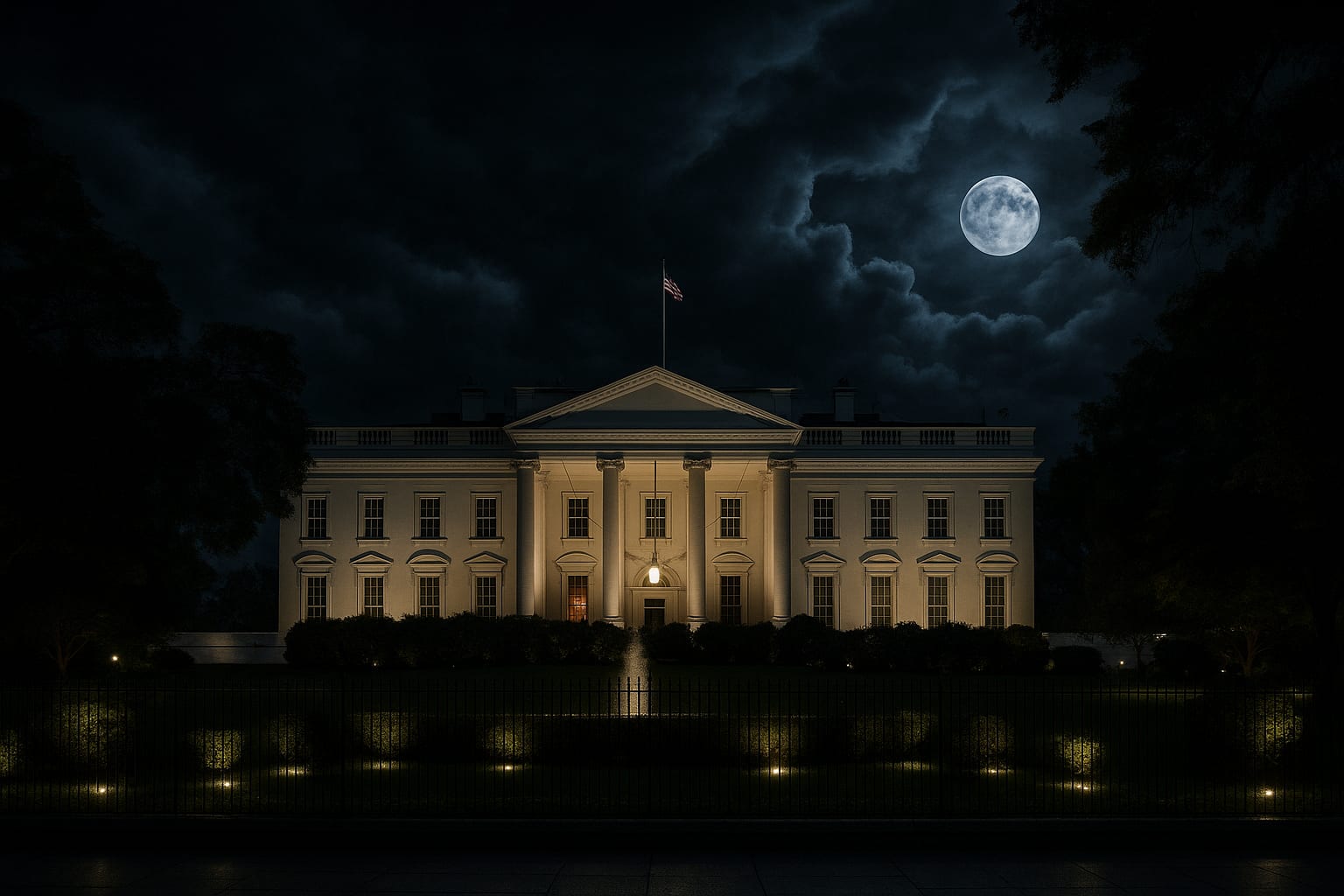
The Civil War Was Fought Here — Without Battlefields
The Civil War is remembered through its battlefields — Gettysburg, Antietam, Shiloh, Vicksburg. But the war was directed from Washington DC, and the emotional toll of that direction left marks on the city that have never fully healed.
For four years, the leaders of the Union government lived and worked in a city that was, functionally, a military installation. Forts ringed the capital. Soldiers filled the streets. The Confederate Army was camped within miles of the White House for much of the war. The possibility of attack — of the capital itself falling to the enemy — was real and present every day.
The decisions made in Washington during these years were not abstract policy. They were orders that sent hundreds of thousands of men to their deaths. Lincoln and his cabinet approved strategies, reviewed casualty reports, and authorized offensives knowing that each decision would produce a body count that would arrive on their desks within days. The psychological toll of this responsibility — carried continuously, for years, without respite — is a dimension of Washington's dark history that is rarely discussed but deeply felt.
For a deeper exploration of how this history connects to the city's paranormal reputation, read our guide to why Washington DC is so haunted.
Hospitals of Washington DC
The wounded soldiers who survived the battlefields were transported to Washington — where every available building was converted into a hospital. Churches, hotels, government offices, and private homes were filled with men who were dying of wounds, disease, and the slow deterioration of bodies that 1860s medicine could not repair.
Walt Whitman, who served as a volunteer nurse in Washington's hospitals, described the experience in terms that remain devastating:
Rows of men lying on cots and blankets, their wounds bandaged with whatever material was available. The sound of suffering — continuous, inescapable, filling every room and hallway. The smell of infection and death permeating buildings that had been designed for worship, for commerce, for the ordinary business of a functioning capital.
The hospitals of wartime Washington were places of prolonged, concentrated human suffering — exactly the conditions that paranormal theory associates with the strongest and most persistent spiritual imprints. The soldiers who died in these improvised wards — far from home, in buildings that were never meant to be their final resting places — left something behind that visitors to these locations continue to report experiencing.
Violence Was Never Far from Power
Political violence is not an aberration in Washington DC's history. It is a recurring theme — a dark thread that runs through the city's story from its earliest years to the present.
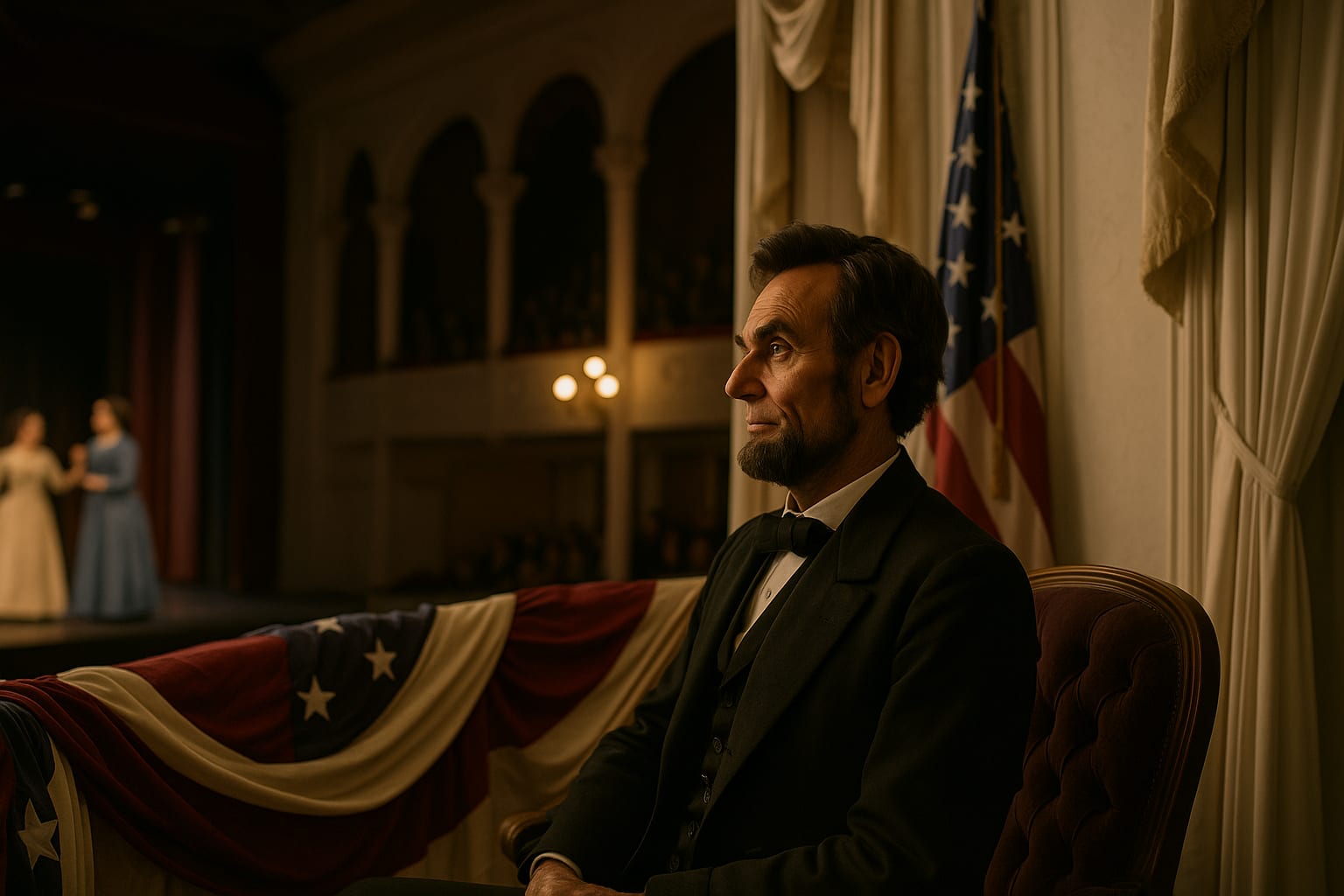
The Ghosts of Ford's Theatre
The site of Lincoln's assassination remains haunted by the emotional shock of that night. Visitors report cold spots in the presidential box, phantom gunshots, and an overwhelming sense of sadness.
Read More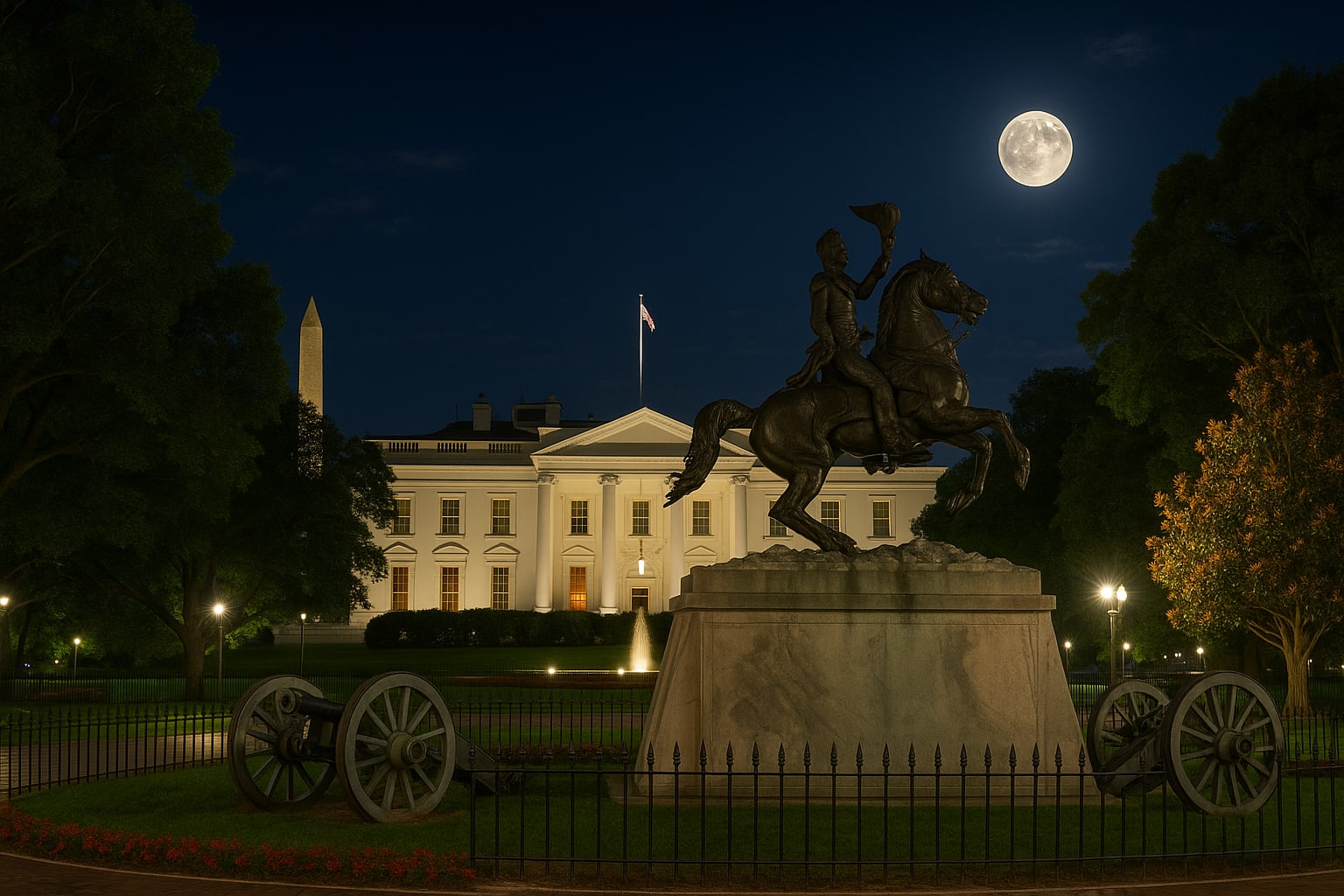
The Haunted Lafayette Square Park
This park across from the White House has witnessed duels, murder, and political violence. The ghost of Philip Barton Key has been reported here for over 160 years.
Read MoreThe Assassination of Abraham Lincoln
On the evening of April 14, 1865, five days after the end of the Civil War, President Abraham Lincoln was shot by John Wilkes Booth at Ford's Theatre. He died the following morning in a boarding house across the street.
The assassination was a trauma that affected the entire nation — but it was concentrated, with devastating physical immediacy, in Washington DC. The city that had endured four years of war, that had served as the nerve center of the Union's fight for survival, that had celebrated the end of the conflict just days earlier — was suddenly plunged into a grief so profound that contemporaries described it as a physical weight that settled over the city and did not lift for months.
Ford's Theatre has been the subject of paranormal reports since the night of the assassination. The emotional shock of that event — the collective horror of an audience witnessing the murder of their president — was compressed into a single building in a single instant, creating what paranormal researchers call a crisis imprint of extraordinary intensity.
[INSERT HAUNTED LOCATION CARD: Ford's Theatre]
Other Political Violence and Assassination Attempts
Lincoln was not the only president targeted in Washington. The city has been the site of assassination attempts, political confrontations, and acts of violence tied to the exercise of power throughout its history.
President James Garfield was shot at a Washington train station in 1881 by a disappointed office-seeker, dying slowly over the course of two months. The attack on the US Capitol in 1814, when British forces burned the building during the War of 1812, destroyed the physical seat of American democracy and traumatized a city that had believed itself to be beyond the reach of foreign armies.
Each act of political violence added another layer to Washington's dark history — another event whose emotional intensity was concentrated in a specific location, leaving marks that have been reported by visitors and investigators for generations.
The Killing of Philip Barton Key
In 1859, Lafayette Square — the elegant park directly across from the White House — became the scene of one of the most sensational murders in American history.
Congressman Daniel Sickles discovered that Philip Barton Key II — the son of Francis Scott Key, author of "The Star-Spangled Banner" — was having an affair with his wife. Sickles confronted Key in Lafayette Square and shot him dead in broad daylight, in full view of witnesses, steps from the most powerful address in the world.
The trial that followed was the first in American history to use temporary insanity as a legal defense. Sickles was acquitted. Key's ghost has been reported in Lafayette Square for more than 160 years.
The killing of Key is a perfect distillation of Washington DC's dark history: power, scandal, violence, and consequences — all concentrated in a public space that sits in the literal shadow of the White House.
[INSERT HAUNTED LOCATION CARD: Lafayette Square]
The Hidden War Within Washington
Washington DC has been the center of American intelligence operations since the Civil War — and the culture of secrecy, surveillance, and espionage that those operations created has added a dimension to the city's dark history that is unlike anything found in other haunted cities.
During the Civil War, Washington was a city of spies. Confederate agents operated within the capital, gathering intelligence and passing it south through networks that extended into the highest levels of Washington society. Union counterintelligence hunted them — and the paranoia that accompanied that hunt permeated every social interaction, every dinner party, every casual conversation in the city's public spaces.
The Cold War intensified the culture of secrecy. Washington became a city where trust was a liability, where the person sitting next to you at a restaurant might be an agent for a foreign government, and where the consequences of betrayal were not social embarrassment but imprisonment or death. Intelligence officers operated under constant psychological pressure — the fear of exposure, the burden of classified knowledge, the awareness that a single mistake could compromise operations and cost lives.
This sustained psychological pressure — decades of secrecy, surveillance, and the constant threat of betrayal — represents a type of emotional energy that is unique to seats of intelligence. It is not the sharp trauma of a battlefield or the acute grief of an assassination. It is a slow, grinding anxiety that accumulates over years and saturates the environments where it is experienced.
Paranormal researchers have begun to explore the idea that non-physical trauma — psychological stress without accompanying physical violence — can produce spiritual imprints. If that theory holds, Washington DC, with its centuries of espionage and political paranoia, is one of the most significant test cases in the country.
The Burden Carried by Presidents
The presidency of the United States is, by any measure, the most emotionally demanding position in the world. The decisions made in the Oval Office determine the fate of millions. The consequences of those decisions — the wars they produce, the lives they end, the futures they alter — are carried personally by the individual who makes them.
Every president who has served has experienced the weight of that responsibility. Some have been broken by it. Others have carried it with a stoic resilience that concealed the toll it was taking. All of them have left their mark on the White House — the building that concentrates more consecutive years of high-stakes emotional experience than any other structure in the Western Hemisphere.
Lincoln's Emotional Toll
No president carried a heavier burden than Abraham Lincoln.
Lincoln presided over the deadliest conflict in American history — a civil war that killed more than 600,000 Americans, tore the nation apart, and required him to make decisions that he knew would result in mass death. He visited the hospitals. He read the casualty reports. He wrote personal letters to the families of fallen soldiers. The war was not an abstraction for Lincoln. It was a daily, intimate, inescapable reality that consumed him for four years.
His personal life compounded the burden. His son Willie died in the White House in 1862, at the age of eleven. Mary Todd Lincoln's grief was so profound that she held séances in the White House, attempting to contact Willie's spirit. Lincoln himself was consumed by a melancholy that contemporaries described as visible — a sadness that seemed to emanate from him, filling the rooms he occupied with an emotional weight that people could feel.
It is no coincidence that Lincoln's ghost is the most frequently reported presence in the White House. The emotional intensity of his experience — the weight of the war, the grief of personal loss, the knowledge that his decisions were determining the fate of the nation — was concentrated in a single building over a span of years. That intensity, paranormal researchers believe, is exactly what produces the kind of lasting spiritual imprint that has been reported at the White House for more than a century and a half.
Personal Loss in the Shadow of Power
Washington DC's dark history is not confined to politics and war. The private tragedies of the people who lived in this city — their losses, their griefs, their personal devastations — are woven into the fabric of the place with an intimacy that makes them particularly affecting.
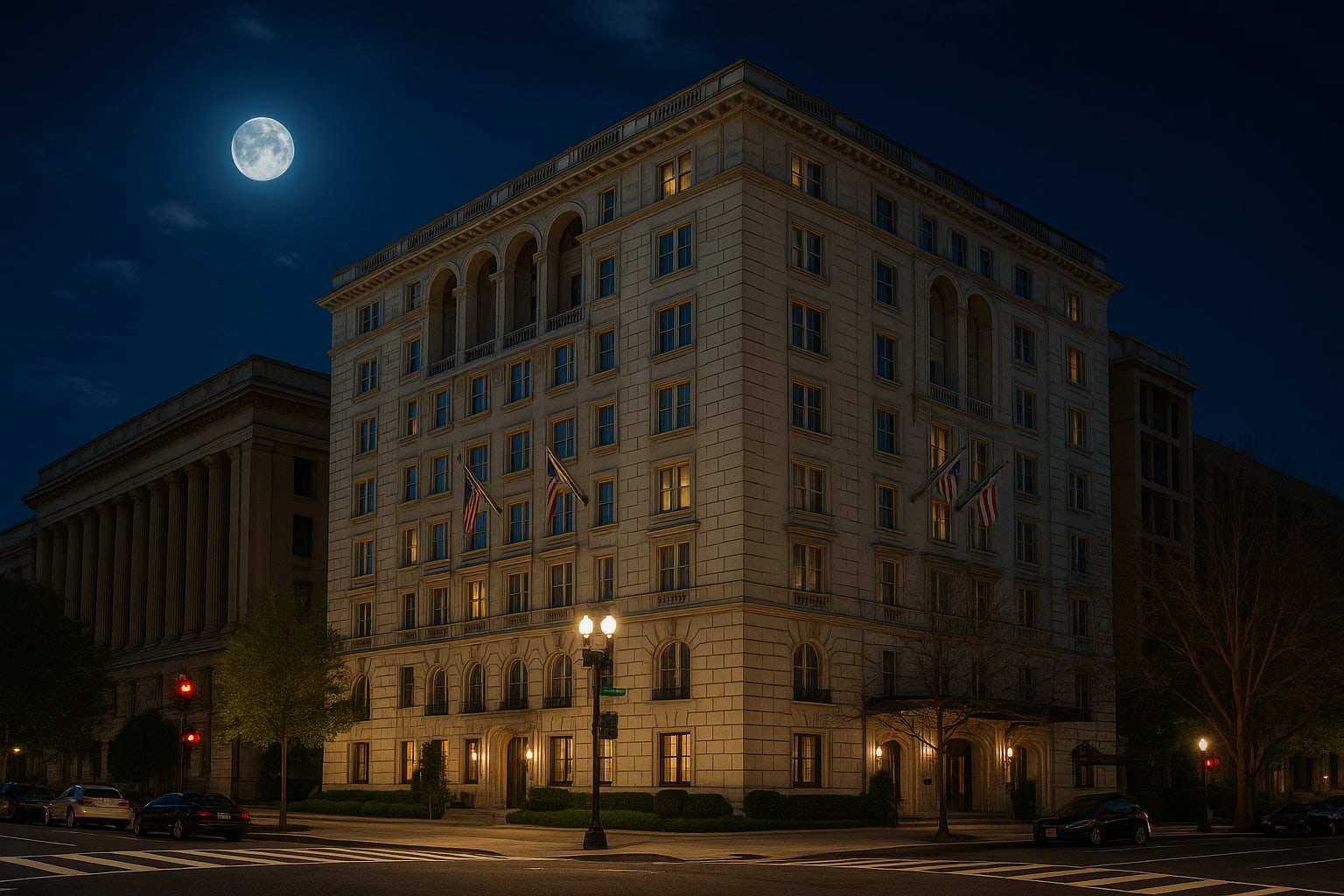
The Hay-Adams Hotel stands on the site where two of Lincoln's closest associates — John Hay, his private secretary, and Henry Adams, grandson and great-grandson of presidents — built their homes. The site's connection to power is direct and deep.
But the haunting most associated with the Hay-Adams is not tied to politics. It is tied to personal tragedy. In 1885, Marian "Clover" Adams — Henry Adams's wife, a brilliant photographer and socialite who was central to Washington's intellectual life — died by suicide in their home on this site. The cause was depression, compounded by grief over her father's death.
Guests at the Hay-Adams have reported unexplained phenomena for decades — a woman's voice in empty hallways, knocking at doors with no one present, and the sensation of a presence in rooms that should be unoccupied. The reports are concentrated on the upper floors, in the area corresponding to the location where the Adams home once stood.
Clover Adams's story is a reminder that Washington's dark history extends beyond the public sphere. The private suffering of the people who lived in the shadow of power — their losses, their despair, their deaths — left marks on the ground they occupied, and those marks persist in the buildings that replaced their homes.
[INSERT HAUNTED LOCATION CARD: Hay-Adams Hotel]
Public Spaces with Dark Pasts
Washington DC's hauntings are not confined to buildings. The city's parks, streets, and public spaces carry their own dark histories — and their own reports of unexplained activity.
Lafayette Square is the most prominent example. The park appears peaceful — a manicured green space with benches, walkways, and a clear sightline to the White House. But it has been the site of duels, political violence, public confrontations, and the kind of high-stakes human drama that Washington's proximity to power inevitably produces.
The streets of Washington themselves carry history. The routes that funeral processions followed — Lincoln's among them — are paths that have been associated with unexplained phenomena by residents who live along them. The parks where soldiers camped during the Civil War, where the wounded were laid out on the grass waiting for hospital space, where the dead were buried in temporary graves before being moved to Arlington — these are not neutral spaces. They are repositories of human experience, preserved beneath the carefully maintained surfaces of a city that projects order but carries chaos within its history.
Hauntings are not confined to buildings. The ground itself holds what happened on it. And in Washington DC, the ground has held a great deal.
The Connection Between History and Hauntings
The dark history of Washington DC is not separate from its haunted reputation. It is the cause of it.
Every haunted location in Washington can be traced back to specific historical events — specific acts of violence, specific moments of grief, specific decisions that carried consequences far beyond the rooms where they were made. The haunted locations of Washington DC are not randomly distributed. They cluster around the sites of the city's most intense historical experiences: the buildings where power was exercised, the locations where violence occurred, and the places where personal tragedy unfolded in the shadow of national events.
This connection — between documented history and reported paranormal activity — is what makes Washington DC's hauntings uniquely credible. These are not stories invented to entertain tourists. They are reports that align with the historical record, that are concentrated in locations where the historical record documents intense human experience, and that have been consistent over decades of independent observation.
Compare Washington DC to other haunted cities:
Savannah is haunted by centuries of disease, fire, and a culture that maintains an intimate relationship with its dead. Gettysburg is haunted by the concentrated violence of the bloodiest battle in American history. Washington DC is haunted by something different — by power, by the consequences of that power, and by the personal and collective toll that exercising it has taken on the people who have lived and worked in this city for more than two centuries.
Of course this city is haunted. The only surprise would be if it were not.
Not Every Story Is True
Washington DC's dark history provides more than enough material for a lifetime of ghost stories. The documented events — the assassinations, the wars, the personal tragedies, the centuries of concentrated power and its consequences — are so rich and so intense that fabrication is not just unnecessary. It is an insult to the real history.
And yet, fabrication exists. Some of Washington's ghost stories have been embellished, distorted, or invented over the years — created to serve the entertainment industry rather than the historical record. The line between documented account and urban legend is not always clear, and the city's mystique as a center of power and secrecy has made it a magnet for stories that prioritize drama over accuracy.
Too many ghost tours prioritize entertainment over truth. They tell stories that sound good but have no historical basis. They sensationalize events that deserve to be treated with gravity. They treat the dead — including people whose real suffering is documented in the historical record — as characters in a performance.
Understanding the real history is what makes these stories powerful. A ghost story without historical context is just a scare. A ghost story grounded in documented truth — connected to real people, real events, and real consequences — is something deeper. It is a connection to the past that transcends entertainment and becomes genuine understanding.
Ghost City Tours tells only the real stories. Researched. Verified. Grounded in the dark history that this article has only begun to explore.
Walking Through Washington DC at Night
Washington DC after dark is a revelation. The monuments, lit from below, become otherworldly — vast, white, and silent against a black sky. The government buildings that are crowded and noisy during the day become imposing silhouettes, their columned facades suggesting a permanence that the city's turbulent history has repeatedly challenged. The streets empty. The tourists retreat to their hotels. And the city's dark history — the violence, the decisions, the suffering — becomes palpable in a way that daylight does not allow.
The best way to experience this history is on foot, at night, guided by someone who knows what happened on every block, behind every facade, and beneath every monument.
Ghost City Tours in Washington DC offers three distinct experiences:
The Ghosts of Washington DC Tour — A family-friendly walking tour that explores the city's most famous haunted locations, grounded in real history and told with the respect these stories demand. Nightly at 9:00 PM, $29.99.
The Dark Nights in DC Ghost Tour — An adults-only (16+) experience that goes deeper into Washington's dark history — the political violence, the assassinations, the personal tragedies, and the paranormal activity that most tours never touch. Nightly at 9:00 PM, $34.99.
The Washington DC Haunted Pub Crawl — A social, 2-hour experience (21+) that combines the city's haunted history with its nightlife, visiting historic establishments with documented ghost stories. Nightly at 8:00 PM, $34.99.
History becomes real when you stand where it happened. The dark history of Washington DC — the power, the war, the secrets, and the consequences — is waiting in every shadow, behind every monument, beneath every carefully maintained surface.
If you want to walk through this history in a single evening — from the monuments at sunset to the quietest streets of Capitol Hill after midnight — we built a step-by-step haunted evening plan for DC that connects every dark chapter to the streets where it happened.
Come see what lies beneath.