A City Built on Bone
James Edward Oglethorpe landed on the bluffs above the Savannah River on February 12, 1733, and founded what he intended to be a utopian colony. Georgia was meant to be different from the other British colonies — a place without slavery, without hard liquor, and without the extremes of wealth and poverty that plagued settlements to the north. It was a noble experiment, and it failed almost immediately.
The land Oglethorpe chose was already occupied. The Yamacraw people, led by Chief Tomochichi, allowed the colonists to settle on the bluff, and for a brief period the two communities coexisted. But the pattern that would define Savannah's history was already taking shape: the displacement and erasure of those who came before, followed by the construction of something beautiful on top of what was lost.
Within a year, the colony had its first murder and its first execution. William Wise, an abusive cattle farmer, was drowned by his indentured servants Alice Riley and Richard White. White was hanged quickly. Riley, discovered to be pregnant, was kept alive long enough to deliver her child before being executed in what is now Wright Square, making her the first woman put to death in the colony of Georgia.
Oglethorpe's ban on slavery was overturned in 1751, and what followed was a century of forced labor, human trafficking, and systematic violence that shaped every institution in the city. Savannah operated one of the largest slave markets in the American South, and the buying and selling of human beings was an everyday occurrence on the waterfront and in the very squares that tourists photograph today. The trauma of that history is embedded in Savannah's oldest buildings in ways that go far beyond metaphor.
Then came the wars. The Siege of Savannah in 1779 was one of the bloodiest engagements of the American Revolution, killing or wounding over 1,000 soldiers in a single failed assault. The dead were buried in mass graves that were later built over as the city expanded. During the Civil War, Sherman's March to the Sea ended in Savannah in December 1864, and while Sherman famously spared the city from burning, the occupation that followed brought its own hardships.
And woven through all of it were the epidemics. Yellow fever swept through Savannah repeatedly throughout the 18th and 19th centuries, killing thousands and overwhelming the city's ability to bury its dead. The epidemic of 1820 killed one in ten residents. The outbreak of 1854 was even worse. Bodies were stacked in the streets, mass graves were dug in and around the city's cemeteries, and entire neighborhoods were abandoned by the living.
This is the foundation on which Savannah was built. Not just brick and tabby, but bone and grief and unresolved trauma stretching back to the city's first year of existence. When people ask why Savannah is the most haunted city in America, the answer begins here: because no other American city has packed this much death into this small a space over this long a period of time.
The Haunted Squares of Savannah
Oglethorpe designed Savannah around a system of public squares that remains largely intact today. There were originally 24 squares laid out in a grid pattern, and 22 of them survive. They are the defining feature of Savannah's urban landscape, and they are also, almost without exception, sites of documented paranormal activity.
This is not a coincidence. The squares served as gathering places, but they also served as execution grounds, makeshift hospitals during epidemics, and staging areas during wartime. Some of them sit directly on top of burial sites that predate the colonial settlement. Others became burial sites themselves when the dead outnumbered the available cemetery space during yellow fever outbreaks.
Madison Square is among the most active. Named for President James Madison, the square is flanked by the Sorrel-Weed House, one of the most investigated paranormal locations in the United States. The story of Francis Sorrel's wife Matilda, who fell or jumped from the second-story balcony, and of Molly, the enslaved woman found hanged in the carriage house days later, has drawn paranormal researchers from around the world. But the square itself carries its own energy. Visitors report cold spots beneath the live oaks, shadow figures that move between the monuments after dark, and an oppressive weight that settles over the square at certain times of night.
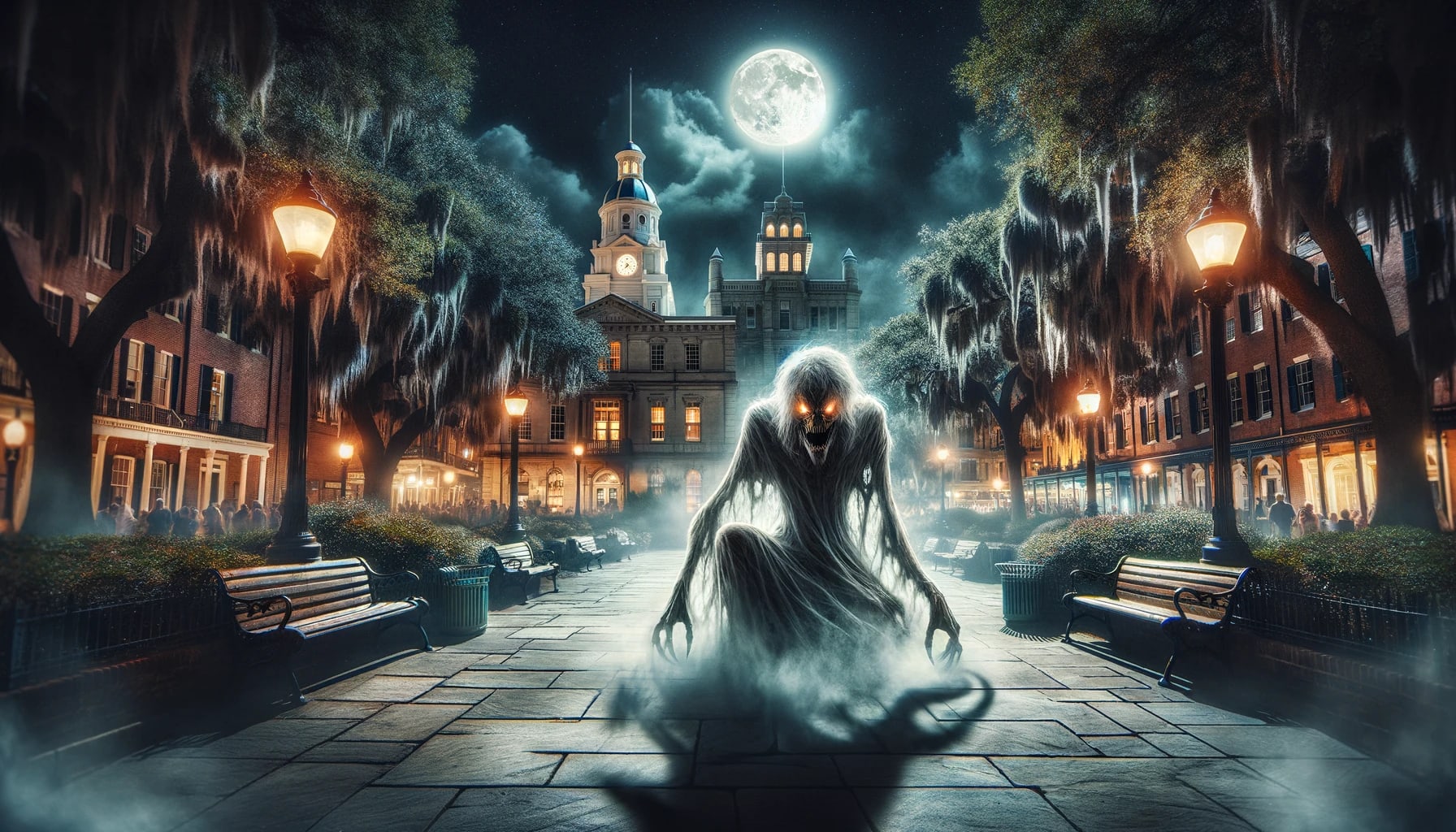
Chippewa Square, made famous by the park bench scene in Forrest Gump, has a darker history than most visitors realize. The square was named for the Battle of Chippewa during the War of 1812, and like many of Savannah's public spaces, it has served multiple purposes over the centuries that left their mark. The imposing statue of Oglethorpe at its center seems to watch over the square with an expression that changes depending on the light and the hour.
Yellow Fever: The Plague That Never Left
If there is a single explanation for why Savannah has more ghosts per square mile than any other American city, it is yellow fever. The disease arrived on ships from the Caribbean and West Africa and found a perfect breeding ground in Savannah's subtropical climate, standing water, and dense population of Aedes aegypti mosquitoes. No one in the 18th or 19th century understood what caused it, and the treatments available — bloodletting, mercury purges, quarantine in conditions that spread the disease faster — often killed patients more efficiently than the virus itself.
The epidemic of 1820 killed approximately 700 people in a city of fewer than 7,000, a mortality rate that would be catastrophic by any standard. But it was the outbreak of 1854 that broke Savannah. Over the course of that summer and fall, more than 1,000 residents died. The city's cemeteries ran out of space. Bodies were buried in mass graves, in backyards, in the foundations of buildings under construction. Some were simply left where they fell until someone could be found to move them.
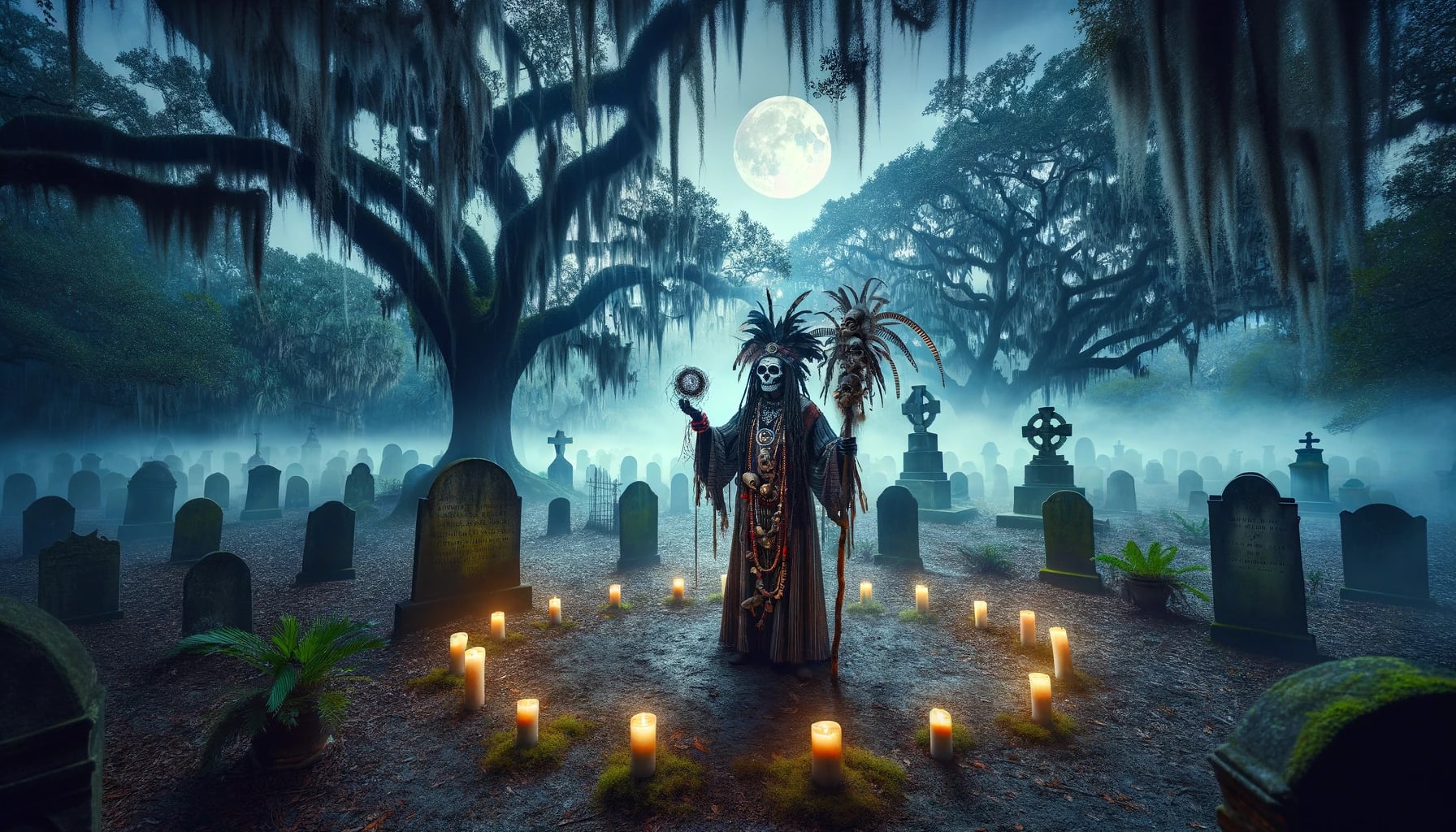
Colonial Park Cemetery, the city's oldest surviving burial ground, became the epicenter of the crisis. The cemetery officially holds about 10,000 burials, but fewer than 700 headstones remain. The rest — victims of yellow fever, smallpox, and other epidemics — lie in unmarked mass graves beneath the surface. During the Civil War, Union soldiers further desecrated the site by altering dates on headstones and using the cemetery as a camp.
The paranormal activity at Colonial Park is so consistent and so varied that it has become almost routine for investigators. Shadow figures move between the headstones after dark. Unexplained mists appear in photographs taken on clear nights. Visitors report hearing whispered conversations in languages they cannot identify. And on certain humid evenings, a smell described as sickly sweet — the smell of death, according to those who recognize it — drifts through the cemetery with no identifiable source.
But the dead of the yellow fever epidemics are not confined to Colonial Park. They are everywhere in Savannah. Construction projects regularly unearth human remains in unexpected locations — beneath parking lots, inside the walls of historic buildings, under the floors of restaurants and hotels. Each discovery is a reminder that Savannah is built, in the most literal sense, on top of its dead.
Savannah's Cities of the Dead
The cemeteries of Savannah tell the story of the city more honestly than any history book. They record who lived, how they died, and — in the case of the thousands buried without markers — who the city chose to remember and who it chose to forget.
Bonaventure Cemetery, the sprawling Victorian garden cemetery on the eastern edge of the city, became world famous through John Berendt's Midnight in the Garden of Good and Evil and the iconic Bird Girl statue that graced its cover. But Bonaventure's history predates its literary fame by more than a century. The site was originally a plantation that burned spectacularly during a dinner party, and the ruins of that fire became the foundation for one of the most beautiful and most haunted burial grounds in America.
Visitors to Bonaventure report encounters that go well beyond the typical cemetery ghost story. The statue of little Gracie Watson, a six-year-old girl who died of pneumonia in 1889, is said to cry real tears. Her face, carved in white marble, seems to change expression depending on who is looking at her and when. People leave toys, flowers, and coins at the base of her monument, and those offerings are sometimes found rearranged in patterns that no wind could account for.
The grave of poet and author Conrad Aiken, who chose a bench-shaped tombstone so that visitors could sit and share a drink with him, generates its own strange phenomena. People who sit on the bench report sudden temperature drops, the sensation of someone sitting beside them, and occasionally the faint smell of pipe tobacco.
Laurel Grove Cemetery, divided into separate sections for white and Black residents — a segregation that persisted well into the 20th century — holds its own collection of restless spirits. And throughout the city, secret cemeteries lie hidden beneath streets, buildings, and parks, their existence known only when construction disturbs the ground and the dead make themselves known again.
Savannah's relationship with its cemeteries is unique among American cities. The dead are not hidden away on the outskirts of town. They are woven into the fabric of daily life, their resting places integrated into the city's parks, neighborhoods, and public spaces. In Savannah, you are never more than a few blocks from a cemetery, and you may be standing on top of one without knowing it.
Explore our complete guide to Savannah's Haunted Cemeteries.
Hotels Where the Ghosts Never Checked Out
Savannah's historic hotels are not just places to sleep. They are buildings with histories measured in centuries, and many of them were repurposed from institutions — hospitals, orphanages, military barracks — where suffering and death were everyday occurrences. The ghosts that inhabit these hotels are not abstract legends. They are connected to specific events, specific people, and specific rooms that guests can book tonight.
The Marshall House on Broughton Street is the most dramatic example. Built in 1851, the hotel was commandeered as a Union hospital during the Civil War, where surgeons performed amputations around the clock on soldiers wounded in the fighting around Savannah. Anesthesia was unreliable. Antiseptic technique did not exist. The screaming, by all accounts, was constant. The hotel also served as a hospital during two separate yellow fever epidemics, turning its guest rooms into fever wards where patients died by the dozen.
During renovations in the late 1990s, workers discovered what the ghosts had been trying to tell them all along: human remains beneath the floorboards. Amputated limbs from the Civil War era, buried where they fell because there was nowhere else to put them. Arms, legs, and bone fragments sealed under the floor for over 130 years, directly beneath rooms where hotel guests had been sleeping.
Today, guests in Room 414 report a persistent, unidentifiable odor that no amount of cleaning removes. Throughout the hotel, visitors hear children's footsteps, rolling marbles, and bouncing rubber balls — sounds attributed to the orphaned children who sheltered in the building during the epidemics. Apparitions of Civil War soldiers, some missing limbs, appear in the hallways. And the figure of a man in 19th-century clothing has been seen sitting at a desk in one of the guest rooms, writing.
The Kehoe House, the Hamilton-Turner Inn, and the 17Hundred90 Inn each carry their own histories of tragedy and their own resident ghosts. At the 17Hundred90, the ghost of Anna Powers, a young woman who threw herself from a third-floor window, is so well documented that the room where she died — Room 204 — is the most requested room in the hotel.
Discover all of Savannah's Haunted Hotels.
Haunted Houses That Hold Their Secrets
Savannah's Historic District contains one of the finest collections of antebellum architecture in the United States. These are not museum reproductions. They are the actual buildings where Savannah's wealthiest and most powerful families lived, and in many cases, where enslaved people suffered and died in service to those families. The beauty of the architecture makes the darkness of the history harder to see, but it is there in every room.
The Sorrel-Weed House on Madison Square is perhaps the most investigated private residence in the American South. The twin tragedies of Matilda Sorrel's death from the balcony and the hanging of Molly, the enslaved woman, in the carriage house have drawn paranormal researchers, television crews, and thousands of visitors seeking contact with the dead. EVP recordings from the carriage house have captured what sounds like a woman's voice, sometimes weeping, sometimes speaking just below the threshold of comprehension.
The Hampton Lillibridge House on East Julian Street earned its reputation during a 1963 relocation, when workers reported tools moving on their own, doors slamming in empty rooms, and a figure in period clothing watching them from an upper window. One worker fell to his death during the move under circumstances that were never satisfactorily explained. After the house was placed on its new foundation, a formal exorcism was performed — one of the few sanctioned by a mainstream religious authority in Savannah's history.
The Mercer-Williams House on Monterey Square, made famous by Midnight in the Garden of Good and Evil, carries the energy of the shooting death of Danny Hansford by Jim Williams in 1981. Williams himself died in the house in 1990, in the same room where he had killed Hansford, and the parallels between the two deaths have fueled speculation about the house ever since.
And at 432 Abercorn Street, a house that sits on Calhoun Square, the stories are so persistent and so disturbing that even longtime Savannah residents avoid the property after dark. The house has been linked to Civil War-era atrocities, and photographs taken from the street frequently capture anomalies in the windows — faces, shadows, lights — that have no earthly explanation.
Browse our complete guide to Savannah's Haunted Houses.
Haunted Restaurants and Taverns
In Savannah, even dinner comes with ghosts. The city's oldest restaurants and taverns have histories that stretch back to the colonial era, and many of them occupy buildings that were not always restaurants. They were warehouses, boarding houses, hospitals, and in at least one case, a front for kidnapping sailors.
The Pirates' House on East Broad Street is one of the oldest standing buildings in the state of Georgia, dating to 1753. Originally an inn for seafarers, the building sits adjacent to the Trustees' Garden, one of the first experimental gardens in North America. But the Pirates' House earned its name and its reputation through less wholesome activities. The tunnel system beneath the building was used by press gangs to shanghai drunk or unconscious sailors, drugging them at the bar and dragging them through underground passages to waiting ships in the harbor. Men who walked into the Pirates' House for a drink woke up at sea, conscripted into service on vessels they had never seen.
The tunnel system still exists beneath the building, sealed off but intact. Staff and visitors report hearing sounds from below the floor — footsteps, dragging, muffled voices — that have no explanation in a building with no basement access. Cold spots appear and disappear without pattern. Objects move on their own. And more than one server has reported seeing a figure in the dining room after closing, dressed in clothing from another century, who vanishes when approached.
Moon River Brewing Company occupies the former City Hotel, built in 1821, where at least two violent deaths occurred. The upper floors, which are not open to the public, are considered among the most paranormally active spaces in Savannah. Investigators who have been granted access report being pushed, scratched, and physically confronted by unseen forces.
Discover all of Savannah's Haunted Restaurants.
The Civil War and Its Unfinished Business
The Civil War left scars on Savannah that have never fully healed, and those scars are a major reason the city is considered the most haunted in America. While Sherman's decision to spare Savannah from the torch preserved its architecture, the war itself brought death, occupation, and upheaval on a scale the city had never experienced.
The fighting around Savannah was fierce long before Sherman arrived. Fort McAllister, south of the city, endured seven naval bombardments before falling to Sherman's forces in December 1864. The fort's earthen walls absorbed the impact of shells that killed and maimed the Confederate defenders, and visitors today report hearing phantom cannon fire, smelling gunpowder, and seeing figures in gray uniforms walking the ramparts at dusk.
Old Fort Jackson, the oldest standing brick fortification in Georgia, carries similar energy. Soldiers from both sides passed through the fort during the war, and the suffering of the wounded and imprisoned left an imprint that paranormal investigators have documented extensively.
The occupation of Savannah by Union forces from 1864 to 1865 transformed the city's civilian buildings into military installations. Hotels became hospitals. Churches became barracks. Private homes were commandeered for officers' quarters. The Marshall House, as mentioned, became an amputation ward. The dead and dying were everywhere, and the city's existing cemeteries could not keep pace with the demand.
But the Civil War's impact on Savannah's haunted reputation goes beyond the battles and the hospitals. The war ended the institution of slavery, but it did not end the suffering of the people who had been enslaved. The transition from bondage to freedom was violent, chaotic, and for many, fatal. Freedmen and women who had survived the horrors of slavery now faced poverty, disease, and racial violence in a city that was struggling to rebuild itself. Their stories, largely unrecorded and unacknowledged, add another layer to Savannah's spiritual complexity.
The Civil War dead are among Savannah's most frequently encountered ghosts. Soldiers in both blue and gray have been seen in the squares, on the riverfront, in the cemeteries, and inside the buildings where they fought, healed, suffered, and died. They are a reminder that the war that tore the nation apart left permanent marks on this city — marks that time has not erased.
Why Savannah Has More Ghosts Than Anywhere Else
Other cities have dark histories. Other cities have old buildings and atmospheric cemeteries and legends of restless spirits. So why does Savannah consistently earn the title of the most haunted city in America? The answer lies in a combination of factors that is unique to this place.
Density of trauma. Savannah's Historic District is compact — roughly one square mile — and within that space, nearly 300 years of concentrated suffering have layered on top of each other. Wars, epidemics, slavery, fires, murders, and natural disasters have all left their mark on the same small collection of streets and squares. Other cities spread their trauma across larger areas. Savannah compressed it.
Preservation of original structures. Unlike cities that demolished and rebuilt after disasters, Savannah preserved its historic buildings with remarkable consistency. The homes, hotels, churches, and public buildings where tragedy occurred are still standing, still in use, and in many cases, still configured much as they were when the events in question took place. If ghosts are attached to locations, Savannah has given them nowhere to go.
The dead beneath your feet. Savannah is built on top of its dead in a way that few other cities can match. Mass graves from yellow fever epidemics, unmarked burial grounds from the colonial era, and secret cemeteries hidden beneath modern construction mean that human remains are a regular discovery during renovation and building projects. The city's relationship with its dead is not metaphorical. It is physical, ongoing, and deeply unsettling.
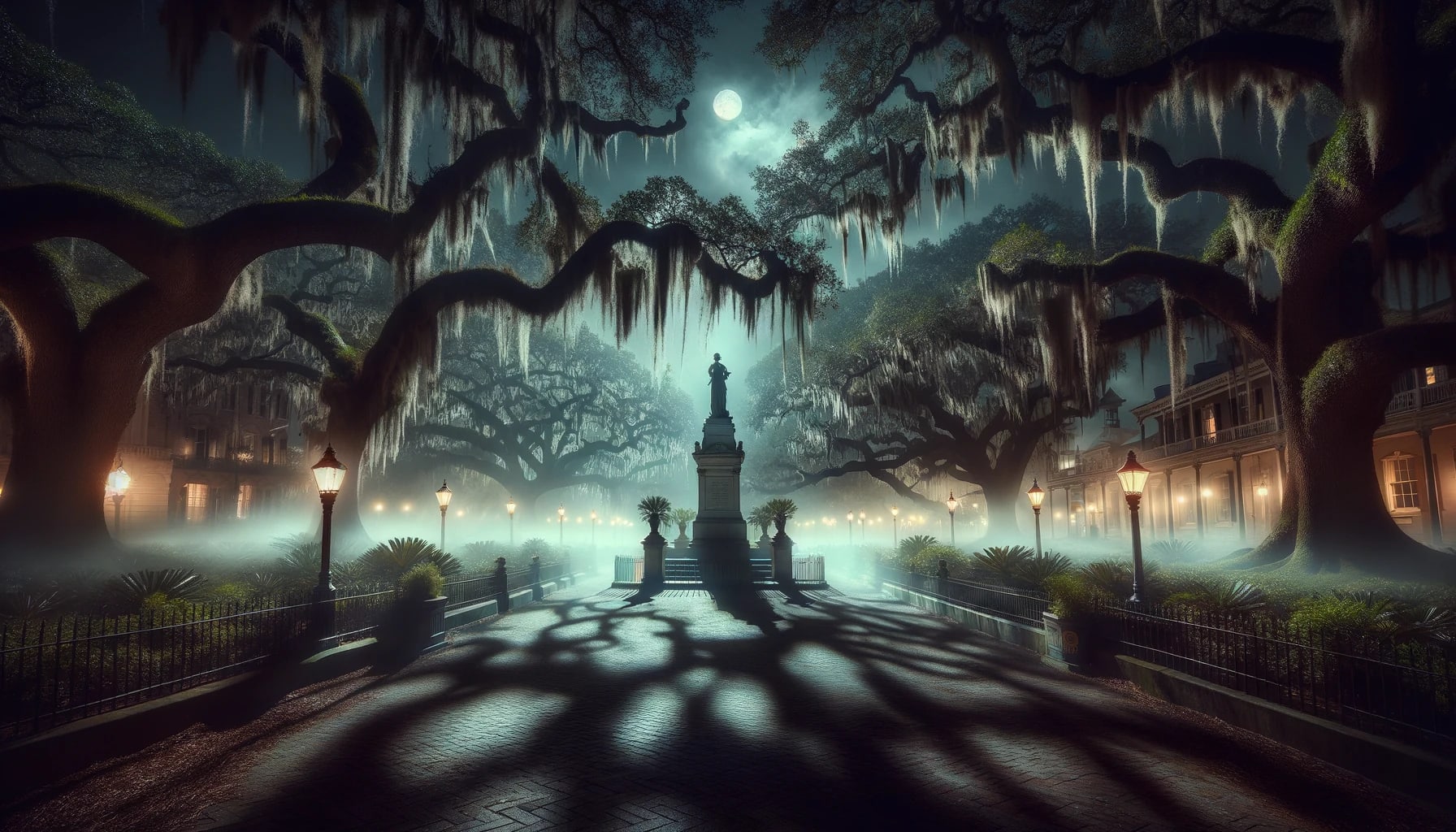
Climate and atmosphere. Savannah's subtropical climate — the heat, the humidity, the Spanish moss that hangs from every live oak — creates an atmosphere that feels charged even to skeptics. The city seems to exist in a perpetual state of twilight, even at midday, and the shadows beneath the oaks are deep enough to hide almost anything. Whether this atmosphere contributes to paranormal activity or simply makes people more receptive to it is a matter of debate, but the effect is undeniable.
A culture of storytelling. Savannah has always taken its ghosts seriously. Unlike cities that downplay or commercialize their supernatural heritage, Savannah has integrated its ghost stories into its identity. The city's residents tell these stories not as entertainment but as history, and that attitude of respect has created an environment where the paranormal is not dismissed but documented, investigated, and passed down through generations.
Frequently Asked Questions
Experience the Most Haunted City for Yourself
Reading about Savannah's ghosts is one thing. Standing in the places where these stories originated is something else entirely. The difference between knowing that Colonial Park Cemetery holds 10,000 bodies and standing among the headstones at night, feeling the temperature drop around you, hearing sounds that have no source — that difference is what separates information from experience.
Ghost City Tours has been telling Savannah's ghost stories since 2012, and the guides who lead these tours are not actors reading scripts. They are researchers, historians, and storytellers who have spent years studying the specific histories of the locations they visit. They know which rooms in which hotels have the most activity. They know which squares carry the heaviest energy. And they know how to tell these stories in a way that does justice to the people who lived and died in these places.
The Savannah Ghost Tour is the definitive introduction to the city's haunted history. The Dead of Night Tour goes deeper into Savannah's darkest chapters for those who want the unvarnished truth. And the Beyond Good & Evil Tour explores the moral complexities of a city that has always existed in the space between light and shadow.
Browse all ghost tours in Savannah or explore our complete guide to Savannah's Haunted Locations.