Did you know?
- The Rivoli Theatre opened in 1927 during the golden age of movie palaces, when theatres were designed to feel like exotic palaces or temples.
- The theatre featured elaborate Moorish-inspired architecture, with ornate plasterwork, a grand chandelier, and a ceiling painted to look like a night sky.
- During the Great Depression, the Rivoli was one of the few entertainment venues that remained open, providing affordable escape for struggling Indianapolis families.
- A longtime projectionist died in the theatre and is believed to be responsible for much of the paranormal activity still experienced there.
- Staff members have nicknamed the resident ghost "Bob," though his real identity remains unknown.
The Golden Age of Movie Palaces
The Rivoli Theatre opened its doors in 1927, during an era when movie houses were designed to transport audiences to another world before the feature even began. These "picture palaces" were architectural fantasies, blending elements of exotic cultures with pure Hollywood glamour to create spaces that made working-class Americans feel like royalty.
The Rivoli was no exception. Its designers drew inspiration from Moorish architecture, filling the theatre with elaborate plasterwork, carved ornaments, and rich fabrics. The ceiling was painted to resemble a star-filled night sky, and a magnificent chandelier hung over the main auditorium. Ushers in uniform greeted guests, and a live organist provided accompaniment to the silent films of the era.
For Indianapolis residents, a trip to the Rivoli was more than entertainment - it was an experience. Families saved their pennies for Saturday afternoon showings. Couples courted in the velvet seats. Children gasped at the elaborate surroundings, many of whom had never seen anything so grand.
The theatre survived the transition to talking pictures, the Great Depression, and the competition from television. It adapted and endured, becoming a beloved Indianapolis institution. But throughout its long history, there have always been whispers of something else in the Rivoli - something that didn't buy a ticket but refused to leave.
The Phantom Projectionist
The most famous ghost at the Rivoli Theatre is known simply as "the projectionist" - or "Bob," as staff members have affectionately named him. This spirit is believed to be a former employee who worked at the theatre for many years and died either in the projection booth or shortly after leaving work one evening.
The identity of this ghostly projectionist has been lost to history. Some say he was a man who devoted his entire adult life to the Rivoli, arriving each day before the first showing and staying until the last reel had been wound. He knew every inch of the projection equipment, every quirk of the old machines. The theatre was his life, and in death, he seems unable to leave it behind.
The projection booth is where Bob is most frequently encountered. Staff members who enter the booth - even in the modern era of digital projection - report feeling an overwhelming sense of being watched. Some have seen a shadowy figure standing at the old projector positions, going through the motions of loading and threading film reels that no longer exist.
Bob seems particularly active when the projection equipment malfunctions, which happens with unusual frequency at the Rivoli. Projectors turn on by themselves. Films that were properly threaded somehow become tangled. Digital equipment glitches in ways that technicians cannot explain. Some staff members believe Bob disapproves of modern technology and sabotages it to express his displeasure.
But Bob can also be helpful. On more than one occasion, staff members have reported problems with the projection system mysteriously resolving themselves overnight, as if someone had come in and fixed them. Perhaps Bob's love for showing films extends even to the new technology he seems to resent.
The Balcony Ghosts
While Bob the projectionist is the Rivoli's most famous ghost, he is far from alone. The theatre's balcony is another hotspot for paranormal activity, with multiple apparitions reported over the years.
The most frequently seen balcony ghost is that of a woman in vintage clothing, usually described as wearing a dress from the 1930s or 1940s. She sits alone in the upper balcony, seemingly watching the screen even when nothing is showing. When approached, she vanishes - sometimes fading gradually, sometimes disappearing in an instant.
Who is this ghostly moviegoer? Some speculate she may be a woman who died of natural causes while watching a film - heart attacks were not uncommon in the days before widespread medical care, and theatres were reluctant to report such incidents for fear of scaring away customers. Others believe she may be the spirit of someone who loved the Rivoli so much in life that she continues to visit in death.
Another balcony phenomenon involves a young couple who appear to be on a date. They're seen sitting close together, holding hands, completely absorbed in each other. But something is wrong with this picture - their clothing is decades out of date, and they seem to flicker, as if they're being projected rather than actually present. When witnesses look away and back again, the couple is gone.
The balcony also experiences unexplained sounds: whispered conversations, muffled laughter, and the rustle of clothing as if someone is settling into a seat. These sounds occur even when the balcony is empty and locked.
Backstage Hauntings
Like many old theatres, the Rivoli has extensive backstage areas that are rarely seen by the public. These spaces - the dressing rooms, storage areas, and cramped corridors behind the screen - are among the most actively haunted parts of the building.
The original Rivoli hosted live performances in addition to films, including vaudeville acts, musical performances, and theatrical productions. The dressing rooms backstage still contain mirrors, makeup tables, and other remnants of this era. And according to staff members, they also contain ghosts.
Actors and performers who have used these dressing rooms report feeling watched, even when alone. Some have seen figures in the mirrors that don't correspond to anyone in the room. Others have heard voices calling their names or felt unseen hands adjust their costumes.
One particularly unsettling story involves a young actress who was preparing for a performance in one of the dressing rooms. As she applied her makeup, she felt someone standing behind her. In the mirror, she saw a man in old-fashioned clothing watching her. When she spun around, no one was there. She ran from the room and refused to return, even to collect her belongings.
The backstage corridors are equally active. Footsteps are heard constantly, even when all staff members can be accounted for elsewhere. Doors open and close on their own. Cold spots move through the hallways like invisible people walking past. Some staff members have reported being pushed or shoved by unseen forces in these narrow passages.
The Crying Child
Perhaps the most heartbreaking ghost at the Rivoli Theatre is that of a child who is heard but rarely seen. The sound of a child crying echoes through certain parts of the theatre, usually late at night when the building is otherwise empty.
The crying has been reported in the lobby, in the auditorium, and in the basement storage areas. Those who have heard it describe the sound of a young child sobbing inconsolably, as if lost or frightened. The sound moves, making it difficult to locate, and stops abruptly when anyone gets close.
On the rare occasions when this ghost has been glimpsed, witnesses describe a small child - gender uncertain - wearing clothing from the early 20th century. The child appears to be looking for someone, wandering through the theatre with tear-stained cheeks. Like the other Rivoli ghosts, this one vanishes when approached.
The identity and fate of this spectral child are unknown. Some speculate the child may have been separated from parents during a crowded showing and never found. Others suggest a more tragic explanation - that the child may have died somewhere in the building, perhaps in an accident that was covered up.
Staff members have reported feeling overwhelming sadness when they hear the crying, as if the child's emotions are affecting them directly. Some have tried to comfort the ghost, speaking softly into empty rooms. The crying usually stops when they do this, though whether the spirit is comforted or simply moves elsewhere is impossible to say.
The Organ That Plays Itself
The Rivoli Theatre originally featured a magnificent pipe organ, used to provide musical accompaniment to silent films. When "talkies" arrived in the late 1920s, the organ was no longer needed for regular showings but was retained for special occasions and intermission entertainment.
The physical organ was eventually removed, but according to many witnesses, its music still fills the theatre on occasion. Staff members and visitors have reported hearing organ music when the building is empty - not recorded music playing over the sound system, but live music that seems to come from where the organ once stood.
The music is described as melancholy, beautiful, and distinctly old-fashioned. Those who have heard it report feeling transported to another era, as if the past is briefly bleeding through into the present. The songs are sometimes recognizable as popular tunes from the 1920s and 1930s.
More disturbing are the reports of someone playing the organ being glimpsed in the orchestra pit. A figure sits at an instrument that isn't there, hands moving over keys that no longer exist. The figure is translucent and indistinct, more of an impression than a clear image, but witnesses agree on the basic details: a man in formal attire, completely absorbed in his music.
Some believe this ghost may be one of the original organists who performed at the Rivoli during the silent film era. These musicians were highly skilled, expected to improvise accompaniment to films they had never seen, matching their music to the action on screen. For an organist who truly loved his work, the Rivoli's ghostly stage might be an eternal performance opportunity.
Paranormal Investigations
The Rivoli Theatre has been investigated by numerous paranormal research groups, and the evidence collected has been substantial. EVP recordings from the theatre have captured whispered voices, including what appears to be a man saying "rolling" - the traditional announcement made when a film projector was started.
Photographic evidence includes numerous orb photographs, though skeptics point out that dust and lens artifacts can create similar effects. More compelling are several photographs that appear to show misty figures in the auditorium and balcony, including one that seems to capture the outline of a woman in a 1940s-style dress.
Electromagnetic field readings throughout the theatre are consistently abnormal, with spikes occurring in the projection booth, backstage areas, and balcony. These spikes often correspond with reports of paranormal experiences.
Thermal imaging has revealed cold spots that move independently through the building. In one investigation, a cold spot was tracked moving through the auditorium, up the stairs to the balcony, and into a back corner where it remained stationary for several minutes before dissipating.
Perhaps most interesting are the results of motion-sensor tests. Investigators have placed motion detectors throughout the empty theatre and recorded significant activity in areas associated with the hauntings. The projection booth, in particular, shows almost constant motion when empty, as if Bob is still going about his duties.
The Theatre's Preservation
Like many historic movie palaces, the Rivoli Theatre has faced challenges over the decades. The rise of multiplexes and home entertainment threatened to make grand old theatres like the Rivoli obsolete. At various points in its history, the building has faced possible demolition or conversion to other uses.
But the Rivoli has always found champions willing to fight for its preservation. Community groups, historic preservation organizations, and devoted movie lovers have worked to keep the theatre alive. Restoration efforts have returned much of the original architectural detail that had been covered over or removed during less appreciative eras.
Some preservationists believe the theatre's ghosts have played a role in these efforts. Strange occurrences have interrupted demolition plans on more than one occasion. Equipment has mysteriously malfunctioned. Workers have reported feeling an oppressive presence that made them unwilling to continue. Whether these incidents represent genuine paranormal intervention or merely coincidence is impossible to say.
What's certain is that the Rivoli Theatre continues to operate, showing films and hosting events in much the same way it has for nearly a century. And for visitors willing to look closely, the ghosts of the theatre's golden age may still be glimpsed - watching from the balcony, tending the projection booth, and forever waiting for the next show to begin.
Know Before You Go
The Rivoli Theatre continues to operate as a venue for films, live performances, and special events. Check current listings for show times and events.
The theatre occasionally offers special ghost-themed events around Halloween and other occasions. These events may include tours of normally restricted areas, including the projection booth and backstage spaces where much of the paranormal activity is concentrated.
For those attending regular showings, the balcony is generally accessible and offers the best chance of experiencing the theatre's paranormal activity firsthand. Many visitors have reported strange occurrences while seated in the upper balcony.
Paranormal investigation groups interested in conducting formal investigations should contact the theatre's management. Due to the building's ongoing use and historic status, investigation access is limited, but arrangements can sometimes be made.
The Rivoli Theatre is a beloved Indianapolis landmark with a dedicated community of supporters. Whether you come for the films, the architecture, or the ghosts, please respect the building and the people who work to preserve it. The spirits of the Rivoli seem to appreciate when visitors treat their eternal home with care.
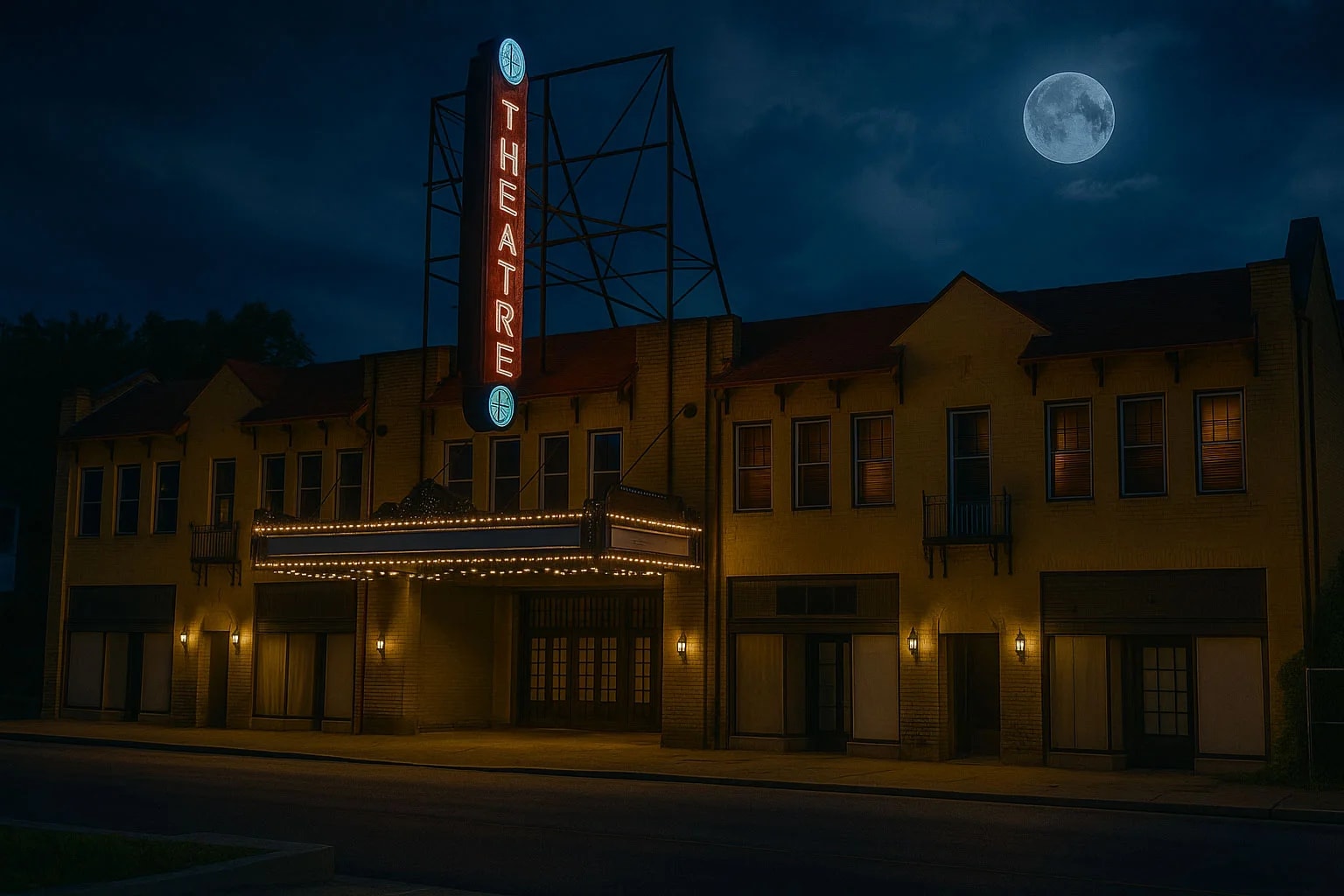
The Rivoli Theatre, Indianapolis' haunted movie palace from the golden age of cinema
