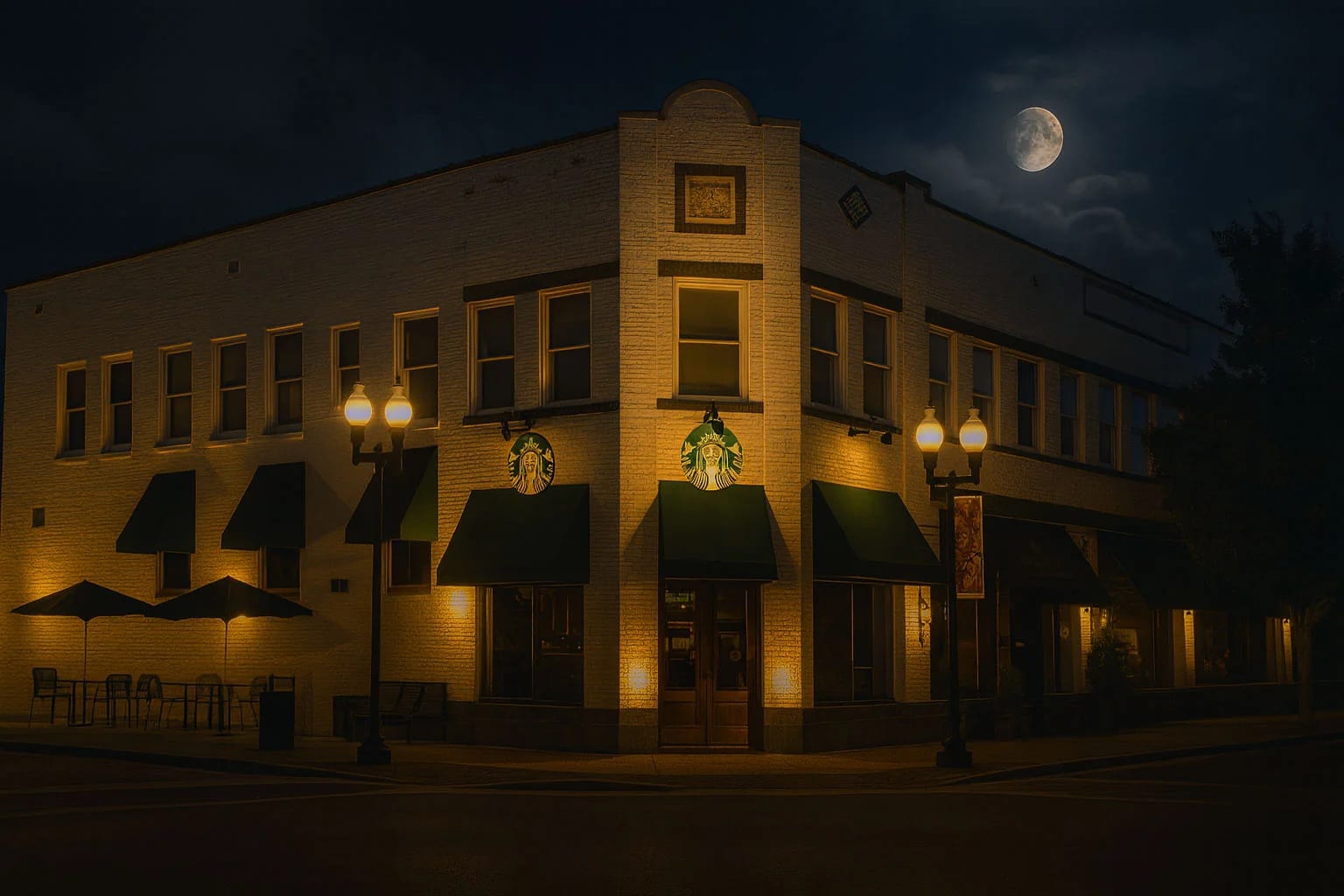
Local paranormal researcher Allen Sircy has investigated every haunted location in Franklin. He's seen things that would make most people question their grip on reality. But the moment that still gives him chills happened inside the White Building on Main Street—the moment he discovered the identity of a ghost who'd been waiting over 160 years for someone to call him by name.
'I play the Battle Hymn of the Republic on my phone,' Sircy recounts, 'and all the lights light up, and everything goes crazy. So we go upstairs and do the same thing. A lady with us says, 'What's your name?' and we heard... 'Drake.'
Drake. Just one word. But it was enough.
Sircy went home that night and started digging through archives, searching military records, cross-referencing lists of soldiers who fought and died in the Battle of Franklin. And there it was: Thomas Jefferson Drake, a drummer in the 10th Ohio Infantry. A boy who'd marched into battle carrying not a rifle but a drum, whose job was to keep the beat that kept the men moving forward, who probably died in this very building when it served as a hospital after the fighting stopped.
If you're taking a ghost tour in Franklin, the White Building is one of those places where the past and present blur together in ways that are impossible to explain away.
Main Street's Bloody History
Today, the White Building is home to businesses that cater to Franklin's visitors—there's a Starbucks on the ground floor, and you can grab a coffee without any idea that you're standing in a place where men died in agony. That's the strange duality of Franklin: charming Southern town by day, haunted battlefield by night.
Before fire codes were established in Tennessee in 1935, downtown Franklin saw numerous deadly blazes. Buildings burned, people died, and the town rebuilt over the ashes. The violence of the Civil War added another layer of trauma to streets that had already witnessed so much suffering.
When the Battle of Franklin ended on November 30, 1864, every building in the downtown area became a hospital. 'They fought the Battle of Franklin all the way to the square,' historian Allen Sircy explains. 'When it was over, they marched to the square, and the soldiers outnumbered the citizens four to one that night. Every building on the square became a hospital.'
The White Building was no exception. Men were carried in from the battlefield, laid out on floors, and treated by surgeons working with limited supplies and no anesthesia. Many of them died there. Some of them never left.
Thomas Jefferson Drake: The Drummer Boy
Civil War drummer boys occupy a strange place in military history. Too young to carry rifles in many cases, they served crucial roles in coordinating troop movements, maintaining morale, and keeping the chaotic rhythm of battle organized. They marched at the front of their units, exposed to enemy fire, armed with nothing but their drums and their courage.
Thomas Jefferson Drake served with the 10th Ohio Infantry, a Union regiment that saw action throughout the Western Theater of the war. By November 1864, the 10th Ohio was part of the forces defending Franklin against Hood's Confederate assault. When the fighting came to Main Street, Drake was there.
We don't know exactly how Drake died. He may have been hit by a bullet during the battle, or he may have survived the fighting only to succumb to wounds in the hospital wards that filled every available building. What we do know is that his spirit never moved on. He stayed in the White Building, waiting for someone to remember him.
For over 160 years, no one did. Then Allen Sircy played the Battle Hymn of the Republic.
The Battle Hymn Experiment
Paranormal investigators develop theories about how to trigger supernatural activity, and Sircy had a hypothesis: if Civil War soldiers died in a building, they might respond to music from their era. The Battle Hymn of the Republic was the Union's anthem, the song that accompanied them into battle, the melody that meant hope and courage and home.
Sircy pulled out his phone, loaded the song, and pressed play.
The reaction was immediate and dramatic. Lights that had been steady began to flicker. EMF meters that had been showing normal readings suddenly spiked. The atmosphere in the building shifted, grew heavier, as if something that had been dormant was suddenly waking up.
They tried it upstairs, and the same thing happened. More flickering. More spikes. More of that heavy, watching feeling. And then a woman in the group asked the question that changed everything: 'What's your name?'
The voice that answered was faint but clear: 'Drake.'
It's one thing to experience paranormal activity. It's another thing entirely to capture a name, to take that name home and discover that it matches a real person who really died in that exact location. Thomas Jefferson Drake wasn't just a random spirit. He was a documented soldier, a drummer boy from Ohio who came to Tennessee and never went home.
Until someone finally played his music and asked him who he was.
Other Spirits in the Shadows
Drake isn't the only presence in the White Building. The structure has accumulated spirits from multiple eras, and investigators have documented a range of paranormal phenomena:
Unexplained Sounds: Footsteps on empty floors. Voices in rooms that should be unoccupied. The occasional sound of drums—faint, rhythmic, impossible—echoing from somewhere that shouldn't have any sound at all.
Temperature Anomalies: Cold spots appear and disappear throughout the building, sometimes dramatically colder than the surrounding air. These cold zones seem to move, as if whatever creates them is wandering through the space.
Electronic Interference: Equipment malfunctions are common during investigations. Cameras lose power unexpectedly. Audio recorders capture sounds that weren't audible to human ears. Flashlights flicker on and off without being touched.
EVP Recordings: Multiple investigators have captured electronic voice phenomena in the White Building, including whispered words and phrases that seem to be direct responses to questions. The 'Drake' recording is the most famous, but others have captured fragments of speech, moans of pain, and what sounds like distant singing.
Visual Phenomena: Some visitors have reported seeing shadowy figures moving through the building, particularly on the upper floors. These shapes are usually glimpsed briefly before disappearing, but they're consistent enough that multiple witnesses have described similar forms.
The Weight of Remembered Suffering
What makes the White Building haunting so compelling isn't just the paranormal activity—it's the documentation. When Sircy heard the name 'Drake' and then found Thomas Jefferson Drake in the historical records, it created a connection between the supernatural and the historical that's rare in ghost research.
This wasn't an anonymous spirit. This was a specific person, a boy who left his home in Ohio to fight in a war he probably didn't fully understand, who carried a drum instead of a rifle, who ended up dying far from everyone who loved him in a building that still stands on Franklin's Main Street.
The Battle Hymn of the Republic meant something to Drake. It was the song of his regiment, his cause, his brief and tragic life. When that music plays in the building where he died, something responds. Something remembers.
That's the power of haunted places like Franklin. They're not just collections of ghost stories. They're repositories of memory, places where the dead have left traces of themselves that the living can still encounter. Drake wasn't just a ghost. He was a person. And for one moment, when someone finally played his song and asked his name, he got to be remembered.
Visit the White Building
The White Building is located on Main Street in downtown Franklin, currently housing a cluster of businesses including a Starbucks. You can walk in during business hours, grab a coffee, and stand in the same space where Thomas Jefferson Drake took his last breaths—though you probably won't experience anything unusual during the busy daytime hours.
The supernatural activity seems to be most pronounced after dark, when the crowds thin out and the building settles into its older rhythms. If you want to try the Battle Hymn experiment yourself, you'll need to find a way to access the upper floors—which isn't easy for casual visitors but is sometimes possible during special events or investigations.
For a structured exploration of the White Building and Franklin's other haunted locations, consider joining one of our Franklin ghost tours. We'll take you through the streets where the battle raged, past the buildings where men died, and share the stories of spirits like Thomas Jefferson Drake—boys who came to Franklin in 1864 and never found their way home.
The drummer boy is still there, waiting in the shadows of the White Building. He answered when someone finally asked his name. Maybe he'll answer again.
Play the Battle Hymn of the Republic and find out.

The White Building looks ordinary until you play the Battle Hymn of the Republic
