A City on the Edge of War
Boston did not stumble into revolution. It was pushed — slowly, relentlessly, and with a mounting pressure that transformed a prosperous colonial port into the most dangerous city in British North America.
The trouble began with taxes. The Stamp Act of 1765, the Townshend Acts of 1767, and the cascade of trade restrictions that followed were not merely economic grievances. They were experienced by Bostonians as acts of subjugation — the assertion of a distant Parliament's authority over people who had governed themselves for over a century. The response was not polite petition. It was rage. Mobs attacked the homes of royal officials. Tax collectors were tarred and feathered. Effigies of British ministers were hung from the Liberty Tree on Boston Common and burned in public ceremonies that blurred the line between protest and threat.
The British response was to send troops. In October 1768, four thousand soldiers — a force nearly equal to the city's adult male population — landed in Boston and began occupying a city that had not invited them. The soldiers were quartered in public buildings, in Faneuil Hall, on Boston Common. They drilled in the streets. They competed with local workers for part-time jobs, undercutting wages and stoking an economic resentment that compounded the political anger already boiling beneath the surface.
The tension was physical. You could feel it in the streets — in the confrontations between soldiers and civilians, in the shouts exchanged on corners, in the brawls that erupted in taverns where armed men and angry colonists drank in the same rooms. The city existed in a state of barely contained violence for eighteen months before that violence finally broke through on the night of March 5, 1770.
The emotional charge of that period — the fear, the anger, the sense of occupation and helplessness and simmering fury — did not dissipate when the Revolution ended. It soaked into the buildings. It settled into the ground. It became part of the city's foundation, layered beneath the cobblestones and the brick and the pavement like a geological stratum of human suffering. And according to those who have walked Boston's oldest streets after dark, it is still there — radiating upward through the ground, audible in the silence between traffic sounds, visible in the shadows that move between the buildings when no one should be moving at all.
The Boston Massacre — Where It Began
The night of March 5, 1770, began with an argument. A wigmaker's apprentice named Edward Garrick confronted a British officer outside the Custom House on King Street — now State Street — accusing him of failing to pay a barber's bill. A sentinel named Private Hugh White struck Garrick with his musket. A crowd gathered. Bells rang. More soldiers arrived. And within minutes, a confrontation that began with an unpaid bill had escalated into the defining moment of colonial American history.
Captain Thomas Preston marched a squad of soldiers to the Custom House to relieve White. The crowd — estimates range from fifty to four hundred people — pressed in around them. Shouts. Snowballs packed with ice and rocks. A club thrown from the back of the mob. Then a word — or not a word, or something mistaken for a word — and the soldiers fired.
Crispus Attucks fell first. He was a mixed-race dockworker, a former slave, a man whose name would become synonymous with the beginning of the American resistance. Samuel Gray fell next, then James Caldwell, then Samuel Maverick — a seventeen-year-old boy who was struck by a ricochet while trying to run away. Patrick Carr, an Irish immigrant, was hit in the hip and died two weeks later from infection. Five dead. Six more wounded. The entire event lasted less than twenty minutes.
The bodies were carried away. The blood froze on the cobblestones. And Paul Revere, who would later make his own legendary contribution to the Revolution, produced an engraving of the scene — stylized, propagandistic, deliberately inflammatory — that transformed a confused and chaotic street brawl into a symbol of British tyranny. The Boston Massacre became the spark. Everything that followed — the Tea Party, the Intolerable Acts, Lexington, Concord, Bunker Hill — flowed from this moment on this street.
The site of the Boston Massacre has been marked and unmarked and marked again over the centuries. Today, a circle of cobblestones and a small plaque on the sidewalk near the Old State House indicate the approximate location. It is easy to walk past without noticing. Thousands of people do it every day.
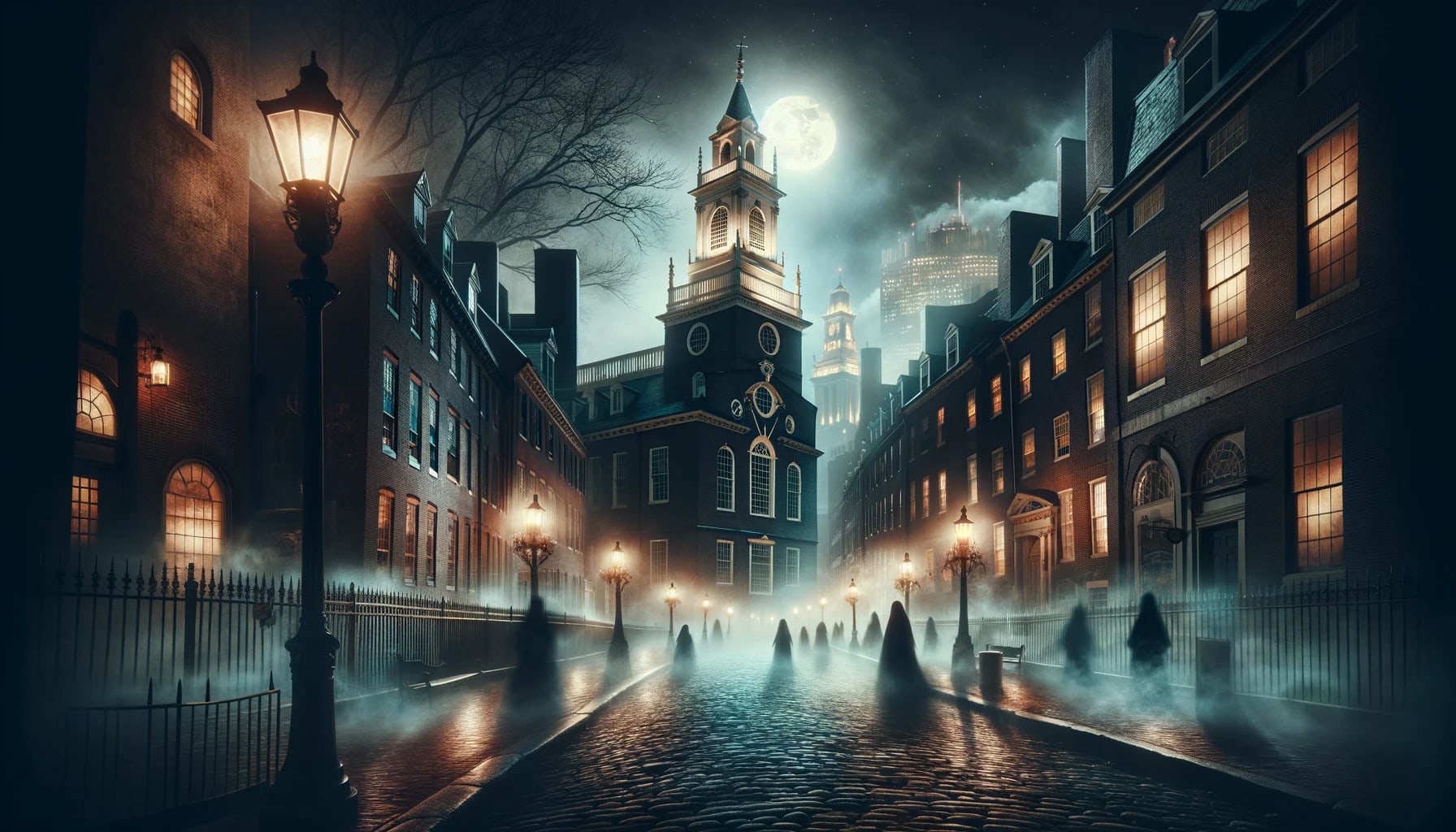
But at night, the site changes. The Old State House — the building from whose balcony the Declaration of Independence was first read to Bostonians in 1776 — stands at the head of State Street like a sentry guarding the memory of what happened here. After dark, when the financial district empties and the foot traffic thins, the area around the Massacre site takes on an atmosphere that visitors describe as heavy, charged, unsettled. People report hearing sounds that do not correspond to any identifiable source — a shout, a sharp crack, the sound of running feet on cobblestones that are covered by modern pavement. Cold spots appear at the Massacre site itself, concentrated and intense, as though the ground is remembering what it absorbed on that March night over 250 years ago.
The Old State House has its own history of paranormal reports. Staff members describe unexplained footsteps on the upper floors, doors that open and close in locked rooms, and the persistent sense of being watched in the building where the fate of a colony was debated and decided. The building has served as a government seat, a commercial exchange, a subway entrance, and a museum. Through all of its incarnations, the reports have remained consistent: something is here that predates the renovations, the repurposing, and the passage of time. Something that was present on the night of March 5, 1770, and has not moved on.
Faneuil Hall stands nearby — the Cradle of Liberty, where the revolutionary leaders who used the Massacre as a rallying cry delivered the speeches that pushed the colonies toward war. The proximity of these two buildings — the site of the killing and the hall where the killing was transformed into a cause — creates a concentration of revolutionary energy that is unique in Boston. The dead of the Massacre. The voices of the men who used their deaths to ignite a revolution. The echoes of both, lingering in buildings that are still standing, on ground that has never been cleared of what it witnessed.
The Dead of the Revolution
The victims of the Boston Massacre were buried at the Granary Burying Ground — a cemetery that would, over the following decade, become the final resting place of the Revolution itself.
Crispus Attucks, Samuel Gray, James Caldwell, Samuel Maverick, and Patrick Carr were placed in a shared grave near the front of the cemetery. Their burial was a political act — a public funeral attended by thousands, designed to transform five dead men into five martyrs. The funeral procession moved through the streets of Boston in a display of grief and defiance that the British authorities could not suppress without risking the very escalation they were trying to prevent. The bodies were lowered into the ground, and the ground has held them ever since.
But the Massacre victims are not alone. The Granary holds over 5,000 bodies, and the men and women who led the Revolution — or died in its service — rest among them. Paul Revere, whose midnight ride warned the colonial militia of the British advance toward Lexington and Concord. Samuel Adams, the architect of colonial resistance, the man who organized the committees of correspondence and helped plan the Boston Tea Party. John Hancock, whose signature on the Declaration of Independence was large enough to read without spectacles — a deliberate act of defiance aimed at King George himself.
These men did not die in battle. They died of old age, of illness, in the decades that followed the Revolution. But their burials in the Granary placed them in the same ground as the men who died at the very beginning — the Massacre victims whose deaths they had used, amplified, and immortalized. The revolutionary dead and the revolutionary leaders share the same soil, and the emotional charge of that concentration — the grief of the victims and the fury of the men who avenged them, compressed into a cemetery that was already overcrowded before the Revolution began — is palpable.
Visitors to the Granary report encounters that align with the cemetery's revolutionary character. Figures in 18th-century clothing have been seen moving between headstones at dusk — not drifting or gliding, but walking with purpose, as though they have somewhere to be. The sound of drums has been reported by visitors standing near the Massacre victims' grave — a low, rhythmic cadence that is not coming from the street and that fades when the listener moves away from the grave site. Cold spots concentrate around the headstones of the revolutionary leaders, as though the intensity of their convictions has survived death and continues to radiate from the ground where their bodies decomposed.
The Granary is not simply a cemetery. It is a memorial to the cost of the Revolution — the human cost, measured in bodies, buried in a space that ran out of room a century ago and has been holding the dead in compressed, overcrowded layers ever since. The revolutionary ghosts of the Granary are not gentle. They are the ghosts of men who fought, killed, died, and refused to accept that death was the end of their contribution to the cause they believed in.
Soldiers Who Never Left
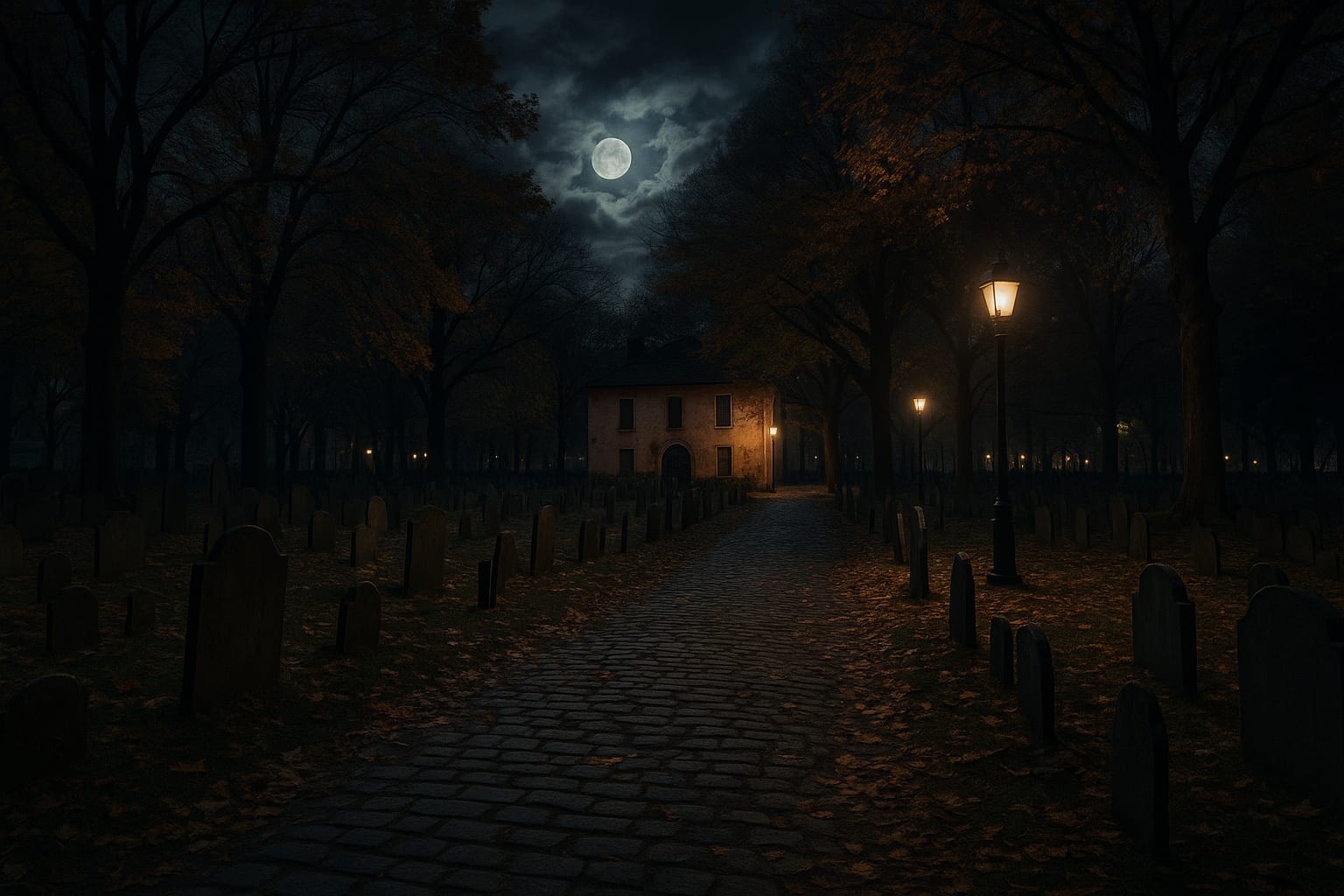
Copp's Hill Burying Ground occupies a rise in the North End that overlooks Boston Harbor and, across the water, the ruins of what was once Charlestown. During the Revolution, this vantage point made Copp's Hill the most strategically valuable piece of ground in Boston — and the British treated it accordingly.
When the Battle of Bunker Hill began on June 17, 1775, British artillery was positioned among the headstones of Copp's Hill. Cannons fired over the graves of Boston's colonial dead and into the buildings of Charlestown, setting the town ablaze. The bombardment was visible from across the harbor — a wall of fire consuming an American town while British soldiers stood in an American cemetery and directed the destruction. The irony was not lost on the colonists, and it was not forgiven.
In the intervals between the shelling, British soldiers used the headstones for target practice. They loaded their muskets and fired into the carved faces of the dead — into the death's heads, the cherubs, the inscriptions that the families of the deceased had commissioned to honor the memory of people who had been in the ground for generations. The bullet holes are still visible today, pockmarks in stone that have endured 250 years of New England weather. Each one is a record of casual cruelty — soldiers with time on their hands, amusing themselves by shooting at the graves of the people whose city they were occupying.
The dead at Copp's Hill did not forget.
The paranormal activity reported at Copp's Hill carries a quality that distinguishes it from every other cemetery in Boston. At the Granary, the atmosphere is solemn. At King's Chapel, it is intimate and personal. At Copp's Hill, it is angry. Visitors describe a feeling of hostility — not from the ghosts of the colonists who were originally buried here, but from something that arrived during the Revolution and has never departed. The British soldiers who occupied this ground, who fired cannons from among the graves and used the headstones for sport, left behind an energy that the American dead apparently find intolerable.
Figures in colonial military uniforms — American, not British — have been reported standing at the edges of the cemetery as though posted on watch. They do not drift or wander. They stand with the bearing of men assigned to a task. Visitors who approach them report that the figures acknowledge them briefly — a nod, a slight turn of the head — before dissolving into the darkness. These are not the hostile presences. These are the guardians — the American dead who returned to Copp's Hill after the Revolution to stand watch over a cemetery that was violated by the enemy and that they apparently intend to protect.
The hostile energy is elsewhere — concentrated in the sections where the British positioned their cannons, in the areas where the headstones bear bullet marks, in the parts of the cemetery that were used as a military installation rather than a place of rest. Visitors to these areas describe sudden drops in temperature, the sound of voices speaking in English accents that are not modern, and the overwhelming sense of being unwelcome — of trespassing on ground that is contested, that is being fought over by the dead themselves in a conflict that the end of the Revolution did not resolve.
Executions, Protests, and Public Death
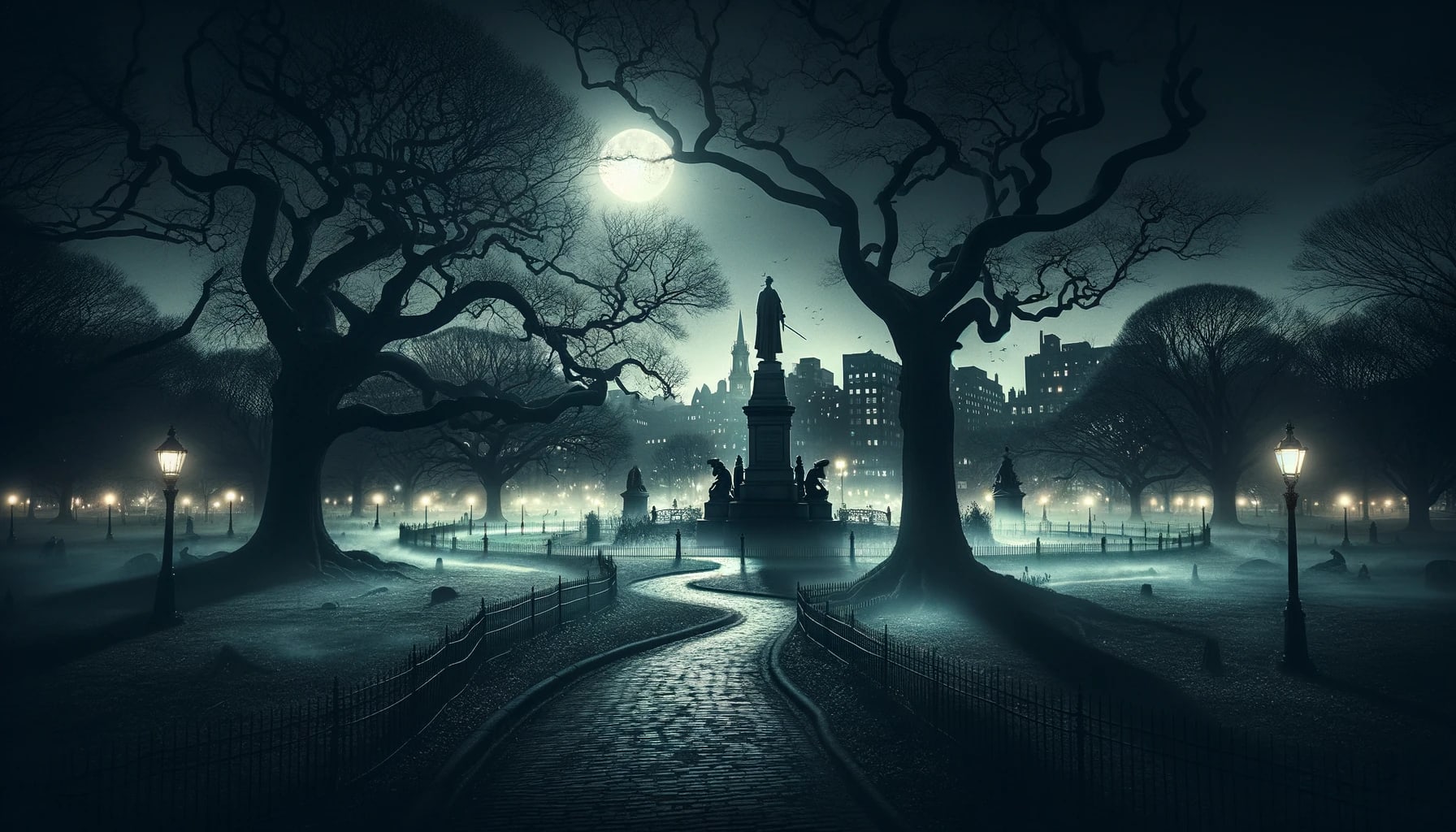
Boston Common served multiple roles during the Revolutionary era, and none of them were peaceful.
Before the Revolution, the Common was already saturated with death. Public hangings had been conducted here since the 1600s — pirates, Quakers, accused witches, and common criminals executed on gallows that stood as a permanent fixture of the park. Mary Dyer was hanged here in 1660. The pirate William Fly was hanged here in 1726 and his body was displayed on an island in the harbor as a warning. By the time the Revolution arrived, Boston Common had already absorbed a century and a half of public death.
The British occupation added a military dimension to the Common's dark history. When the four thousand soldiers arrived in 1768, they set up camp on the Common — drilling, parading, and conducting military punishments in a public park that the citizens of Boston considered their own. The sight of British soldiers flogging deserters on the Common, of redcoats marching in formation across ground where Bostonians had walked their children, of military tents and supply wagons occupying a space that had been public for over a century — these were not abstract grievances. They were daily humiliations, experienced by every Bostonian who crossed the Common and saw their city being treated as conquered territory.
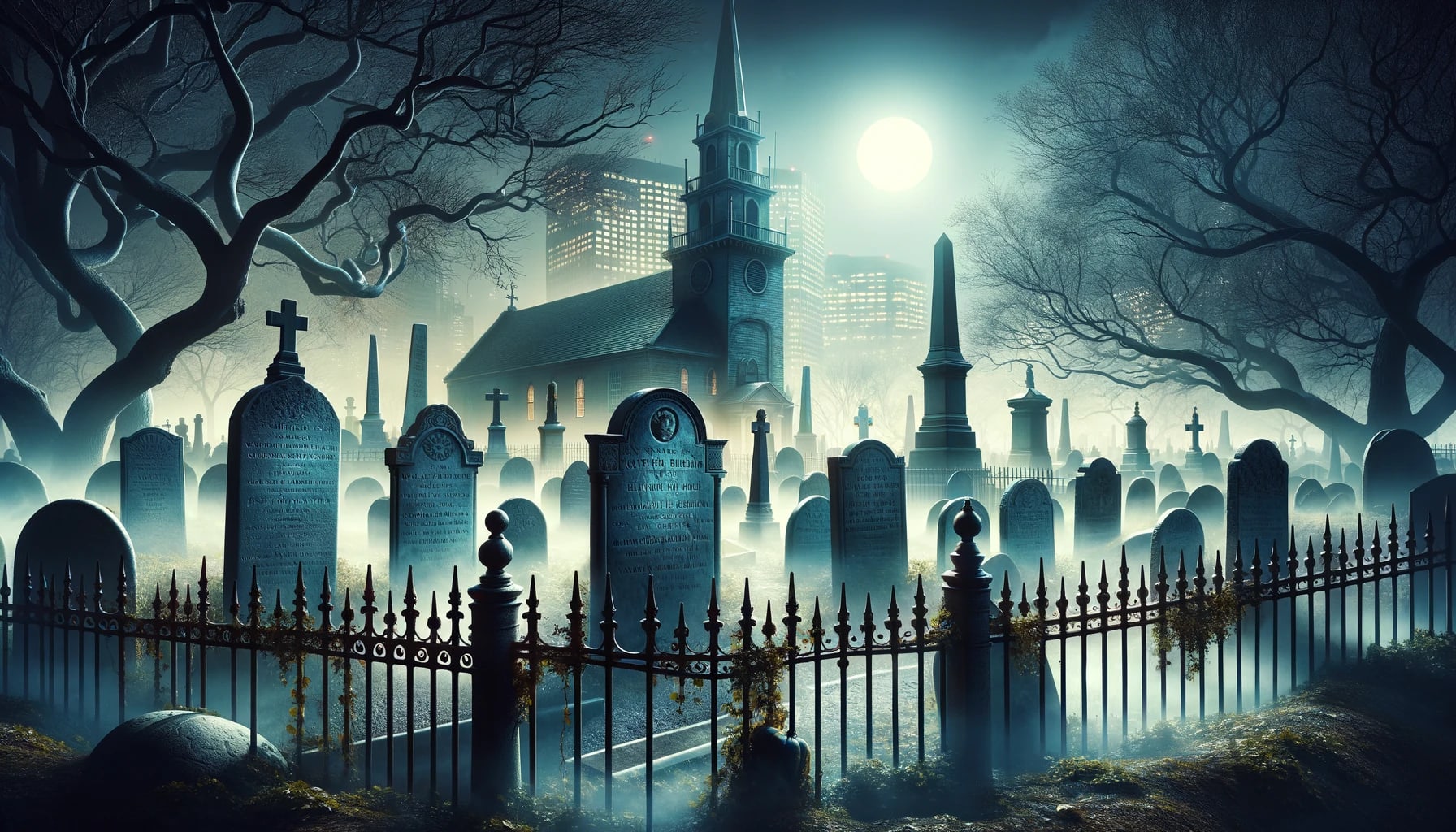
The emotional residue of the Revolutionary-era Common is distinct from the earlier execution-ground hauntings. The ghosts of the hanged — the pirates, the Quakers, the condemned — are reported as individual presences, figures seen near the former gallows site, isolated and specific. The Revolutionary-era hauntings are broader. They are atmospheric rather than apparitional. Visitors describe the feeling of a crowd — the sense of being surrounded by people who are not visible, of standing in a space that is occupied by an assembly that existed 250 years ago and has not dispersed. The sound of marching — rhythmic, measured, coming from no identifiable direction — has been reported by visitors and residents for generations. Shadow figures, moving in formation rather than individually, have been seen crossing the Common at night.
The Common absorbed the occupation. It absorbed the resentment of the occupied and the authority of the occupiers. It absorbed the executions, the protests, the confrontations, and the slow-burning rage of a population that watched foreign soldiers take ownership of their public space. The Revolution freed the Common. The emotions that accumulated during the occupation have never been freed. They are still here, pressed into the grass and the paths and the earth, rising to the surface on quiet nights when the park empties and the weight of what happened here settles back into place.
Where Revolutionaries Met — and Lingered
The Revolution was not born on the battlefield. It was born in taverns — in the back rooms and upper floors of drinking establishments where men gathered to commit treason over pints of ale, knowing that discovery meant the gallows.
Faneuil Hall was the public stage — the building where James Otis and Samuel Adams delivered the speeches that framed the colonial grievances in language that justified rebellion. The meetings at Faneuil Hall were large, heated, and dangerous. Every man who stood to speak against the Crown was committing an act that could be prosecuted as treason. The emotional intensity of those gatherings — the combination of conviction, fear, and the exhilaration of collective defiance — was concentrated in a single room, repeated over months and years, and driven by the knowledge that the consequences of failure were absolute.
The hauntings at Faneuil Hall reflect that intensity. The Great Hall, where the revolutionary speeches were delivered, produces reports of disembodied voices — not shouting, not screaming, but speaking with the urgent, persuasive cadence of men making arguments they believe will determine whether they live or die. The voices are heard when the hall is empty, when the building is closed, when the only people present are security guards who have learned to accept that the building is never truly unoccupied. Footsteps echo on the upper floors in patterns that correspond to pacing — back and forth, back and forth, as though someone is rehearsing a speech or working through the logic of a decision that cannot be reversed.
The Green Dragon Tavern was the private stage — the back room where the real planning happened. The Green Dragon, located on Union Street, was where the Sons of Liberty held their most sensitive meetings. This is where the Boston Tea Party was organized. This is where Paul Revere received the intelligence that sent him on his midnight ride. This is where men who would become Founding Fathers sat together in a room and decided, deliberately and irrevocably, to destroy the political order they had been born into.
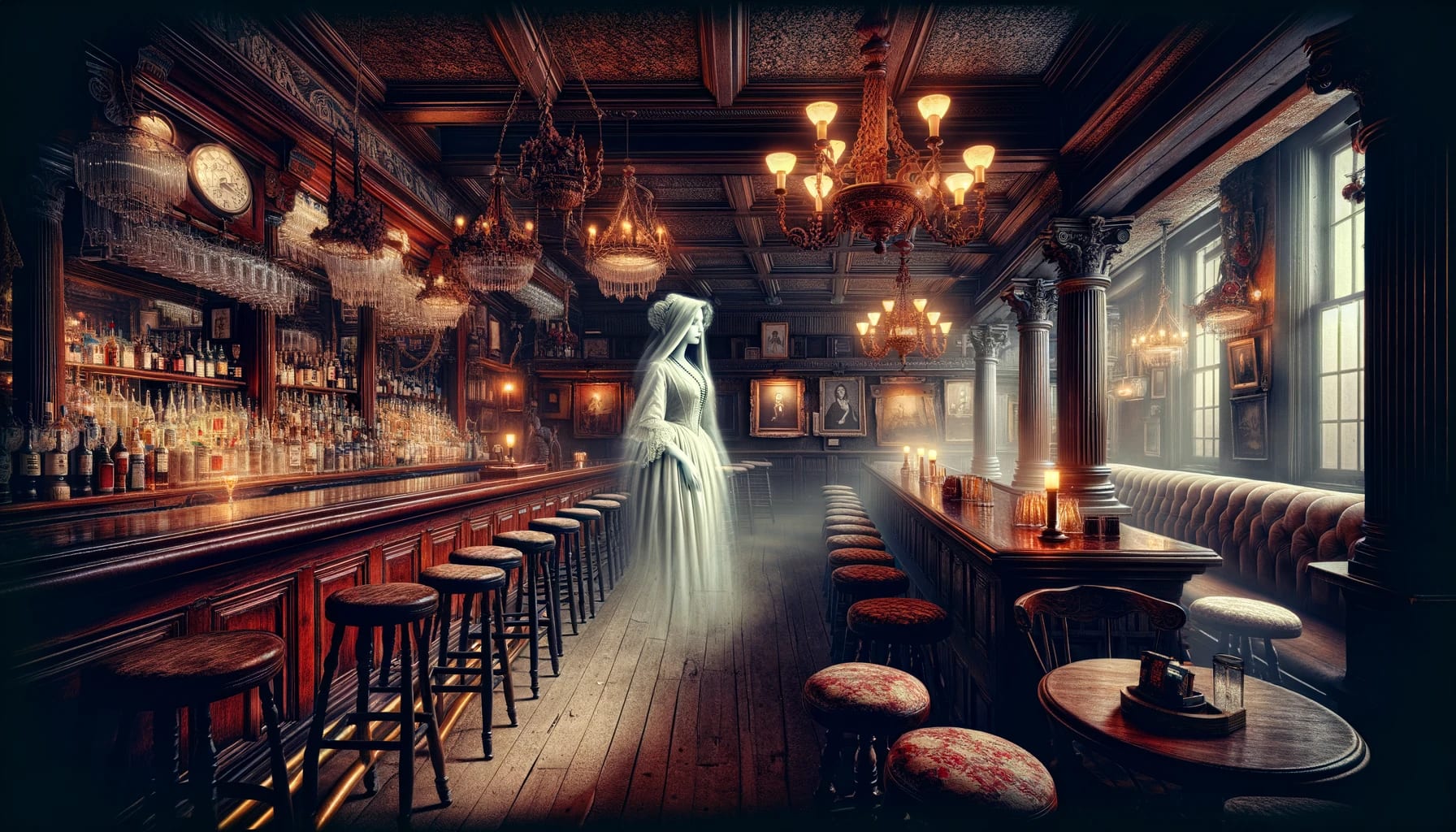
The original Green Dragon Tavern was demolished in 1854, but the site has never been free of the energy that accumulated within its walls during the most consequential years in American history. The current establishment, which embraces its revolutionary heritage, has been the subject of paranormal reports since it opened. Visitors and staff describe the sense of a gathering — of people present in the room who cannot be seen, of a meeting in progress that the living have inadvertently interrupted. The atmosphere in the Green Dragon at certain hours — late at night, when the modern patrons have thinned and the bar grows quiet — takes on a quality that regulars have learned to recognize. The room feels full when it is not. The air feels charged. And the conversations that seem to hover at the edge of hearing, just below the threshold of intelligibility, carry the rhythm and urgency of men planning something they cannot take back.
The revolutionaries who met in these buildings were not gentle men engaged in philosophical debate. They were conspirators planning the violent overthrow of the government that ruled them. They risked everything — their property, their families, their lives — on a gamble that most of them expected to lose. The emotional intensity of those meetings was enormous, and it was repeated hundreds of times over the course of a decade, in the same rooms, by the same men, with the same stakes. That kind of energy does not dissipate when the meetings end. It stays. It saturates the walls and the floors and the air. And in Boston, where the buildings are still standing and the rooms are still in use, it makes itself known to anyone who is paying attention.

Faneuil Hall
The Cradle of Liberty, where revolutionary speeches that could have cost their speakers the gallows were delivered with conviction and fear in equal measure. The voices of those speakers have never fully gone silent.
Read More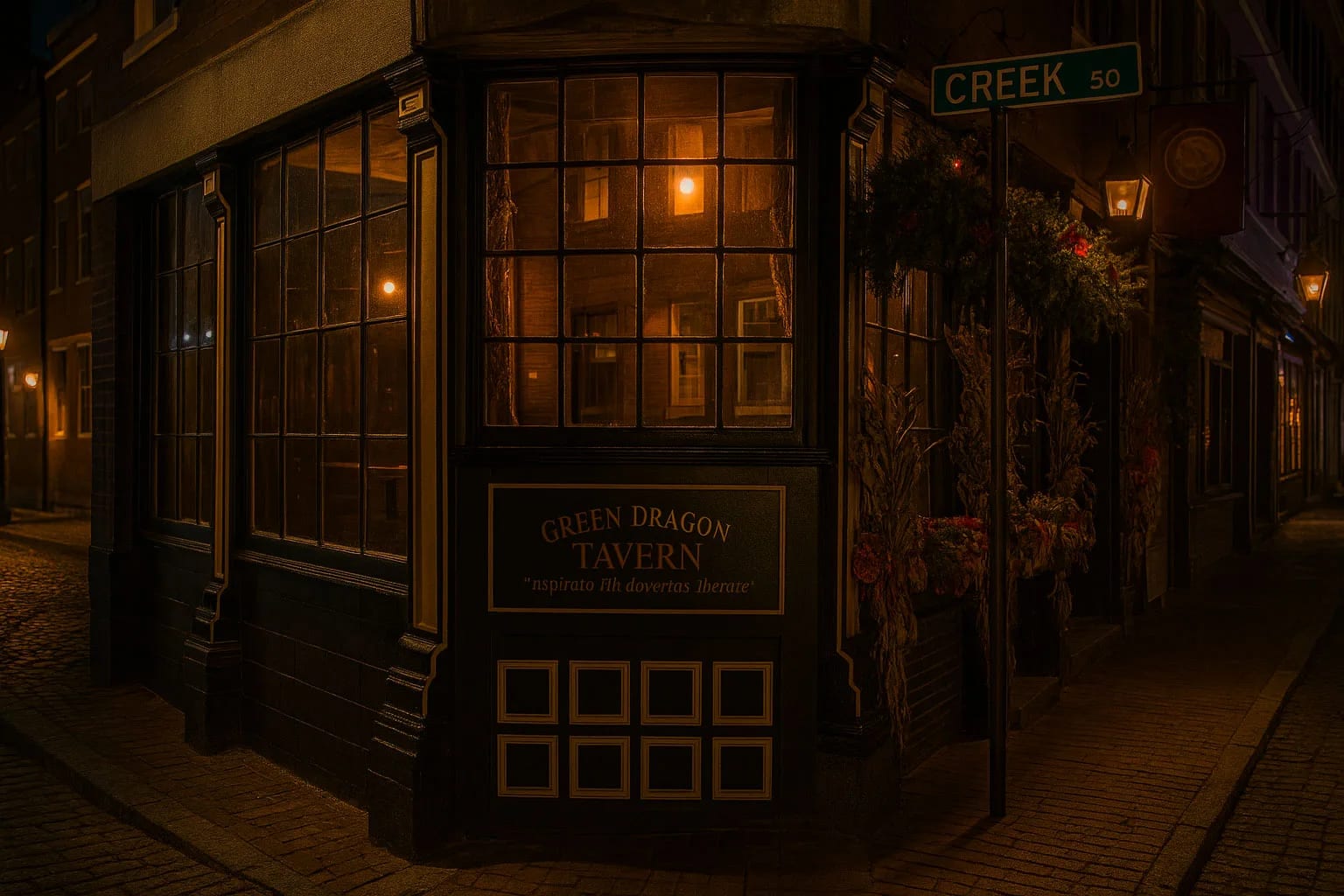
The Green Dragon Tavern
The 'Headquarters of the Revolution' where the Boston Tea Party was planned and Paul Revere received his orders. The energy of treasonous conspiracy still fills the room on quiet nights.
Read MoreWar, Imprisonment, and Suffering
The Revolution produced prisoners — on both sides — and the treatment of those prisoners created some of the most intense and enduring hauntings in the Boston area.
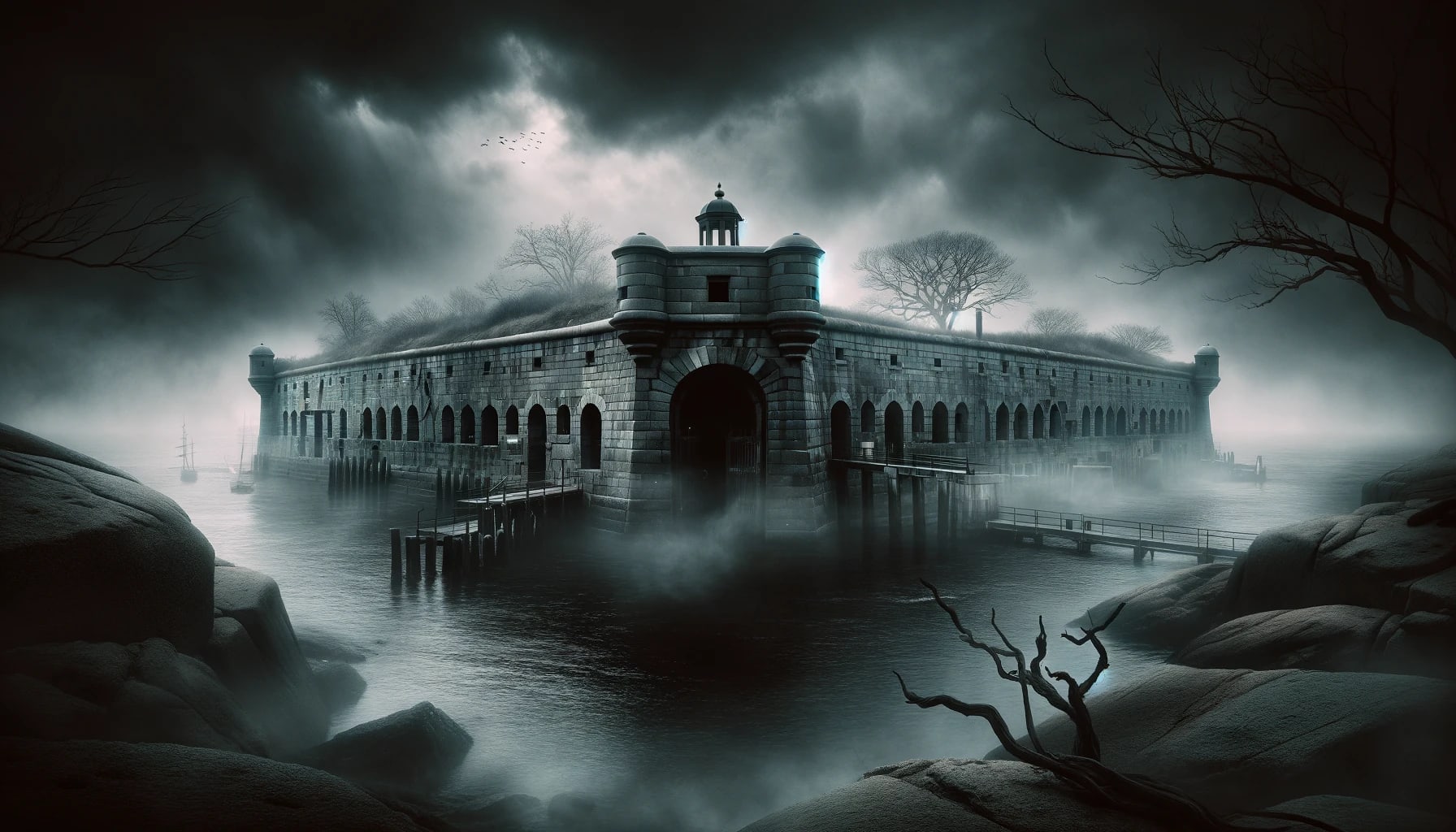
Fort Warren on Georges Island in Boston Harbor was not built during the Revolution — it was constructed in the 1830s and served as a Union prison during the Civil War. But the fort's connection to Boston's military history, its isolation in the harbor, and the suffering that occurred within its walls place it firmly in the continuum of war-related hauntings that began with the Revolution and continued through every conflict that followed.
Confederate soldiers and political prisoners were held at Fort Warren in conditions that ranged from tolerable to devastating. The island's isolation — surrounded by cold Atlantic water, exposed to winds that cut through stone walls, separated from the mainland by a harbor crossing that made escape nearly impossible — amplified the psychological torment of imprisonment. Disease claimed lives steadily. Despair claimed more. The men who died at Fort Warren died slowly, far from home, in a fortress built on an island that offered no comfort and no hope of release.
The most famous ghost at Fort Warren is the Lady in Black — a figure reported on the fort's ramparts, in its tunnels, and along its walls for over 150 years. According to legend, she was the wife of a Confederate prisoner who disguised herself as a man, rowed to the island, and attempted to free her husband. She was captured, tried, and sentenced to death. Before her execution, she requested to be hanged in women's clothing, and a black robe was the only garment available. She has been seen in that black robe ever since — standing on the battlements, moving through the corridors, appearing to visitors and park rangers with a consistency that has made her one of the most well-documented ghosts in New England.
Whether the Lady in Black legend is historically accurate is debated. What is not debated is the persistence of the reports. She has been seen by military personnel stationed at the fort during World War II. She has been seen by park rangers who maintain the island today. She has been seen by visitors who had no knowledge of the legend before arriving. The reports describe the same figure — a woman in dark clothing, silent, purposeful, moving through a fortress where men suffered and died far from the people who loved them.
Fort Warren is the Revolution's echo — the proof that the pattern of war, imprisonment, and unresolved death that began in Boston in the 1770s did not end with independence. It continued through every American conflict, each one adding its own layer of suffering to the military infrastructure that grew up around Boston Harbor. The Lady in Black is not a Revolutionary War ghost. She is a war ghost — a spirit produced by the same machinery of conflict and confinement that the Revolution set in motion, playing out on an island in the harbor of the city where it all began.
The Fire That Burned What the Revolution Built
The Great Boston Fire of 1872 did not occur during the Revolution, but it destroyed much of what the Revolution had built — and it added a catastrophic layer of death and trauma to a city that was already saturated with both.
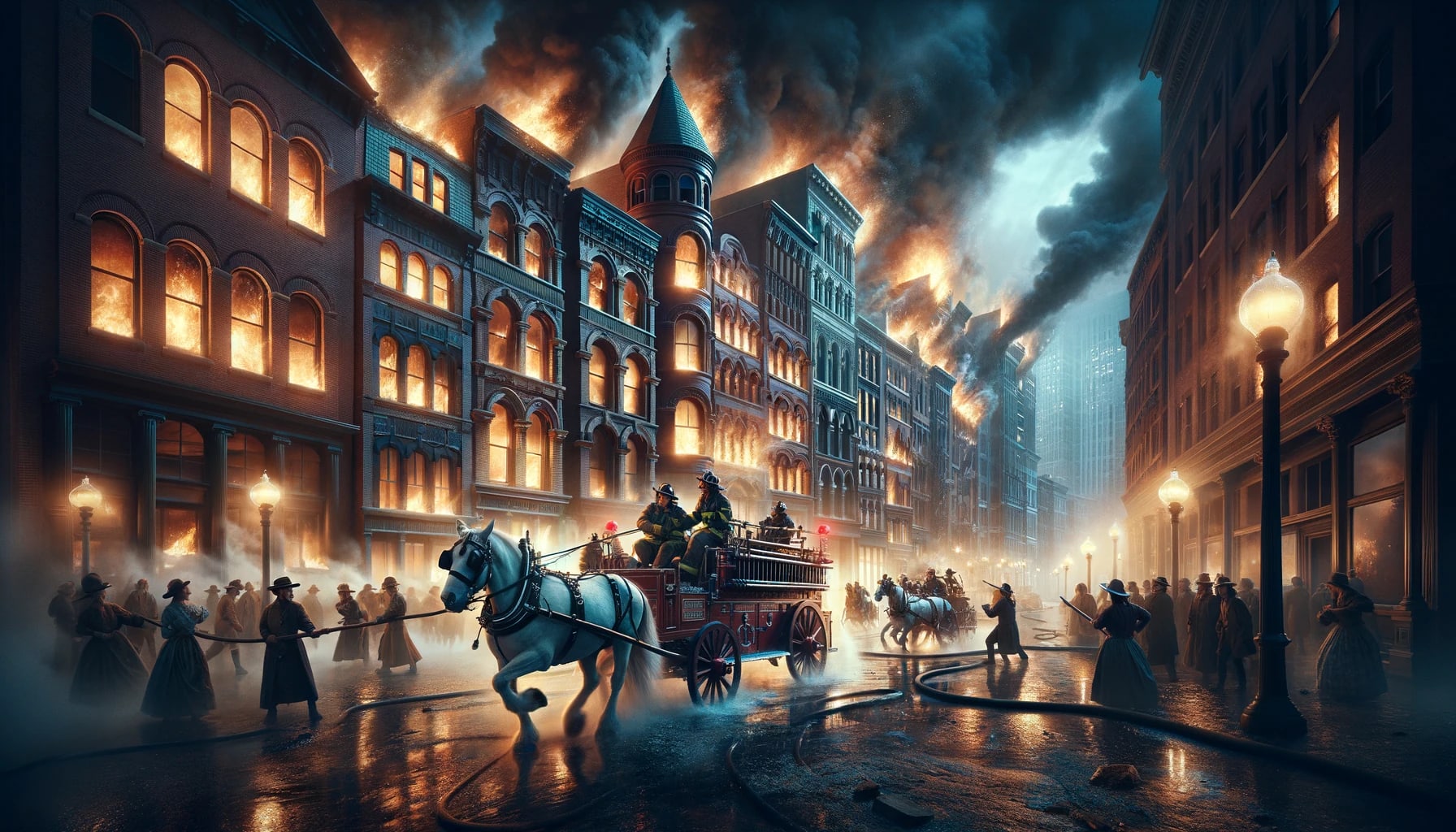
The fire started on the evening of November 9, 1872, in the basement of a commercial warehouse on Summer Street. Within hours, it had consumed an area of sixty-five acres — the commercial heart of Boston, a district of warehouses, dry goods stores, printing houses, and offices that had been built in the decades following the Revolution by the very economy that independence had made possible. Seven hundred and seventy-six buildings were destroyed. At least thirty people were killed. The damage, in modern dollars, exceeded two billion.
The fire burned through a district that had been continuously occupied since the colonial era. The buildings that were destroyed sat on ground where pre-Revolutionary structures had stood, where colonial-era commerce had been conducted, where the economic life of a city that fought a war for self-governance had flourished for a century. The fire did not just destroy property. It destroyed a physical connection to the Revolution — the buildings, the streets, the commercial infrastructure that the generation after the Founders had built on the foundation of independence.
The area where the fire burned most intensely — the blocks around Summer Street and Franklin Street in what is now the Financial District — has been associated with paranormal reports since the reconstruction began. Workers in buildings constructed on the fire's footprint describe unexplained sounds, sudden temperature changes, and the lingering smell of smoke in areas where no fire exists. The ghosts of the fire district are not revolutionary ghosts — they are civilian ghosts, people who died in terror and confusion in a disaster that struck without warning. But they are layered on top of the revolutionary history that preceded them, adding another stratum of death to ground that was already heavy with it.
The Revolution built Boston. The fire burned part of it down. And the dead from both events — separated by a century but occupying the same ground — coexist in the soil beneath the Financial District, each generation of ghosts adding its own weight to a city that has never been able to put its dead behind it.
Why the Revolution Still Haunts Boston
The American Revolution ended in 1783. The Treaty of Paris was signed. The British withdrew. The United States of America became a sovereign nation. The war was over.
But wars do not end cleanly. They do not end when treaties are signed or when armies withdraw. They end — if they end at all — when the emotional energy they generated has been fully processed, fully grieved, fully resolved. And the American Revolution, in Boston, has never been fully resolved.
The dead were buried hastily, in overcrowded cemeteries, in unmarked graves, in the basements and yards of buildings that are still standing. The five victims of the Boston Massacre share a grave that has become a monument — but thousands of other revolutionary dead have no monument, no marker, no name. They are simply somewhere beneath Boston, compressed into earth that has been paved over and built upon for 250 years.
The emotional intensity of the Revolution was extraordinary — greater, in some ways, than any conflict that followed. The men and women who participated in it were not professional soldiers fighting a distant war. They were civilians — shopkeepers, artisans, farmers, lawyers, smugglers — who decided, deliberately and with full knowledge of the consequences, to risk everything they had on the chance that they could overthrow the most powerful empire on Earth. The fear was real. The conviction was real. The deaths were sudden, violent, and personal in a way that modern warfare, conducted at a distance with precision weapons, rarely produces.
Paranormal researchers describe the conditions that produce persistent hauntings: violent death, unresolved grief, emotional intensity concentrated in specific locations, and the physical preservation of the spaces where the events occurred. Boston checks every box. The deaths were violent. The grief was never fully resolved — you cannot resolve grief for people whose graves have been lost. The emotional intensity of the Revolution was concentrated in specific buildings and streets that are still standing. And the spaces themselves — the taverns, the halls, the burial grounds, the Common — have been preserved in a state that is close enough to their revolutionary-era condition that the dead, if they are aware of their surroundings, would recognize where they are.
The Revolution still haunts Boston because Boston still looks like the Revolution. The streets are the same streets. The buildings are the same buildings. The burial grounds are the same burial grounds. And the dead — the soldiers, the civilians, the revolutionaries, and the victims — are still in the ground, still in the walls, still standing at the edges of the cemeteries where they were buried, waiting for a resolution that has never come.
For the complete story of the death, disease, and conflict that created one of America's most haunted cities, read Why Is Boston So Haunted?.
Walk the Haunted History Yourself
The Revolutionary War ghosts of Boston are not museum exhibits. They are not behind glass or roped off or accessible only during business hours. They are in the streets — the same streets where the Massacre occurred, where the occupation was endured, where the rebellion was planned. They are in the taverns where you can still sit at a bar and order a drink in a room where Paul Revere once conspired to destroy a government. They are in the burial grounds where you can stand inches from the grave of a man who signed the Declaration of Independence and feel the temperature drop around you like a door opening into another century.
Ghost City Tours offers three ways to experience the haunted Revolutionary history of Boston:
The Ghosts of Boston Tour is the definitive introduction — a family-friendly walking tour that covers the city's most famous haunted locations with storytelling that brings the Revolution to life in the streets where it happened. This is the tour that has made Ghost City Tours the highest-rated ghost tour company in Boston, and it is the right choice for anyone who wants to understand what the Revolution left behind.
The Death & Dying Tour goes darker. This is the adults-only experience that explores the executions, the massacres, the epidemics, and the military violence that the family tour only hints at. If you want the unvarnished truth about what the Revolution cost — in blood, in suffering, in lives that ended violently on ground you are standing on — this is the tour.
The Haunted Pub Crawl visits the taverns where the Revolution was born. Drink in the same rooms where the Sons of Liberty plotted treason. Stand where Paul Revere stood. And listen — carefully — for the voices that have been speaking in these rooms for 250 years and show no signs of stopping.
The Revolution is over. The ghosts are not. Plan your haunted night in Boston and experience what independence really cost.
Frequently Asked Questions
Are there Revolutionary War ghosts in Boston?
Yes. Boston was the birthplace of the American Revolution, and the violence, death, and emotional intensity of the revolutionary period produced some of the city's most persistent hauntings. Ghosts in colonial military uniforms have been reported at Copp's Hill Burying Ground, phantom voices are heard at Faneuil Hall, and the site of the Boston Massacre on State Street produces unexplained sounds and cold spots. The revolutionary dead are among the most active spirits in Boston.
Where did the Boston Massacre happen?
The Boston Massacre occurred on March 5, 1770, on King Street — now State Street — in front of the Old State House. A circle of cobblestones and a small plaque mark the approximate location where five colonists were killed by British soldiers. The site is associated with paranormal reports including unexplained sounds, cold spots, and the feeling of residual energy from the event that sparked the American Revolution.
Which Revolutionary War sites in Boston are haunted?
The most actively haunted Revolutionary War sites include the Granary Burying Ground (where Massacre victims and revolutionary leaders are buried), Copp's Hill Burying Ground (used as a British artillery position), Boston Common (execution ground and British military camp), Faneuil Hall (where revolutionary speeches were delivered), and the Green Dragon Tavern site (where the Boston Tea Party was planned). Fort Warren in Boston Harbor, though a Civil War site, continues the pattern of military hauntings.
Can you visit the Boston Massacre site at night?
The Boston Massacre site on State Street is a public sidewalk and is accessible at any time. The Old State House nearby is open during museum hours. Ghost City Tours offers guided walking tours that pass the Massacre site in the evening, providing the historical context and ghost stories that bring the location to life after dark.
What ghost tours cover Revolutionary War history in Boston?
Ghost City Tours offers three tours that cover Boston's Revolutionary War haunted history: the Ghosts of Boston Tour for a family-friendly experience, the Death & Dying Tour for an adults-only deep dive into the Revolution's darkest chapters, and the Haunted Pub Crawl for a 21+ experience visiting the taverns where the Revolution was planned.
Why are Revolutionary War sites haunted?
Revolutionary War sites in Boston are haunted due to the extreme emotional intensity of the events that occurred there — sudden violent death, collective trauma, prolonged military occupation, and the unresolved grief of people whose graves were disturbed, unmarked, or lost entirely. The physical preservation of Boston's revolutionary-era buildings and burial grounds means the locations where these events occurred are still intact, creating conditions that paranormal researchers consider ideal for persistent activity.